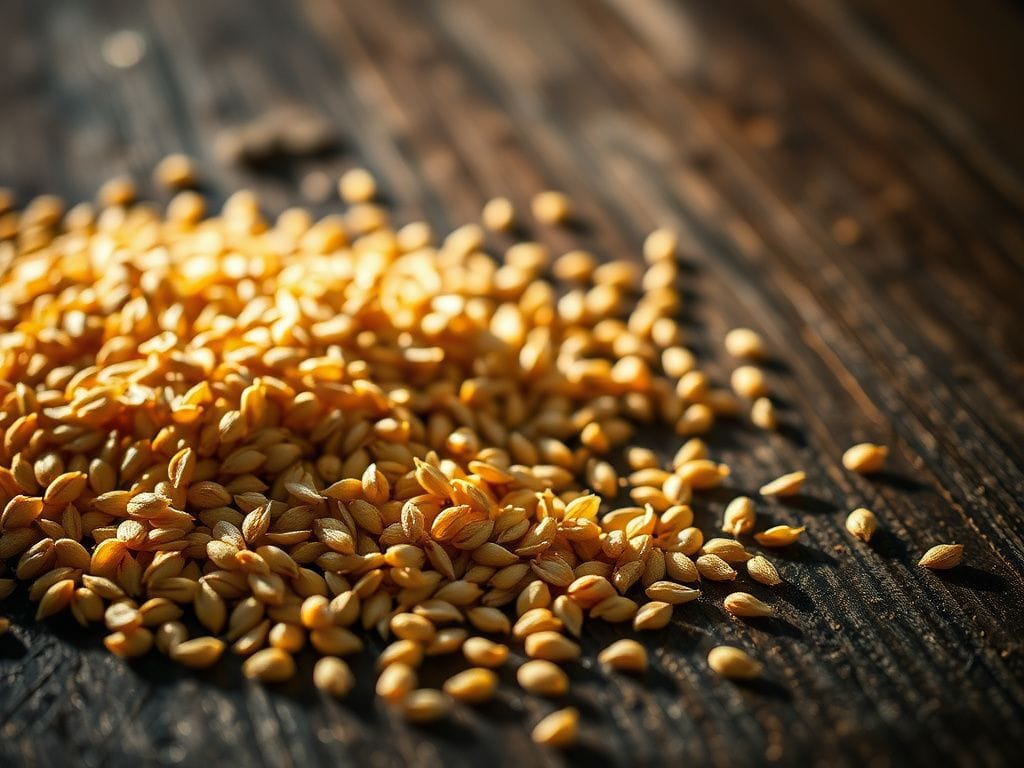
This guide provides a foundational understanding of All-Grain Brew in a Bag (BIAB), enabling aspiring brewers to execute technically sound mashes and boils. Focus is on equipment, process mechanics, critical control points, and calculation methodologies, demystifying advanced brewing for practical application without superfluous detail. Master your brew day with precision.
BIAB Core Process Parameters
Understanding key technical parameters is critical for consistent results in BIAB. This table outlines essential aspects to monitor and control.
| Parameter | Technical Function | Optimal Range/Value | Critical Impact on Brew | Measurement/Control |
|---|---|---|---|---|
| Grain Crush | Exposes endosperm for enzymatic conversion. Finer crush increases surface area. | Significantly finer than typical 3-roller mill for BIAB to maximize efficiency, but avoid flour. | Directly affects mash efficiency and potential for stuck sparge (less concern with BIAB). | Adjust mill gap (e.g., 0.025-0.030 inches). Visually inspect for whole grains vs. flour. |
| Mash pH | Enzyme activity optimization (alpha- and beta-amylase) and protein coagulation. | 5.2 – 5.6 at mash temperature (5.4 – 5.8 at room temp). | Enzyme efficacy, fermentability, clarity, flavor stability, hop utilization. Off-flavors at extremes. | Calibrated pH meter. Lactic acid, phosphoric acid, calcium carbonate, gypsum for adjustment. |
| Mash Temperature | Dictates enzyme activity: alpha-amylase (dextrinizing) vs. beta-amylase (saccharifying). | Typically 148-158°F (64-70°C). Lower for drier beer, higher for fuller body. | Fermentability (body vs. dryness), sugar profile, foam stability. | Accurate thermometer, continuous monitoring, heat application during mash if needed. |
| Strike Water Volume | Determines mash thickness. Total water required for mashing and sparging (if applicable). | Typically 1.25-1.5 quarts/lb (2.6-3.1 L/kg) for main mash, plus boil-off, dead space, absorption. | Mash efficiency, temperature stability, lautering ease. | Calculated pre-brew. Volumetric measurement using calibrated vessel. |
| Boil Vigor/Time | Concentrates wort, isomerizes hop acids, volatilizes off-flavors (DMS), sanitizes. | Rolling boil. 60-90 minutes standard for most styles. | Hop utilization (IBUs), DMS reduction, wort stability, final gravity. | Visual inspection. Timer. Adjust heat source. |
Core BIAB Brewing Calculations
Precision in brewing demands accurate calculations. Here are fundamental formulas and an example to guide your BIAB process.
1. Strike Water Volume (Initial Mash Water)
Strike Water Volume (gal) = (Grain Weight (lb) * Mash Thickness (qt/lb) / 4) + Kettle Dead Space (gal) + Boil-off Loss (gal) + Grain Absorption (gal) - Potential Sparge Water (gal)
Common Conversions: 1 gal = 4 qt; Grain absorption ~ 0.08 gal/lb (0.67 L/kg); Boil-off ~ 1.0-1.5 gal/hr (3.8-5.7 L/hr)
Example Calculation:
Target Batch Size: 5.5 gallons (post-boil)
Grain Weight: 10.0 lb
Mash Thickness: 1.25 qt/lb
Kettle Dead Space: 0.5 gal
Boil-off Rate: 1.25 gal/hr (for 60 min boil)
Grain Absorption: 10.0 lb * 0.08 gal/lb = 0.8 gal
First, calculate total water needed for mash, absorption, and dead space:
Mash Water = (10.0 lb * 1.25 qt/lb) / 4 qt/gal = 3.125 gal
Pre-boil Volume Target = Batch Size + Boil-off Loss = 5.5 gal + 1.25 gal = 6.75 gal
Total Mash/Lauter Water Needed = Pre-boil Volume Target + Grain Absorption + Kettle Dead Space = 6.75 gal + 0.8 gal + 0.5 gal = 8.05 gal
Since BIAB typically mashes with full volume, your Strike Water Volume should aim for the ‘Total Mash/Lauter Water Needed’ minus any water you might hold back for a dunk sparge. For a true full-volume BIAB, this is your initial water volume.
Adjusted Strike Water Volume = 8.05 gallons
2. Strike Water Temperature
Strike Water Temp (°F) = (Target Mash Temp (°F) - Grain Temp (°F) / (Water to Grain Ratio * 0.2)) + Target Mash Temp (°F)
Water to Grain Ratio (qts/lb). Specific heat of water ~1, specific heat of grain ~0.2.
Example:
Target Mash Temp: 152°F
Grain Temp: 70°F
Water to Grain Ratio: (8.05 gal * 4 qt/gal) / 10.0 lb = 3.22 qt/lb
Strike Water Temp = (152 - 70) / (3.22 * 0.2) + 152 = 82 / 0.644 + 152 = 127.3 + 152 = 279.3°F (Initial calculation, this is too high, indicating the formula's simplification for larger ratios. For practical BIAB, aim for a few degrees higher than target and adjust).
A more practical approach for BIAB: Heat water 5-10°F above target mash temp. Add grain, stir, measure. Adjust with heat or cold water. Iterative adjustment is key due to kettle heat loss and grain specific heat variability.
3. Original Gravity (OG) Estimation
OG = 1 + (PPG * Grain Weight (lb) * Brew House Efficiency / Post-Boil Volume (gal)) / 1000
PPG (Points Per Gallon) is a value for each malt type (e.g., Pale Malt ~37 PPG). Brew House Efficiency is typically 65-75% for BIAB.
Example:
PPG for Pale Malt: 37
Grain Weight: 10.0 lb
Target Efficiency: 70% (0.70)
Post-Boil Volume: 5.5 gal
OG = 1 + (37 * 10.0 * 0.70 / 5.5) / 1000 = 1 + (259 / 5.5) / 1000 = 1 + 47.09 / 1000 = 1 + 0.04709 = 1.047
4. Brew House Efficiency (BHE) Calculation (Post-Brew)
BHE = ((Actual OG - 1) * Post-Boil Volume (gal)) / (PPG * Grain Weight (lb))
Example (using previous example’s OG and other values):
Actual OG Measured: 1.045
Post-Boil Volume: 5.5 gal
PPG: 37
Grain Weight: 10.0 lb
BHE = ((1.045 - 1) * 5.5) / (37 * 10.0) = (0.045 * 5.5) / 370 = 0.2475 / 370 = 0.0006689...
Wait, this is wrong. The formula for efficiency needs to be expressed as a percentage or decimal of potential gravity points. It’s: (Measured Gravity Points * Volume) / (Total Potential Gravity Points from Grains).
Corrected BHE Calculation:
BHE = (((Actual OG - 1) * 1000) * Post-Boil Volume (gal)) / (PPG * Grain Weight (lb))
BHE = ((45) * 5.5) / (37 * 10.0) = 247.5 / 370 = 0.6689 = 66.9%
These calculations are fundamental for predicting and analyzing your brewing performance.
The Definitive Master-Guide: All-Grain BIAB for Technical Beginners
All-Grain Brew in a Bag (BIAB) represents a critical bridge from extract brewing to full-grain mastery, simplifying the equipment demands while retaining the fundamental process of all-grain production. This method is not merely a shortcut; it is a technically viable, efficient approach capable of producing award-winning beers, provided the brewer understands and controls the underlying principles. This guide will meticulously detail the BIAB process, focusing on technical specifications, critical control points, and actionable strategies for consistent results.
I. Deconstructing the BIAB Philosophy
BIAB fundamentally integrates the mash tun and lauter tun functions into a single vessel, typically your boil kettle. The “bag” is a precisely engineered filter, allowing for a full-volume mash without the need for a separate hot liquor tank or sparge arm. This streamlining reduces capital expenditure and footprint, making it ideal for brewers with limited space or budget, while accelerating learning by exposing the entire all-grain workflow.
II. Essential BIAB Equipment: Technical Specifications
Precision in brewing begins with calibrated, appropriate equipment. Skimping here introduces uncontrollable variables.
- Brew Kettle:
Minimum 10-gallon (38-liter) capacity for a 5-gallon (19-liter) batch to accommodate full-volume mash, boil-off, and potential foaming. Stainless steel (304 or 316 grade) is preferred for its inertness and durability. Ensure it has a sturdy handle and a tight-fitting lid to minimize heat loss during mash.
- Brew Bag:
Crucial. Must be food-grade nylon or polyester mesh (e.g., 200-400 micron size) to prevent grain particles from entering the wort while allowing proper liquid circulation. Dimensions must be generous enough to prevent grain overflow and strong enough to support the wet grain weight (e.g., 10-15 lbs / 4.5-6.8 kg). A bag with integrated lifting straps is highly recommended for safety and ease of use.
- Heat Source:
Propane burner (e.g., 60,000-100,000 BTU) or a powerful electric element (e.g., 3500-5500W, 240V) is necessary to achieve and maintain strike temperatures and a rolling boil for typical batch sizes. Residential stove tops are often insufficient for full-volume boiling.
- Thermometer:
Calibrated digital thermometer with an immersion probe (e.g., 0.1°F/0.1°C resolution, +/- 0.5°F accuracy) is non-negotiable for mash temperature control. Probe length should reach the center of the mash bed.
- Hydrometer & Test Jar:
Essential for measuring wort density (Original Gravity, OG; Final Gravity, FG) to monitor fermentation progression and calculate alcohol by volume (ABV). Calibrate periodically with distilled water at 60°F (15.6°C).
- Large Stirring Spoon/Paddle:
Stainless steel or food-grade plastic, long enough to reach the bottom of your kettle and effectively agitate the entire grain bed.
- Lifting Mechanism:
Pulley system, robust tripod, or a sturdy helper for lifting the heavy, hot bag of spent grain from the kettle. Safety is paramount.
- Wort Chiller:
Immersion chiller (copper or stainless steel) or plate chiller is critical for rapidly cooling wort to pitching temperature (70°F/21°C or below) within 15-30 minutes, minimizing risk of bacterial infection and DMS production. For details on optimizing your chilling process, visit BrewMyBeer.online.
- Fermentation Vessel:
Food-grade bucket or carboy (glass or PET plastic) with an airlock. Capacity should be 10-20% greater than your batch size to accommodate krausen formation.
- Sanitation Supplies:
Specific brewing sanitizers (e.g., Star San, Iodophor). Absolutely no compromises on sanitation post-boil.
III. The Pre-Mash Phase: Water and Grain Preparation
A. Grain Selection & Crush:
Utilize fresh, quality malt. For BIAB, a finer crush than traditional 3-vessel brewing is beneficial, as the bag acts as the filter bed, mitigating the risk of a stuck sparge. A typical single-roller mill setting or a doubled-crush through a 3-roller mill is common. A finer crush increases the surface area for enzymatic activity, potentially boosting mash efficiency. However, avoid pulverizing to flour, which can lead to excessive protein haze or difficult bag handling.
B. Water Chemistry Fundamentals:
Water is over 90% of your beer. Understanding your source water profile is crucial. Obtain a water report. Basic adjustments typically involve:
- Chlorine/Chloramine Removal: Crucial. Use a Campden tablet (potassium metabisulfite) at 1/4 tablet per 5 gallons to neutralize chlorine/chloramines, which create phenolic off-flavors (band-aid, medicinal).
- Mash pH Adjustment: The optimal mash pH range is 5.2-5.6 (at mash temp), which is critical for enzyme activity, protein coagulation, and hop utilization. Darker malts naturally lower pH. Lighter malts may require acid additions (lactic acid, phosphoric acid) or mineral salts (calcium carbonate, gypsum) to adjust pH. A calibrated pH meter is the most accurate tool for measurement.
- Mineral Additions: Gypsum (calcium sulfate) enhances hop bitterness and clarity. Calcium chloride enhances maltiness and mouthfeel. Both contribute calcium ions beneficial for enzyme function and yeast health. Start simple; advanced water chemistry is a deep dive.
IV. The Mash: Enzymatic Conversion and Temperature Control
This is where starches convert to fermentable sugars. Precision is paramount.
- Strike Water Heating & Bag Insertion: Calculate your strike water volume and temperature (refer to Math Box). Heat the full strike volume in your kettle. Once target temperature is reached, turn off the heat. Carefully insert your brew bag, ensuring it lines the kettle without folds that could trap grain. Secure the top of the bag to the kettle rim.
- Dough-In: Slowly add your crushed grains to the strike water within the bag, stirring constantly and thoroughly with your mash paddle to break up any dough balls (clumps of dry grain). Ensure all grains are fully hydrated. Take an immediate mash temperature reading.
- Mash Temperature Adjustment: If your mash temperature is below target, apply direct heat (carefully, stirring continuously to prevent scorching the bag/grain) until target is reached. If above, add a small amount of cool, purified water and stir. Aim for a specific target (e.g., 152°F / 67°C for a balanced beer; lower for drier, higher for fuller body) and maintain it.
- Mash Duration: A typical single-infusion mash lasts 60 minutes. During this time, alpha- and beta-amylase enzymes convert starches into fermentable sugars and unfermentable dextrins. Insulate your kettle to minimize heat loss; a sleeping bag or reflective insulation can help. Stir gently every 15-20 minutes to ensure even temperature distribution and promote enzymatic action.
- Mash-Out (Optional but Recommended): After 60 minutes, gently raise the mash temperature to 168-170°F (75-77°C) for 10 minutes. This step denatures the enzymes, locking in your sugar profile, and reduces wort viscosity, facilitating better sugar extraction during lautering.
V. The Lauter: Separating Wort from Grain
In BIAB, this is simplified. It’s essentially lifting the bag.
- Bag Lift: Carefully lift the brew bag from the kettle using your lifting mechanism. Allow the wort to drain back into the kettle. This can take several minutes.
- Squeeze or Not to Squeeze: Technically, squeezing the bag can increase efficiency by extracting more sugars from the grain. However, excessive squeezing *can* also extract undesirable tannins, leading to astringency, especially if your mash pH was high. For beginners, a gentle squeeze or simply allowing gravity to drain is sufficient.
- Dunk Sparge (Optional): Some brewers perform a “dunk sparge” by heating a smaller volume of water to 170°F (77°C) in a separate vessel, then dunking the grain bag into it for 10-15 minutes to rinse additional sugars. This can further boost Brew House Efficiency. Collect this sparge water into your main kettle.
- Pre-Boil Gravity & Volume: Measure the pre-boil volume and take a gravity reading. This allows you to calculate your actual mash efficiency and make adjustments if necessary (e.g., extend boil time if gravity is low).
VI. The Boil: Sanitation, Hop Utilization, and Concentration
The boil serves several critical functions beyond just sanitizing the wort.
- Achieving a Rolling Boil: Apply maximum heat to bring your pre-boil wort to a vigorous, rolling boil. This is essential for proper hop isomerization, protein coagulation (hot break), and the evaporation of volatile compounds like DMS (dimethyl sulfide, which can taste like cooked corn).
- Hot Break: During the first 10-15 minutes of the boil, proteins will coagulate and rise to the surface as a foamy layer. This “hot break” should be skimmed off if excessive, though some consider it unnecessary for homebrewing.
- Hop Additions: Follow your recipe’s hop schedule precisely.
- Bittering Hops (60-90 min): Added at the beginning of the boil for alpha acid isomerization, contributing bitterness (IBUs).
- Flavor Hops (10-20 min): Added towards the end for hop flavor compounds.
- Aroma Hops (0-5 min or Flameout/Whirlpool): Added at the very end or after heat is turned off to preserve delicate volatile hop oils for aroma.
Understanding hop timing is vital for achieving desired BJCP Style Guidelines characteristics.
- Boil Additions:
- Whirlfloc/Irish Moss (10-15 min): Fining agents that aid in protein coagulation, promoting clearer beer.
- Yeast Nutrients (10 min): Provides essential micronutrients for healthy yeast fermentation, especially for high-gravity worts.
- Boil Duration: Standard is 60 minutes, though some recipes call for 90 minutes (e.g., for pilsners to reduce DMS more effectively, or high-gravity beers for more concentration). Monitor boil-off rate to ensure your final volume is met.
VII. The Chill: Rapid Cooling and Sanitation
Rapidly cooling the wort is critical for preventing bacterial contamination and minimizing production of DMS. The period between 140°F (60°C) and 80°F (27°C) is known as the “DMS window” and should be navigated quickly.
- Sanitation: All equipment coming into contact with the wort post-boil (chiller, fermenter, airlock, hydrometer, etc.) MUST be thoroughly sanitized.
- Chilling:
- Immersion Chiller: Submerge into the wort for the last 10 minutes of the boil to sanitize. Connect to a cold water source and drain. Circulate cold water through the chiller until wort reaches target pitching temperature (e.g., 65-70°F / 18-21°C for most ale yeasts). Stirring the wort or agitating the chiller significantly improves chilling speed.
- Ice Bath (less efficient for full volume): For smaller batches, place the kettle in a larger container filled with ice and water. Stir the wort frequently.
- Pitching Temperature: Target the specific temperature range recommended for your chosen yeast strain. Consistency here prevents off-flavors (e.g., fusel alcohols from too high, esters from too low).
VIII. Fermentation: The Yeast’s Domain
This is where wort becomes beer. Yeast health and environmental control are paramount.
- Transfer to Fermenter: Once chilled, carefully transfer the wort to your sanitized fermentation vessel. Minimize splashing if using an auto-siphon or ball valve to prevent hot-side aeration. However, splashing can be beneficial if done pre-yeast pitch to introduce oxygen for yeast health.
- Aeration: Yeast requires oxygen for healthy cell reproduction. Aerate the chilled wort by shaking the fermenter vigorously, using an aeration stone with filtered air/oxygen, or simply splashing during transfer.
- Yeast Pitching: Rehydrate dry yeast according to manufacturer instructions or prepare a liquid yeast starter. Pitch the yeast at the target temperature. Under-pitching can lead to slow or stuck fermentations and off-flavors. Proper yeast pitch rate is crucial.
- Temperature Control: Maintain fermentation temperature within the yeast strain’s recommended range (e.g., 65-70°F / 18-21°C for most ale yeasts). Fluctuations can stress the yeast, producing undesirable esters or fusel alcohols. A fermentation chamber (fridge with temperature controller) is an ideal solution.
- Monitoring: Observe airlock activity (though not a definitive indicator of fermentation). After 3-5 days, take a gravity reading. Fermentation is complete when gravity readings are stable over 2-3 consecutive days, indicating the yeast has consumed all available fermentable sugars.
IX. Packaging: Bottling or Kegging
The final step, ensuring carbonation and stability.
- Sanitation: Again, ALL equipment (bottles, caps, kegs, tubing, bottling wand) must be meticulously sanitized.
- Priming Sugar (Bottling): Calculate the precise amount of priming sugar (dextrose, table sugar) needed to achieve desired carbonation levels for your beer style. This is added just before bottling to provide yeast with a small amount of sugar for secondary fermentation in the bottle, producing CO2.
- Transfer: Gently transfer fermented beer to a bottling bucket (with priming sugar dissolved) or directly to a sanitized keg, minimizing oxygen exposure.
- Conditioning: Allow bottles to condition at room temperature for 2-3 weeks for carbonation. Kegged beer can be force carbonated in 3-7 days.
X. Troubleshooting Common BIAB Issues
- Low Efficiency: Finer crush, longer mash time, proper mash pH, a dunk sparge, and ensuring even temperature distribution can help.
- Stuck Fermentation: Ensure proper yeast pitch rate, aeration, and stable fermentation temperatures. Consider a yeast nutrient addition.
- Off-Flavors:
- DMS (cooked corn): Insufficient boil vigor or duration, slow chilling.
- Acetaldehyde (green apple): Immature beer, insufficient conditioning, yeast stress.
- Diacetyl (butterscotch): Insufficient conditioning, premature yeast removal from beer.
- Phenolic (band-aid, medicinal): Chlorine/chloramine in water, wild yeast contamination, high mash pH.
- Astringency (harsh mouthfeel): Over-squeezing grain bag (especially at high mash pH), sparging with too hot water (above 170°F / 77°C), prolonged contact with grain husks at high pH.
Mastering BIAB is an iterative process requiring attention to detail, adherence to technical specifications, and a commitment to sanitation. By controlling the variables outlined in this guide, even beginner brewers can consistently produce high-quality, all-grain beers. For advanced recipe formulation and fine-tuning your process, continue exploring resources like BrewMyBeer.online.