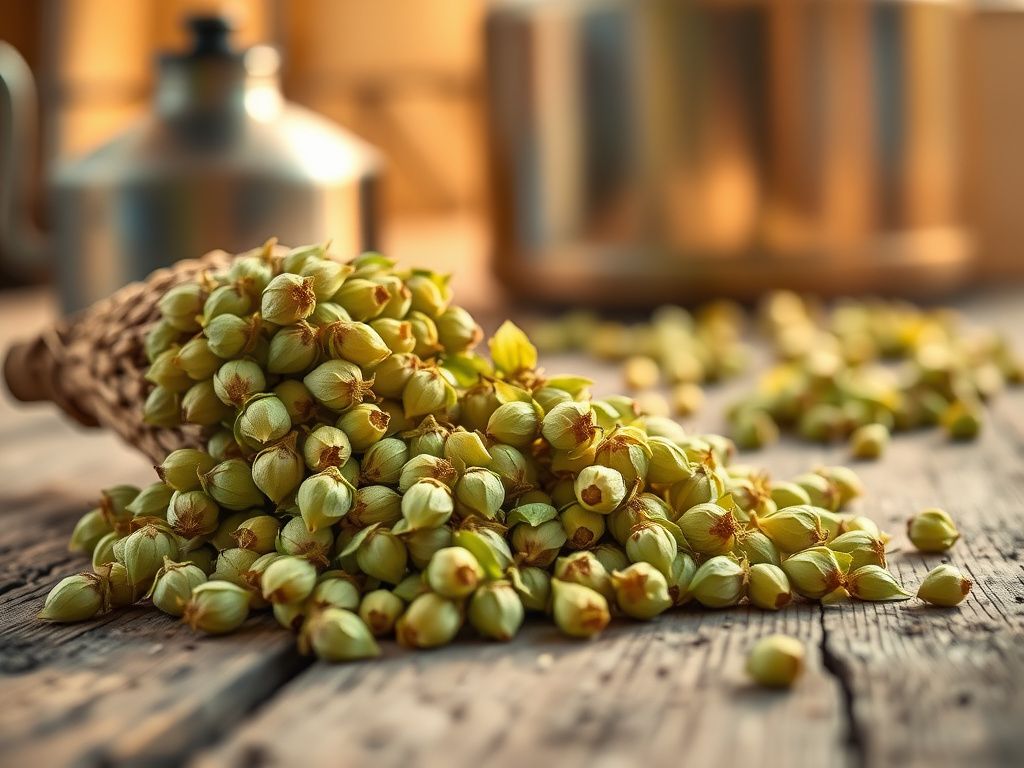
DIY hop bag and spider alternatives
DIY voile bag
Bridal veil fabric (voile or organza) from a fabric store makes excellent hop bags at nearly zero cost. Cut a 12″ × 12″ square, tie the top with a silicone band or food-safe twine, and drop in the kettle. The mesh is fine enough to contain pellet debris while allowing good wort contact. A yard of voile fabric ($2–4) makes 8–10 bags. Single-use or reusable after a PBW soak and rinse. This is the most cost-effective hop containment method for occasional brewers who don’t want to invest in a hop spider.
DIY stainless mesh hop spider
A DIY hop spider using a stainless mesh strainer basket ($8–12), a hose clamp, and a length of stainless rod or copper pipe as a handle performs identically to commercial hop spiders. The basket rim sits on the kettle rim; the mesh cylinder hangs inside. Drill two holes in the basket rim for a wire handle if needed. Total cost: $10–15 for a functional hop spider that outlasts most commercial plastic-framed versions. The main limitation is sizing, make sure the basket diameter fits inside your kettle rim before building.
Whirlpool hop stand without containment
For brewers using a counterflow or plate chiller, the alternative to hop containment is a proper whirlpool: stir the wort vigorously at flameout to create a rotating vortex, then let settle for 20 minutes. Hop and protein trub collects in a cone at the kettle center. Draw wort from the side of the kettle (not the center) through the chiller, most of the trub stays behind. This approach works well with pellet hops and requires no bags or spider. It requires a kettle with a side outlet or a pickup tube positioned away from center, and discipline about not disturbing the trub cone when transferring.
Common Questions
Does a hop bag reduce bitterness in the finished beer?
Yes, but the effect is modest for pellet hops in bags with reasonable mesh size (not too fine). Studies on hop utilization suggest containment reduces alpha acid extraction by 5–15% compared to loose addition. In practice: if your recipe calls for 1 oz of 10% AA hops for 30 IBUs with loose addition, a hop bag might yield 26–28 IBUs. For most homebrewers this is acceptable, the cleaner wort transfer and easier cleanup outweigh the small IBU reduction. If you’re brewing a recipe with tight bitterness targets, compensate by adding 10–15% more hops when using a bag. Hop spiders with coarser mesh (larger holes) reduce utilization loss compared to very fine muslin bags.
Commercial hop bag options
- Nylon muslin bags: The standard approach, $1–3 each, reusable after thorough cleaning. Available at homebrew shops. Fill, tie off, and drop in the kettle at the appropriate addition time. The limitation: standard muslin bags are too small for large hop additions (4+ oz pellets expand significantly when hydrated). For big dry hop additions or large bittering additions, use a larger bag or multiple bags.
- Grain bag repurposed as a hop bag: A large nylon voile grain bag (used for all-grain brewing) works as a hop bag for large additions. The fine mesh retains even fine hop debris. Cost: $5–8 for a reusable bag that handles 8+ oz of pellets without crowding.
- Stainless steel hop spider: A cylindrical stainless mesh basket that hangs from the kettle rim and holds hop additions inside the mesh while wort circulates freely through it. SpiderLegs ($25–40) and similar commercial hop spiders are the standard. Very easy to remove post-boil, lift the spider out, all hop debris comes with it. Best solution for immersion-chiller setups where you don’t want hop debris coating the chiller coils.
DIY hop bag and spider alternatives
DIY voile bag
Bridal veil fabric (voile or organza) from a fabric store makes excellent hop bags at nearly zero cost. Cut a 12″ × 12″ square, tie the top with a silicone band or food-safe twine, and drop in the kettle. The mesh is fine enough to contain pellet debris while allowing good wort contact. A yard of voile fabric ($2–4) makes 8–10 bags. Single-use or reusable after a PBW soak and rinse. This is the most cost-effective hop containment method for occasional brewers who don’t want to invest in a hop spider.
DIY stainless mesh hop spider
A DIY hop spider using a stainless mesh strainer basket ($8–12), a hose clamp, and a length of stainless rod or copper pipe as a handle performs identically to commercial hop spiders. The basket rim sits on the kettle rim; the mesh cylinder hangs inside. Drill two holes in the basket rim for a wire handle if needed. Total cost: $10–15 for a functional hop spider that outlasts most commercial plastic-framed versions. The main limitation is sizing, make sure the basket diameter fits inside your kettle rim before building.
Whirlpool hop stand without containment
For brewers using a counterflow or plate chiller, the alternative to hop containment is a proper whirlpool: stir the wort vigorously at flameout to create a rotating vortex, then let settle for 20 minutes. Hop and protein trub collects in a cone at the kettle center. Draw wort from the side of the kettle (not the center) through the chiller, most of the trub stays behind. This approach works well with pellet hops and requires no bags or spider. It requires a kettle with a side outlet or a pickup tube positioned away from center, and discipline about not disturbing the trub cone when transferring.
Common Questions
Does a hop bag reduce bitterness in the finished beer?
Yes, but the effect is modest for pellet hops in bags with reasonable mesh size (not too fine). Studies on hop utilization suggest containment reduces alpha acid extraction by 5–15% compared to loose addition. In practice: if your recipe calls for 1 oz of 10% AA hops for 30 IBUs with loose addition, a hop bag might yield 26–28 IBUs. For most homebrewers this is acceptable, the cleaner wort transfer and easier cleanup outweigh the small IBU reduction. If you’re brewing a recipe with tight bitterness targets, compensate by adding 10–15% more hops when using a bag. Hop spiders with coarser mesh (larger holes) reduce utilization loss compared to very fine muslin bags.
Why use a hop containment method at all
Uncontained hop pellets break apart during the boil and whirlpool, creating a fine suspended debris that clogs plate chillers and counterflow chillers, can pass through most inline filters, and makes trub separation in the fermenter more difficult. Hop bags and spiders solve this by keeping hop debris contained and removable. The tradeoff: any containment method reduces hop utilization slightly (hops release alpha acids and aroma compounds through contact with wort, restricted surface area means less contact). For pellet hops, the utilization reduction is modest (5–10%). For whole leaf hops, containment significantly reduces utilization and isn’t recommended.
Commercial hop bag options
- Nylon muslin bags: The standard approach, $1–3 each, reusable after thorough cleaning. Available at homebrew shops. Fill, tie off, and drop in the kettle at the appropriate addition time. The limitation: standard muslin bags are too small for large hop additions (4+ oz pellets expand significantly when hydrated). For big dry hop additions or large bittering additions, use a larger bag or multiple bags.
- Grain bag repurposed as a hop bag: A large nylon voile grain bag (used for all-grain brewing) works as a hop bag for large additions. The fine mesh retains even fine hop debris. Cost: $5–8 for a reusable bag that handles 8+ oz of pellets without crowding.
- Stainless steel hop spider: A cylindrical stainless mesh basket that hangs from the kettle rim and holds hop additions inside the mesh while wort circulates freely through it. SpiderLegs ($25–40) and similar commercial hop spiders are the standard. Very easy to remove post-boil, lift the spider out, all hop debris comes with it. Best solution for immersion-chiller setups where you don’t want hop debris coating the chiller coils.
DIY hop bag and spider alternatives
DIY voile bag
Bridal veil fabric (voile or organza) from a fabric store makes excellent hop bags at nearly zero cost. Cut a 12″ × 12″ square, tie the top with a silicone band or food-safe twine, and drop in the kettle. The mesh is fine enough to contain pellet debris while allowing good wort contact. A yard of voile fabric ($2–4) makes 8–10 bags. Single-use or reusable after a PBW soak and rinse. This is the most cost-effective hop containment method for occasional brewers who don’t want to invest in a hop spider.
DIY stainless mesh hop spider
A DIY hop spider using a stainless mesh strainer basket ($8–12), a hose clamp, and a length of stainless rod or copper pipe as a handle performs identically to commercial hop spiders. The basket rim sits on the kettle rim; the mesh cylinder hangs inside. Drill two holes in the basket rim for a wire handle if needed. Total cost: $10–15 for a functional hop spider that outlasts most commercial plastic-framed versions. The main limitation is sizing, make sure the basket diameter fits inside your kettle rim before building.
Whirlpool hop stand without containment
For brewers using a counterflow or plate chiller, the alternative to hop containment is a proper whirlpool: stir the wort vigorously at flameout to create a rotating vortex, then let settle for 20 minutes. Hop and protein trub collects in a cone at the kettle center. Draw wort from the side of the kettle (not the center) through the chiller, most of the trub stays behind. This approach works well with pellet hops and requires no bags or spider. It requires a kettle with a side outlet or a pickup tube positioned away from center, and discipline about not disturbing the trub cone when transferring.
Common Questions
Does a hop bag reduce bitterness in the finished beer?
Yes, but the effect is modest for pellet hops in bags with reasonable mesh size (not too fine). Studies on hop utilization suggest containment reduces alpha acid extraction by 5–15% compared to loose addition. In practice: if your recipe calls for 1 oz of 10% AA hops for 30 IBUs with loose addition, a hop bag might yield 26–28 IBUs. For most homebrewers this is acceptable, the cleaner wort transfer and easier cleanup outweigh the small IBU reduction. If you’re brewing a recipe with tight bitterness targets, compensate by adding 10–15% more hops when using a bag. Hop spiders with coarser mesh (larger holes) reduce utilization loss compared to very fine muslin bags.
Common Questions
Does a hop bag reduce bitterness in the finished beer?
Yes, but the effect is modest for pellet hops in bags with reasonable mesh size (not too fine). Studies on hop utilization suggest containment reduces alpha acid extraction by 5–15% compared to loose addition. In practice: if your recipe calls for 1 oz of 10% AA hops for 30 IBUs with loose addition, a hop bag might yield 26–28 IBUs. For most homebrewers this is acceptable, the cleaner wort transfer and easier cleanup outweigh the small IBU reduction. If you’re brewing a recipe with tight bitterness targets, compensate by adding 10–15% more hops when using a bag. Hop spiders with coarser mesh (larger holes) reduce utilization loss compared to very fine muslin bags.
Why use a hop containment method at all
Uncontained hop pellets break apart during the boil and whirlpool, creating a fine suspended debris that clogs plate chillers and counterflow chillers, can pass through most inline filters, and makes trub separation in the fermenter more difficult. Hop bags and spiders solve this by keeping hop debris contained and removable. The tradeoff: any containment method reduces hop utilization slightly (hops release alpha acids and aroma compounds through contact with wort, restricted surface area means less contact). For pellet hops, the utilization reduction is modest (5–10%). For whole leaf hops, containment significantly reduces utilization and isn’t recommended.
Commercial hop bag options
- Nylon muslin bags: The standard approach, $1–3 each, reusable after thorough cleaning. Available at homebrew shops. Fill, tie off, and drop in the kettle at the appropriate addition time. The limitation: standard muslin bags are too small for large hop additions (4+ oz pellets expand significantly when hydrated). For big dry hop additions or large bittering additions, use a larger bag or multiple bags.
- Grain bag repurposed as a hop bag: A large nylon voile grain bag (used for all-grain brewing) works as a hop bag for large additions. The fine mesh retains even fine hop debris. Cost: $5–8 for a reusable bag that handles 8+ oz of pellets without crowding.
- Stainless steel hop spider: A cylindrical stainless mesh basket that hangs from the kettle rim and holds hop additions inside the mesh while wort circulates freely through it. SpiderLegs ($25–40) and similar commercial hop spiders are the standard. Very easy to remove post-boil, lift the spider out, all hop debris comes with it. Best solution for immersion-chiller setups where you don’t want hop debris coating the chiller coils.
DIY hop bag and spider alternatives
DIY voile bag
Bridal veil fabric (voile or organza) from a fabric store makes excellent hop bags at nearly zero cost. Cut a 12″ × 12″ square, tie the top with a silicone band or food-safe twine, and drop in the kettle. The mesh is fine enough to contain pellet debris while allowing good wort contact. A yard of voile fabric ($2–4) makes 8–10 bags. Single-use or reusable after a PBW soak and rinse. This is the most cost-effective hop containment method for occasional brewers who don’t want to invest in a hop spider.
DIY stainless mesh hop spider
A DIY hop spider using a stainless mesh strainer basket ($8–12), a hose clamp, and a length of stainless rod or copper pipe as a handle performs identically to commercial hop spiders. The basket rim sits on the kettle rim; the mesh cylinder hangs inside. Drill two holes in the basket rim for a wire handle if needed. Total cost: $10–15 for a functional hop spider that outlasts most commercial plastic-framed versions. The main limitation is sizing, make sure the basket diameter fits inside your kettle rim before building.
Whirlpool hop stand without containment
For brewers using a counterflow or plate chiller, the alternative to hop containment is a proper whirlpool: stir the wort vigorously at flameout to create a rotating vortex, then let settle for 20 minutes. Hop and protein trub collects in a cone at the kettle center. Draw wort from the side of the kettle (not the center) through the chiller, most of the trub stays behind. This approach works well with pellet hops and requires no bags or spider. It requires a kettle with a side outlet or a pickup tube positioned away from center, and discipline about not disturbing the trub cone when transferring.
Common Questions
Does a hop bag reduce bitterness in the finished beer?
Yes, but the effect is modest for pellet hops in bags with reasonable mesh size (not too fine). Studies on hop utilization suggest containment reduces alpha acid extraction by 5–15% compared to loose addition. In practice: if your recipe calls for 1 oz of 10% AA hops for 30 IBUs with loose addition, a hop bag might yield 26–28 IBUs. For most homebrewers this is acceptable, the cleaner wort transfer and easier cleanup outweigh the small IBU reduction. If you’re brewing a recipe with tight bitterness targets, compensate by adding 10–15% more hops when using a bag. Hop spiders with coarser mesh (larger holes) reduce utilization loss compared to very fine muslin bags.
DIY hop bag and spider alternatives
DIY voile bag
Bridal veil fabric (voile or organza) from a fabric store makes excellent hop bags at nearly zero cost. Cut a 12″ × 12″ square, tie the top with a silicone band or food-safe twine, and drop in the kettle. The mesh is fine enough to contain pellet debris while allowing good wort contact. A yard of voile fabric ($2–4) makes 8–10 bags. Single-use or reusable after a PBW soak and rinse. This is the most cost-effective hop containment method for occasional brewers who don’t want to invest in a hop spider.
DIY stainless mesh hop spider
A DIY hop spider using a stainless mesh strainer basket ($8–12), a hose clamp, and a length of stainless rod or copper pipe as a handle performs identically to commercial hop spiders. The basket rim sits on the kettle rim; the mesh cylinder hangs inside. Drill two holes in the basket rim for a wire handle if needed. Total cost: $10–15 for a functional hop spider that outlasts most commercial plastic-framed versions. The main limitation is sizing, make sure the basket diameter fits inside your kettle rim before building.
Whirlpool hop stand without containment
For brewers using a counterflow or plate chiller, the alternative to hop containment is a proper whirlpool: stir the wort vigorously at flameout to create a rotating vortex, then let settle for 20 minutes. Hop and protein trub collects in a cone at the kettle center. Draw wort from the side of the kettle (not the center) through the chiller, most of the trub stays behind. This approach works well with pellet hops and requires no bags or spider. It requires a kettle with a side outlet or a pickup tube positioned away from center, and discipline about not disturbing the trub cone when transferring.
Common Questions
Does a hop bag reduce bitterness in the finished beer?
Yes, but the effect is modest for pellet hops in bags with reasonable mesh size (not too fine). Studies on hop utilization suggest containment reduces alpha acid extraction by 5–15% compared to loose addition. In practice: if your recipe calls for 1 oz of 10% AA hops for 30 IBUs with loose addition, a hop bag might yield 26–28 IBUs. For most homebrewers this is acceptable, the cleaner wort transfer and easier cleanup outweigh the small IBU reduction. If you’re brewing a recipe with tight bitterness targets, compensate by adding 10–15% more hops when using a bag. Hop spiders with coarser mesh (larger holes) reduce utilization loss compared to very fine muslin bags.
Why use a hop containment method at all
Uncontained hop pellets break apart during the boil and whirlpool, creating a fine suspended debris that clogs plate chillers and counterflow chillers, can pass through most inline filters, and makes trub separation in the fermenter more difficult. Hop bags and spiders solve this by keeping hop debris contained and removable. The tradeoff: any containment method reduces hop utilization slightly (hops release alpha acids and aroma compounds through contact with wort, restricted surface area means less contact). For pellet hops, the utilization reduction is modest (5–10%). For whole leaf hops, containment significantly reduces utilization and isn’t recommended.
Commercial hop bag options
- Nylon muslin bags: The standard approach, $1–3 each, reusable after thorough cleaning. Available at homebrew shops. Fill, tie off, and drop in the kettle at the appropriate addition time. The limitation: standard muslin bags are too small for large hop additions (4+ oz pellets expand significantly when hydrated). For big dry hop additions or large bittering additions, use a larger bag or multiple bags.
- Grain bag repurposed as a hop bag: A large nylon voile grain bag (used for all-grain brewing) works as a hop bag for large additions. The fine mesh retains even fine hop debris. Cost: $5–8 for a reusable bag that handles 8+ oz of pellets without crowding.
- Stainless steel hop spider: A cylindrical stainless mesh basket that hangs from the kettle rim and holds hop additions inside the mesh while wort circulates freely through it. SpiderLegs ($25–40) and similar commercial hop spiders are the standard. Very easy to remove post-boil, lift the spider out, all hop debris comes with it. Best solution for immersion-chiller setups where you don’t want hop debris coating the chiller coils.
DIY hop bag and spider alternatives
DIY voile bag
Bridal veil fabric (voile or organza) from a fabric store makes excellent hop bags at nearly zero cost. Cut a 12″ × 12″ square, tie the top with a silicone band or food-safe twine, and drop in the kettle. The mesh is fine enough to contain pellet debris while allowing good wort contact. A yard of voile fabric ($2–4) makes 8–10 bags. Single-use or reusable after a PBW soak and rinse. This is the most cost-effective hop containment method for occasional brewers who don’t want to invest in a hop spider.
DIY stainless mesh hop spider
A DIY hop spider using a stainless mesh strainer basket ($8–12), a hose clamp, and a length of stainless rod or copper pipe as a handle performs identically to commercial hop spiders. The basket rim sits on the kettle rim; the mesh cylinder hangs inside. Drill two holes in the basket rim for a wire handle if needed. Total cost: $10–15 for a functional hop spider that outlasts most commercial plastic-framed versions. The main limitation is sizing, make sure the basket diameter fits inside your kettle rim before building.
Whirlpool hop stand without containment
For brewers using a counterflow or plate chiller, the alternative to hop containment is a proper whirlpool: stir the wort vigorously at flameout to create a rotating vortex, then let settle for 20 minutes. Hop and protein trub collects in a cone at the kettle center. Draw wort from the side of the kettle (not the center) through the chiller, most of the trub stays behind. This approach works well with pellet hops and requires no bags or spider. It requires a kettle with a side outlet or a pickup tube positioned away from center, and discipline about not disturbing the trub cone when transferring.
Common Questions
Does a hop bag reduce bitterness in the finished beer?
Yes, but the effect is modest for pellet hops in bags with reasonable mesh size (not too fine). Studies on hop utilization suggest containment reduces alpha acid extraction by 5–15% compared to loose addition. In practice: if your recipe calls for 1 oz of 10% AA hops for 30 IBUs with loose addition, a hop bag might yield 26–28 IBUs. For most homebrewers this is acceptable, the cleaner wort transfer and easier cleanup outweigh the small IBU reduction. If you’re brewing a recipe with tight bitterness targets, compensate by adding 10–15% more hops when using a bag. Hop spiders with coarser mesh (larger holes) reduce utilization loss compared to very fine muslin bags.
Commercial hop bag options
- Nylon muslin bags: The standard approach, $1–3 each, reusable after thorough cleaning. Available at homebrew shops. Fill, tie off, and drop in the kettle at the appropriate addition time. The limitation: standard muslin bags are too small for large hop additions (4+ oz pellets expand significantly when hydrated). For big dry hop additions or large bittering additions, use a larger bag or multiple bags.
- Grain bag repurposed as a hop bag: A large nylon voile grain bag (used for all-grain brewing) works as a hop bag for large additions. The fine mesh retains even fine hop debris. Cost: $5–8 for a reusable bag that handles 8+ oz of pellets without crowding.
- Stainless steel hop spider: A cylindrical stainless mesh basket that hangs from the kettle rim and holds hop additions inside the mesh while wort circulates freely through it. SpiderLegs ($25–40) and similar commercial hop spiders are the standard. Very easy to remove post-boil, lift the spider out, all hop debris comes with it. Best solution for immersion-chiller setups where you don’t want hop debris coating the chiller coils.
DIY hop bag and spider alternatives
DIY voile bag
Bridal veil fabric (voile or organza) from a fabric store makes excellent hop bags at nearly zero cost. Cut a 12″ × 12″ square, tie the top with a silicone band or food-safe twine, and drop in the kettle. The mesh is fine enough to contain pellet debris while allowing good wort contact. A yard of voile fabric ($2–4) makes 8–10 bags. Single-use or reusable after a PBW soak and rinse. This is the most cost-effective hop containment method for occasional brewers who don’t want to invest in a hop spider.
DIY stainless mesh hop spider
A DIY hop spider using a stainless mesh strainer basket ($8–12), a hose clamp, and a length of stainless rod or copper pipe as a handle performs identically to commercial hop spiders. The basket rim sits on the kettle rim; the mesh cylinder hangs inside. Drill two holes in the basket rim for a wire handle if needed. Total cost: $10–15 for a functional hop spider that outlasts most commercial plastic-framed versions. The main limitation is sizing, make sure the basket diameter fits inside your kettle rim before building.
Whirlpool hop stand without containment
For brewers using a counterflow or plate chiller, the alternative to hop containment is a proper whirlpool: stir the wort vigorously at flameout to create a rotating vortex, then let settle for 20 minutes. Hop and protein trub collects in a cone at the kettle center. Draw wort from the side of the kettle (not the center) through the chiller, most of the trub stays behind. This approach works well with pellet hops and requires no bags or spider. It requires a kettle with a side outlet or a pickup tube positioned away from center, and discipline about not disturbing the trub cone when transferring.
Common Questions
Does a hop bag reduce bitterness in the finished beer?
Yes, but the effect is modest for pellet hops in bags with reasonable mesh size (not too fine). Studies on hop utilization suggest containment reduces alpha acid extraction by 5–15% compared to loose addition. In practice: if your recipe calls for 1 oz of 10% AA hops for 30 IBUs with loose addition, a hop bag might yield 26–28 IBUs. For most homebrewers this is acceptable, the cleaner wort transfer and easier cleanup outweigh the small IBU reduction. If you’re brewing a recipe with tight bitterness targets, compensate by adding 10–15% more hops when using a bag. Hop spiders with coarser mesh (larger holes) reduce utilization loss compared to very fine muslin bags.
Why use a hop containment method at all
Uncontained hop pellets break apart during the boil and whirlpool, creating a fine suspended debris that clogs plate chillers and counterflow chillers, can pass through most inline filters, and makes trub separation in the fermenter more difficult. Hop bags and spiders solve this by keeping hop debris contained and removable. The tradeoff: any containment method reduces hop utilization slightly (hops release alpha acids and aroma compounds through contact with wort, restricted surface area means less contact). For pellet hops, the utilization reduction is modest (5–10%). For whole leaf hops, containment significantly reduces utilization and isn’t recommended.
Commercial hop bag options
- Nylon muslin bags: The standard approach, $1–3 each, reusable after thorough cleaning. Available at homebrew shops. Fill, tie off, and drop in the kettle at the appropriate addition time. The limitation: standard muslin bags are too small for large hop additions (4+ oz pellets expand significantly when hydrated). For big dry hop additions or large bittering additions, use a larger bag or multiple bags.
- Grain bag repurposed as a hop bag: A large nylon voile grain bag (used for all-grain brewing) works as a hop bag for large additions. The fine mesh retains even fine hop debris. Cost: $5–8 for a reusable bag that handles 8+ oz of pellets without crowding.
- Stainless steel hop spider: A cylindrical stainless mesh basket that hangs from the kettle rim and holds hop additions inside the mesh while wort circulates freely through it. SpiderLegs ($25–40) and similar commercial hop spiders are the standard. Very easy to remove post-boil, lift the spider out, all hop debris comes with it. Best solution for immersion-chiller setups where you don’t want hop debris coating the chiller coils.
DIY hop bag and spider alternatives
DIY voile bag
Bridal veil fabric (voile or organza) from a fabric store makes excellent hop bags at nearly zero cost. Cut a 12″ × 12″ square, tie the top with a silicone band or food-safe twine, and drop in the kettle. The mesh is fine enough to contain pellet debris while allowing good wort contact. A yard of voile fabric ($2–4) makes 8–10 bags. Single-use or reusable after a PBW soak and rinse. This is the most cost-effective hop containment method for occasional brewers who don’t want to invest in a hop spider.
DIY stainless mesh hop spider
A DIY hop spider using a stainless mesh strainer basket ($8–12), a hose clamp, and a length of stainless rod or copper pipe as a handle performs identically to commercial hop spiders. The basket rim sits on the kettle rim; the mesh cylinder hangs inside. Drill two holes in the basket rim for a wire handle if needed. Total cost: $10–15 for a functional hop spider that outlasts most commercial plastic-framed versions. The main limitation is sizing, make sure the basket diameter fits inside your kettle rim before building.
Whirlpool hop stand without containment
For brewers using a counterflow or plate chiller, the alternative to hop containment is a proper whirlpool: stir the wort vigorously at flameout to create a rotating vortex, then let settle for 20 minutes. Hop and protein trub collects in a cone at the kettle center. Draw wort from the side of the kettle (not the center) through the chiller, most of the trub stays behind. This approach works well with pellet hops and requires no bags or spider. It requires a kettle with a side outlet or a pickup tube positioned away from center, and discipline about not disturbing the trub cone when transferring.
Common Questions
Does a hop bag reduce bitterness in the finished beer?
Yes, but the effect is modest for pellet hops in bags with reasonable mesh size (not too fine). Studies on hop utilization suggest containment reduces alpha acid extraction by 5–15% compared to loose addition. In practice: if your recipe calls for 1 oz of 10% AA hops for 30 IBUs with loose addition, a hop bag might yield 26–28 IBUs. For most homebrewers this is acceptable, the cleaner wort transfer and easier cleanup outweigh the small IBU reduction. If you’re brewing a recipe with tight bitterness targets, compensate by adding 10–15% more hops when using a bag. Hop spiders with coarser mesh (larger holes) reduce utilization loss compared to very fine muslin bags.
Common Questions
Does a hop bag reduce bitterness in the finished beer?
Yes, but the effect is modest for pellet hops in bags with reasonable mesh size (not too fine). Studies on hop utilization suggest containment reduces alpha acid extraction by 5–15% compared to loose addition. In practice: if your recipe calls for 1 oz of 10% AA hops for 30 IBUs with loose addition, a hop bag might yield 26–28 IBUs. For most homebrewers this is acceptable, the cleaner wort transfer and easier cleanup outweigh the small IBU reduction. If you’re brewing a recipe with tight bitterness targets, compensate by adding 10–15% more hops when using a bag. Hop spiders with coarser mesh (larger holes) reduce utilization loss compared to very fine muslin bags.
Commercial hop bag options
- Nylon muslin bags: The standard approach, $1–3 each, reusable after thorough cleaning. Available at homebrew shops. Fill, tie off, and drop in the kettle at the appropriate addition time. The limitation: standard muslin bags are too small for large hop additions (4+ oz pellets expand significantly when hydrated). For big dry hop additions or large bittering additions, use a larger bag or multiple bags.
- Grain bag repurposed as a hop bag: A large nylon voile grain bag (used for all-grain brewing) works as a hop bag for large additions. The fine mesh retains even fine hop debris. Cost: $5–8 for a reusable bag that handles 8+ oz of pellets without crowding.
- Stainless steel hop spider: A cylindrical stainless mesh basket that hangs from the kettle rim and holds hop additions inside the mesh while wort circulates freely through it. SpiderLegs ($25–40) and similar commercial hop spiders are the standard. Very easy to remove post-boil, lift the spider out, all hop debris comes with it. Best solution for immersion-chiller setups where you don’t want hop debris coating the chiller coils.
DIY hop bag and spider alternatives
DIY voile bag
Bridal veil fabric (voile or organza) from a fabric store makes excellent hop bags at nearly zero cost. Cut a 12″ × 12″ square, tie the top with a silicone band or food-safe twine, and drop in the kettle. The mesh is fine enough to contain pellet debris while allowing good wort contact. A yard of voile fabric ($2–4) makes 8–10 bags. Single-use or reusable after a PBW soak and rinse. This is the most cost-effective hop containment method for occasional brewers who don’t want to invest in a hop spider.
DIY stainless mesh hop spider
A DIY hop spider using a stainless mesh strainer basket ($8–12), a hose clamp, and a length of stainless rod or copper pipe as a handle performs identically to commercial hop spiders. The basket rim sits on the kettle rim; the mesh cylinder hangs inside. Drill two holes in the basket rim for a wire handle if needed. Total cost: $10–15 for a functional hop spider that outlasts most commercial plastic-framed versions. The main limitation is sizing, make sure the basket diameter fits inside your kettle rim before building.
Whirlpool hop stand without containment
For brewers using a counterflow or plate chiller, the alternative to hop containment is a proper whirlpool: stir the wort vigorously at flameout to create a rotating vortex, then let settle for 20 minutes. Hop and protein trub collects in a cone at the kettle center. Draw wort from the side of the kettle (not the center) through the chiller, most of the trub stays behind. This approach works well with pellet hops and requires no bags or spider. It requires a kettle with a side outlet or a pickup tube positioned away from center, and discipline about not disturbing the trub cone when transferring.
Common Questions
Does a hop bag reduce bitterness in the finished beer?
Yes, but the effect is modest for pellet hops in bags with reasonable mesh size (not too fine). Studies on hop utilization suggest containment reduces alpha acid extraction by 5–15% compared to loose addition. In practice: if your recipe calls for 1 oz of 10% AA hops for 30 IBUs with loose addition, a hop bag might yield 26–28 IBUs. For most homebrewers this is acceptable, the cleaner wort transfer and easier cleanup outweigh the small IBU reduction. If you’re brewing a recipe with tight bitterness targets, compensate by adding 10–15% more hops when using a bag. Hop spiders with coarser mesh (larger holes) reduce utilization loss compared to very fine muslin bags.
Why use a hop containment method at all
Uncontained hop pellets break apart during the boil and whirlpool, creating a fine suspended debris that clogs plate chillers and counterflow chillers, can pass through most inline filters, and makes trub separation in the fermenter more difficult. Hop bags and spiders solve this by keeping hop debris contained and removable. The tradeoff: any containment method reduces hop utilization slightly (hops release alpha acids and aroma compounds through contact with wort, restricted surface area means less contact). For pellet hops, the utilization reduction is modest (5–10%). For whole leaf hops, containment significantly reduces utilization and isn’t recommended.
Commercial hop bag options
- Nylon muslin bags: The standard approach, $1–3 each, reusable after thorough cleaning. Available at homebrew shops. Fill, tie off, and drop in the kettle at the appropriate addition time. The limitation: standard muslin bags are too small for large hop additions (4+ oz pellets expand significantly when hydrated). For big dry hop additions or large bittering additions, use a larger bag or multiple bags.
- Grain bag repurposed as a hop bag: A large nylon voile grain bag (used for all-grain brewing) works as a hop bag for large additions. The fine mesh retains even fine hop debris. Cost: $5–8 for a reusable bag that handles 8+ oz of pellets without crowding.
- Stainless steel hop spider: A cylindrical stainless mesh basket that hangs from the kettle rim and holds hop additions inside the mesh while wort circulates freely through it. SpiderLegs ($25–40) and similar commercial hop spiders are the standard. Very easy to remove post-boil, lift the spider out, all hop debris comes with it. Best solution for immersion-chiller setups where you don’t want hop debris coating the chiller coils.
DIY hop bag and spider alternatives
DIY voile bag
Bridal veil fabric (voile or organza) from a fabric store makes excellent hop bags at nearly zero cost. Cut a 12″ × 12″ square, tie the top with a silicone band or food-safe twine, and drop in the kettle. The mesh is fine enough to contain pellet debris while allowing good wort contact. A yard of voile fabric ($2–4) makes 8–10 bags. Single-use or reusable after a PBW soak and rinse. This is the most cost-effective hop containment method for occasional brewers who don’t want to invest in a hop spider.
DIY stainless mesh hop spider
A DIY hop spider using a stainless mesh strainer basket ($8–12), a hose clamp, and a length of stainless rod or copper pipe as a handle performs identically to commercial hop spiders. The basket rim sits on the kettle rim; the mesh cylinder hangs inside. Drill two holes in the basket rim for a wire handle if needed. Total cost: $10–15 for a functional hop spider that outlasts most commercial plastic-framed versions. The main limitation is sizing, make sure the basket diameter fits inside your kettle rim before building.
Whirlpool hop stand without containment
For brewers using a counterflow or plate chiller, the alternative to hop containment is a proper whirlpool: stir the wort vigorously at flameout to create a rotating vortex, then let settle for 20 minutes. Hop and protein trub collects in a cone at the kettle center. Draw wort from the side of the kettle (not the center) through the chiller, most of the trub stays behind. This approach works well with pellet hops and requires no bags or spider. It requires a kettle with a side outlet or a pickup tube positioned away from center, and discipline about not disturbing the trub cone when transferring.
Common Questions
Does a hop bag reduce bitterness in the finished beer?
Yes, but the effect is modest for pellet hops in bags with reasonable mesh size (not too fine). Studies on hop utilization suggest containment reduces alpha acid extraction by 5–15% compared to loose addition. In practice: if your recipe calls for 1 oz of 10% AA hops for 30 IBUs with loose addition, a hop bag might yield 26–28 IBUs. For most homebrewers this is acceptable, the cleaner wort transfer and easier cleanup outweigh the small IBU reduction. If you’re brewing a recipe with tight bitterness targets, compensate by adding 10–15% more hops when using a bag. Hop spiders with coarser mesh (larger holes) reduce utilization loss compared to very fine muslin bags.
DIY hop bag and spider alternatives
DIY voile bag
Bridal veil fabric (voile or organza) from a fabric store makes excellent hop bags at nearly zero cost. Cut a 12″ × 12″ square, tie the top with a silicone band or food-safe twine, and drop in the kettle. The mesh is fine enough to contain pellet debris while allowing good wort contact. A yard of voile fabric ($2–4) makes 8–10 bags. Single-use or reusable after a PBW soak and rinse. This is the most cost-effective hop containment method for occasional brewers who don’t want to invest in a hop spider.
DIY stainless mesh hop spider
A DIY hop spider using a stainless mesh strainer basket ($8–12), a hose clamp, and a length of stainless rod or copper pipe as a handle performs identically to commercial hop spiders. The basket rim sits on the kettle rim; the mesh cylinder hangs inside. Drill two holes in the basket rim for a wire handle if needed. Total cost: $10–15 for a functional hop spider that outlasts most commercial plastic-framed versions. The main limitation is sizing, make sure the basket diameter fits inside your kettle rim before building.
Whirlpool hop stand without containment
For brewers using a counterflow or plate chiller, the alternative to hop containment is a proper whirlpool: stir the wort vigorously at flameout to create a rotating vortex, then let settle for 20 minutes. Hop and protein trub collects in a cone at the kettle center. Draw wort from the side of the kettle (not the center) through the chiller, most of the trub stays behind. This approach works well with pellet hops and requires no bags or spider. It requires a kettle with a side outlet or a pickup tube positioned away from center, and discipline about not disturbing the trub cone when transferring.
Common Questions
Does a hop bag reduce bitterness in the finished beer?
Yes, but the effect is modest for pellet hops in bags with reasonable mesh size (not too fine). Studies on hop utilization suggest containment reduces alpha acid extraction by 5–15% compared to loose addition. In practice: if your recipe calls for 1 oz of 10% AA hops for 30 IBUs with loose addition, a hop bag might yield 26–28 IBUs. For most homebrewers this is acceptable, the cleaner wort transfer and easier cleanup outweigh the small IBU reduction. If you’re brewing a recipe with tight bitterness targets, compensate by adding 10–15% more hops when using a bag. Hop spiders with coarser mesh (larger holes) reduce utilization loss compared to very fine muslin bags.
Commercial hop bag options
- Nylon muslin bags: The standard approach, $1–3 each, reusable after thorough cleaning. Available at homebrew shops. Fill, tie off, and drop in the kettle at the appropriate addition time. The limitation: standard muslin bags are too small for large hop additions (4+ oz pellets expand significantly when hydrated). For big dry hop additions or large bittering additions, use a larger bag or multiple bags.
- Grain bag repurposed as a hop bag: A large nylon voile grain bag (used for all-grain brewing) works as a hop bag for large additions. The fine mesh retains even fine hop debris. Cost: $5–8 for a reusable bag that handles 8+ oz of pellets without crowding.
- Stainless steel hop spider: A cylindrical stainless mesh basket that hangs from the kettle rim and holds hop additions inside the mesh while wort circulates freely through it. SpiderLegs ($25–40) and similar commercial hop spiders are the standard. Very easy to remove post-boil, lift the spider out, all hop debris comes with it. Best solution for immersion-chiller setups where you don’t want hop debris coating the chiller coils.
DIY hop bag and spider alternatives
DIY voile bag
Bridal veil fabric (voile or organza) from a fabric store makes excellent hop bags at nearly zero cost. Cut a 12″ × 12″ square, tie the top with a silicone band or food-safe twine, and drop in the kettle. The mesh is fine enough to contain pellet debris while allowing good wort contact. A yard of voile fabric ($2–4) makes 8–10 bags. Single-use or reusable after a PBW soak and rinse. This is the most cost-effective hop containment method for occasional brewers who don’t want to invest in a hop spider.
DIY stainless mesh hop spider
A DIY hop spider using a stainless mesh strainer basket ($8–12), a hose clamp, and a length of stainless rod or copper pipe as a handle performs identically to commercial hop spiders. The basket rim sits on the kettle rim; the mesh cylinder hangs inside. Drill two holes in the basket rim for a wire handle if needed. Total cost: $10–15 for a functional hop spider that outlasts most commercial plastic-framed versions. The main limitation is sizing, make sure the basket diameter fits inside your kettle rim before building.
Whirlpool hop stand without containment
For brewers using a counterflow or plate chiller, the alternative to hop containment is a proper whirlpool: stir the wort vigorously at flameout to create a rotating vortex, then let settle for 20 minutes. Hop and protein trub collects in a cone at the kettle center. Draw wort from the side of the kettle (not the center) through the chiller, most of the trub stays behind. This approach works well with pellet hops and requires no bags or spider. It requires a kettle with a side outlet or a pickup tube positioned away from center, and discipline about not disturbing the trub cone when transferring.
Common Questions
Does a hop bag reduce bitterness in the finished beer?
Yes, but the effect is modest for pellet hops in bags with reasonable mesh size (not too fine). Studies on hop utilization suggest containment reduces alpha acid extraction by 5–15% compared to loose addition. In practice: if your recipe calls for 1 oz of 10% AA hops for 30 IBUs with loose addition, a hop bag might yield 26–28 IBUs. For most homebrewers this is acceptable, the cleaner wort transfer and easier cleanup outweigh the small IBU reduction. If you’re brewing a recipe with tight bitterness targets, compensate by adding 10–15% more hops when using a bag. Hop spiders with coarser mesh (larger holes) reduce utilization loss compared to very fine muslin bags.
Why use a hop containment method at all
Uncontained hop pellets break apart during the boil and whirlpool, creating a fine suspended debris that clogs plate chillers and counterflow chillers, can pass through most inline filters, and makes trub separation in the fermenter more difficult. Hop bags and spiders solve this by keeping hop debris contained and removable. The tradeoff: any containment method reduces hop utilization slightly (hops release alpha acids and aroma compounds through contact with wort, restricted surface area means less contact). For pellet hops, the utilization reduction is modest (5–10%). For whole leaf hops, containment significantly reduces utilization and isn’t recommended.
Commercial hop bag options
- Nylon muslin bags: The standard approach, $1–3 each, reusable after thorough cleaning. Available at homebrew shops. Fill, tie off, and drop in the kettle at the appropriate addition time. The limitation: standard muslin bags are too small for large hop additions (4+ oz pellets expand significantly when hydrated). For big dry hop additions or large bittering additions, use a larger bag or multiple bags.
- Grain bag repurposed as a hop bag: A large nylon voile grain bag (used for all-grain brewing) works as a hop bag for large additions. The fine mesh retains even fine hop debris. Cost: $5–8 for a reusable bag that handles 8+ oz of pellets without crowding.
- Stainless steel hop spider: A cylindrical stainless mesh basket that hangs from the kettle rim and holds hop additions inside the mesh while wort circulates freely through it. SpiderLegs ($25–40) and similar commercial hop spiders are the standard. Very easy to remove post-boil, lift the spider out, all hop debris comes with it. Best solution for immersion-chiller setups where you don’t want hop debris coating the chiller coils.
DIY hop bag and spider alternatives
DIY voile bag
Bridal veil fabric (voile or organza) from a fabric store makes excellent hop bags at nearly zero cost. Cut a 12″ × 12″ square, tie the top with a silicone band or food-safe twine, and drop in the kettle. The mesh is fine enough to contain pellet debris while allowing good wort contact. A yard of voile fabric ($2–4) makes 8–10 bags. Single-use or reusable after a PBW soak and rinse. This is the most cost-effective hop containment method for occasional brewers who don’t want to invest in a hop spider.
DIY stainless mesh hop spider
A DIY hop spider using a stainless mesh strainer basket ($8–12), a hose clamp, and a length of stainless rod or copper pipe as a handle performs identically to commercial hop spiders. The basket rim sits on the kettle rim; the mesh cylinder hangs inside. Drill two holes in the basket rim for a wire handle if needed. Total cost: $10–15 for a functional hop spider that outlasts most commercial plastic-framed versions. The main limitation is sizing, make sure the basket diameter fits inside your kettle rim before building.
Whirlpool hop stand without containment
For brewers using a counterflow or plate chiller, the alternative to hop containment is a proper whirlpool: stir the wort vigorously at flameout to create a rotating vortex, then let settle for 20 minutes. Hop and protein trub collects in a cone at the kettle center. Draw wort from the side of the kettle (not the center) through the chiller, most of the trub stays behind. This approach works well with pellet hops and requires no bags or spider. It requires a kettle with a side outlet or a pickup tube positioned away from center, and discipline about not disturbing the trub cone when transferring.
Common Questions
Does a hop bag reduce bitterness in the finished beer?
Yes, but the effect is modest for pellet hops in bags with reasonable mesh size (not too fine). Studies on hop utilization suggest containment reduces alpha acid extraction by 5–15% compared to loose addition. In practice: if your recipe calls for 1 oz of 10% AA hops for 30 IBUs with loose addition, a hop bag might yield 26–28 IBUs. For most homebrewers this is acceptable, the cleaner wort transfer and easier cleanup outweigh the small IBU reduction. If you’re brewing a recipe with tight bitterness targets, compensate by adding 10–15% more hops when using a bag. Hop spiders with coarser mesh (larger holes) reduce utilization loss compared to very fine muslin bags.
Common Questions
Does a hop bag reduce bitterness in the finished beer?
Yes, but the effect is modest for pellet hops in bags with reasonable mesh size (not too fine). Studies on hop utilization suggest containment reduces alpha acid extraction by 5–15% compared to loose addition. In practice: if your recipe calls for 1 oz of 10% AA hops for 30 IBUs with loose addition, a hop bag might yield 26–28 IBUs. For most homebrewers this is acceptable, the cleaner wort transfer and easier cleanup outweigh the small IBU reduction. If you’re brewing a recipe with tight bitterness targets, compensate by adding 10–15% more hops when using a bag. Hop spiders with coarser mesh (larger holes) reduce utilization loss compared to very fine muslin bags.
DIY hop bag and spider alternatives
DIY voile bag
Bridal veil fabric (voile or organza) from a fabric store makes excellent hop bags at nearly zero cost. Cut a 12″ × 12″ square, tie the top with a silicone band or food-safe twine, and drop in the kettle. The mesh is fine enough to contain pellet debris while allowing good wort contact. A yard of voile fabric ($2–4) makes 8–10 bags. Single-use or reusable after a PBW soak and rinse. This is the most cost-effective hop containment method for occasional brewers who don’t want to invest in a hop spider.
DIY stainless mesh hop spider
A DIY hop spider using a stainless mesh strainer basket ($8–12), a hose clamp, and a length of stainless rod or copper pipe as a handle performs identically to commercial hop spiders. The basket rim sits on the kettle rim; the mesh cylinder hangs inside. Drill two holes in the basket rim for a wire handle if needed. Total cost: $10–15 for a functional hop spider that outlasts most commercial plastic-framed versions. The main limitation is sizing, make sure the basket diameter fits inside your kettle rim before building.
Whirlpool hop stand without containment
For brewers using a counterflow or plate chiller, the alternative to hop containment is a proper whirlpool: stir the wort vigorously at flameout to create a rotating vortex, then let settle for 20 minutes. Hop and protein trub collects in a cone at the kettle center. Draw wort from the side of the kettle (not the center) through the chiller, most of the trub stays behind. This approach works well with pellet hops and requires no bags or spider. It requires a kettle with a side outlet or a pickup tube positioned away from center, and discipline about not disturbing the trub cone when transferring.
Common Questions
Does a hop bag reduce bitterness in the finished beer?
Yes, but the effect is modest for pellet hops in bags with reasonable mesh size (not too fine). Studies on hop utilization suggest containment reduces alpha acid extraction by 5–15% compared to loose addition. In practice: if your recipe calls for 1 oz of 10% AA hops for 30 IBUs with loose addition, a hop bag might yield 26–28 IBUs. For most homebrewers this is acceptable, the cleaner wort transfer and easier cleanup outweigh the small IBU reduction. If you’re brewing a recipe with tight bitterness targets, compensate by adding 10–15% more hops when using a bag. Hop spiders with coarser mesh (larger holes) reduce utilization loss compared to very fine muslin bags.
Commercial hop bag options
- Nylon muslin bags: The standard approach, $1–3 each, reusable after thorough cleaning. Available at homebrew shops. Fill, tie off, and drop in the kettle at the appropriate addition time. The limitation: standard muslin bags are too small for large hop additions (4+ oz pellets expand significantly when hydrated). For big dry hop additions or large bittering additions, use a larger bag or multiple bags.
- Grain bag repurposed as a hop bag: A large nylon voile grain bag (used for all-grain brewing) works as a hop bag for large additions. The fine mesh retains even fine hop debris. Cost: $5–8 for a reusable bag that handles 8+ oz of pellets without crowding.
- Stainless steel hop spider: A cylindrical stainless mesh basket that hangs from the kettle rim and holds hop additions inside the mesh while wort circulates freely through it. SpiderLegs ($25–40) and similar commercial hop spiders are the standard. Very easy to remove post-boil, lift the spider out, all hop debris comes with it. Best solution for immersion-chiller setups where you don’t want hop debris coating the chiller coils.
DIY hop bag and spider alternatives
DIY voile bag
Bridal veil fabric (voile or organza) from a fabric store makes excellent hop bags at nearly zero cost. Cut a 12″ × 12″ square, tie the top with a silicone band or food-safe twine, and drop in the kettle. The mesh is fine enough to contain pellet debris while allowing good wort contact. A yard of voile fabric ($2–4) makes 8–10 bags. Single-use or reusable after a PBW soak and rinse. This is the most cost-effective hop containment method for occasional brewers who don’t want to invest in a hop spider.
DIY stainless mesh hop spider
A DIY hop spider using a stainless mesh strainer basket ($8–12), a hose clamp, and a length of stainless rod or copper pipe as a handle performs identically to commercial hop spiders. The basket rim sits on the kettle rim; the mesh cylinder hangs inside. Drill two holes in the basket rim for a wire handle if needed. Total cost: $10–15 for a functional hop spider that outlasts most commercial plastic-framed versions. The main limitation is sizing, make sure the basket diameter fits inside your kettle rim before building.
Whirlpool hop stand without containment
For brewers using a counterflow or plate chiller, the alternative to hop containment is a proper whirlpool: stir the wort vigorously at flameout to create a rotating vortex, then let settle for 20 minutes. Hop and protein trub collects in a cone at the kettle center. Draw wort from the side of the kettle (not the center) through the chiller, most of the trub stays behind. This approach works well with pellet hops and requires no bags or spider. It requires a kettle with a side outlet or a pickup tube positioned away from center, and discipline about not disturbing the trub cone when transferring.
Common Questions
Does a hop bag reduce bitterness in the finished beer?
Yes, but the effect is modest for pellet hops in bags with reasonable mesh size (not too fine). Studies on hop utilization suggest containment reduces alpha acid extraction by 5–15% compared to loose addition. In practice: if your recipe calls for 1 oz of 10% AA hops for 30 IBUs with loose addition, a hop bag might yield 26–28 IBUs. For most homebrewers this is acceptable, the cleaner wort transfer and easier cleanup outweigh the small IBU reduction. If you’re brewing a recipe with tight bitterness targets, compensate by adding 10–15% more hops when using a bag. Hop spiders with coarser mesh (larger holes) reduce utilization loss compared to very fine muslin bags.
Why use a hop containment method at all
Uncontained hop pellets break apart during the boil and whirlpool, creating a fine suspended debris that clogs plate chillers and counterflow chillers, can pass through most inline filters, and makes trub separation in the fermenter more difficult. Hop bags and spiders solve this by keeping hop debris contained and removable. The tradeoff: any containment method reduces hop utilization slightly (hops release alpha acids and aroma compounds through contact with wort, restricted surface area means less contact). For pellet hops, the utilization reduction is modest (5–10%). For whole leaf hops, containment significantly reduces utilization and isn’t recommended.
Commercial hop bag options
- Nylon muslin bags: The standard approach, $1–3 each, reusable after thorough cleaning. Available at homebrew shops. Fill, tie off, and drop in the kettle at the appropriate addition time. The limitation: standard muslin bags are too small for large hop additions (4+ oz pellets expand significantly when hydrated). For big dry hop additions or large bittering additions, use a larger bag or multiple bags.
- Grain bag repurposed as a hop bag: A large nylon voile grain bag (used for all-grain brewing) works as a hop bag for large additions. The fine mesh retains even fine hop debris. Cost: $5–8 for a reusable bag that handles 8+ oz of pellets without crowding.
- Stainless steel hop spider: A cylindrical stainless mesh basket that hangs from the kettle rim and holds hop additions inside the mesh while wort circulates freely through it. SpiderLegs ($25–40) and similar commercial hop spiders are the standard. Very easy to remove post-boil, lift the spider out, all hop debris comes with it. Best solution for immersion-chiller setups where you don’t want hop debris coating the chiller coils.
DIY hop bag and spider alternatives
DIY voile bag
Bridal veil fabric (voile or organza) from a fabric store makes excellent hop bags at nearly zero cost. Cut a 12″ × 12″ square, tie the top with a silicone band or food-safe twine, and drop in the kettle. The mesh is fine enough to contain pellet debris while allowing good wort contact. A yard of voile fabric ($2–4) makes 8–10 bags. Single-use or reusable after a PBW soak and rinse. This is the most cost-effective hop containment method for occasional brewers who don’t want to invest in a hop spider.
DIY stainless mesh hop spider
A DIY hop spider using a stainless mesh strainer basket ($8–12), a hose clamp, and a length of stainless rod or copper pipe as a handle performs identically to commercial hop spiders. The basket rim sits on the kettle rim; the mesh cylinder hangs inside. Drill two holes in the basket rim for a wire handle if needed. Total cost: $10–15 for a functional hop spider that outlasts most commercial plastic-framed versions. The main limitation is sizing, make sure the basket diameter fits inside your kettle rim before building.
Whirlpool hop stand without containment
For brewers using a counterflow or plate chiller, the alternative to hop containment is a proper whirlpool: stir the wort vigorously at flameout to create a rotating vortex, then let settle for 20 minutes. Hop and protein trub collects in a cone at the kettle center. Draw wort from the side of the kettle (not the center) through the chiller, most of the trub stays behind. This approach works well with pellet hops and requires no bags or spider. It requires a kettle with a side outlet or a pickup tube positioned away from center, and discipline about not disturbing the trub cone when transferring.
Common Questions
Does a hop bag reduce bitterness in the finished beer?
Yes, but the effect is modest for pellet hops in bags with reasonable mesh size (not too fine). Studies on hop utilization suggest containment reduces alpha acid extraction by 5–15% compared to loose addition. In practice: if your recipe calls for 1 oz of 10% AA hops for 30 IBUs with loose addition, a hop bag might yield 26–28 IBUs. For most homebrewers this is acceptable, the cleaner wort transfer and easier cleanup outweigh the small IBU reduction. If you’re brewing a recipe with tight bitterness targets, compensate by adding 10–15% more hops when using a bag. Hop spiders with coarser mesh (larger holes) reduce utilization loss compared to very fine muslin bags.
Last updated:
Hop bags sound like a minor detail until you’ve poured wort through a plate chiller and found it clogged with hop debris, or spent twenty minutes picking leaf hops out of a whirlpool. I’ve tried most of the available approaches, commercial hop bags, DIY muslin, stainless hop spiders, whole hop alternatives, and the right solution depends on what problem you’re trying to solve and what equipment you’re working with. Here’s what actually works, when each approach is worth using, and the DIY alternatives that perform as well as commercial products at a fraction of the cost.
Common Questions
Does a hop bag reduce bitterness in the finished beer?
Yes, but the effect is modest for pellet hops in bags with reasonable mesh size (not too fine). Studies on hop utilization suggest containment reduces alpha acid extraction by 5–15% compared to loose addition. In practice: if your recipe calls for 1 oz of 10% AA hops for 30 IBUs with loose addition, a hop bag might yield 26–28 IBUs. For most homebrewers this is acceptable, the cleaner wort transfer and easier cleanup outweigh the small IBU reduction. If you’re brewing a recipe with tight bitterness targets, compensate by adding 10–15% more hops when using a bag. Hop spiders with coarser mesh (larger holes) reduce utilization loss compared to very fine muslin bags.
Common Questions
Does a hop bag reduce bitterness in the finished beer?
Yes, but the effect is modest for pellet hops in bags with reasonable mesh size (not too fine). Studies on hop utilization suggest containment reduces alpha acid extraction by 5–15% compared to loose addition. In practice: if your recipe calls for 1 oz of 10% AA hops for 30 IBUs with loose addition, a hop bag might yield 26–28 IBUs. For most homebrewers this is acceptable, the cleaner wort transfer and easier cleanup outweigh the small IBU reduction. If you’re brewing a recipe with tight bitterness targets, compensate by adding 10–15% more hops when using a bag. Hop spiders with coarser mesh (larger holes) reduce utilization loss compared to very fine muslin bags.
DIY hop bag and spider alternatives
DIY voile bag
Bridal veil fabric (voile or organza) from a fabric store makes excellent hop bags at nearly zero cost. Cut a 12″ × 12″ square, tie the top with a silicone band or food-safe twine, and drop in the kettle. The mesh is fine enough to contain pellet debris while allowing good wort contact. A yard of voile fabric ($2–4) makes 8–10 bags. Single-use or reusable after a PBW soak and rinse. This is the most cost-effective hop containment method for occasional brewers who don’t want to invest in a hop spider.
DIY stainless mesh hop spider
A DIY hop spider using a stainless mesh strainer basket ($8–12), a hose clamp, and a length of stainless rod or copper pipe as a handle performs identically to commercial hop spiders. The basket rim sits on the kettle rim; the mesh cylinder hangs inside. Drill two holes in the basket rim for a wire handle if needed. Total cost: $10–15 for a functional hop spider that outlasts most commercial plastic-framed versions. The main limitation is sizing, make sure the basket diameter fits inside your kettle rim before building.
Whirlpool hop stand without containment
For brewers using a counterflow or plate chiller, the alternative to hop containment is a proper whirlpool: stir the wort vigorously at flameout to create a rotating vortex, then let settle for 20 minutes. Hop and protein trub collects in a cone at the kettle center. Draw wort from the side of the kettle (not the center) through the chiller, most of the trub stays behind. This approach works well with pellet hops and requires no bags or spider. It requires a kettle with a side outlet or a pickup tube positioned away from center, and discipline about not disturbing the trub cone when transferring.
Common Questions
Does a hop bag reduce bitterness in the finished beer?
Yes, but the effect is modest for pellet hops in bags with reasonable mesh size (not too fine). Studies on hop utilization suggest containment reduces alpha acid extraction by 5–15% compared to loose addition. In practice: if your recipe calls for 1 oz of 10% AA hops for 30 IBUs with loose addition, a hop bag might yield 26–28 IBUs. For most homebrewers this is acceptable, the cleaner wort transfer and easier cleanup outweigh the small IBU reduction. If you’re brewing a recipe with tight bitterness targets, compensate by adding 10–15% more hops when using a bag. Hop spiders with coarser mesh (larger holes) reduce utilization loss compared to very fine muslin bags.
Commercial hop bag options
- Nylon muslin bags: The standard approach, $1–3 each, reusable after thorough cleaning. Available at homebrew shops. Fill, tie off, and drop in the kettle at the appropriate addition time. The limitation: standard muslin bags are too small for large hop additions (4+ oz pellets expand significantly when hydrated). For big dry hop additions or large bittering additions, use a larger bag or multiple bags.
- Grain bag repurposed as a hop bag: A large nylon voile grain bag (used for all-grain brewing) works as a hop bag for large additions. The fine mesh retains even fine hop debris. Cost: $5–8 for a reusable bag that handles 8+ oz of pellets without crowding.
- Stainless steel hop spider: A cylindrical stainless mesh basket that hangs from the kettle rim and holds hop additions inside the mesh while wort circulates freely through it. SpiderLegs ($25–40) and similar commercial hop spiders are the standard. Very easy to remove post-boil, lift the spider out, all hop debris comes with it. Best solution for immersion-chiller setups where you don’t want hop debris coating the chiller coils.
DIY hop bag and spider alternatives
DIY voile bag
Bridal veil fabric (voile or organza) from a fabric store makes excellent hop bags at nearly zero cost. Cut a 12″ × 12″ square, tie the top with a silicone band or food-safe twine, and drop in the kettle. The mesh is fine enough to contain pellet debris while allowing good wort contact. A yard of voile fabric ($2–4) makes 8–10 bags. Single-use or reusable after a PBW soak and rinse. This is the most cost-effective hop containment method for occasional brewers who don’t want to invest in a hop spider.
DIY stainless mesh hop spider
A DIY hop spider using a stainless mesh strainer basket ($8–12), a hose clamp, and a length of stainless rod or copper pipe as a handle performs identically to commercial hop spiders. The basket rim sits on the kettle rim; the mesh cylinder hangs inside. Drill two holes in the basket rim for a wire handle if needed. Total cost: $10–15 for a functional hop spider that outlasts most commercial plastic-framed versions. The main limitation is sizing, make sure the basket diameter fits inside your kettle rim before building.
Whirlpool hop stand without containment
For brewers using a counterflow or plate chiller, the alternative to hop containment is a proper whirlpool: stir the wort vigorously at flameout to create a rotating vortex, then let settle for 20 minutes. Hop and protein trub collects in a cone at the kettle center. Draw wort from the side of the kettle (not the center) through the chiller, most of the trub stays behind. This approach works well with pellet hops and requires no bags or spider. It requires a kettle with a side outlet or a pickup tube positioned away from center, and discipline about not disturbing the trub cone when transferring.
Common Questions
Does a hop bag reduce bitterness in the finished beer?
Yes, but the effect is modest for pellet hops in bags with reasonable mesh size (not too fine). Studies on hop utilization suggest containment reduces alpha acid extraction by 5–15% compared to loose addition. In practice: if your recipe calls for 1 oz of 10% AA hops for 30 IBUs with loose addition, a hop bag might yield 26–28 IBUs. For most homebrewers this is acceptable, the cleaner wort transfer and easier cleanup outweigh the small IBU reduction. If you’re brewing a recipe with tight bitterness targets, compensate by adding 10–15% more hops when using a bag. Hop spiders with coarser mesh (larger holes) reduce utilization loss compared to very fine muslin bags.
Why use a hop containment method at all
Uncontained hop pellets break apart during the boil and whirlpool, creating a fine suspended debris that clogs plate chillers and counterflow chillers, can pass through most inline filters, and makes trub separation in the fermenter more difficult. Hop bags and spiders solve this by keeping hop debris contained and removable. The tradeoff: any containment method reduces hop utilization slightly (hops release alpha acids and aroma compounds through contact with wort, restricted surface area means less contact). For pellet hops, the utilization reduction is modest (5–10%). For whole leaf hops, containment significantly reduces utilization and isn’t recommended.
Commercial hop bag options
- Nylon muslin bags: The standard approach, $1–3 each, reusable after thorough cleaning. Available at homebrew shops. Fill, tie off, and drop in the kettle at the appropriate addition time. The limitation: standard muslin bags are too small for large hop additions (4+ oz pellets expand significantly when hydrated). For big dry hop additions or large bittering additions, use a larger bag or multiple bags.
- Grain bag repurposed as a hop bag: A large nylon voile grain bag (used for all-grain brewing) works as a hop bag for large additions. The fine mesh retains even fine hop debris. Cost: $5–8 for a reusable bag that handles 8+ oz of pellets without crowding.
- Stainless steel hop spider: A cylindrical stainless mesh basket that hangs from the kettle rim and holds hop additions inside the mesh while wort circulates freely through it. SpiderLegs ($25–40) and similar commercial hop spiders are the standard. Very easy to remove post-boil, lift the spider out, all hop debris comes with it. Best solution for immersion-chiller setups where you don’t want hop debris coating the chiller coils.
DIY hop bag and spider alternatives
DIY voile bag
Bridal veil fabric (voile or organza) from a fabric store makes excellent hop bags at nearly zero cost. Cut a 12″ × 12″ square, tie the top with a silicone band or food-safe twine, and drop in the kettle. The mesh is fine enough to contain pellet debris while allowing good wort contact. A yard of voile fabric ($2–4) makes 8–10 bags. Single-use or reusable after a PBW soak and rinse. This is the most cost-effective hop containment method for occasional brewers who don’t want to invest in a hop spider.
DIY stainless mesh hop spider
A DIY hop spider using a stainless mesh strainer basket ($8–12), a hose clamp, and a length of stainless rod or copper pipe as a handle performs identically to commercial hop spiders. The basket rim sits on the kettle rim; the mesh cylinder hangs inside. Drill two holes in the basket rim for a wire handle if needed. Total cost: $10–15 for a functional hop spider that outlasts most commercial plastic-framed versions. The main limitation is sizing, make sure the basket diameter fits inside your kettle rim before building.
Whirlpool hop stand without containment
For brewers using a counterflow or plate chiller, the alternative to hop containment is a proper whirlpool: stir the wort vigorously at flameout to create a rotating vortex, then let settle for 20 minutes. Hop and protein trub collects in a cone at the kettle center. Draw wort from the side of the kettle (not the center) through the chiller, most of the trub stays behind. This approach works well with pellet hops and requires no bags or spider. It requires a kettle with a side outlet or a pickup tube positioned away from center, and discipline about not disturbing the trub cone when transferring.
Common Questions
Does a hop bag reduce bitterness in the finished beer?
Yes, but the effect is modest for pellet hops in bags with reasonable mesh size (not too fine). Studies on hop utilization suggest containment reduces alpha acid extraction by 5–15% compared to loose addition. In practice: if your recipe calls for 1 oz of 10% AA hops for 30 IBUs with loose addition, a hop bag might yield 26–28 IBUs. For most homebrewers this is acceptable, the cleaner wort transfer and easier cleanup outweigh the small IBU reduction. If you’re brewing a recipe with tight bitterness targets, compensate by adding 10–15% more hops when using a bag. Hop spiders with coarser mesh (larger holes) reduce utilization loss compared to very fine muslin bags.