

Complete guide to starting a microbrewery in Canada. Learn licensing, costs, equipment & marketing strategies for craft beer success.
Standing in the heart of Toronto’s Distillery District last fall, watching eager customers sample innovative maple-infused ales while discussing the latest craft beer trends with local brewery owners, I witnessed firsthand Canada’s remarkable transformation into a craft beer powerhouse. With over 1,200 breweries now operating across the country and the market projected to reach USD 4.98 billion by 2031, the opportunity for how to start a microbrewery in Canada has never been more compelling.

My journey through Canada’s brewing renaissance began a decade ago when I started developing automated systems for small-scale breweries across the provinces. From helping a former tech worker launch a successful nano-brewery in rural Nova Scotia to consulting on multi-million dollar facilities in British Columbia’s wine country, I’ve learned that understanding how to start a microbrewery in Canada requires mastering both the technical aspects of brewing and the unique regulatory landscape that varies dramatically from province to province.
The numbers tell an extraordinary story of growth and opportunity. Canada’s craft beer market is experiencing explosive expansion, with projections showing growth from USD 1.72 billion in 2025 to USD 4.98 billion by 2031, representing an impressive 19.1% compound annual growth rate. This growth is driven by evolving consumer preferences for differentiated beverages, expanding microbrewery culture, and supportive regulatory environments that increasingly favor small-scale producers.
However, success in starting a microbrewery in Canada requires more than passion for creating exceptional beer. It demands navigating complex federal and provincial licensing requirements that can take months to complete, understanding market dynamics that vary significantly between regions, and building sustainable business models in an increasingly competitive landscape. Having guided over 40 Canadian brewery startups through their initial years, I’ve seen that thorough preparation and systematic execution separate thriving operations from the numerous closures that continue to challenge the industry.
This comprehensive guide shares everything you need to know about how to start a microbrewery in Canada, from initial market research through long-term growth strategies that position your brewery for sustained success in Canada’s dynamic craft beer marketplace.
Understanding Canada’s Craft Beer Market Revolution
Market Dynamics and Growth Trajectory
The foundation of how to start a microbrewery in Canada begins with understanding a market experiencing unprecedented transformation. Canada’s craft beer industry has evolved from a niche segment to a mainstream force, with craft beer holding approximately 10% of the total beer market volume and achieving steady annual growth of 5.2% from 2020 to 2024.
Canadian craft beer consumers demonstrate increasingly sophisticated preferences, driven by desire for authentic experiences, local connections, and unique flavor profiles. This consumer evolution creates opportunities for microbreweries that can deliver exceptional quality while telling compelling stories about their ingredients, processes, and community connections. The trend toward experiential consumption – brewery visits, tastings, and educational experiences – provides additional revenue streams beyond traditional beer sales.
Regional specialization has become crucial for microbrewery success across Canada’s diverse provinces. British Columbia breweries leverage proximity to hop farms and wine country, Ontario operations explore connections to agricultural communities, while Maritime provinces experiment with coastal ingredients and seafaring traditions. According to industry analysis, 94% of Canadian breweries are small and local businesses producing less than 15,000 hectolitres annually, indicating that understanding your local market deeply provides the strongest foundation for sustainable success.
Craft beer tourism has emerged as a significant economic driver, with recent studies showing the industry creates $1,475 million in total output and sustains up to 8,800 jobs nationally. Tourism operators increasingly partner with craft breweries to offer travel packages centered around beer experiences, while provinces like Ontario and British Columbia have developed “beer trails” that guide visitors through multiple brewery experiences in single regions.
Consumer Demographics and Market Segmentation
Understanding your target customers is essential when planning how to start a microbrewery in Canada successfully. Canadian craft beer consumers represent distinct demographic segments with specific preferences that successful breweries align with their product development and marketing strategies.
Primary Consumer Demographics:
- Urban millennials and Gen Z (ages 25-40): Drive market growth through desire for authentic, locally-produced experiences
- Affluent professionals: Value quality over quantity, willing to pay premium prices for exceptional products
- Beer enthusiasts and collectors: Seek limited releases, seasonal specialties, and brewery-exclusive offerings
- Tourism market: Both domestic and international visitors seeking authentic Canadian beer experiences
- Health-conscious consumers: Increasingly interested in low-alcohol, organic, and craft options
Key Trends Shaping Consumer Preferences:
- Local authenticity: Strong preference for breweries reflecting regional identity and community involvement
- Sustainability consciousness: Growing demand for environmentally responsible brewing practices
- Experiential consumption: Beer as catalyst for social gathering and cultural connection
- Quality transparency: Interest in understanding ingredients, brewing processes, and business practices
- Seasonal engagement: Appreciation for products celebrating Canadian seasons and cultural traditions
Regional Market Variations and Opportunities
Ontario Market Characteristics
Ontario represents Canada’s largest craft beer market, with sophisticated consumers and intense competition particularly around Toronto and Ottawa. However, rural areas and smaller cities offer opportunities for breweries emphasizing local connections and authentic experiences. Recent analysis suggests that successful Ontario operations require minimum investments of $1.5 million with emphasis on branding and LCBO-focused marketing.
British Columbia Wine Country Synergies
BC’s established wine industry creates natural partnerships and consumer crossover opportunities for craft breweries. The province’s hop farming industry provides ingredient sourcing advantages, while tourism infrastructure supports brewery visitor experiences.
Atlantic Canada Rural Opportunities
Maritime provinces offer lower operational costs, strong community support for local businesses, and unique positioning opportunities around coastal ingredients and cultural heritage. Government support programs particularly favor rural economic development initiatives.
Prairie Agricultural Connections
Alberta, Saskatchewan, and Manitoba provide excellent access to malting barley and other brewing ingredients, with growing urban populations driving demand for craft beer experiences.
Federal and Provincial Licensing Framework
Understanding Canada’s Complex Regulatory Structure
Successfully starting a microbrewery in Canada requires navigating both federal regulations administered by the Canada Revenue Agency and provincial licensing systems that vary significantly between jurisdictions. The multi-tiered regulatory structure can seem overwhelming initially, but systematic preparation makes compliance manageable and ensures proper operation from day one.
Federal Requirements (Canada Revenue Agency)
All commercial breweries must obtain federal licensing from the Canada Revenue Agency (CRA) before beginning production. Federal licensing includes:
- Excise duty license: Mandatory for all alcohol production in Canada
- Brewery license: Permits commercial beer production under federal oversight
- Tax registration: Monthly reporting and payment of federal excise duties
- Product registration: Documentation of all beer styles and alcohol content levels
- Bonding requirements: Financial security ensuring tax payment compliance
Provincial Licensing Variations
Each province maintains distinct licensing requirements that complement federal regulations. Understanding these provincial differences is crucial for how to start a microbrewery in Canada in your chosen location.
Provincial Licensing Requirements by Region
Ontario (AGCO – Alcohol and Gaming Commission of Ontario)
Ontario’s brewery licensing system requires multiple permits:
- Manufacturer’s License: Permits beer production and storage
- Retail License: Allows on-site sales through taprooms
- Distribution Authorization: Enables wholesale sales to restaurants and retailers
- Special Occasion Permits: Required for off-site events and festivals
| License Type | Application Fee | Annual Fee | Processing Time |
|---|---|---|---|
| Manufacturer’s License | $1,000 | $3,680 | 90-120 days |
| Retail Store Authorization | $550 | $275 | 60-90 days |
| By-the-Glass Endorsement | $275 | $137.50 | 30-60 days |
British Columbia (BC Liquor and Cannabis Regulation)
BC’s manufacturer licensing system offers streamlined applications for qualified breweries:
- Manufacturing License: Combined production and retail authorization
- Lounge Endorsement: Permits on-site consumption with food service
- Liquor Primary License: Full restaurant and bar operations
- Special Event Permits: Temporary licenses for festivals and events
Atlantic Canada Provincial Systems
Maritime provinces maintain similar but distinct licensing requirements. Newfoundland and Labrador, for example, requires:
- Brewery License: Basic production permit
- Lounge License: Separate application for taproom operations
- Municipal approvals: Written approval from local government
- Fire safety certification: Provincial fire commissioner approval
- Food establishment license: Required for any food service operations
Additional Federal and Municipal Requirements
Canadian Food Inspection Agency (CFIA)
Beer production falls under federal food safety regulations requiring comprehensive compliance with labeling requirements under the Food and Drugs Act. Key requirements include:
- Ingredient labeling: Complete disclosure of all ingredients and allergens
- Nutritional information: Calorie and alcohol content declarations
- Bilingual requirements: French and English labeling in specific provinces
- Health claims: Restrictions on health-related marketing statements
Municipal Permits and Zoning
Local governments maintain significant authority over brewery operations:
- Zoning compliance: Ensuring your location permits commercial brewing
- Building permits: Modifications required for equipment installation
- Development permits: Some municipalities require additional development approvals
- Business licenses: Local registration and taxation requirements
- Fire and safety: Municipal fire department and safety inspections
Financial Planning and Investment Analysis
Comprehensive Startup Cost Breakdown
Understanding the financial commitment required for how to start a microbrewery in Canada involves analyzing multiple cost categories that vary significantly based on scale, location, provincial regulations, and operational model. Recent industry analysis indicates Canadian brewery startup costs ranging from $50,000 for nano-breweries to over $2 million for mid-size operations.
Detailed Investment Requirements:
| Category | Nano-Brewery (CAD) | Microbrewery (CAD) | Mid-Size Operation (CAD) |
|---|---|---|---|
| Brewing Equipment | 40,000-100,000 | 150,000-500,000 | 500,000-1,200,000 |
| Facility & Renovation | 20,000-60,000 | 80,000-200,000 | 200,000-500,000 |
| Licensing & Legal | 8,000-20,000 | 20,000-40,000 | 40,000-80,000 |
| Initial Inventory | 10,000-25,000 | 30,000-75,000 | 75,000-150,000 |
| Marketing & Branding | 8,000-20,000 | 25,000-50,000 | 50,000-120,000 |
| Working Capital | 30,000-80,000 | 100,000-250,000 | 250,000-500,000 |
| Total Investment | 116,000-305,000 | 405,000-1,115,000 | 1,115,000-2,550,000 |
Revenue Models and Profitability Projections
Canadian Market Revenue Expectations:
| Operation Type | Year 1 Revenue (CAD) | Year 3 Revenue (CAD) | Net Margin (Year 3) |
|---|---|---|---|
| Nano-Brewery/Taproom | 120,000-300,000 | 350,000-700,000 | 18-25% |
| Microbrewery | 250,000-600,000 | 700,000-1,500,000 | 15-22% |
| Brewpub Model | 400,000-900,000 | 1,000,000-2,200,000 | 20-28% |
| Regional Distribution | 500,000-1,200,000 | 1,200,000-3,000,000 | 12-20% |
Key Performance Indicators:
- Revenue per hectolitre: CAD $200-$500 depending on distribution mix and market positioning
- Taproom revenue per visit: CAD $20-$45 including food and merchandise
- Tourism contribution: 25-40% for breweries in tourist-accessible locations
- Seasonal variation: 30-50% fluctuation based on Canadian climate and tourism patterns
Funding Sources and Government Support
Federal Funding Programs
The Canadian government offers several programs supporting small brewery development:
- Canada Small Business Financing Program: Loans up to $1 million for equipment and real estate
- Regional Development Agencies: Province-specific programs supporting local economic development
- Export Development: Programs supporting international market expansion
- Innovation funding: Technology adoption and sustainability initiatives
Provincial Support Programs
Each province offers distinct support systems for craft breweries. Recent analysis shows numerous federal and provincial grants, tax credits, and development programs specifically targeting Canada’s craft brewery industry.
Private Investment Options
- Community investment: Local ownership structures and cooperative models gaining popularity
- Angel investors: Growing network of private investors interested in craft beverage ventures
- Equipment financing: Leasing arrangements reducing upfront capital requirements
- Revenue-based financing: Alternative lending based on projected cash flows
Equipment Selection and Brewery Setup
Essential Brewing Equipment and Systems
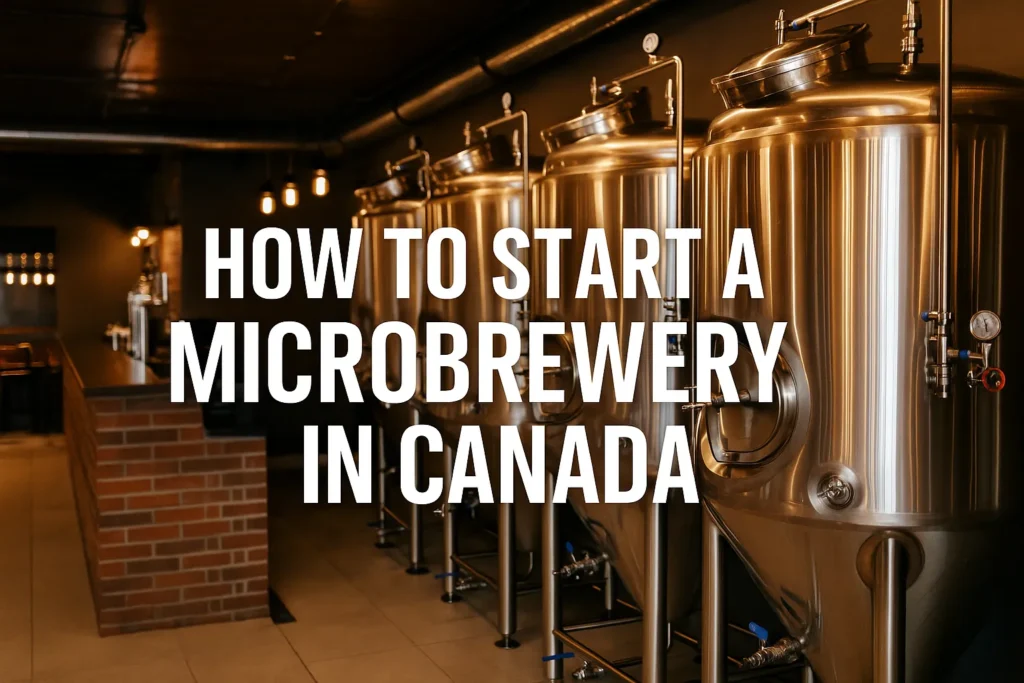
Selecting appropriate equipment represents one of the largest investments in how to start a microbrewery in Canada. Equipment choices impact product quality, production capacity, operational efficiency, and long-term scalability while needing to withstand Canada’s challenging climate conditions.
Core Brewing System Components:
- Mash/lauter tun: Where grain and hot water combine to extract fermentable sugars
- Brew kettle: Boils wort with hops to create desired flavors and bitterness profiles
- Whirlpool tank: Clarifies wort by removing hop debris and protein particles
- Heat exchanger: Rapidly cools wort to optimal fermentation temperatures
- Fermentation vessels: Where yeast converts sugars to alcohol and develops flavor profiles
- Conditioning tanks: Final maturation and carbonation before packaging
- CIP (Clean-in-Place) systems: Automated cleaning reducing labor and ensuring consistency
Canadian Climate Considerations
Canada’s extreme temperature variations create unique equipment requirements:
- Enhanced insulation: Systems designed for -30°C to +30°C temperature swings
- Heating systems: Adequate facility heating for year-round operation
- Glycol cooling: Robust temperature control systems handling extreme ambient conditions
- Freeze protection: Preventing equipment damage during winter shutdowns
- Energy efficiency: Equipment optimized for Canada’s high energy costs
Quality Control Laboratory Setup
Professional brewing requires comprehensive testing capabilities:
- Alcohol measurement: Ensuring accurate tax reporting and consumer labeling
- Microbiological testing: Detecting contamination and ensuring product safety
- Chemical analysis: Monitoring pH, dissolved oxygen, and other quality parameters
- Sensory evaluation: Maintaining consistent flavor profiles through trained panels
Facility Design and Layout Optimization
Production Area Planning
Efficient brewery design optimizes workflow while meeting Canadian regulatory and climate requirements:
- Insulated construction: Building envelope designed for extreme weather conditions
- Adequate drainage: Floor systems handling spills and cleaning requirements
- Ventilation systems: Managing humidity, heat, and steam from brewing operations
- Material handling: Easy access for grain deliveries and product distribution
- Expansion capability: Design allowing growth without major reconstruction
Climate-Controlled Storage
Canadian temperature extremes require sophisticated storage solutions:
- Refrigerated storage: Maintaining product quality year-round
- Grain storage: Climate-controlled silos preventing moisture and pest problems
- Packaging materials: Protecting labels, bottles, and cans from humidity
- Finished goods: Temperature-stable storage for distribution and retail
For comprehensive guidance on advanced brewing system automation and temperature control, exploring Canadian-specific solutions can significantly enhance your brewery’s consistency and operational efficiency in challenging climate conditions.
Recipe Development and Product Innovation
Crafting Distinctly Canadian Beer Profiles
Developing compelling recipes represents the creative heart of how to start a microbrewery in Canada. Successful Canadian breweries balance international brewing traditions with authentic Canadian ingredients and cultural references that resonate with domestic consumers while attracting international attention.
Canadian Ingredient Integration
Canada offers unique brewing ingredients that create distinctive beer profiles:
- Canadian barley: World-renowned malting barley from Prairie provinces
- Maple syrup and products: Natural sweeteners creating authentically Canadian flavors
- Wild berries: Blueberries, saskatoons, and cloudberries for seasonal specialties
- Canadian hops: Emerging hop varieties developed for Canadian growing conditions
- Indigenous ingredients: Traditional plants and flavoring agents with cultural significance
- Ice wine influences: Techniques borrowed from Canadian ice wine production
Seasonal Canadian Beer Styles
Canadian breweries increasingly develop products celebrating the country’s dramatic seasonal changes:
- Winter warmers: Strong ales and stouts providing comfort during harsh winters
- Spring refreshers: Light, clean beers celebrating the end of winter
- Summer session ales: Lower alcohol beers perfect for cottage country and festivals
- Harvest celebrations: Fall beers incorporating Canadian grains, fruits, and spices
Regional Specialization Strategies
Different Canadian regions offer distinct ingredient and cultural inspiration:
- Maritime provinces: Seaweed, sea salt, and seafaring traditions
- Quebec: French-Canadian cultural influences and local agricultural products
- Ontario: Agricultural diversity and proximity to major urban markets
- Prairie provinces: Grain specialties and Ukrainian/German brewing influences
- British Columbia: Hop farms, wine country synergies, and Pacific Coast influences
- Northern territories: Wild ingredients and extreme climate adaptations
Quality Management in Canadian Conditions
Temperature Control Challenges
Canada’s extreme climate variations create unique quality control requirements:
- Consistent fermentation: Maintaining optimal temperatures despite ambient fluctuations
- Cold storage: Preventing freeze damage while maintaining product quality
- Distribution logistics: Managing product integrity during transportation
- Seasonal adjustments: Modifying processes for summer versus winter conditions
Regulatory Compliance
Canadian beer regulations require comprehensive quality documentation:
- Bilingual labeling: French and English requirements in specific provinces
- Alcohol content accuracy: Precise measurement for tax calculation and consumer information
- Ingredient disclosure: Complete allergen and additive information
- Nutritional labeling: Calorie and carbohydrate content where required
Marketing Strategy and Brand Development
Building Your Canadian Brewery Brand
Creating compelling brand identity is crucial for how to start a microbrewery in Canada successfully. Your brand must communicate values and personality that differentiate your brewery while respecting Canadian cultural sensibilities and regional identity.
Canadian Brand Identity Elements
- Regional authenticity: Genuine connections to Canadian places, traditions, and values
- Bilingual considerations: Respectful French-English communication where appropriate
- Cultural sensitivity: Understanding and respecting Indigenous heritage and local history
- Environmental responsibility: Canadians increasingly value sustainable business practices
- Community involvement: Demonstrating genuine commitment to local communities and causes
Storytelling and Canadian Values
Canadian consumers connect with authentic stories about brewery founders, brewing philosophy, and community contribution. Effective Canadian brewery storytelling includes:
- Founder narratives: Personal journeys reflecting Canadian experiences and values
- Ingredient sourcing: Stories about Canadian suppliers, farmers, and ingredient quality
- Community impact: Ways your brewery supports local causes, employment, and culture
- Environmental stewardship: Sustainability practices reflecting Canadian environmental values
- Cultural celebration: How your brewery reflects and enhances Canadian regional culture
Digital Marketing and Social Media Strategy
Platform-Specific Canadian Approaches:
Instagram Marketing
Visual storytelling platform showcasing Canadian brewery atmosphere and products:
- Seasonal content: Highlighting Canadian seasons, holidays, and cultural celebrations
- Ingredient photography: Showcasing Canadian ingredients and local sourcing stories
- Behind-the-scenes: Brewing process documentation and Canadian staff personalities
- Regional partnerships: Collaborations with local restaurants, events, and cultural institutions
Facebook Community Building
Building local Canadian communities around your brewery:
- Event promotion: Taproom events, seasonal celebrations, and Canadian holiday specials
- Educational content: Brewing knowledge, Canadian beer history, and tasting notes
- Community engagement: Responding to customer feedback and building local relationships
- Bilingual content: French and English communication where culturally appropriate
Email Marketing and Customer Retention
Direct communication with Canadian customers:
- Seasonal release announcements: First access to limited Canadian-themed offerings
- Event invitations: Exclusive brewery tours and seasonal celebration events
- Educational newsletters: Canadian brewing history, food pairing, and industry insights
- Loyalty programs: Rewards programs reflecting Canadian values and customer appreciation
Traditional Marketing and Community Integration
Local Partnership Development
Building relationships with complementary Canadian businesses:
- Restaurant partnerships: Beer dinners featuring Canadian cuisine and local ingredients
- Tourism integration: Partnerships with Canadian tourism operators and regional attractions
- Agricultural connections: Direct relationships with Canadian farmers and ingredient suppliers
- Cultural institutions: Partnerships with museums, festivals, and cultural organizations
Community Involvement Strategies
Successful Canadian breweries become integral parts of their local communities:
- Charitable support: Supporting Canadian charities, local causes, and community organizations
- Cultural events: Sponsoring local festivals, hockey teams, and community celebrations
- Educational programs: Brewing education, Canadian beer history, and industry workshops
- Environmental initiatives: Sustainability programs reflecting Canadian environmental values
Distribution Strategy and Market Access
Direct-to-Consumer Sales in Canadian Market
Direct sales provide the highest profit margins and strongest customer relationships, making them essential for how to start a microbrewery in Canada profitably. However, Canadian alcohol distribution regulations vary significantly between provinces, creating complex compliance requirements.
Provincial Direct Sales Regulations
- Ontario: Limited on-site sales with strict quantity restrictions
- British Columbia: More liberal direct sales policies including some delivery options
- Quebec: Unique system allowing broader direct sales in certain circumstances
- Atlantic provinces: Generally restrictive policies with limited direct sales opportunities
- Prairie provinces: Varying regulations with some provinces more permissive than others
Taproom Optimization Strategies
- Canadian atmosphere: Creating welcoming environments reflecting regional character
- Food integration: Canadian cuisine pairings and local food partnerships
- Seasonal programming: Events celebrating Canadian seasons and cultural holidays
- Educational experiences: Brewery tours emphasizing Canadian ingredients and traditions
- Merchandise sales: Canadian-themed branded items extending brand presence
Navigating Canadian Distribution Systems
Provincial Liquor Corporation Systems
Most Canadian provinces operate government-controlled distribution systems:
- LCBO (Ontario): Largest Canadian alcohol retailer with complex listing requirements
- SAQ (Quebec): Quebec’s government retailer with distinct French-Canadian market preferences
- BC Liquor Stores: Provincial system with growing craft beer focus
- NSLC (Nova Scotia): Maritime distributor with regional product emphasis
- SLGA (Saskatchewan): Prairie distribution with agricultural community connections
Private Distribution Opportunities
Some provinces allow limited private distribution:
- Alberta: Privatized system offering multiple distribution channels
- British Columbia: Mixed public-private system with various retail options
- Ontario: Limited private distribution through licensed retailers
- Quebec: Some private distribution through specialized retailers
Operational Excellence and Quality Management
Maintaining Quality in Canadian Conditions
Consistent quality represents the foundation of long-term success when starting a microbrewery in Canada. Canadian climate conditions and seasonal variations create unique quality challenges requiring systematic approaches and robust control systems.
Climate-Specific Quality Protocols
- Winter operations: Maintaining consistent temperatures and preventing freeze damage
- Summer challenges: Managing heat effects on fermentation and storage
- Humidity control: Preventing mold and label degradation in humid conditions
- Shipping protection: Ensuring product quality during extreme weather transportation
Canadian Regulatory Compliance
Federal and provincial regulations require comprehensive quality documentation:
- CRA reporting: Accurate production records for federal excise tax compliance
- Provincial inspections: Meeting food safety standards and facility requirements
- Bilingual documentation: French and English record-keeping where required
- Traceability systems: Complete ingredient and batch tracking for recall capability
Staff Training and Canadian Employment Standards
Essential Training Programs
- Brewing operations: Technical skills for consistent Canadian product quality
- Food safety: Canadian food safety regulations and sanitation procedures
- Customer service: Product knowledge and Canadian hospitality standards
- Bilingual service: French-English service capabilities where culturally appropriate
- Safety protocols: Canadian workplace safety standards and emergency procedures
Future Trends and Growth Opportunities
Emerging Market Trends in Canada
The landscape for how to start a microbrewery in Canada continues evolving as consumer preferences shift and market conditions change, driven by uniquely Canadian cultural and economic factors.
Health-Conscious Canadian Consumers
Canadian consumers increasingly prioritize health and wellness:
- Low-alcohol options: Session ales and light beers supporting Canadian social drinking culture
- Organic certification: Canadian organic ingredients appealing to health-conscious consumers
- Functional ingredients: Probiotics, vitamins, and wellness-focused additions
- Transparency: Detailed Canadian ingredient information and nutritional disclosure
Sustainability and Environmental Leadership
Environmental consciousness represents a core Canadian value:
- Carbon footprint reduction: Sustainable brewing practices and renewable energy adoption
- Local sourcing: Supporting Canadian agriculture while reducing transportation environmental impact
- Packaging innovation: Environmentally responsible packaging reflecting Canadian values
- Circular economy: Waste reduction and byproduct utilization programs
Technology Integration
Canadian breweries increasingly adopt advanced technologies:
- Automated brewing: IoT systems optimizing consistency and efficiency
- Digital customer engagement: Apps, loyalty programs, and online communities
- E-commerce platforms: Direct-to-consumer sales where provincially permitted
- Quality monitoring: Advanced testing and documentation systems
Growth Opportunities and Market Expansion
Underserved Canadian Markets
- Rural communities: Small towns and rural areas with limited craft beer options
- Northern territories: Unique positioning opportunities in Canada’s frontier regions
- Immigrant communities: Products reflecting Canada’s multicultural population
- Indigenous partnerships: Respectful collaborations incorporating traditional ingredients
Export Market Potential
Canadian craft beer reputation creates international opportunities:
- United States: Cross-border tourism and specialty import markets
- European markets: Premium positioning leveraging Canadian quality reputation
- Asia-Pacific: Growing craft beer appreciation and Canadian brand recognition
- International festivals: Showcasing Canadian brewing innovation globally
Your Path to Canadian Brewing Success
Starting a microbrewery in Canada represents both an extraordinary opportunity and a significant challenge that requires understanding the country’s unique market dynamics, regulatory complexity, and cultural values. Canada’s craft beer market offers exceptional potential for breweries that can successfully navigate provincial licensing requirements while building authentic connections with increasingly sophisticated consumers.
Success in how to start a microbrewery in Canada depends on recognizing that Canadian consumers value authenticity, quality, and community connection above novelty or aggressive marketing. They reward breweries that demonstrate genuine commitment to local communities, environmental responsibility, and exceptional product quality while respecting regional cultural differences and linguistic requirements.
The regulatory environment, while complex, provides clear pathways for compliant operations when properly understood and navigated with professional guidance. Canada’s multi-jurisdictional structure requires careful attention to both federal and provincial requirements, but systematic preparation and expert consultation make compliance achievable for serious entrepreneurs.
Financial planning must acknowledge both substantial upfront investments and extended timelines to profitability, particularly given Canada’s seasonal market variations and climate challenges. However, government support programs, growing private investment interest, and strong market fundamentals create opportunities for well-capitalized ventures with realistic projections and comprehensive business plans.
Your brewing journey in Canada begins with thorough understanding of your chosen province’s specific requirements, genuine respect for local communities and values, and unwavering commitment to exceptional quality. The Canadian craft beer revolution continues expanding rapidly, offering opportunities for breweries that contribute meaningfully to regional culture while building sustainable businesses that honor both brewing excellence and Canadian values.
The path forward requires patience, cultural sensitivity, and dedication to operational excellence that reflects Canada’s reputation for quality and reliability. The breweries that will thrive in Canada’s craft beer future are those that start with solid foundations, maintain focus on authentic community connections, and build systems enabling sustainable growth while preserving the character that makes Canadian craft brewing distinctive and valuable.
About the Author
Ryan Brewtech bridges the gap between traditional brewing and cutting-edge technology with over 15 years of experience developing automated brewing systems across North America. With a background in computer engineering and IoT development, Ryan designs and implements brewery automation systems that improve consistency while maintaining craft quality, with particular expertise in solutions for Canada’s challenging climate conditions. He specializes in data-driven brewing approaches, using sensors and software to monitor and optimize every aspect of the brewing process from grain to glass, while ensuring systems can withstand extreme
Canadian weather conditions. Ryan has developed several open-source brewing applications and affordable DIY automation solutions that have helped dozens of Canadian microbreweries improve their operations and maintain quality consistency year-round. Currently based in Vancouver, he consults for craft breweries across Canada on production optimization, quality control systems, and sustainable brewing technologies adapted for Canadian conditions. Contact him at ryan.brewtech@brewmybeer.online