
Learn how to start a microbrewery in Nigeria—covering costs, licenses, equipment, and strategies to launch a successful craft beer venture.
Listen, brewing isn’t just science—it’s art. And Nigeria? Nigeria’s like a blank canvas begging for bold strokes.
I’ve spent the better part of fifteen years chasing wild yeasts across five continents, from Belgian monastery cellars to Mongolian steppes, but nothing prepared me for what I discovered in Nigeria’s brewing landscape. Picture this: you’re standing in Lagos, surrounded by 200 million potential customers, in a beer market worth $7 billion annually according to Statista, and the craft beer scene is practically non-existent. It’s like finding an untouched gold mine.

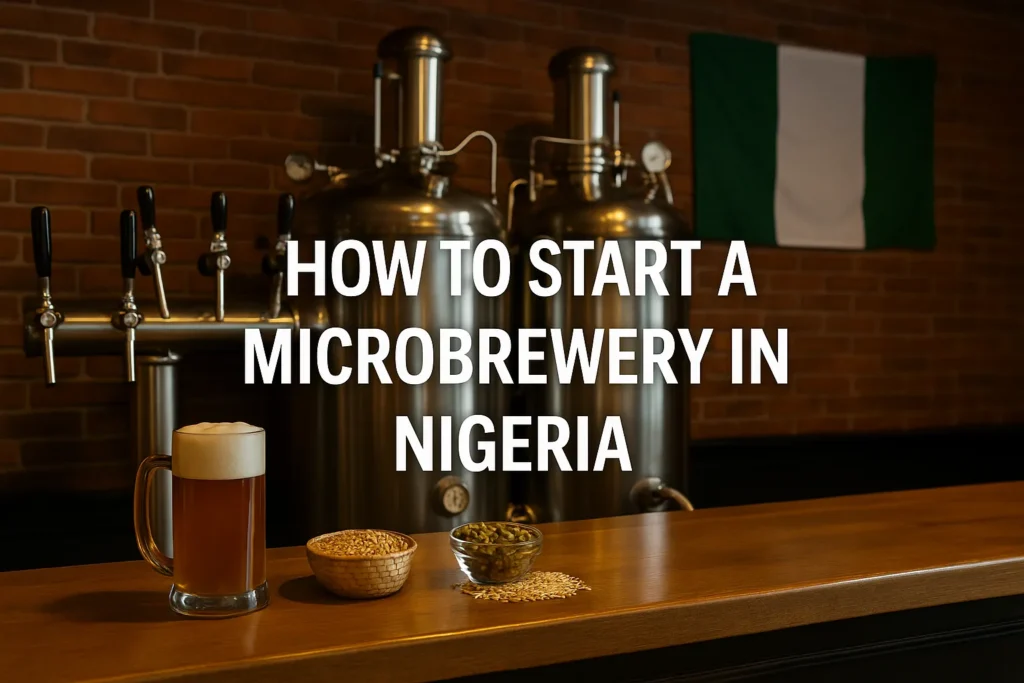
But here’s the thing about how to start a microbrewery in Nigeria—it’s not just about copying what works in Denver or Brussels. This is Africa’s most populous country, a place where palm wine traditions stretch back centuries, where cultural diversity spans 250+ ethnic groups, each with their own fermentation wisdom. The opportunity isn’t just economic; it’s cultural, it’s revolutionary.
I first arrived in Nigeria in 2019, chasing rumors of indigenous fermentation practices in the Middle Belt region. What I found was a country on the verge of a craft beer awakening. Traditional breweries like Nigerian Breweries dominated with their mass-produced lagers, but underneath, there was this hunger—this genuine appetite for something authentic, something local, something crafted with soul.
The numbers tell an incredible story. Nigeria’s beer market demonstrates consistent growth, with consumers increasingly interested in premium products and craft alternatives. Bature Brewery, currently Nigeria’s largest craft producer at 22,000 liters monthly, targets 500 retail locations by 2026. That’s not just growth—that’s explosion waiting to happen.
Yet starting a microbrewery in Nigeria requires understanding more than market data. It demands navigating complex regulatory frameworks, sourcing equipment in challenging logistics environments, and most importantly, creating products that honor Nigerian tastes while introducing international craft beer standards.
This comprehensive guide combines my microbiological expertise with on-ground experience helping Nigeria’s emerging craft brewers establish successful operations. From isolation of indigenous yeast strains to navigating NAFDAC regulations, we’ll explore every critical aspect of building a thriving microbrewery in West Africa’s most dynamic market.
Nigeria’s Brewing Renaissance: Understanding the Landscape
Cultural Foundation and Traditional Fermentation
Before diving into business mechanics, let’s acknowledge the elephant in the room—Nigeria already has a rich fermentation heritage. Palm wine, burukutu, pito, and other traditional beverages demonstrate sophisticated understanding of fermentation science that predates European beer styles by centuries.
In Kaduna State, I spent weeks learning pito production from traditional brewers who could tell fermentation progress by smell alone. These masters work with sorghum and millet, creating complex flavor profiles that would make any craft brewer jealous. The point? How to start a microbrewery in Nigeria isn’t about introducing fermentation—it’s about elevating existing knowledge with modern techniques and quality control.
Regional Fermentation Traditions:
- Northern Nigeria: Pito (sorghum-based), burukutu (millet-based)
- Middle Belt: Palm wine variations, guinea corn beers
- Southern Nigeria: Palm wine, traditional honey wines
- Coastal regions: Coconut palm wines, cassava-based fermentations
This heritage creates unique opportunities. Nigerian consumers understand fermentation complexity in ways that many Western markets don’t. They appreciate subtle flavors, seasonal variations, and the social significance of shared drinking experiences.
Market Dynamics and Consumer Behavior
Nigeria’s beer market reflects the country’s economic diversity and cultural complexity. Lagos alone—with over 20 million people—represents a market larger than many entire countries. Add Abuja, Kano, Ibadan, and other major cities, and you’re looking at concentrated urban populations with growing disposable income and international exposure.
Key Consumer Segments:
- Urban professionals (25-40 years): Highest disposable income, international exposure
- Diaspora returnees: Familiar with craft beer culture, seeking authentic Nigerian expressions
- Expatriate community: Established craft beer drinkers willing to pay premium prices
- Young entrepreneurs: Social media savvy, influence broader consumer trends
- Cultural enthusiasts: Interested in products that honor Nigerian traditions
Market Timing Factors:
The timing for starting a microbrewery in Nigeria couldn’t be better. Economic challenges have actually strengthened demand for local alternatives to imported premium beers. Consumers still want quality, but they’re increasingly interested in Nigerian-made products that offer both value and cultural relevance.
Competitive Landscape Analysis
Nigeria’s beer market remains dominated by three major players: Nigerian Breweries (Heineken subsidiary), International Breweries (AB InBev), and Guinness Nigeria. These companies control roughly 90% of market share, focusing on mass-market lagers and stouts.
The craft beer segment is practically virgin territory. Bature Brewery currently leads with products like Harmattan Haze, Lagos Lager, and Mango Disco, but their 22,000 liters monthly barely registers in the broader market. This represents opportunity, not threat.
Competitive Advantages for New Entrants:
- Local ingredient integration: Using Nigerian grains, fruits, and spices
- Cultural authenticity: Products that reflect Nigerian identity and values
- Premium positioning: Quality differentiation from mass-market options
- Experience marketing: Brewery tours, educational programs, cultural events
- Digital engagement: Social media marketing to young, connected consumers
Regulatory Framework and Legal Requirements
NAFDAC Compliance and Product Registration
Understanding Nigeria’s regulatory environment represents perhaps the most crucial aspect of how to start a microbrewery in Nigeria. The National Agency for Food and Drug Administration and Control (NAFDAC) serves as the primary regulatory body for alcoholic beverages, with comprehensive requirements outlined in their Beer Regulations 2019.
NAFDAC Registration Process:
- Pre-submission meeting with NAFDAC officials to discuss requirements
- Facility inspection ensuring compliance with Good Manufacturing Practice (GMP)
- Product formulation review including ingredient specifications and quality standards
- Laboratory analysis by NAFDAC-approved facilities
- Label approval ensuring compliance with advertising and content regulations
- Certificate issuance typically taking 3-6 months for complete approval
Key Regulatory Requirements:
- Facility standards: GMP-compliant production environment
- Quality control laboratory: On-site or contracted testing capabilities
- Product specifications: Detailed formulations for each beer style
- Labeling compliance: Specific requirements for alcohol content, warnings, and nutrition information
- Import permits: For equipment and ingredients not available locally
Federal and State Licensing Matrix
Beyond NAFDAC approval, starting a microbrewery in Nigeria requires navigating multiple licensing layers. The complexity varies by state, but certain federal requirements apply universally.
Federal License Requirements:
| License Type | Issuing Agency | Cost Range (₦) | Processing Time |
|---|---|---|---|
| NAFDAC Registration | NAFDAC | 500,000-1,500,000 | 3-6 months |
| Corporate Affairs | CAC | 50,000-200,000 | 2-4 weeks |
| FIRS Tax Registration | FIRS | 25,000-100,000 | 2-6 weeks |
| Import/Export License | Nigerian Customs | 100,000-300,000 | 4-8 weeks |
State-Level Requirements (Lagos Example):
- Lagos State liquor license: ₦200,000-500,000 annually
- Environmental compliance: ₦150,000-400,000
- Fire safety certificate: ₦50,000-150,000
- Building approval: ₦100,000-500,000
Special Considerations and Regional Variations
Nigeria’s diverse legal landscape creates unique challenges. Northern states with Sharia law implementation may have additional restrictions or prohibition on alcohol sales in certain areas. Understanding local regulations becomes crucial for distribution planning.
Strategic Licensing Approach:
- Start with one state: Master the process before expanding
- Use professional consultants: Legal experts familiar with alcoholic beverage regulations
- Build regulatory relationships: Maintain positive communication with officials
- Plan for renewals: Budget ongoing compliance costs and renewal timelines
Equipment Selection and Technical Infrastructure
Climate-Adaptive Brewing Systems
Selecting appropriate equipment for how to start a microbrewery in Nigeria requires understanding West African climate challenges. Lagos averages 27°C (80°F) with 85% humidity year-round. Equipment designed for temperate climates often struggles with Nigerian conditions.
Critical Climate Considerations:
- Enhanced cooling capacity: 40-50% oversized refrigeration systems
- Corrosion resistance: Marine-grade stainless steel for coastal locations
- Humidity control: Dehumidification systems for ingredient storage
- Power surge protection: Voltage regulation for Nigeria’s unstable electrical grid
- Generator backup: Diesel generators for production continuity during power outages
Recommended Equipment Specifications:
| System Component | Capacity Range | Investment (₦) | Key Features |
|---|---|---|---|
| Brewing System | 500L-2000L | 15,000,000-45,000,000 | Tropical-rated cooling, automated controls |
| Fermentation Tanks | 1000L-3000L each | 2,500,000-8,000,000 | Glycol cooling, CIP systems |
| Packaging Line | 200-800 bottles/hour | 5,000,000-20,000,000 | Semi-automatic, humidity resistant |
| Quality Lab | Complete setup | 3,000,000-10,000,000 | Microscopes, testing kits, refrigeration |
| Cooling System | 10-30 kW | 4,000,000-12,000,000 | Glycol chillers, redundant compressors |
Local vs. International Equipment Strategy
Nigeria’s import environment creates both opportunities and challenges for equipment procurement. High duties (often 20-35%) on imported equipment encourage local alternatives, but technical sophistication and reliability vary significantly.
Hybrid Procurement Strategy:
- Tanks and vessels: Local fabrication with imported fittings and valves
- Control systems: International suppliers for precision components
- Pumps and automation: European or American systems with local service support
- Laboratory equipment: Mixed sourcing based on specific testing requirements
Local Fabrication Advantages:
- Cost savings: 40-60% lower than imported alternatives
- Customization: Modifications for local conditions and preferences
- Service support: Local technicians and spare parts availability
- Currency risk: Reduced exposure to naira devaluation impacts
For comprehensive guidance on fermentation monitoring and quality control systems, exploring indigenous Nigerian yeast strains and traditional fermentation wisdom can create unique competitive advantages while maintaining international quality standards.
Recipe Development and Indigenous Innovation
Exploring Nigerian Ingredients and Flavors
This is where microbiology gets exciting. Nigeria offers ingredient diversity that most brewers never encounter—tropical fruits, indigenous grains, medicinal plants, and wild yeasts that can create completely unique beer profiles.
Traditional Grains and Starches:
- Sorghum varieties: Different regions produce distinct flavor profiles
- Millet species: Pearl millet, finger millet with varying characteristics
- Cassava: High-starch content, interesting fermentation behavior
- Plantain: Natural sugars and tropical fruit character
- Tiger nut: Nutty flavors and unique enzyme activity
Tropical Fruits and Natural Flavoring:
- Hibiscus (zobo): Tart, ruby-red color, antioxidant properties
- African star fruit: Citrusy acidity, natural preservative qualities
- Locust bean (dawadawa): Umami complexity, traditional flavoring
- Tamarind: Natural sourness, traditional brewing ingredient
- Palm fruit: Sweet, oily character unique to West Africa
Wild Yeast Isolation and Characterization
Here’s where my microbiology background becomes crucial. Nigeria’s diverse ecosystems harbor wild yeasts with fermentation characteristics unavailable anywhere else. I’ve isolated strains from palm wine trees in Ogun State that produce flavor compounds not found in commercial brewing yeasts.
Wild Yeast Collection Sites:
- Palm wine trees: Natural fermentation environments with diverse yeast populations
- Fruit surfaces: Indigenous yeasts adapted to local tropical fruits
- Traditional brewing sites: Locations where ancestral fermentation occurred
- Grain storage areas: Yeasts associated with local grain varieties
Isolation and Testing Protocol:
- Environmental sampling from diverse locations and substrates
- Laboratory isolation using selective media and identification techniques
- Fermentation testing with various sugar sources and conditions
- Flavor profiling through gas chromatography and sensory analysis
- Scale-up trials evaluating commercial production potential
Modern Nigerian Beer Styles
Successful starting of a microbrewery in Nigeria requires developing products that honor local tastes while introducing craft beer sophistication. This isn’t about copying American IPAs—it’s about creating distinctly Nigerian expressions.
Proposed Nigerian Craft Styles:
- Lagos Lager: Clean, crisp beer showcasing local grain character
- Harmattan Haze: Wheat beer with hibiscus for color and tartness
- Palm Wine Saison: Traditional palm wine flavors in modern saison format
- Jollof Amber: Malty beer incorporating traditional spice blends
- Afrobeat Stout: Coffee stout using Nigerian coffee varieties
Quality Control in Tropical Conditions:
- Temperature monitoring: Continuous fermentation temperature control
- Contamination prevention: Enhanced sanitation protocols for humid conditions
- Ingredient preservation: Proper storage for tropical ingredient stability
- Seasonal adaptation: Recipe modifications for ingredient availability changes
Financial Planning and Investment Strategy
Comprehensive Investment Analysis
Understanding the complete financial picture for how to start a microbrewery in Nigeria requires analyzing both obvious costs and hidden expenses that can derail unprepared entrepreneurs.
Detailed Investment Breakdown:
| Category | Small Setup (₦) | Medium Setup (₦) | Large Setup (₦) |
|---|---|---|---|
| Equipment & Installation | 25,000,000 | 60,000,000 | 120,000,000 |
| Facility Development | 8,000,000 | 20,000,000 | 45,000,000 |
| Licensing & Legal | 2,000,000 | 4,000,000 | 8,000,000 |
| Initial Inventory | 3,000,000 | 8,000,000 | 15,000,000 |
| Marketing Launch | 2,000,000 | 6,000,000 | 12,000,000 |
| Working Capital (6 months) | 10,000,000 | 25,000,000 | 50,000,000 |
| Total Investment | 50,000,000 | 123,000,000 | 250,000,000 |
Hidden Costs to Consider:
- Generator fuel: ₦500,000-2,000,000 annually
- Security services: ₦1,200,000-3,000,000 annually
- Import duties and delays: 15-25% above equipment costs
- Professional services: Legal, accounting, consulting fees
- Insurance premiums: Product liability, equipment, business interruption
Revenue Models and Profitability Analysis
Nigerian Market Revenue Projections:
| Operation Type | Year 1 Revenue (₦) | Year 3 Revenue (₦) | Net Margin (Year 3) |
|---|---|---|---|
| Taproom-Focused | 20,000,000 | 60,000,000 | 18-25% |
| Production Brewery | 35,000,000 | 120,000,000 | 15-22% |
| Premium Positioning | 45,000,000 | 150,000,000 | 22-30% |
| Regional Distribution | 60,000,000 | 200,000,000 | 12-18% |
Key Performance Indicators:
- Revenue per liter: ₦800-2,500 depending on channel and positioning
- Taproom revenue per visit: ₦3,000-8,000 including food and merchandise
- Corporate sales premium: 40-60% higher pricing for B2B channels
- Export potential: West African regional markets showing increasing interest
Funding Sources and Support Programs
Nigeria offers surprising opportunities for brewery financing, particularly for businesses demonstrating innovation and local economic impact.
Government and Institutional Support:
- Bank of Industry (BOI): Manufacturing sector loans at favorable rates
- Nigerian Export-Import Bank: Support for businesses with export potential
- Central Bank SME funds: Various programs supporting small and medium enterprises
- State government incentives: Tax holidays and development grants
- International Breweries Kickstart Program: Up to ₦3 million for qualifying young entrepreneurs
Private Investment Options:
- Angel investors: Growing network of Nigerian and diaspora investors
- Private equity: Increasing interest in consumer goods and manufacturing
- Crowdfunding: Local platforms and diaspora community support
- Equipment financing: Leasing arrangements with international suppliers
Marketing and Brand Development
Cultural Authenticity and Brand Positioning
Creating compelling brands for how to start a microbrewery in Nigeria requires deep understanding of Nigerian cultural nuances and consumer psychology. Nigerian consumers are sophisticated—they can distinguish authentic cultural representation from superficial appropriation.
Successful Brand Elements:
- Regional identity: Connecting to specific Nigerian states, cities, or communities
- Cultural narratives: Stories that reflect Nigerian experiences and values
- Visual aesthetics: Design elements drawing from Nigerian art, textiles, and symbols
- Language integration: Thoughtful use of local languages and expressions
- Community involvement: Genuine participation in local events and causes
Brand Positioning Strategies:
- Premium local: High-quality Nigerian alternative to imported brands
- Cultural ambassador: Products that celebrate Nigerian heritage and diversity
- Innovation within tradition: Modern brewing techniques honoring traditional flavors
- Social hub: Brewery as community gathering place and cultural center
Digital Marketing and Social Media Strategy
Nigeria’s digital landscape offers extraordinary opportunities for craft brewery marketing. With over 100 million internet users and sophisticated social media engagement, digital marketing becomes essential for brand building.
Platform-Specific Approaches:
- Instagram: Visual storytelling showcasing brewing processes and cultural connections
- Twitter: Real-time engagement, industry discussions, customer service
- WhatsApp Business: Direct customer communication, order management, event coordination
- YouTube: Educational content, brewery tours, brewing tutorials
- LinkedIn: B2B marketing, professional networking, industry thought leadership
Content Marketing Strategy:
- Educational content: Teaching Nigerians about craft beer styles and brewing science
- Cultural celebration: Highlighting connections to Nigerian traditions and festivals
- Behind-the-scenes: Showing brewing craftsmanship and quality commitment
- Community stories: Featuring local ingredients, suppliers, and cultural partnerships
Distribution and Sales Channel Development
Primary Sales Channels:
- Direct taproom sales: Highest margins, strongest customer relationships
- Premium restaurants: High-end establishments serving affluent consumers
- Hotels and hospitality: Targeting business travelers and tourists
- Corporate events: B2B sales with premium pricing opportunities
- Online sales: Direct-to-consumer delivery in major urban areas
Channel Development Strategy:
Phase 1 (Months 1-12): Focus on taproom establishment and local premium venues
Phase 2 (Months 12-24): Expand to major hotels and corporate accounts
Phase 3 (Months 24-36): Regional distribution and online sales platform
Phase 4 (Years 3-5): Multi-state presence and export development
Operational Excellence and Quality Management
Quality Control in Nigerian Conditions
Maintaining consistent quality represents the foundation of any successful brewery, but Nigeria’s tropical climate and infrastructure challenges create unique requirements for starting a microbrewery in Nigeria.
Critical Quality Control Points:
- Ingredient storage: Climate-controlled environments protecting malt, hops, and specialty ingredients
- Water treatment: Comprehensive filtration and mineral adjustment systems
- Fermentation monitoring: Continuous temperature and pH monitoring with alarm systems
- Packaging integrity: Contamination prevention and shelf-life optimization
- Cold chain management: Refrigerated storage and distribution networks
Nigerian-Specific Quality Challenges:
- Power instability: Generator backup systems for critical cooling operations
- Water quality variation: Municipal supply inconsistencies requiring treatment adaptation
- Humidity control: Preventing mold and contamination in high-humidity conditions
- Transportation stress: Protecting product quality during distribution in challenging road conditions
Staffing and Training Programs
Core Team Requirements:
- Head brewer: Technical expertise in brewing science and quality control
- Assistant brewers: Trained in specific brewing operations and safety procedures
- Quality control specialist: Laboratory skills and analytical capabilities
- Sales/marketing manager: Understanding of Nigerian consumer behavior and business culture
- Operations manager: Logistics, regulatory compliance, and administrative oversight
Training and Development:
- Technical brewing education: Partnering with international brewing schools for staff development
- Food safety certification: HACCP training and ongoing safety protocol education
- Cultural competency: Understanding diverse Nigerian consumer preferences and business practices
- Leadership development: Building management capabilities for business growth
Growth Strategies and Market Expansion
Scaling Operations and Geographic Expansion
Successful growth in Nigeria requires systematic approach to scaling operations while maintaining quality and cultural authenticity that drives initial success.
Growth Phase Development:
- Local market mastery (Year 1): Perfect operations and build local brand recognition
- Regional expansion (Year 2-3): Enter neighboring states with proven business model
- National presence (Year 4-5): Multi-regional operations with distribution networks
- Export development (Year 5+): West African regional markets and diaspora communities
Expansion Triggers:
- Capacity utilization: 85%+ for 6+ consecutive months
- Financial performance: 18+ months of consistent profitability
- Brand recognition: Measurable consumer awareness in target markets
- Operational excellence: Proven quality systems and management capabilities
Export Opportunities and Regional Markets
Nigeria’s position as West Africa’s economic powerhouse creates natural opportunities for regional craft beer exports once domestic operations achieve stability.
Target Export Markets:
- Ghana: Sophisticated consumer base, established craft beer appreciation
- Cameroon: Cultural similarities, French-speaking market opportunities
- Benin/Togo: Regional trade relationships, growing middle-class populations
- Diaspora markets: Nigerian communities in US, UK, Canada seeking authentic products
Challenges and Risk Management
Common Pitfalls and Strategic Solutions
My experience working with Nigerian brewery startups reveals consistent challenges that can derail promising ventures if not addressed proactively.
Regulatory Complexity: Nigeria’s multi-layered regulatory environment overwhelms many entrepreneurs. Solution: Engage experienced regulatory consultants from project inception, budget 12-18 months for complete licensing approval.
Infrastructure Reliability: Power outages and water supply inconsistencies threaten production continuity. Solution: Invest in robust backup systems including generators, UPS systems, and water storage/treatment capabilities.
Currency Volatility: Naira fluctuations impact imported ingredient and equipment costs. Solution: Hedge currency exposure through forward contracts, maximize local sourcing, build foreign currency reserves.
Cultural Misalignment: Breweries that ignore local preferences struggle to build sustainable customer bases. Solution: Extensive consumer research, cultural advisory boards, gradual product introduction with feedback integration.
Quality Consistency: Climate and infrastructure challenges threaten product consistency. Solution: Robust quality systems, redundant equipment, comprehensive staff training programs.
Risk Mitigation Strategies
Operational Risk Management:
- Equipment redundancy: Backup systems for critical brewing operations
- Supplier diversification: Multiple sources for key ingredients and materials
- Staff cross-training: Multiple employees capable of performing critical functions
- Financial reserves: Minimum 6-month operating capital buffer
- Insurance coverage: Comprehensive protection against equipment failure, business interruption, product liability
Future Opportunities and Industry Evolution
Emerging Trends and Market Development
The landscape for how to start a microbrewery in Nigeria continues evolving rapidly as consumer preferences mature and the regulatory environment adapts to industry growth.
Consumer Evolution:
- Premium positioning: Growing willingness to pay higher prices for authentic quality
- Health consciousness: Interest in lower-alcohol, organic, and functional ingredient beers
- Cultural pride: Increasing appreciation for products celebrating Nigerian heritage
- Experience economy: Demand for brewery tours, educational programs, cultural events
- Digital engagement: Sophisticated social media interaction and online community building
Market Structure Changes:
- Distribution evolution: Development of specialized craft beer distribution networks
- Tourism integration: Craft breweries becoming tourist destinations and cultural attractions
- Investment attraction: Venture capital and private equity interest in successful operations
- Export development: Regional and international market opportunities for authentic Nigerian craft beer
- Industry organization: Formation of Nigerian craft brewing associations and professional networks
Your Nigerian Brewing Adventure Awaits
Standing in that palm wine grove in Ogun State, watching traditional fermentation techniques that haven’t changed in centuries, I realized something profound about how to start a microbrewery in Nigeria. This isn’t just about building a business—it’s about preserving culture, creating community, and writing the next chapter of Nigeria’s fermentation story.
The opportunity is massive. The challenges are real. The potential for both financial success and cultural impact is extraordinary.
Nigeria’s craft beer industry is where American craft brewing was in the 1980s—poised for explosive growth driven by consumers hungry for authenticity, quality, and cultural connection. The infrastructure exists. The regulatory framework, while complex, provides clear pathways for compliant operations. The cultural foundation is rock solid.
But success requires more than good intentions and quality beer. It demands understanding Nigeria’s unique market dynamics, respecting cultural traditions, building genuine community relationships, and maintaining unwavering commitment to excellence in every aspect of operations.
The brewers who succeed in Nigeria will be those who approach this market not as colonizers bringing foreign concepts, but as students learning from centuries of fermentation wisdom while contributing modern techniques and quality systems. They’ll be culturally curious, operationally excellent, and genuinely committed to becoming part of the communities they serve.
Your brewery can become more than a business—it can become a cultural institution, a community gathering place, a source of pride and employment for local communities. The consumers are waiting. The market is developing. The opportunity window is wide open.
The question isn’t whether Nigeria’s craft beer market will explode—it’s whether you’ll be part of that explosion. The tools exist. The knowledge is available. The support networks are forming.
What remains is your commitment to the journey, respect for the culture, and dedication to excellence that Nigerian consumers deserve and demand.
Welcome to Nigeria’s craft beer revolution. Your fermentation adventure begins now.
About the Author
Tyler Yeastman is a microbiologist who left his lab position to explore the fascinating world of wild fermentation and indigenous brewing cultures across Africa and beyond. He maintains a library of over 200 isolated wild yeast strains and bacterial cultures collected from brewing regions worldwide, with particular expertise in West African fermentation traditions and tropical brewing environments. Tyler specializes in spontaneous fermentation systems, traditional brewing techniques, and developing location-specific brewing cultures that produce complex, terroir-driven flavors reflecting their environmental origins. His field laboratory includes custom equipment for yeast isolation, genetic analysis, fermentation monitoring, and flavor compound identification specifically adapted for work in challenging tropical conditions.
Tyler frequently collaborates with traditional brewers and modern craft operations across Nigeria, Ghana, and other West African countries to develop signature house cultures based on indigenous microorganisms while preserving traditional brewing knowledge. Currently based between Lagos and rural fermentation research sites, he helps breweries across Africa develop authentic wild fermentation programs that honor traditional methods while meeting contemporary quality and safety standards. Contact him at tyler.yeastman@brewmybeer.online