

Master brewing sanitization with 12 essential tips for contamination-free beer. Learn proper techniques, sanitizer selection, and troubleshooting to prevent off-flavors and infections in your homebrew.
Picture this: You’ve spent hours carefully selecting the perfect recipe. You’ve measured your grains with precision, timed your hop additions to the second, and monitored fermentation temperatures religiously. After weeks of anticipation, you crack open your first bottle, only to be greeted by an unmistakably sour aroma, a strange film floating on top, and flavors that can only be described as “barnyard meets bandage.”

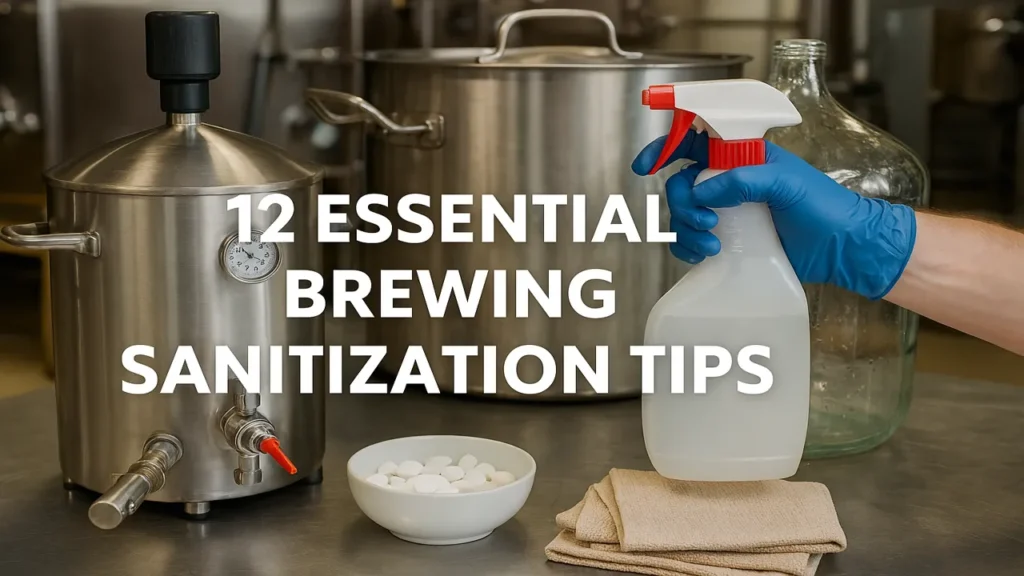
What went wrong? In the vast majority of cases, the culprit is poor sanitization—the silent saboteur that ruins more batches of otherwise well-brewed beer than any other factor. While brewing often gets romanticized for its creative aspects, the unglamorous reality is that meticulous cleaning and sanitizing practices form the foundation of every successful brew.
In my years of brewing and helping troubleshoot failed batches, I’ve seen countless cases where excellent brewers were undone by overlooking this critical step. This comprehensive guide will walk you through everything you need to know about proper sanitization, from understanding the science behind contamination to practical step-by-step procedures that will protect your precious beer from unwanted microorganisms.
Why Brewing Sanitization Matters: The Science Behind Contamination
Before diving into the how-to aspects, it’s important to understand why sanitization deserves your utmost attention. Wort (unfermented beer) provides an ideal environment for microorganism growth—it’s warm, nutrient-rich, and initially has minimal competition from your brewing yeast. This perfect storm creates a breeding ground for bacteria and wild yeasts that can quickly take over.
“Sanitization isn’t just about avoiding off-flavors,” explains Dr. Linda Harris, food safety microbiologist at UC Davis. “It’s about creating a controlled environment where only your selected yeast can thrive. Without proper sanitization, you’re essentially staging a microbial battle where the odds are stacked against your brewing yeast.”
Common Beer Contaminants and Their Effects
Understanding your adversaries helps you better appreciate the importance of sanitization:
Lactobacillus and Pediococcus (Bacteria)
- Create sour, tart flavors (desirable in certain styles like Berliner Weisse or Lambic but unwelcome in most beers)
- Can produce rope-like strands in the beer (known as “ropiness”)
- Often accompanied by a yogurt-like aroma
Acetobacter (Bacteria)
- Converts alcohol to acetic acid (vinegar)
- Results in a sharp, vinegary flavor and aroma
- Can form a film on the beer’s surface
Brett anomy ces (Wild Yeast)
- Creates “barnyard,” “horse blanket,” or “medicinal” characters
- While prized in specific Belgian styles, these flavors are usually considered serious flaws in most beer styles
- May create super-attenuation, resulting in over-carbonation and potential bottle bombs
Various Molds
- Develop as fuzzy patches on the beer’s surface
- Introduce musty, cellar-like aromas
- May produce mycotoxins (though rare in beer due to hops’ antimicrobial properties)
According to research published in the Journal of the Institute of Brewing, contamination can begin with as few as 10-100 microorganisms but quickly multiply to millions, overwhelming all the careful work you’ve done.
Cleaning vs. Sanitizing: Understanding the Critical Difference
A common mistake among new brewers is conflating cleaning with sanitizing—two distinct and equally important processes.
Cleaning removes visible soil, organic matter, and residue. Without proper cleaning, sanitizers cannot make direct contact with surfaces, rendering them ineffective against lurking microorganisms.
Sanitizing reduces microorganisms to safe levels (typically a 99.999% reduction). Unlike sterilization (which eliminates ALL microorganisms and requires extreme heat or pressure), sanitization achieves a level appropriate for brewing needs.
“You cannot sanitize a dirty surface,” emphasizes Charlie Bamforth, distinguished professor emeritus of brewing sciences. “Organic matter not only shields microbes from sanitizers but can also neutralize certain sanitizing agents.”
The 12 Essential Sanitization Tips for Contamination-Free Beer
Now that we understand why sanitization matters, let’s explore the practical steps for implementation:
1. Choose the Right Sanitizer for the Job
Not all sanitizers are created equal, and the homebrew market offers several options with distinct advantages and limitations:
Star San (Acid-Based Sanitizer)
- Pros: No-rinse, fast-acting (30 seconds contact time), effective at low concentrations, relatively safe to handle
- Cons: Cannot be used on certain metals (though safe for stainless steel), degrades over time once mixed
- Usage: Dilute 1 oz per 5 gallons of water (check manufacturer’s instructions)
Iodophor (Iodine-Based Sanitizer)
- Pros: Highly effective broad-spectrum sanitizer, economical, no-rinse at proper dilution
- Cons: Stains plastic, shorter shelf life once mixed, can impart flavors if not properly diluted
- Usage: Typically 12.5-25 ppm (follow package instructions precisely)
Peracetic Acid (Commercial Brewery Favorite)
- Pros: Extremely effective, breaks down into harmless compounds
- Cons: Corrosive, dangerous to handle without proper protection, pungent odor
- Usage: Generally not recommended for homebrewers due to safety concerns
Bleach (Sodium Hypochlorite)
- Pros: Inexpensive, readily available
- Cons: Requires thorough rinsing, can leave chlorine flavors, corrosive to stainless steel, degrades quickly once mixed
- Usage: 1-2 tablespoons per 5 gallons, requires 20+ minutes contact time and thorough rinsing
For most homebrewers, acid-based sanitizers like Star San offer the best balance of effectiveness, safety, and convenience. The American Homebrewers Association consistently finds that brewers using dedicated brewing sanitizers experience fewer contamination issues than those using household alternatives.
2. Focus on Proper Contact Time
One of the most overlooked aspects of sanitization is ensuring adequate contact time—the period necessary for your sanitizer to effectively reduce microorganism counts to safe levels.
Different sanitizers require different contact times:
- Star San: Minimum 30 seconds
- Iodophor: 1-2 minutes
- Bleach: 20+ minutes
“Dipping equipment in sanitizer for a quick second isn’t effective,” warns professional brewer David Rodriguez. “You need to ensure the minimum contact time is met for every surface that will contact your beer post-boil.”
For equipment like fermenters and carboys, many brewers fill the entire vessel with sanitizer solution and let it sit while preparing other aspects of their brew day. For smaller items, a dedicated sanitizing bucket or tub allows for proper submersion.
3. Understand “No-Rinse” Sanitizers Correctly
Products like Star San and properly diluted Iodophor are marketed as “no-rinse” sanitizers, but many brewers misinterpret this feature.
“No-rinse” means that at proper dilution, any residual sanitizer breaks down into compounds that won’t harm yeast or impact flavor—not that you should leave excessive amounts in your fermenter.
Best practices for no-rinse sanitizers:
- Allow items to drain thoroughly before use
- Don’t fear the foam with Star San (it contains the same active ingredient)
- Avoid pouring significant amounts of sanitizer into your fermenter
A study by Experimental Brewing demonstrated that even direct addition of small amounts of properly diluted Star San had no measurable impact on fermentation performance or flavor outcomes in finished beer.
4. Create a Proper Sanitizing Process
Efficiency in brewing comes from developing a systematic approach to sanitization:
Pre-Brew Day:
- Clean all equipment immediately after previous use
- Inspect for residue, biofilms, or damage
- Replace scratched plastic items that can harbor bacteria
Brew Day Preparation:
- Mix fresh sanitizer solution according to manufacturer’s directions
- Use filtered or distilled water for sanitizer if your tap water is extremely hard
- Prepare spray bottles for quick sanitization during transfers
During Brewing:
- Sanitize equipment as close to use time as possible
- Keep a spray bottle of sanitizer handy for quick treatment
- Cover sanitized equipment to prevent airborne contamination
Post-Brewing:
- Clean equipment immediately when brewing is complete
- Store equipment dry and assembled to prevent dust and contamination
- Keep fermenters sealed with airlocks until next use
For managing various stages of the brewing process with proper sanitization, the comprehensive guides at Brew My Beer provide excellent step-by-step instructions tailored to different equipment setups.
5. Cold-Side vs. Hot-Side Sanitization Requirements
Understanding which brewing stages require sanitization helps focus your efforts effectively:
Hot-Side (pre-boil equipment like mash tuns, brew kettles):
- Requires thorough cleaning but not sanitization
- The boiling process will kill microorganisms
- Focus on removing organic residue to prevent off-flavors
Cold-Side (post-boil equipment like fermenters, transfer tubing, bottling equipment):
- Requires both thorough cleaning AND sanitization
- Any equipment that touches wort after boiling must be sanitized
- This includes seemingly minor items like thermometer tips and hydrometer test jars
“The distinction between hot and cold side processes is crucial for efficient brewing,” explains brewing consultant Michael Tonsmeire, author of “American Sour Beers.” “Understanding where to focus your sanitization efforts saves time while ensuring your beer remains contamination-free.”
6. Address Areas Most Prone to Contamination
Certain brewing equipment poses particular sanitization challenges:
Transfer Tubing:
- Difficult to visually inspect
- Susceptible to biofilm formation
- Solution: Regular replacement, specialized cleaning brushes, recirculating sanitizer solution
Valves and Fittings:
- Contain small crevices and O-rings
- May require disassembly for proper cleaning
- Solution: Periodic complete disassembly, dedicated cleaning brushes, soaking in sanitizer
Airlocks:
- Often neglected in cleaning routines
- Can harbor mold and bacteria
- Solution: Complete disassembly between uses, dedicated cleaning brush
Keg Systems:
- Complex internal geometry
- Hidden surfaces in dip tubes and poppets
- Solution: Regular disassembly and dedicated cleaning/sanitizing procedures
A survey by the Brewing Science Institute found that transfer equipment accounts for approximately 60% of contamination vectors in both home and craft brewing environments.
7. Implement a Cleaning-Before-Sanitizing Regimen
Effective sanitization begins with meticulous cleaning:
Cleaning Process:
- Rinse with warm water immediately after use to remove residue
- Apply brewery-specific cleaner (e.g., PBW, Oxiclean Free)
- Scrub with non-scratching brushes designed for brewing equipment
- Rinse thoroughly until all cleaner is removed
- Check for residual soil or discoloration
- Repeat if necessary
Only after equipment is visibly clean and free of residue should sanitization begin. Special attention should be paid to areas where krausen (fermenting foam) has dried, as these deposits can be particularly difficult to remove.
8. Manage Sanitizer Solutions Properly
Sanitizer effectiveness diminishes over time and with use:
Star San Solution Management:
- Verify proper pH (should be below 3.0) for effectiveness
- Check for cloudiness which indicates diminished potency
- Generally effective for 1-3 days once mixed, depending on water quality
- Store in closed containers away from sunlight
Iodophor Solution Management:
- Color indicates potency (should maintain amber color)
- Loses effectiveness when color fades to clear
- Generally effective for 1-2 days once mixed
- Store in closed dark containers
Test strips are available for most sanitizers to verify their continued effectiveness. Using expired or depleted sanitizer solutions provides a false sense of security while leaving equipment vulnerable to contamination.
9. Consider Water Chemistry’s Impact on Sanitizer Effectiveness
Water quality significantly affects sanitizer performance:
Hard Water Concerns:
- Minerals in hard water can deactivate acid-based sanitizers
- May cause Star San to become cloudy and less effective
- Can reduce overall sanitizing power
Alkaline Water Issues:
- May neutralize acid-based sanitizers
- Requires higher concentrations to achieve proper pH
- Can impact no-rinse properties
For brewers with problematic water, using distilled or RO (reverse osmosis) water for sanitizer preparation ensures maximum effectiveness. A study from the Master Brewers Association demonstrated that extremely hard water (>250 ppm calcium carbonate) can reduce acid sanitizer effectiveness by up to 40%.
10. Adapt Sanitization Practices to Brewing Scale
Sanitization approaches must scale with your brewing system:
Small Batch Brewing (1-5 gallons):
- Bucket or tub submersion works well for most equipment
- Spray bottles provide efficient spot sanitization
- Consider bottle sanitizing tablets for small batches
Medium Scale (5-15 gallons):
- Dedicated sanitizer reservoirs become practical
- Pump-based systems for recirculating sanitizer
- Specialized Carboy/keg cleaning tools
Larger Systems:
- CIP (Clean-In-Place) systems become necessary
- Dedicated sanitizing vessels with recirculation
- Pressurized spray systems for larger fermenters
As brewing volume increases, sanitization becomes both more critical and more challenging, requiring systematic approaches to ensure all surfaces are adequately treated.
11. Recognize When Sanitization Isn’t Enough: The Case for Aged or Infected Equipment
Sometimes equipment reaches a point where normal sanitization procedures are insufficient:
Signs Equipment May Need Replacement:
- Persistent off-flavors across multiple batches
- Visible scratches or damage to plastic fermenters
- Recurring infections despite proper procedures
- Staining or discoloration that doesn’t respond to cleaning
Plastic equipment particularly is susceptible to microscopic scratches that can harbor bacteria beyond the reach of sanitizers. Most professional brewers recommend replacing plastic fermenters every 1-2 years depending on use frequency and visible wear.
“There comes a point where no amount of sanitizer will solve the problem,” notes veteran homebrewer and judge Gordon Strong. “Recognizing when to retire equipment is part of the brewer’s maturation process.”
12. Develop Sanitization Standard Operating Procedures (SOPs)
Consistency is key to contamination prevention. Creating formalized procedures helps ensure nothing is overlooked:
SOP Components:
- Specific cleaner and sanitizer dilution rates
- Required contact times
- Equipment-specific procedures
- Verification methods (visual inspection, pH testing)
- Troubleshooting guidelines
- Recordkeeping
Many professional brewers maintain cleaning and sanitization logs to track procedures and identify potential sources of contamination when problems arise. Even on a homebrew scale, simple checklists can provide valuable consistency and peace of mind.
Special Considerations for Different Brewing Scenarios
Different brewing approaches present unique sanitization challenges:
Wild Fermentation and Mixed Cultures
For brewers intentionally working with wild yeasts and bacteria (for styles like lambic or mixed-fermentation sours), sanitization remains important but requires modification:
- Maintain separate equipment for clean and mixed-culture brewing
- Perform mixed-culture brewing after clean brewing sessions
- Implement more aggressive cleaning procedures for shared equipment
- Consider dedicated storage areas for wild brewing tools
According to research in the Journal of the American Society of Brewing Chemists, Brettanomyces and certain bacteria can form biofilms resistant to standard sanitizers, requiring extended contact times or higher concentrations.
Pressure Fermentation
Modern pressure fermentation systems introduce additional considerations:
- Pressure-rated vessels often have more complex seals and fittings
- CIP (Clean-In-Place) capability becomes more important
- Pressure-rated fittings may require disassembly for proper cleaning
- Consider periodic pressure testing to ensure seal integrity
High-Gravity Brewing
Brewing stronger beers presents both challenges and advantages:
- Higher alcohol content provides some protection against certain contaminants
- Extended aging creates more opportunity for slow-growing contamination
- Enhanced nutrient levels make wort more attractive to wild microorganisms
- Consider more rigorous sanitization for beers intended for extended aging
Troubleshooting Contamination: Identifying and Addressing Issues
Despite best efforts, contamination sometimes occurs. Developing the skills to identify, address, and prevent recurrence is valuable:
Common Contamination Indicators
Visual Signs:
- Pellicle formation (wrinkled film on beer surface)
- Unexpected cloudiness or particles
- Gushing carbonation
- Rope-like strands in the beer
Aroma/Flavor Signs:
- Medicinal/Band-Aid (chlorophenols)
- Vinegar (acetic acid)
- Butter/Butterscotch beyond normal levels (diacetyl)
- Sour or tart flavors in styles where not appropriate
- Excessive fruitiness or “funky” barnyard character
Contamination Response Plan
When contamination is suspected:
- Document observations and brewing process details
- Determine if beer is salvageable (some minor flaws improve with time)
- Review all sanitization procedures for potential breakdowns
- Assess equipment for replacement needs
- Implement corrective actions before next brew day
For definitive contamination identification, many resources are available, including the BJCP Off-Flavor Guides and microscopy services offered by some homebrew shops and laboratories.
The Economic Case for Proper Sanitization
Beyond the frustration of dumping contaminated beer, there are tangible economic benefits to diligent sanitization:
- Average 5-gallon homebrew batch ingredients: $30-50
- Equipment usage costs per batch: ~$5-10
- Brewer’s time investment: 4-6 hours minimum
A single contaminated batch represents a significant financial and time loss. Investing in quality sanitizers and cleaning products typically adds only $0.50-1.00 per batch while dramatically improving success rates.
Conclusion: Building a Sanitization Mindset
Proper sanitization isn’t merely a step in the brewing process—it’s a mindset that influences every aspect of beer production. The most skilled brewers internalize this understanding and develop an almost instinctive approach to protecting their beer from contamination.
“The mark of an experienced brewer isn’t their ability to design complex recipes,” observes master brewer Vinnie Cilurzo of Russian River Brewing. “It’s their uncompromising attention to sanitization and quality control processes.”
By implementing the practices outlined in this guide, you’ll build a solid foundation for brewing success. Remember that sanitization is not where to cut corners or save time—it’s the insurance policy that protects all your other brewing efforts.
As you develop your brewing skills, let proper sanitization become second nature—a non-negotiable aspect of your brewing process. Your beer (and those lucky enough to share it) will thank you for the clean, contamination-free flavors that result from this critical but often underappreciated aspect of the brewer’s craft.
Author:
Mark Kegman
mark.kegman@brewmybeer.online
Equipment Testing Specialist and home fermentation enthusiast with over 15 years of experience brewing beer, mead, kombucha, and various other fermented beverages.