


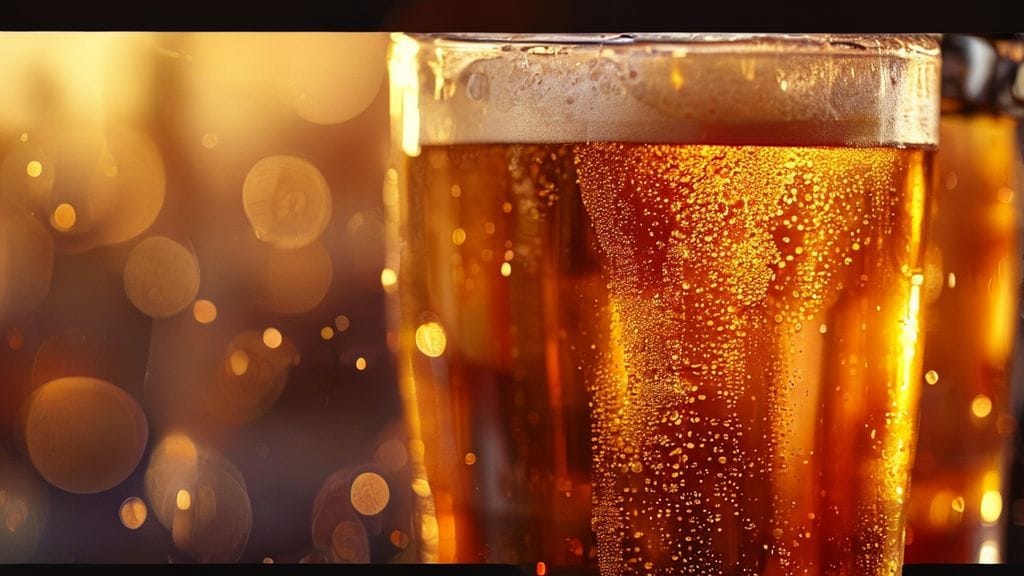
Isinglass, derived from the swim bladders of fish, is a powerful positively-charged collagen fining agent utilized post-fermentation to achieve exceptional beer clarity. It works by attracting and binding to negatively-charged yeast cells and proteins, forming larger flocs that rapidly settle out of suspension during cold crashing. Proper preparation and precise dosage are critical for optimal results and preventing haze recurrence.
| Metric | Value / Range | Notes |
|---|---|---|
| Primary Constituent | Collagen (Type I & V) | Derived from fish swim bladders (e.g., sturgeon) |
| Charge Profile | Strongly Positive (+) | Binds to negatively-charged particles (yeast, proteins) |
| Typical Dosage (Powder) | 0.025 – 0.1 g/L | Equivalent to 0.5 – 2.0 grams per 20 Liters |
| Typical Dosage (Liquid) | 0.5 – 1.25 mL/L | Equivalent to 10 – 25 mL per 20 Liters |
| Preparation Temp (Powder) | 18-22°C (Room Temp) | Requires rehydration and potential acidification |
| Addition Temp (Beer) | 0-5°C (Cold Crash) | Optimal activity and settling at low temperatures |
| Clarification Time | 24-72 hours | Varies with beer gravity, yeast strain, and temperature |
| Optimal pH Range | 3.5 – 5.5 | Ensures optimal positive charge efficacy |
| Vegan Status | No | Animal-derived product |
The Brewer’s Hook: Chasing That Elusive Brilliance
For two decades, I’ve brewed more beer than I can count. Early on, my focus was solely on flavor and aroma. But as I refined my craft, a persistent visual flaw haunted me: haze. Not just any haze, but the persistent yeast and protein haze that dulled the appearance of my otherwise perfectly crafted lagers and crisp ales. I remember one particularly frustrating batch of German Pilsner. The aroma was spot on, the flavor clean and crisp, but it poured with a slight opaqueness that betrayed its true potential. I’d cold crashed, I’d waited, but that perfect brilliance remained just out of reach.
That’s when I truly started digging deep into fining agents. My journey led me to Isinglass, a clarifier I’d heard about in commercial breweries but initially dismissed for homebrewing as “too complicated” or “overkill.” What a mistake that was. The first time I correctly applied Isinglass to a batch, the transformation was nothing short of miraculous. Within 48 hours, the beer went from cloudy to a liquid jewel, a clarity that enhanced every aspect of the drinking experience. It completely changed my perspective on what was achievable in a home brewery, and ever since, it’s been a crucial tool in my arsenal for specific styles where visual perfection is paramount. Let me show you how to harness its power.
The Math: Precision in Dosage and Preparation
Using Isinglass effectively isn’t about guesswork; it’s about precise chemistry and careful calculation. The collagen protein in Isinglass carries a strong positive charge, which is crucial for its function. It acts like a magnet for the negatively-charged yeast cells and haze-forming proteins in your beer. But getting the dosage right is critical. Too little, and you won’t achieve desired clarity. Too much, and while rare, it can potentially lead to over-fining or even contribute to chill haze later.
Manual Calculation Guide: Isinglass Dosage and Dilution
When working with Isinglass, especially the powder form, proper hydration and dilution are key. I typically aim for a **1% stock solution** from powder to ensure accurate dosing.
- Determine your target dosage: My preferred range for most beers is **0.05 grams per liter (g/L)** of beer. For a particularly hazy beer, I might go up to **0.1 g/L**.
- Calculate total Isinglass needed:
- Formula:
Total Isinglass (grams) = Target Dosage (g/L) × Beer Volume (L) - Example: For a 20-liter batch and a target of 0.05 g/L:
0.05 g/L × 20 L = 1.0 gram of Isinglass powder
- To make a 1% (w/v) solution, you need 1 gram of Isinglass for every 100 mL of solvent (acidified water).
- Formula:
Solvent Volume (mL) = Total Isinglass (grams) × 100 mL/gram - Example: If you need 1.0 gram of Isinglass:
1.0 gram × 100 mL/gram = 100 mL of 1% stock solution
- Target pH for hydration: **2.0-3.0**.
- To achieve this, I dissolve **1 gram of citric acid** in **1 liter of sterile water**. This gives a solution with a pH generally in the target range. Adjust as needed.
- The volume of 1% stock solution to add is directly the
Solvent Volume (mL)calculated in step 3. - Example: For our 20L batch needing 1.0 gram of Isinglass, we would add **100 mL** of the 1% Isinglass stock solution.
For liquid Isinglass products, simply refer to the manufacturer’s recommendations, usually in mL/L, and scale accordingly for your batch size. I still recommend measuring precisely with a graduated cylinder or syringe.
Step-by-Step Execution: Achieving Brilliant Clarity with Isinglass
Applying Isinglass requires attention to detail and timing. My process has been refined over many batches, ensuring maximum efficacy and minimal fuss.
- Choose Your Isinglass Form:
- Powdered Isinglass: More economical, but requires careful hydration and activation. This is my preferred method for control.
- Liquid Isinglass Solutions: Convenient, pre-hydrated, but often more expensive and have a shorter shelf life once opened.
- Preparation of Powdered Isinglass (24-48 hours prior to use):
- Hydrate: Measure the calculated amount of powdered Isinglass (e.g., **1.0 gram** for 20L). Place it in a sanitized, sealable container (e.g., a mason jar).
- Acidify Solvent: Add the calculated volume of sterile, acidified water (e.g., **100 mL** of water with 0.1g citric acid per 100mL for a pH ~2.5) to the container.
- Mix Gently: Stir or shake gently to ensure the powder is fully wetted. Do not agitate vigorously, as this can denature the collagen.
- Refrigerate: Store the solution in the refrigerator at **2-4°C** for **24 to 48 hours**. This allows the collagen to fully dissolve and unravel, exposing its positive charges. Shake gently a few times during this period.
- Verify: The solution should be mostly clear, with no obvious clumps of powder remaining. If it’s still clumpy, give it more time or gently warm it slightly (not above **30°C**) before re-cooling.
- Prepare Your Beer: Cold Crashing is Non-Negotiable:
- Isinglass works best in a very cold environment. Begin cold crashing your fully fermented beer **24-48 hours** before you plan to add the Isinglass.
- Bring the beer temperature down to **0-2°C**. This helps drop a significant portion of yeast and proteins naturally, making the Isinglass’s job easier and more efficient.
- Isinglass Addition to Beer:
- Warm (Optional, for Viscosity): If your prepared Isinglass solution is too thick from refrigeration, let it sit at room temperature for **15-30 minutes** to reduce viscosity, but do not warm it excessively.
- Sanitize: Ensure all tools (syringes, funnels, stirrers) are meticulously sanitized.
- Add Slowly: Gently add the prepared Isinglass solution directly into your fermenter. For a conical fermenter, I’ll add it through the top port. For a carboy, I’ll carefully siphon it in.
- Gentle Mixing: This is critical. You want to distribute the Isinglass evenly without re-suspending settled yeast or introducing oxygen.
- If you have a conical fermenter, a very brief burst of CO2 from the bottom can achieve this.
- For carboys, a sanitized stainless steel spoon can be gently used to stir the top layer of the beer for **30-60 seconds**. Alternatively, I’ve had success by gently rocking the entire fermenter for a few minutes.
- Settling Period:
- Return the beer to its cold crash temperature (**0-2°C**) and allow it to sit undisturbed for **24 to 72 hours**.
- During this time, the Isinglass will bind to haze particles, forming larger flocs that settle to the bottom.
- Racking/Packaging:
- Carefully rack the now brilliantly clear beer off the precipitated trub and Isinglass floc. Minimize disturbance to avoid re-suspending settled material.
- At this stage, your beer is ready for kegging or bottling.
Troubleshooting: What Can Go Wrong and How I Fix It
Even with precision, things can occasionally go sideways. Here are common issues I’ve encountered with Isinglass and my approach to resolving them:
- Beer Not Clearing or Too Slow:
- My Fix: Insufficient Dosage: My first thought is always dosage. If I suspect I was too conservative, I’ll re-calculate and add a second, smaller dose (e.g., half of the initial amount) and allow another 24-48 hours.
- My Fix: Temperature Too High: Isinglass needs cold. If my cold crash wasn’t truly at **0-2°C**, I’ll ensure my refrigeration is working optimally.
- My Fix: Poor Preparation: For powdered Isinglass, if it wasn’t fully hydrated or acidified, it won’t work. I ensure my stock solution is clear and properly aged before adding.
- My Fix: Excess Protein/Pectin Haze: Sometimes, the haze isn’t just yeast. If I’m dealing with a lot of adjuncts like wheat or fruit, I might need an enzyme like Brewbrite during the boil or even Pectic Enzyme for fruit beers *before* fermentation. Isinglass is primarily for yeast and larger protein aggregates, not small colloidal particles.
- Haze Returns After Clearing (Chill Haze):
- My Fix: Isinglass is effective at removing some haze-forming proteins, but not all. If chill haze persists, it indicates smaller protein-polyphenol complexes. I’d consider adding a colloidal stabilizer like PVPP (Polyvinylpolypyrrolidone) *in conjunction* with Isinglass, or ensuring I used Irish Moss/Whirlfloc effectively during the boil. Isinglass itself doesn’t cause chill haze, but it doesn’t always prevent all forms of it.
- Off-Flavors or Aroma Impact:
- My Fix: In my experience, Isinglass is remarkably inert. If I detect off-flavors, it’s almost certainly *not* the Isinglass. It’s more likely yeast autolysis from sitting on the trub too long, or an oxidation issue from my packaging process. I double-check my entire brewing process, not just the fining step. Extremely high overdosing *could* theoretically leave a residual protein, but I’ve never experienced it at typical homebrew dosages.
Sensory Analysis: The Transformation to Brilliance
The impact of proper Isinglass fining is primarily visual, but this visual transformation profoundly affects how we perceive and enjoy the beer.
- Appearance: This is where Isinglass shines, quite literally. A well-fined beer transforms from turbid or hazy to “brilliant,” “sparkling,” or “crystal clear.” When I pour a beer treated with Isinglass, the light gleams through it, revealing a true depth of color and allowing no suspended particles to obscure the view. This is especially vital for styles like German Lagers, Pilsners, or certain IPAs where a clean, bright appearance is a hallmark. The difference is stark, almost as if I’ve polished the liquid itself.
- Aroma: Isinglass itself is inert and imparts no aroma. However, by removing suspended yeast and protein, it allows the true aromatic compounds of the beer – the delicate esters, phenols, and especially hop thiols – to come through unhindered. There’s no “yeastiness” or “muddiness” to obscure the intended bouquet. For me, a brilliantly clear beer often smells “cleaner” and “sharper,” allowing for a more precise sensory evaluation of its aromatic profile.
- Mouthfeel: The removal of suspended yeast and protein significantly impacts mouthfeel. A hazy beer often has a slightly “thicker” or “chewier” mouthfeel due to these particulates. With Isinglass, the beer feels “crisper,” “cleaner,” and “smoother” on the palate. There’s an absence of any perceived “grittiness” or “breadiness” from yeast, allowing the true body and texture of the malt bill to present itself without interference. It’s a subtle but distinct improvement in drinkability.
- Flavor: Similar to aroma, Isinglass contributes no direct flavor. Its effect is indirect but powerful. By stripping out yeast, it eliminates any potential for lingering yeast bite, sulfur compounds, or excessive bready notes that might come from extended contact with a large yeast cake. It leaves behind a “clean slate” for the true malt and hop flavors to shine. My beers fined with Isinglass always taste “purer” and “more defined,” with individual flavor components standing out more distinctly. It truly elevates the drinking experience. I rely on BrewMyBeer.online for much of my research into these details.
Frequently Asked Questions About Isinglass
What’s the primary difference between Isinglass and Gelatin as fining agents?
While both Isinglass and Gelatin are protein-based fining agents that clarify beer, they originate differently and have subtle differences in their efficacy and charge profiles. Isinglass is derived specifically from the collagen of fish swim bladders and typically carries a very strong positive charge. This makes it exceptionally effective at rapidly binding to and dropping out negatively-charged yeast cells and some proteins. Gelatin, on the other hand, is derived from animal hides and bones (collagen) and generally has a weaker positive charge. While still effective, especially against yeast, I find Isinglass to be more potent for achieving that extreme “polished” clarity, particularly when dealing with stubborn haze.
Can Isinglass cause or contribute to chill haze later in the beer’s life?
No, Isinglass itself does not cause chill haze. In fact, by effectively removing some larger protein-polyphenol complexes and yeast, it can actually help reduce the *potential* for chill haze. However, Isinglass is not a magic bullet for all forms of haze. Chill haze is often caused by the aggregation of smaller, more stable protein-polyphenol complexes that fall out of solution at cold temperatures but redissolve when warmed. If these smaller complexes are present, Isinglass alone may not remove them. To combat persistent chill haze, I often combine Isinglass with other fining agents like PVPP or silica gel, or ensure excellent hot and cold breaks during the brewing process. For more on haze prevention, check out BrewMyBeer.online.
How long does Isinglass remain effective in beer, and can it be stored for reuse?
Once added to beer, Isinglass begins its work almost immediately, with optimal clarification typically observed within **24-72 hours**. After it has flocculated and settled to the bottom with the yeast and trub, its active fining effect is complete. The beer should then be carefully racked off this compacted layer. The prepared Isinglass *solution* (before addition to beer) has a limited shelf life. My own experience dictates that a properly prepared and refrigerated 1% solution of powdered Isinglass should be used within **7-10 days** for maximum efficacy. Beyond that, its positive charge can degrade, reducing its effectiveness. It cannot be stored *after* being added to beer and then reused.