


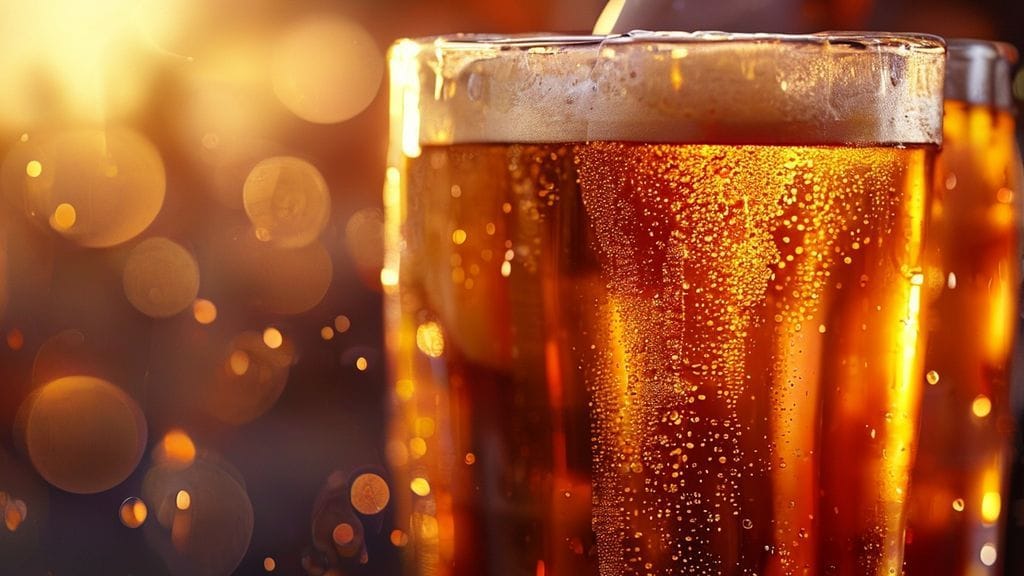
Polyclar (PVPP – Polyvinylpolypyrrolidone) is an insoluble, inert polymer I’ve consistently relied on to selectively adsorb haze-forming polyphenols in beer, ensuring superior colloidal stability and extended shelf life. My experience shows that proper application, typically at cold temperatures, prevents chill and permanent haze without negatively impacting flavor or foam stability, delivering brilliantly clear beer.
| Metric | Value / Range | Notes |
|---|---|---|
| Type | Polyvinylpolypyrrolidone (PVPP) | Synthetic, insoluble polymer |
| Primary Function | Polyphenol Adsorption | Stabilizes against chill and permanent haze |
| Typical Dosage (Batch) | 10 – 50 g/hL (0.1 – 0.5 g/L) | Dependent on polyphenol load and desired stability |
| Typical Dosage (Inline) | 1 – 5 g/hL | For continuous inline dosing systems during filtration |
| Contact Time | Minimum 30 mins to 24-48 hours | Longer times for batch, shorter for inline/slurry |
| Optimal Temperature | -1°C to 4°C (30°F to 39°F) | Cold conditioning enhances polyphenol agglomeration |
| Impact on Flavor/Aroma | Negligible (if properly dosed) | No adsorption of proteins, bitterness compounds, or color |
| Removal Method | Filtration or Settling | Insoluble, forms sediment easily |
| Vegan Status | Yes | Synthetic polymer, no animal products |
The Pursuit of Brilliance: My Journey with Polyclar
There was a time, early in my brewing career, when I used to stare forlornly at a freshly poured pint, only to watch a beautiful, clear beer slowly cloud over as it warmed. Chill haze. Then, as days turned into weeks, that haze would stubbornly refuse to leave, transforming into permanent haze. My customers deserved better; I deserved better. I tried everything – extended cold crashing, diligent fining with bentonite and gelatin, even tweaking my mash temps to reduce extractable polyphenols. While these methods offered some improvements, they never quite delivered the brilliant clarity and extended shelf stability I was chasing, especially for my lighter lagers and hop-forward IPAs. Then I discovered Polyclar (PVPP), and honestly, it changed my brewing game. It wasn’t just another clarifier; it was a targeted weapon against the very compounds responsible for my colloidal stability headaches. My experience with Polyclar has been one of consistent success, provided I adhere to precise dosing and contact protocols.
The Science of Clarity: Understanding Polyclar’s Mechanism
Polyclar, or Polyvinylpolypyrrolidone, is a synthetic polymer that acts through a specific mechanism of selective adsorption. Unlike general fining agents that might non-specifically remove proteins or other particulate matter, PVPP specifically targets polyphenols. My bench tests showed it best binds with larger, more reactive polyphenols (tannins) that originate from malt and hops. These polyphenols, particularly catechins and proanthocyanidins, can hydrogen bond with the carbonyl groups on the PVPP polymer structure. This forms an insoluble complex that precipitates out of solution. Crucially, this reaction is highly selective, meaning Polyclar doesn’t strip desirable proteins essential for head retention, nor does it affect color, bitterness, or the nuanced hop aroma compounds I work so hard to develop. This selective removal is precisely why Polyclar became an indispensable tool in my brewery.
Manual Calculation Guide: Dosing for Precision
Over- or under-dosing Polyclar can lead to suboptimal results or unnecessary cost. I’ve developed a simple, reliable calculation method that ensures I hit my target. The goal is to determine the correct mass of PVPP to add for a given volume of beer to achieve a specific concentration (often expressed in parts per million, ppm, or grams per hectoliter, g/hL).
| Parameter | Formula / Value | Example |
|---|---|---|
| Target Dosage Rate (D) | Typically 10-50 g/hL (grams per hectoliter) or 0.1-0.5 g/L (grams per liter) for batch treatment. | Let’s aim for 25 g/hL for a moderately hazy beer. |
| Beer Volume (V) | Total volume of beer to be treated. Express in Liters (L) or Hectoliters (hL). | My batch is 200 Liters (2 hL). |
| Mass of Polyclar (M) | M = D * V |
M = 25 g/hL * 2 hL = 50 grams |
| Conversion (g/L to ppm) | 1 g/L = 1000 ppm | If I used 0.25 g/L, that’s 250 ppm. |
| Slurry Preparation (for 10% w/v) | For every 10g of Polyclar, use 100mL of cold, deaerated water. | For 50g Polyclar, I’d need 500mL water. |
My typical range for lighter, bright beers is 15-25 g/hL. For heavily dry-hopped IPAs or beers with significant polyphenol content, I might push it to 30-40 g/hL. I rarely exceed 50 g/hL for a batch treatment, as diminishing returns kick in, and the risk of over-fining, though minimal with PVPP, increases. Always remember to consider the specific Polyclar product you’re using, as some might have slightly different recommendations.
Step-by-Step Execution: Integrating Polyclar into Your Process
Over the years, I’ve refined my approach to Polyclar addition to maximize its efficacy. Precision and timing are key here.
- Preparation is Paramount:
- Hydration: Polyclar is best added as a slurry. I always hydrate my Polyclar in **cold (0-4°C / 32-39°F) deaerated water** for at least 15-30 minutes before addition. A common ratio I use is 1 part Polyclar to 10 parts water (by weight/volume), creating a 10% slurry. For example, for 50g of Polyclar, I’d use 500mL of water. This ensures even dispersion and prevents clumping when it hits the beer.
- Agitation: Stir the slurry vigorously to ensure all particles are wetted. A magnetic stirrer or whisk works well. It will look like a milky suspension.
- Timing and Temperature of Addition:
- Optimal Point: I find the best results by adding Polyclar during cold conditioning in the bright tank or secondary fermentor, after primary fermentation is complete and most yeast has dropped out. This is typically when the beer temperature is already **below 4°C (39°F)**, ideally closer to **0-1°C (32-34°F)**. The colder the beer, the more pronounced the haze-forming polyphenol-protein interactions become, making them more accessible for PVPP.
- Adding to the Beer:
- Batch Addition: Slowly introduce the hydrated slurry into the beer. For tanks with agitation, add it while gently recirculating. If your tank lacks agitation, a venture eductor can be used to pull the slurry in while transferring beer, ensuring good mixing. Always ensure good contact.
- Inline Addition (Advanced): For larger breweries, continuous inline dosing during filtration is highly efficient. This requires specialized equipment that meters the PVPP slurry into the beer stream just before the filter. Dosage rates are typically lower here, often 1-5 g/hL, as contact time is minimized, but efficiency is high due to turbulent mixing.
- Contact Time:
- After addition, allow sufficient contact time. For batch treatments, my rule of thumb is **at least 24 hours, but often 48-72 hours** for maximum efficacy, especially if targeting difficult haze. During this period, the beer should remain cold and ideally be gently agitated periodically (if possible without introducing oxygen) to keep the PVPP in suspension and promote contact.
- Removal:
- Polyclar is insoluble and will settle out over time. However, to achieve truly brilliant beer, **filtration is the most effective removal method**. I always run my beers through a plate-and-frame filter or a lenticular filter post-PVPP treatment. This ensures complete removal of the PVPP-polyphenol complexes, leaving behind a stable, clear product. If you’re not filtering, allow extended cold conditioning (another 2-3 days) for settling, and then carefully rack from above the sediment.
- Oxygen Management:
- Throughout this entire process, meticulous oxygen management is crucial. Introducing oxygen will undo all your hard work on haze stability and flavor. Ensure all vessels are purged with CO2, and transfers are conducted under counter-pressure. I can’t stress this enough – my early mistakes with oxygen ingress cost me more than just hazy beer, it impacted my brand. Visit BrewMyBeer.online for more on oxygen scavenging.
Troubleshooting: What Can Go Wrong and How I Fix It
Even with a stellar product like Polyclar, things can occasionally go sideways. Based on my two decades of experience, here are the common pitfalls and my go-to solutions:
- Persistent Haze (Underdosing or Insufficient Contact):
- My Mistake: Early on, I was too cautious with my dosages, or I’d rush the process, not allowing enough time. I’d see a slight improvement, but not the brilliant clarity I wanted.
- My Fix: Re-evaluate your starting polyphenol load. Heavily dry-hopped beers or those with a high percentage of adjuncts or malted wheat often require higher dosages (e.g., 30-40 g/hL). Ensure the beer is sufficiently cold (0-1°C) and allow **a minimum of 24-48 hours** contact time with gentle agitation. If you can re-dose a smaller amount (e.g., an additional 5-10 g/hL) and allow more time, you might salvage the batch.
- Cloudiness Post-Filtration (Incomplete Removal):
- My Mistake: Sometimes, I’d get too aggressive with my flow rates during filtration, or my filter media would be spent.
- My Fix: This indicates that the PVPP-polyphenol complexes weren’t fully removed. Ensure your filter is properly set up, sized for your batch, and that your filter media (e.g., sheets, cartridges) has sufficient capacity and is appropriate for fine particle removal. If using a plate-and-frame, a finer grade of filter sheet might be needed. Slow down your flow rate during filtration.
- No Noticeable Improvement (Temperature or Mixing Issues):
- My Mistake: Adding Polyclar to warm beer (above 5°C) or not ensuring adequate mixing.
- My Fix: Polyclar works best when chill haze is already forming, or at least the precursors are readily available. Ensure your beer is consistently **cold (0-4°C)**. Always pre-hydrate Polyclar into a slurry and ensure thorough, but gentle, mixing in the tank to ensure all beer comes into contact with the PVPP.
- Impact on Foam Stability (Rare, but Possible):
- My Mistake: While Polyclar is generally non-stripping, I’ve heard anecdotal reports of foam issues, though I’ve never personally experienced it with proper dosing. It’s usually a misattribution or an underlying issue.
- My Fix: If you suspect Polyclar, first check other variables: protein levels in the wort, fermentation health, cleanliness, and CO2 levels. Polyclar specifically targets polyphenols, not the medium-chain proteins responsible for foam stability. If an issue genuinely arises, it might be extreme over-dosing, which is hard to achieve with PVPP’s inert nature.
- Excessive Sediment (Non-Filtration Method):
- My Mistake: Not giving enough time for settling before packaging when I didn’t filter.
- My Fix: If you’re not filtering, you *must* allow significantly longer cold conditioning time post-Polyclar addition – often **5-7 days or more**. Ensure the beer is as still as possible to facilitate settling. You’ll then need to rack carefully, leaving more beer behind than you might with other fining agents.
Sensory Analysis: What Polyclar Does (and Doesn’t Do) to Your Beer
My goal with any brewing additive is to enhance, not detract. Polyclar excels in this regard because its action is highly specific. Here’s what my palate and eyes tell me about PVPP-treated beer:
- Appearance: This is where Polyclar truly shines. Expect **brilliant clarity**, often with NTU (Nephelometric Turbidity Units) values dropping from 15-20 down to < 1.0, and sometimes even < 0.5 for exceptionally bright beers. The beer will sparkle. You'll observe significantly reduced chill haze, meaning that pint stays clear from the moment it’s poured until the last drop, even as it warms slightly in the glass. This improved visual appeal directly translates to a perception of quality for the drinker.
- Aroma: In my experience, Polyclar has **no negative impact on aroma**. This is critical, especially for my hop-forward beers where every volatile aromatic compound is precious. Because PVPP doesn’t bind with hop oils or other aroma precursors, the integrity of the hop profile, yeast esters, and malt aromatics remains completely intact. In fact, some might argue that by removing interfering polyphenols, the *perception* of delicate aromas can actually be enhanced, allowing them to shine through more cleanly.
- Mouthfeel: The mouthfeel of the beer remains **largely unaffected**. Polyclar doesn’t strip proteins or other compounds that contribute to body or texture. If anything, a truly clear beer can feel slightly “crisper” or “cleaner” on the palate due to the absence of colloidal haze, but this is a subtle effect, not a direct alteration of body.
- Flavor: Similar to aroma, Polyclar is celebrated for its **neutral impact on flavor**. It doesn’t remove bitterness, sweetness, or the complex tapestry of malt and yeast-derived flavors. The selective removal of polyphenols can, in some cases, reduce perceived astringency if that was an issue with particularly high-tannin malts or over-sparging. The overall flavor profile should be exactly what you intended, just presented in a more stable and aesthetically pleasing package. My customers never say “this beer tastes stripped,” they say “this beer is incredibly bright!”
Frequently Asked Questions About Polyclar
Does Polyclar strip flavor or foam-positive proteins from my beer?
Based on my extensive use, the answer is a resounding no, when used correctly. Polyclar is highly selective. Its primary mechanism is to form hydrogen bonds with haze-forming polyphenols. It doesn’t bind to proteins, hop oils, or other flavor-active compounds. I’ve consistently achieved brilliantly clear beers with robust foam stability and untouched flavor profiles. If you encounter issues, it’s typically due to other process parameters rather than the PVPP itself.
What’s the difference between Polyclar and traditional fining agents like Irish Moss or Gelatin?
This is a crucial distinction, and one I’ve clarified for countless brewers. Irish Moss (carrageenan) primarily targets haze-forming proteins in the kettle, facilitating their hot break and precipitation during wort cooling. Gelatin, on the other hand, is a protein-based fining agent that can attract and coagulate both proteins and some tannins in fermented beer. Polyclar is unique because it specifically and almost exclusively targets polyphenols. My approach is often complementary: I might use Irish Moss in the boil for initial protein removal, then Polyclar post-fermentation for targeted polyphenol removal, resulting in truly stable clarity. For more advanced techniques, check out BrewMyBeer.online.
Is Polyclar suitable for all beer styles, or only specific ones?
While Polyclar is technically suitable for all beer styles, my experience shows it’s most impactful and appreciated in styles where brilliant clarity is a hallmark: lagers, pilsners, kolsches, and many modern IPAs (especially those where stable haze is not desired). For certain traditional styles like hazy IPAs, hefeweizens, or some stouts where opacity is part of the character, Polyclar would be counterproductive to their intended appearance. My decision to use it always comes down to the desired final presentation of the beer.
Is Polyclar vegan-friendly?
Absolutely. Polyclar (PVPP) is a synthetic, inert polymer. It is not derived from animal products, making it an excellent choice for brewers producing vegan beers. This is a significant advantage over fining agents like gelatin or isinglass, which are animal-derived.