

Discover AI in Brewing Current Applications how artificial intelligence revolutionizes beer production through advanced quality control, recipe optimization, and predictive analytics. Learn about current AI applications transforming brewing operations from craft breweries to global beer giants.

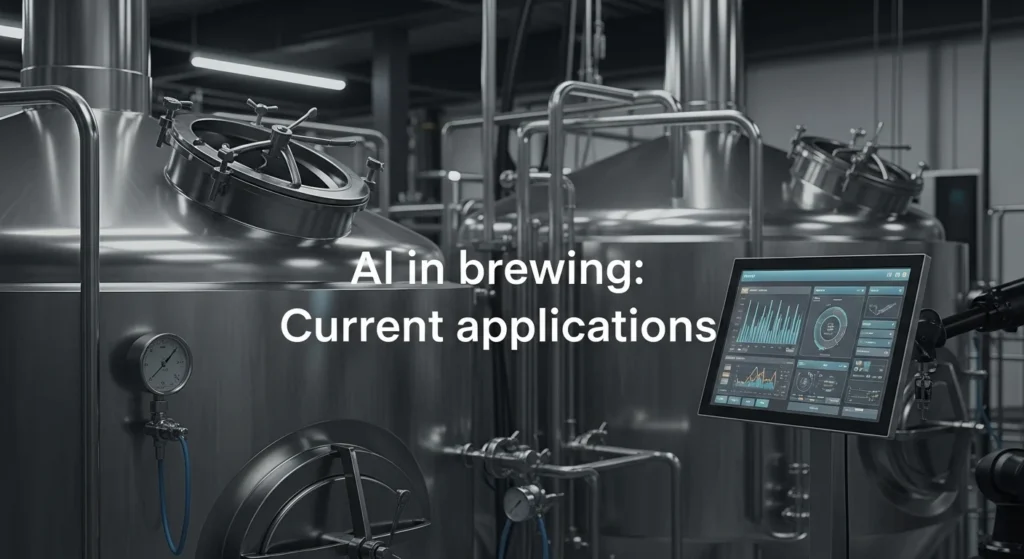
The brewing industry stands at the forefront of a technological revolution where AI in brewing applications are reshaping traditional production methods. From automated quality control systems to predictive recipe optimization, artificial intelligence has moved beyond experimental applications to become an integral part of modern brewery operations.thedrinksbusiness+1
Major brewing companies worldwide have embraced AI in brewing technologies, achieving remarkable results including 35% reductions in production defects, 20% improvements in operational efficiency, and the ability to analyze over 1,000 beer samples daily. These advancements represent more than incremental improvements – they signify a fundamental shift toward data-driven brewing excellence.digitaldefynd+1
The current landscape of AI in brewing encompasses everything from sensor-based quality monitoring to machine learning-powered recipe development, creating opportunities for breweries of all sizes to enhance their operations. Understanding these applications helps brewers leverage artificial intelligence effectively while maintaining the artisanal qualities that define exceptional beer.brewingindustryguide+1
Current State of AI in Brewing Technology
Modern AI in brewing implementations utilize sophisticated machine learning algorithms, computer vision systems, and predictive analytics to address complex brewing challenges. These technologies have matured rapidly, transitioning from research projects to production-ready systems that deliver measurable business value.micetgroup+1
The integration of Internet of Things (IoT) sensors with artificial intelligence creates comprehensive monitoring ecosystems that track every aspect of beer production. Real-time data analysis enables immediate responses to process variations, ensuring consistent quality and optimal resource utilization.iot.telenor+1
Core Technologies Driving Innovation
Machine learning algorithms analyze vast datasets from brewing operations to identify patterns, predict outcomes, and optimize processes. Neural networks process complex sensory data to predict beer flavor profiles and consumer preferences with unprecedented accuracy.nature+1
Computer vision systems inspect packaging quality, monitor fill levels, and detect defects with precision exceeding human capabilities. These automated inspection systems operate continuously at production speeds, identifying issues before they impact product quality.flavoractiv+1
Predictive analytics platforms forecast equipment maintenance needs, production demand, and quality issues before they occur. This proactive approach minimizes downtime while optimizing resource allocation and production scheduling.skilglobal+1
| Application Area | Technology Used | Maturity Level | Implementation Cost | ROI Timeline | Brewery Size | Success Rate | Key Benefits |
|---|---|---|---|---|---|---|---|
| Recipe Optimization | Machine Learning | Emerging | Medium | 6-12 months | All sizes | 70% | Consistency & Innovation |
| Quality Control | Computer Vision | Advanced | High | 3-6 months | Medium-Large | 85% | Defect Reduction |
| Process Monitoring | IoT Sensors + ML | Mature | Medium | 1-3 months | All sizes | 90% | Real-time Optimization |
| Predictive Maintenance | Predictive Analytics | Mature | High | 6-12 months | Large breweries | 80% | Reduced Downtime |
| Demand Forecasting | Time Series Analysis | Advanced | Medium | 3-6 months | Medium-Large | 75% | Waste Reduction |
| Flavor Profiling | Neural Networks | Experimental | Low | 12+ months | Research/Large | 60% | New Product Development |
| Temperature Control | Real-time Control Systems | Mature | Medium | 1-3 months | All sizes | 95% | Quality Assurance |
| Inventory Management | Supply Chain Analytics | Advanced | Medium | 6-12 months | Medium-Large | 80% | Cost Optimization |
Quality Control and Inspection Systems
AI in brewing quality control represents one of the most successful applications of artificial intelligence technology. Advanced computer vision systems inspect millions of bottles and cans daily, identifying defects, verifying fill levels, and ensuring packaging integrity with remarkable precision.digitaldefynd+1
Heineken’s implementation of AI-powered quality control systems demonstrates the technology’s transformative potential. Their computer vision platform achieved 92% improvement in visual inspection accuracy while reducing packaging defects by 35%.digitaldefynd
Real-Time Quality Monitoring
Sensor-based AI systems continuously monitor critical brewing parameters including temperature, pH levels, dissolved oxygen, and fermentation progression. These systems detect deviations from optimal conditions within seconds, enabling immediate corrective actions.micetgroup+1
Machine learning models analyze historical quality data to identify patterns that predict potential issues. This predictive approach allows brewers to intervene before problems affect finished products, maintaining consistent quality standards.sciencedirect+1
Automated sampling and testing systems reduce human error while increasing testing frequency. AI algorithms process spectroscopic data to assess beer composition, flavor compounds, and quality metrics in real-time.hellofuture.orange+1
Defect Detection and Prevention
Computer vision technology identifies visual defects including label misalignment, underfilled containers, and packaging irregularities. These systems operate at production line speeds, inspecting every package without slowing manufacturing processes.flavoractiv+1
Predictive maintenance algorithms analyze equipment performance data to prevent failures that could compromise product quality. By identifying potential issues before they occur, breweries maintain consistent production standards while reducing waste.skilglobal+1
Quality prediction models combine process data with historical outcomes to forecast batch quality before fermentation completion. This early warning system enables brewers to adjust processes or redirect products as needed.sciencedirect+1
Recipe Optimization and Development
AI in brewing recipe development leverages machine learning to analyze ingredient combinations, process parameters, and consumer preferences. These systems can evaluate thousands of potential recipe variations, identifying optimal formulations that human brewers might never consider.bernardmarr+1
IntelligentX pioneered AI-driven recipe optimization by collecting customer feedback through social media platforms. Their system processes consumer taste preferences to continuously refine beer recipes, creating personalized brewing recommendations.forbes+1
Ingredient Selection and Formulation
Machine learning algorithms analyze vast databases of ingredient properties, including hop varieties, malt characteristics, and yeast performance profiles. These systems recommend ingredient combinations that achieve specific flavor targets while optimizing cost and availability.imarcgroup+1
Neural networks process sensory data from hundreds of beer samples to understand the relationship between ingredients and flavor outcomes. This analysis enables precise prediction of how recipe modifications will affect finished beer characteristics.nature+1
Optimization algorithms balance multiple constraints including ingredient costs, availability, regulatory requirements, and flavor targets. These systems generate recipe recommendations that satisfy complex business and quality objectives simultaneously.microbreweryindia+1
AI in Brewing Current Applications Flavor Profile Prediction
Advanced AI models analyze chemical compounds responsible for beer flavor and aroma. Belgian researchers developed machine learning systems that predict consumer ratings with higher accuracy than human experts.technologyreview+1
Spectroscopic analysis combined with artificial intelligence identifies flavor compounds and predicts sensory characteristics before beer production. This capability enables brewers to evaluate recipe concepts without expensive pilot batches.hellofuture.orange+1
Consumer preference modeling incorporates demographic data, tasting history, and regional preferences to predict market acceptance. These insights guide new product development and marketing strategies.economist+1
Process Monitoring and Control
Real-time process monitoring represents one of the most mature applications of AI in brewing technology. Advanced sensor networks collect thousands of data points per minute, feeding machine learning algorithms that optimize brewing parameters continuously.skilglobal+1
Kirin’s Takumi system exemplifies sophisticated AI-powered process control. This platform monitors fermentation conditions, adjusts parameters automatically, and maintains consistent beer quality across multiple production facilities.finance.yahoo+1
Fermentation Monitoring and Control
AI-powered fermentation monitoring systems track yeast activity, sugar consumption, and metabolic byproduct formation throughout the brewing process. These systems predict fermentation completion timing and identify potential issues before they impact beer quality.arxiv+1
Temperature control algorithms automatically adjust heating and cooling systems based on fermentation stage, yeast strain, and target outcomes. This precision control ensures optimal yeast performance while preventing off-flavor development.micetgroup+1
Dissolved oxygen monitoring with AI analysis prevents oxidation damage and maintains beer freshness. Machine learning models correlate oxygen levels with shelf life, enabling optimization for specific distribution requirements.microbreweryindia+1
Production Optimization
Predictive analytics optimize production scheduling based on demand forecasts, ingredient availability, and equipment capacity. These systems minimize inventory costs while ensuring product availability.plaato+1
Energy consumption optimization uses machine learning to reduce heating, cooling, and processing costs without compromising quality. AI algorithms identify efficiency opportunities that human operators might overlook.imarcgroup+1
Waste reduction systems analyze production data to minimize ingredient losses, reduce water consumption, and optimize byproduct utilization. These environmental benefits align with sustainability objectives while improving profitability.thedrinksbusiness+1
Predictive Analytics and Maintenance
Predictive maintenance represents a critical application of AI in brewing operations, preventing costly equipment failures and production disruptions. Machine learning algorithms analyze equipment performance data to predict maintenance needs before problems occur.skilglobal+1
Deschutes Brewery successfully implemented predictive analytics to optimize their glycol cooling system, delaying expensive capacity expansion through better utilization. This approach demonstrates how AI in brewing can deliver significant capital cost savings.osisoft+1
| Company | AI Application | Technology Partner | Implementation Year | Primary Outcome | Investment Level | Current Status |
|---|---|---|---|---|---|---|
| Heineken | Quality Control | In-house + External | 2020-2025 | 35% defect reduction | High | Expanding |
| Carlsberg | Beer Fingerprinting | Microsoft, Universities | 2018-2021 | 1000 samples/day analysis | Very High | Completed |
| Kirin | Takumi System | In-house | 2019-2025 | Quality consistency | High | Active |
| AB InBev | Process Optimization | Multiple vendors | 2018-2025 | Cost optimization | Very High | Ongoing |
| IntelligentX | Recipe Optimization | Facebook Messenger API | 2016-2020 | Customer feedback loop | Medium | Acquired/Dormant |
| Champion Brewing | ML IPA Development | Metis Machine | 2018 | Perfect IPA recipe | Low | Completed |
| Deschutes | Predictive Analytics | OSI Pi | 2015-2019 | Glycol capacity delay | Medium | Mature |
| Coca-Cola (Beverages) | Flavor Consistency | In-house | 2020-2025 | Flavor standardization | High | Active |
Equipment Health Monitoring
Vibration analysis using machine learning detects bearing wear, pump problems, and mechanical issues before failure occurs. These systems continuously monitor equipment health, scheduling maintenance during planned downtime.skilglobal+1
Thermal imaging combined with AI algorithms identifies heating and cooling system inefficiencies. Early detection prevents energy waste and maintains optimal brewing conditions.imarcgroup+1
Flow rate monitoring with predictive analytics identifies pipe blockages, valve problems, and filtration issues. This proactive approach prevents product contamination and maintains process efficiency.skilglobal+1
Demand Forecasting and Planning
AI-powered demand forecasting analyzes seasonal patterns, promotional impacts, and market trends to optimize production planning. These systems reduce inventory costs while preventing stockouts.plaato+1
Seasonal demand prediction helps breweries prepare for peak consumption periods including holidays, sporting events, and warm weather. Accurate forecasting prevents overproduction and waste.plaato+1
Market trend analysis identifies emerging consumer preferences, enabling breweries to develop products that meet changing demands. This competitive intelligence guides strategic planning and innovation initiatives.economist+1
Inventory and Supply Chain Optimization
AI in brewing extends beyond production to optimize inventory management and supply chain operations. Machine learning algorithms analyze consumption patterns, supplier performance, and market conditions to optimize purchasing and inventory levels.unleashedsoftware+1
Predictive analytics help breweries balance ingredient freshness with cost optimization, ensuring quality while minimizing waste. These systems consider ingredient shelf life, seasonal availability, and price fluctuations in optimization decisions.plaato+1
Raw Material Management
Ingredient quality prediction uses machine learning to assess hop, malt, and yeast characteristics before brewing. These systems enable quality-based purchasing decisions and optimal ingredient utilization.microbreweryindia+1
Supplier performance analytics evaluate delivery reliability, quality consistency, and cost competitiveness. AI algorithms recommend supplier strategies that balance cost, quality, and risk factors.dataintelo+1
Inventory optimization balances carrying costs against stockout risks, considering ingredient perishability and seasonal availability. These systems minimize working capital requirements while ensuring production continuity.skilglobal+1
Distribution and Logistics
Route optimization algorithms minimize delivery costs while ensuring product freshness. These systems consider traffic patterns, delivery windows, and temperature control requirements.unleashedsoftware+1
Cold chain monitoring with AI analysis maintains product quality throughout distribution. Temperature sensors combined with machine learning detect issues that could compromise beer quality.thedrinksbusiness+1
Demand sensing algorithms adjust distribution patterns based on real-time sales data and market conditions. This responsive approach optimizes inventory positioning and reduces waste.plaato+1
Emerging Applications and Future Trends
Advanced AI in brewing applications continue emerging as technology capabilities expand. Molecular analysis combined with machine learning promises even more precise quality control and flavor prediction.economist+1
Digital twin technology creates virtual brewery models that enable process optimization without physical experimentation. These sophisticated simulations accelerate innovation while reducing development costs.arxiv+1
Personalized Beer Production
Consumer preference learning systems analyze individual taste profiles to recommend personalized beer formulations. These systems could enable mass customization of beer products.forbes+1
Micro-batch optimization uses AI to produce small quantities of customized beers efficiently. This capability enables breweries to serve niche markets without major investments.brewingindustryguide+1
Regional preference modeling adapts beer recipes to local taste preferences while maintaining brand consistency. This approach enables global breweries to compete with local producers.forbes+1
Sustainability and Environmental Impact
Energy optimization algorithms minimize power consumption throughout brewing operations. These systems identify efficiency opportunities that reduce environmental impact while lowering costs.thedrinksbusiness+1
Water usage optimization balances quality requirements with conservation objectives. AI algorithms identify opportunities to reduce water consumption without compromising beer quality.microbreweryindia+1
Waste stream optimization transforms brewing byproducts into valuable resources. Machine learning identifies optimal utilization strategies for spent grain, yeast, and other waste materials.imarcgroup+1
Implementation Strategies and Best Practices
Successful AI in brewing implementation requires careful planning, phased deployment, and strong change management. Organizations should start with pilot projects that demonstrate value before expanding to full-scale implementations.brewingindustryguide+1
Staff training and development ensure successful technology adoption while maintaining brewing expertise. The most successful implementations combine artificial intelligence with human knowledge and creativity.bernardmarr+1
| Aspect | Benefits | Challenges | Mitigation Strategy | Success Factor |
|---|---|---|---|---|
| Implementation Speed | Rapid deployment possible | Complex integration | Phased implementation | Strong project management |
| Cost Effectiveness | ROI within 6-12 months | High upfront costs | Start with pilot projects | Clear ROI metrics |
| Quality Improvement | 85-95% accuracy improvements | Algorithm bias risks | Human oversight essential | Continuous monitoring |
| Process Efficiency | 20-30% efficiency gains | Change management | Staff training programs | Change leadership |
| Innovation Capability | New product development | Limited creativity | Human-AI collaboration | Balanced approach |
| Scalability | Easy to scale up | Infrastructure needs | Cloud-based solutions | Flexible architecture |
| Data Requirements | Rich data insights | Data quality issues | Data validation systems | Data governance |
| Technical Expertise | Automated decision making | Skill gap requirements | Partner with AI vendors | Ongoing education |
Technology Selection and Integration
Platform evaluation should consider brewing-specific requirements, integration capabilities, and vendor support quality. Generic AI solutions often require significant customization for brewery applications.brewingindustryguide+1
Data integration challenges require careful planning to combine information from multiple brewing systems. Standardized data formats and APIs facilitate integration with existing brewery infrastructure.unleashedsoftware+1
Cloud versus on-premises deployment decisions balance data security, performance, and cost considerations. Hybrid approaches often provide optimal flexibility for brewery operations.dataintelo+1
Change Management and Training
Workforce development ensures brewers can effectively utilize AI tools while maintaining traditional brewing skills. The most successful implementations enhance rather than replace human expertise.bernardmarr+1
Cultural change management addresses resistance to technology adoption while preserving brewing traditions. Communication strategies emphasize how AI enhances rather than threatens brewing craftsmanship.microbreweryindia+1
Continuous learning programs keep staff current with evolving AI capabilities and best practices. Regular training ensures organizations maximize their technology investments.brewingindustryguide+1
ROI and Business Impact Analysis
AI in brewing investments typically achieve positive returns within 6-12 months through efficiency gains, quality improvements, and cost reductions. Quality control applications often deliver the fastest payback through defect reduction and waste elimination.digitaldefynd+1
Process optimization and predictive maintenance provide ongoing value through reduced downtime and optimized resource utilization. These benefits compound over time, creating substantial long-term value.skilglobal+1
Measuring Success and Optimization
Key performance indicators should align with specific business objectives including quality metrics, efficiency measures, and financial outcomes. Regular assessment ensures AI systems continue delivering expected value.the5thingredient+1
Continuous optimization refines AI algorithms based on operational experience and changing business needs. Machine learning systems improve performance as they process more data and receive feedback.nature+1
Benchmarking against industry standards and competitors helps organizations assess their AI maturity and identify improvement opportunities. Regular evaluation ensures systems remain current with technology developments.skilglobal+1
The current applications of AI in brewing demonstrate technology’s transformative potential for beer production operations. From quality control systems that inspect millions of packages daily to predictive analytics that optimize entire supply chains, artificial intelligence has become integral to modern brewing success.
Major breweries worldwide have achieved remarkable results through AI implementation, including significant defect reductions, efficiency improvements, and cost savings. These successes provide roadmaps for other organizations considering similar investments in brewing technology advancement.
The future of AI in brewing promises even more sophisticated applications including personalized beer production, molecular-level quality control, and comprehensive sustainability optimization. Organizations that embrace these technologies thoughtfully, balancing artificial intelligence with human expertise, will lead the industry’s continued evolution toward data-driven brewing excellence.
About Auther
Ryan Brewtech is a computer engineer developing IoT brewing solutions with over 12 years of experience in brewing technology and artificial intelligence applications. He has designed and implemented AI systems for breweries ranging from craft operations to multinational corporations, specializing in machine learning algorithms, predictive analytics, and automated quality control systems. Ryan holds a Master’s degree in Computer Engineering and brewing certifications from the Institute of Brewing and Distilling. His expertise spans embedded systems, machine learning implementation, and brewery process optimization, making him a trusted authority on AI applications in brewing operations and the future of intelligent brewing technology.