


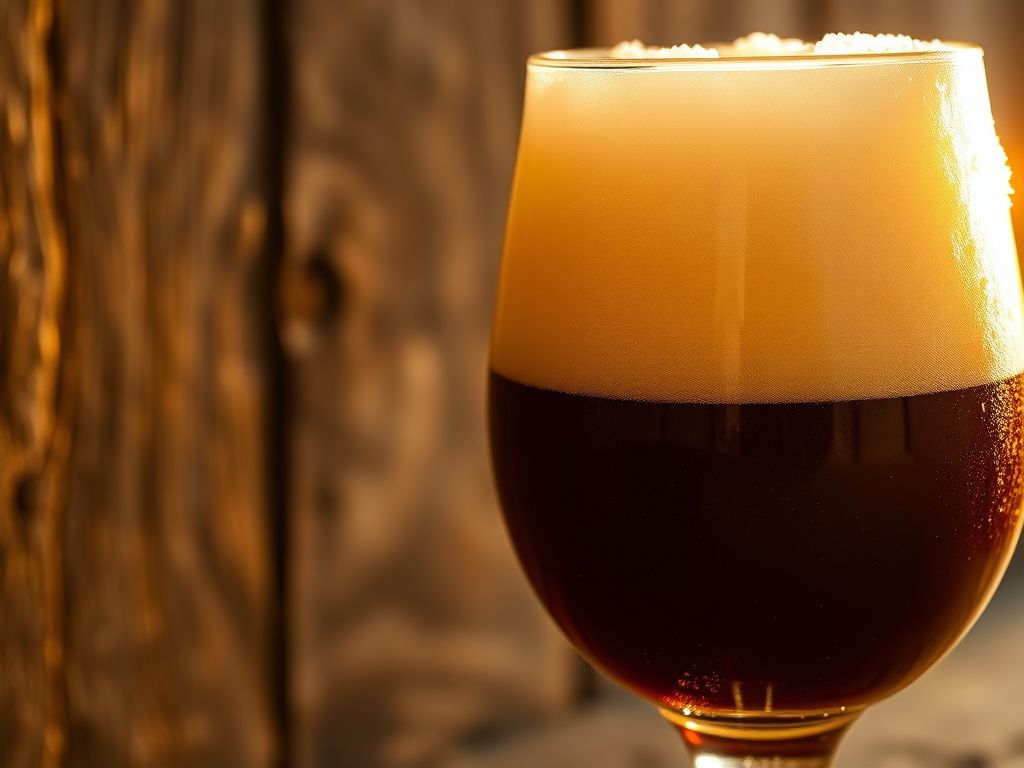
Mastering Belgian Quad aging demands precise control over fermentation kinetics, oxygen ingress, and cellar conditions to cultivate complex ester profiles, Maillard derivatives, and subtle oxidative nuances. Two-year maturation requires robust yeast health, meticulous sanitation, and stable environmental parameters to prevent deleterious off-flavors and optimize sensory evolution.
Belgian Quad Aging: Key Parameters and Technical Specifications
| Aging Phase | Key Parameter | Target Value/Range | Technical Rationale | Observation/Metric |
|---|---|---|---|---|
| Primary Fermentation | Yeast Pitching Rate | 1.0-1.5M cells/mL/°P (High-Gravity) | Ensures complete attenuation, minimizes stress, promotes desired ester/phenol production, prevents underpitching off-flavors (e.g., diacetyl, acetaldehyde). | Microscopy cell count, viability staining, gravity readings (hydrometer/densitometer). |
| Secondary/Bulk Conditioning | Temperature Stability | 18-22°C (post-fermentation) | Facilitates diacetyl reduction, allows yeast to clean up byproducts, promotes long-chain esterification, contributes to flavor integration. | Temperature loggers, sensory evaluation for diacetyl threshold. |
| Packaging (Bottling) | Dissolved Oxygen (DO) | < 50 ppb (Ideally < 20 ppb) | Minimizes oxidative staling, preserves hop character (though minimal for Quads), ensures controlled aging reactions, prevents rapid degradation. | DO meter (e.g., Hach, Anton Paar), TPO analysis. |
| Cellaring (24 Months) | Temperature Range | 10-15°C (constant) | Optimizes slow, desirable chemical reactions (Maillard, esterification), retards undesirable oxidative processes, prevents rapid yeast autolysis, maintains stable flavor profile development. | Continuous temperature logging, cellar environment monitoring. |
| Cellaring (24 Months) | Light Exposure | Absolute Darkness | Prevents light strike (skunking) by inhibiting iso-alpha-acid degradation, preserves subtle malt character, ensures oxidative reactions proceed without light-induced acceleration. | Visual inspection of storage area, light meter readings (negligible). |
Calculations for High-Gravity Belgian Quad Aging
1. Estimated Yeast Pitching Rate (High-Gravity):
For a 20L batch of Belgian Quad with an Original Gravity (OG) of 1.090 (approx. 22.5°P):
Target Pitch Rate = 1.0 x 10⁶ cells/mL/°P
Volume = 20,000 mL
°P = (OG – 1) * 250 (approx.) = (1.090 – 1) * 250 = 0.090 * 250 = 22.5°P
Required Cells = 1.0 x 10⁶ cells/mL/°P * 20,000 mL * 22.5 °P = 4.5 x 10¹¹ cells
Note: This is a conservative estimate. Many brewers opt for 1.25-1.5M cells/mL/°P for robust fermentation and long-term viability in high-gravity worts, often requiring multiple yeast packets or a large starter.
2. Post-Fermentation ABV Calculation:
Assuming an OG of 1.090 and a Final Gravity (FG) of 1.012:
ABV% = (OG – FG) * 131.25
ABV% = (1.090 – 1.012) * 131.25
ABV% = 0.078 * 131.25 = 10.24%
This high alcohol content contributes significantly to the beer’s stability and aging potential, acting as a natural preservative and solvent for flavor compounds.
3. Oxygen Ingress Estimation Through Crown Cap (General Reference):
While precise measurements require specialized equipment, generalized ingress rates for standard crown caps can be modeled.
Assumed O2 ingress rate for a typical crown cap: 0.01 – 0.05 mg/L/month.
For a 24-month aging period:
Minimum Total Ingress = 0.01 mg/L/month * 24 months = 0.24 mg/L
Maximum Total Ingress = 0.05 mg/L/month * 24 months = 1.20 mg/L
This cumulative oxygen ingress, even at low rates, drives the oxidative maturation process. Brewers must minimize initial Dissolved Oxygen (DO) at bottling to ensure this ingress contributes to desirable sherry and dried fruit notes rather than cardboard staling. High TPO (Total Package Oxygen) drastically reduces aging potential.
Belgian Quads: Mastering Two-Year Cellaring for Definitive Evolution
Introduction to the Belgian Quad Style and Aging Philosophy
The Belgian Quad, also known as a Belgian Dark Strong Ale, represents the pinnacle of complex, high-gravity brewing. Characterized by an Original Gravity (OG) often exceeding 1.085 (with some pushing 1.100+), an alcohol content typically ranging from 9-13% ABV, and a rich tapestry of dark fruit esters, caramel, toffee, and spice notes, these beers are inherently designed for extensive maturation. Unlike many other styles, a properly brewed and cellared Quad does not merely survive aging; it flourishes. The two-year aging window specified herein is not arbitrary; it represents a critical period where the beer’s raw fermentation character harmonizes, new oxidative compounds emerge, and the overall complexity deepens to an almost vinous, liqueur-like quality.
The fundamental principle behind aging high-gravity beers like the Belgian Quad is the controlled transformation of volatile and semi-volatile compounds. Yeast byproducts such as acetaldehyde and diacetyl diminish, replaced by more stable, nuanced esters and higher alcohols. Maillard reactions, initially set during the boil, continue to evolve slowly, contributing to sherry, raisin, and dried plum characteristics. The inherent alcoholic strength, coupled with residual sugars and complex melanoidins from the malt bill, provides a robust matrix that buffers against rapid degradation and supports the long-term development of desirable flavor compounds. Achieving this requires technical precision from grain to glass, particularly regarding yeast health, oxygen management, and environmental control.
Brewing for Longevity: The Foundation of a Cellar-Worthy Quad
Successful two-year aging begins with the brewing process itself. The recipe formulation and fermentation management are paramount.
Malt Bill Construction: A complex foundation is essential. Primarily, a significant proportion of quality Belgian Pilsner malt provides fermentable sugars and a clean base. Specialty malts such as Munich, Vienna, Special B, Aromatic, and various crystal malts (e.g., CaraMunich, CaraVienne) contribute layers of caramel, toffee, and dark fruit notes that will evolve beautifully. The judicious use of dark candi sugar (syrup or rocks), typically 10-20% of the fermentable adjuncts, is crucial. This sugar is 100% fermentable, boosting ABV without adding excessive body, which can become cloying over extended aging. The Maillard reaction products within the candi sugar itself also contribute to the beer’s deep color and complex flavor profile.
Hop Schedule: Hops play a supporting, not starring, role in a Belgian Quad. High alpha acid noble hops (e.g., Styrian Goldings, Northern Brewer, Saaz) are typically used for bittering only, aiming for 20-35 IBU. Aromatic hop additions are minimal or absent entirely, as their delicate compounds will dissipate or morph into undesirable notes over two years. The goal is sufficient bitterness to balance the malt sweetness without contributing any noticeable hop aroma or flavor.
Water Chemistry: Building a robust, long-aging beer requires attention to water. A relatively soft water profile with low sulfates and chlorides is generally preferred to allow the malt and yeast character to shine. pH buffering capacity is critical; the mash pH should be targeted at 5.2-5.4. Adequate calcium (50-100 ppm) supports enzyme activity, yeast flocculation, and overall beer stability. Ensuring a healthy brewing liquor is a foundational step in crafting a beer that can withstand extended cellaring. For advanced water adjustments, consider resources available at BrewMyBeer.online.
Yeast Selection and Management: This is arguably the most critical component for a Belgian Quad destined for two-year aging. Specific Belgian ale yeast strains are essential, known for their high alcohol tolerance, significant attenuation, and characteristic ester/phenol production. Recommended strains include Wyeast 3787 (Trappist High Gravity), White Labs WLP500 (Trappist Ale), WLP530 (Abbey Ale), or WLP540 (Abbey IV). These yeasts produce complex esters (e.g., fig, raisin, plum, cherry) and phenols (clove, pepper) that form the core flavor profile, which matures over time.
Pitching rate for high-gravity worts must be meticulously calculated – typically 1.0 to 1.5 million cells/mL/°P. Underpitching leads to stressed yeast, incomplete fermentation, and the production of undesirable fusel alcohols and diacetyl, which will not age out cleanly. Conversely, overpitching can suppress desired ester formation. A healthy, actively fermenting starter is almost always required for optimal cell counts and viability. Oxygenation of the wort prior to pitching is also crucial for yeast health and sterol synthesis, especially at high gravities. Multiple oxygenation stages or extended pure O2 diffusion may be necessary.
Fermentation Management: Temperature control is non-negotiable. Begin fermentation at a lower temperature (e.g., 18-20°C) for the first 2-3 days to encourage cleaner primary fermentation, then slowly ramp up to 22-24°C to encourage ester production and ensure full attenuation. A diacetyl rest (holding at the higher temperature for several days after primary fermentation slows) is vital for yeast cleanup. Allow ample time for primary fermentation – often 2-3 weeks, followed by a secondary or conditioning phase. Racking to a secondary fermenter for 2-4 months before packaging is common practice to allow the beer to clarify and condition further, minimizing yeast autolysis in the final package.
Conditioning and Packaging: Protecting the Investment
The transition from fermenter to final package is a high-risk phase for long-aging beers. Oxygen ingress and sanitation are paramount.
Sanitation Protocol: Rigorous sanitation of all equipment is non-negotiable. Any microbial contamination (wild yeast, bacteria) will spoil the beer over a two-year period, leading to sourness, pellicle formation, or off-flavors like acetaldehyde or acetic acid. Employ a multi-stage cleaning and sanitizing regimen, using effective cleansers (e.g., PBW) followed by no-rinse sanitizers (e.g., Star San, Iodophor). All bottles, caps, and filling equipment must be scrupulously clean and sanitized. For detailed sanitation guidelines, consult resources from the Homebrewers Association.
Bottle Conditioning: This is the preferred method for most Belgian Quads. The small amount of fresh yeast and priming sugar added at bottling creates a secondary fermentation in the bottle, producing CO2 for carbonation and scavenging any residual oxygen. This yeast activity significantly enhances the beer’s aging potential. Select a suitable priming sugar (e.g., dextrose, sucrose) to achieve target carbonation levels (2.5-3.0 volumes CO2). Consider adding a small amount of fresh, healthy bottling yeast (e.g., a neutral ale strain or champagne yeast) if the primary yeast has significantly flocculated or is known for poor bottle conditioning. Heavy-gauge Belgian-style bottles are recommended to withstand the higher pressures. Crown caps must be applied tightly and consistently. For cork-and-cage bottles, ensure proper corking technique to prevent oxygen ingress. The integrity of the closure is a direct determinant of the beer’s longevity and quality.
Minimizing Oxygen at Packaging: Total Package Oxygen (TPO) is the single most critical factor determining the aging trajectory. While some oxygen is desired for *controlled* oxidative maturation over two years, *initial* oxygen exposure must be minimal. Techniques include closed transfers, purging bottles/kegs with CO2, counter-pressure filling, and minimizing splashing during transfer. A TPO of less than 50 ppb is ideal; below 20 ppb is exceptional and will yield the best results for two-year aging. Higher initial DO leads to rapid staling (wet cardboard, sherry, fusel notes) rather than elegant development.
The Cellaring Environment: The Long Wait
Once bottled, the beer requires specific environmental conditions to age optimally for two years.
Temperature Stability: The ideal cellaring temperature for Belgian Quads is cool and stable, typically between 10-15°C (50-59°F). Fluctuations in temperature are highly detrimental. Each temperature swing causes the beer to expand and contract, drawing tiny amounts of oxygen into the bottle and accelerating undesirable chemical reactions. Constant low temperatures slow down both desirable and undesirable reactions, allowing the desired complex transformations to occur over an extended period. Avoid storing at room temperature (above 20°C) as this will drastically shorten the aging window and accelerate staling. Conversely, very cold temperatures (e.g., refrigeration below 4°C) will effectively halt aging, preventing the desired chemical evolution.
Absence of Light: All forms of light, especially UV and fluorescent light, must be completely excluded. Light interacts with hop iso-alpha acids to produce 3-methyl-2-butene-1-thiol, causing “light strike” or “skunking.” While Quads are not hop-forward, light degradation will still negatively impact the overall delicate balance of flavors. Store bottles in dark cellars, opaque boxes, or dark closets.
Humidity: For corked bottles, maintaining moderate to high humidity (60-70% RH) is important to prevent corks from drying out and shrinking, which would allow oxygen ingress. For crown-capped bottles, humidity is less critical, but avoiding extreme dryness can still benefit the cap liner’s integrity.
Bottle Orientation: Crown-capped bottles should be stored upright. This minimizes the surface area of beer exposed to oxygen via the cap liner and prevents potential long-term liner degradation from contact with high-alcohol beer. Corked bottles, like wine, should be stored on their side to keep the cork moist and expanded, maintaining a tight seal.
Chemical and Biological Transformations During Aging
The two-year aging process is a complex interplay of chemical reactions and, to a lesser extent, biological activity.
Oxidative Maturation: This is the most significant chemical process. Controlled oxidation over two years leads to the development of highly prized notes such as sherry, Madeira, dried fruit (raisin, fig, prune), tobacco, and leather. Aldehyde formation (e.g., phenylacetaldehyde, 2-phenylacetaldehyde) contributes to honey-like aromas. However, uncontrolled or excessive oxidation, particularly from high initial DO, rapidly leads to detrimental flavors like cardboard, wet paper, and stale bread. The high alcohol content of Quads acts as an antioxidant, modulating the rate of these reactions.
Esterification and Hydrolysis: Over time, esters (responsible for fruity notes) undergo both formation and hydrolysis. In a Quad, the raw, “green” esters from initial fermentation evolve into more complex, integrated fruit notes. Higher alcohols also esterify with organic acids, leading to new aromatic compounds that contribute to the beer’s depth and complexity. These reactions are slow and temperature-dependent.
Maillard Reactions: These non-enzymatic browning reactions between amino acids and reducing sugars, initiated during the boil, continue very slowly during aging, especially at higher temperatures. They contribute to the development of melanoidins and furans, enhancing caramel, toffee, toast, and dried fruit flavors. These are critical for the deep, rich character of an aged Quad.
Polyphenol Reactions: Polyphenols, primarily from malt, can polymerize over time, contributing to haze and potential astringency if excessive. However, in balanced amounts, they can also act as antioxidants and contribute to the beer’s body and mouthfeel. Their interaction with proteins can lead to chill haze formation, but this is less critical for a style meant to be aged and often consumed slightly warmer than standard lagers.
Yeast Autolysis (Avoidance): While some brewers believe very subtle autolysis can contribute savory notes to aged beers, extensive autolysis (where yeast cells die and rupture, releasing their intracellular contents) produces undesirable flavors like meaty, sulfuric, rubbery, or savory broth notes. This is why racking off the yeast cake after primary fermentation is crucial for beers destined for long-term aging. The high alcohol content can also inhibit extensive autolysis, but careful management is still required.
Monitoring and Evaluation: Tracking Evolution
For brewers seriously committed to understanding the aging process, a systematic approach is invaluable.
Sacrificial Bottles: The simplest method is to bottle extra batches and open one at regular intervals (e.g., every 3 months for the first year, then every 6 months for the second). This allows for direct sensory evaluation of the beer’s evolution, noting changes in aroma, flavor, mouthfeel, and appearance. Keep detailed tasting notes.
Sensory Panels: Conducting blind sensory evaluations with experienced tasters can provide objective feedback on the beer’s development. Look for specific markers of aging: reduction of harsh alcohol notes, increased dried fruit and sherry character, improved smoothness, and integration of flavors. Identifying any off-flavors (e.g., excessive oxidation, infection) early can inform future brewing practices.
Analytical Testing (Advanced): For commercial or very serious homebrewers, basic analytical tests like pH and residual gravity can be informative. A slight drop in pH over time is common. Stability in gravity indicates no unwanted microbial activity. Dissolved oxygen monitoring at bottling and occasionally post-aging (if samples are taken without introducing more oxygen) provides critical data on package integrity. For a deeper understanding of brewing science, consider the resources at Brewers Association publications.
Common Faults and Prevention in Long-Term Aging
Even with meticulous care, issues can arise. Understanding and preventing them is key.
Infection: The most catastrophic fault. Sourness, acetic notes (vinegar), pellicle formation, or excessive carbonation are signs. Prevention: absolute sanitation, healthy yeast, proper bottle conditioning (no over-priming to minimize chance of refermentation by wild yeast). The high alcohol content and low pH of a Quad provide some protection, but not immunity.
Excessive Oxidation: Rapid onset of cardboard, wet paper, or stale bread notes, often accompanied by a significant loss of fresh fruit character. Prevention: Minimize TPO at bottling, ensure tight seals, store in a cool, stable, dark environment. This is distinct from the desirable oxidative development.
Autolysis: Rubber, meaty, sulfuric, or broth-like flavors. Prevention: Rack beer off the primary yeast cake after fermentation is complete, use healthy yeast to begin with, avoid very long contact times on the yeast bed. While some Quads may age with some yeast sediment, excessive amounts for two years can be problematic.
Light Strike: Skunky aroma. Prevention: Store bottles in complete darkness. Use brown bottles, which block a significant portion of UV light, but dark storage is still essential.
Refermentation Issues: Under-carbonation (insufficient priming sugar or dead yeast) or over-carbonation/bottle bombs (too much priming sugar, wild yeast infection, or insufficient attenuation prior to bottling). Prevention: Accurate priming calculations, healthy bottling yeast, ensure terminal gravity is reached before bottling, monitor fermentation closely. Consult the BJCP Style Guidelines for target carbonation levels for Belgian Quads.
Conclusion
Aging a Belgian Quad for two years is a testament to the brewer’s skill and patience. It transforms a formidable high-gravity beer into a sublime, multifaceted experience, where individual components meld into a harmonious symphony of complex flavors and aromas. By strictly adhering to best practices in yeast management, oxygen control, sanitation, and environmental conditioning, brewers can confidently craft a beverage that not only endures the test of time but flourishes, rewarding the patient connoisseur with a truly definitive expression of the style.