


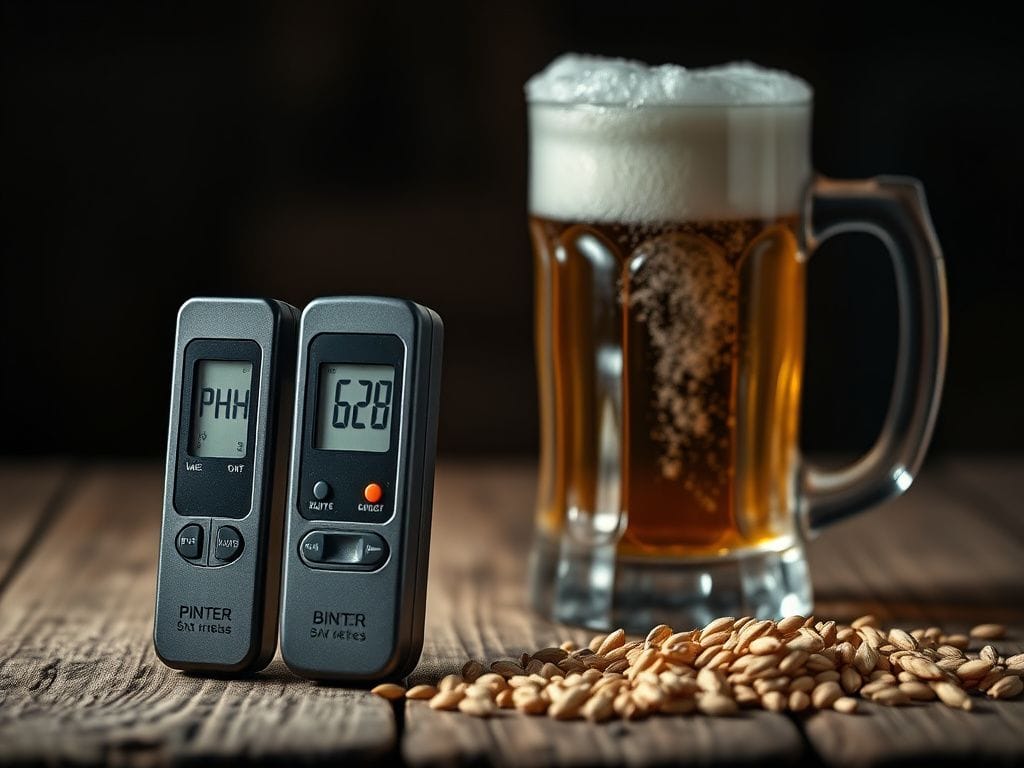
Accurate pH measurement is critical for mash conversion, yeast health, and final beer stability. This guide dissects budget-friendly pH meters under $100 against professional-grade units, detailing their technical specifications, calibration requirements, and maintenance protocols to ensure precise readings for superior brewing outcomes. Optimize your brew day with informed pH control.
pH Meter Comparison: Budget vs. Professional
Understanding the distinctions between accessible and advanced pH measurement tools is fundamental for any brewer committed to process control. The following table provides a technical comparative analysis of various pH meter categories relevant to brewing applications, highlighting their core specifications and operational characteristics.
|
Meter Category/Model |
Typical Price ($USD) |
Accuracy/Resolution (pH) |
Calibration Points |
Key Technical Differentiator |
|---|---|---|---|---|
|
Entry-Level Pen (e.g., HM Digital PH-80) |
20-40 |
±0.02 / 0.01 |
1-2 (Manual) |
Basic functionality, non-replaceable probe, limited ATC. |
|
Mid-Range Pen (e.g., Apera PH20) |
40-70 |
±0.01 / 0.01 |
2-3 (Auto Recognition) |
Replaceable probe, integrated ATC, IP67 waterproof rating. |
|
Pro-Grade Pen (e.g., Hanna HI98103, Bluelab pH Pen) |
80-150 |
±0.01 / 0.01 |
2-3 (Auto Recognition) |
Specialized electrode materials/junctions, enhanced durability, faster response. |
|
Portable Benchtop (e.g., Milwaukee MW102) |
150-250 |
±0.01 / 0.01 |
2-3 (Auto Recognition) |
BNC connector for interchangeable probes, larger display, dedicated temperature probe option. |
|
Lab-Grade Benchtop (e.g., Thermo Orion Star A211) |
1000+ |
±0.002 / 0.001 |
Up to 5 (Auto Recognition) |
GLP compliance, advanced data logging, multiple sensor inputs, highly customizable. |
Mash pH Adjustment Calculation (Conceptual)
Precise mash pH adjustment is critical for enzymatic efficiency. While exact calculations require specific wort buffering capacity data, this conceptual example demonstrates the principle of acid addition for a targeted pH reduction. This is a simplified model for illustrative purposes only; real-world adjustments demand iterative testing or software.
Given Parameters:
-
Mash Volume: 10 Gallons (37.85 Liters)
-
Initial Measured Mash pH: 5.75
-
Target Mash pH: 5.20
-
Acidulant: 88% Lactic Acid
-
Assumed Acid Efficiency (Highly Variable): For this conceptual exercise, we will assume that 1 mL of 88% Lactic Acid lowers the pH of 1 gallon of typical pale ale wort by approximately 0.05 pH units. This factor is extremely dependent on water chemistry, malt bill, and buffer capacity, and should not be used for actual brewing without verification via titration or brewing software.
Calculation Steps:
1. Determine Required pH Reduction:
Desired ΔpH = Initial pH – Target pH
Desired ΔpH = 5.75 – 5.20 = 0.55 pH units
2. Calculate Lactic Acid per 0.05 pH unit Reduction:
Volume of Acid per 0.05 pH reduction per Gallon = 1 mL
3. Calculate Total Acid for Target Reduction in 1 Gallon:
Acid per Gallon = (Desired ΔpH / 0.05) * 1 mL
Acid per Gallon = (0.55 / 0.05) * 1 mL = 11 * 1 mL = 11 mL
4. Calculate Total Acid for Entire Mash Volume:
Total Acid = Acid per Gallon * Mash Volume
Total Acid = 11 mL/Gallon * 10 Gallons = 110 mL of 88% Lactic Acid
Conclusion:
Based on this highly generalized model, approximately 110 mL of 88% Lactic Acid would be required to reduce the mash pH from 5.75 to 5.20 in a 10-gallon mash. Brewers must use a titration method or advanced brewing software like Bru’n Water, alongside accurate pH meter readings, to precisely determine acid additions for their specific brewing liquor and grist. Always add acid incrementally, stirring thoroughly, and re-measuring pH after each addition to prevent overshooting the target.
Deep Dive: pH Meter Technology for Brewing Excellence
The pH value, a measure of hydrogen ion activity, exerts a profound and pervasive influence across the entire brewing process. From mash conversion to final beer stability, precise pH control is not merely advantageous but absolutely critical for producing consistent, high-quality beer. A mere 0.1 pH unit deviation can significantly alter enzymatic efficiency, hop isomerization, yeast metabolism, and ultimately, the finished beer’s flavor profile, clarity, and shelf life. This definitive guide dissects the technical aspects of pH meters, comparing budget-friendly options with professional-grade equipment, and providing the knowledge necessary for brewers to make informed decisions about their pH measurement strategy.
The Unseen Regulator: Why pH Matters in Brewing
The importance of pH in brewing cannot be overstated. It is a fundamental chemical parameter that dictates the efficacy and outcome of nearly every stage. In the mash, pH directly impacts the activity of amylolytic and proteolytic enzymes responsible for converting starches into fermentable sugars and breaking down proteins for yeast nutrition and head retention. An optimal mash pH, typically between 5.2 and 5.6 (at mash temperature), maximizes enzyme efficiency, leading to desirable wort characteristics. Deviations can result in poor extract efficiency, hazy wort, or off-flavors. During the boil, pH influences hop isomerization, hot break formation, and color development. A lower boil pH (e.g., 5.0-5.2) can enhance hop utilization and promote more effective protein coagulation. For fermentation, yeast strains thrive within specific pH ranges, usually 4.0-4.5. Deviations can stress yeast, leading to sluggish fermentation, incomplete attenuation, or the production of unwanted byproducts like diacetyl or acetaldehyde. Finally, the pH of the finished beer affects its sensory balance, microbial stability, and shelf life. Most beers finish between 4.0-4.5 pH, providing a degree of microbial inhibition and a crisp, refreshing character. Understanding and actively managing pH is a hallmark of a master brewer.
Anatomy of a pH Meter: Unpacking the Technology
At its core, a pH meter consists of two primary components: the electrode (or probe) and the meter body. The electrode is the sensing element, typically a glass bulb containing a pH-sensitive membrane, an internal buffer solution (often pH 7.0), and a silver/silver chloride (Ag/AgCl) internal reference element. This half-cell generates a voltage proportional to the hydrogen ion concentration of the solution being measured. A second component, the reference electrode, typically contains its own Ag/AgCl reference and a stable electrolyte (e.g., KCl) that makes electrical contact with the sample via a porous liquid junction. The potential difference between these two half-cells is measured by the meter’s high-impedance voltmeter and converted into a pH reading. Modern electrodes are often “combination electrodes,” integrating both the sensing and reference components into a single probe. Crucially, the voltage output of a pH electrode is temperature-dependent; therefore, an integrated or separate temperature sensor for Automatic Temperature Compensation (ATC) is vital for accurate readings, especially in dynamic brewing environments.
Budget-Friendly pH Meters: The Homebrewer’s Workhorse (Under $100)
For many homebrewers and even small-scale professional operations, pH meters under $100 offer a cost-effective entry point into precise pH control. These are predominantly pen-style meters, known for their portability and ease of use. Typical models, like the Apera PH20 or HM Digital PH-80, feature an accuracy of ±0.01 or ±0.02 pH units and a resolution of 0.01 pH. They often incorporate basic Automatic Temperature Compensation (ATC) to account for temperature variations in the sample. Most budget meters utilize 2- or 3-point calibration, usually with auto-recognition of standard certified pH buffer solutions. The primary advantages of these units are their affordability, convenience, and sufficient accuracy for most homebrewing needs, particularly for mash and wort measurements. However, they come with certain limitations. Their durability can be less robust than professional models, electrodes may have a shorter lifespan (often non-replaceable in the cheapest units), and their liquid junctions are typically single-junction designs, which can be prone to clogging or contamination in complex brewing samples, leading to slower response times or drift. While generally adequate for initial investments, brewers must be diligent with calibration and maintenance to ensure consistent accuracy over time.
Professional-Grade pH Meters: Precision for the Pro Brewer (Over $100)
As brewing operations scale or demand for heightened precision increases, investing in professional-grade pH meters becomes justifiable. These units, ranging from high-end pen meters (e.g., Hanna Instruments HI98103, Bluelab pH Pen) to portable benchtop meters (e.g., Milwaukee MW102) and even laboratory-grade benchtop systems (e.g., Thermo Orion Star A211), offer superior accuracy, durability, and advanced features.
High-end pen meters in the $80-$150 range often feature specialized electrodes with more robust construction, better liquid junctions (often double junction for enhanced performance in “dirty” samples), and faster response times. They maintain the portability of pen-style units while offering improved reliability and longevity. The Bluelab pH Pen, for example, is renowned for its ruggedness in agricultural and hydroponic settings, translating well to brewing.
Portable benchtop meters, typically costing $150-$500, provide greater stability and flexibility. They often feature larger displays, dedicated temperature probes for more precise ATC, and crucially, BNC connectors. The BNC connector allows for the use of interchangeable electrodes, meaning a brewer can select specific probe types for different applications (e.g., a spear-tip electrode for fruit purees or semi-solids, a specialized beer electrode for finished product). This modularity significantly extends the meter’s utility and lifespan, as only the electrode needs replacement.
Lab-grade benchtop systems, exceeding $1000, are overkill for most small breweries but find their place in larger quality control laboratories. These units offer the highest resolution (e.g., 0.001 pH), multi-point calibration (up to 5 points for extreme linearity across a wide range), advanced data logging, GLP (Good Laboratory Practice) compliance, and sophisticated diagnostics. They provide unparalleled precision and analytical capabilities. The primary advantages of professional-grade meters are their superior accuracy, reproducibility, enhanced durability, longer electrode lifespan, advanced diagnostics, and the ability to tailor electrodes to specific applications. The higher initial cost is offset by increased reliability, reduced long-term maintenance, and the assurance of critical process control. For brewers dedicated to consistency and quality, this investment is often non-negotiable.
The Crucial Process of Calibration
Calibration is the most critical aspect of maintaining pH meter accuracy. Without regular and correct calibration, even the most expensive meter is useless. The voltage output of a pH electrode drifts over time due to various factors including aging, coating, and temperature fluctuations. Calibration corrects for this drift by adjusting the meter’s internal circuitry to accurately interpret the electrode’s signal against known pH standards.
Calibration buffers are solutions of precisely known pH values, typically 4.01, 7.01, and 10.01. It is imperative to use fresh, unexpired, and uncontaminated buffers. Once opened, buffer solutions have a limited shelf life (often a few months) as they can absorb CO2 from the air, altering their pH.
Most brewing applications benefit from 2-point calibration. A common strategy is to calibrate at pH 7.01 (the neutral point) and then at pH 4.01, as most brewing measurements fall within the acidic range. For fermenting beers or higher pH samples, a 3-point calibration (4.01, 7.01, 10.01) may be beneficial to ensure linearity across a broader range.
Proper calibration technique involves rinsing the electrode thoroughly with distilled or deionized water between each buffer, gently stirring the electrode in the buffer to ensure uniform contact, and allowing the reading to stabilize completely before accepting the calibration point. Never rub the glass bulb, as this can generate static electricity and damage the sensitive membrane. Calibration should be performed before each brew day, or even before each critical measurement batch, depending on the frequency of use and the desired level of precision. When measuring different batches or types of samples frequently, calibration checks with a known buffer should be performed regularly, and full recalibration initiated if readings deviate significantly (e.g., >0.05 pH units).
Maintenance Protocols for Optimal Performance
Proper maintenance is paramount for extending the life and ensuring the accuracy of your pH electrode. The most critical aspect of electrode care is correct storage. pH electrodes must *never* be stored dry or in distilled/deionized water. Distilled water will leach out the electrolyte from the reference junction, effectively “killing” the electrode. Electrodes should be stored in a specialized pH electrode storage solution (typically 3M KCl solution, often with a fungal inhibitor), which maintains the hydration of the glass membrane and prevents the reference junction from drying out. If storage solution is unavailable, pH 4.01 buffer can serve as a temporary alternative, but dedicated storage solution is superior.
Regular cleaning is also essential. Brewing samples, especially wort, are complex and can leave protein and organic deposits on the glass bulb and liquid junction. These coatings impede proper electrode function, leading to slow, unstable, or inaccurate readings. Cleaning solutions specifically designed for pH electrodes (e.g., pepsin-HCl for protein removal, thiourea for sulfide removal) should be used as directed by the manufacturer. A general cleaning with dilute acid (e.g., 5% HCl) followed by a protein cleaning solution is a good practice.
Electrode replacement is an inevitable part of pH meter ownership. Electrodes have a finite lifespan, typically 6-18 months with proper care, depending on usage frequency and sample type. Signs that an electrode needs replacement include slow response times, inability to calibrate, erratic or drifting readings, or a significantly reduced slope (a diagnostic often available on more advanced meters). For meters with replaceable probes, this extends the overall lifespan of the instrument considerably. Finally, always ensure battery levels are adequate, as low batteries can cause unstable readings.
Temperature Compensation (ATC): The Unsung Hero
The voltage output of a pH electrode is inherently temperature-dependent. For every 1°C change, the mV output of a pH electrode changes by approximately 0.003 pH units per pH unit deviation from pH 7.0. This means that a measurement taken at 20°C will yield a different raw mV reading than the same solution measured at 60°C, even if the actual pH of the solution (its hydrogen ion activity) remains constant. Automatic Temperature Compensation (ATC) addresses this phenomenon. A thermistor (temperature sensor) integrated into or alongside the pH electrode measures the sample temperature. The pH meter’s electronics then apply a mathematical correction to the raw mV reading, normalizing it to a standard reference temperature (usually 25°C). This ensures that the displayed pH value accurately reflects the true pH of the sample, irrespective of its temperature. Without effective ATC, measuring mash pH at 65°C using a meter calibrated at 25°C would introduce significant error, making precise process control impossible. For brewing, where samples are measured at widely varying temperatures (mash, boil, fermentation), accurate ATC is not an optional feature but a critical requirement for obtaining meaningful data.
pH in Brewing Operations: Critical Control Points
Monitoring pH at specific stages of the brewing process is fundamental for consistent product quality. Each stage presents unique pH challenges and opportunities for optimization.
Mash pH: This is arguably the most critical pH measurement. An optimal mash pH (typically 5.2-5.6 at mash temperature, which equates to 5.0-5.4 at room temperature) is essential for maximizing the activity of beta-amylase (responsible for fermentable sugars like maltose) and alpha-amylase (responsible for dextrins and body), as well as proteolytic enzymes for protein breakdown. A pH too high can lead to sluggish lautering, astringency, and darker beer. A pH too low can inhibit enzyme activity and result in a thin, watery beer. Utilizing a precise pH meter allows brewers to fine-tune their water chemistry and grist composition to achieve optimal mash pH ranges, ensuring efficient starch conversion and desired wort characteristics. For those looking to fine-tune their process, explore optimizing mash pH profiles for your specific beer styles for advanced techniques.
Sparge pH: During sparging (rinsing the grain bed), maintaining a pH below 6.0 is crucial. A higher sparge pH (above 6.0) can extract undesirable tannins and silicates from the grain husks, leading to astringency and harsh flavors in the final beer. Monitoring sparge pH allows for adjustments to the sparge water (e.g., adding a small amount of acid) to prevent this issue.
Kettle pH: The pH of the wort in the kettle, typically around 5.0-5.2, impacts hop isomerization and hot break formation. A lower pH during the boil can increase hop utilization and promote more effective coagulation of proteins and polyphenols, leading to clearer wort and a more stable finished product. pH also affects caramelization reactions and wort color development.
Fermentation pH: Yeast metabolic activity is profoundly influenced by pH. Most brewing yeast strains perform optimally within a specific pH range, typically dropping from a wort pH of 5.0-5.4 down to 4.0-4.5 during active fermentation. Monitoring this pH drop provides insights into yeast metabolic activity and health. Deviations from expected pH trends can indicate stressed yeast, potential infection, or problems with fermentation progression, leading to off-flavors (e.g., diacetyl, acetaldehyde, excessive esters or phenols). Regular pH checks allow brewers to intervene if necessary, ensuring healthy yeast and a clean fermentation. Learn more about advanced fermentation strategies and yeast management to maintain optimal conditions.
Finished Beer pH: The pH of the final product, usually between 4.0 and 4.5, is critical for flavor balance, microbial stability, and shelf life. A properly attenuated beer with a stable pH is less susceptible to spoilage organisms and maintains its intended sensory profile. Higher pH in finished beer can indicate residual alkalinity from the water, poor fermentation, or potential spoilage, leading to a flatter, less vibrant taste. Adherence to desired finished beer pH ranges is often outlined in BJCP style guidelines and essential for commercial consistency.
Advanced Considerations and Troubleshooting
Beyond basic operation, understanding advanced aspects of pH meters can further enhance precision. The choice of electrode type can be crucial: spherical bulbs are general-purpose, conical tips are for penetration into semi-solids (useful for fruit additions), and flat surface electrodes are for measuring on surfaces (less common in brewing but used in some food applications). The liquid junction, connecting the reference electrode to the sample, is critical. Single-junction electrodes are simpler but more prone to clogging in “dirty” samples like wort. Double-junction electrodes offer superior protection for the reference electrolyte, making them more robust for brewing applications and extending electrode lifespan by reducing contamination.
Troubleshooting common issues is part of meter ownership. Slow readings or drifting pH often indicate a fouled or aging electrode, or improper storage. Cleaning the electrode, re-hydrating it in storage solution, or recalibrating can often resolve these. If the problem persists, the electrode may need replacement. Error messages typically refer to calibration issues (e.g., incorrect buffer detection, unstable reading during calibration) or a completely failed electrode. Always consult the manufacturer’s manual for specific error codes. Electrode slope is a diagnostic parameter (often displayed on advanced meters after calibration) that indicates electrode health; a slope significantly outside the 90-102% range usually means the electrode is failing. Rapid response time, stability, and reproducibility are hallmarks of a healthy electrode.
Making the Right Choice: Under $100 or Pro Gear?
The decision between an under-$100 pH meter and professional-grade equipment hinges on several factors: the scale of your operation, the required precision, your budget, and your commitment to maintenance.
For the vast majority of homebrewers, a mid-range pen-style meter like the Apera PH20 (typically $40-60) offers an excellent balance of affordability, accuracy (±0.01 pH), and features like replaceable probes and ATC. With diligent calibration and proper storage, these units are perfectly capable of providing the necessary precision for mash and fermentation control, significantly elevating brewing quality.
For advanced homebrewers, small craft breweries, or those requiring more robust performance and longevity, investing in a professional-grade pen (e.g., Hanna, Bluelab, $80-150) or a portable benchtop unit ($150-250) is often a worthwhile upgrade. The improved durability, better electrode design (e.g., double junction), and the option for interchangeable probes on benchtop units offer greater reliability and versatility. While the theoretical accuracy might be similar (±0.01 pH), the consistency of readings, faster response, and extended lifespan often justify the higher price point.
True lab-grade benchtop meters (>$1000) are generally overkill for all but the largest breweries with dedicated quality control labs. The diminishing returns in practical brewing applications for extreme 0.001 pH resolution often do not outweigh the significant cost.
Ultimately, the “best” pH meter is one that consistently provides accurate, reliable readings for your specific brewing needs, is properly maintained, and is within your operational budget. The most expensive meter poorly maintained will perform worse than a budget meter cared for diligently.
Conclusion: Invest in Precision, Brew with Confidence
pH is not merely a number; it is a critical lever for influencing enzymatic activity, yeast performance, hop utilization, and the sensory characteristics of your final beer. Investing in a reliable pH meter, whether a budget-friendly pen or a professional-grade benchtop unit, is a non-negotiable step towards mastering the art and science of brewing. Understanding the technical specifications, diligently executing calibration protocols, and adhering to strict maintenance routines are the pillars of accurate pH measurement. Choose your tool wisely, respect its capabilities and limitations, and employ it with precision. Only then can you truly unlock the full potential of your ingredients and processes, brewing with confidence and consistency every single batch.