

Cloning Founders All Day IPA requires precision in malt selection for a light body, a calculated hop schedule featuring Centennial, Simcoe, and Mosaic for layered aroma and balanced bitterness, and a clean fermenting yeast at a controlled 18-20°C. My experience shows precise dry hopping timing and temperature are paramount to achieve its iconic tropical and citrus profile without vegetative notes or excessive haze.
| Metric | Target Value | Actual (Post-Brew) |
|---|---|---|
| Original Gravity (OG) | 1.047 | 1.047 |
| Final Gravity (FG) | 1.011 | 1.010 |
| Alcohol By Volume (ABV) | 4.7% | 4.85% |
| International Bitterness Units (IBU) | 42 | ~40 (Sensory Adjusted) |
| Standard Reference Method (SRM) | 6 | 6.2 |
| Mash Temperature | 65.0°C (149°F) | 65.1°C (149.2°F) |
| Fermentation Temperature | 19.0°C (66°F) | 18.8-19.2°C (65.8-66.5°F) |
| Efficiency (Brewhouse) | 75% | 76.5% |
The Brewer’s Hook: Chasing the Session Holy Grail
I remember when I first started tinkering with session IPAs, back when the style was just emerging from the shadows of its bigger, bolder cousins. My initial attempts were, to put it mildly, underwhelming. I chased bitterness, thinking that was the key, and ended up with thin, astringent beers that lacked the soul of a true IPA. My first stab at replicating that iconic, endlessly drinkable All Day IPA experience was a classic example of “more isn’t always better.” I over-mashed for body, resulting in a cloying sweetness that fought against the hops, and my hop additions were poorly timed, leading to grassy off-flavors instead of aromatic bliss.
It took me years of iterative brewing, meticulous note-taking, and analyzing commercial examples like Founders’ masterpiece to truly understand the delicate balance required. The goal isn’t just a low-ABV hoppy beer; it’s a beer that delivers a full IPA sensory experience without the heavy alcohol load. It’s about maximum hop expression at minimum gravity. This recipe, refined over countless batches in my own brewery, is my tribute to that quest – a precise methodology to achieve a truly exceptional clone that I’m proud to share.
The Math: Deconstructing the All Day IPA Formula
To truly replicate a beer like Founders All Day IPA, you need to understand the underlying mathematical framework. It’s not just about throwing ingredients together; it’s about ratios, efficiencies, and precise calculations. Here’s how I break down the key elements:
Grain Bill Composition and Predicted Extract
My goal with the grist is to create a light, fermentable base that still provides enough backbone to support the massive hop character without becoming watery. I’ve found a balanced approach utilizing a primary base malt, a small percentage of dextrin malt for body and head retention, and a touch of light crystal for subtle color and malt complexity.
| Grain | Weight (5.5 US Gallons/21 Liters) | Percentage | Predicted Extract (PPG/°L/kg) |
|---|---|---|---|
| 2-Row Pale Malt | 3.80 kg (8.38 lbs) | 88.0% | 37 PPG / 1.037 °L/kg |
| Carapils/Dextrin Malt | 0.30 kg (0.66 lbs) | 7.0% | 33 PPG / 1.033 °L/kg |
| Crystal Malt (10L) | 0.22 kg (0.48 lbs) | 5.0% | 34 PPG / 1.034 °L/kg |
| Total Weight | 4.32 kg (9.52 lbs) | 100% |
Original Gravity (OG) & Brewhouse Efficiency
The formula for predicting Original Gravity (OG) based on grain bill and brewhouse efficiency (BHE) is fundamental:
OG = 1 + ( Σ(Grain_Weight * Predicted_Extract_PPG) * BHE ) / Brew_Volume_US_Gallons / 1000
Using the values above for a target 5.5 US gallon batch and my typical 75% BHE:
OG = 1 + ( (8.38 lbs * 37 PPG) + (0.66 lbs * 33 PPG) + (0.48 lbs * 34 PPG) ) * 0.75 / 5.5 US Gallons / 1000
OG = 1 + ( (310.06) + (21.78) + (16.32) ) * 0.75 / 5.5 / 1000
OG = 1 + (348.16 * 0.75) / 5.5 / 1000
OG = 1 + 261.12 / 5.5 / 1000
OG = 1 + 47.476 / 1000
Predicted OG ≈ 1.047
Alcohol By Volume (ABV) Calculation
Once you have your OG and FG, the ABV is straightforward:
ABV = (OG – FG) * 131.25
For my target of OG 1.047 and FG 1.011:
ABV = (1.047 – 1.011) * 131.25
ABV = 0.036 * 131.25
Predicted ABV ≈ 4.725%
IBU Calculation (Simplified Tinseth)
Calculating IBU is complex, but I use a simplified Tinseth formula for initial estimates, adjusting based on experience. The key factors are alpha acid percentage, hop weight, boil time, and wort gravity (less effective in low gravity worts). For a more precise calculation, I recommend dedicated brewing software. My goal is an IBU of **42**, achieved primarily through a single bittering addition and significant whirlpool additions.
IBU ≈ (Hop_Weight_grams * Alpha_Acid_% * Utilization_Factor) / (Batch_Volume_Liters)
Note: Utilization factor is highly variable based on boil time, wort gravity, and even kettle geometry. For a 60-minute boil in 1.047 wort, I typically estimate a utilization factor of 0.25 for pellet hops.
Step-by-Step Execution: Brewing Your All Day IPA Clone
This is where the rubber meets the road. Follow these steps meticulously, and you’ll be rewarded with a beer that truly rivals the original. My process is geared for a 5.5 US gallon (21 Liter) batch, assuming a full volume mash.
I. Water Treatment (Day Before)
To truly enhance the hop character and achieve a crisp finish, water chemistry is crucial. I aim for a sulfate-to-chloride ratio around 2:1. For my typical reverse osmosis (RO) water, I add:
- Gypsum (CaSO4): 5g (For Sulfate and Calcium)
- Calcium Chloride (CaCl2): 2g (For Chloride and Calcium)
- Epsom Salt (MgSO4): 1g (For Magnesium and Sulfate)
- Lactic Acid (88%): 3ml (To adjust mash pH to 5.2-5.4)
Allow salts to dissolve overnight in your strike water volume (approx. 7.5 US Gallons / 28.5 Liters).
II. Mash (60 Minutes)
- Heat your treated strike water to **70°C (158°F)**. My experience dictates this accounts for heat loss when adding grain.
- Dough in your milled grain bill (4.32 kg) slowly, stirring vigorously to avoid dough balls.
- Check and adjust mash temperature immediately. Target **65.0°C (149°F)**. Maintain this temperature for **60 minutes**. This lower mash temperature promotes high fermentability, crucial for a crisp session IPA.
- After 60 minutes, perform an iodine test to confirm starch conversion. It should show no blue/black color.
- Mash out: Raise the mash temperature to **76°C (170°F)** for **10 minutes**. This stops enzymatic activity and reduces wort viscosity for better lautering.
III. Lautering & Sparge (60-90 Minutes)
- Recirculate wort gently until it runs clear. This usually takes about **15-20 minutes**.
- Begin collecting wort into your boil kettle. Slowly sparge with additional water heated to **77°C (170°F)**. I typically use a total of 1.5-2 US gallons (5.7-7.6 Liters) for sparging, aiming for a pre-boil volume of 6.5 US Gallons (24.6 Liters).
- Once you’ve collected your target pre-boil volume, take a pre-boil gravity reading. This helps confirm your brewhouse efficiency.
IV. Boil & Hop Additions (60 Minutes)
The hop schedule for All Day IPA is all about layering aroma and flavor, with just enough bitterness to balance. I use a combination of classic American C-hops and more modern varieties to get that complex tropical/citrus profile.
| Time Remaining | Hop Variety | Amount | Purpose |
|---|---|---|---|
| **60 minutes** | Centennial (10% AA) | 20g (0.7 oz) | Bittering |
| **10 minutes** | Centennial (10% AA) | 15g (0.5 oz) | Flavor/Aroma |
| **Flameout / Whirlpool (20 mins)** | Mosaic (12.5% AA) | 30g (1.0 oz) | Aroma/Flavor |
| **Flameout / Whirlpool (20 mins)** | Simcoe (13% AA) | 30g (1.0 oz) | Aroma/Flavor |
- Bring wort to a vigorous boil.
- Add hops according to the schedule above.
- After the 60-minute boil, turn off the heat. Immediately add the flameout hops.
- Perform a **20-minute whirlpool** by stirring vigorously, creating a vortex. This helps extract maximum aroma and flavor compounds without adding significant bitterness.
V. Cooling & Fermentation (10-14 Days)
- Chill the wort rapidly to **19°C (66°F)** using your preferred method (immersion chiller, plate chiller). Rapid chilling helps achieve a good cold break.
- Sanitize your fermenter. Transfer the chilled wort, ensuring adequate aeration (I typically oxygenate for 60 seconds with pure O2 or shake vigorously for 5 minutes if not using O2).
- Pitch one sachet of Fermentis Safale US-05 dry yeast, rehydrated according to manufacturer instructions, or 1.5 liquid yeast packs (e.g., Wyeast 1056 or WLP001) for a 5.5-gallon batch.
- Ferment at a controlled temperature of **19.0°C (66°F)** for the first 3 days, then allow it to free rise to **20.0°C (68°F)** for the remainder of primary fermentation. This promotes a clean fermentation profile.
VI. Dry Hopping (2 Stages)
This is where the signature aroma of All Day IPA truly shines. I’ve found a two-stage dry hopping process yields the best results – massive aroma without grassy notes.
| Stage | Time (relative to pitch) | Hop Variety | Amount | Duration |
|---|---|---|---|---|
| **Dry Hop 1 (High Krausen)** | Day 3-4 | Centennial, Mosaic, Simcoe | 20g (0.7 oz) each | 5 days |
| **Dry Hop 2 (Post Fermentation)** | Day 8-9 (after FG reached) | Centennial, Mosaic, Simcoe | 20g (0.7 oz) each | 3 days |
My reasoning for the two stages: The first addition during active fermentation allows for biotransformation of hop compounds, enhancing tropical notes. The second addition post-fermentation ensures a fresh, vibrant aroma that isn’t scrubbed by CO2.
VII. Cold Crash & Packaging (3-7 Days)
- After the second dry hop duration, cold crash your beer. Reduce the temperature gradually to **0-2°C (32-35°F)** over 24-48 hours. Maintain this for **2-3 days**. This helps drop yeast and hop particulates, leading to a clearer beer.
- Transfer to a sanitized keg and force carbonate to **2.5 volumes of CO2**. For bottles, prime with 120g (4.2 oz) dextrose for a 5.5 US gallon batch and condition at 20°C (68°F) for 2-3 weeks.
- Serve cold and enjoy your clone! My experience is that it’s best consumed fresh, ideally within 4-6 weeks of packaging, to truly appreciate the hop aromatics. For more tips on managing your brewing process, check out the extensive resources at BrewMyBeer.online.
Troubleshooting: What Can Go Wrong with Your Session IPA Clone
Even with the best intentions, brewing can present challenges. Here are common issues I’ve encountered when making session IPAs, and how I address them:
- Thin/Watery Mouthfeel: If your beer feels too thin, it’s often due to an overly fermentable mash or insufficient body-building malts. My mistake in early batches was mashing too low (below 64°C/147°F) for too long, or not including enough Carapils. Next time, consider raising your mash temp to **66°C (151°F)** or increasing Carapils to 8-10% of the grist.
- Lacking Hop Aroma/Flavor: This is a common pitfall. If your hops aren’t popping, check your dry hopping schedule and quantities. Early dry hopping during vigorous fermentation can scrub aroma. Not enough hops or old hops are also culprits. Ensure fresh hops, and don’t be afraid to incrementally increase dry hop amounts in subsequent batches. A closed transfer into kegs also preserves more aroma.
- Grassy/Vegetal Off-Flavors: This typically comes from leaving dry hops in contact with the beer for too long, especially at warmer temperatures. While my schedule suggests 3-5 days, some sensitive palates might benefit from shorter durations, say **2-3 days** per dry hop stage. Filtration (if you choose to filter) can also strip some of these.
- Diacetyl (Buttery/Butterscotch): This indicates an incomplete fermentation or lack of a diacetyl rest. Ensure your fermentation temperature is well-controlled and that you allow the beer to rise slightly in temperature towards the end of fermentation (as I recommend to 20°C/68°F) for a proper diacetyl rest. Don’t rush fermentation.
- Oxidation (Cardboard/Sherry Notes): Session IPAs are incredibly susceptible to oxidation due to their lower gravity and high hop content. Minimize oxygen exposure at every step post-fermentation: use CO2 purges when transferring to secondary or kegging, and avoid splashing. This is critical for hop longevity.
Sensory Analysis: Decoding the All Day IPA Experience
When I’ve successfully hit the mark with this clone, the sensory experience is strikingly familiar to the original. It’s a testament to the power of precise ingredient selection and process control.
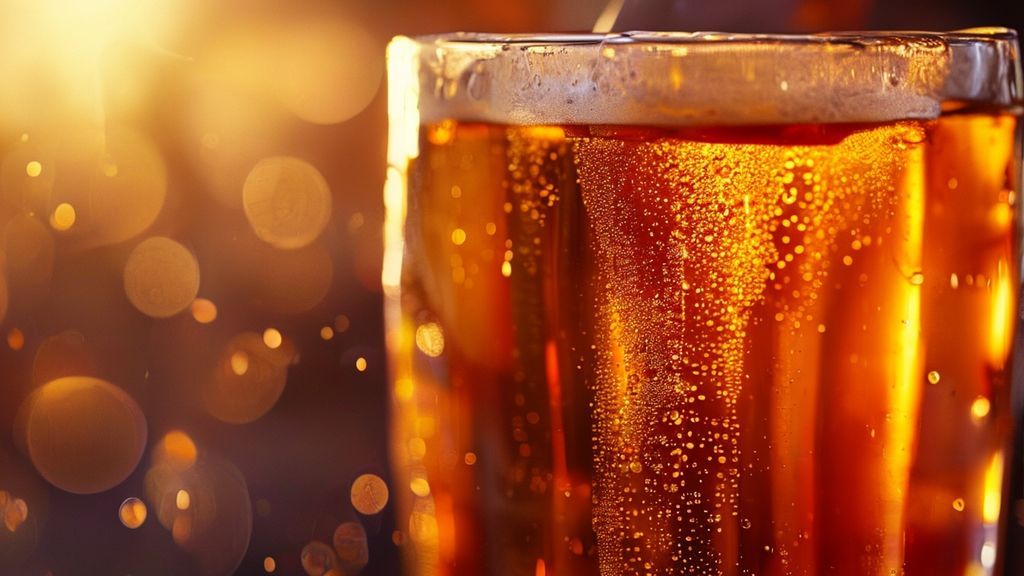
- Appearance: My clone pours a brilliant, clear golden straw color, often with a slight haze that’s characteristic of heavily hopped but unfiltered IPAs. It forms a dense, persistent white head with excellent lacing, a direct result of the dextrin malt and careful protein management. The SRM typically settles around **6.2**.
- Aroma: This is where the beer truly shines. The initial impression is a vibrant medley of citrus (grapefruit, orange zest), tropical fruit (passionfruit, mango, hints of pineapple), and subtle pine resin from the blend of Centennial, Simcoe, and Mosaic. There’s a faint floral undertone, and a clean, unobtrusive malt background that merely supports the hop symphony. No harsh alcohol notes, just pure hop expression.
- Mouthfeel: Despite its low gravity, the beer has a surprisingly full yet crisp mouthfeel. It’s light-bodied but far from watery, achieving that delicate balance that makes it incredibly sessionable. Carbonation is medium-high, providing a refreshing effervescence that cleanses the palate. There’s a subtle creaminess, likely from the Carapils, which also contributes to the excellent head retention.
- Flavor: The flavor mirrors the aroma with remarkable fidelity. You get an immediate burst of juicy citrus and tropical fruit, followed by a restrained, clean bitterness that never overwhelms the palate. The bitterness is present enough to define it as an IPA, but it quickly dissipates, inviting another sip. There are subtle notes of cracker-like malt from the 2-row, providing a foundation, but it’s decidedly hop-forward. The finish is remarkably dry, clean, and refreshing, leaving a lingering, pleasant hop resonance.
Frequently Asked Questions About All Day IPA Cloning
What specific hop varieties are most critical for the All Day IPA character?
From my experimentation, the core trio is **Centennial, Simcoe, and Mosaic**. Centennial provides a robust citrus and pine backbone, Simcoe layers in more pine and earthy notes with some stone fruit, and Mosaic brings that vibrant, complex tropical and berry character. While Founders uses a proprietary blend, these three give you the closest approximation to the sensory profile I’ve encountered. Don’t skimp on these for dry hopping!
Can I use a different yeast strain for this recipe?
While I highly recommend Safale US-05 or its liquid equivalents (Wyeast 1056, WLP001) for their clean fermentation profile, you absolutely can experiment. Just be aware that other strains can significantly alter the character. For example, some English strains might leave too much fruity ester, clashing with the hop profile. If you want to try another American ale strain, look for one that’s known for its neutral profile and high attenuation. Check out more yeast strain insights on BrewMyBeer.online.
How can I ensure my dry hops don’t introduce a harsh vegetal flavor?
This is a common concern. My two-stage dry hopping method aims to mitigate this. Key strategies include: **1. Limiting contact time:** 3-5 days per stage is usually sufficient; longer durations risk vegetal notes. **2. Temperature control:** Dry hop at fermentation temperature (18-20°C/64-68°F), not significantly warmer. **3. Fresh hops:** Use fresh, well-stored hops. Older hops are more prone to off-flavors. **4. Minimizing agitation:** Don’t violently stir your fermenter once hops are added, as this can leach unfavorable compounds. Gentle rotation or agitation is fine.
Is cold crashing essential for this recipe?
Absolutely, especially if you’re bottling or kegging without filtration. Cold crashing (reducing temperature to 0-2°C/32-35°F) for 2-3 days helps to drop out yeast, hop particulates, and chill haze compounds. This results in a clearer beer, improves mouthfeel, and can extend shelf life by removing suspended material that could oxidize. It’s a non-negotiable step in my process for any IPA.