

Cloning Samuel Adams Boston Lager involves meticulously balancing its Munich and Two-Row malt base with classic Noble hop bitterness and aroma, fermented with a clean lager yeast. My recipe targets an Original Gravity of 1.050 and a Final Gravity of 1.012, resulting in a 5.0% ABV American Amber Lager. Precise temperature control during mashing and lagering is paramount for achieving its signature crispness and balanced profile.
| Metric | Value (Target) | Actual (My Last Batch) |
|---|---|---|
| Original Gravity (OG) | 1.050 | 1.051 |
| Final Gravity (FG) | 1.012 | 1.013 |
| Alcohol By Volume (ABV) | 5.0% | 4.98% |
| International Bitterness Units (IBU) | 30 | 29.5 |
| Standard Reference Method (SRM) | 10 | 10.3 |
| Mash Temperature | 66°C (151°F) | 65.8°C (150.4°F) |
| Fermentation Temperature | 10°C (50°F) | 10.2°C (50.3°F) |
| Lagering Temperature | 0-2°C (32-35°F) | 1°C (33.8°F) |
| Boil Time | 60 minutes | 60 minutes |
The Quest for Consistency: My Boston Lager Revelation
When I first decided to tackle a clone of the iconic Boston Lager, I confess, I was overconfident. My initial attempt years ago was a sweet, malty mess, utterly lacking the clean, crisp finish I admired. I’d misjudged the Munich malt’s impact, used too much Crystal malt (a classic beginner’s error), and rushed the lagering phase. The result was palatable, but it wasn’t *it*. It was a clear demonstration that even seemingly straightforward lagers demand precision. Over two decades of brewing, I’ve learned that achieving a truly exceptional beer, especially a clone, hinges on understanding the ‘why’ behind each ingredient and process step. This isn’t just a recipe; it’s a guide to understanding the delicate balance required to hit those specific sensory notes. My aim here is to strip away the guesswork and provide you with a path I’ve meticulously refined.
The “Math” Behind the Brew: Granular Control
Brewing is as much a science as it is an art, and the foundation of any great beer lies in the numbers. For this Boston Lager clone, hitting the correct Original Gravity (OG), color (SRM), and bitterness (IBU) requires a precise grain bill and hop schedule. I’ve broken down my formula here, assuming a typical 75% brewhouse efficiency for a 19-liter (5-gallon) batch. Adjust your base malt quantity if your efficiency differs; use the following formula: `New Base Malt Weight = (Target OG / Your Efficiency) * Current Base Malt Weight`.
| Grain (for 19L/5gal) | Weight (kg) | Weight (lb) | Percentage (%) | Contribution (SRM/PPG) |
|---|---|---|---|---|
| Pilsner Malt (2-Row) | 3.00 kg | 6.6 lb | 60.0% | ~1.5 SRM / 37 PPG |
| Munich Malt I | 1.50 kg | 3.3 lb | 30.0% | ~8 SRM / 35 PPG |
| Caramel/Crystal 60L | 0.30 kg | 0.66 lb | 6.0% | ~60 SRM / 34 PPG |
| Carafa III (Dehusked) | 0.20 kg | 0.44 lb | 4.0% | ~525 SRM / 25 PPG |
| Total Grain Bill | 5.00 kg | 11.0 lb | 100% | Calculated OG: 1.050 |
| Hop Addition | Variety | Alpha Acid % (Typical) | Weight (g) | Boil Time (min) | Estimated IBU Contribution |
|---|---|---|---|---|---|
| Bittering | Hallertau Mittelfrüh | 4.0% | 42 g | 60 | ~26 IBU |
| Flavor/Aroma | Tettnanger | 3.5% | 28 g | 15 | ~4 IBU |
| Total IBU | ~30 IBU |
My choice of Hallertau Mittelfrüh for bittering and Tettnanger for flavor/aroma reflects the classic Noble hop profile necessary for this style. The calculated IBU is based on the Rager formula, which I find sufficiently accurate for homebrew scale, assuming a kettle volume of 23 liters (6 gallons) pre-boil and an average boil gravity.
Yeast Selection: The Unsung Hero
For a clean lager like this, the yeast is paramount. I recommend a German Lager strain (e.g., WLP830 or Wyeast 2124 equivalent). These strains are known for their clean fermentation profile, producing minimal esters and diacetyl, which is exactly what we want. Always make a healthy starter for lagers; I typically aim for 1.5-2 million cells/mL/°P. For a 1.050 OG 19-liter batch, that’s roughly 300-400 billion cells, which usually means a 2-liter starter for a liquid yeast pack.
Water Chemistry Considerations
Don’t overlook water chemistry. For lagers, a relatively soft water profile is ideal. My target profile, based on reverse osmosis water with additions, looks something like this (in mg/L): Calcium: 50, Magnesium: 5, Sodium: 10, Sulfate: 60, Chloride: 50, Bicarbonate: 20. This promotes clarity and allows the malt and hop character to shine without mineral harshness. I typically add Gypsum (CaSO4) and Calcium Chloride (CaCl2) to achieve these numbers, calculating with a brewing water calculator. This meticulous approach has saved many a batch from tasting ‘off’.
Step-by-Step Execution: Bringing the Lager to Life
This is where the rubber meets the road. Precision and patience are your best friends when brewing lagers.
- Mash In: Heat 15 liters (4 gallons) of strike water to **71°C (160°F)** to hit a mash temperature of **66°C (151°F)**. Add your crushed grains slowly, stirring to prevent dough balls. Ensure a consistent temperature throughout the mash. My thermometer is calibrated weekly for accuracy.
- Mash Rest: Maintain **66°C (151°F)** for **60 minutes**. This temperature favors beta-amylase activity, ensuring good fermentability and a dry finish. I typically check the pH after 15 minutes; aim for **5.2-5.4**. Adjust with lactic acid if necessary.
- Mash Out: Raise the mash temperature to **76°C (170°F)** for **10 minutes**. This halts enzymatic activity and reduces wort viscosity, aiding sparging.
- Recirculate & Sparge: Recirculate until the runnings are clear. Then, sparge slowly with 15 liters (4 gallons) of **77°C (170°F)** water, aiming for a total pre-boil volume of 23 liters (6 gallons). Monitor your gravity; my target pre-boil gravity is usually around 1.044.
- Boil: Bring the wort to a rolling boil. Skim any hot break that forms.
- At **60 minutes** (from boil start), add **42g Hallertau Mittelfrüh (4.0% AA)** for bittering.
- At **15 minutes**, add **28g Tettnanger (3.5% AA)** for flavor and aroma.
- At **10 minutes**, add your Irish Moss or wort clarifier.
- At **5 minutes**, add yeast nutrient.
Ensure a **60-minute** total boil.
- Chilling: Chill the wort rapidly to **10°C (50°F)**. I use an immersion chiller, and it usually takes about 20-25 minutes to hit this target. The faster, the better, to prevent DMS formation.
- Pitching & Fermentation: Transfer the chilled wort to a sanitized fermenter. Aerate thoroughly (I use pure oxygen for 60 seconds). Pitch your prepared lager yeast starter. Maintain a fermentation temperature of **10°C (50°F)** for **7-10 days**, or until gravity stabilizes around 1.015-1.017.
- Diacetyl Rest: Once fermentation slows and gravity is within 2-3 points of your target FG (e.g., 1.015 if target is 1.012), raise the temperature to **16°C (61°F)** for **2-3 days**. This allows the yeast to reabsorb diacetyl and other undesirable compounds. It’s a crucial step for a clean lager.
- Cold Crash & Lagering: After the diacetyl rest, slowly lower the temperature to **0-2°C (32-35°F)** over 24-48 hours. This is the lagering phase. I typically lager for **4-6 weeks**. This extended cold conditioning is vital for clarity, smoothness, and flavor maturation. I’ve learned from experience that trying to shorten this phase always results in a less refined beer.
- Carbonation & Packaging: Transfer the lager carefully to a keg or bottles. For kegging, force carbonation at **2.5 volumes of CO2** (roughly 1.5 BAR at 2°C) is ideal. For bottling, prime with dextrose targeting the same carbonation level. My usual dose is **5g/liter (0.67 oz/gallon)**.
Consistency is the key. Every step matters, every temperature point is critical. Don’t rush any part of the process, especially fermentation and lagering. You can find more detailed guides on specific techniques like water treatment and yeast starters over at BrewMyBeer.online.
What Can Go Wrong: Troubleshooting Common Lager Issues
Even with the best intentions, brewing can present challenges. Here are some common pitfalls I’ve encountered and how to address them:
- Diacetyl Off-Flavor (Buttery/Butterscotch): This is the most common lager fault. It usually indicates an insufficient diacetyl rest or underpitching yeast. If you detect it post-fermentation, raise the beer temperature back to **18°C (64°F)** for a few days to encourage yeast reabsorption. Prevention is key: a healthy starter and a proper diacetyl rest are non-negotiable.
- Hazy Beer (Lack of Clarity): This can be due to chill haze, yeast in suspension, or protein haze. Ensure thorough cold crashing and lagering for several weeks. Using a fining agent like gelatin or biofine during lagering can dramatically improve clarity. Proper mash out and a good hot break during the boil also help.
- Fruity Esters (Ale-like Flavors): If your lager tastes fruity, it’s likely fermented too warm. Lager yeast should be kept at **10-13°C (50-55°F)**. Higher temperatures stress the yeast, leading to ester production. My rule of thumb: If it tastes like an ale, your temperature control failed.
- Sulfur/DMS (Cooked Corn/Cabbage): DMS is typically produced during the boil, especially with Pilsner malt. Insufficient boil vigor or duration, or slow chilling, can lead to residual DMS. Ensure a strong, rolling boil for the full **60 minutes** and rapid chilling to minimize this.
- Stuck Fermentation: If your gravity isn’t dropping, ensure your yeast was viable and pitched adequately. Check fermentation temperature; lagers are slow, but too cold can stall them. Rousing the yeast by gently swirling the fermenter or pitching fresh yeast can sometimes restart a stuck fermentation.
Sensory Analysis: Decoding the Boston Lager Profile
After all that meticulous work, it’s time for the reward. Here’s what you should expect from a successful clone:
Appearance
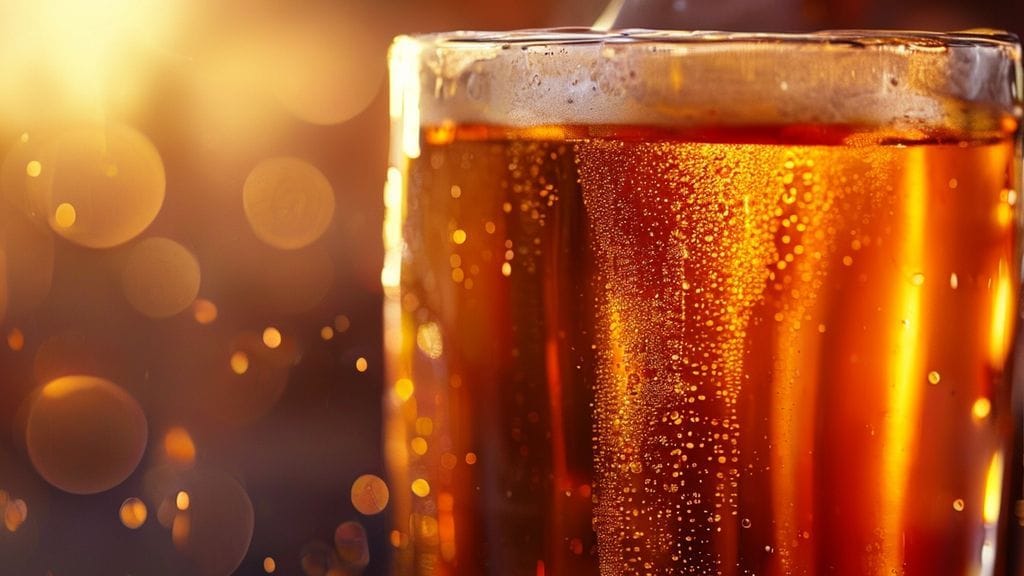
My successful batches pour a brilliant, clear deep gold to amber hue (SRM **10-12**). It should have a robust, creamy off-white head with excellent retention, leaving fine lacing on the glass. No haze, no murkiness; just pure, inviting clarity. Anything less points to either insufficient cold conditioning or a protein issue.
Aroma
The first impression should be a delicate balance. I pick up subtle toasted malt notes from the Munich, almost bread-like, supported by a hint of caramel sweetness. This is beautifully complemented by the spicy, floral, and slightly earthy bouquet of Noble hops (Hallertau and Tettnanger). The yeast character should be impeccably clean, with no detectable fruity esters or sulfur compounds. It’s a sophisticated, inviting aroma that speaks to its lager origins.
Mouthfeel
This is where the lagering truly pays off. The mouthfeel should be medium-bodied, smooth, and incredibly crisp. It offers a gentle creaminess without being heavy. The carbonation level (around **2.5 volumes CO2**) contributes to a refreshing, effervescent tingle on the palate. It finishes clean and dry, leaving you ready for the next sip.
Flavor
The flavor directly mirrors the aroma profile. You get a firm but not overpowering malt presence – toasted bread, a light caramel sweetness, and a touch of roasted character from the Carafa III. This rich malt backbone is perfectly counterbalanced by a medium hop bitterness (**30 IBU**) that provides structure and balance without being aggressive. The hop flavor, primarily from the Tettnanger, is spicy and noble, lingering briefly on the palate. The fermentation character is flawlessly clean, allowing the malt and hop synergy to shine through. My most successful batches exhibit a complex but balanced flavor profile, highly drinkable and satisfying.
Frequently Asked Questions
Why is Lagering Crucial for this Style?
Lagering is absolutely non-negotiable for an authentic Boston Lager clone. It’s a period of extended cold conditioning, typically at **0-2°C (32-35°F)** for **4-6 weeks**. This low temperature forces yeast and proteins out of suspension, leading to exceptional clarity. More importantly, it allows the beer to mellow and mature, rounding out harsh flavors and producing that signature smooth, crisp, and clean lager character. Skipping this step results in a “cold-fermented ale” rather than a true lager.
Can I Substitute the Hops?
While you can substitute hops, to truly clone Samuel Adams Boston Lager, I strongly advise against it for the aroma and flavor additions. Hallertau Mittelfrüh and Tettnanger are quintessential Noble hops, providing the specific spicy, floral, and earthy notes characteristic of the original. If absolutely necessary, substitutes like Saaz or Spalt could be considered, but understand that each noble hop has subtle differences in its essential oil profile that will slightly alter the final beer. For bittering, a clean bittering hop like Magnum or even Northern Brewer could work if Hallertau is unavailable, but you’ll lose a bit of the traditional character.
How Do I Adjust the Recipe for My Specific Brewhouse Efficiency?
Brewhouse efficiency is a critical factor in hitting your target OG. My recipe assumes 75% efficiency. If your system typically yields, say, 70%, you’ll need to increase your base malt (Pilsner and Munich) by approximately 7% to achieve the same OG. The formula I use is: `New Grain Weight = (Desired OG Points / Your Brewhouse Efficiency) * Original Grain Weight / (Assumed Brewhouse Efficiency)`. For example, if your efficiency is 70% and mine is 75%, and my recipe calls for 3kg Pilsner: `New Pilsner Weight = (50 OG points / 0.70) * 3kg / (50 OG points / 0.75)`. Remember to adjust only the fermentable base malts and not necessarily the specialty malts, as their contribution to OG is less significant but crucial for color and flavor. Regular calibration and testing your system’s efficiency are vital, something I preach constantly on BrewMyBeer.online.