

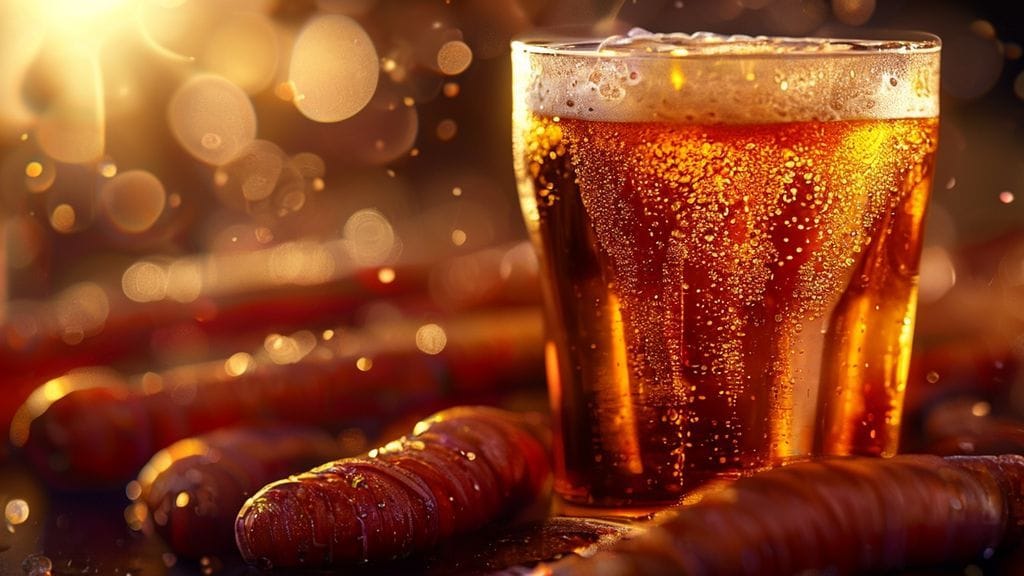
Brewing and cooking, for me, are two sides of the same meticulous coin. When I set out to develop the ultimate Beer Glazed Carrots, my goal was precision: marrying the inherent sweetness and earthy notes of carrots with the complex malt character and subtle bitterness of a carefully selected brew. The result is a dish that elevates a simple vegetable to a culinary experience, where every temperature and ingredient ratio is optimized for flavor synergy.
| Metric | Value | Notes |
|---|---|---|
| Beer Style (Recommended) | Medium-Bodied Amber Ale | Malty, caramel notes, moderate bitterness |
| Beer Original Gravity (OG) | 1.056 – 1.062 | Ensures sufficient residual sugars post-fermentation |
| Beer Final Gravity (FG) | 1.012 – 1.016 | Provides body and sweetness, crucial for glaze viscosity |
| Beer ABV | 5.3% – 6.0% | Alcohol provides solvent properties for flavor extraction and evaporates during cooking |
| Beer SRM (Color) | 10 – 15 | Contributes a rich, amber hue to the final glaze |
| Beer IBU (Bitterness) | 20 – 30 | Balances the sweetness of carrots and added sugars without dominating |
| Initial Sauté Temperature | 170-180°C (338-356°F) | Promotes Maillard reaction for depth of flavor |
| Glaze Reduction Temperature | 100-105°C (212-221°F) | Gentle simmer for evaporation, concentrating sugars |
| Optimal Carrot Size | 1.5 – 2 cm (0.6 – 0.8 inches) diagonal cut | Ensures even cooking and surface area for glazing |
| Cook Time (Total) | 25-30 minutes | From initial sauté to final glaze, achieving tender-crisp texture |
The Brewer’s Hook: More Than Just ‘Adding Beer’
When I first ventured into cooking with beer, I made the common mistake of thinking any old lager would do. For beer-glazed carrots, my initial attempts were, frankly, forgettable. I’d grab a light, mass-produced pilsner, pour it into the pan, and wonder why the carrots tasted watery and slightly metallic. The glaze lacked depth, the aroma was muted, and the whole dish felt like a missed opportunity. It was then that I realized the same principles I applied to crafting a balanced brew needed to be brought into the kitchen: ingredient selection is paramount.
My breakthrough came when I started treating the beer as a key ingredient, not just a liquid. I began experimenting with different malt profiles, hop bitterness, and residual sugar levels. A robust Porter overwhelmed the delicate carrot flavor, a sour Gose left them too tart, and an aggressively hopped IPA introduced an unwelcome astringency. After numerous trials and detailed sensory evaluations with my family, I zeroed in on the sweet spot: a medium-bodied amber ale with a balanced malt-forward character and moderate bitterness. This specific beer, with its caramel notes and a final gravity that indicates a good amount of residual sugar, proved to be the perfect canvas. It was a true “aha!” moment, proving that understanding the beer’s chemical and sensory profile is just as critical for the cook as it is for the brewer.
The “Math” Section: Deconstructing the Glaze Chemistry
Achieving the perfect beer glaze isn’t about guesswork; it’s about understanding the interaction of sugars, acids, and aromatics. My approach involves calculated ratios and an appreciation for the Maillard reaction and sugar concentration. Think of it as a small-scale brewing process, but for vegetables.
Manual Calculation Guide for Glaze Composition
This table outlines the foundational ratios I use. These are based on weight for precision, as volume measurements can vary too much with ingredients like butter.
| Component | Ratio by Weight (relative to Carrots) | Function & Chemical Impact |
|---|---|---|
| Carrots | 100% (Base) | Primary sugar source (sucrose, glucose, fructose), structural integrity. |
| Unsalted Butter (High Fat) | 8-10% | Flavor carrier, fat for Maillard reaction, emulsification of glaze. Butterfat melts at approx. 32-35°C. |
| Amber Ale (OG 1.058, FG 1.014) | 150-180% | Liquid volume for reduction, malt sugars (maltose, dextrins), hop bitterness (alpha acids), yeast esters. Contributes to glaze viscosity and aroma profile. Contains ~3.5-4.0% residual sugars (by weight). |
| Brown Sugar (Dark Muscovado recommended) | 2-3% | Additional simple sugars (sucrose) for caramelization, molasses for depth of flavor. Caramelizes at ~160°C. |
| Apple Cider Vinegar (5% Acetic Acid) | 0.5-1% | Acidic component to brighten flavors, balances sweetness. Acetic acid is volatile and partially evaporates. |
| Salt (Fine Sea Salt) | 0.8-1% | Flavor enhancer, moderates perception of sweetness. Promotes osmosis, drawing moisture from carrots. |
| Fresh Thyme (leaves) | 0.1-0.2% | Aromatic compounds (thymol, carvacrol) for herbaceous complexity. |
Understanding Beer Reduction and Sugar Concentration
The magic happens during the reduction of the beer. My target is typically a **50-60% reduction in liquid volume**. This process concentrates the residual sugars from the beer, the added brown sugar, and the complex flavor compounds. The boiling point of beer, due to its alcohol and dissolved solids, is slightly higher than water, but for practical purposes, it’s close enough to 100°C (212°F) initially. As alcohol evaporates rapidly, the boiling point rises slightly due to increasing sugar concentration. The ideal sugar concentration for a syrupy glaze is around 65-70 Brix.
Here’s a simplified approach to visualize the sugar impact:
- **Beer Sugars:** An amber ale with FG 1.014 retains roughly 35-40 g/L of fermentable and unfermentable sugars (primarily maltose, maltotriose, dextrins). When I reduce 500ml of this beer by 50%, I’m concentrating those 17.5-20g of sugar into 250ml.
- **Added Sugars:** 15g of brown sugar (for 500g carrots) adds further sucrose, glucose, and fructose.
- **Carrot Sugars:** Carrots themselves contain 5-7% sugars, predominantly sucrose. Cooking breaks down cell walls, allowing these sugars to leach out and integrate into the glaze.
The combination of these sugar sources, coupled with the Maillard reaction (browning) from the initial sauté, creates the deep, nuanced flavor profile. The slight acidity from the vinegar acts as a counterpoint, preventing the glaze from becoming cloyingly sweet and enhancing the overall brightness. This interplay is a delicate balance, much like dialing in mash pH for optimal enzyme activity. Every component serves a specific purpose, contributing to the final equilibrium of flavor and texture.
Step-by-Step Execution: My Proven Glazing Process
This is the method I’ve refined over years, focusing on temperature control and specific timings to extract the best from both the carrots and the beer. Consistency is key, and I always advise sticking to these numbers.
- **Preparation (Pre-Cook):**
- Select 500g of fresh, firm carrots. Peel them meticulously.
- Cut carrots diagonally into 1.5 – 2 cm (0.6 – 0.8 inch) pieces. This maximizes surface area for glazing and ensures even cooking.
- Weigh out 40g unsalted butter, 15g dark brown sugar, 5g fine sea salt, and 5ml apple cider vinegar. Measure out 500ml of your chosen Amber Ale (OG 1.058, FG 1.014, SRM 12, IBU 25).
- Finely chop 2 sprigs of fresh thyme leaves (approx. 1g).
- **Initial Sauté & Maillard Reaction (5-7 minutes):**
- Place a heavy-bottomed, 10-inch skillet over medium-high heat. Add the **40g butter**.
- Once the butter is fully melted and just beginning to foam (around **150°C / 300°F**), add the prepared carrots.
- Sauté, stirring occasionally, for **5-7 minutes**, until the carrots develop a slight golden-brown char on some edges. This is crucial for initiating the Maillard reaction, developing complex savory notes that complement the sweet glaze. The internal temperature of the carrots will begin to rise, breaking down pectins.
- **Deglazing & Beer Reduction (12-15 minutes):**
- Pour in the **500ml of Amber Ale**. The liquid will immediately begin to deglaze the pan, incorporating any fond (caramelized bits) into the sauce.
- Add the **5g fine sea salt** and **15g dark brown sugar**. Stir well to dissolve.
- Bring the mixture to a vigorous simmer (around **100-102°C / 212-215°F**). Reduce the heat slightly to maintain a consistent, bubbling simmer.
- Allow the liquid to reduce by approximately **50-60%**, which typically takes **12-15 minutes**. You’ll notice the liquid thickening and coating the back of a spoon. The alcohol from the beer will largely evaporate during this phase.
- **Final Glaze & Finish (3-5 minutes):**
- Once the glaze has visibly thickened, add the **5ml apple cider vinegar** and the **1g fresh thyme leaves**. The vinegar introduces a bright acidity to cut through the sweetness, while the thyme adds an aromatic complexity.
- Continue to simmer gently for another **2-3 minutes**, stirring constantly, until the glaze fully coats the carrots and has a syrupy consistency. The internal temperature of the carrots should be around **85-90°C (185-195°F)**, yielding a tender-crisp texture.
- Remove from heat immediately. Overcooking at this stage will cause the glaze to seize and potentially burn.
- **Resting & Serving:**
- Let the carrots rest in the pan for **2 minutes** off the heat. This allows the glaze to set slightly and the flavors to meld.
- Serve hot.
Troubleshooting: What Can Go Wrong
Even with precise instructions, variables exist. Here are common pitfalls I’ve encountered and my solutions:
- **Glaze Too Thin/Watery:**
- **Issue:** Insufficient reduction. The beer wasn’t concentrated enough.
- **My Fix:** Remove carrots from the pan, return the liquid to a simmer, and reduce further until it coats a spoon. Then, reintroduce carrots and toss to coat. Ensure your heat isn’t too low during the reduction phase; a consistent, gentle boil is needed for evaporation.
- **Glaze Too Thick/Sugary/Burnt:**
- **Issue:** Over-reduction or heat too high, causing sugars to caramelize too aggressively or burn.
- **My Fix:** If slightly too thick, add a tablespoon of hot water or, ideally, a splash more of the same beer, stirring vigorously off the heat to emulsify. If burnt, unfortunately, the only solution is to start over. Burnt sugar notes are irreversible and unpleasant. This usually happens if you’re not stirring frequently during the final glazing stage or if the heat is excessively high.
- **Carrots Too Soft/Mushy:**
- **Issue:** Overcooked. Likely simmered too long after adding the beer, or cut too small.
- **My Fix:** There’s no recovery for mushy carrots. Next time, ensure your carrot pieces are uniform and the specified size. Monitor doneness by piercing with a fork; you want tender-crisp, not soft.
- **Carrots Lack Flavor/Are Bland:**
- **Issue:** Insufficient browning during the initial sauté, or not enough salt.
- **My Fix:** Ensure you’re getting some good color on the carrots in step 2. That Maillard reaction adds immense depth. Also, check your salt measurement. Salt is a flavor enhancer, and 0.8-1% of the carrot weight is critical for bringing out their natural sweetness and the beer’s malt notes. For deeper flavor, consider adding a pinch of white pepper or a very small amount of finely minced garlic during the initial sauté, but be careful not to overpower the beer.
- **Beer Flavor is Too Dominant or Astringent:**
- **Issue:** Using the wrong beer style (e.g., an overly hoppy IPA or a very dark, roasted stout).
- **My Fix:** Re-evaluate your beer choice. Stick to an Amber Ale or a similar malty, moderately bitter, and balanced brew. The ABV and IBU ranges I provided are critical. If you find your beer overpowering, you can always reduce the initial volume slightly or add a touch more sugar or butter to balance it. I’ve found that exploring different styles on BrewMyBeer.online helps homebrewers understand these nuances.
Sensory Analysis: A Brewer’s Perspective
Just as I evaluate my finished beers, I approach this dish with a critical sensory eye. The goal is a harmonious balance where the beer elevates the carrot, rather than overshadowing it.
- **Appearance:** The carrots should possess a vibrant, deep orange hue, uniformly coated with a glistening, translucent, amber-brown glaze. There should be no visible charring beyond a subtle browning from the initial sauté. The glaze should not be opaque or murky; its clarity indicates proper reduction and emulsion.
- **Aroma:** The initial impression is a rich blend of cooked carrot sweetness, followed by distinct caramel and toasted malt notes from the beer. Undertones of fresh earthiness from the carrot and a subtle herbaceous lift from the thyme should be present. There should be no raw alcohol aroma, indicating successful evaporation during reduction.
- **Mouthfeel:** The carrots should be tender-crisp – yielding easily to a bite but still retaining a slight textural resistance, not mushy. The glaze should be smooth, syrupy, and adhere well to the carrot pieces, providing a luscious coating without being sticky or overly thick. A slight richness from the butter should contribute to a satisfying feel.
- **Flavor:** The flavor profile is a delightful interplay of sweet and savory. Dominant sweetness from the natural carrot sugars and the concentrated beer/brown sugar is immediately apparent, balanced by the subtle bitterness of the hops in the amber ale. Notes of toasted bread, caramel, and a hint of dark fruit from the malt should meld seamlessly with the earthy, sweet carrot base. The apple cider vinegar provides a crucial acidic lift, brightening the overall profile and preventing cloying sweetness. The salt enhances all these flavors, creating a well-rounded and complex taste experience. The thyme should offer a delicate herbal counterpoint, adding an aromatic top note. The finish should be clean, with lingering sweet-malt impressions.
Frequently Asked Questions
What is the best type of beer to use for beer glazed carrots?
I consistently recommend a medium-bodied Amber Ale with an Original Gravity (OG) of 1.056-1.062, a Final Gravity (FG) of 1.012-1.016, an SRM (color) between 10-15, and an IBU (bitterness) of 20-30. This profile ensures sufficient residual sugars for a rich glaze, provides balanced caramel malt notes, and offers just enough hop bitterness to prevent the dish from being overly sweet, without introducing overwhelming hop aroma or astringency. Avoid overly hoppy IPAs, very dark stouts, or thin lagers.
Can I make beer glazed carrots ahead of time?
While best served immediately after preparation to maintain optimal texture and glaze consistency, you can prepare beer glazed carrots up to 24 hours in advance. Store them in an airtight container in the refrigerator. To reheat, gently warm them in a skillet over medium-low heat with a tablespoon of water or a splash more beer, stirring frequently until heated through. Be cautious not to overcook, as this can make the carrots mushy and the glaze overly sticky. I often refresh them with a tiny knob of fresh butter right at the end of reheating.
What are the key chemical reactions happening during the glazing process?
There are several critical reactions at play. Firstly, the **Maillard reaction** occurs during the initial high-heat sauté of the carrots and butter, leading to non-enzymatic browning and the development of complex savory ‘umami’ flavors. Secondly, during beer reduction, **caramelization** of the various sugars (maltose, sucrose, glucose from beer, brown sugar, and carrots) takes place, contributing deep amber color and complex sweet notes. The **evaporation of alcohol** from the beer concentrates its flavors and residual sugars, while the **acid hydrolysis** from the apple cider vinegar helps to balance the sweetness and can further break down some complex sugars into simpler ones, enhancing flavor perception. Understanding these processes is a cornerstone of advanced brewing and culinary arts, much like the detailed articles you’ll find at BrewMyBeer.online.