
Discover the essential fermentation equipment you need to start brewing at home, from basic starter kits to specialized tools for beer, wine, kombucha, and other fermented beverages.
The world of home fermentation offers a rewarding journey of discovery, flavor, and self-sufficiency. Whether you’re drawn to the hoppy aroma of homebrewed beer, the tangy effervescence of kombucha, or the complex notes of homemade wine, having the right fermentation equipment is crucial to your success. This comprehensive guide will walk you through all the essential tools needed to begin your home brewing adventure, from basic starter kits to specialized equipment for different fermentation projects.
Understanding the Basics of Fermentation Equipment
Fermentation is fundamentally a simple process – microorganisms consume sugars and produce alcohol, acids, or gases – but having proper equipment ensures consistency, safety, and quality results. The good news is that you don’t need to invest thousands of dollars to get started. Many home fermenters begin with minimal setups and gradually expand their collection as their skills and interests develop.

The quality of your equipment directly affects the quality of your fermentation,” explains Master Brewer Michael Tonsmeire in his book “American Sour Beers.” “While you can certainly ferment with minimal tools, investing in a few key pieces will significantly improve your results and enjoyment of the process.
Let’s explore the essential equipment categories before diving into the specifics for different fermentation projects.
Core Fermentation Equipment for All Projects
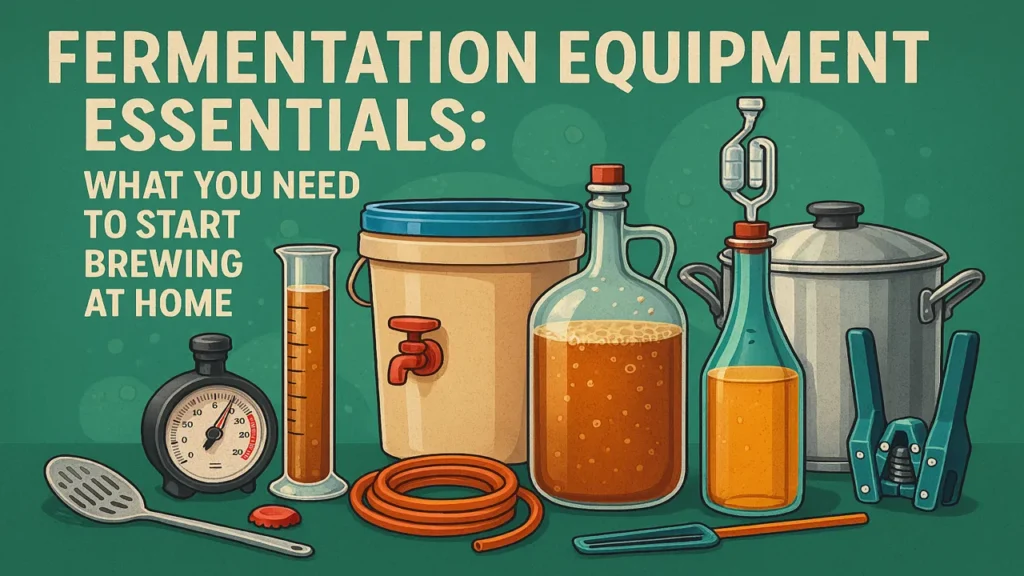
Regardless of what you’re fermenting, these foundational items form the backbone of any home fermentation setup:
Fermentation Vessels
The container in which fermentation occurs is arguably the most important piece of equipment you’ll purchase. These vessels come in various materials, each with distinct advantages:
Glass Containers
- Carboys: These large glass jugs (typically 1-6.5 gallons) are perfect for beer, wine, and larger fermentation projects
- Mason jars: Ideal for smaller fermentations like small kombucha batches or vegetable ferments
- Pros: Non-reactive, easy to sanitize, transparent for monitoring
- Cons: Breakable, heavier, can be difficult to clean
Food-Grade Plastic
- Buckets: Affordable and lightweight options for primary fermentation
- Better Bottles: PET plastic carboys that are lighter than glass
- Pros: Lightweight, durable, often less expensive
- Cons: Can scratch (harboring bacteria), permeable to oxygen over time, less durable long-term
Stainless Steel
- Brew kettles: For the brewing process
- Fermenters: High-end options for serious fermenters
- Pros: Extremely durable, easy to clean, won’t break, excellent temperature control
- Cons: Significant cost increase, can’t see inside without special ports
According to a 2022 survey by the American Homebrewers Association, most beginners start with either plastic buckets (68%) or glass carboys (24%) before potentially upgrading to stainless steel vessels.
Airlocks and Stoppers
An airlock is a simple yet ingenious device that allows carbon dioxide to escape from your fermentation vessel while preventing oxygen and contaminants from entering. Types include:
- S-shaped/three-piece airlocks: The most common type, easy to clean and use
- Bubble airlocks: Simple one-piece design that’s also effective
- Silicone or waterless airlocks: Newer options that don’t require water
Airlocks fit into vessels using rubber stoppers (bungs) that come in various sizes to match different container openings. For wide-mouth containers like buckets, you’ll need lids with airlock holes.
Thermometers
Temperature control is often the difference between success and failure in fermentation. Options include:
- Floating thermometers: Simple glass thermometers that float in your liquid
- Digital probe thermometers: Offer greater accuracy and ease of reading
- Adhesive thermometer strips: Attach to the outside of fermentation vessels
- Smart thermometers: Connected devices that can alert you to temperature changes
For more serious temperature control, consider:
- Temperature controllers: Devices that can turn heating or cooling elements on/off to maintain specific temperatures
- Fermentation chambers: Converted refrigerators or freezers with temperature controllers
Sanitizers and Cleaners
Proper sanitation is non-negotiable in fermentation. Key products include:
- Star San: No-rinse acid sanitizer, the gold standard for homebrewers
- PBW (Powdered Brewery Wash): An effective alkaline cleaner for removing organic buildup
- Iodophor: Iodine-based sanitizer
- Bleach solution: Budget option (must be thoroughly rinsed)
“Sanitation is the single most important factor in successful fermentation,” insists Charlie Papazian, founder of the American Homebrewers Association. “You can have the best ingredients and equipment, but without proper sanitation, you’re likely to end up with contaminated results.”
Measuring Equipment
Precision matters in fermentation. Essential measuring tools include:
- Kitchen scale: For weighing ingredients accurately
- Measuring cups: For liquid measurements
- Hydrometer: Measures sugar content and potential alcohol
- pH meter or strips: Critical for monitoring acidity, especially important for wild fermentations
Transfer Equipment
Moving fermenting liquids between vessels requires specific tools:
- Auto-siphon: Makes starting a siphon easy and avoids contamination
- Food-grade tubing: For transferring between vessels
- Bottling wand: Controls flow when bottling
- Funnel: Wide-mouth funnel helps with transfers and reduces splashing
Bottling and Storage
Your fermentation needs a final home once complete:
- Bottles: Glass bottles in various sizes depending on your project
- Caps, corks, or other closures: Appropriate for your container choice
- Bottle capper or corker: Tools to seal bottles properly
- Swing-top bottles: Reusable option with attached closures
Now that we’ve covered the essential equipment categories, let’s look at specific recommendations for different fermentation projects.
Beer Brewing Equipment: From Extract to All-Grain
Homebrewing equipment needs vary based on your brewing method. Here’s what you’ll need for different approaches:
Extract Brewing Equipment (Beginner Level)
Extract brewing uses pre-made malt extract, making it the simplest entry point to beer making. Essential equipment includes:
- Brew kettle: 5+ gallon stainless steel pot
- Heat source: Stovetop or dedicated burner
- Fermenting bucket or carboy: 6+ gallon capacity
- Airlock and stopper
- Auto-siphon and tubing
- Bottles, caps, and capper (approximately 50 12oz bottles for a 5-gallon batch)
- Bottling bucket: Secondary bucket with spigot for easy bottling
- Hydrometer: For measuring sugar content and alcohol potential
- Thermometer
- Sanitizer
Many homebrew shops offer starter kits containing these essentials. The Northern Brewer Basic Starter Kit is highly rated among beginners for its quality components and comprehensive instructions.
Partial Mash Brewing (Intermediate Level)
Partial mash brewing combines malt extract with some actual grain mashing, offering more control without requiring all the equipment of all-grain brewing. Additional equipment includes:
- Grain bag: For steeping specialty grains
- Larger brew kettle: Ideally 7-10 gallons
- Wort chiller: Immersion, counterflow, or plate chiller for rapidly cooling the wort
- Mash paddle or long spoon: For stirring
- Thermometer with better accuracy: For monitoring mash temperatures
All-Grain Brewing (Advanced Level)
All-grain brewing extracts all fermentable sugars directly from malted grains. This traditional approach requires additional equipment:
- Mash tun: Insulated vessel for converting grain starches to sugars
- Hot liquor tank: For heating water (often another pot)
- Larger brew kettle: 8-15 gallons
- More efficient wort chiller
- Grain mill: For crushing malted grain
- Mash paddle
- BIAB (Brew in a Bag) equipment: Alternative to traditional mashing
- Digital pH meter: For monitoring mash pH
For detailed reviews of various all-grain brewing setups designed for different spaces and budgets, check out the comprehensive equipment guides at Brew My Beer, which offer expert insights into selecting systems that match your brewing goals.
Wine Making Equipment Essentials
Home winemaking ranges from simple country wines to complex traditional grape wines. Here’s what you’ll need:
Basic Wine Making Equipment
- Primary fermenter: Food-grade plastic bucket (6+ gallons) with lid
- Glass carboys: Secondary fermenters (5+ gallons)
- Airlocks and stoppers
- Auto-siphon and tubing
- Hydrometer
- Wine bottles: Typically 750ml bottles
- Corks and corker: Hand corker for beginners, floor corker for more serious production
- Wine thief: For taking samples
- Sanitizer
- Potassium metabisulfite: For sterilizing equipment and stabilizing wine
Additional Equipment for Fresh Fruit Wines
If working with fresh fruit rather than juice:
- Fruit crusher: For breaking down fruit
- Press: For extracting juice from crushed fruit
- Nylon straining bags: For containing fruit during fermentation
Advanced Wine Making Equipment
- Testing equipment: pH meter, acid test kit, SO2 test kit
- Filter system: For brilliantly clear wines
- Barrel or oak alternatives: For aging and flavor development
“Starting with a quality wine kit and basic equipment is the most foolproof way to begin making wine at home,” recommends Tim Vandergrift, technical wine advisor and writer for WineMaker Magazine. “As your skills develop, you can invest in equipment for working with fresh fruit.”
Kombucha Equipment: Simple but Specific
Kombucha requires perhaps the simplest equipment setup, but specific considerations are important:
Essential Kombucha Equipment
- Large glass jar: 1-2 gallon wide-mouth vessel
- Breathable cover: Coffee filter, paper towel, or tightly woven cloth
- Rubber band: To secure the cover
- SCOBY: The symbiotic culture of bacteria and yeast
- pH tester: Strips or digital meter
- Bottles for second fermentation: Swing-top bottles are ideal
- Funnel: Wide-mouth for transfers
- Thermometer: For monitoring fermentation temperature
- Optional: heating mat: For maintaining optimal temperature
Equipment Notes for Kombucha
Never use metal containers for kombucha brewing or fermentation,” warns Hannah Crum, founder of Kombucha Kamp and author of “The Big Book of Kombucha.” “The acidic environment can react with metals. Stick to glass, food-grade plastic, or stainless steel for any equipment that contacts your brew.”
Specialized Equipment for Other Fermentation Projects
Kefir Equipment
Kefir requires minimal equipment:
- Glass jars: Quart or half-gallon size
- Plastic strainer: Metal can potentially damage kefir grains
- Wooden or plastic utensils: For same reason as above
- Storage containers: For finished kefir
Mead Making Equipment
Mead combines elements of beer and wine equipment:
- Fermentation vessels: Buckets and carboys
- Airlocks and stoppers
- Hydrometer
- Bottles and closures: Wine bottles for still mead, beer bottles for carbonated varieties
- Sanitizer
- Optional: nutrient additions: Specific measuring equipment for precise additions
Cider Equipment
Hard cider production requires:
- Crusher and press: If using fresh apples
- Fermentation vessels: Similar to wine
- Airlocks and stoppers
- Bottling equipment: Wine or beer bottles depending on style
- Pasteurization equipment: If making sweet cider
- Optional: keg system: For serving still or carbonated cider
Creating a Smart Starter Setup: Budget Considerations
Starting with fermentation doesn’t have to break the bank. Here’s how to build effective starter setups at different price points:
Budget Starter ($50-$100)
- One-gallon glass jug fermenter with airlock
- Sanitizer
- Siphon tubing
- Bottles (repurposed)
- Basic thermometer
- Simplified ingredient kits
Mid-Range Starter ($100-$250)
- Five-gallon fermenting bucket and bottling bucket
- Auto-siphon and tubing
- Hydrometer
- Bottle capper and new bottles
- Digital thermometer
- Better quality ingredient kits
Premium Starter ($250-$500)
- Combination of glass and plastic fermenters
- Wort chiller (for beer)
- Digital temperature controllers
- Complete bottling setup
- Specialized equipment for preferred fermentation type
“Start with the best quality equipment you can reasonably afford,” advises homebrewing expert John Palmer, author of “How to Brew.” “It’s better to begin with a smaller but quality setup than to be frustrated by sub-par equipment that might contaminate your fermentations.”
Temperature Control: The Secret to Consistent Results
While not strictly “equipment,” temperature control deserves special mention as it’s critical for fermentation success:
Basic Temperature Control Methods
- Ambient room temperature: Simplest but least controlled
- Water bath with ice packs: Budget cooling solution
- Insulated blankets or sleeping bags: Simple heat retention
- Heating pads or belts: Basic warming solutions
Advanced Temperature Control Systems
- Temperature controllers: Devices that control heating/cooling elements
- Modified refrigerators or freezers: With external temperature controllers
- Purpose-built fermentation chambers: Ultimate control
“Temperature control is often the single biggest improvement homebrewers can make to their process,” notes Drew Beechum, author of “The Everything Hard Cider Book.” “Consistent temperature equals consistent fermentation, which means consistent results.”
Cleaning and Sanitizing: Equipment for Maintenance
Proper cleaning and sanitizing equipment is essential for successful fermentation:
Cleaning Tools
- Bottle brushes: Various sizes for different containers
- Carboy brushes: Long-handled for reaching inside
- Specialized cleaning products: PBW, Oxiclean Free, etc.
- Pressure washers: For serious brewers with multiple vessels
Sanitizing Equipment
- Spray bottles: For applying sanitizer
- Bucket or tub: For soaking equipment
- Dedicated sanitizer containers
Equipment for Measuring and Testing
Precision measurement tools help achieve consistent results:
Essential Measurement Tools
- Hydrometer and test jar: Measures sugar content
- Thermometer: Various types as discussed
- Kitchen scale: Digital preferred for accuracy
- Measuring cups: For ingredients
Advanced Testing Equipment
- Refractometer: Alternative to hydrometer, uses light refraction
- pH meter: Digital preferred over strips for accuracy
- Titration kit: For measuring acid levels in wine
- Alcohol testing equipment: For determining final ABV
Storage and Aging Equipment
After fermentation, proper storage equipment preserves your creations:
Short-Term Storage
- Bottles and closures: As discussed by beverage type
- Swing-top bottles: Convenient reusable option
- Growlers: For sharing larger quantities
Long-Term Aging
- Wine racks: For proper bottle positioning
- Cellar alternatives: Cool, dark storage areas
- Temperature monitors: Ensuring proper aging conditions
- Barrel alternatives: Oak spirals, cubes, or staves for flavor without barrels
Record-Keeping Tools: The Unsung Heroes
While not physical fermentation equipment, tools for recording your process are invaluable:
- Brewing software: Programs like BeerSmith or BeerTools
- Fermentation journals: For analog record-keeping
- Labels and markers: For identifying batches
- Digital brewing apps: Mobile solutions for recipe building and tracking
“The equipment you’ll use most is often your notebook,” emphasizes Jamil Zainasheff, host of the Brewing Network’s “Brew Strong” podcast. “Detailed records of what works—and what doesn’t—are what transform you from a novice to an expert fermenter.”
Equipment for Different Spaces: From Apartments to Dedicated Breweries
Your available space significantly impacts equipment choices:
Apartment Brewing Equipment
- Smaller fermenters: 1-3 gallon size
- Electric brewing systems: No open flames
- Compact storage solutions: Stacking fermenters, collapsible equipment
- Multi-purpose equipment: Items that serve multiple functions
Garage or Basement Brewing
- Standard 5-gallon setups: More space for traditional equipment
- Dedicated fermentation chambers: Modified freezers or refrigerators
- Permanent workstations: Fixed brewing areas
- Ventilation considerations: Managing moisture and odors
Dedicated Brewing Spaces
- Larger vessels: 10+ gallon capacity
- Multiple fermenters: For concurrent batches
- Draft systems: For serving finished products
- Specialized equipment: Grain mills, larger chillers, etc.
The Digital Revolution: Smart Fermentation Equipment
Modern fermentation equipment increasingly incorporates technology:
Connected Fermentation Tools
- Bluetooth hydrometers: Real-time gravity readings
- Wi-Fi temperature controllers: Remote monitoring and adjustment
- Automated brewing systems: PID-controlled brewing
- Fermentation tracking apps: Data collection and analysis
Automated Systems
- All-in-one brewing machines: Integrated systems that handle multiple steps
- Smart fermenters: Vessels with built-in temperature control and monitoring
- Remote monitoring equipment: Cameras and sensors for observation
“The rise of connected brewing equipment has democratized techniques once available only to commercial producers,” observes Dr. Chris White, founder of White Labs yeast company. “Home fermenters can now achieve levels of precision and consistency that were impossible a decade ago.”
Equipment Safety Considerations
Fermentation equipment safety is paramount:
Physical Safety
- Heat-resistant gloves: For handling hot vessels
- Proper ventilation: Especially for gas burners
- Stable brewing stands: Preventing tippage of hot liquids
- Ground fault circuit interrupters (GFCIs): For electrical equipment near water
Food Safety
- Food-grade materials: All equipment that contacts ingredients
- Proper sanitization equipment: As discussed
- Testing equipment: For ensuring proper pH and other safety factors
- Storage for cleaning chemicals: Keeping them separate from ingredients
Sustainable and DIY Equipment Options
Many fermenters embrace sustainable approaches:
DIY Equipment Ideas
- Converted coolers: For mash tuns
- Homemade stir plates: For yeast starters
- Repurposed refrigerators: For fermentation chambers
- PVC manifolds: For water distribution
Sustainable Choices
- Reused bottles: Properly cleaned and sanitized
- Second-hand equipment: Especially durable items like stainless steel
- Solar-powered options: For heating water or powering equipment
- Water recirculation systems: Reducing water usage in cooling
Equipment Upgrades: When to Invest More
Knowing when to upgrade equipment is a skill itself:
Signs It’s Time to Upgrade
- Consistent off-flavors: May indicate equipment issues
- Difficulty maintaining temperatures: Limiting your brewing calendar
- Capacity constraints: When you regularly want larger batches
- Efficiency problems: When processes take too long or waste resources
- Quality plateaus: When your fermentations aren’t improving despite technique refinements
Strategic Upgrade Path
- Temperature control equipment
- Wort chiller (for beer) or proper press (for wine/cider)
- Larger/better fermentation vessels
- Kegging system
- Specialized equipment for preferred styles
“Upgrade the equipment that addresses your biggest frustration first,” recommends homebrewing competition judge Gordon Strong. “Each improvement should solve a specific problem or open new possibilities, not just be a shiny new toy.”
Building Your Equipment Collection Thoughtfully
Fermentation equipment is an investment in both your hobby and the quality of your creations. While it’s tempting to acquire every specialized tool available, the wisest approach is methodical:
- Start with essential, versatile equipment for your chosen fermentation type
- Master basic techniques before investing in specialized tools
- Upgrade equipment that addresses specific limitations you’ve encountered
- Consider durability and longevity when making purchases
- Join equipment-sharing groups or clubs to try before you buy
Remember that while good equipment facilitates great fermentation, the most important factors remain attention to detail, proper sanitation, and passion for the craft. Many award-winning fermented creations have come from modest setups guided by knowledgeable hands.
Your fermentation equipment collection will grow organically as your skills and interests evolve. With the essentials covered in this guide, you’re well-equipped to begin your journey into the rewarding world of home fermentation.
Author:
Mark Kegman
mark.kegman@brewmybeer.online
Equipment Testing Specialist and home fermentation enthusiast with over 15 years of experience brewing beer, mead, kombucha, and various other fermented beverages.