


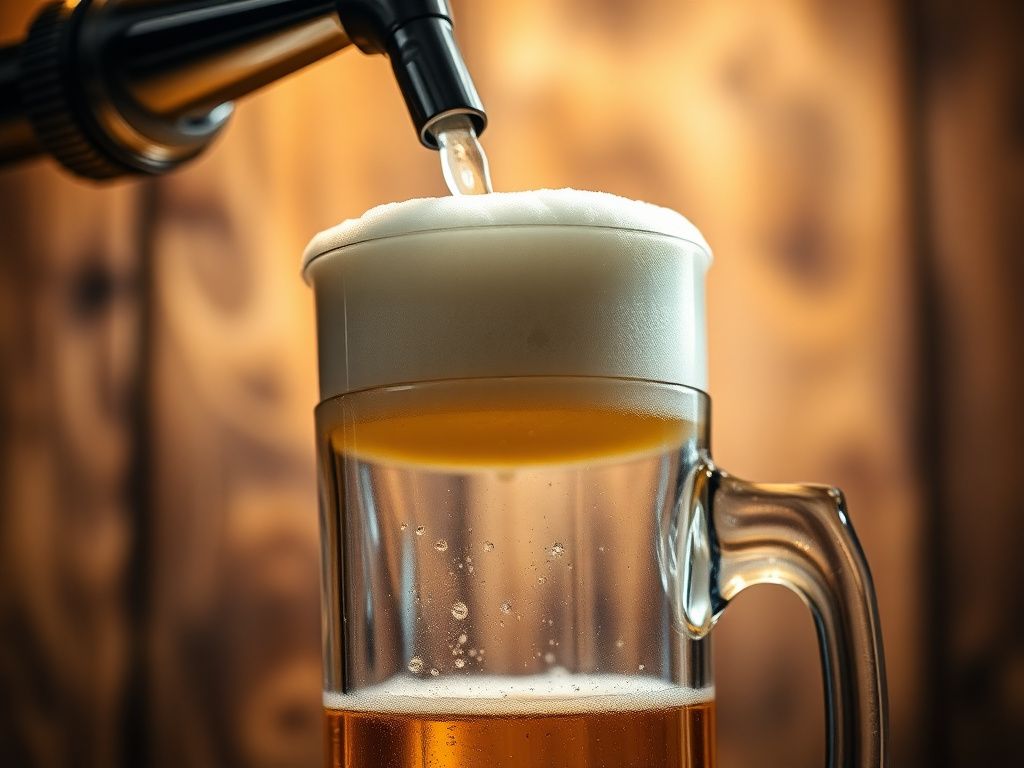
Selecting the optimal forward-sealing faucet for a home draft system is critical for dispense hygiene and performance. This guide meticulously dissects the engineering and operational specifics of Intertap and Nukatap faucets, analyzing their sealing mechanisms, material compositions, flow control capabilities, and long-term durability. We provide a technical deep dive to inform your critical equipment procurement decisions.
Forward-Sealing Faucets: Technical Specification Overview
| Feature | Intertap (Standard/Flow Control) | Nukatap (SS/Flow Control) | Technical Specification Detail | Comparative Analysis | Preferred Application |
|---|---|---|---|---|---|
| Sealing Mechanism | Forward-sealing shuttle with front-facing o-ring. | Forward-sealing shuttle with conical forward-facing seal. | Intertap uses a durable rubber o-ring on a moving shuttle. Nukatap employs a proprietary, self-centering, conical forward seal often made of an advanced polymer. Both eliminate beer contact with ambient air post-pour. | Intertap’s o-ring seal is effective but requires periodic replacement. Nukatap’s conical seal offers superior self-cleaning properties and potentially longer service life due to reduced friction and enhanced sealing surface. | Both suitable for clean pours. Nukatap excels in low-maintenance, high-hygiene environments. |
| Core Material | 304 Stainless Steel (Standard & FC models) or Chrome-plated Brass (Standard only). | 304 Stainless Steel (SS & FC models) exclusively. | 304 SS offers excellent corrosion resistance and flavor neutrality. Chrome-plated brass is more economical but less resistant to acidic beer and potential plating wear. | 304 SS is the industry standard for hygiene and longevity. Chrome-plated brass can leach metals over time, imparting off-flavors, and is susceptible to wear, requiring more frequent maintenance or replacement. | 304 SS for all professional and discerning home setups. Chrome-plated brass for budget-constrained, low-volume use with neutral pH beverages. |
| Flow Control (FC Models) | External lever controlling internal restrictor pin. | Integrated internal restrictor valve via front-mounted dial. | Intertap FC uses a direct-action lever to adjust a pintle, restricting flow path diameter. Nukatap FC integrates a precision-machined flow control stem within the shuttle, adjusted by a front-mounted dial. | Intertap FC provides tactile control; however, the restrictor pin can be prone to beer residue accumulation. Nukatap FC offers finer, more consistent adjustment with a design less prone to residue due to its integrated, smoother flow path. | Nukatap FC for precise carbonation management and challenging dispense conditions (e.g., high carbonation, short lines). Intertap FC for general flow adjustment. |
| Shuttle Design | Cylindrical shuttle with a dedicated o-ring groove. | Advanced, tapered shuttle with integrated seal geometry. | Intertap’s shuttle design is straightforward, relying on the o-ring for sealing. Nukatap’s shuttle is engineered for minimal surface area contact, reducing friction and improving sealing efficiency. | Nukatap’s design inherently minimizes stiction and wear due to reduced contact points and superior sealing geometry. Intertap’s relies heavily on the o-ring condition and proper lubrication. | Nukatap for consistent, smooth operation with minimal stiction. Intertap for reliability with regular cleaning/maintenance. |
| Cleaning & Maintenance Access | Standard faucet brush access. Complete disassembly for thorough cleaning. | Standard faucet brush access. Easier complete disassembly due to fewer parts and integrated design. | Both allow routine cleaning with standard faucet brushes. Full disassembly for deep cleaning reveals differences in component complexity and internal geometry. Nukatap’s shuttle is simpler to remove and clean. | Nukatap generally offers a more streamlined cleaning experience due to its optimized internal geometry and fewer distinct sealing components compared to Intertap’s separate o-ring. | Nukatap for reduced maintenance burden; Intertap remains highly serviceable with standard tools. |
| Modular Spout System | Interchangeable threaded spouts (Stout, Growler Filler, Ball Lock). | Interchangeable threaded spouts (Stout, Growler Filler, Ball Lock) with proprietary thread. | Both offer modularity for specific dispensing tasks. Intertap uses a common thread pitch. Nukatap uses a slightly different thread pitch, requiring Nukatap-specific accessories. | Intertap’s ecosystem of modular accessories is broader due to its longer market presence and more common thread. Nukatap’s system is growing, but specific parts must be sourced from the manufacturer. | Intertap for existing accessory compatibility. Nukatap for a dedicated, integrated system. |
Fluid Dynamic & System Pressure Calculation
Understanding the interplay between beer line length, pressure, and faucet resistance is paramount for optimal pour quality. Let’s calculate the required beer line length for a typical draft system aiming for a specific serving pressure, incorporating a nominal faucet resistance.
Assumptions:
- Target Carbonation: 2.5 Volumes CO2 (Typical Ale)
- Serving Temperature: 38°F (3.3°C)
- Keg Headspace Pressure (CO2 Regulator Set Point): 12 PSI (calculated from carbonation charts for 38°F)
- Elevation Difference: 0 ft (faucet at same height as keg)
- Beer Line Internal Diameter: 3/16 inch (0.1875 inch)
- Approximate Resistance of 3/16″ ID Vinyl Beer Line: 2.2 PSI per foot
- Nominal Faucet Resistance (Intertap/Nukatap): 1.5 PSI (approximation, can vary slightly by model)
- Choker Resistance (if used, e.g., 2 inches of 1/8″ ID line): ~0.5 PSI
Calculation:
Total System Pressure (TSP) must balance the sum of all resistances to achieve a stable pour without excessive foaming or flat beer.
TSP = Keg Pressure = 12 PSI
Resistances to Overcome:
- Faucet Resistance = 1.5 PSI
- Choker Resistance = 0.5 PSI
- Line Resistance = X feet * 2.2 PSI/foot
Therefore, we need to balance the remaining pressure with the beer line length:
Keg Pressure = Faucet Resistance + Choker Resistance + (Line Length * Line Resistance per foot)
12 PSI = 1.5 PSI + 0.5 PSI + (Line Length * 2.2 PSI/foot)
12 PSI = 2.0 PSI + (Line Length * 2.2 PSI/foot)
12 PSI – 2.0 PSI = Line Length * 2.2 PSI/foot
10 PSI = Line Length * 2.2 PSI/foot
Line Length = 10 PSI / 2.2 PSI/foot
Line Length ≈ 4.55 feet
Conclusion:
For this specific scenario, approximately 4.5 to 5 feet of 3/16″ ID beer line would be required to achieve a balanced system. This calculation highlights how the inherent resistance of the faucet contributes to the overall system pressure balance. Faucets with flow control capabilities, such as the Intertap FC or Nukatap FC, provide the brewer with the ability to dynamically adjust this resistance, offering unparalleled flexibility in balancing challenging beer styles or compensating for varying line lengths and serving pressures without altering regulator settings.
For more detailed calculations and tools to optimize your home brewing setup, consult advanced brewing resources.
Intertap vs. Nukatap: The Definitive Master Guide for Forward-Sealing Faucets in Home Bars
The pursuit of perfection in draft beer dispensing is a continuous endeavor for the dedicated homebrew enthusiast. Central to this pursuit is the selection of a robust, hygienic, and efficient faucet. Rear-sealing faucets, once ubiquitous, are progressively being replaced by superior forward-sealing designs due to their inherent advantages in preventing beer residue buildup and subsequent microbial contamination. Among the leading innovators in this segment are the Intertap and Nukatap faucet lines, both manufactured by KegLand. This master guide provides an exhaustive technical analysis, dissecting their designs, materials, performance characteristics, and practical implications for your home bar.
The Engineering Principle of Forward Sealing
To truly appreciate the advancements offered by Intertap and Nukatap, one must first grasp the fundamental engineering principle of forward-sealing faucets. Traditional rear-sealing faucets utilize a shuttle that retracts into the faucet body, allowing beer to flow. When closed, the shuttle seats against a gasket at the rear of the faucet, leaving a cavity exposed to air between the seal and the spout opening. This cavity invariably fills with residual beer after each pour. Over time, this residual beer oxidizes, becomes a substrate for microbial growth (e.g., wild yeast, bacteria like Acetobacter), and eventually manifests as off-flavors (e.g., acetic acid, diacetyl precursors) and visible contamination, often necessitating frequent and laborious cleaning routines.
Forward-sealing faucets, conversely, position their primary sealing mechanism at the very front of the faucet body, precisely at the spout opening. When the faucet handle is closed, a shuttle or shaft moves forward, directly sealing the opening to the atmosphere. This design ensures that the entire internal volume of the faucet, from the shank connection to the sealing surface, remains completely filled with beer, isolated from ambient air. Upon closing, the beer-filled chamber is hermetically sealed, preventing air ingress and significantly retarding oxidation and microbial proliferation. This attribute translates directly to superior hygiene, reduced cleaning frequency, and, critically, a more consistently fresh and untainted beer flavor profile between pours and over extended periods of inactivity. This fundamental difference is not merely a convenience but a critical factor in maintaining the integrity of delicate beer styles, particularly those susceptible to oxidation or souring. Understanding this core mechanism is paramount to justifying the investment in these advanced faucet designs.
Intertap Faucets: Robustness and Modularity
The Intertap faucet, a progenitor in the modern forward-sealing movement, represents a pragmatic balance of performance, durability, and cost-effectiveness. Its design centers around a robust cylindrical shuttle that moves linearly within the faucet body. The primary seal is achieved by a durable, food-grade o-ring mounted on the front face of this shuttle, which presses against the internal perimeter of the spout opening when the handle is closed. This positive seal prevents beer from egressing and air from ingress, maintaining the hygienic environment within the faucet body.
Material Construction: Intertap faucets are available in two primary material configurations: 304 Stainless Steel (SS) and chrome-plated brass. The 304 SS variant is the professional standard, offering exceptional corrosion resistance against the acidic nature of beer, eliminating concerns of metallic off-flavors, and providing superior durability. The chrome-plated brass version, while more economical, presents a trade-off. The chrome plating provides an initial barrier, but over prolonged exposure to beer and repeated cleaning cycles, it can wear, exposing the underlying brass. Brass contains lead, zinc, and copper alloys that can leach into beer, imparting metallic or astringent off-flavors and potentially posing health concerns. For any long-term or professional application, the 304 SS variant is unequivocally recommended.
Flow Control (FC) Model: The Intertap Flow Control (FC) model integrates an additional mechanism to regulate beer flow rate. This is achieved via an external lever that manipulates an internal restrictor pin, which protrudes into the beer flow path. By adjusting the lever, the user can vary the cross-sectional area of the beer path, thereby increasing or decreasing flow resistance. This feature is invaluable for managing varying carbonation levels, compensating for sub-optimal line lengths, or dispensing challenging styles like highly carbonated saisons or nitro stouts with specialized stout spouts. However, the internal restrictor pin, by its nature, can be a point of beer residue accumulation if not regularly flushed and cleaned, although its 304 SS construction mitigates serious issues.
Modularity: A hallmark of the Intertap design is its modular spout system. The threaded spout allows for the quick interchange of various attachments, including standard tap spouts, growler fillers, stout spouts, and even ball lock posts for cleaning or counter-pressure filling. This versatility significantly enhances the faucet’s utility in a dynamic home bar environment.
Maintenance: Routine cleaning involves flushing with water and periodic use of a faucet brush. For deeper cleaning, the Intertap faucet is easily disassembled. The handle detaches, allowing the shuttle assembly to be removed. The o-ring, being a wear item, may require replacement over time, a simple procedure that ensures continued optimal sealing.
Nukatap Faucets: Precision and Next-Generation Hygiene
The Nukatap faucet, a refinement and evolution of the forward-sealing concept, represents KegLand’s commitment to advancing dispensing technology. While sharing the core forward-sealing principle with Intertap, the Nukatap distinguishes itself through an innovative shuttle design and sealing mechanism, aiming for even greater hygiene, reduced stiction, and enhanced operational smoothness.
Shuttle and Sealing Mechanism: Unlike Intertap’s o-ring on a cylindrical shuttle, the Nukatap employs a redesigned, often tapered, shuttle with an integrated, proprietary conical seal. This seal, typically made from an advanced food-grade polymer (e.g., EPDM or TPE variants), is designed to provide a positive, self-centering seal at the very front of the faucet. The geometry minimizes surface area contact when the faucet is open, significantly reducing potential for beer residue adhesion and frictional forces. When closed, the conical design creates a highly effective seal that is less prone to stiction, which is the tendency of the faucet to stick in the closed position, especially after periods of inactivity with dried beer residue. This improved design dramatically reduces the incidence of a sticky first pour, a common minor nuisance with some forward-sealing designs, including earlier Intertaps.
Material Construction: All Nukatap faucets are constructed exclusively from 304 Stainless Steel. This commitment to a single, high-grade material underscores its focus on premium performance and hygiene, eliminating the compromises associated with chrome-plated brass. The internal components, including the shuttle and springs, are also stainless steel or other food-grade, highly durable polymers.
Flow Control (FC) Model: The Nukatap FC model elevates flow control precision. Instead of an external lever and internal pin, the Nukatap FC integrates a multi-position flow control dial at the front of the faucet. This dial precisely adjusts an internal valve mechanism within the shuttle, allowing for highly granular control over flow restriction. The design is notably cleaner, with less opportunity for beer residue to accumulate in the flow control pathway compared to lever-and-pin designs. This makes the Nukatap FC exceptionally adept at managing diverse serving conditions, from highly carbonated sparkling wines to delicate nitro beers, ensuring an ideal pour regardless of the beverage’s carbonation levels or the system’s inherent resistance.
Modularity: Similar to Intertap, Nukatap faucets feature a threaded spout for modular accessories. While the thread pitch may differ slightly, KegLand offers a dedicated range of Nukatap-specific stout spouts, growler fillers, and other attachments, maintaining a consistent and integrated ecosystem. This ensures the user is not locked into a single dispensing configuration and can adapt the faucet to various serving needs.
Maintenance: The Nukatap’s streamlined internal geometry and optimized sealing mechanism contribute to even easier cleaning and reduced maintenance requirements. The reduced surface area for residue buildup and the self-centering nature of the seal mean less effort is required for routine flushing. Disassembly is straightforward, and the proprietary seal is designed for longevity, often outlasting traditional o-rings. The design minimizes internal crevices where beer could hide, making sanitization more effective and faster.
Key Technical Comparison Points
1. Hygiene and Cleaning Efficacy: Both faucets excel over traditional rear-sealing designs. However, the Nukatap, with its integrated conical seal and optimized shuttle geometry, exhibits a slight edge in reducing beer residue adhesion and simplifying internal cleaning. The Intertap’s o-ring, while effective, can harbor minute amounts of residue in its groove if not meticulously cleaned. For critical applications where absolute hygiene is paramount, the Nukatap’s design offers a marginal, yet discernible, improvement in preventing biofilm formation and maintaining beer purity.
2. Material Science and Durability: The universal use of 304 Stainless Steel in Nukatap models provides consistent corrosion resistance and longevity. For Intertap, opting for the 304 SS version is crucial to match this durability; the chrome-plated brass version, despite its lower cost, is fundamentally a less durable and hygienic choice for long-term beer dispensing due to potential plating degradation and metal leaching. The sealing materials also differ: Intertap’s o-rings are robust but require eventual replacement, whereas Nukatap’s integrated polymer seal is designed for extended life and potentially superior resistance to chemical degradation and wear.
3. Flow Control Precision and Mechanism: While both FC models offer excellent flow management, the Nukatap FC’s integrated dial and internal valve mechanism provide finer, more repeatable adjustments. The absence of a protruding pin within the main flow path in the Nukatap FC also means less disruption to laminar flow and potentially reduced foam initiation at the control point. For applications requiring precise pour adjustments, especially for high-carbonation or delicate nitro beers, the Nukatap FC offers a tangible advantage in control and pour quality.
4. Stiction and Operational Smoothness: A common characteristic of many forward-sealing faucets is “stiction” – the tendency for the faucet to stick in the closed position, especially after dried beer residue accumulates on the seal. The Nukatap’s redesigned shuttle and advanced polymer seal significantly mitigate this issue. Its reduced surface contact and specific seal geometry lead to consistently smoother operation, minimizing the effort required for the initial opening and providing a more pleasant user experience. While Intertaps are generally smooth, they can exhibit stiction if not regularly used or cleaned, requiring slightly more force to open the first pour after extended periods.
5. Thermal Mass and Chill Stability: Both faucets, when made of 304 SS, possess significant thermal mass. This means they will conduct heat from the ambient air, potentially warming the first few ounces of beer dispensed, especially in warmer environments. Pre-chilling the faucet with a quick flush of cold beer or water before the main pour is a common practice. Neither faucet inherently offers a distinct advantage in this regard when both are constructed from stainless steel. However, the greater internal volume of some faucet designs can exacerbate this effect; both Intertap and Nukatap have optimized internal volumes to minimize this.
6. Cost-Benefit Analysis: The Intertap SS models generally represent a more budget-friendly entry point into forward-sealing technology, particularly the standard (non-FC) variant. The Nukatap, with its advanced design and exclusive 304 SS construction, typically commands a higher price. The decision hinges on balancing initial investment against long-term performance, hygiene, and convenience. For the serious enthusiast seeking the pinnacle of dispensing hygiene and operational smoothness, the Nukatap’s additional investment is justifiable. For robust, reliable performance on a tighter budget, the Intertap SS remains an excellent choice.
Which to Choose for Your Home Bar?
The selection between Intertap and Nukatap hinges on specific priorities, budget, and desired level of sophistication:
- For the Budget-Conscious but Quality-Focused Brewer: If cost is a primary constraint but you refuse to compromise on hygiene, the Intertap 304 Stainless Steel Standard faucet is an exceptional value. It delivers robust forward-sealing performance and accepts modular spouts, offering a significant upgrade over any rear-sealing faucet.
- For Versatility and General Flow Management: The Intertap Flow Control (FC) 304 Stainless Steel model is an excellent choice. Its ability to adjust flow on the fly is highly practical for serving a range of beer styles, and its modularity is a major plus for various dispensing scenarios.
- For Ultimate Hygiene and Smooth Operation: The Nukatap 304 Stainless Steel (Standard) is the superior choice if maximizing hygiene, minimizing stiction, and ensuring the freshest possible pour is your top priority. Its refined internal geometry and sealing mechanism offer a noticeable improvement in overall user experience and long-term cleanliness.
- For Unparalleled Precision and Professional-Grade Dispensing: The Nukatap Flow Control (FC) 304 Stainless Steel stands as the pinnacle. Its precise, integrated flow control, combined with all the hygienic advantages of the Nukatap platform, makes it ideal for dispensing highly carbonated beverages, fine-tuning pours for competitions, or simply achieving the absolute best pour quality with minimal effort. This is the choice for the uncompromising brewer who demands the best for every pour. It is particularly beneficial for those experimenting with different beer styles and carbonation levels, allowing the dynamic adjustment necessary to achieve a perfect pour.
Regardless of your choice, transitioning to a forward-sealing faucet from a traditional rear-sealing model is one of the most impactful upgrades you can make to your home draft system. The benefits in hygiene, flavor preservation, and reduced maintenance are substantial and immediate. These faucets, when paired with correctly sized lines and a stable temperature control system, complete the technical framework for professional-grade draft dispensing in any home setting.
Beyond the Faucet: Completing Your System
While the faucet is a critical component, its performance is intrinsically linked to the integrity of the entire draft system. Ensure your system includes high-quality 304 SS shanks, appropriate beer lines (e.g., EVABarrier for oxygen impermeability), reliable CO2 regulators, and precise temperature control. Sourcing these complete draft system components from reputable suppliers ensures compatibility and system integrity. Regular cleaning, using specialized beer line cleaners, remains essential regardless of faucet type, extending the life of your equipment and ensuring every pour is as intended by the brewmaster.
Conclusion
Both Intertap and Nukatap represent significant advancements in draft dispensing technology, offering robust forward-sealing mechanisms that vastly improve hygiene and pour quality over traditional faucets. The Intertap line provides excellent performance and modularity at a competitive price point, particularly its stainless steel variants. The Nukatap, however, pushes the boundaries further with refined engineering, superior sealing mechanics, and enhanced flow control precision, justifying its position as a premium choice for the discerning brewer. Your final decision should align with your specific budget, the frequency of use, the diversity of beer styles you dispense, and your personal emphasis on ultimate hygiene and operational smoothness. Investing in either of these advanced faucets is a commitment to superior beer presentation and preservation.