


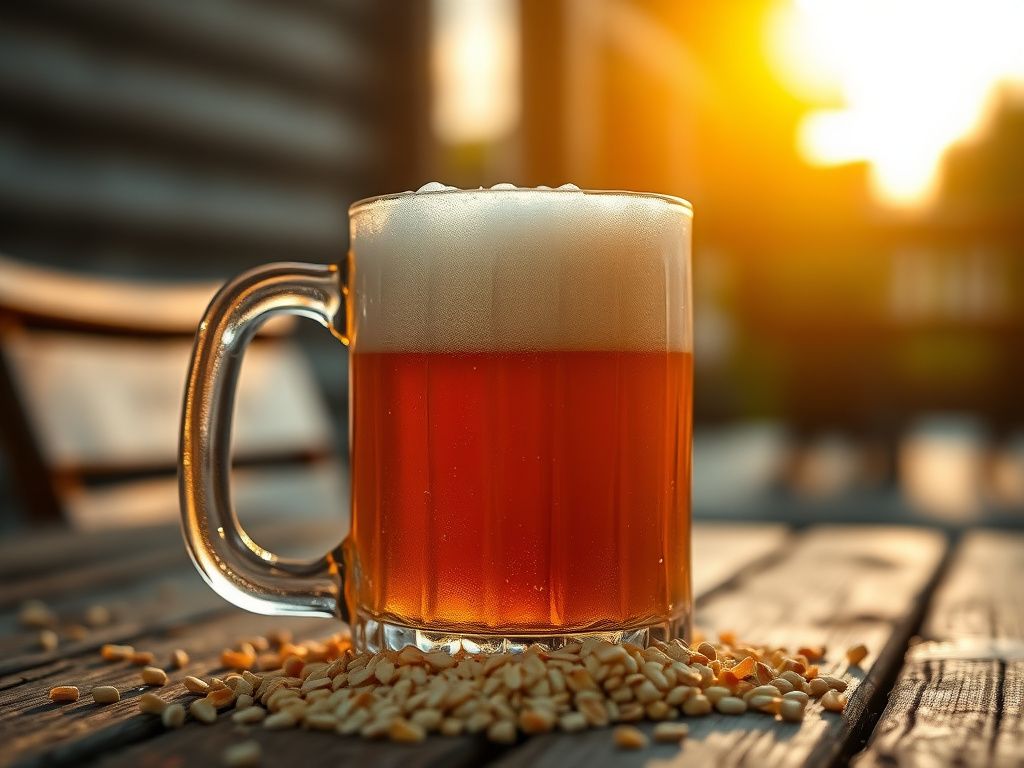
Crafting an exceptional Mexican Lager demands precision in yeast selection and adjunct incorporation. This guide details optimal ratios, mash regimens, and fermentation kinetics to achieve a clean, sessionable profile ideal for summer. Master these technical elements to brew a refreshing, authentic lager at home, enhancing your brewing prowess via BrewMyBeer.online.
Technical Specifications: Mexican Lager Parameters
| Parameter | Specification/Ratio | Impact/Rationale | Target Range | Notes/Refinement |
|---|---|---|---|---|
| Yeast Strain | Lager (e.g., W-34/70, WLP940) | Low ester production, clean fermentation profile crucial for lager crispness. | Attenuation: 78-84% Flocculation: Medium-High |
Ensure adequate pitching rates (2x ale rates) for healthy fermentation. |
| Adjunct Type | Flaked Maize (Corn) | Adds lightness, crispness, and reduces protein haze without imparting harsh flavors. | 20-40% of Grits | Requires proper mashing for complete starch conversion. |
| Mash Temperature | Single Infusion: 64-66°C (147-151°F) | Optimizes beta-amylase activity for high fermentability, contributing to a dry finish. | pH: 5.2-5.4 | Maintain temperature consistently; monitor pH for efficiency. |
| Fermentation Temp | Primary: 10-14°C (50-57°F) | Suppresses ester formation, promotes clean sulfur reduction, ensures proper lager character. | Tolerance: ±1°C | Ramp to Diacetyl Rest gradually (1-2°C/day). |
| Diacetyl Rest | 16-18°C (61-64°F) for 2-3 days | Allows yeast to reabsorb diacetyl and other vicinal diketones (VDKs). | Gravity Plateau: Before Lagering | Confirm diacetyl absence via forced diacetyl test before crashing. |
| Lagering Duration | 2-6 weeks at 0-2°C (32-36°F) | Promotes yeast flocculation, clarifies beer, mellows flavors, and improves shelf stability. | Clarity: Brilliant | Longer lagering generally yields cleaner, smoother results. |
| Water Profile | Soft, low mineral content | Prevents harshness, allows malt and hop characteristics to shine without interference. | Sulfate:Chloride (1:1 to 1:2) | Consider reverse osmosis (RO) water with precise mineral additions. |
Mathematical Principles: Mexican Lager Production
1. Adjunct Mass Calculation:
To determine the precise mass of an adjunct (e.g., flaked maize) required for your grist, use the following:
Adjunct_Mass = Total_Grist_Weight * (Adjunct_Percentage / 100)
Example: For a 5.0 kg (11.0 lb) total grist and a desired 30% flaked maize:
Adjunct_Mass = 5.0 kg * (30 / 100) = 1.5 kg (3.3 lb)
This calculation is critical for maintaining the desired body, dryness, and fermentability profile.
2. Lager Yeast Pitching Rate (Cells/mL):
Optimal lager fermentation requires significantly higher pitching rates than ales due to lower fermentation temperatures and slower yeast metabolism. A common target for lagers is 1.5-2.0 million cells/mL/°P.
Pitching_Rate (Cells) = Target_Rate * Wort_Volume (mL) * Original_Gravity (Degrees Plato)
Example: For a 20L (5.28 gal) batch at 12°P (1.048 SG), targeting 1.75 million cells/mL/°P:
Wort_Volume = 20,000 mL
Pitching_Rate = (1.75 * 10^6 cells/mL/°P) * 20,000 mL * 12 °P
Pitching_Rate = 4.2 * 10^11 cells (420 billion cells)
This ensures rapid onset of fermentation, reduces lag phase, and minimizes off-flavor production.
3. Bitterness Ratio (IBU/SG):
Mexican Lagers are characterized by low bitterness. A good technical metric is the Bitterness Ratio, which relates IBU to Original Gravity (SG).
Bitterness_Ratio = IBU / (Original_Gravity - 1) * 1000
Example: For 18 IBU and an Original Gravity of 1.048:
Bitterness_Ratio = 18 / (1.048 - 1) * 1000 = 18 / 0.048 = 375
Target ratios for International Pale Lagers typically fall between 0.35 to 0.50 (or 350-500 if using 1000*SG). Achieving a ratio around 0.35-0.40 ensures a crisp, refreshing, non-assertive hop balance.
The Definitive Master-Guide: Mexican Lagers at Home
Brewing a truly authentic Mexican Lager at home, especially for summer consumption, requires a meticulous understanding of process control, raw material selection, and fermentation kinetics. This guide provides the technical framework necessary to achieve a clean, crisp, and highly quaffable lager, mirroring the quality of commercial examples.
Defining the Mexican Lager Profile
A Mexican Lager, often classified under the International Pale Lager category by the BJCP Style Guidelines, is characterized by its light body, high drinkability, and a subtle malt character often accentuated by a significant proportion of adjuncts. Bitterness is low, and hop aroma is minimal to non-existent, focusing on refreshment. Color is typically pale straw to light gold. The critical challenge for the homebrewer is to produce this beer free of diacetyl, acetaldehyde, and sulfur compounds, which can easily mar the delicate profile of a lager.
Malt Bill and Adjunct Integration: The Foundation of Lightness
The foundation of a Mexican Lager is a pale malt, typically 2-row Pilsner or a North American 2-row. This provides the enzymatic power for starch conversion and the base flavor profile. However, the defining characteristic of this style often comes from the generous use of adjuncts. Flaked maize (corn) and, less commonly, flaked rice are the primary choices.
Flaked maize is preferred for its ability to lighten the body, contribute a subtle sweetness, and promote a dry, crisp finish without imparting a “corny” flavor if used appropriately. It reduces the protein content of the wort, leading to improved clarity and stability. Typical ratios for flaked maize range from 20% to 40% of the total grist. At the higher end, a slight corn-like aroma can emerge, which some brewers desire for stylistic authenticity, though it must be subtle.
Flaked rice, when used, contributes an even drier and crisper character than corn, with virtually no flavor contribution. It’s often used in conjunction with corn or as a sole adjunct at similar percentages. The key with both adjuncts is that they are pre-gelatinized, meaning their starches have been cooked and made accessible for enzymatic conversion during the mash. This eliminates the need for a separate cereal mash, simplifying the homebrewing process.
When formulating your grist, aim for a base malt contribution of 60-80% of pale malt, with the remaining 20-40% being flaked maize or rice. A very small percentage (1-2%) of Carapils/Dextrin Malt can be included to enhance head retention and body without adding significant color or sweetness, which aligns with the technical goals of this style.
Water Chemistry: The Silent Influencer
Water chemistry plays a more critical role in lagers than many other styles due to their delicate flavor profiles. Mexican Lagers thrive on soft water. High levels of sulfate can accentuate perceived bitterness and dryness, while excessive chloride can lead to a fuller, sweeter profile. Both can easily throw the subtle balance of a Mexican Lager off course.
Ideally, use reverse osmosis (RO) water and build your profile from scratch. Aim for a balanced or slightly sulfate-leaning profile with very low mineral content. Target calcium levels around 50-70 ppm, and a sulfate-to-chloride ratio between 1:1 and 1:2. Sodium should be kept below 50 ppm. This ensures that no single mineral dominates, allowing the subtle malt and adjunct characters to be perceived cleanly.
Mash pH is equally crucial. Target a mash pH of 5.2-5.4 at mash temperature for optimal enzyme activity. Adjuncts, particularly maize, tend to raise mash pH, so acid additions (lactic acid, phosphoric acid, or acidulated malt) may be necessary to bring the pH into the target range. Monitoring mash pH with a calibrated pH meter is essential for consistent results.
Hops: Subtlety is Key
Hop character in a Mexican Lager should be minimal. The goal is balance, not prominence. Bitterness should be low, typically in the 15-20 IBU range. Noble hop varieties (e.g., Hallertauer, Saaz, Tettnang) are traditional choices, offering a clean, spicy, or floral bitterness without being aggressive. American noble hop equivalents like Liberty or Mt. Hood can also be used.
A single bittering addition at 60 minutes is usually sufficient. Avoid late hop additions for aroma, as they can detract from the crisp, clean profile. If a very subtle noble hop aroma is desired, a small addition (0.5-1.0 oz) at 10 minutes can be considered, but this deviates slightly from the most stripped-down versions of the style. The focus remains on quenching thirst rather than hop complexity.
Yeast Selection and Management: The Core of Lager Brewing
This is where the true technical challenge and reward lie. The choice and management of lager yeast are paramount for a clean, crisp Mexican Lager. Ale yeasts, even clean ones, will produce esters and phenols that are entirely inappropriate for this style. We need a true lager strain.
Recommended Lager Yeast Strains:
-
Fermentis SafLager W-34/70: This is arguably the most popular and forgiving lager strain globally. It’s highly attenuative, produces a very clean profile, and has excellent flocculation characteristics. It performs well across a range of lager temperatures (10-15°C / 50-59°F) and is relatively tolerant of slight temperature fluctuations, making it a homebrewer favorite. Its low diacetyl production and efficient sulfur reduction make it ideal for quick lagers.
-
White Labs WLP830 German Lager Yeast / WLP940 Mexican Lager Yeast: WLP830 is another workhorse, producing classic German lagers with a very clean, crisp profile. WLP940 is specifically marketed for Mexican Lagers, offering a neutral profile with good attenuation and flocculation, leading to a refreshing and dry finish.
-
Imperial Yeast L13 Global Lager: Known for its robust performance, L13 provides a crisp, clean fermentation with subtle fruit notes that are still appropriate for a lager if fermented on the lower end of its range. It ferments quickly and flocculates well.
-
Fermentis SafLager S-23: While S-23 can produce fruitier notes (often described as estery or even slightly apple-like) than W-34/70, it can be managed at the very lowest end of its temperature range (around 10-11°C / 50-52°F) to produce a cleaner profile suitable for some Mexican Lager interpretations. It attenuates very well.
Yeast Pitching Rate: This is non-negotiable for lagers. You need to pitch significantly more yeast than for an ale. A target of 1.5 to 2.0 million cells/mL/°P (Degrees Plato) is standard. For a typical 5-gallon (19-liter) batch at 1.048-1.050 OG (12-12.5°P), this means pitching approximately 350-450 billion cells. This is roughly twice the rate of an ale. Achieving this usually requires a substantial yeast starter (e.g., 2-3 liters for liquid yeast, or 2-3 rehydrated dry yeast packets).
Underpitching leads to:
-
Extended lag phases, increasing risk of infection.
-
Stressed yeast, producing excessive esters, fusel alcohols, and diacetyl.
-
Stuck fermentations and poor attenuation.
Therefore, proper yeast propagation and pitching rate calculation, possibly aided by tools like the BrewMyBeer.online calculator, are critical.
Fermentation Management: Precision Temperature Control
Lager fermentation requires tight temperature control. Ferment at the cooler end of your chosen yeast’s optimal range, typically 10-14°C (50-57°F). Consistent temperature prevents off-flavors. Fluctuations can stress yeast and lead to undesirable byproducts.
Primary Fermentation: Maintain your chosen temperature for 7-10 days, or until gravity is within 2-3 points of your estimated final gravity (FG).
Diacetyl Rest: This is an absolutely crucial step for any lager, especially one as clean as a Mexican Lager. Once fermentation is nearing completion (e.g., gravity drop slows significantly, or after 7-10 days), raise the temperature to 16-18°C (61-64°F) for 2-3 days. This warmer temperature encourages the yeast to clean up diacetyl and other vicinal diketones (VDKs) that contribute to butterscotch or movie-theater popcorn off-flavors. Verify diacetyl absence with a forced diacetyl test: take a sample, warm it to 60°C (140°F) for 10-15 minutes, then cool and smell. If no diacetyl is present, proceed.
Conditioning and Lagering: The Maturation Process
After the diacetyl rest, crash cool the beer rapidly to 0-2°C (32-36°F). This initiates the lagering phase, where the beer conditions and clarifies. Lagering promotes further yeast flocculation, allowing the beer to become brilliantly clear. It also helps mellow any remaining off-flavors and integrates the various flavor compounds.
Lagering typically lasts 2 to 6 weeks. While shorter lagering times are possible with highly flocculant strains and careful fermentation, longer periods generally yield a smoother, more refined lager. Patience here is rewarded with superior clarity and a cleaner taste.
Process Optimization for Summer Brewing
Brewing lagers in summer presents specific challenges due to ambient temperatures.
-
Chilling Strategy: Rapid chilling of the wort to pitching temperature is critical. Utilize an immersion or plate chiller effectively. Pre-chilling strike water in a fermenter or using a pre-chiller with garden hose water can help. Consider an ice bath for the wort chiller if tap water is too warm.
-
Fermentation Temperature Control: An insulated fermentation chamber with active cooling (e.g., a chest freezer with an external temperature controller like an Inkbird) is almost mandatory for lagers. Fermenting in ambient summer temperatures without control will result in a poor-quality, estery, or fusel-alcohol-laden beer that doesn’t resemble a true lager.
-
Yeast Starter Management: If building a liquid yeast starter, manage its temperature carefully. A starter that gets too warm can produce off-flavors even before pitching, affecting the final beer. Consider using a small insulated bath for your starter vessel to maintain a stable, cooler temperature (e.g., 18-20°C / 64-68°F).
Troubleshooting Common Issues
Diacetyl: The most common lager off-flavor. Caused by underpitching, insufficient diacetyl rest, or premature chilling. Ensure proper pitching rates and execute the diacetyl rest fully.
Sulfur (DMS, H2S): Hydrogen sulfide (rotten egg smell) is common in primary lager fermentation but should dissipate during lagering. DMS (cooked corn/vegetable) can result from insufficient boil time (less than 60-90 minutes, especially with Pilsner malt) or slow wort chilling. Ensure a vigorous boil and rapid chilling.
Haze: Protein haze can result from insufficient cold crashing, poor flocculation, or high protein malt content. Adjuncts help, as does proper lagering. Yeast haze indicates insufficient flocculation or filtration (if used).
Lack of Crispness: Often caused by too high a mash temperature (leading to lower fermentability), insufficient attenuation, or residual sweetness from under-fermentation. Ensure precise mash temperatures and thorough fermentation.
Conclusion
Brewing an excellent Mexican Lager at home is a rewarding endeavor that hones advanced brewing skills. From precise adjunct ratios to rigorous temperature control and patient lagering, each step contributes to the final beer’s clean, refreshing character. By focusing on yeast health, optimal fermentation conditions, and proper conditioning, you can consistently produce a vibrant, thirst-quenching lager perfect for summer enjoyment. Embrace the technical demands, and elevate your brewing with the expertise found at BrewMyBeer.online.