

Transform your homebrewing operation from amateur to professional-grade with expertly crafted multi-vessel brewing stand welding plans. Whether you’re upgrading from extract brewing or designing a complete all-grain system, mastering the art of brewing stand construction through proper welding techniques represents the difference between a functional setup and a brewing masterpiece.
Understanding Multi-Vessel Brewing Stand Design Philosophy
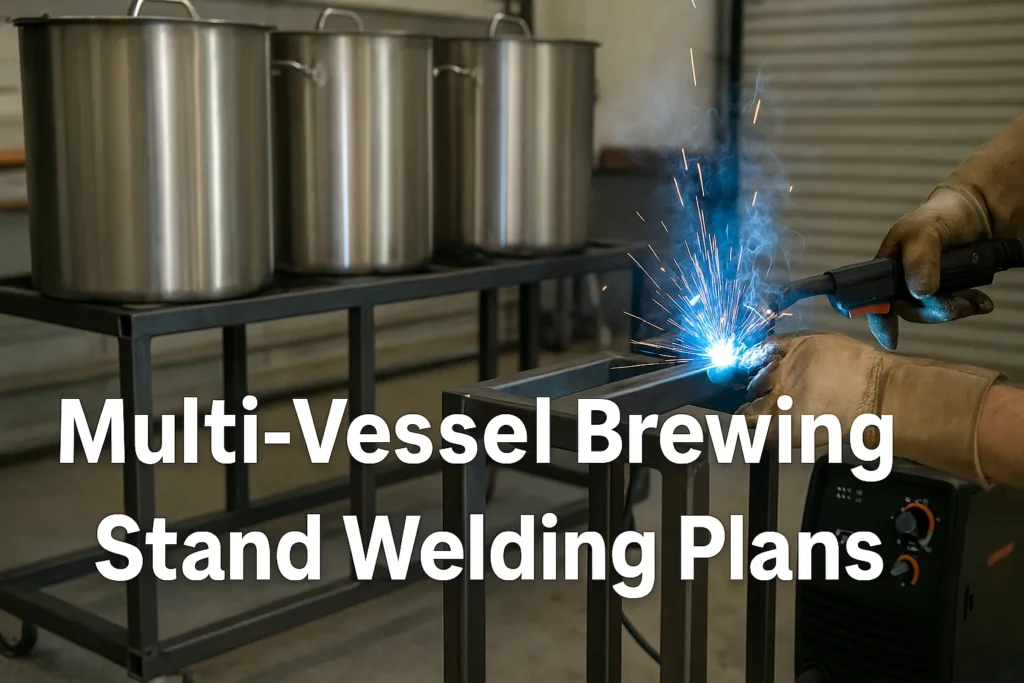
A multi-vessel brewing stand serves as the backbone of serious all-grain brewing operations, supporting multiple vessels while facilitating efficient liquid transfer and temperature control. The basic framework can be welded together with a stick or wire-feed welder in a couple of afternoons, yet the engineering behind successful multi-vessel brewing stand welding plans requires careful consideration of structural loads, safety requirements, and operational efficiency.
Professional brewing stands typically accommodate three primary vessels: the hot liquor tank (HLT), mash tun, and boil kettle. Advanced systems may incorporate a fourth vessel for whirlpooling or additional heating capacity. The frame to support this whole system must be built to hold the weight of the kegs and their contents, which can exceed 200 pounds when fully loaded with water, grain, and other components.

Key Design Considerations for Multi-Vessel Systems
Structural Integrity: Multi-vessel brewing stand welding plans must account for static loads from empty vessels, dynamic loads during operation, and safety factors for unexpected stresses. Kegs full of mash water, fifteen or twenty pounds of grain and all of the other components may have a combined weight that demands robust construction.
Operational Workflow: The configuration significantly impacts brewing efficiency, with gravity-fed systems requiring specific height relationships between vessels for optimal liquid transfer.
Future Expansion: Well-designed multi-vessel brewing stand welding plans incorporate provisions for additional equipment, upgraded vessels, or modified brewing processes.
Material Selection for Multi-Vessel Brewing Stand Construction
Steel Specifications and Grade Selection
The choice of steel significantly impacts both performance and cost in multi-vessel brewing stand welding plans. Most homebrewing applications benefit from mild steel construction, which offers excellent weldability and cost-effectiveness compared to stainless steel alternatives.
Recommended Steel Specifications:
- 1.5″ x 1.5″ Square Tubing (14 gauge): Optimal balance of strength and weight for most applications
- 2″ x 2″ Square Tubing (1/8″ wall): Provides extra rigidity for heavy-duty applications
- 2″ x 1″ Rectangular Tubing: Efficient material usage for specific applications
| Tubing Size | Wall Thickness | Weight (lbs/ft) | Recommended Use |
|---|---|---|---|
| 1.5″ x 1.5″ | 14 gauge (0.083″) | 2.68 | Standard homebrewing |
| 2″ x 2″ | 1/8″ (0.125″) | 4.32 | Heavy-duty systems |
| 2″ x 1″ | 14 gauge | 2.23 | Compact designs |
| 1.5″ x 1.5″ | 1/8″ wall | 3.07 | Premium applications |
Material Quality and Sourcing Considerations
Quality multi-vessel brewing stand welding plans specify ASTM A500 Grade B structural tubing for consistency and reliable mechanical properties. This specification ensures uniform carbon content, weldability characteristics, and structural performance across different suppliers.
Cost-Effective Sourcing Strategies:
- Local metal supply remnant tables often yield excellent pricing
- Steel service centers provide cut-to-length services
- Online suppliers offer competitive pricing for standard lengths
Structural Engineering Principles for Brewing Stands
Load Calculations and Safety Factors
Professional multi-vessel brewing stand welding plans incorporate proper structural load calculations to ensure adequate safety margins. The primary loads include:
Dead Loads: Permanent weight of vessels, frame, and fixed equipment Live Loads: Variable weights from liquids, grain, and operational personnel Dynamic Loads: Forces from liquid movement, pump vibration, and thermal expansion
Critical Load Scenarios:
- Three 20-gallon vessels completely filled (approximately 500 lbs liquid load)
- 50 pounds of grain in mash tun during peak load conditions
- Personnel accessing elevated platforms for cleaning and maintenance
- Asymmetric loading during partial vessel filling or emptying
Structural Design Methodology
Effective multi-vessel brewing stand welding plans follow established engineering principles while accommodating the unique requirements of brewing operations. I’ve designed these systems to fit into a conventional seven and a half foot ceiling garage, utilizing gravity for liquid transfer between vessels.
Design Process Overview:
- Load Analysis: Calculate maximum expected loads with appropriate safety factors
- Member Sizing: Select structural members capable of resisting calculated loads
- Connection Design: Specify welding procedures and joint configurations
- Stability Analysis: Ensure adequate resistance to overturning and lateral forces
Welding Techniques for Multi-Vessel Brewing Stand Construction
MIG vs TIG Welding for Brewing Applications
The choice between MIG and TIG welding significantly impacts both the construction process and final quality in multi-vessel brewing stand welding plans. Each process offers distinct advantages depending on project requirements and welder experience.
MIG Welding Advantages:
- Faster welding speeds enable efficient production
- Lower skill requirements for acceptable results
- Cost-effective consumables and equipment
- Excellent for structural steel in 14-gauge and thicker applications
TIG Welding Benefits:
- Superior weld quality and appearance
- Precise heat control for thin materials
- Clean welds requiring minimal post-processing
- Optimal for stainless steel components
For most multi-vessel brewing stand welding plans, MIG welding provides the optimal balance of speed, cost, and quality. The process works exceptionally well for mild steel structural members while requiring less specialized skill development.
Welding Procedures and Techniques
Professional multi-vessel brewing stand welding plans specify appropriate welding procedures to ensure structural integrity and safety. The most common approaches include:
Flux-Core Arc Welding (FCAW): .030/.035/.040 flux core provides excellent penetration and works well in outdoor environments where wind might affect shielding gas.
Gas Metal Arc Welding (GMAW/MIG): .035 solid wire with 75/25 argon/CO2 shielding gas offers superior weld quality for indoor construction.
Preparation Requirements:
- Clean, rust-free surfaces ensure optimal weld quality
- Proper fit-up eliminates gaps that compromise structural integrity
- Beveled joints on thicker materials promote full penetration welds
Detailed Multi-Vessel Brewing Stand Welding Plans
Three-Tier Gravity-Fed Configuration
The classic three-tier design represents the most popular multi-vessel brewing stand welding plans configuration, utilizing gravity for efficient liquid transfer while maintaining reasonable operational heights.
Dimensional Requirements:
- Overall Height: 6-7 feet accommodates standard garage ceilings
- Tier Spacing: 18-24 inches between vessel centers enables adequate clearance
- Base Dimensions: 6-8 feet length provides stability while fitting standard garage spaces
- Depth: 24-30 inches accommodates vessel diameters plus access clearance
Construction Sequence:
- Base Frame Assembly: Weld primary structural frame ensuring square and level construction
- Vertical Supports: Install uprights with precise spacing for vessel platforms
- Platform Construction: Fabricate vessel support platforms with appropriate drainage provisions
- Bracing Installation: Add diagonal bracing for lateral stability and vibration control
Single-Tier Pump-Fed Design
Modern multi-vessel brewing stand welding plans increasingly favor single-tier configurations that rely on pumps for liquid transfer while offering improved ergonomics and space efficiency.
Advantages of Single-Tier Systems:
- Improved operator ergonomics with all vessels at similar heights
- Reduced structural loads due to lower center of gravity
- Enhanced flexibility for vessel arrangement and future modifications
- Simplified cleaning and maintenance access
Key Design Elements:
- Uniform Height: All vessels positioned at optimal working height (36-42 inches)
- Pump Integration: Provisions for pump mounting and plumbing routing
- Control Panel Space: Dedicated area for electrical controls and instrumentation
- Storage Integration: Lower shelf space for equipment and supplies
Modular Four-Vessel Configuration
Advanced multi-vessel brewing stand welding plans accommodate four-vessel systems for double-batch efficiency or specialized brewing processes like whirlpooling and extended hop stands.
Fourth Vessel Applications:
- Whirlpool Vessel: Dedicated vessel for hop separation and wort clarification
- Hot Liquor Tank #2: Additional capacity for double batches or continuous operations
- Specialized Applications: Sour mashing, decoction processes, or experimental techniques
Safety Requirements and Building Codes
Structural Safety Considerations
Professional multi-vessel brewing stand welding plans prioritize safety through proper engineering and compliance with applicable building codes. While homebrewing stands typically don’t require formal engineering approval, following established safety principles protects both investment and operator safety.
Critical Safety Elements:
- Adequate Safety Factors: Design loads should include appropriate safety margins
- Stability Analysis: Prevent overturning under maximum load conditions
- Material Quality: Specify appropriate steel grades and welding procedures
- Regular Inspection: Establish maintenance schedules for ongoing safety verification
Fire Safety and Ventilation Requirements
Multi-vessel brewing systems generate significant heat and steam, requiring careful attention to fire safety and ventilation in multi-vessel brewing stand welding plans.
Ventilation Requirements:
- Steam Evacuation: Adequate exhaust capacity for boil-off steam
- Make-Up Air: Balanced ventilation prevents negative pressure conditions
- Carbon Monoxide Safety: Proper combustion air supply for gas-fired equipment
Advanced Construction Techniques
Weldless vs Welded Construction Methods
While traditional multi-vessel brewing stand welding plans emphasize welded construction, modern alternatives offer flexibility and reduced skill requirements.
Weldless Assembly Benefits:
- Accessibility: No welding equipment or skills required
- Flexibility: Easy modification and reconfiguration
- Portability: Disassembly for storage or relocation
- Quality Control: Consistent performance with proper hardware
Welded Construction Advantages:
- Structural Integrity: Superior strength and rigidity
- Custom Configuration: Unlimited design possibilities
- Professional Appearance: Clean, integrated aesthetic
- Long-Term Durability: Permanent assembly resists loosening
Powder Coating and Finishing Options
Quality multi-vessel brewing stand welding plans specify appropriate finishing to ensure long-term performance and professional appearance. Powder coating offers a high-temperature option that has a listed durability of up to approximately 600°F while providing excellent corrosion resistance.
Finishing Alternatives:
- Powder Coating: Professional appearance with excellent durability
- High-Temperature Paint: Cost-effective option for budget-conscious builds
- Stainless Steel: Premium option eliminates finishing requirements
- Galvanizing: Maximum corrosion protection for outdoor installations
Cost Analysis and Project Planning
Material Cost Breakdown
Understanding cost implications helps optimize multi-vessel brewing stand welding plans for specific budget constraints while maintaining quality and safety standards.
| Component Category | Percentage of Total | Typical Cost Range |
|---|---|---|
| Structural Steel | 35-45% | $150-300 |
| Welding Consumables | 10-15% | $50-75 |
| Hardware & Fasteners | 15-20% | $75-125 |
| Finishing Materials | 20-25% | $100-150 |
| Miscellaneous | 10-15% | $50-100 |
Labor and Equipment Requirements
Professional multi-vessel brewing stand welding plans require specific equipment and skill levels that impact project timelines and costs.
Essential Equipment:
- Welding Machine: MIG welder capable of 1/8″ steel (minimum 140 amp capacity)
- Cutting Tools: Angle grinder, cut-off saw, or plasma cutter
- Measuring Tools: Square, level, measuring tape, and marking tools
- Safety Equipment: Welding helmet, gloves, safety glasses, and ventilation
Skill Development Investment:
- Basic Welding Course: 20-40 hours of instruction for fundamental techniques
- Practice Materials: Additional steel for skill development and technique refinement
- YouTube University: Free online resources supplement formal training effectively
Integration with Brewing Equipment
Vessel Mounting and Support Systems
Effective multi-vessel brewing stand welding plans incorporate proper mounting systems that accommodate various vessel types while ensuring safety and operational efficiency.
Keggle Conversion Considerations:
- Support Ring Design: Distribute load evenly around vessel circumference
- Height Adjustment: Accommodate different vessel sizes and configurations
- Drainage Provisions: Enable cleaning and maintenance operations
- Thermal Expansion: Allow for metal expansion during heating cycles
Plumbing and Electrical Integration
Modern multi-vessel brewing stand welding plans anticipate integration requirements for pumps, valves, and control systems that enhance brewing efficiency and automation.
Infrastructure Planning:
- Pump Mounting: Dedicated locations for recirculation and transfer pumps
- Valve Accessibility: Easy access for operation and maintenance
- Electrical Routing: Protected pathways for power and control wiring
- Gas Line Integration: Safe routing for propane supply systems
Quality Control and Testing Procedures
Weld Quality Assessment
Professional multi-vessel brewing stand welding plans incorporate quality control measures to ensure structural integrity and long-term performance.
Visual Inspection Criteria:
- Penetration: Full penetration welds on structural joints
- Profile: Consistent bead profile indicating proper technique
- Defects: Absence of cracks, porosity, or inclusion defects
- Cleanup: Appropriate slag removal and finishing
Load Testing and Verification
Before placing any brewing system into service, proper load testing verifies the adequacy of multi-vessel brewing stand welding plans implementation.
Testing Protocol:
- Progressive Loading: Gradually increase loads to design capacity
- Deflection Measurement: Monitor structural response under load
- Joint Inspection: Examine critical connections for distress
- Stability Verification: Confirm resistance to overturning forces
Troubleshooting Common Construction Issues
Weld Quality Problems
Even experienced welders encounter challenges that can compromise multi-vessel brewing stand welding plans if not properly addressed.
Common Issues and Solutions:
- Lack of Penetration: Increase amperage or reduce travel speed
- Porosity: Improve shielding gas coverage or clean base material
- Distortion: Use proper fixturing and welding sequence
- Cracking: Check material compatibility and pre-heat requirements
Dimensional Accuracy Challenges
Precision in multi-vessel brewing stand welding plans implementation ensures proper fit and function of all system components.
Accuracy Maintenance Strategies:
- Jig Construction: Build fixtures to maintain critical dimensions
- Progressive Assembly: Check fit at each construction stage
- Measurement Verification: Confirm dimensions before final welding
- Adjustment Provisions: Design flexibility for minor corrections
Future Upgrades and Modifications
Expansion Planning Considerations
Well-designed multi-vessel brewing stand welding plans anticipate future needs and incorporate provisions for system upgrades without major reconstruction.
Common Upgrade Paths:
- Additional Vessels: Fourth vessel for specialized processes
- Automation Integration: Control systems and monitoring equipment
- Capacity Increases: Larger vessels or duplicate systems
- Process Improvements: Enhanced mixing, temperature control, or filtration
Maintenance and Longevity Strategies
Proper maintenance ensures multi-vessel brewing stand welding plans deliver decades of reliable service while maintaining safety and performance standards.
Maintenance Schedule:
- Monthly: Visual inspection of joints and connections
- Quarterly: Detailed inspection of high-stress areas
- Annually: Complete structural assessment and protective coating evaluation
- As Needed: Repair or replacement of worn components
Professional vs DIY Construction Decisions
Skill Assessment and Project Scope
The decision to pursue DIY construction versus professional fabrication significantly impacts both cost and quality outcomes in multi-vessel brewing stand welding plans implementation.
DIY Advantages:
- Cost Savings: Eliminate labor costs for budget-conscious builders
- Learning Experience: Develop valuable fabrication skills
- Customization: Unlimited design flexibility and modification capability
- Personal Satisfaction: Pride of craftsmanship and ownership
Professional Benefits:
- Expertise: Access to experienced fabricators and proven techniques
- Efficiency: Faster completion with professional equipment and skills
- Quality Assurance: Higher likelihood of optimal results
- Warranty Protection: Professional guarantees on workmanship
Resource Requirements Analysis
Successful multi-vessel brewing stand welding plans implementation requires honest assessment of available resources and realistic project timelines.
Critical Success Factors:
- Adequate Workspace: Sufficient area for safe construction operations
- Equipment Access: Appropriate tools and welding equipment
- Skill Development: Time investment for technique mastery
- Quality Standards: Realistic expectations for finished results
Advanced Applications and Specialized Designs
Commercial-Scale Adaptations
Professional breweries increasingly adapt multi-vessel brewing stand welding plans principles for pilot systems, quality control laboratories, and specialized production requirements.
Scaling Considerations:
- Regulatory Compliance: Building codes and professional engineering requirements
- Insurance Requirements: Commercial coverage may mandate specific design standards
- Production Efficiency: Optimized workflows for commercial operations
- Maintenance Access: Enhanced accessibility for professional maintenance schedules
Specialized Brewing Processes
Advanced multi-vessel brewing stand welding plans accommodate specialized techniques that require unique equipment configurations or vessel arrangements.
Process-Specific Requirements:
- Sour Beer Production: Dedicated vessels for extended fermentation and blending
- High-Gravity Brewing: Enhanced structural capacity for concentrated worts
- Continuous Systems: Modified configurations for flow-through processes
- Experimental Brewing: Flexibility for research and development applications
Mastering Multi-Vessel Brewing Stand Construction
Creating professional-quality multi-vessel brewing stand welding plans represents the intersection of engineering principles, fabrication skills, and brewing knowledge. Whether pursuing DIY construction or working with professional fabricators, understanding the fundamental principles ensures optimal results that serve brewing operations for decades.
The investment in quality multi-vessel brewing stand welding plans pays dividends through improved brewing efficiency, enhanced safety, and the satisfaction of creating professional-grade systems. From material selection through final assembly, attention to detail and adherence to proven engineering principles separate amateur projects from professional installations.
For brewers ready to take their craft to the next level, proper planning and execution of multi-vessel brewing stand welding plans provides the foundation for consistently excellent results. Whether brewing five-gallon test batches or production-scale systems, the principles remain constant: quality materials, proper engineering, skilled fabrication, and ongoing maintenance ensure lasting success.
The journey from concept to completion challenges builders to develop new skills, understand complex systems, and create lasting improvements to their brewing operations. For those ready to invest the time and effort, multi-vessel brewing stand welding plans offer the pathway to brewing excellence that continues advancing the craft for years to come.
For additional brewing insights, equipment reviews, and construction guidance, visit Brew My Beer, where passionate brewers share expertise and help elevate homebrewing craft to professional standards.
About the Author: Mark Kegman spent 15 years as a mechanical engineer before turning his analytical mind to brewing equipment. His methodical approach to testing and reviewing brewing gear has earned him a reputation for thorough, unbiased assessments. Mark maintains a fully equipped home brewery lab where he puts everything from budget starter kits to professional-grade systems through rigorous testing protocols. He’s particularly passionate about helping brewers find the best value equipment and innovative solutions for small-space brewing setups. His detailed comparison videos have amassed over 2 million views online.