


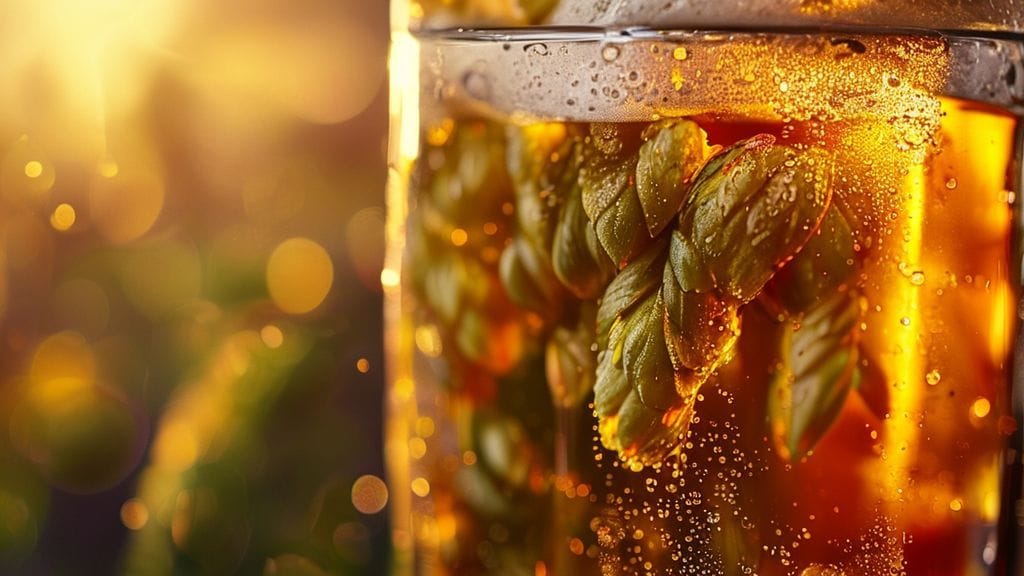
Diving into the world of wine-like hops, Nelson Sauvin delivers pungent notes of crushed gooseberry, passionfruit, and distinct white grape, often with a mineral or “diesel” edge. Hallertau Blanc, conversely, offers a cleaner, more refined profile reminiscent of Sauvignon Blanc wine, featuring gooseberry, elderflower, and tropical fruit, making both essential for modern, aromatic brews.
| Metric | Nelson Sauvin (NZ) | Hallertau Blanc (DE) |
|---|---|---|
| Alpha Acid Range | 12.0 – 13.0% | 9.0 – 12.0% |
| Beta Acid Range | 6.0 – 8.0% | 4.5 – 5.5% |
| Co-Humulone | 22 – 26% | 21 – 25% |
| Total Oil (mL/100g) | 1.00 – 1.40 | 1.00 – 1.50 |
| Myrcene (% of Total Oil) | 40 – 50% | 65 – 80% |
| Humulene (% of Total Oil) | 25 – 35% | 10 – 15% |
| Caryophyllene (% of Total Oil) | 8 – 12% | 3 – 6% |
| Farnesene (% of Total Oil) | <1.0% | <1.0% |
| Key Descriptors | Crushed gooseberry, white grape, passionfruit, citrus, diesel, tropical fruit | White grape, gooseberry, elderflower, passionfruit, lemongrass, clean white wine |
| Origin | New Zealand | Germany |
The Brewer’s Hook: Uncorking the Hop’s Terroir
I remember my first encounter with Nelson Sauvin like it was yesterday. It was a sample brew, a simple pale ale, and frankly, I was skeptical. “Wine-like hops?” I thought, “Isn’t that just marketing fluff?” But when I pulled that sample, the aroma that hit me was undeniable: an explosion of white grape and passionfruit, unlike anything I’d ever smelled from a hop cone. My mind was blown. Later, when Hallertau Blanc burst onto the scene, I braced myself for more of the same, only to discover a distinctly different, yet equally captivating, vinous character. The journey to truly understand and differentiate these two powerhouses has been one of the most rewarding aspects of my brewing career.
For years, I’ve seen brewers try to use them interchangeably, or worse, shy away from them due to their potent profiles. My experience has taught me that these hops, while sharing a “wine-like” umbrella, are as distinct as a Sauvignon Blanc from the Old World versus the New. Mastering their application means understanding their unique chemical signatures and how they interact with wort chemistry and yeast metabolism. This isn’t just about throwing hops in a kettle; it’s about crafting an aromatic experience, a delicate balance of ester and thiol transformation that results in something truly extraordinary.
The Math: Calculating Your Vinous Impact
Achieving that perfect wine-like character isn’t just guesswork; it’s rooted in understanding your hop’s alpha acid content for bittering and, more critically, your dry hop rates for aroma. For these delicate, aromatic hops, bittering additions are often minimal, focusing on late kettle, whirlpool, and dry hop contributions. My strategy revolves around maximizing the volatile aroma compounds.
Manual Calculation Guide: Dry Hop Concentration
For me, targeting a specific aroma intensity requires a consistent approach to dry hopping. I often think in terms of grams per liter (g/L) for a given beer volume. While specific thiol concentrations are hard to measure without lab equipment, I use empirical data from my pilot brews to establish effective ranges for the desired “wine-like” punch.
Formula for Total Dry Hop Weight (g):
Total Dry Hop Weight (g) = Desired Dry Hop Rate (g/L) × Fermentor Volume (L)
Let’s say I’m aiming for a “medium-high” wine-like intensity in a 20-liter batch:
- For Nelson Sauvin: I target 6 g/L. My calculation would be: 6 g/L × 20 L = 120 g.
- For Hallertau Blanc: I target 5 g/L. My calculation would be: 5 g/L × 20 L = 100 g.
This allows me to scale consistently, regardless of batch size. For blending these hops, I proportionally adjust. For example, a 50/50 blend at 5 g/L total would be 2.5 g/L of each hop.
| Desired Vinous Intensity | Nelson Sauvin Dry Hop Rate (g/L) | Hallertau Blanc Dry Hop Rate (g/L) |
|---|---|---|
| Subtle | 3.0 – 4.0 | 2.5 – 3.5 |
| Medium | 4.0 – 6.0 | 3.5 – 5.0 |
| High | 6.0 – 8.0 | 5.0 – 7.0 |
| Intense/Juicy | 8.0 – 12.0 | 7.0 – 10.0 |
Grain Bill Percentage for Clean Base
To truly highlight these hops, I build a very simple, clean malt base. I typically go for something like this:
| Malt Type | Percentage | Contribution |
|---|---|---|
| Pale Malt (e.g., 2-Row, Pilsner) | 85% | Clean fermentable base, light body |
| Flaked Oats | 10% | Body, mouthfeel, haze stability |
| Carapils/Dextrin Malt | 5% | Improved head retention, slight body |
This provides a canvas that allows the hops to paint their full aromatic picture without competition from complex malt flavors. Visit BrewMyBeer.online for more detailed recipe formulations.
Step-by-Step Execution: Crafting the Vinous Brew
Here’s how I approach brewing a beer designed to showcase the unique characteristics of Nelson Sauvin or Hallertau Blanc:
- Water Profile Adjustment: I start with de-chlorinated water and build a profile emphasizing chlorides over sulfates. A typical target profile for me is a Chloride:Sulfate ratio of 2:1 or even 3:1. For example, I aim for Calcium: 80 ppm, Magnesium: 10 ppm, Sodium: 20 ppm, Chloride: 150 ppm, Sulfate: 75 ppm. This enhances mouthfeel and perceived hop juiciness, softening any potential bitterness.
- Mashing: I crush my grains with a gap of 0.8mm for good efficiency. I perform a single infusion mash at a temperature of 65°C (149°F) for 60 minutes. This lower temperature produces a more fermentable wort, ensuring a drier finish that lets the hop aromatics truly pop. My target mash pH is 5.2-5.4.
- Lautering & Boil: After a thorough sparge, I aim for a pre-boil gravity around 1.050. The boil is typically 60 minutes.
- 60-minute addition: A small bittering charge (e.g., 5-10 IBU) using a neutral high-alpha hop like Magnum or a very small addition of Nelson Sauvin (0.5 g/L). For a Hallertau Blanc focused beer, I might use 0.3 g/L Hallertau Blanc.
- 10-minute addition: 0.5-1.0 g/L of the primary hop (Nelson Sauvin or Hallertau Blanc) for some early flavor extraction.
- Flameout/Whirlpool: This is where the magic happens. After chilling the wort rapidly to 80°C (176°F), I add a substantial dose of 2.0-3.0 g/L of the chosen hop. I let this steep for 20 minutes, stirring gently every 5 minutes. The specific temperature is crucial to extract maximum aromatics with minimal bitterness.
- Chilling & Fermentation: I chill the wort rapidly to 18°C (64°F). I pitch a clean-fermenting ale yeast (e.g., California Ale V or a similar neutral strain) at a rate of 0.75 million cells/mL/°P. Fermentation is maintained strictly between 18-20°C (64-68°F) for 5-7 days. My target Original Gravity is typically 1.058-1.062, with a target Final Gravity of 1.008-1.012, yielding an ABV of 6.0-6.8%.
- Primary Dry Hopping: Once fermentation shows signs of slowing (around day 3-4, when specific gravity is typically 1.018-1.020), I add 50-60% of my total dry hop charge (using the rates from the “Math” section). This allows yeast biotransformation to enhance the thiol-driven “wine-like” character.
- Secondary Dry Hopping: After primary fermentation is complete and the beer is crashing to 14°C (57°F) (around day 7-9, FG reached), I add the remaining 40-50% of the dry hop charge. This preserves the delicate, volatile aromatics that can be scrubbed by active fermentation. Total dry hop contact time is typically 3-5 days.
- Cold Crash & Packaging: After dry hopping, I cold crash the beer to 0-2°C (32-36°F) for 48-72 hours. This helps to settle yeast and hop matter. I then transfer to kegs or bottles, aiming for a carbonation level of 2.4-2.6 volumes of CO2.
Troubleshooting: What Can Go Wrong
Working with such aromatic and potent hops requires attention to detail. I’ve certainly had my share of learning experiences:
- “Catty” Notes (Nelson Sauvin): This off-flavor, often described as blackcurrant leaf or cat pee, can occur with Nelson Sauvin due to high concentrations of 4MMP (4-mercapto-4-methylpentan-2-one). My solution?
- Reduce early additions: Keep bittering and early boil additions to a minimum. Focus on whirlpool and dry hopping.
- Yeast choice: Some yeast strains are more prone to expressing these notes. Experiment with different clean ale strains.
- Blending: Sometimes blending Nelson Sauvin with another hop (e.g., Citra, Galaxy, or even Hallertau Blanc) can temper its more assertive qualities.
- Fading Aroma: These delicate wine-like thiols are volatile.
- Oxygen exposure: Minimize oxygen ingress at every stage, especially post-fermentation. I employ closed transfers and purge kegs thoroughly.
- Temperature control: Keep finished beer cold. Elevated temperatures accelerate aroma degradation.
- Dry hop timing: My two-stage dry hopping method aims to mitigate this by having fresh aroma introduced closer to packaging.
- Lack of “Wine-Like” Expression: If you’re not getting that signature vinous character:
- Hop freshness: Always use fresh hops, stored cold and sealed. Older hops lose their volatile compounds.
- Under-dosing: My dry hop rates are quite aggressive for a reason. Don’t be shy!
- Yeast health: A healthy, active fermentation is key for biotransformation. Ensure proper pitching rates and nutrients.
- Water chemistry: A high sulfate water profile can push the perceived bitterness and suppress delicate aromatics. Re-check your water.
- Perceived Harshness/Bitterness (Nelson Sauvin): Nelson Sauvin, despite its fruity character, can contribute a lingering, harsh bitterness if not handled correctly.
- Whirlpool temperature: Stick to the 80°C (176°F) range. Higher temperatures extract more bitterness.
- Avoid long contact times in the hot wort: Limit whirlpool to 20-30 minutes.
- pH control: Ensure your mash pH is in the optimal range, and verify your finished beer pH (target 4.2-4.4). Higher pH can make bitterness more prominent.
Sensory Analysis: Decoding the Vinous Palette
Nelson Sauvin
- Appearance: In a finished beer designed to showcase it, I typically see a hazy, pale straw to deep gold color, often with a brilliant white, persistent head. The haze is usually hop-derived.
- Aroma: This is where Nelson truly shines. Dominant notes of freshly crushed gooseberry, very ripe white grape (think Sauvignon Blanc), and passionfruit leap out. There’s often an underlying pungency, sometimes described as diesel, petrol, or even a slight onion/garlic note (the “catty” compound 4MMP, when well-integrated, can add complexity rather than an off-flavor). Hints of lime and tropical fruit round out the profile.
- Mouthfeel: Typically medium-bodied, often with a creamy smoothness from flaked oats, and a soft, full impression on the palate. Carbonation accentuates the crispness of the hop profile.
- Flavor: Mirroring the aroma, you’ll get intense white grape and gooseberry upfront, followed by tropical fruit and a distinctive vinous character. The unique diesel/mineral quality can be present, adding an intriguing depth. Bitterness is typically firm but smooth, integrating well with the fruit flavors, leading to a long, complex finish that often lingers with a grape-skin character.
Hallertau Blanc
- Appearance: Similar to Nelson Sauvin, a showcasing beer will likely be hazy, pale gold, with a fluffy white head. The clarity might be slightly better than a Nelson-heavy beer due to less hop particulate, but haze is still common.
- Aroma: Hallertau Blanc offers a cleaner, more elegant white wine character. I pick up pronounced notes of white grape, gooseberry, and a lovely elderflower or honeysuckle floral quality. There’s often a delicate tropical fruit component (passionfruit, pineapple) and hints of lemongrass or herbaceousness. It lacks the pungent “diesel” note of Nelson, presenting a more refined bouquet.
- Mouthfeel: Light to medium body, often crisp yet soft, with good carbonation. It tends to feel a touch drier and perhaps slightly less creamy than a Nelson-focused beer, depending on the malt bill.
- Flavor: The flavor is a beautiful interplay of white grape, gooseberry, and delicate tropical fruits. The elderflower and a subtle herbal note provide complexity. It’s clean, bright, and refreshing, with a moderate, balanced bitterness that doesn’t linger harshly. The finish is crisp and dry, inviting another sip, and truly evokes a dry white wine.
In essence, Nelson Sauvin is the bold, unbridled, New World Sauvignon Blanc – intense, juicy, and a little wild. Hallertau Blanc is its sophisticated, elegant Old World cousin – refined, clean, and beautifully balanced. Both are incredible tools in the modern brewer’s arsenal.
Frequently Asked Questions
Can I blend Nelson Sauvin and Hallertau Blanc effectively?
Absolutely, and I highly recommend it! I’ve found that blending these two hops can create a synergy that’s greater than the sum of their parts. Nelson Sauvin provides its punchy, slightly wild tropical and white grape notes, while Hallertau Blanc offers elegance, refinement, and a cleaner gooseberry/elderflower character. A 50/50 blend often works wonders, creating a layered complexity that’s truly unique. Experiment with ratios like 60% Nelson / 40% Hallertau Blanc for more tropical aggression, or 40% Nelson / 60% Hallertau Blanc for a softer, more refined white wine profile. It’s all about finding your balance.
What yeast strains best complement these hops?
For these hops, I almost exclusively use clean, neutral ale yeast strains that allow the hop character to dominate. My go-to choices include:
- WLP001 / US-05 (California Ale Yeast): Extremely clean, high attenuation, and reliable. It ferments quickly and drops bright, leaving a blank canvas for the hops.
- WLP090 / BRY-97 (San Diego Super Yeast): Similar to WLP001 but often described as even drier and more attenuative, which can further enhance the crispness of the wine-like notes.
- WLP644 / Philly Sour (Saccharomyces bruxellensis trois): While not strictly neutral, this strain can produce fantastic tropical fruit esters (pineapple, mango) that can beautifully complement the fruit character of these hops, especially in a hazy or fruit-forward ale. Just be mindful of its slight tartness.
I typically avoid overly estery British or Belgian strains that might compete with or obscure the delicate hop aromas.
Are there specific water profiles that enhance their “wine-like” character?
Yes, water chemistry plays a significant role. My experience points to a preference for a chloride-heavy profile, which emphasizes a softer mouthfeel and perceived hop juiciness, rather than bitterness. I aim for a Chloride:Sulfate ratio of at least 2:1, often pushing it to 3:1. A common target I use is:
- Calcium: 70-90 ppm
- Magnesium: 5-15 ppm
- Sodium: 10-30 ppm
- Chloride: 120-180 ppm
- Sulfate: 40-80 ppm
This profile enhances the perception of fruitiness and body, allowing the vinous notes to truly shine without harshness. It’s a key step I always take when brewing these particular hop-forward beers. You can find more specific guidance on BrewMyBeer.online.