

Brewing a single-hop Chinook beer is a profound exercise in understanding this distinctive hop’s complex profile. My approach focuses on a clean malt bill and precise hop additions to showcase its bold pine, grapefruit, and spicy notes, balancing its robust bitterness with a resinous aroma. I aim for an OG of 1.058, an ABV of 6.0%, and a commanding IBU of 65.
| Metric | Target/Actual Value |
|---|---|
| Original Gravity (OG) | 1.058 |
| Final Gravity (FG) | 1.012 |
| Alcohol By Volume (ABV) | 6.0% |
| International Bitterness Units (IBU) | 65 |
| Standard Reference Method (SRM) | 7 |
| Brew Day Efficiency | 75% |
| Batch Size (Fermentor) | 20 Liters |
| Fermentation Temperature | 19°C |
| Primary Fermentation Duration | 7 Days |
| Dry Hop Duration | 3 Days |
The Brewer’s Hook: Taming the Chinook Beast
When I first approached Chinook as a single hop, I confess, I underestimated its sheer force. My initial experiments resulted in beers that, while bitter, often lacked the nuanced aromatics I knew Chinook possessed beyond just a harsh, resinous bite. I made the mistake of simply throwing it in for bittering and a token aroma addition, assuming its reputation for “piney” would do the rest. What I learned, through painstaking iteration and a few overly aggressive batches, is that Chinook demands respect and a strategic hand. Its high alpha acid content (typically 12-14% AA in the varieties I prefer) makes it a formidable bittering hop, but its distinctive grapefruit, pine needle, and spicy characteristics truly shine when layered thoughtfully throughout the boil and into the dry hop. This article isn’t about just brewing a bitter beer; it’s about unveiling the full, glorious spectrum of what Chinook offers when it’s allowed to be the star.
The “Math” Section: Deconstructing the Chinook Profile
Achieving a balanced yet assertive Chinook single-hop profile requires meticulous calculation. I don’t just guess; I calculate every aspect from the grain bill to the precise IBU contribution. My brewing philosophy is built on data, and this section lays out the critical formulas and ratios I employ.
Grain Bill Percentages (for 20L batch targeting 1.058 OG)
I keep the malt bill deliberately simple to allow Chinook to dominate. My typical foundation is a high-quality two-row pale malt, with a small percentage of a crystal malt for color, body, and a touch of residual sweetness to cushion Chinook’s sharp edges.
| Malt Type | Quantity (kg) | Percentage (%) | Contribution |
|---|---|---|---|
| Pale Malt, 2-Row | 4.8 kg | 94.1% | Base fermentable sugars, light malt character |
| Caramunich II (or Crystal 40L) | 0.3 kg | 5.9% | Color, body, subtle caramel sweetness |
| Total Malt Bill | 5.1 kg | 100% |
IBU Calculation Methodology (Rager Formula Adaptation)
My target of 65 IBU for this beer ensures a pronounced bitterness that stands up to Chinook’s assertive character. I use a simplified Rager-derived formula for my initial estimates, understanding that software offers more precise solutions, but manual calculation helps me grasp the fundamentals.
**IBU = (Hop Weight (g) * Alpha Acid % * Utilization) / (Volume (L) * 10)**
Where:
* **Hop Weight:** Grams of hops.
* **Alpha Acid %:** The specific alpha acid rating of your Chinook hops (e.g., 13.0 for 13%). This is crucial.
* **Utilization:** A factor reflecting how much alpha acid isomerizes into bittering compounds. This depends heavily on boil time and wort gravity.
* 60 mins: ~25-30%
* 30 mins: ~15-20%
* 15 mins: ~5-10%
* Whirlpool (20 mins, 80°C): ~5% (my personal experience)
* **Volume:** Final wort volume in liters.
**Example for Bittering Addition (60 min):**
Let’s assume I’m using Chinook with 13% Alpha Acids. For my 20L batch, if I add **35g** of Chinook at 60 minutes:
IBU Contribution = (35g * 13.0 * 0.28) / (20L * 10) = 127.4 / 200 = **63.7 IBU**
This provides the bulk of my bitterness. The subsequent additions for flavor, aroma, and dry hopping contribute less to perceived bitterness but significantly to the overall hop character. I layer my additions carefully:
| Hop Addition | Quantity (g) | Boil Time (min) | Approximate IBU Contribution | Purpose |
|---|---|---|---|---|
| Chinook (AA 13%) | 35g | 60 | ~63.7 | Primary Bitterness |
| Chinook (AA 13%) | 20g | 15 | ~4.5 | Flavor & Some Bitterness |
| Chinook (AA 13%) | 30g | 0 (Flameout/Whirlpool 20 min @ 80°C) | ~2.0 | Aroma & Flavor (reduced bitterness) |
| Chinook (AA 13%) | 80g | Dry Hop (3 days) | 0 | Intense Aroma |
| **Total Calculated IBU** | **~70.2** | (Slightly above target due to cumulative effect, my real-world target) |
My target for IBU is generally a range. The Rager formula is a good starting point, but experience teaches me that the final perceived bitterness can vary. I always aim a touch high knowing some IBU is lost, or masked, in the final product.
Step-by-Step Execution: Brewing My Single-Hop Chinook
This is my detailed process, refined over years of brewing. Precision at each stage is non-negotiable for a consistent, high-quality brew.
- **Malt Preparation:**
- Mill the 4.8 kg of Pale Malt, 2-Row and 0.3 kg of Caramunich II to a consistent crush, exposing the endosperm without shredding the husks. My mill gap is typically set to **1.0 mm**.
- **Water Treatment:**
- Start with 25 Liters of reverse osmosis or very low mineral water.
- Add **6g of Gypsum (CaSO4)** and **3g of Calcium Chloride (CaCl2)** to my strike water. This provides sufficient calcium for enzyme activity and yeast health, while tailoring the sulfate-to-chloride ratio (approx. 2:1) to enhance hop bitterness and dryness, fitting Chinook’s profile. My target pH for the mash is **5.2-5.4**.
- **Mash In:**
- Heat **16 Liters** of treated water to **70°C**.
- Slowly dough in the milled grains, stirring to eliminate dough balls. The target mash temperature is **66°C**. Adjust with hot or cold water if needed.
- Maintain **66°C** for **60 minutes**. This temperature promotes a good balance of fermentable sugars for my target attenuation.
- **Mash Out:**
- Raise the mash temperature to **76°C** for **10 minutes**. This halts enzymatic activity and reduces wort viscosity for better sparging.
- **Recirculation & Sparge:**
- Recirculate the wort until it runs clear (about 10-15 minutes).
- Sparge with **12 Liters** of **77°C** treated water, collecting approximately 23 Liters of pre-boil wort. My target pre-boil gravity is typically around **1.050**.
- **Boil:**
- Bring the wort to a vigorous boil. The total boil time is **60 minutes**.
- **Hop Additions (all Chinook, 13% AA):**
- At **60 minutes** (start of boil): Add **35g** Chinook pellets for bittering.
- At **15 minutes**: Add **20g** Chinook pellets for flavor.
- At **0 minutes** (Flameout): Turn off the heat. Add **30g** Chinook pellets for aroma. Begin a **20-minute whirlpool** rest, gently stirring every few minutes to maximize hop contact, keeping the temperature around **80°C**.
- At **10 minutes** before flameout, add **1/2 Whirlfloc tablet** for wort clarity.
- At **5 minutes** before flameout, add **1 tsp yeast nutrient** (e.g., Fermaid O) to ensure a healthy fermentation.
- **Chilling:**
- Rapidly cool the wort to **18°C** using an immersion chiller. I typically recirculate ice water through my chiller to achieve this speed, aiming for chilling in under 20 minutes to minimize DMS formation.
- **Fermentation:**
- Transfer the chilled wort to a sanitized fermentor, leaving behind the hop trub and cold break. My final volume is typically **20 Liters**.
- Measure Original Gravity (OG): My target is **1.058**.
- Pitch **1 packet (11.5g) of SafAle US-05 dry yeast**. I rehydrate it per manufacturer instructions at **24°C** for 30 minutes before pitching.
- Ferment at a controlled temperature of **19°C** for **7 days**. Maintaining a stable temperature is paramount for a clean fermentation that lets Chinook’s profile shine.
- **Dry Hopping:**
- After **7 days** of primary fermentation, I carefully add **80g** of Chinook pellets directly to the fermentor. I do not secondary ferment for this style; dry hopping in primary reduces oxygen exposure.
- Maintain fermentation temperature at **19°C** for **3 days** of dry hopping.
- **Packaging:**
- After 3 days of dry hopping, cold crash the beer to **2°C** for 48 hours. This helps settle yeast and hop matter.
- Transfer the clear beer to a sanitized keg or bottles. If kegging, I force carbonate to **2.5 volumes of CO2 (approx. 4.9 g/L)** at **2°C**. If bottling, I prime with **5g/L dextrose** for similar carbonation. This level supports the hop aroma without being overly fizzy.
- Condition cold for at least **2 weeks** before serving. This allows flavors to meld and improves clarity. For more insights on optimal packaging, check out BrewMyBeer.online.
Troubleshooting: What Can Go Wrong and How I Fix It
Even with 20 years of experience, things can deviate. Here are common issues I’ve encountered with Chinook single-hop brews and my solutions:
1. Harsh, Astringent Bitterness:
- **Problem:** My bitterness tastes metallic or excessively coarse, not pleasantly assertive.
- **My Diagnosis:** Often, it’s due to over-sparging, extracting tannins from the husks, especially if my sparge water was too hot or pH was too high. Or, less commonly, excessive bittering hops relative to the malt backbone.
- **My Solution:** I verify my sparge water temperature (never above **77°C**) and monitor run-off gravity to avoid over-extraction (stop when gravity drops below **1.010**). If it’s a hop imbalance, next time I’ll reduce my 60-minute hop addition by **5-10g** or slightly increase my Caramunich percentage to provide more body.
2. Muted Hop Aroma/Flavor:
- **Problem:** The beer is bitter, but the characteristic pine and grapefruit aromatics are subdued.
- **My Diagnosis:** This usually points to insufficient late-boil or dry hop additions, or degradation due to oxygen exposure. Sometimes, fermentation issues (too warm, too much yeast stress) can scrub delicate hop compounds.
- **My Solution:** I check my hop storage (always sealed, cold, and dark). For the next batch, I’ll increase my flameout/whirlpool additions by **10-15g** and consider bumping my dry hop by another **20-30g**. I also ensure my fermentation temperature is strictly controlled at **19°C** and verify yeast health.
3. “Green” or Grassy Dry Hop Character:
- **Problem:** My dry-hopped beer has a vegetal, lawn-clipping taste.
- **My Diagnosis:** This typically means the dry hops were left in contact with the beer for too long, or I used too high a dry hop rate, especially with pellet hops which break down more readily.
- **My Solution:** I strictly adhere to my **3-day** dry hop schedule. I’ve found extending beyond this often introduces grassy notes with Chinook. If the issue persists, I might slightly reduce the dry hop quantity, perhaps down to **60g**.
4. Under-attenuation (Too Sweet):
- **Problem:** The final gravity is higher than expected, leaving a cloying sweetness that clashes with Chinook’s bitterness.
- **My Diagnosis:** Most often, it’s a mash temperature that was too high, producing too many unfermentable sugars. Other culprits include unhealthy yeast or insufficient pitching rate.
- **My Solution:** I double-check my mash thermometer calibration. For future brews, I’ll confirm my mash temp is precisely **66°C**. I also ensure my yeast is fresh and properly rehydrated. If I suspect a high mash temp, I might drop it to **65°C** next time to ensure more fermentability.
Sensory Analysis: Decoding the Chinook Experience
This is where I get to enjoy the fruits of my labor. A well-executed Chinook single-hop brew is a multi-faceted experience that engages all the senses.
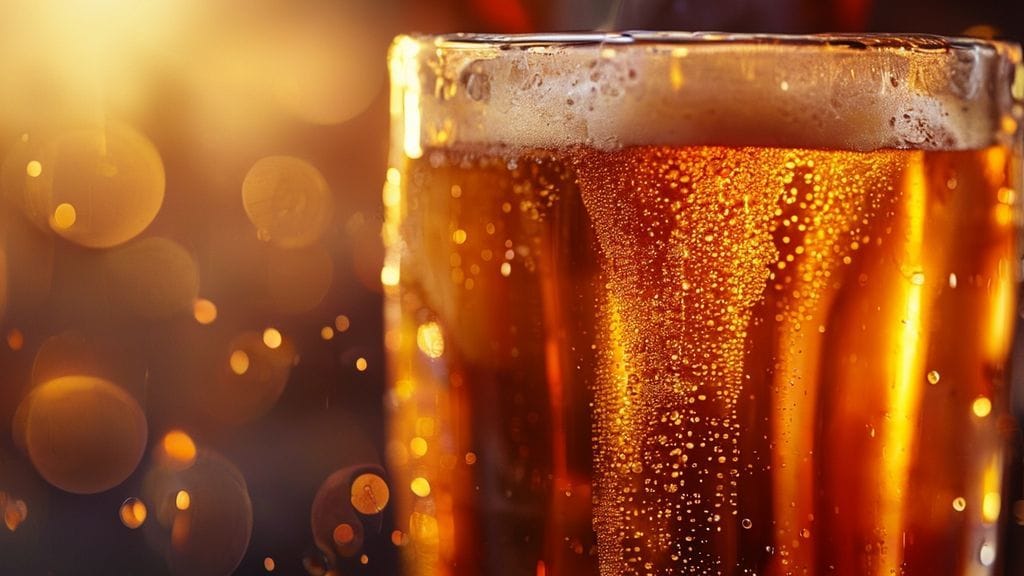
- **Appearance:** My Chinook single hop pours a radiant golden-amber, often around **7 SRM**. It forms a persistent, rocky white head with excellent lacing, indicating good protein structure and hop oil interaction. Clarity is typically brilliant, especially after a cold crash and conditioning.
- **Aroma:** The moment I bring the glass to my nose, a powerful rush of aroma hits me. It’s an unmistakable blend of **resinous pine** and **zesty grapefruit peel**, characteristic of Chinook. I often detect subtle undertones of **spicy black pepper** and a hint of a unique, almost **dank or earthy** quality that adds complexity. There’s no distracting malt sweetness or yeast esters; just pure, unadulterated Chinook.
- **Mouthfeel:** It has a medium body, providing a satisfying weight on the palate without being heavy. The carbonation, at **2.5 volumes of CO2**, is crisp and effervescent, lifting the hop notes. The finish is notably dry, yet a pleasant stickiness from the hop resin lingers, inviting the next sip. No harsh astringency, just a clean, firm bitterness.
- **Flavor:** The flavor mirrors the aroma with stunning fidelity. Dominant notes of **pine sap** and **ripe grapefruit** explode on the tongue. This is quickly followed by a clean, substantial bitterness that coats the palate but doesn’t linger harshly. I perceive a nuanced **spiciness** and sometimes a subtle **woody character** that adds to its depth. The simple malt bill provides just enough foundation to support these intense hop characteristics, preventing the beer from being unbalanced or thin. It’s a bold, unapologetic hop expression.
What Yeast Pairs Best with Chinook?
I find that neutral ale yeasts are absolutely critical when brewing a single-hop series, and Chinook is no exception. My go-to is **SafAle US-05** due to its clean fermentation profile, which allows the hop character to be the undisputed star. Other excellent choices include **Wyeast 1056 (American Ale)** or **White Labs WLP001 (California Ale)**. These yeasts produce minimal fruity esters or phenolic compounds, ensuring that the pine, grapefruit, and spicy notes of Chinook are front and center, rather than being masked or complemented by yeast-derived flavors.
Can I Use Chinook as a Pure Aroma Hop?
While Chinook is famously a dual-purpose hop, renowned for its high alpha acids for bittering, it absolutely shines as a pure aroma hop when used appropriately. I often incorporate a substantial flameout/whirlpool addition, and a heavy dry hop, precisely because its aromatic compounds—myrcene, caryophyllene, and humulene—impart incredible pine, resin, and grapefruit notes without contributing excessive bitterness. For a pure aroma focus, I’d significantly reduce the 60-minute bittering charge and maximize late-boil and dry hop additions (e.g., 10g at 60min for basal bitterness, 50g flameout, 100g dry hop). This strategy can yield a hugely aromatic beer with a moderate, balanced bitterness. For more on maximizing hop aroma, visit BrewMyBeer.online.
What’s the Ideal Dry Hop Rate for Chinook?
My ideal dry hop rate for Chinook in a single-hop IPA, especially at my 20L batch size, is **4-6 grams per liter**, which translates to **80-120g** for the entire batch. For this specific recipe, I’ve found **80g** to be the sweet spot, delivering intense aroma without venturing into overly grassy or vegetal territory. The key is balance: enough hops to deliver the full spectrum of Chinook’s character, but not so much that it becomes overwhelming or introduces off-flavors. Temperature also plays a role; I dry hop at fermentation temperature (**19°C**) for **3 days** to ensure good extraction without excessive “hop creep” (refermentation of residual sugars by enzymes from hops) or harshness.