

Brewing a Belgian Dubbel involves a precise balance of specialty malts, dark candi sugar, and specific Belgian yeast strains fermented with a controlled temperature ramp to develop its iconic dark fruit, caramel, and spicy phenolic character. Achieving the ideal balance requires careful attention to mash pH, sugar addition timing, and a robust fermentation profile, typically targeting an Original Gravity of 1.062-1.075 and a finishing ABV around 6.5-7.5%.
| Metric | Target Value | My Brew Day (Example) |
|---|---|---|
| Batch Size | 20 Liters (5.28 Gallons) | 20.5 Liters |
| Original Gravity (OG) | 1.068 | 1.069 |
| Final Gravity (FG) | 1.012 | 1.011 |
| Alcohol By Volume (ABV) | 7.3% | 7.6% |
| International Bitterness Units (IBU) | 22 | 21.8 |
| Standard Reference Method (SRM) | 14 | 14.5 |
| Mash Temperature | 66°C (151°F) | 66.5°C |
| Fermentation Temperature (Start) | 18°C (64°F) | 18.2°C |
| Yeast Strain | Wyeast 1762 (Belgian Abbey II) | Wyeast 1762 |
The Brewer’s Hook: Taming the Wild Yeast and the Sugar Beast
When I first ventured into brewing Belgian Dubbels over fifteen years ago, I fell into a classic trap: underestimating the yeast and oversimplifying the sugar addition. My first few attempts resulted in beers that were either cloyingly sweet and under-attenuated, or thin and alcoholic without the rich complexity I craved. I remember one batch, specifically Batch #03-DB, where I dumped all the candi sugar directly into the boil at the start. The resulting beer was fiercely hot, lacked the dried fruit depth, and finished with an unpleasantly sharp alcoholic bite. I learned then that managing the Belgian yeast’s temperament and timing the candi sugar addition are paramount. It’s not just about hitting your target gravity; it’s about nurturing that unique ester and phenol profile. My process has since evolved, integrating precise temperature control and a staged sugar addition that truly lets the yeast sing.
The “Math” Section: Deconstructing the Dubbel Recipe
Crafting a compelling Belgian Dubbel starts with understanding the raw ingredients and their contributions to the final beer. I approach this with a calculator in one hand and a hydrometer in the other. Here’s how I break down the crucial calculations for a 20-liter batch.
Grain Bill and Expected Extract
My go-to Dubbel recipe leverages a blend of malts for complexity and candi sugar for fermentability and color. Understanding the potential extract (PPG – points per pound per gallon, or LPK – liters per kilogram per liter) of each ingredient is key to hitting your Original Gravity (OG).
| Ingredient | Amount (kg) | % of Grain Bill | Potential Extract (LPK) | Estimated Points @ 100% Eff. |
|---|---|---|---|---|
| Belgian Pilsner Malt | 4.50 kg | 77.6% | 305 | 1372.5 |
| Munich Malt II | 0.50 kg | 8.6% | 300 | 150.0 |
| Caramunich II | 0.30 kg | 5.2% | 280 | 84.0 |
| Special B Malt | 0.20 kg | 3.4% | 270 | 54.0 |
| Dark Candi Syrup (D-90) | 0.39 kg | 5.2% (of total fermentables) | 350 (approx.) | 136.5 |
| Totals | 5.89 kg | 100% | 1797.0 points |
To calculate your estimated OG, you take the total points and divide by your batch volume in liters, then multiply by your expected brewhouse efficiency (I typically target 75% for this style):
Estimated OG = 1 + (Total Points * Efficiency / Batch Volume in Liters / 1000)
For my recipe: 1 + (1797 * 0.75 / 20 / 1000) = 1 + 0.0673875 = 1.067. This is close to my target of 1.068. The slight difference allows for minor variations or adjustment on brew day.
ABV Calculation
My go-to formula for Alcohol By Volume is based on the differential between Original Gravity and Final Gravity:
ABV = (OG - FG) * 131.25
Using my target values: (1.068 - 1.012) * 131.25 = 0.056 * 131.25 = 7.35% ABV.
Yeast Pitching Rate
For a Belgian Abbey strain like Wyeast 1762, I target a pitching rate of 0.75 million cells/mL/°P (Plato) for healthy fermentation and optimal ester/phenol development. First, convert your OG to Plato:
°P = (OG - 1) * 259.2
So, for an OG of 1.068: (1.068 - 1) * 259.2 = 0.068 * 259.2 = 17.6256 °P.
Then, calculate total cells needed:
Cells needed = Batch Volume (mL) * Pitching Rate (million cells/mL/°P) * °P
Cells needed = 20,000 mL * 0.75 * 17.6256 = 264,384 million cells, or approximately 264 billion cells. This typically means building a starter from a single vial/smack pack or using 2-3 direct-pitch packs, depending on their freshness.
Step-by-Step Execution: Brewing My Signature Dubbel
This is the process I’ve refined over two decades, consistently delivering a high-quality Belgian Dubbel. Precision here is non-negotiable.
- Mash In (60 minutes):
- Heat 18 liters of strike water to 71°C (160°F) to account for temperature drop when adding grain.
- Mash in your milled grains, stirring thoroughly to prevent dough balls. My target mash temperature is 66°C (151°F). This temperature favors alpha-amylase activity, providing a good balance of fermentable sugars for attenuation and unfermentable dextrins for body.
- Monitor mash pH. I adjust my water profile to hit a mash pH of 5.3-5.4 at mash temperature for optimal enzyme activity and extract efficiency.
- Rest for 60 minutes, maintaining temperature. Recirculate slowly for the first 15 minutes if using an all-grain system with a false bottom to set the grain bed.
- Mash Out & Sparge (30-60 minutes):
- Raise mash temperature to 77°C (170°F) for 10 minutes (mash out) to halt enzymatic activity and reduce wort viscosity.
- Begin to collect your wort. I use a fly sparge method, adding sparge water heated to 77°C (170°F) gently over the grain bed while draining. Aim to collect approximately 25 liters of pre-boil wort.
- Monitor the gravity of your runnings. I stop sparging when the gravity drops below 1.010 to avoid extracting tannins.
- Boil (90 minutes):
- Bring the collected wort to a vigorous boil. This longer boil helps concentrate the wort and develop Maillard reactions.
- First Hop Addition (60 min): Add 20g Styrian Goldings (4.5% AA). This provides the foundational bitterness.
- Second Hop Addition (15 min): Add 10g Styrian Goldings (4.5% AA) for a subtle hop aroma and flavor contribution.
- Dark Candi Syrup Addition (10 min): This is critical. Add 390g Dark Candi Syrup (D-90) slowly, stirring constantly to prevent scorching. Adding it later in the boil helps preserve its delicate flavor compounds and avoids potential off-flavors from excessive caramelization.
- Whirlfloc/Irish Moss (10 min): Add 1/2 tsp or 1 tablet to aid in wort clarity.
- After 90 minutes, turn off the heat.
- Chilling & Aeration:
- Rapidly chill the wort to 18°C (64°F) using an immersion chiller or plate chiller. Speed is essential to minimize DMS (dimethyl sulfide) production and prevent infections.
- Transfer the chilled wort to a sanitized fermenter. During transfer, oxygenate thoroughly. For this high-gravity beer, I use an oxygenation stone and pure O2 for 60 seconds at 1 LPM. This is vital for healthy yeast propagation and full attenuation.
- Fermentation (2-3 weeks):
- Pitch your prepared yeast starter (e.g., 2 liters of a healthy Wyeast 1762 starter) at 18°C (64°F).
- Maintain fermentation temperature at 18°C (64°F) for the first 3 days. This encourages ester formation without creating fusel alcohols or an overly phenolic profile.
- On Day 4, slowly ramp up the temperature by 1°C (2°F) per day until you reach 22°C (72°F). This temperature ramp helps the yeast fully attenuate the wort and finish strong, scrubbing undesirable byproducts.
- Allow fermentation to proceed for 10-14 days or until gravity readings are stable (e.g., 1.012). My experience at BrewMyBeer.online has taught me patience is key here.
- Once stable, cool the fermenter to 10°C (50°F) for 3-5 days for diacetyl rest and flocculation.
- Conditioning & Carbonation (2-4 weeks):
- Transfer the beer to a sanitized conditioning vessel or keg.
- Cold condition (lagering) at 0-4°C (32-39°F) for 2-4 weeks. This helps mellow flavors, improve clarity, and smooth out any harsh notes.
- Carbonate to 2.4-2.8 volumes of CO2. For bottle conditioning, this usually means adding 6-7 grams of priming sugar per liter. For kegging, set your regulator to 12-14 PSI at 4°C.
Troubleshooting: What Can Go Wrong and How I Fix It
Even after 20 years, brewing isn’t without its surprises. Here are common Dubbel issues I’ve encountered and my solutions:
1. Under-attenuated / Too Sweet
- Cause: Mash temperature too high (producing unfermentable sugars), insufficient yeast health/pitching rate, or premature cold crashing.
- My Fix: In the past, I’ve re-pitched with a fresh, healthy, high-attenuating yeast starter (often a neutral ale yeast if the Belgian yeast has given up). For prevention, I always ensure adequate yeast nutrition (yeast nutrient addition in the boil) and precise mash temperature control (targeting 65-66°C).
2. Lack of Signature Dark Fruit/Caramel Character
- Cause: Insufficient Special B or inadequate quantity/type of dark candi sugar. Improper timing of candi sugar addition (too early, allowing flavor compounds to boil off).
- My Fix: I ensure my Special B is fresh and I exclusively use dark candi syrup (D-90 or D-180), adding it no earlier than 10-15 minutes remaining in the boil. Consider increasing the Special B to 5% of the grain bill if the character is consistently too light.
3. Harsh Phenolics or Solvent-like Flavors
- Cause: Fermentation temperatures too high, especially early in fermentation. Yeast stress due to under-pitching or lack of oxygen.
- My Fix: My crucial lesson here was strict temperature control. I always start Belgian fermentations on the lower end of the yeast’s range (18°C) and only allow a slow, controlled ramp up. Proper oxygenation of the wort and a robust starter prevent yeast stress.
4. Too Thin or Watery Mouthfeel
- Cause: Mash temperature too low (producing highly fermentable sugars), excessive amounts of simple sugar, or aggressive attenuation.
- My Fix: If I overshoot attenuation, sometimes a judicious amount of lactose can rescue body post-fermentation, though I prefer to fix it in the mash. I target a mash temperature of 66°C to ensure sufficient dextrin production. Limiting candi sugar to ~5-8% of total fermentables also helps maintain body.
Sensory Analysis: What a Perfect Dubbel Tastes Like
After all that hard work and technical precision, the reward is in the glass. When I taste a well-made Belgian Dubbel, it’s a revelation.
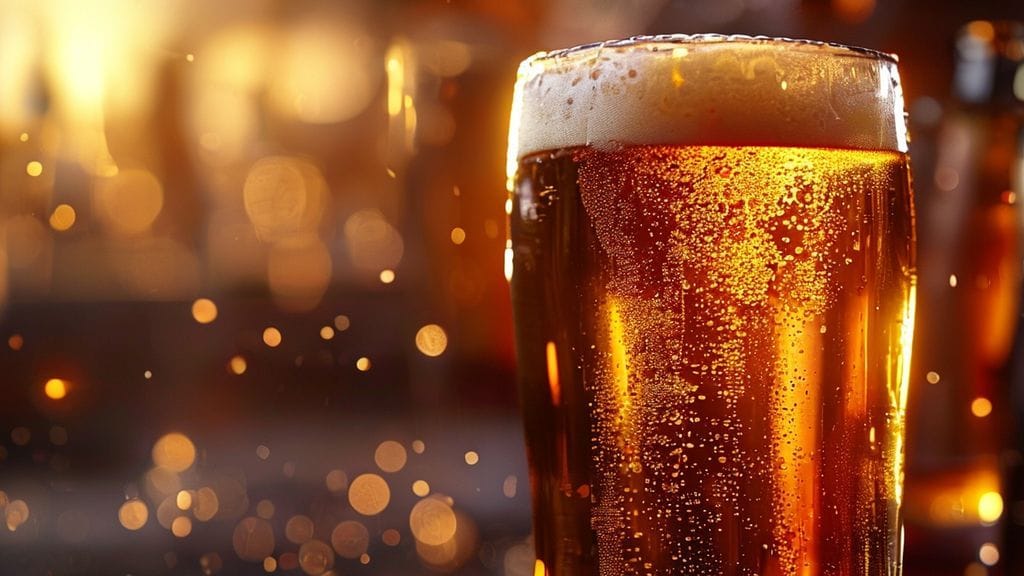
* Appearance: It pours a beautiful, slightly turbid, deep copper to mahogany brown. It’s crowned with a voluminous, rocky, persistent off-white head that leaves intricate lacing down the glass as I drink. Clarity can range from brilliant to slightly hazy, which is acceptable for the style.
* Aroma: The first sniff transports me. I expect a complex bouquet of dried dark fruits—raisin, fig, and plum dominate. Caramel and toasted bread notes from the specialty malts intertwine. There’s a delicate phenolic spice, reminiscent of clove and black pepper, along with subtle alcohol warmth. A faint hint of earthy or floral hops might linger in the background.
* Mouthfeel: It has a medium-full body, creamy and smooth, yet finishes surprisingly dry due to the high attenuation. The carbonation is moderate to high, providing a pleasant effervescence that lifts the flavors. A gentle warmth from the alcohol is present but never harsh or burning.
* Flavor: The taste mirrors the aroma, an intricate dance of dark fruit esters and complex malt character. I experience notes of caramelized sugar, dark dried fruits, and sometimes a hint of chocolate or toasted nuts. The characteristic Belgian yeast profile contributes spicy, peppery phenols and often a touch of banana or subtle fruitiness. Bitterness is low to moderate, serving only to balance the malt sweetness. The finish is long, complex, and typically quite dry, inviting another sip.
FAQs: Deep Diving into Dubbel Particulars
How does candi sugar impact a Belgian Dubbel compared to malt?
Candi sugar, especially dark candi syrup, is crucial for a Belgian Dubbel. Unlike malt, it’s nearly 100% fermentable, which boosts alcohol content without adding residual sweetness or body, helping achieve that characteristic dry finish despite a high OG. It also contributes unique caramel, toffee, and dark fruit notes that are distinct from malt-derived flavors, and it significantly impacts the beer’s color. My advice is to always use actual candi syrup or sugar, not just brown sugar, for authenticity.
What is the ideal yeast choice for a Belgian Dubbel?
For a traditional Dubbel, I strongly recommend using a classic Belgian Abbey Ale yeast strain. My personal favorites include Wyeast 1762 (Belgian Abbey II) or White Labs WLP500 (Trappist Ale). These strains are renowned for producing the complex ester profile (dried fruit, banana) and phenolic notes (clove, pepper) that define the style. Pitching a healthy, well-oxygenated starter and controlling fermentation temperature are far more critical than with most other styles.
Why is temperature control so important during Belgian Dubbel fermentation?
Temperature control is paramount because Belgian yeast strains are highly sensitive to temperature fluctuations and can produce drastically different flavor profiles. Fermenting too warm, especially early on, leads to an overabundance of harsh fusel alcohols and phenolic compounds (like burning plastic or excessive spice). Too cool, and you risk under-attenuation, stalled fermentation, or a muted ester profile. I always start cool and slowly ramp up to encourage desirable ester and phenol production while ensuring complete attenuation, a technique honed over many years and documented extensively on BrewMyBeer.online.
How long should a Belgian Dubbel condition before serving?
While some lighter beers are ready quickly, a Belgian Dubbel truly benefits from extended conditioning. I typically recommend at least 2-4 weeks in a cold environment (0-4°C or 32-39°F) after primary fermentation and before carbonation. This “lagering” period allows the complex flavors to meld, smooths out any harsh edges, and improves clarity. The beer will continue to evolve and improve for several months in the bottle, developing deeper notes of dried fruit and Sherry-like complexity.