

The Brut IPA is an aggressively dry, effervescent, and hop-forward beer style, designed to showcase intense aromatics without any residual sweetness. Achieving its characteristic bone-dry finish requires precise mash temperatures and the strategic use of alpha-amylase (amyloglucosidase) enzymes to convert complex dextrins into highly fermentable sugars, often resulting in a final gravity near or below 1.000.
| Metric | Target Range | My Typical Result |
|---|---|---|
| Original Gravity (OG) | 1.048 – 1.055 | 1.052 |
| Final Gravity (FG) | 0.998 – 1.005 | 1.000 |
| Alcohol By Volume (ABV) | 6.0% – 7.5% | 6.8% |
| International Bitterness Units (IBU) | 20 – 35 | 28 |
| Standard Reference Method (SRM) | 2 – 4 | 3 |
| Mash Temperature | 68°C – 70°C | 69°C |
| Fermentation Temperature | 18°C – 20°C | 19°C |
| Enzyme Addition | Amyloglucosidase | Added during fermentation |
The Brewer’s Hook: Chasing the Phantom Dryness
I remember the first time I heard about Brut IPA. It was a few years back, and the buzz was all about “bone dry” and “champagne-like” qualities. My initial thought was, “How dry can a beer really get without tasting thin or watery?” I’d spent two decades perfecting balance in my brews, and the idea of pushing dryness to its absolute limit felt like a challenge to my core brewing philosophy. My very first attempt was, shall we say, a learning experience. I focused too much on a low mash temperature, thinking that would generate more fermentable sugars, and I under-dosed my amyloglucosidase. The result? A beer that was dry, sure, but not Brut IPA dry. It landed at an FG of 1.008, respectable for an IPA, but nowhere near the 1.000 I was aiming for. It lacked that crisp, almost ethereal finish. It taught me a crucial lesson: achieving true Brut dryness isn’t just about throwing an enzyme at it; it’s a symphony of process adjustments, from mash to fermentation, all orchestrated to leave no sugar behind.
The Math Behind the Brut: Deconstructing Fermentability
Achieving the extreme dryness of a Brut IPA relies on a fundamental understanding of enzymatic conversion and fermentable sugar calculations. My approach always starts with a highly fermentable grain bill and then amplifies that fermentability with a targeted enzymatic strike. Here’s how I break down the numbers:
Grain Bill Composition (for a 20-litre batch, targeting OG 1.052)
The goal here is a clean, pale base that offers maximal fermentable extract without contributing significant residual dextrins or colour.
| Grain | Kilograms (kg) | Percentage (%) | Purpose |
|---|---|---|---|
| Pilsner Malt | 4.0 kg | 80% | Pale colour, high fermentability, clean base. |
| Flaked Rice | 0.75 kg | 15% | Lightens body, boosts fermentability, no flavour contribution. |
| CaraPils/Dextrin Malt | 0.25 kg | 5% | Head retention, slight body perception without sweetness. |
| Total | 5.0 kg | 100% |
Amyloglucosidase Dosage Calculation
This is the secret weapon for the Brut IPA. Amyloglucosidase breaks down complex dextrins, which standard brewer’s yeast can’t ferment, into simple glucose. The dosage is critical. Too little, and you don’t hit your target FG. Too much, and while it’s hard to overdo it for dryness, you’re wasting product and potentially impacting head retention by over-thinning the beer. I typically use a liquid enzyme product with a concentration of 150 GAU (Glucoamylase Units) per millilitre.
For a 20-litre batch targeting an FG below 1.002, I use the following formula:
Enzyme Dosage (mL) = (Target Volume in Litres * Target GAU per Litre) / Enzyme Concentration (GAU/mL)
My typical target is around 10 GAU per litre for aggressive dryness.
Enzyme Dosage = (20 Litres * 10 GAU/Litre) / 150 GAU/mL
Enzyme Dosage = 200 / 150 = **1.33 mL**
I usually round this up slightly to **1.5 mL** for good measure, ensuring a complete conversion. I add this enzyme during the active fermentation phase, typically 24-48 hours after yeast pitching.
ABV Calculation
The high attenuation of a Brut IPA means a higher ABV for a given OG. My standard formula is:
ABV % = (OG - FG) * 131.25
Using my typical results:
ABV % = (1.052 - 1.000) * 131.25
ABV % = 0.052 * 131.25 = **6.825%**
This shows why hitting that super low FG is key to the style’s strength without feeling heavy.
Step-by-Step Execution: Brewing Your Brut IPA
Precision is paramount here. Follow these steps for a clean, dry, and aromatic Brut IPA.
- Water Treatment: My water profile for this style leans towards balanced mineral content to support hop expression and enzyme activity. Target a SO4:Cl ratio of around 2:1. For a pale, crisp beer, I typically aim for Calcium (Ca) 70 ppm, Magnesium (Mg) 10 ppm, Sodium (Na) 20 ppm, Sulfate (SO4) 150 ppm, Chloride (Cl) 75 ppm.
- Mash In: Crush your grains and dough in at a Mash Ratio of 3 Litres of water per Kilogram of grain (3 L/kg). Aim for a mash temperature of exactly **69°C**. This higher temperature encourages the production of more complex dextrins initially, which the amyloglucosidase will later efficiently break down. Hold this temperature for **75 minutes**.
- Mash Out: Raise the mash temperature to **78°C** and hold for **10 minutes** to halt enzymatic activity and reduce wort viscosity.
- Sparge: Begin recirculating until clear, then sparge slowly, ensuring your run-off temperature does not exceed **78°C** to avoid tannin extraction. Collect **23-24 litres** of wort pre-boil, allowing for boil-off.
- The Boil (60 minutes):
- 60 minutes: Add bittering hops (e.g., Magnum) to achieve approximately 20 IBU. For my OG of 1.052, this is typically **8g** of 14% AA Magnum.
- 15 minutes: Add **5g** Irish Moss or other kettle finings.
- 10 minutes: Add **15g** of a low-cohumulone hop (e.g., Citra, Mosaic, Nelson Sauvin) for a subtle flavour contribution.
- Flameout/Whirlpool (0 minutes): This is where the aroma magic happens. Reduce wort temperature to **80°C**. Add **60g** of aromatic hops (e.g., 20g Citra, 20g Mosaic, 20g Galaxy). Circulate for **20 minutes**.
- Cooling: Rapidly cool the wort to **18°C** using an immersion chiller or plate chiller. This minimizes hot-side aeration and ensures a clean fermentation.
- Transfer and Aerate: Transfer the cooled wort to your sanitized fermenter. Adequately aerate the wort for **60 seconds** with an oxygen stone or by shaking vigorously to promote healthy yeast growth.
- Yeast Pitching: Pitch a neutral, high-attenuating ale yeast. I’ve had excellent results with SafAle US-05 or LalBrew BRY-97. For a 20-litre batch, I typically rehydrate and pitch **11g (one sachet)**.
- Enzyme Addition: **24-48 hours** after pitching yeast, once active fermentation is clearly visible (krausen forming), carefully add the calculated **1.5 mL** of amyloglucosidase enzyme. Ensure careful sanitation when opening the fermenter. Swirl gently to distribute.
- Fermentation: Maintain a fermentation temperature of **19°C** for 5-7 days, or until gravity stabilizes at or below **1.005**. Continue to monitor. It might take longer to reach the target FG of 1.000 or below.
- First Dry Hop (Krausen Drop): Once primary fermentation activity subsides (after approximately 5-7 days, or when gravity is around 1.002), and the krausen has fallen, add your first dry hop charge: **50g** of a blend like Citra and Mosaic directly into the fermenter. Hold at **19°C** for **3 days**.
- Second Dry Hop (Cold Crash Prep): After 3 days, lower the temperature to **15°C**. Add the second dry hop charge: another **50g** of your chosen aroma hops. Hold for **2 days**. This lower temperature helps retain delicate hop aromatics and prepares for cold crashing.
- Cold Crash: Drop the fermenter temperature to **0-2°C** for **48-72 hours**. This helps clarify the beer by dropping yeast and hop particulate.
- Packaging: Transfer the beer to a sanitized keg or bottles. For a Brut IPA, I target a higher carbonation level, typically **2.8-3.0 volumes of CO2**, to enhance that champagne-like effervescence. This can mean setting your regulator to **2.5 bar (36 psi)** at 4°C for kegging.
What Can Go Wrong? Troubleshooting Your Brut IPA
Even with meticulous planning, brewing can throw curveballs. Here are common issues I’ve encountered with Brut IPAs and my solutions:
- My Brut IPA isn’t dry enough (FG above 1.005):
- Cause: Insufficient amyloglucosidase, enzyme added too late, or mash temperature too low initially.
- Solution: If still fermenting, carefully add another 0.5 mL – 1.0 mL of enzyme to the fermenter. If fermentation is complete, you might need to live with it, or consider blending. For future batches, ensure accurate enzyme dosing and verify mash temperature with multiple thermometers.
- Sourness or off-flavours after enzyme addition:
- Cause: Infection introduced during enzyme addition due to poor sanitation.
- Solution: Prevention is key. Ensure *everything* that touches the beer during enzyme addition is thoroughly sanitized. If sourness develops, it’s often irreversible.
- Haze despite cold crashing:
- Cause: Hop creep (re-fermentation from dry hopping releasing more fermentable sugars), protein haze, or simply too much hop particulate.
- Solution: Consider adding a fining agent like gelatin during the cold crash (add 5g dissolved in warm water for 20L). For hop creep, ensuring your beer has fully attenuated and the enzyme has done its work before dry hopping helps. Filtering can also be an option for commercial brewers, but is less common for homebrewers.
- Lack of hop aroma:
- Cause: Too much aggressive dry hopping (leading to hop burn or scrubbing out delicate aromatics), or oxidation during dry hopping or packaging.
- Solution: Fine-tune your dry hopping schedule and amounts. Ensure minimal oxygen exposure during transfers, especially post-fermentation. My two-stage dry hopping at descending temperatures helps to layer aroma without overpowering. If you’re looking for more guidance, check out the dry hopping section on BrewMyBeer.online.
- Body feels too thin or watery:
- Cause: Over-reliance on simple sugars in the grain bill, or excessive enzyme action.
- Solution: A small amount of CaraPils or dextrin malt (as in my recipe) helps. You can also experiment with a slight increase in mash temperature (up to 70°C) without affecting dryness too much, as the enzyme will still work on the dextrins.
Sensory Analysis: Experiencing the Brut IPA
When a Brut IPA is done right, it’s a truly unique and refreshing experience. Here’s what I look for:
Appearance
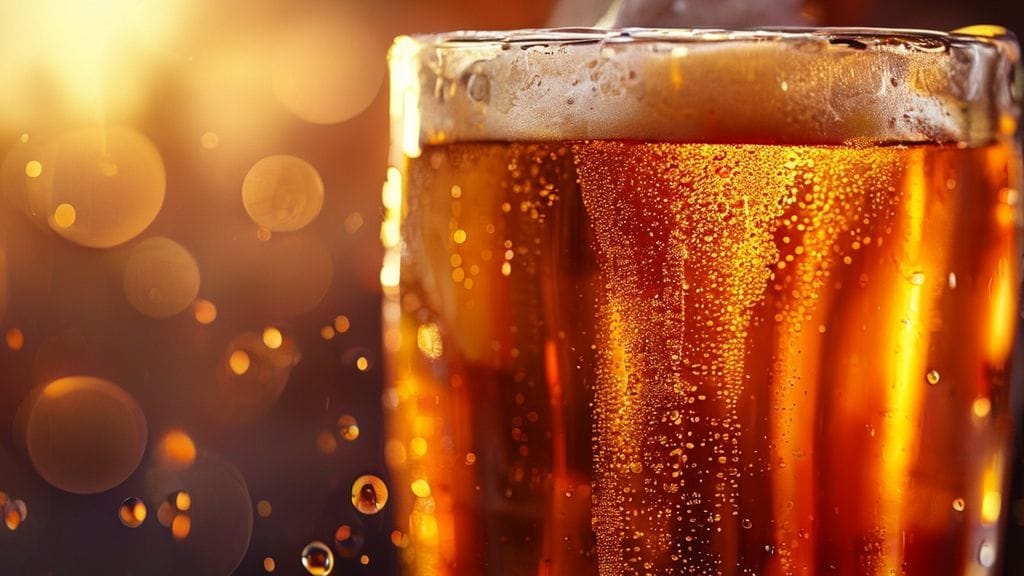
I aim for a beer that is **brilliant to exceptionally brilliant**, often reminiscent of champagne. It should be a very pale straw to light gold (SRM 2-3). The head should be pure white, dense, and exceptionally persistent, with fine bubbles clinging to the glass, indicative of its high carbonation and clean fermentation. High effervescence, with visible streams of bubbles rising from the bottom of the glass, is key.
Aroma
The aroma should be **intensely hop-forward and clean**. Expect prominent notes of citrus (grapefruit, lemon, lime), tropical fruit (passionfruit, guava, pineapple), and sometimes subtle pine or floral undertones, depending on the hops used. There should be no discernable malt sweetness, only a faint, clean grain character if anything. Yeast esters should be minimal, contributing to the overall cleanliness. No diacetyl or other off-aromas.
Mouthfeel
This is where the “Brut” truly shines. The mouthfeel is **exceptionally dry, crisp, and clean**. It should feel incredibly light-bodied, almost ethereal, but not watery due to the effervescence. The carbonation is high, creating a pleasant tingle on the tongue that contributes to its refreshing quality. There should be absolutely no residual stickiness or sweetness; the finish is quick and utterly devoid of anything lingering, encouraging another sip.
Flavor
The flavor directly mirrors the aroma: **hop-dominant, bright, and utterly dry**. Expect a burst of hop character – citrus, tropical, or stone fruit – that fades quickly into a bone-dry finish. Bitterness is present but restrained (20-35 IBU), acting more as a structural component rather than a driving force, ensuring balance with the extreme dryness. There should be no malt sweetness whatsoever. The finish is remarkably clean, leaving the palate refreshed and ready for more. No lingering astringency, despite the dryness.
Frequently Asked Questions About Brut IPA
Why is my Brut IPA not dry enough, even after adding amyloglucosidase?
Several factors can cause an insufficiently dry Brut IPA. The most common issues I’ve seen are insufficient enzyme dosage (check your calculations and the enzyme’s stated activity), or the enzyme not being fully active (ensure proper storage and expiry date). A mash temperature that was too low (below 68°C) can also produce fewer of the complex dextrins that the enzyme needs to work on, even though it still ferments sugars. Finally, ensure your yeast is healthy and has sufficient nutrients to finish the job, and allow adequate time for the enzyme to fully act, sometimes up to 2-3 weeks, especially if cold crashing prematurely.
When is the best time to add amyloglucosidase to the fermenter?
From my experience, the optimal time to add amyloglucosidase is **24 to 48 hours after pitching yeast**, once active fermentation has visibly begun and a krausen has formed. Adding it too early (with the yeast) can stress the yeast if it converts too many sugars too quickly, potentially leading to off-flavours or a stalled fermentation. Adding it too late might mean the yeast has already consumed most simple sugars and its activity is slowing, making the enzyme’s conversion less efficient or requiring more time. Adding it during active fermentation ensures the yeast is healthy and ready to consume the newly created simple sugars.
What’s the best hop combination for a Brut IPA?
The “best” combination is subjective, but I always lean towards hops that are exceptionally aromatic, fruit-forward, and contribute minimal vegetal character. My go-to hops include **Citra, Mosaic, Galaxy, Nelson Sauvin, and Motueka**. These provide intense notes of tropical fruit, citrus, and white wine that complement the crisp, dry base. I tend to avoid overly dank or resinous hops as they can sometimes clash with the clean profile. The key is multiple additions: a small bittering charge, a moderate whirlpool addition, and a significant two-stage dry hop, often found described in detail on BrewMyBeer.online, to layer the aromatics.
How do I prevent hop creep in a Brut IPA?
Hop creep, the unwanted re-fermentation caused by enzymes in dry hops breaking down residual dextrins, can be particularly problematic in Brut IPAs, potentially raising FG or creating diacetyl. To mitigate this, I ensure the beer is **fully attenuated to its target FG (1.000 or below)** *before* adding the dry hops. I also drop the dry hopping temperature for the second stage to **15°C** to slow down any enzymatic activity from the hops. While not always feasible for homebrewers, commercial breweries might use very short, high-concentration dry hopping methods followed by rapid chilling and filtration. For homebrewers, patience and ensuring complete fermentation are your best defense.