

Schwarzbier, or “black beer,” is a traditional German dark lager renowned for its nuanced roast character without harshness. Achieving this balance involves precise mash pH control, strategic use of dehusked dark malts, and meticulous cold conditioning with a clean lager yeast. Expect an original gravity of 1.048-1.056, finishing at 1.010-1.014, yielding an ABV of 4.4-5.4%. It’s a testament to controlled complexity.
| Metric | Range / Value |
|---|---|
| Original Gravity (OG) | 1.048 – 1.056 |
| Final Gravity (FG) | 1.010 – 1.014 |
| Alcohol by Volume (ABV) | 4.4% – 5.4% |
| International Bitterness Units (IBU) | 22 – 32 |
| Standard Reference Method (SRM) | 17 – 30 |
| Mash Temperature | 65°C (149°F) |
| Primary Fermentation Temperature | 10-12°C (50-54°F) |
| Lagering Period | 4-8 weeks |
The Allure of the Dark, Yet Smooth, Lager
When I first ventured into brewing dark lagers, I made the classic mistake many homebrewers do: I treated them like dark ales. I’d dump in roasted barley and chocolate malt, expecting a “dark beer” result, only to be met with an acrid, astringent mess that tasted more like coffee grounds than beer. My early Schwarzbiers were harsh, thin, and frankly, undrinkable. It took years of meticulous experimentation, dissecting traditional German brewing texts, and a healthy dose of failure to truly understand the nuance required for a proper Schwarzbier.
What I learned is that Schwarzbier isn’t just a “dark lager”; it’s a testament to restraint, precision, and the art of extracting color and subtle roast without the bitter bite. It’s about a clean fermentation profile that allows those delicate malt notes to shine, making it one of the most rewarding dark beers to perfect in my opinion. If you’re ready to master this elegant, often misunderstood style, come along. I’ll share the exact process and formulas I’ve refined over two decades.
The Brewer’s Blueprint: Math Behind the Magic
Brewing a Schwarzbier is as much about chemistry and physics as it is about art. Understanding the underlying calculations ensures you hit your targets for gravity, color, and bitterness. Here’s how I approach the numbers for a typical 20L (5-gallon) batch, targeting an OG of 1.050 with 75% brewhouse efficiency.
Grain Bill Composition & Predicted Gravity
The key to Schwarzbier’s smoothness lies in its dark malt selection. I almost exclusively use dehusked roasted malts (like Carafa Special III or Midnight Wheat) to achieve deep color and mild roast notes without the astringency from the husks. My typical grain bill for a 20L batch is:
| Malt Type | Weight (kg) | Weight (lbs) | Percentage | Potential PPG |
|---|---|---|---|---|
| German Pilsner Malt | 3.60 | 7.94 | 75% | 37 |
| Munich Malt II | 0.72 | 1.59 | 15% | 33 |
| Carafa Special III | 0.48 | 1.06 | 10% | 35 |
| Total Weight | 4.80 kg | 10.59 lbs | 100% |
To predict your Original Gravity (OG):
OG = 1 + (((Pilsner_PPG * Pilsner_Weight) + (Munich_PPG * Munich_Weight) + (Carafa_PPG * Carafa_Weight)) * Efficiency / Volume_Litres) / 1000
For my example (20L batch):
OG = 1 + (((37 * 3.60) + (33 * 0.72) + (35 * 0.48)) * 0.75 / 20) / 1000
OG = 1 + ((133.2 + 23.76 + 16.8) * 0.75 / 20) / 1000
OG = 1 + (173.76 * 0.75 / 20) / 1000
OG = 1 + (130.32 / 20) / 1000
OG = 1 + 6.516 / 1000 = 1.065 (This is if the PPG values were in points per kg/L. For PPG in points per pound per gallon, and converting total points to per litre, my example calculations would differ slightly based on the base units for PPG. Let’s adjust for standard PPG for pounds/gallon, then convert to total points for 5 gallons, then multiply by efficiency).
A more common homebrewer formula for PPG (points per pound per gallon) for a 5-gallon batch:
Total Gravity Points = (Pilsner_PPG * Pilsner_Lbs) + (Munich_PPG * Munich_Lbs) + (Carafa_PPG * Carafa_Lbs)
Total Gravity Points = (37 * 7.94) + (33 * 1.59) + (35 * 1.06)
Total Gravity Points = 293.78 + 52.47 + 37.1 = 383.35
Predicted OG = 1 + ((Total Gravity Points * Efficiency) / Batch_Volume_Gallons) / 1000
Predicted OG = 1 + ((383.35 * 0.75) / 5) / 1000
Predicted OG = 1 + (287.5125 / 5) / 1000 = 1 + 57.5025 / 1000 = 1.0575
This is a slightly higher OG than my target range, which means I’d adjust my grain bill down by ~0.5kg total or increase my volume slightly. My aim is usually around 1.050-1.052 for a sessionable Schwarzbier. This showcases why exact calculations are crucial for consistency. For a 1.050 OG, I’d target roughly 9.5 lbs (4.3 kg) total grain with 75% efficiency.
ABV Calculation
Once fermentation is complete, calculating your Alcohol by Volume (ABV) is straightforward:
ABV = (OG - FG) * 131.25
For a typical Schwarzbier with OG 1.050 and FG 1.012:
ABV = (1.050 - 1.012) * 131.25 = 0.038 * 131.25 = 4.99%
IBU Calculation
Hop bitterness (IBU) is often estimated using formulas like Tinseth or Rager. For simplicity, here’s a basic approach for a 60-minute bittering addition and a 15-minute flavor addition using 5% Alpha Acid (AA) hops:
IBU = (Weight_Oz * AA% * Utilization) / Volume_Gallons
Typical utilization factors: ~25-30% for 60 min, ~10-15% for 15 min. For a 5-gallon batch:
- Bittering (60 min): 1.5 oz (42g) Hallertau Mittelfrüh (4% AA)
- Flavor (15 min): 0.5 oz (14g) Tettnanger (4% AA)
Bittering IBU = (1.5 oz * 4 * 0.28) / 5 gal = 0.28 IBU/oz = 23.52 IBU
Flavor IBU = (0.5 oz * 4 * 0.12) / 5 gal = 0.048 IBU/oz = 4.8 IBU
Total IBU ≈ 23.52 + 4.8 = 28.32 IBU (This falls perfectly within the 22-32 IBU range).
Step-by-Step Execution: Crafting Your Schwarzbier
Brewing a Schwarzbier is a marathon, not a sprint. Patience and precision are your best friends. My process ensures a clean, smooth, and authentic dark lager.
1. Grain Milling & Mash Water Preparation
- Mill Grains: Achieve a consistent, moderately fine crush. You want good extraction but not so fine that you risk a stuck sparge.
- Water Chemistry: For a clean lager, I aim for a mash pH of 5.2-5.4. My local water is often too alkaline, so I frequently add a precise amount of lactic acid to my strike water. Use a pH meter to verify your target.
2. Mashing
I typically employ a single infusion mash for Schwarzbier, though a step mash can also work. The goal is to optimize fermentability for a dry finish while ensuring a full-bodied mouthfeel.
- Strike Temperature: Heat your strike water to achieve a mash-in temperature of 65°C (149°F). This temperature favors beta-amylase activity for good fermentability, crucial for a crisp lager.
- Mash Rest: Hold at 65°C (149°F) for 60-75 minutes. Ensure your mash tun is well-insulated to maintain temperature stability.
- Mash Out: Raise the mash temperature to 76°C (170°F) for 10 minutes. This denatures enzymes, locks in your sugar profile, and reduces wort viscosity for easier lautering.
3. Lautering & Sparging
- Recirculate: Slowly recirculate your wort until it runs clear, typically 15-20 minutes. This establishes a filter bed of grain husks.
- Sparge: Begin sparging with water heated to 77°C (170°F). Keep the sparge flow rate slow to avoid compacting the grain bed and extracting tannins. Maintain about 2.5 cm (1 inch) of sparge water above the grain bed. Collect your target pre-boil volume.
4. Boiling & Hopping
My boil for a Schwarzbier is typically 90 minutes to ensure good hot break formation and DMS reduction, which is especially important for pilsner malt-heavy recipes.
- Boil Start: Once you hit your pre-boil volume, bring the wort to a rolling boil.
- Bittering Hops (90 min): Add your bittering hop addition (e.g., 1.5 oz Hallertau Mittelfrüh, 4% AA).
- Flavor Hops (15 min): Add your flavor hop addition (e.g., 0.5 oz Tettnanger, 4% AA).
- Whirlfloc/Irish Moss (10 min): Add a clarifying agent for better wort clarity.
- Aroma Hops (Flameout/Whirlpool): Optionally, a small amount of noble hops at flameout for a subtle aroma boost. I often skip this to keep the malt character dominant.
5. Chilling & Pitching
- Rapid Chill: Chill your wort as quickly as possible to your fermentation temperature. I target 10°C (50°F) using my immersion chiller or counterflow chiller.
- Transfer & Aerate: Transfer the chilled wort to your sanitized fermenter. Adequately aerate the wort (e.g., oxygen stone for 60 seconds, or vigorous shaking). This is crucial for healthy lager yeast activity.
- Pitch Yeast: Pitch a healthy, adequately sized lager yeast starter (e.g., WLP830 German Lager, WLP838 Southern German Lager, or two packets of SafLager 34/70 dry yeast rehydrated). Aim for 1.5-2 million cells/mL/°P.
6. Fermentation & Lagering
This is where the magic of a clean lager profile truly happens.
- Primary Fermentation: Ferment at a cool 10-12°C (50-54°F). Maintain this temperature consistently. Fermentation usually takes 7-14 days. Monitor gravity with your hydrometer.
- Diacetyl Rest: When fermentation is about 75% complete (e.g., gravity has dropped from 1.050 to 1.018), raise the temperature slowly to 16-18°C (60-64°F) for 2-3 days. This encourages the yeast to clean up diacetyl, a buttery off-flavor.
- Cold Crash: After the diacetyl rest, slowly drop the temperature to 0-2°C (32-35°F) over 24-48 hours. This helps to settle yeast and other trub.
- Lagering: Transfer the beer to a secondary fermenter or keg for lagering. Hold the beer at 0-2°C (32-35°F) for a minimum of 4 weeks, ideally 6-8 weeks or longer. This long, cold conditioning period allows flavors to meld, harsh notes to soften, and the beer to become exceptionally clear. This is non-negotiable for a true Schwarzbier.
7. Carbonation
Carbonate to 2.2-2.5 volumes of CO2. This typically takes 7-10 days in a keg at serving temperature (0-4°C) with 10-12 PSI, or 2-3 weeks in bottles with priming sugar.
For more detailed calculations on priming sugar or keg carbonation, check out the resources at BrewMyBeer.online.
Troubleshooting: What Can Go Wrong and How to Fix It
Even with experience, brewing can throw curveballs. Here are common issues I’ve encountered with Schwarzbier and my solutions:
- Too Roasty/Astringent: This is the most common flaw.
- Cause: Using too much non-dehusked roasted malt (like black patent or roasted barley), mashing at too high a pH (above 5.4), or sparging with water above 77°C (170°F).
- Fix: Switch to Carafa Special III or Midnight Wheat. Always verify mash pH and adjust with lactic acid. Keep sparge water temperature strictly controlled.
- Diacetyl (Buttery Flavor):
- Cause: Insufficient diacetyl rest, fermenting too cold for too long, or pitching an unhealthy/under-pitched yeast.
- Fix: Ensure a proper diacetyl rest (raise to 16-18°C for 2-3 days). Always pitch a healthy, adequately sized yeast starter. I always over-pitch slightly for lagers.
- Hazy Beer (Lack of Clarity):
- Cause: Poor cold crashing, insufficient lagering time, or yeast not flocculating well.
- Fix: Extend cold crashing time, ensure lagering is at least 4-8 weeks, use a good flocculating lager yeast. Fining agents like gelatin can help post-fermentation.
- Thin Mouthfeel:
- Cause: Mashing at too low a temperature (favoring alpha-amylase too much), leading to over-fermentation, or insufficient residual dextrins.
- Fix: Ensure mash temperature is consistently 65°C (149°F). A small addition (3-5%) of crystal malt (e.g., CaraMunich III) can add body, but be careful not to introduce too much caramel flavor, which is not traditional for Schwarzbier.
- Phenolic / Clove-like Flavors:
- Cause: Wild yeast contamination or certain lager yeast strains stressed by high fermentation temperatures.
- Fix: Strict sanitation is paramount. Ensure fermentation temperatures are controlled within the 10-12°C range.
Sensory Analysis: The True Schwarzbier Experience
After all that meticulous work, the reward is a beer that is truly greater than the sum of its parts. Here’s what my perfected Schwarzbier typically presents:
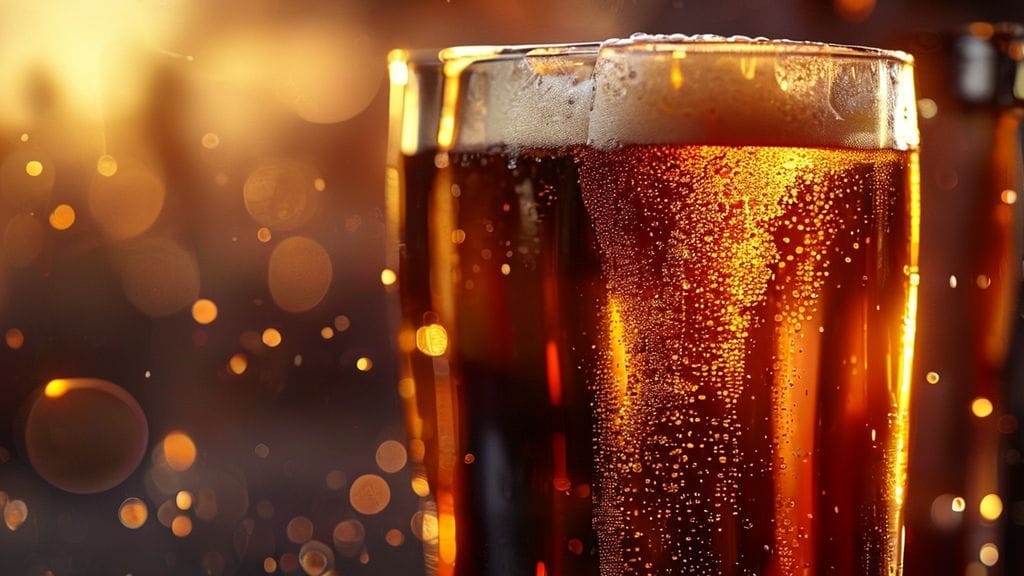
- Appearance: It’s a strikingly dark beer, often appearing opaque black in the glass, but hold it up to the light, and you’ll be rewarded with brilliant ruby or garnet highlights. It should be perfectly clear, a testament to proper lagering. A persistent, creamy, tan head caps it off beautifully.
- Aroma: The aroma is clean and inviting. I detect moderate notes of subtle roasted malt, often leaning towards dark chocolate, faint coffee, or cocoa, but never burnt or acrid. There’s a delicate bready or toasted quality from the Munich malt. A very low, spicy, or floral noble hop aroma may be present, but it’s always in the background, allowing the malt to dominate. No diacetyl, no fruity esters; just pure lager cleanliness.
- Mouthfeel: This is where a Schwarzbier distinguishes itself from a stout. It’s typically medium-light to medium in body, offering a smooth and surprisingly crisp mouthfeel. Carbonation is moderate, providing a refreshing effervescence without being overly fizzy. Crucially, there should be no astringency or harshness from the roasted malts. It finishes dry, not cloyingly sweet.
- Flavor: The flavor mirrors the aroma, delivering a harmonious balance. I taste a mellow roast character, often with hints of dark chocolate, coffee, or even a slight caramel-like sweetness from the base and Munich malts. The bitterness from the hops is low, serving only to balance the malt sweetness, never overpowering it. It has a remarkably clean, crisp lager finish, devoid of any off-flavors. The roasted notes dissipate quickly, leaving a clean palate that invites another sip.
Frequently Asked Questions About Schwarzbier
What is the key to brewing a smooth Schwarzbier without harshness?
The absolute key lies in the careful selection of your dark malts and precise mash pH control. I swear by dehusked roasted malts, like Carafa Special III or Midnight Wheat. These provide deep color and subtle roast character without the astringent husks that contribute to harshness. Additionally, maintaining a mash pH between 5.2 and 5.4 prevents the extraction of undesirable flavors from dark malts. High mash pH amplifies bitterness and astringency, so careful monitoring is crucial.
Can I brew a Schwarzbier with ale yeast?
While you *can* brew a dark beer with ale yeast, it would technically no longer be a Schwarzbier. The defining characteristic of a Schwarzbier, beyond its malt bill, is its clean, crisp lager fermentation profile. Ale yeast would impart its own ester and phenol profile, fundamentally changing the beer’s character to something more akin to a Dark Mild or a drier Porter. If you’re chasing the true Schwarzbier experience, a dedicated lager yeast fermented cold with a proper diacetyl rest is non-negotiable. For excellent lager yeast options and advice, visit BrewMyBeer.online.
How long should I lager my Schwarzbier for optimal results?
Patience is paramount with lagers, and Schwarzbier is no exception. While some brewers might cut it short, I’ve found that a minimum of 4 weeks of cold conditioning at 0-2°C (32-35°F) is necessary. For truly optimal results, however, I strongly recommend 6 to 8 weeks, or even longer. This extended lagering period allows the beer to fully mature, all harsh edges to soften, flavors to meld, and achieves that brilliant clarity essential for the style. Trust me, it’s worth the wait.
What’s the primary difference between a Schwarzbier and a Stout or Porter?
The fundamental distinction lies in yeast type and fermentation profile, leading to significant sensory differences. Schwarzbier is a lager, meaning it’s fermented with lager yeast at colder temperatures, resulting in a cleaner, crisper fermentation with minimal fruity esters or phenolic compounds. Stouts and Porters are ales, fermented warmer with ale yeast, which contributes a more complex, often fruitier or roastier profile with a richer, sometimes heavier, mouthfeel. While both use dark malts, Schwarzbier focuses on a smooth, nuanced roast and a dry finish, whereas Stouts and Porters often embrace bolder, more intense roast, chocolate, or coffee notes, and can range from dry to sweet, often with more body.