

A Triple IPA is an intensely hopped, high-alcohol ale, typically ranging from 9.5% to 12.5%+ ABV, characterized by an overwhelming hop aroma and flavor, balanced by a significant malty sweetness and a full body. It pushes the boundaries of hop saturation and alcohol content, often featuring multiple dry hop additions and higher original gravities than its Double IPA counterparts.
| Metric | Target Range | My Typical Result |
|---|---|---|
| Original Gravity (OG) | 1.085 – 1.110 | 1.098 |
| Final Gravity (FG) | 1.012 – 1.022 | 1.018 |
| Alcohol By Volume (ABV) | 9.5% – 12.5%+ | 10.5% |
| Bitterness (IBU) | 60 – 100+ | 85 |
| Color (SRM) | 6 – 14 | 8 |
| Fermentation Temp | 18°C – 22°C (64°F – 72°F) | 20°C (68°F) |
| Dry Hop Load (Total, per 19L/5gal) | 200g – 400g+ | 300g |
The Brewer’s Hook: Chasing the Triple IPA Dragon
When I first decided to tackle a Triple IPA over a decade ago, I thought I knew what I was getting into. I’d brewed plenty of Double IPAs, so scaling up seemed straightforward. My mistake? Underestimating the sheer logistical and fermentation challenges of pushing that much sugar and that many hops into a single batch. My first attempt stalled spectacularly at 1.040, tasted like sweet, boozy hop tea, and was a colossal failure. I learned that brute force isn’t enough; precision, proper yeast management, and a meticulous approach to oxidation are paramount. This isn’t just a bigger IPA; it’s a different beast entirely, and I’ve spent years refining my process to consistently hit that aggressive, yet balanced, sweet spot. Let me share how I tame this beast.
The Math: Engineering Your Triple IPA’s Foundation
Crafting a Triple IPA isn’t about guesswork; it’s about precise calculations to hit those high gravities and massive hop loads while maintaining fermentability. I approach this with a rigorous plan for my grain bill and target efficiency.
Grain Bill Breakdown (For 19L / 5 US Gallons)
My typical grist for a Triple IPA is designed to provide fermentable sugars for high ABV while retaining enough dextrins for body, preventing it from finishing thin despite the attenuation.
| Grain Type | Weight (kg) | Weight (lb) | Percentage (%) | Contribution (PPG) |
|---|---|---|---|---|
| Pale Malt (2-Row) | 7.5 kg | 16.5 lb | 83.3% | 36 |
| Munich Malt II | 0.7 kg | 1.5 lb | 7.8% | 33 |
| CaraPils/Dextrin Malt | 0.4 kg | 0.9 lb | 4.4% | 33 |
| Flaked Oats | 0.4 kg | 0.9 lb | 4.4% | 33 |
| TOTAL | 9.0 kg | 19.8 lb | 100% | N/A |
Original Gravity (OG) Calculation
To calculate your target OG based on your grain bill and expected brewhouse efficiency, I use this formula:
OG = 1 + ( (Total PPG * Brewhouse Efficiency) / Target Volume in Liters ) / 1000
Let’s use my typical numbers for a 19L (5 US Gal) batch with an expected 75% brewhouse efficiency:
- Pale Malt: 7.5 kg * 36 PPG/kg = 270 gravity points (approx. 1.036 SG for 1L)
- Munich Malt II: 0.7 kg * 33 PPG/kg = 23.1 gravity points
- CaraPils: 0.4 kg * 33 PPG/kg = 13.2 gravity points
- Flaked Oats: 0.4 kg * 33 PPG/kg = 13.2 gravity points
- Total Grain Gravity Points: 270 + 23.1 + 13.2 + 13.2 = 319.5 gravity points per kg (using the PPG unit for 1 lb in 1 gallon, converted to metric for convenience of calculation here).
More simply, summing the PPG contributions for the total grain bill, then multiplying by efficiency and dividing by the target volume:
Total fermentables for 19.8 lbs: (16.5lb * 36) + (1.5lb * 33) + (0.9lb * 33) + (0.9lb * 33) = 594 + 49.5 + 29.7 + 29.7 = 702.9 points/gallon.
For a 5-gallon batch at 75% efficiency:
Target OG = 1 + ( (702.9 points/gallon * 0.75) / 5 gallons ) / 1000 = 1 + (527.175 / 5) / 1000 = 1 + 105.435 / 1000 = 1.105
This puts me squarely in the Triple IPA range, often slightly above my 1.098 typical, allowing for slight variations or adjusting with dextrose in the boil if needed to hit my exact target without adding excessive malt character.
ABV Calculation
Once fermentation is complete, I use this standard formula for ABV:
ABV = (OG - FG) * 131.25
Using my typical results:
ABV = (1.098 - 1.018) * 131.25 = 0.080 * 131.25 = 10.5%
Step-by-Step Execution: My Triple IPA Brewing Process
Brewing a Triple IPA is a marathon, not a sprint. Every step needs precision.
1. Water Chemistry (The Unsung Hero)
I start with filtered water and build my profile. For a Triple IPA, I aim for a balanced chloride-to-sulfate ratio, perhaps slightly favoring chloride for mouthfeel, but ensuring enough sulfate to accentuate hop bitterness. My target profile typically includes:
- Calcium: 100-120 ppm
- Magnesium: 10-15 ppm
- Sodium: 20-30 ppm
- Chloride: 150-180 ppm
- Sulfate: 120-150 ppm
- pH: Mash pH target of 5.2 – 5.4.
I add brewing salts (Gypsum, Calcium Chloride, Epsom Salt) during the mash water heating stage.
2. Mashing (Efficiency is Key)
- Heat Strike Water: Heat 25 liters (6.6 US gallons) of treated water to **71°C (160°F)** to hit my target mash temperature.
- Dough-In: Add the entire grain bill to the strike water. Mix thoroughly to avoid dough balls.
- Mash Rest: Maintain the mash at **66°C (151°F)** for **90 minutes**. This slightly lower temperature, compared to a thinner IPA, promotes a higher degree of fermentability while still allowing for good body.
- Mash Out: Raise the mash temperature to **77°C (170°F)** for **10 minutes**. This stops enzymatic activity and reduces wort viscosity for better sparging.
3. Sparge (Extracting Every Drop)
Given the large grain bill, I perform a thorough sparge to extract maximum sugars.
- Recirculate: Begin recirculating the wort until it runs clear, typically 15-20 minutes.
- Lauter: Slowly drain the wort into your boil kettle.
- Sparge Water: Begin adding sparge water heated to **77°C (170°F)**. I aim for approximately 18-20 liters (4.7-5.3 US gallons) of sparge water, depending on my pre-boil gravity readings, to collect a total of 25-26 liters (6.6-6.9 US gallons) of wort in the kettle. I monitor my pre-boil gravity; if it’s low, I adjust my boil time or add dextrose.
4. The Boil (Hop Onslaught)
My boil for a Triple IPA is usually **90 minutes** to achieve proper concentration and bitterness. I use high alpha acid hops for bittering and more aromatic varieties for flavor and aroma.
| Hop Type | Amount (g) | Alpha Acid (%) | Boil Time | Purpose |
|---|---|---|---|---|
| Magnum | 28g | 14% | 60 minutes | Bittering |
| Centennial | 28g | 10% | 15 minutes | Flavor |
| Citra | 56g | 13% | 5 minutes | Aroma |
| Mosaic | 56g | 12% | Flameout | Whirlpool Aroma |
At 15 minutes remaining, I add a yeast nutrient (like Fermaid O, 5g) and a fining agent (e.g., Irish Moss, 1 tsp) to promote healthy fermentation and clear beer. For the flameout addition, I drop the wort temperature to **80°C (176°F)** and conduct a **20-minute whirlpool**, stirring vigorously, before chilling further.
5. Chilling & Fermentation (The Critical Phase)
Rapid chilling is crucial to lock in hop aromas. I chill my wort to **18°C (64°F)** and transfer to a sanitized fermenter.
- Yeast Pitching: For an OG of 1.098, I pitch a massive amount of healthy yeast. I typically use two packs of Wyeast 1056 (American Ale) or SafAle US-05, rehydrated. This calculates to roughly 600 billion cells for a 19L batch, far exceeding the standard 200 billion for lower gravity ales, to prevent a stalled fermentation.
- Primary Fermentation: Ferment at a stable **20°C (68°F)**. This ensures vigorous fermentation without producing excessive esters, allowing the hops to shine. Fermentation usually takes 7-10 days to reach terminal gravity.
- Diacetyl Rest (Optional but Recommended): Once gravity has dropped to within 2-3 points of expected FG, I often raise the temperature to **22°C (72°F)** for 24-48 hours to ensure full diacetyl cleanup.
6. Dry Hopping (The Hop Tsunami)
This is where the “Triple” in Triple IPA truly comes alive. I perform multiple dry hop additions to maximize aroma and minimize hop creep.
| Stage | Hops (g) | Timing | Contact Time |
|---|---|---|---|
| First Dry Hop | 150g (e.g., 75g Citra, 75g Mosaic) | When gravity is 1.030 (active fermentation) | 3-4 days |
| Second Dry Hop | 150g (e.g., 75g Galaxy, 75g Nelson Sauvin) | After terminal gravity reached, at 18°C (64°F) | 2-3 days |
I always add dry hops when fermentation is either still active or has just finished, and preferably slightly warmer, to minimize the risk of oxidation. For more details on avoiding oxidation during dry hopping, I often refer to the resources at BrewMyBeer.online.
7. Cold Crash & Packaging
- Cold Crash: After dry hopping, I cold crash the beer to **0°C (32°F)** for 48-72 hours. This helps to drop yeast and hop particles out of suspension.
- Transfer: Carefully transfer the beer to a purged keg or bottles. I’m fanatical about minimizing oxygen exposure at this stage.
- Carbonation: Carbonate to **2.4 – 2.6 volumes of CO2**. For kegging, this means setting my regulator to 10-12 PSI (0.69-0.83 bar) at 2°C (36°F) and waiting 5-7 days for full saturation.
Troubleshooting: What Can Go Wrong with a Triple IPA
Triple IPAs are notoriously challenging. Here are a few common pitfalls I’ve encountered and how to address them:
1. Stuck Fermentation
- Symptom: Gravity reading much higher than expected FG, no airlock activity, sweet taste.
- My Fix: I ensure massive yeast pitching rates – often double what a typical ale would require. If it’s already stuck, try rousing the yeast by gently swirling the fermenter, or pitch an additional packet of highly attenuative dry yeast (like US-05) rehydrated with nutrient. Check mash temperature; mashing too high can produce unfermentable sugars.
2. Excessive Hop Burn or Grassy Flavors
- Symptom: A harsh, astringent, or green vegetal flavor, especially after dry hopping.
- My Fix: This often comes from too much hop contact time, especially with pellet hops, or too aggressive dry hopping at the wrong temperature. I limit dry hop contact to 2-4 days per addition. Using hop socks or bags can help with removal. Cryo hops often reduce vegetal matter.
3. Oxidation (The Triple IPA Killer)
- Symptom: Dull, muted hop aroma, cardboard/papery off-flavor, darkening color, loss of clarity.
- My Fix: Absolute obsession with limiting oxygen exposure from cold crash to packaging. I use CO2 to purge carboys, kegs, and transfer lines. Closed transfers are non-negotiable for me. I also dry hop during active fermentation (biotransformation) or just as it finishes, as yeast consumes residual oxygen. I’ve learned that a single slip in oxygen management can ruin months of work.
4. Diacetyl (Buttery Off-Flavor)
- Symptom: Popcorn, butterscotch, or slick mouthfeel.
- My Fix: Primarily caused by insufficient diacetyl rest or under-pitched, stressed yeast. I ensure proper yeast health and a temperature ramp to **22°C (72°F)** for 24-48 hours at the end of fermentation to allow the yeast to clean up any diacetyl precursors.
Sensory Analysis: Experiencing My Triple IPA
This is the reward for all that hard work. A well-executed Triple IPA is a symphony of intensity.
Appearance
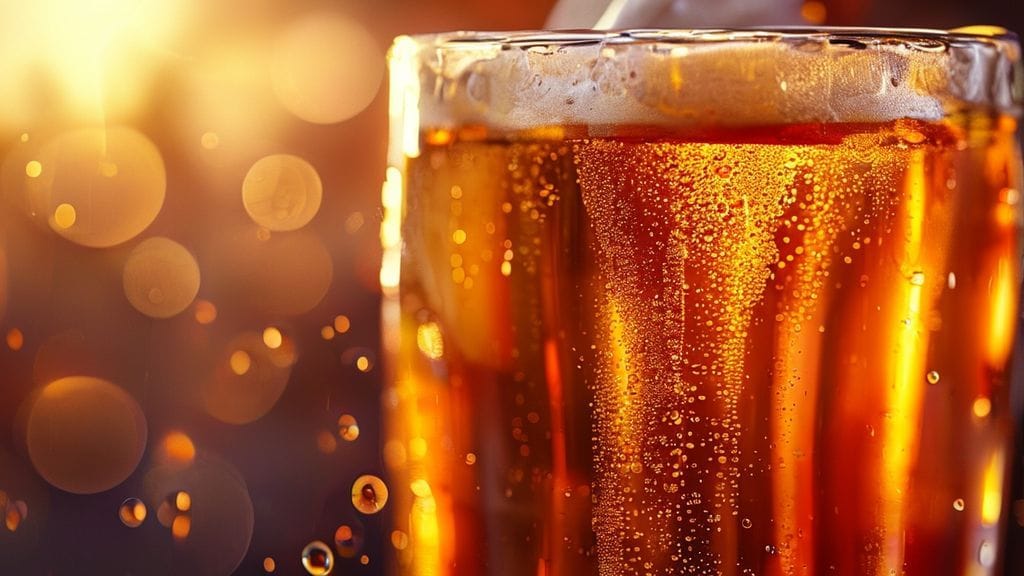
My Triple IPA pours a brilliant, hazy golden to light amber color, typically around **8 SRM**. It forms a thick, persistent white head with excellent lacing, indicative of the high protein content from my malt bill and copious hopping. The haze is generally stable, not particulate, a result of hop oils and protein interactions.
Aroma
The first impression is an explosion of hop aroma. I detect layers of tropical fruit (mango, passionfruit, pineapple), bright citrus (grapefruit, orange zest), and often stone fruit (apricot, peach). Depending on the hop blend, I might also pick up resinous pine or dank notes. There’s a subtle background of sweet, clean malt, but the hops are the undeniable star. Alcohol presence is warming, not harsh, intertwined with the fruit. I want that aroma to leap out of the glass and grab you by the nose.
Mouthfeel
Despite the high ABV, it’s remarkably smooth and full-bodied. There’s a substantial chewiness and velvety texture, a result of the dextrin malts and flaked oats. Carbonation is medium, providing a refreshing effervescence that lifts the hop flavors. The alcohol warmth is present, especially as it glides down, but it’s integrated, not hot or solventy. Bitterness is firm but not aggressive or astringent; it lingers pleasantly, balanced by the residual sweetness.
Flavor
The flavor mirrors the aroma, delivering a concentrated burst of hop-derived fruit and dankness on the front palate. I taste juicy citrus, ripe tropical fruits, and often a hint of berry. This is quickly followed by a clean, substantial malt sweetness that provides a backbone, preventing the beer from becoming one-dimensional or cloying. The bitterness builds but remains balanced, a strong counterpoint to the sweetness. There’s little to no caramel or roasted character, just pure, clean malt supporting the hop intensity. The finish is long, complex, and warming, leaving a lingering hop bitterness and fruitiness that invites another sip. It’s truly a complex journey for the palate, and I’m always looking for ways to enhance this with every batch I brew, refining my methods and exploring new hop combinations on BrewMyBeer.online.
Frequently Asked Questions About Triple IPAs
What is the ideal serving temperature for a Triple IPA?
I’ve found the ideal serving temperature for a Triple IPA to be between **10-13°C (50-55°F)**. This allows the complex hop aromatics and malt character to fully express themselves without the alcohol being too harsh or the flavors becoming muddled by being too cold. Serving it too cold can mute the intricate hop profile.
Can I use dry yeast for a Triple IPA, or do I need liquid yeast?
Absolutely, you can use dry yeast! In fact, for a Triple IPA, I often prefer it due to its robustness and ease of pitching large quantities. High-quality dry yeasts like SafAle US-05 or Lallemand BRY-97 are excellent choices. The key is to pitch a massive amount, often 2-3 rehydrated packets for a 19L (5-gallon) batch, to ensure a healthy and complete fermentation of the high-gravity wort.
How long should I age a Triple IPA?
Triple IPAs are generally best enjoyed fresh, typically within 2-3 months of packaging, to fully appreciate their vibrant hop aromas and flavors. While the high alcohol content offers some preservation, the delicate hop compounds degrade over time, leading to a loss of pungency and a shift towards more muted, oxidized notes. I always recommend drinking them sooner rather than later to catch them at their peak.