

The White IPA is a distinctive hybrid beer style, marrying the vibrant hop character of an American IPA with the spicy, fruity notes and hazy appearance of a Belgian Witbier. It delivers a refreshing, effervescent experience with citrus, floral, and piney hop aromas supported by coriander, orange peel, and a soft, wheaty malt backbone, culminating in a balanced bitterness and dry finish.
| Metric | Value (My Typical Batch) | Range (Style Guide) |
|---|---|---|
| Original Gravity (OG) | 1.064 | 1.056 – 1.065 |
| Final Gravity (FG) | 1.012 | 1.010 – 1.016 |
| Alcohol By Volume (ABV) | 6.8% | 5.8% – 7.0% |
| International Bitterness Units (IBU) | 55 | 40 – 70 |
| Standard Reference Method (SRM) | 4 | 5 – 8 |
| Fermentation Temperature | 20°C | 18°C – 22°C |
When I first ventured into the hybrid beer styles, the White IPA struck me as particularly intriguing. My initial attempts were a bit… schizophrenic. I found myself battling between the desire for the clean, crisp bitterness of an IPA and the nuanced spice and ester profile of a Belgian Wit. I remember one batch where I overdid the coriander, making it taste more like a savoury curry than a refreshing beer, while simultaneously pushing the bittering hops too far, creating an unpleasant astringency. It took several iterations, meticulous note-taking, and a lot of trial and error to truly understand the delicate balance required to meld these two distinct styles into a harmonious, compelling brew. The key, I learned, wasn’t to simply combine two recipes, but to allow each style’s best attributes to elevate the other without clashing. This guide is built on those lessons, designed to help you bypass my early stumbles and brew a White IPA that truly shines.
The Brewer’s Math: Crafting Your White IPA Recipe
Precision is paramount in brewing, and nowhere is this more evident than when balancing the complex profile of a White IPA. My typical approach involves a 19-liter (5-gallon) batch size, which is perfect for homebrewers. Here’s a breakdown of the math I use to formulate my White IPA recipe, ensuring I hit my target gravity, bitterness, and flavour profile.
Grain Bill Calculation for a Target OG of 1.064
To achieve a substantial but not overwhelming malt base that supports both the hops and spices, I aim for a specific blend. Assuming an average brewhouse efficiency of 75% and a total fermentable weight of approximately 6.2 kg (13.6 lbs) for a 1.064 OG in 19 liters:
| Malt Type | Percentage | Weight (kg) | Weight (lbs) | PPG (Approx.) |
|---|---|---|---|---|
| Pilsner Malt | 50% | 3.10 kg | 6.83 lbs | 37 |
| Unmalted Wheat | 40% | 2.48 kg | 5.47 lbs | 37 |
| Flaked Oats | 10% | 0.62 kg | 1.37 lbs | 33 |
| TOTAL | 100% | 6.20 kg | 13.67 lbs | – |
Calculation check: ( (3.1*37) + (2.48*37) + (0.62*33) ) / 19 liters * 0.75 (efficiency) = approx. 64 gravity points. Add 1.000 for 1.064 OG.
IBU Calculation: Balancing Bitterness and Aroma
For a White IPA, I target an IBU range of 40-70. I use a combination of bittering hops early in the boil, and then substantial flavour and aroma additions at the end, including whirlpool and dry hopping. My aim is a soft bitterness, not harsh. Here’s a typical hop schedule for 55 IBU:
| Hop Type | Amount (g) | Alpha Acid % (AA%) | Boil Time (min) | Estimated IBU Contribution |
|---|---|---|---|---|
| Magnum | 20g | 14% | 60 | 30 |
| Citra | 25g | 12% | 10 | 10 |
| Amarillo | 30g | 9% | 5 | 5 |
| Simcoe (Whirlpool) | 50g | 13% | 20 (at 80°C) | 10 |
| TOTAL IBU (Approx.) | – | – | – | 55 |
Note: IBU calculations are estimates. Actual utilization varies based on wort gravity, boil vigor, and hop form. My estimations here are for a standard 19L batch.
ABV Calculation
After fermentation, I target an FG of 1.012. My ABV is then calculated using the standard formula:
ABV = (OG - FG) * 131.25
For my target values: (1.064 - 1.012) * 131.25 = 0.052 * 131.25 = 6.825% ABV.
Yeast Pitching Rate
I typically use a Belgian Witbier yeast strain (e.g., Wyeast 3944 Belgian Witbier or White Labs WLP400 Belgian Wit Ale) for its characteristic spicy and fruity esters. For a 19L batch with an OG of 1.064, I aim for a pitching rate of approximately 0.75 million cells/mL/°Plato. This translates to roughly 200-250 billion viable yeast cells. I often achieve this by building a 1.5-liter starter about 24-36 hours prior to brew day, ensuring vigorous fermentation.
Step-by-Step Execution: Brewing Your White IPA
Brewing a White IPA is all about precision and timing. Here’s the detailed process I follow:
-
Water Treatment & Mash-In:
- Start with 23 liters (6.1 gallons) of brewing water. I always treat my water to achieve a profile suitable for IPAs with a slight nod to Belgian styles. My typical water profile aims for a Chloride:Sulfate ratio of around 1.5:1, targeting roughly 70 ppm Chloride and 50 ppm Sulfate, with calcium around 80 ppm. This helps enhance mouthfeel while supporting hop character.
- Adjust mash pH to 5.2-5.4 using lactic acid or phosphoric acid if necessary. This promotes optimal enzyme activity.
- Dough in your crushed grains (as per the Math section) and mash at 65°C (149°F) for 60 minutes. The relatively low mash temperature ensures high fermentability, leading to a drier finish critical for an IPA.
- Perform a mash-out by raising the temperature to 76°C (168°F) for 10 minutes to halt enzyme activity and prepare for lautering.
-
Sparge & Boil:
- Recirculate until the runnings are clear, then sparge slowly with 77°C (170°F) water. Collect approximately 25 liters (6.6 gallons) of wort in your boil kettle, aiming for a pre-boil gravity of around 1.056.
- Bring to a vigorous boil. Once boiling, add your bittering hops (e.g., 20g Magnum AA 14%) for 60 minutes.
- At 10 minutes remaining in the boil, add your first aroma/flavour hop addition (e.g., 25g Citra AA 12%) along with 15g freshly crushed coriander seeds and 15g dried bitter orange peel. For the orange peel, I prefer using dried Valencia or Curaçao peel for consistency.
- At 5 minutes remaining, add your second aroma/flavour hop addition (e.g., 30g Amarillo AA 9%).
- Turn off the heat.
-
Whirlpool & Chilling:
- Once the heat is off, initiate a whirlpool. When the wort temperature drops to 80°C (176°F), add your whirlpool hops (e.g., 50g Simcoe AA 13%). Continue the whirlpool for 20 minutes to maximize hop aroma and flavour extraction without excessive bitterness.
- Rapidly chill the wort to your fermentation temperature, ideally 18-20°C (64-68°F), using an immersion or plate chiller. I aim for the lower end of this range to control the Belgian yeast esters, ensuring they complement rather than overpower the hops.
- Transfer the chilled wort to your sanitized fermenter, aerating well (e.g., via oxygenation stone for 60 seconds at 1 LPM, or vigorous shaking for 5 minutes).
-
Fermentation:
- Pitch your prepared yeast starter (e.g., Wyeast 3944) at a rate of 200-250 billion cells.
- Ferment at a controlled temperature of 20°C (68°F) for the first 3-5 days. If using a particularly expressive Belgian strain, I might start at 18°C and let it free rise to 20°C.
- After primary fermentation subsides (usually 5-7 days), raise the temperature to 22°C (72°F) for a diacetyl rest for 2-3 days, ensuring a clean finish.
-
Dry Hopping & Conditioning:
- Once fermentation is complete (gravity stable for 3 days, ideally at 1.012), add your dry hops. My typical dry hop addition is 100g (3.5oz) of a blend of Citra and Mosaic (50g each).
- Dry hop for 3-5 days. Longer periods can lead to grassy off-flavors.
- After dry hopping, cold crash the beer to 1-4°C (34-39°F) for 2-3 days to help settle yeast and hop matter, improving clarity and stability.
-
Packaging:
- Transfer to a sanitized keg or bottles. For kegging, force carbonate to 2.8-3.0 volumes of CO2. For bottling, prime with dextrose aiming for the same carbonation level (approx. 130-140g dextrose for 19L).
- Condition in the cold for at least 1-2 weeks before serving to allow flavours to meld and carbonation to fully integrate.
What Can Go Wrong? Troubleshooting Your White IPA
Even with meticulous planning, brewing complex styles like the White IPA can present challenges. Based on my years of experience, here are common issues and how I address them:
- Excessive Phenolic/Clove Flavours: If your beer tastes too much like clove or medicinal, it’s often a sign of fermenting too warm with a Belgian yeast strain. My mistake here was not adequately controlling my fermentation temperature in early batches. To prevent this, ensure your fermentation chamber maintains a steady 18-20°C (64-68°F), especially during the first few days. Some Belgian strains are more phenolic than others; consider a different strain if consistent issues arise.
- Lack of Haze or Too Much Sediment: White IPAs should have a characteristic haze, but not be murky with particulate. If it’s too clear, you might have omitted the unmalted wheat or flaked oats. If it’s too cloudy with sediment, it could be a cold-side issue. Ensure proper cold crashing and gentle transfers. Remember, the haze comes from wheat proteins and yeast, not necessarily chill haze from polyphenols.
- Unbalanced Bitterness: If your beer is too harsh or has a vegetal character, you might be over-hopping, especially with high alpha acid hops at longer boil times. Conversely, if it’s too sweet, you might not have enough bittering. I learned to use high AA hops like Magnum for clean bitterness at 60 minutes, then focus on late additions for aroma and flavour. Adjusting your IBU target by 5-10 points can significantly impact the perception of bitterness.
- Muted Hop Aroma: If the hop aroma is lacking, you likely didn’t use enough late-boil, whirlpool, or dry hops. I’ve found that White IPAs benefit from a hefty dry hop charge to compete with the yeast and spice character. Ensure your dry hops are fresh and consider a two-stage dry hop for maximum impact, particularly if you have a tight internal schedule at BrewMyBeer.online.
- Lack of Spice Character: If the coriander and orange peel are absent, you might not be adding enough, or your additions might be old. I always use freshly crushed coriander seeds (crush them just before adding) and high-quality, fragrant dried bitter orange peel. Don’t use sweet orange zest unless you want a very different character.
Sensory Analysis: Experiencing My White IPA
After all the hard work, the best part is experiencing the beer. Here’s what I look for in my ideal White IPA:
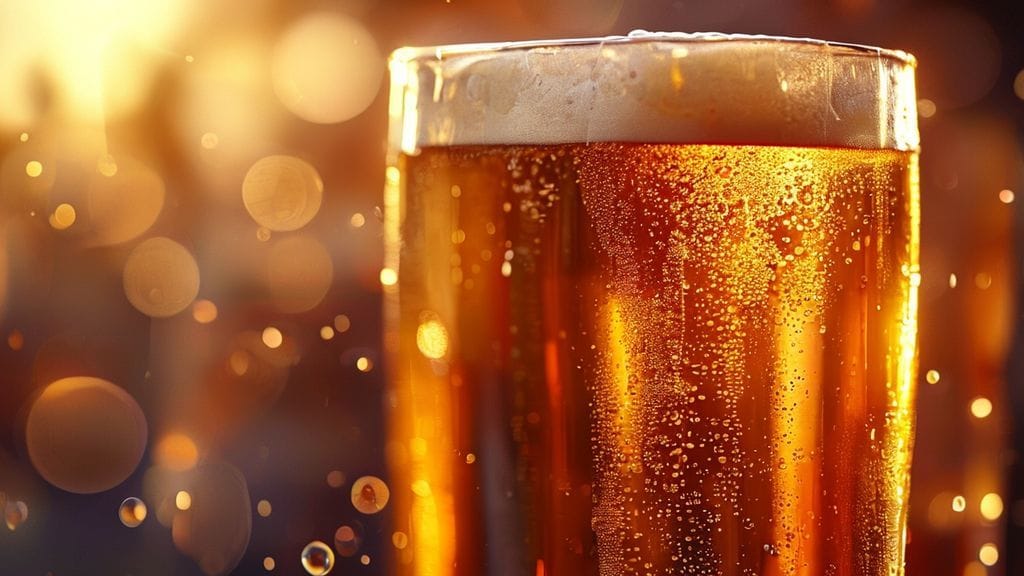
- Appearance: It pours a vibrant, hazy pale gold to light orange, crowned with a dense, persistent white head of fine bubbles. Clarity should not be expected; a soft, inviting haze is part of the style, but it should not be turbid or chunky.
- Aroma: The nose is a complex interplay. I detect bright citrus notes—grapefruit, orange zest, and lemon—from the American hops, often with underlying tropical fruit nuances like passion fruit or mango. These marry beautifully with the classic Belgian spice profile of fresh coriander and a subtle, peppery phenol. A faint bready or wheaty malt sweetness is present, providing a sturdy backdrop. There’s a clean, almost champagne-like effervescence that lifts all these aromatics.
- Mouthfeel: It has a medium-light body, surprisingly smooth and soft on the palate due to the wheat and oats, which counter the assertiveness of the hops. High carbonation (my target of 2.8-3.0 volumes of CO2 is critical here) provides a spritzy, refreshing character that finishes dry, inviting another sip. There should be no astringency or harshness, just a clean, palate-cleansing finish.
- Flavor: The flavour mirrors the aroma, starting with a burst of citrus and tropical hop notes upfront. This transitions into the distinct spice of coriander and a subtle orange peel bitterness, often with a hint of peppery Belgian yeast character. The malt backbone is understated, providing just enough sweetness to prevent the beer from being overly dry or thin. The bitterness is firm but refined, perfectly balancing the hop and spice complexity, lingering just enough to signify its IPA heritage without cloying. The finish is crisp, dry, and immensely refreshing.
Frequently Asked Questions About White IPAs
What’s the difference between a White IPA and a regular Witbier?
A White IPA distinguishes itself primarily through its aggressive hop profile, featuring a much higher IBU and pronounced American hop aromatics (citrus, pine, tropical fruit) compared to a traditional Belgian Witbier. While both share a hazy wheat base and often incorporate coriander and orange peel, the Witbier leans heavily on Belgian yeast esters and spice, with low bitterness, whereas the White IPA showcases modern hop varieties as its dominant character. It’s a hybrid, essentially a Witbier with an IPA-level hop infusion.
Can I use any American IPA hop for a White IPA?
While you can experiment, I find that bright, fruity, and citrus-forward American hop varieties work best. Hops like Citra, Mosaic, Amarillo, Simcoe, and Centennial are excellent choices as they complement the Belgian spice character without clashing. Avoid overly dank, oniony, or garlic-forward hops, as these can create an undesirable sensory experience when combined with the delicate Belgian yeast and spice notes. The goal is synergy, not conflict.
Is it essential to use unmalted wheat, or can I use malted wheat?
For a truly authentic White IPA experience, I strongly recommend using a significant portion of unmalted wheat, typically 30-50% of your grist. Unmalted wheat contributes more protein, which is crucial for achieving the characteristic haze, silky mouthfeel, and stable head retention of the style. While malted wheat can be used, it generally results in a less pronounced haze and a slightly different flavour profile. I always perform a thorough beta-glucan rest at 45-48°C (113-118°F) if my recipe calls for more than 40% unmalted wheat to prevent potential stuck sparges, a valuable tip I picked up through early learning on BrewMyBeer.online.