


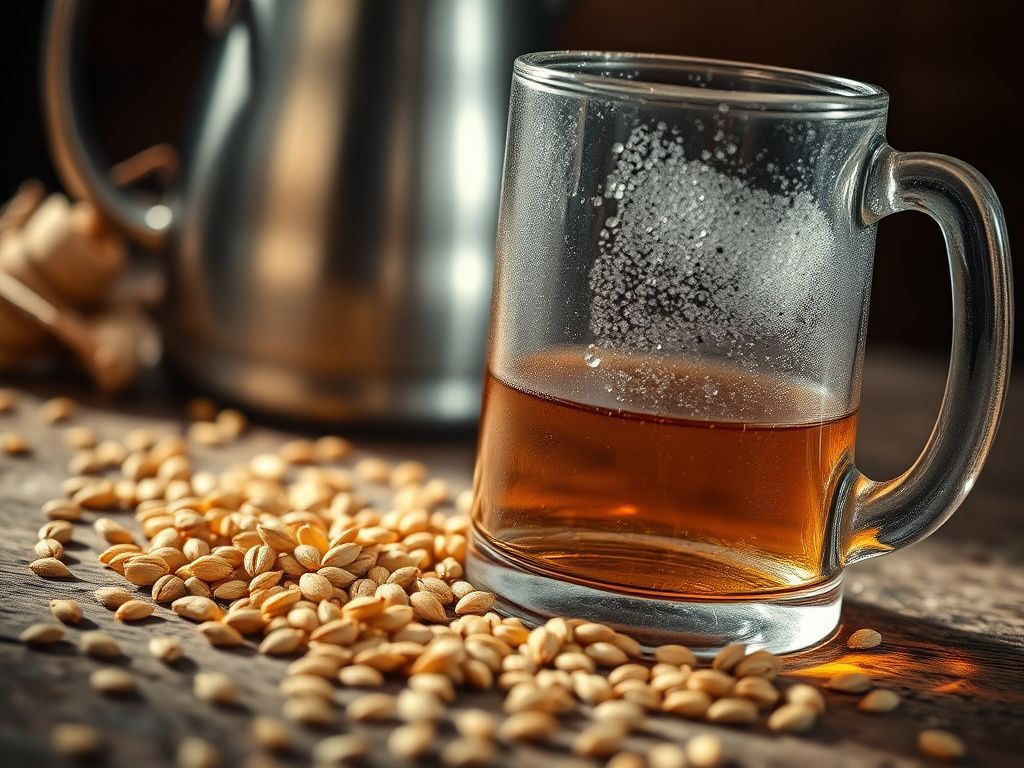
Brew in a Bag (BIAB) simplifies all-grain brewing for beginners. This guide outlines essential techniques for consistent wort production with minimal equipment. Mastering BIAB delivers quality craft beer efficiently, making advanced brewing accessible. Understand the fundamentals to maximize your brewhouse potential, optimizing your brewing journey from BrewMyBeer.online.
Critical Parameters for BIAB All-Grain Production
Understanding and controlling key parameters is paramount for consistent wort quality in Brew in a Bag (BIAB) systems. Deviations from target ranges directly impact enzymatic activity, extraction efficiency, and ultimately, the final beer profile.
| Stage | Critical Parameter | Target Range/Value | Impact of Deviation | Mitigation Strategy |
|---|---|---|---|---|
| Mash In | Strike Water Temp (SWT) | Target Mash Temp + (Grain Temp Diff x 0.2) | Incorrect initial enzyme activation; pH deviation. | Pre-heat kettle; recalibrate thermometer; adjust water volume/temp dynamically. |
| Mash Rest | Mash Temp | 65-69°C (149-156°F) | Low temp: under-conversion, thin body; High temp: dextrinous, sweet body. | Insulate kettle; direct heat application with constant stirring; adjust heat source output. |
| Mash Rest | Mash pH | 5.2-5.6 | Suboptimal enzyme function, poor clarity, harsh flavors, reduced hop utilization. | Adjust water chemistry pre-mash with acid or salts; monitor with calibrated pH meter. |
| Grain Bag Removal | Wort Aeration (Hot Side) | Minimize Aggressive Splashing | Oxidation leading to stale/cardboard off-flavors (trans-2-nonenal). | Lift bag gently; drain slowly; avoid splashing during transfer to boil kettle. |
| Boil | Boil Vigor & Duration | Rolling boil, 60-90 minutes | Insufficient hot break, poor hop utilization, low evaporation, DMS presence. | Maintain strong, consistent boil; adjust heat source; ensure adequate kettle headspace. |
BIAB Core Process Calculations
Precision in BIAB brewing hinges on accurate pre-boil calculations. These formulas provide foundational data for predictable wort production.
1. Strike Water Volume (SWV) Calculation:
The BIAB method often utilizes a full-volume mash, meaning all strike and sparge water are added at mash-in. This simplifies the process but requires precise volume determination.
SWV = (Desired Pre-Boil Volume + Grain Absorption) – Expected Boil-Off
-
Desired Pre-Boil Volume: The volume of wort you aim to have before the boil begins (e.g., 25 Liters).
-
Grain Absorption: Approximately 1.0-1.2 Liters per kilogram of grain. Use 1.1 L/kg as a common estimate.
Example: 5 kg grain * 1.1 L/kg = 5.5 Liters absorbed.
-
Expected Boil-Off: Varies by kettle geometry and heat intensity. Typically 3-5 Liters per hour. Measure your specific boil-off rate by performing a test boil of plain water.
Example: 60-minute boil at 4 L/hr = 4 Liters boil-off.
Calculation Example:
Desired Pre-Boil Volume = 25 L
Grain Absorption (for 5 kg grain) = 5.5 L
Expected Boil-Off (for 60 min) = 4 L
SWV = (25 L + 5.5 L) – 4 L = 26.5 Liters
2. Strike Water Temperature (SWT) Calculation:
This formula accounts for the thermal mass of the grain, ensuring your mash settles at the target temperature after dough-in.
SWT = ( (0.2 * Grain_Weight_kg) * (Target_Mash_Temp – Grain_Temp_C) ) / Water_Volume_L + Target_Mash_Temp
-
0.2: Specific heat of grain (approx. 0.2 kcal/kg/°C or 0.2 BTU/lb/°F).
-
Grain_Weight_kg: Total grain bill weight in kilograms.
-
Target_Mash_Temp: Desired mash temperature in °C.
-
Grain_Temp_C: Ambient temperature of your grain in °C (typically room temperature, e.g., 20°C).
-
Water_Volume_L: Calculated Strike Water Volume in Liters.
Calculation Example:
Grain Weight = 5 kg
Target Mash Temp = 67°C
Grain Temp = 20°C
Water Volume = 26.5 L
SWT = ( (0.2 * 5) * (67 – 20) ) / 26.5 + 67 = (1 * 47) / 26.5 + 67 = 47 / 26.5 + 67 = 1.77 + 67 = 68.77°C
Round up to 68.8°C.
3. Mash Efficiency (ME) Calculation:
Mash efficiency quantifies the percentage of extractable sugars you obtained from your grain bill compared to the theoretical maximum. This is crucial for consistent recipe scaling.
ME (%) = ( (Pre_Boil_Gravity_Points * Pre_Boil_Volume_L) / (Total_Grain_Weight_kg * PPG_Potential_L_kg) ) * 100
-
Pre_Boil_Gravity_Points: The specific gravity reading (e.g., 1.050 is 50 points). Read with a hydrometer/refractometer after mash out and draining but before boil.
-
Pre_Boil_Volume_L: Measured wort volume in Liters before the boil.
-
Total_Grain_Weight_kg: Total grain bill weight in kilograms.
-
PPG_Potential_L_kg: Points per pound per gallon potential for your specific grain bill. For simplicity, use 37 points/lb/gal (or 309 points/kg/L) for typical base malt blends, or calculate a weighted average of your specific grain’s extract potentials (e.g., for Pale Malt, 1.037 is 37 PPG).
Calculation Example:
Pre-Boil Gravity = 1.045 (45 points)
Pre-Boil Volume = 25 Liters
Total Grain Weight = 5 kg
PPG Potential (assuming average) = 309 points/kg/L
ME = ( (45 * 25) / (5 * 309) ) * 100 = (1125 / 1545) * 100 = 0.728 * 100 = 72.8%
4. Water-to-Grain Ratio (W:G):
Expressed in Liters of water per kilogram of grain (L/kg). This impacts mash viscosity and enzyme performance.
W:G = Strike_Water_Volume_L / Total_Grain_Weight_kg
Calculation Example:
Strike Water Volume = 26.5 L
Total Grain Weight = 5 kg
W:G = 26.5 L / 5 kg = 5.3 L/kg
Typical BIAB ratios are often higher, 4-6 L/kg, due to the full-volume mash approach.
The Definitive Master Guide: All-Grain BIAB Fundamentals
The Brew in a Bag (BIAB) methodology has democratized all-grain brewing, transforming a multi-vessel, often complex, process into a single-kettle operation. As a Master Brewmaster, I recognize BIAB not merely as a simplification, but as a robust and highly effective brewing system capable of producing exceptional quality beer with remarkable consistency, provided its core principles are rigorously applied. This guide delves into the technical bedrock of BIAB, offering an unparalleled understanding for both the novice and the seasoned brewer seeking to optimize their BIAB workflow.
1. BIAB: A Technical Overview
BIAB is fundamentally a full-volume mash system utilizing a single vessel. Unlike traditional three-vessel (hot liquor tank, mash tun, boil kettle) systems, BIAB consolidates the mashing and lautering steps within the boil kettle itself. The grain bill, contained within a large mesh bag, is steeped in the entire volume of strike water. After mashing, the bag is simply lifted from the wort, acting as a filter and eliminating the need for a separate lauter tun and sparge arm. This single-vessel approach drastically reduces equipment costs, setup time, and cleanup, making all-grain accessible to brewers with space and budget constraints.
Advantages:
-
Simplicity: Streamlined process reduces complexity and potential points of failure.
-
Cost-Effectiveness: Requires minimal specialized equipment beyond a large kettle, a grain bag, and a heat source.
-
Space Efficiency: Compact footprint ideal for small brewing areas.
-
Reduced Cleanup: Only one primary vessel to clean.
-
Flexibility: Easily accommodates various batch sizes.
Disadvantages and Considerations:
-
Thermal Stability: A large volume of liquid in a single, often thin-walled, kettle can lead to greater temperature fluctuations during the mash. Insulation is critical.
-
Mash Efficiency: While often comparable to traditional systems, BIAB can sometimes exhibit slightly lower average efficiencies due to the lack of a proper grain bed for filtering and rinsing. However, with proper technique (e.g., finer crush, squeezing), efficiencies exceeding 75-80% are readily achievable.
-
Kettle Size: Requires a kettle large enough to accommodate the full strike water volume plus the grain bill without overflowing.
2. Essential Equipment for Precision BIAB
While minimal, the right equipment enhances control and consistency.
-
Brew Kettle: A minimum of 38-40 Liters (10-10.5 gallons) for a 19-20 Liter (5-gallon) finished batch is recommended to account for grain displacement and boil-off. Stainless steel is preferred for durability and ease of cleaning.
-
Grain Bag: Crucial. Opt for a durable, food-grade polyester or nylon bag with a fine mesh (e.g., 200-400 micron). It must be large enough to line the kettle and accommodate the entire grain bill without tearing when wet. Handles are a significant advantage for lifting.
-
Heat Source: High-output propane burner (for outdoor use), induction cooker, or an integrated electric heating element (e.g., eBIAB systems) provides the necessary power for heating strike water and maintaining a vigorous boil. Precision electric systems allow for automated mash temperature control.
-
Thermometer: A reliable, calibrated digital thermometer is non-negotiable for accurate mash temperature control. Probe thermometers are ideal.
-
Hydrometer and Test Jar/Refractometer: Essential for measuring specific gravity (SG) to track fermentation progress and determine Original Gravity (OG) and Final Gravity (FG). Refractometers are convenient for pre-boil readings but require temperature correction and a wort correction factor.
-
Stirring Paddle: Long-handled, food-grade plastic or stainless steel for thorough dough-in and temperature distribution.
-
Fermentation Vessel: Food-grade plastic bucket or glass carboy, adequately sized (e.g., 23-25 L for a 19 L batch) to prevent blow-off.
-
Chilling Solution: An immersion chiller (copper or stainless steel) is highly recommended for rapid wort cooling post-boil, minimizing hot-side aeration and preventing DMS formation.
-
pH Meter: For advanced brewers, a calibrated pH meter is invaluable for precise mash pH adjustments, significantly impacting enzyme activity, clarity, and flavor stability. A range of 5.2-5.6 pH at mash temperature is typically optimal.
3. Recipe Formulation for BIAB
Designing a recipe for BIAB follows standard all-grain principles, with specific considerations for efficiency and volume.
-
Malt Selection: Standard base malts (2-row, Pale Ale, Pilsner), specialty malts (caramel, roasted), and adjuncts are all compatible. Account for differing extract potentials of each grain.
-
Hop Scheduling: Determine bittering, flavor, and aroma additions based on target IBU and desired hop character. Longer boil times for bittering hops, shorter for flavor, whirlpool/dry hopping for aroma. Boil vigor and hop utilization are critical factors.
-
Yeast Selection: Choose a yeast strain appropriate for the beer style, considering its attenuation, flocculation, temperature tolerance, and ester/phenol production. Healthy yeast pitch rates are paramount for proper fermentation. More information on yeast health and selection can be found at homebrewersassociation.org.
-
Water Chemistry: Often overlooked, water chemistry is foundational. Adjusting pH, mineral content (calcium, sulfate, chloride), and alkalinity influences mash efficiency, hop perception, and overall beer character. Target a mash pH of 5.2-5.6 at mash temperature. Understanding source water profiles and making calculated additions of brewing salts (e.g., gypsum, calcium chloride) or acids (e.g., lactic acid, phosphoric acid) is critical. Consult resources like the Brewer’s Association for detailed guides on water treatment strategies: brewersassociation.org.
-
Target OG, FG, SRM, IBU: Define these parameters precisely. Account for typical BIAB efficiencies (often 65-75%, but can be optimized higher) when calculating your grain bill to hit target OG.
4. The BIAB Process: Step-by-Step Execution
4.1 Pre-Brew Day Preparations
-
Cleaning and Sanitization: All equipment coming into contact with wort post-boil must be meticulously cleaned and sanitized. This is the single most critical step to prevent infection and off-flavors.
-
Malt Milling: A finer crush is generally recommended for BIAB compared to traditional three-vessel systems. The absence of a conventional false bottom and grain bed means a finer grind improves extraction efficiency without significantly increasing the risk of a stuck sparge. However, avoid flouring the grain completely. Aim for a slightly finer crush than typical roller mill settings. Further details on crush optimization can be found at homebrewersassociation.org.
-
Water Treatment: Measure and adjust your brewing water based on your target profile and mash pH calculations.
4.2 Mash In
-
Water Volume: Fill your kettle with the calculated strike water volume. It’s crucial to have sufficient headroom for the grain. Consider using a false bottom or trivet under the bag if using direct heat to prevent scorching.
-
Strike Water Temperature: Heat your water to the calculated strike water temperature (SWT). Once at temperature, turn off the heat source to prevent scorching the bag or grain.
-
Dough-In: Slowly add the milled grain directly into the grain bag, stirring continuously to prevent dough balls and ensure even hydration. A thorough dough-in is essential for enzymatic activity and full starch conversion. Verify the mash temperature after all grain is added and well-mixed. Adjust if necessary with small additions of hot or cold water.
4.3 Mash Rest
-
Maintaining Temperature: The mash temperature must be held within the optimal range (typically 65-69°C / 149-156°F) for the duration of the mash rest, usually 60-90 minutes. Insulate your kettle with a reflectix jacket, blankets, or towels. If using an electric system, the controller will maintain temperature. For direct-fired systems, periodic gentle heat application with stirring may be needed, taking extreme care not to scorch the bag.
-
Enzymatic Activity: At these temperatures, enzymes (primarily alpha-amylase and beta-amylase) convert complex starches into fermentable and unfermentable sugars. Beta-amylase is more active at lower temperatures (60-65°C / 140-149°F), producing highly fermentable sugars (maltose). Alpha-amylase is more active at higher temperatures (68-72°C / 154-162°F), producing more unfermentable dextrins, contributing body and mouthfeel. The chosen mash temperature dictates the fermentability and body of the final beer. The biochemistry of mashing and enzyme function is a complex field critical for understanding extract efficiency and fermentability.
-
Mash pH: Monitor and adjust mash pH if you have a calibrated pH meter. Optimal pH (5.2-5.6 at mash temperature) is crucial for enzyme efficiency, preventing astringency, and enhancing clarity. Water profile adjustments on brew day are primarily aimed at achieving this target.
4.4 Mash Out (Optional but Recommended)
-
Raising Temperature: Slowly raise the mash temperature to 75-77°C (168-170°F) for 10-15 minutes. This rapidly deactivates the mash enzymes, locking in your sugar profile. It also reduces the viscosity of the wort, facilitating better drainage from the grain bag.
4.5 Grain Bag Removal (The “Sparge”)
-
Lifting Technique: Carefully lift the grain bag out of the kettle. If using a hoist or pulley system, secure the bag above the kettle to allow it to drain. For manual lifting, ensure you have sufficient strength and a clear draining point (e.g., a large colander or another sanitized bucket). Allow the bag to drain thoroughly for 10-15 minutes.
-
Draining vs. Squeezing: Gently squeezing the grain bag can significantly increase mash efficiency by extracting more sugars. While some old wives’ tales suggest squeezing causes astringency, this is largely disproven. Astringency comes from high mash pH (above 6.0) or excessive sparging with water above 77°C (170°F), extracting tannins from the husks. Squeezing a mash within the proper pH range is generally safe and highly effective.
-
Minimizing Aeration: At this stage, the wort is hot and highly susceptible to oxidation. Avoid aggressive splashing or aeration of the hot wort during transfer or draining, as this can lead to the formation of stale/cardboard-like off-flavors (trans-2-nonenal) in the final beer.
4.6 The Boil
-
Full Volume Boil: Bring the entire volume of wort to a vigorous, rolling boil. Ensure adequate headspace in your kettle to prevent boil-overs, especially during the hot break (proteins coagulating and rising to the surface).
-
Boil Additions: Add hops according to your schedule. Bittering hops are added early (60-90 minutes), flavor hops later (15-30 minutes), and aroma hops/whirlpool additions at flameout or during cooling.
-
Boil Duration: A standard boil is 60 minutes, though some recipes call for 90 minutes. The boil sterilizes the wort, isomerizes hop alpha acids (for bitterness), coagulates proteins (hot break), drives off undesirable volatile compounds (e.g., DMS precursors), and concentrates the wort. Ensure proper ventilation to remove DMS precursors.
-
Pre-Boil Gravity & Post-Boil Gravity: Take a pre-boil gravity reading to calculate mash efficiency and confirm you are on track for your target OG. After the boil, cool a sample and take a post-boil gravity reading (OG).
-
Cooling: Rapidly cool the wort to pitching temperature (typically 18-22°C / 65-72°F for most ale yeasts). An immersion chiller is ideal. Rapid cooling helps create a good “cold break” (further protein coagulation) for clearer beer and minimizes the risk of infection. Do not skimp on cooling.
4.7 Fermentation Preparation
-
Transferring Wort: Carefully transfer the cooled wort to your sanitized fermentation vessel. Again, minimize splashing to avoid hot-side aeration.
-
Pitching Yeast: Pitch healthy, appropriately-sized yeast. If using dry yeast, rehydrate it per manufacturer instructions. If using liquid yeast, ensure it’s fresh or has been stepped up via a starter. Proper yeast pitching rates are vital for a clean, efficient fermentation.
-
Oxygenation: Aerate the wort thoroughly before pitching yeast. Yeast requires oxygen for healthy cell reproduction in the initial growth phase. This can be achieved by shaking the fermenter vigorously, using an aeration stone with pure oxygen, or splashing the wort from a height into the fermenter (being careful not to introduce too much air post-pitch). For more detailed information, BrewMyBeer.online provides extensive resources on proper yeast management.
5. Optimizing BIAB Efficiency
While BIAB is inherently efficient, several techniques can push extraction rates higher:
-
Finer Crush: As mentioned, a finer crush exposes more starch to enzymatic action. Experiment with your mill gap, targeting a crush that’s finer than traditional but still avoids a flour-like consistency.
-
Mash Duration: Extending the mash to 90 minutes can sometimes yield a few extra percentage points of efficiency, especially with difficult-to-convert grains.
-
Temperature Control: Maintaining a consistent mash temperature within the target range is paramount. Any significant drops will hinder enzyme activity.
-
Squeezing the Bag: Properly executed squeezing of the grain bag is a proven method to extract more wort and increase efficiency. Ensure your mash pH is within the optimal range (5.2-5.6) before squeezing to avoid tannin extraction.
-
Recirculation (eBIAB): Electric BIAB systems often incorporate a pump for continuous recirculation of the wort through the grain bed during the mash. This ensures even temperature distribution and maximizes extraction efficiency by constantly exposing the enzymes to fresh substrate.
6. Troubleshooting Common BIAB Issues
-
Low Efficiency: Re-evaluate your crush (is it fine enough?), mash temperature (is it consistent?), and mash duration. Consider implementing squeezing the bag, if you aren’t already. Check your calculated water volumes and actual pre-boil volumes.
-
Off-Flavors: Most off-flavors stem from poor sanitation, improper fermentation temperature control, or oxidation. Review your cleaning and sanitization protocols rigorously. Ensure you’re pitching healthy yeast at the correct temperature and providing adequate oxygen. Minimize hot-side aeration.
-
Temperature Fluctuations: Improve kettle insulation. For direct-fired systems, stir constantly while applying heat. For electric systems, ensure your controller is properly calibrated and the element is not undersized.
7. Advanced BIAB Techniques
-
Step Mashing: While more challenging with a single-vessel system, step mashing (raising the mash temperature through several protein rest, beta-amylase, and alpha-amylase stages) is achievable with careful heat application and stirring, or with an eBIAB system’s programmable controller. This technique allows for greater control over fermentability and head retention for certain beer styles.
-
No-Sparge BIAB vs. Pseudo-Sparge: True no-sparge BIAB involves using the entire pre-boil volume as strike water and simply lifting the bag. A “pseudo-sparge” or “dunk sparge” involves having a small separate volume of hot water (e.g., 2-3 Liters) in which the grain bag is briefly steeped after initial draining. This can provide a small bump in efficiency without the full commitment of a traditional sparge.
Conclusion
BIAB is not merely a “beginner” method; it is a highly capable and efficient all-grain brewing system. By understanding and meticulously applying the technical principles outlined in this guide, any brewer can achieve consistent, high-quality wort production. Precision in water chemistry, temperature control, and process execution are the hallmarks of successful BIAB brewing. Embrace continuous learning and iterative process improvement. Your journey to mastery in all-grain brewing begins with these foundational techniques, and BrewMyBeer.online is here to support your continued advancement.