

Mastering all-grain BIAB (Brew in a Bag) demystifies complex brewing, offering a streamlined, cost-effective path to quality craft beer. This guide covers essential equipment, precise ingredient selection, and a detailed step-by-step process from strike water to fermentation, ensuring technical proficiency for beginners. Optimize efficiency and consistency with this robust methodology.
BIAB Process Flow: Critical Parameters
| Process Step | Key Technical Parameter | Target Range/Value | Rationale for Control | Critical Adjustment/Observation |
|---|---|---|---|---|
| Water Treatment & pH | Mash pH | 5.2 – 5.5 (at mash temp) | Optimizes enzyme activity for starch conversion; impacts hop utilization and flavor stability. | Adjust with lactic acid, phosphoric acid, or calcium carbonate based on grain bill and source water profile. Measure with calibrated pH meter. |
| Strike Water Calculation | Strike Water Temperature | Calculated (e.g., 160-170°F for a 152°F mash) | Ensures precise mash-in temperature, crucial for enzyme function and starch conversion efficiency. | Use brewing software for calculation; verify with accurate thermometer upon grain addition. Account for kettle heat loss. |
| Mashing | Mash Temperature | 148-158°F (64-70°C) | Controls alpha/beta amylase activity ratio, dictating fermentability and final body/mouthfeel. | Maintain stable temperature. Insulate kettle. Apply direct heat sparingly if dropping. Stir periodically to equalize. |
| Bag Drainage & Squeeze | Pre-Boil Gravity (P.B.G.) | Targeted SG based on recipe and expected efficiency | Indicates mash efficiency and potential for achieving target Original Gravity (O.G.). | Allow complete drainage. Gentle squeeze can recover absorbed wort, but aggressive squeezing may extract tannins. Adjust with water or DME if off-target. |
| Boiling & Hop Additions | Boil Vigor & Time | Rolling boil, 60-90 minutes | Sterilization, isomerizes hop alpha acids for bitterness, coagulates proteins (hot break), volatilizes undesirable compounds (DMS). | Ensure robust, consistent boil. Add hops precisely per schedule. Monitor boil-off rate and adjust heat if necessary to hit final volume. |
| Chilling & Aeration | Wort Knockout Temperature | Optimal pitching temp (e.g., 60-68°F / 15-20°C for ales) | Prevents off-flavors (DMS, fusel alcohols), minimizes infection risk, ensures healthy yeast propagation. | Chill rapidly using immersion chiller or ice bath. Aerate wort thoroughly (shaking, O2 stone) before pitching yeast. |
Gravimetric Calculations & Thermal Dynamics
1. Strike Water Temperature (TS) Calculation:
Accurate strike water temperature is paramount for hitting your target mash temperature (TM). This calculation accounts for the thermal mass of the grains.
TS = (0.2 * (TM – TG) / R) + TM
Where:
- TS = Strike Water Temperature (°F)
- TM = Target Mash Temperature (°F)
- TG = Grain Temperature (typically ambient, ~70°F)
- R = Mash Thickness Ratio (e.g., 1.25 for 1.25 quarts/lb, or 2.5 L/kg)
- 0.2 = Specific heat of grain relative to water (approx. 0.2 BTU/lb/°F)
Example: Target mash 152°F, 10 lbs grain at 70°F, 1.25 qt/lb mash thickness.
TS = (0.2 * (152 – 70) / 1.25) + 152
TS = (0.2 * 82 / 1.25) + 152
TS = (16.4 / 1.25) + 152
TS = 13.12 + 152 = 165.12°F
2. Pre-Boil Gravity (P.B.G.) & Volume Adjustment:
If your pre-boil gravity (SGPB) is lower than targeted for your pre-boil volume (VPB), you can calculate the required boil-down volume or addition of extract.
Target Original Gravity (OG) = (SGPB – 1) * VPB / VBatch + 1
To hit a specific OG (SGTarget) for a given batch volume (VBatch) from an observed pre-boil SG (SGObserved) and pre-boil volume (VObserved):
Required Boil Down Volume = VObserved – ((SGObserved – 1) * VObserved / (SGTarget – 1))
Example: Observed P.B.G. = 1.040, Observed P.B. Volume = 6.5 Gallons. Target OG = 1.050 for a 5 Gallon Batch.
First, calculate current extract contribution: (1.040 – 1) * 6.5 = 0.040 * 6.5 = 0.260 gravity points per gallon.
Target gravity points for 5 Gallons: (1.050 – 1) * 5 = 0.050 * 5 = 0.250 gravity points per gallon.
In this scenario, you have more gravity points than needed for the target OG and batch volume. This means you would need to boil down to a volume where 0.260 gravity points gives 1.050. This is unusual. Let’s assume you’re undershooting and need to know the *final volume* if you boiled down to *reach* 1.050:
To achieve a higher gravity without extract, you need to reduce volume.
Target P.B.G. if boiling to 5 Gallons (assuming no boil-off during mash and pre-boil): (1.050 – 1) * 5 / VPB + 1 = Target P.B.G. at your measured VPB.
Let’s simplify for common use: If current Pre-Boil Gravity is 1.040 for 6.5 gallons, but you need 1.050 for 5 gallons (after boil).
Current Total Gravity Points = (SGObserved – 1) * VObserved * 1000 = (1.040 – 1) * 6.5 * 1000 = 0.040 * 6.5 * 1000 = 260 gravity points.
If you boil down to a volume Vfinal, and want an OG of 1.050:
260 = (1.050 – 1) * Vfinal * 1000
260 = 0.050 * Vfinal * 1000
260 = 50 * Vfinal
Vfinal = 260 / 50 = 5.2 Gallons. You would boil down to 5.2 gallons to hit an OG of 1.050.
The Definitive Master-Guide: All-Grain BIAB for the Aspiring Brewmaster
1. Introduction to Brew in a Bag (BIAB) Methodology
The Brew in a Bag (BIAB) methodology represents a paradigm shift in all-grain brewing, significantly reducing the equipment barrier and process complexity typically associated with multi-vessel systems. Developed in Australia, BIAB simplifies the mash, lautering, and sparge stages into a single vessel, making it an ideal entry point for homebrewers transitioning from extract or seeking a more streamlined all-grain process. This technique employs a fine-mesh bag to contain the crushed grain during the mash, effectively filtering the wort upon removal. The primary advantages include reduced capital expenditure, minimal space requirements, quicker cleanup, and a consolidated workflow. While traditionally associated with lower mash efficiencies compared to 3-vessel RIMS/HERMS systems, modern BIAB techniques, including finer grain crushes and careful temperature management, can yield highly competitive results. The intrinsic simplicity allows the brewer to focus on critical variables: water chemistry, temperature control, and yeast health, which are universally crucial for quality beer production.
2. Essential Equipment for BIAB Operation
Successful BIAB execution hinges on acquiring specific, yet minimal, equipment:
-
Brew Kettle: A large-capacity kettle is non-negotiable. It must accommodate the full strike water volume plus the grain bill, allowing for headspace to prevent boil-overs. For a standard 5-gallon batch, a 10-15 gallon (38-57 liter) kettle is recommended to ensure adequate volume for full volume mashing and boiling without excessive foaming. Stainless steel construction is preferred for durability and ease of sanitation.
-
Grain Bag: This is the heart of the BIAB system. The bag must be food-grade, heat-resistant, and robust enough to support the weight of wet grains without tearing. Polyester or nylon bags with a fine mesh (typically 200-400 micron) are common. Size is critical; it must fit securely over the kettle rim, allowing for full submersion of the grain bill. A drawstring closure is beneficial for securing the bag during the mash. Source from reputable brewing suppliers.
-
Heat Source: A high-output heat source is required to bring large volumes of water to strike temperature and maintain a vigorous boil. Propane burners (e.g., Bayou Classic KAB4) are popular for their power, especially for larger batches. Electric induction cooktops or dedicated electric brewing systems (e.g., Anvil Foundry, Grainfather) offer precise temperature control and indoor brewing capabilities.
-
Thermometer: Accurate temperature measurement is non-negotiable for mashing. A calibrated digital thermometer with a probe is highly recommended. Periodic stirring and multiple readings ensure uniform mash temperature.
-
Hydrometer and/or Refractometer: Essential tools for measuring specific gravity at various stages (pre-boil, post-boil, before and after fermentation). A refractometer is particularly convenient for pre-boil measurements due to its small sample requirement, but requires temperature correction and may not be accurate post-fermentation due to alcohol content. A hydrometer provides definitive readings for Original Gravity (OG) and Final Gravity (FG).
-
Sanitation Equipment: A rigorous sanitation regimen is paramount. This includes appropriate cleaning agents (e.g., PBW, OxiClean Free) to remove organic matter, and sanitizers (e.g., Star San, Iodophor) to eliminate microbial contaminants. Invest in spray bottles, carboy brushes, and specialized cleaning tools. The importance of sanitation cannot be overstated; it is the single most critical factor in preventing off-flavors and spoilage.
-
Fermentation Vessel: Carboys (glass or plastic), buckets, or stainless steel fermenters are suitable. Ensure the vessel is clean, sanitized, and has an airlock to allow CO2 escape while preventing oxygen ingress.
-
Optional but Recommended: Grain mill (for optimal crush), stir spoon/paddle, wort chiller (immersion or plate type for rapid cooling), dedicated grain scale, water testing kit or municipal water report.
3. Ingredient Selection and Preparation
The quality and precision of your ingredients directly dictate the final beer profile.
-
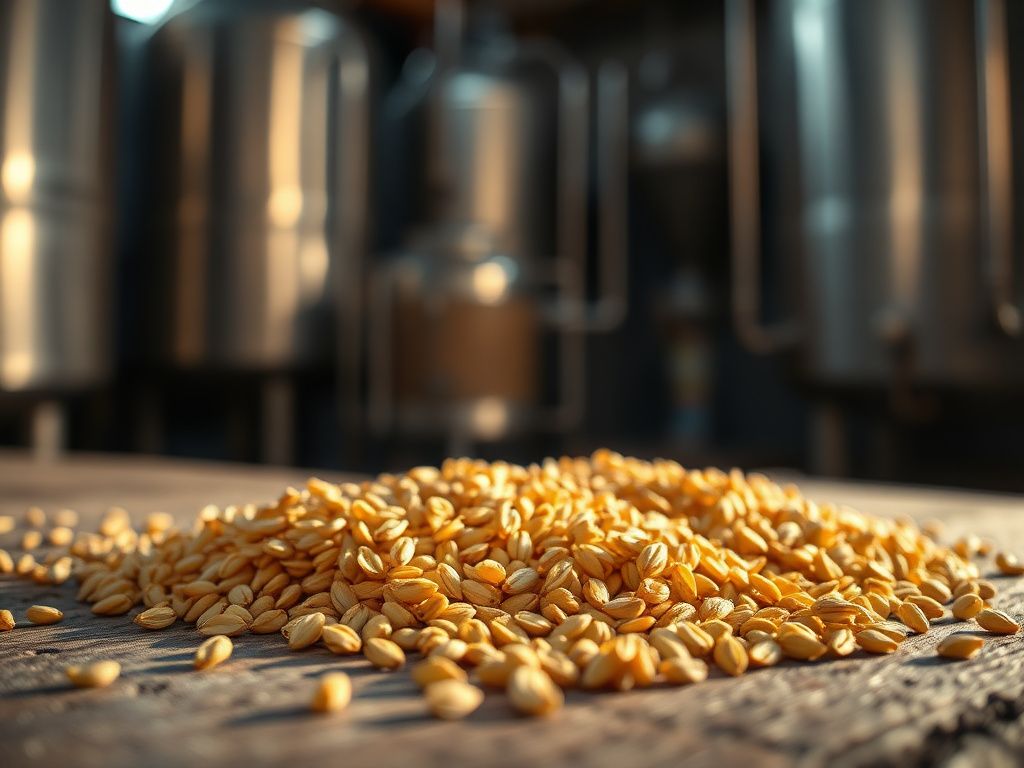
Grains: Select high-quality malted barley, wheat, oats, or other adjuncts as specified by your recipe. For BIAB, a finer crush than traditional 3-vessel mashing is often beneficial for maximizing efficiency, as the bag acts as the filter bed, mitigating stuck sparges. However, excessively fine crushing can increase tannin extraction. Aim for a crush that just breaks the kernel without pulverizing the husk. Base malts (e.g., 2-row, Maris Otter) provide the bulk of fermentable sugars. Specialty malts contribute color, flavor, aroma, and body.
-
Hops: Hops provide bitterness, flavor, and aroma. Understand alpha acid (AA) content, which dictates bitterness. Bittering hops (high AA) are added early in the boil. Flavor hops (medium AA) are added mid-boil. Aroma hops (low AA, high essential oils) are added late in the boil or during whirlpool/dry hopping. Pelletized hops are more common and stable than whole cone. Store hops cold and vacuum-sealed.
-
Yeast: Yeast is responsible for fermentation, converting sugars into alcohol and CO2, and contributing significant flavor/aroma compounds. Choose a strain appropriate for your beer style (ale yeast vs. lager yeast). Dry yeast is convenient, stable, and often has higher cell counts than liquid yeast. If using liquid yeast, consider making a starter to ensure adequate cell density for healthy fermentation. Proper yeast rehydration and pitching protocols are critical for avoiding fermentation issues and off-flavors.
-
Water: Water is over 90% of your beer. Understand your source water profile. Municipal water reports are a good starting point, or consider reverse osmosis (RO) water as a blank slate. Adjustments with brewing salts (e.g., gypsum, calcium chloride, Epsom salt, chalk) and acids (lactic, phosphoric) are often necessary to optimize mash pH and enhance specific beer characteristics. Water chemistry tailored to style profoundly impacts enzyme activity, hop utilization, and overall flavor.
4. The BIAB Brewing Process: Step-by-Step Execution
Follow these steps rigorously for optimal results:
4.1. Recipe Formulation and Water Preparation
Select a proven BIAB recipe or formulate your own using brewing software. Calculate grain bill, hop additions, and yeast pitching rates. Determine required water volume for mashing and account for boil-off and trub loss to hit your target final batch volume. If adjusting water chemistry, add salts and acids to your strike water volume. Heat your strike water to the calculated temperature (TS) discussed in the Math Box, ensuring a few degrees higher to account for heat loss during transfer and grain addition.
4.2. Dough-In and Mashing
Once strike water reaches TS, place your grain bag securely into the kettle, ensuring it covers the entire inside surface and is fastened to the rim. Slowly pour the crushed grains into the water, stirring constantly to prevent dough balls and ensure even hydration. Measure mash pH immediately after dough-in and adjust if necessary. Cover the kettle to retain heat. Maintain the target mash temperature (TM) for the duration specified by your recipe (typically 60-90 minutes). For BIAB, insulation (e.g., sleeping bag, moving blanket) is vital. If temperature drops, apply very gentle, intermittent heat while stirring to avoid scorching the bag or grains, then re-cover. A single infusion mash at 148-158°F (64-70°C) is standard for most ales, influencing fermentability.
4.3. Bag Removal and Wort Collection
After the mash, carefully lift the grain bag out of the kettle. Allow it to drain naturally for several minutes. You can rest the bag on a sturdy rack over the kettle or a separate sanitized bucket to continue draining. Some brewers advocate for a gentle squeeze of the bag to extract more wort and improve efficiency, while others caution against this, citing potential tannin extraction. For a beginner, a moderate squeeze, avoiding aggressive wringing, is generally acceptable. The goal is to collect as much wort as possible prior to the boil. Measure your pre-boil volume and pre-boil gravity (P.B.G.). If the P.B.G. is significantly off target, you can adjust with an addition of water (if too high) or dry malt extract (if too low) to bring it closer to your recipe’s specifications for your next brew.
4.4. The Boil
Bring the wort to a vigorous, rolling boil. This is crucial for sterilization, isomerizing hop alpha acids for bitterness, coagulating proteins (hot break), and volatilizing undesirable compounds like Dimethyl Sulfide (DMS). The boil typically lasts 60-90 minutes. Skim off any hot break material that forms during the first 15-20 minutes of the boil. Follow your hop schedule precisely: bittering hops early, flavor hops mid-boil, aroma hops late-boil. Consider adding Irish Moss or Whirlfloc tablets 10-15 minutes before the end of the boil for improved clarity. Monitor your boil-off rate; adjust heat to maintain a consistent boil and hit your post-boil volume targets.
4.5. Chilling and Yeast Pitching
Rapidly cool the wort to yeast pitching temperature (typically 60-68°F / 15-20°C for most ales). This is critical for preventing the formation of DMS, minimizing the risk of infection, and ensuring a clean fermentation. Immersion chillers are highly efficient for BIAB. Once chilled, transfer the wort to a sanitized fermenter. Aerate the wort thoroughly (e.g., shaking the fermenter vigorously, using an oxygenation stone) to provide yeast with essential oxygen for healthy cell reproduction. Finally, pitch your yeast according to manufacturer instructions and your recipe. Ensure the yeast is at a similar temperature to the wort to prevent thermal shock. Secure the fermenter with an airlock.
4.6. Fermentation and Packaging
Place the fermenter in an area where the temperature can be maintained within the yeast strain’s optimal range. Maintain stable fermentation temperatures. Primary fermentation typically lasts 1-3 weeks. Monitor activity via airlock bubbles and take gravity readings. Once fermentation is complete and gravity has stabilized (no change over 2-3 days), the beer is ready for packaging. For bottling, calculate the appropriate amount of priming sugar to achieve desired carbonation levels for your specific style. For kegging, force carbonate to your target volumes. Ensure all packaging equipment is impeccably sanitized.
5. Troubleshooting Common BIAB Issues
-
Low Efficiency: This is the most common BIAB concern. Solutions include a finer grain crush, maintaining precise mash temperature, extending mash time slightly, or performing a “dunk sparge” (rinsing the grain bag in a separate pot of hot water before the boil). Ensure accurate brewing calculations for your system.
-
Stuck Mash/Drainage: Less common with BIAB due to the bag acting as a filter. If drainage is slow, ensure the grain isn’t compacted too tightly. A slightly coarser crush might be needed if this persists.
-
Off-Flavors: Often linked to poor sanitation, improper fermentation temperature control, or inadequate yeast pitching rates. Review your sanitation protocols, invest in a fermentation temperature controller, and ensure you’re pitching healthy, adequate amounts of yeast.
-
Bag Tearing: Use a high-quality, durable grain bag. Avoid sharp edges in your kettle. Lift the bag slowly and carefully, allowing some drainage before attempting to move the full weight.
6. Advanced BIAB Techniques and Considerations
Once proficient, consider these enhancements:
-
Double Crushing: Running grains through your mill twice at a tighter gap setting can significantly boost mash efficiency without the risk of a stuck sparge common in traditional systems. This is particularly effective in BIAB due to the bag acting as the filter.
-
Mash Recirculation (eBIAB): For electric BIAB systems, recirculating wort during the mash can improve clarity and efficiency by continuously filtering the wort through the grain bed. This often requires a small pump and a manifold.
-
No-Sparge vs. Dunk Sparge: The core BIAB method is a full-volume no-sparge mash. However, a “dunk sparge” (submerging the grain bag into a smaller volume of hot water after the main mash) can extract additional sugars, mimicking a rudimentary sparge. This requires an additional vessel but can slightly increase efficiency.
-
High-Gravity Brewing: For beers with Original Gravities above 1.070, BIAB can still be effective, but attention to mash thickness (avoiding overly thick mashes), yeast health (larger starters), and boil vigor is essential. Consider using adjuncts like corn sugar to boost gravity without overloading the mash tun.
-
Specific Gravity and Temperature Correction: Always correct hydrometer readings for temperature. Hydrometers are calibrated for a specific temperature (usually 60°F or 20°C). Use a BJCP calculator for accurate adjustments to ensure your gravity readings are precise.
7. The Absolute Imperative: Sanitation Protocol
No amount of technical expertise, quality ingredients, or advanced equipment can overcome poor sanitation. Infection is the primary cause of off-flavors and ruined batches. Understand the difference: Cleaning removes visible organic matter; Sanitizing kills microorganisms. All equipment that comes into contact with chilled wort or beer must be scrupulously cleaned, then sanitized immediately before use. This includes fermenters, airlocks, siphons, thermometers, hydrometers, and packaging equipment. Follow manufacturer instructions for concentration and contact time for all cleaning and sanitizing agents. Never cut corners here.
8. Meticulous Record Keeping
Every professional brewer maintains detailed records, and so should you. Document every aspect of your brew day: recipe specifics, grain crush, water treatment, strike water temperature, actual mash temperature profile, mash pH, pre-boil gravity and volume, hop additions and timings, boil-off rate, post-boil gravity and volume, chilling time, pitching temperature, yeast strain, fermentation temperature, and final gravity. These records are invaluable for troubleshooting, replicating successful batches, and continuously improving your process and recipes. They allow for systematic analysis and refinement of your brewing practices, transforming anecdotal observations into actionable data.
9. Conclusion: The BIAB Foundation for Brewing Mastery
The BIAB method provides an accessible yet robust foundation for all-grain brewing. Its inherent simplicity allows beginners to quickly grasp the fundamentals of mashing, boiling, and fermentation, while still yielding high-quality results. By diligently controlling critical parameters—water chemistry, temperature, and sanitation—and embracing a continuous learning mindset, the aspiring brewmaster can produce exceptional beers and confidently advance their technical brewing skills. BIAB is not merely a shortcut; it is a legitimate and highly effective brewing technique capable of producing award-winning beer when executed with precision and care. Master these principles, and unlock your full brewing potential.