

Mastering all-grain BIAB revolutionizes homebrewing by simplifying the mash, lautering, and sparge into a single vessel. This guide outlines the essential techniques, equipment, and critical process parameters for consistent, high-quality beer. Achieve full mash efficiency and unlock complex flavor profiles with this accessible all-grain method.
BIAB Process Parameters: Critical Technical Overview
Understanding the interplay of these parameters is crucial for consistent all-grain BIAB results. Deviations impact efficiency, fermentability, and final beer character.
| Process Step | Key Parameter | Target Range | Critical Observation | Impact on Beer |
|---|---|---|---|---|
| Grain Milling | Particle Size | Fine Crush (0.5-0.7 mm avg) | Uniformity, minimal whole kernels | Mash efficiency, potential for astringency if excessively fine or squeezed |
| Water Treatment | Mash pH (at mash temp) | 5.2 – 5.6 | Measured with calibrated pH meter or strips | Enzyme activity, color extraction, hop utilization, flavor stability |
| Mash Temperature | Amylase Activity | 65-69°C (149-156°F) | Constant temperature maintenance during rest | Fermentability (body vs. dry), enzyme denaturation kinetics |
| Bag Lift & Drain | Squeeze Pressure/Duration | Gentle/brief | Avoid excessive turbidity; observe runoff clarity | Tannin extraction, wort clarity, final beer astringency |
| Boil Volume Control | Pre-Boil Gravity (P.B.G) | Calculated based on target O.G. & boil-off rate | Refractometer/hydrometer reading before boil initiation | Achieving target Original Gravity (O.G.), final beer ABV |
BIAB Core Calculations: Precision Brewing Formulas
Strike Water Temperature (Tstrike)
Accurate strike water temperature is paramount for hitting your target mash temperature (Tmash). This formula accounts for grain temperature (Tgrain) and the thermal mass of the grains.
Tstrike = (0.2 / (Water:Grain Ratio * Specific Heat of Grain)) * (Tmash – Tgrain) + Tmash
Where:
- Water:Grain Ratio is typically 1.25 to 1.5 quarts/lb or 2.6 to 3.1 L/kg for BIAB full volume mashing.
- Specific Heat of Grain is approximately 0.12 cal/g/°C or 0.12 BTU/lb/°F.
- 0.2 is a constant for unit conversion/system efficiency factor.
Example: Target Tmash = 67°C, Tgrain = 20°C, Water:Grain Ratio = 2.8 L/kg. Specific Heat of Grain ≈ 0.12.
Tstrike = (0.2 / (2.8 * 0.12)) * (67 – 20) + 67
Tstrike = (0.2 / 0.336) * 47 + 67
Tstrike = 0.595 * 47 + 67
Tstrike = 27.97 + 67 = 94.97°C ≈ 95°C
Mash Water Volume (Vmash)
Determining the correct initial mash volume ensures full grain hydration and appropriate wort concentration for BIAB.
Vmash = (Gweight * Gabsorption) + (Boilvolume / (1 – Boiloff%)) + Deadspace
Where:
- Gweight = Total grain weight (kg or lbs)
- Gabsorption = Grain absorption rate (approx. 0.8 – 1.0 L/kg or 0.1 – 0.125 gal/lb)
- Boilvolume = Desired post-boil volume (L or gal)
- Boiloff% = Average boil-off rate per hour (e.g., 10% = 0.1)
- Deadspace = Volume below kettle spigot/elements (L or gal)
Example: 5 kg grain, 0.9 L/kg absorption, 20 L desired post-boil, 12% boil-off, 2 L dead space.
Pre-Boil Volume = 20 L / (1 – 0.12) = 20 L / 0.88 = 22.73 L
Vmash = (5 kg * 0.9 L/kg) + 22.73 L + 2 L
Vmash = 4.5 L + 22.73 L + 2 L = 29.23 L
Brewhouse Efficiency (ηBH)
Brewhouse efficiency quantifies how effectively fermentable sugars are extracted from grains and carried through the entire brewing process to the fermenter.
ηBH = ((GOG – 1) * Vfermenter) / (Sum(Gweight * Gextract_potential)) * 100%
Where:
- GOG = Original Gravity in specific gravity units (e.g., 1.050)
- Vfermenter = Volume transferred to fermenter (L or gal)
- Gweight = Weight of individual grain (kg or lbs)
- Gextract_potential = Extract potential of individual grain (e.g., 1.038 for Pale Malt per lb/gal, or PPG)
- Sum of (Gweight * Gextract_potential) is the total potential extract from all grains.
Example: 20 L to fermenter, OG = 1.055, 5 kg Pale Malt (38 PPG or 0.237 L/kg extract potential), 0.5 kg Crystal Malt (34 PPG or 0.211 L/kg extract potential).
Total Potential Extract (PPG units for example, using lb/gal: Assume 11 lbs Pale Malt, 1.1 lbs Crystal Malt for 5kg and 0.5kg approx):
Pale Malt Potential = 11 lbs * 38 PPG = 418 points
Crystal Malt Potential = 1.1 lbs * 34 PPG = 37.4 points
Total Points Potential = 418 + 37.4 = 455.4 points
Actual Points Collected = (1.055 – 1) * 1000 * (20 L / 3.785 L/gal) = 55 * 5.28 gal = 290.4 points
ηBH = (290.4 / 455.4) * 100% = 63.76%
The Definitive Master-Guide: All-Grain BIAB for the Aspiring Brewmaster
Welcome, aspiring brewmaster, to the realm of all-grain brewing. The Brew in a Bag (BIAB) method stands as a powerful testament to the democratization of brewing, collapsing the complexity of traditional three-vessel systems into a single, efficient kettle. This guide will meticulously dissect every facet of all-grain BIAB, transforming theoretical knowledge into practical, repeatable excellence. No fluff, just hard data and actionable insight. If you’re serious about elevating your craft beyond extract, pay close attention. For further optimization, consider exploring the comprehensive recipe builder and premium brewing ingredients available at BrewMyBeer.online.
The Fundamental Principles of BIAB
BIAB leverages a single vessel for mashing, lautering, and often boiling. The core innovation is a fine-mesh bag that holds the grain bill, allowing the brewer to immerse it fully in the strike water. After the mash, the bag is simply lifted, draining the wort, eliminating the need for a separate mash tun and sparge arm. This streamlining reduces equipment footprint, cleanup time, and simplifies process steps without compromising on the quality or complexity of all-grain beers.
Essential Equipment: Beyond the Basic Kettle
While BIAB minimizes equipment, precision tools are non-negotiable for consistent results.
- Brew Kettle: A stainless-steel kettle significantly larger than your desired batch size. For a 5-gallon (19L) batch, a 10-gallon (38L) kettle is minimal, with 15-gallon (57L) providing ample headspace for boil-off and preventing boilovers, especially crucial for full-volume mashing.
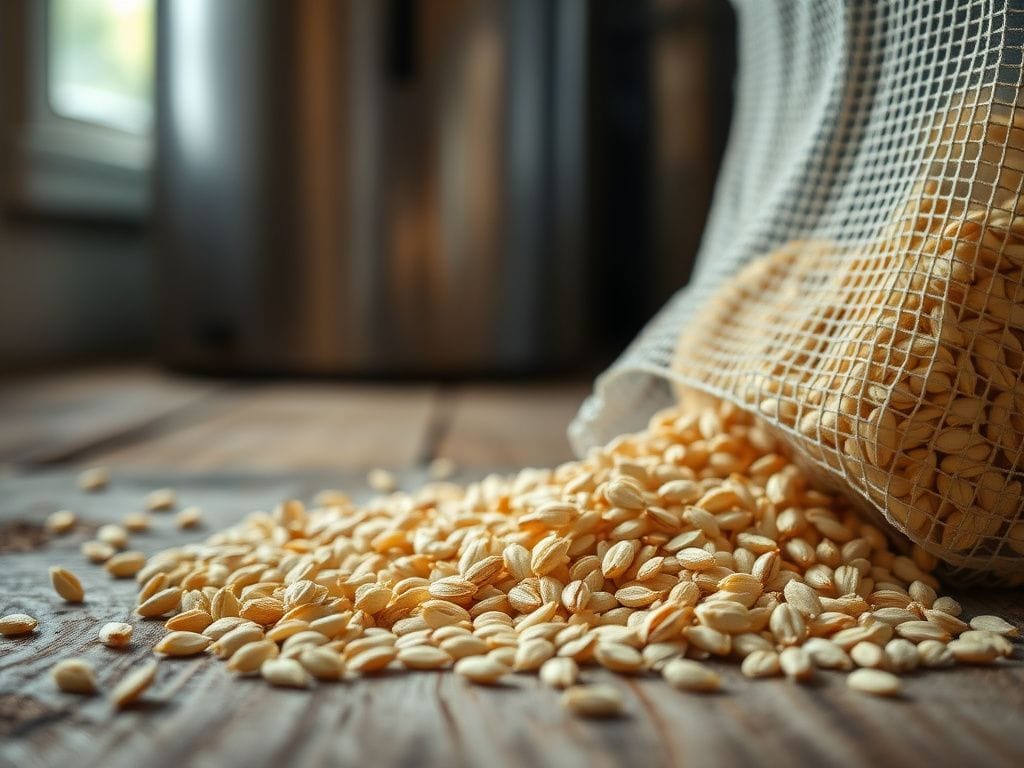
- BIAB Bag: This is your workhorse. Opt for a heavy-duty, fine-mesh polyester or nylon bag, rated for high temperatures. Mesh size is critical; too coarse, and grain particles escape; too fine, and drainage is excessively slow. A 200-400 micron mesh is ideal. Ensure it fits your kettle with enough slack to tie off or secure to the rim, preventing immersion during the mash.
- Heat Source: Propane burner or robust electric element (e.g., induction cooktop, dedicated RIMS/HERMS element). Consistent heat is vital for strike water and boil.
- Accurate Thermometer: Digital, fast-reading, and calibrated. Mash temperature control is paramount.
- Hydrometer & Test Jar / Refractometer: Essential for measuring Original Gravity (OG), Pre-Boil Gravity (PBG), and Final Gravity (FG). Refractometers are quick for PBG but require temperature correction for hot wort and an alcohol correction factor for FG.
- Grain Mill (Optional but Recommended): While many homebrew shops offer milling, controlling your crush is a distinct advantage. BIAB thrives on a finer crush than traditional sparging methods, as there’s no risk of a stuck sparge. A finer crush increases surface area for enzymatic action, boosting efficiency.
- Lifting Mechanism: A sturdy pulley system, hoist, or a strong helper for lifting the heavy, saturated grain bag out of the kettle.
- Scale: For precise measurement of grains, hops, and water chemistry salts.
- Timer: For mash rests, hop additions, and boil duration.
- pH Meter & Buffers: Crucial for precise mash pH adjustments. Calibration is key.
The Foundation: Ingredients & Their Technical Roles
Each ingredient contributes specific chemical and biological components that define your final product.
- Grains (The Malt Bill): The primary source of fermentable sugars, proteins, and color.
- Base Malts: (e.g., Pale Malt, Pilsner Malt, Vienna, Munich) Form the bulk of the grist. They contain high diastatic power, meaning they possess sufficient alpha- and beta-amylase enzymes to convert their own starches and often additional unmalted grains.
- Specialty Malts: (e.g., Crystal/Caramel Malts, Roasted Malts, Chocolate Malt) Contribute color, specific flavors (caramel, nutty, roasted), and unfermentable sugars for body. Many have little to no diastatic power.
- Adjuncts: (e.g., Flaked Barley, Wheat, Rice, Corn) Can add mouthfeel, head retention, haze, or lighten body/color. Often require base malts for starch conversion due to lack of enzymes.
- Malt Analysis: Brewers often refer to malt specifications like Lovibond (color), Protein (impacts head retention, clarity, haze), and PPG (Points Per Pound Per Gallon) or DP (Diastatic Power in °Lintner). Understanding these profiles is vital for accurate recipe formulation and predicting wort characteristics. For detailed analyses of various malt types, refer to resources provided by the Homebrewers Association.
- Hops: Provide bitterness, aroma, and flavor, and act as a natural preservative.
- Alpha Acids: The primary bittering compounds, isomerized during the boil. Measured in percentages (e.g., 6.0% AA). The higher the AA%, the more bitterness per unit weight. IBU (International Bittering Units) is calculated based on AA%, boil time, wort gravity, and boil volume.
- Beta Acids & Essential Oils: Contribute aroma and flavor. Volatile oils evaporate during longer boils, hence late additions are for aroma/flavor.
- Hop Varieties: Each variety has a unique blend of alpha acids and oils, imparting distinct characteristics (e.g., earthy, citrusy, floral, piney).
- Yeast (*Saccharomyces cerevisiae* / *Saccharomyces pastorianus*): The unsung hero, responsible for fermenting sugars into ethanol and CO2, and producing myriad flavor-active compounds (esters, phenols, diacetyl, etc.).
- Strain Selection: Crucial for beer style. Ale yeasts (*Saccharomyces cerevisiae*) generally ferment warmer (18-22°C) and produce more esters. Lager yeasts (*Saccharomyces pastorianus*) prefer colder temperatures (8-14°C) and yield cleaner profiles.
- Attenuation: The percentage of sugars converted to alcohol. High attenuation = drier beer; low attenuation = sweeter, fuller-bodied beer.
- Flocculation: Yeast’s tendency to clump together and settle out of suspension. High flocculation = clearer beer, easier racking.
- Pitching Rate: The correct amount of viable yeast cells pitched per volume of wort. Underpitching can lead to slow fermentation, off-flavors, and stuck ferments. Overpitching can strip flavor. Consult calculators for optimal rates. For comprehensive information on yeast biology and selection, consider resources from the Brewers Association.
- Water: Often overlooked, but paramount. It constitutes over 90% of your beer.
- Mineral Content: Ions like Calcium (Ca), Magnesium (Mg), Sulfate (SO4), and Chloride (Cl) directly impact mash pH, enzyme function, hop perception, and mouthfeel.
- Alkalinity: Measured as residual alkalinity, it dictates the buffering capacity of your water and its ability to resist pH changes during the mash.
- pH: Mash pH (5.2-5.6 at mash temperature) is critical for optimal enzyme activity, influencing sugar conversion, clarity, and eventual beer flavor.
- Treatment: Often involves adding brewing salts (gypsum, calcium chloride, Epsom salt) or acids (lactic acid, phosphoric acid) to achieve a target water profile suitable for a specific beer style (e.g., Burton for hoppy beers, Dublin for stouts).
The All-Grain BIAB Process: Step-by-Step Execution
Precision at each stage is what separates consistent, high-quality beer from unpredictable batches.
1. Recipe Formulation
Start with a well-designed recipe. Utilize brewing software (e.g., BeerSmith, Brewfather) to calculate grain bill, hop additions, water volumes, and predict OG, IBU, SRM, and ABV. This is where you define your target beer according to BJCP Style Guidelines.
2. Water Chemistry Adjustment
Obtain a water report or start with known distilled/RO water. Using brewing software and brewing salts (e.g., gypsum, calcium chloride), adjust your strike water to achieve your target mash pH and mineral profile. Heat your strike water to the calculated strike temperature (Tstrike).
3. Milling the Grains
For BIAB, a finer crush than traditional three-vessel systems is advantageous. This maximizes surface area for enzyme action, boosting efficiency, and mitigating the lack of a sparge step. Aim for a crack that resembles coarse flour with some intact husks. If using pre-milled grains, inquire about their crush for BIAB.
4. Mashing In
When your strike water reaches Tstrike, slowly add your milled grains to the BIAB bag, stirring thoroughly to prevent dough balls and ensure even hydration. The goal is to hit your target mash temperature (Tmash) within +/- 1°C (2°F). Secure the bag to the kettle rim. Take a mash pH reading after 10-15 minutes and adjust with lactic or phosphoric acid if necessary to bring it into the 5.2-5.6 range.
5. The Mash Rest
Maintain your Tmash for 60-90 minutes. This is where enzymes (alpha-amylase for dextrins/body, beta-amylase for fermentable sugars) convert starches into sugars. For a full-bodied beer, aim for the higher end of the mash temperature range (e.g., 68-69°C). For a drier, more fermentable beer, aim for the lower end (e.g., 65-66°C). Agitate the mash periodically (e.g., every 15-20 minutes) to ensure even temperature and conversion. Optional: Perform an iodine starch test towards the end of the mash; a positive test (blue/black color) indicates uncoverted starch. Continue mashing until the test is negative.
6. Mash Out (Optional but Recommended)
Raise the mash temperature to 77°C (170°F) for 10 minutes. This denatures the amylase enzymes, locking in your sugar profile. It also reduces wort viscosity, aiding drainage, and preventing further starch conversion during the bag lift. Be careful not to exceed 80°C (176°F), as this can extract undesirable tannins.
7. Bag Lift & Drain
Carefully lift the grain bag out of the kettle. Allow it to drain naturally for 10-15 minutes. You can rest the bag on a sturdy rack over the kettle or a separate bucket to collect runoff. A gentle squeeze of the bag is permissible to extract more wort, but avoid excessive, aggressive squeezing which can extract tannins, leading to astringency. The goal is to collect your target pre-boil volume.
8. The Boil
Bring the wort to a vigorous, rolling boil.
- Hot Break: Proteins will coagulate and rise to the surface as a foamy scum. Skim if desired, but many brewers leave it.
- Bittering Hops: Add your bittering hop charge at the start of the 60-90 minute boil.
- Boil-Off Rate: Maintain a consistent boil-off rate (typically 10-15% per hour) to concentrate the wort and reach your target OG.
- Flavor & Aroma Hops: Add later hop additions (e.g., 20-30 minutes remaining for flavor, 5-10 minutes for aroma, flameout for maximum aroma).
- Whirlfloc/Irish Moss: Add 10-15 minutes before flameout to aid in wort clarity and cold break formation.
- Yeast Nutrients: If using, add 10-15 minutes before flameout.
9. Chilling
Rapidly cool your wort to yeast pitching temperature (typically 18-20°C for ales, 8-12°C for lagers). Immersion chillers, plate chillers, or counterflow chillers are common. Rapid chilling minimizes the risk of infection and produces a good cold break, improving clarity. Aim for under 30 minutes to reach pitching temperature.
10. Fermentation
Sanitize your fermenter thoroughly. Transfer the chilled wort, minimizing splashing to avoid oxygenating hot wort (which causes off-flavors) but maximizing splashing once cooled to aerate the wort for yeast health. Pitch your yeast at the appropriate temperature and rate. Seal the fermenter with an airlock. Control fermentation temperature precisely; fluctuations cause off-flavors. Allow primary fermentation for 7-14 days. Gravity readings will indicate completion when stable over several days.
11. Packaging
Once fermentation is complete and gravity is stable, bottle or keg your beer.
- Bottling: Add a calculated amount of priming sugar (dextrose or corn sugar) to achieve desired carbonation levels. Carefully siphon beer into sanitized bottles, leaving headspace. Cap bottles. Condition at room temperature for 2-3 weeks.
- Kegging: Transfer beer to a sanitized keg. Force carbonate using CO2 at appropriate pressure and temperature settings. Condition in a cold environment.
Troubleshooting Common BIAB Issues
Even with precision, issues arise. Here’s a technical approach to common BIAB problems.
- Low Brewhouse Efficiency:
- Cause: Coarse crush, insufficient mash temperature, short mash time, poor agitation, insufficient water volume.
- Solution: Ensure a finer BIAB-specific crush. Verify and maintain mash temperature. Extend mash time to 90 minutes. Stir mash periodically. Re-evaluate mash water volume calculations.
- Off-Flavors (e.g., Diacetyl, Esters, Phenolic):
- Cause: Poor fermentation temperature control (too high/low), underpitching/overpitching yeast, poor yeast health, oxidation, infection.
- Solution: Implement precise temperature control during fermentation. Ensure correct pitching rates. Use fresh, healthy yeast. Minimize oxygen exposure post-fermentation. Practice rigorous sanitation.
- Stuck Fermentation:
- Cause: Insufficient fermentable sugars (high mash temp, short mash), stressed/unhealthy yeast, nutrient deficiency, drastic temperature drop.
- Solution: Re-evaluate mash parameters. Repitch with a healthy, active yeast starter. Add yeast nutrients. Slowly raise fermentation temperature.
- Astringency:
- Cause: Excessive squeezing of the grain bag, mashing above 80°C (176°F), sparging with water above 80°C (if applicable), excessively fine crush leading to husk breakdown.
- Solution: Gentle squeeze or no squeeze. Control mash-out temperature. Adjust crush.
Advanced BIAB Techniques & Optimizations
Once proficient, explore techniques to further optimize your brewing process and extract maximum potential from your ingredients. Find more expert brewing resources at BrewMyBeer.online.
- Recirculating Mash (Pump Assisted BIAB): Introducing a small pump to continuously recirculate wort through the grain bed (within the bag) can significantly improve mash efficiency and clarity by creating a pseudo-lauter effect.
- Step Mashing with BIAB: While single infusion is standard, BIAB kettles often allow for easy temperature adjustments, enabling step mashing. This involves holding the mash at different temperature rests (e.g., protein rest, beta-amylase rest, alpha-amylase rest) to target specific enzyme activities for complex malt profiles or difficult grains.
- No-Sparge BIAB: This involves mashing with the full volume of water required for the entire batch. It simplifies the process further by eliminating any sparge step, though it may result in slightly lower efficiency depending on your specific setup and grain absorption rates.
- Grain Crusher Settings Optimization: Experiment with your mill gap setting. A tighter gap for BIAB can yield 5-10% higher efficiency compared to a standard crush, as the bag prevents a stuck mash. Document your results for various gap settings.
Mastering all-grain BIAB is a journey of continuous learning and refinement. By adhering to these technical principles and meticulously controlling your process, you will consistently produce exceptional beer, unlocking the full potential of your raw materials with unparalleled simplicity and efficiency.