


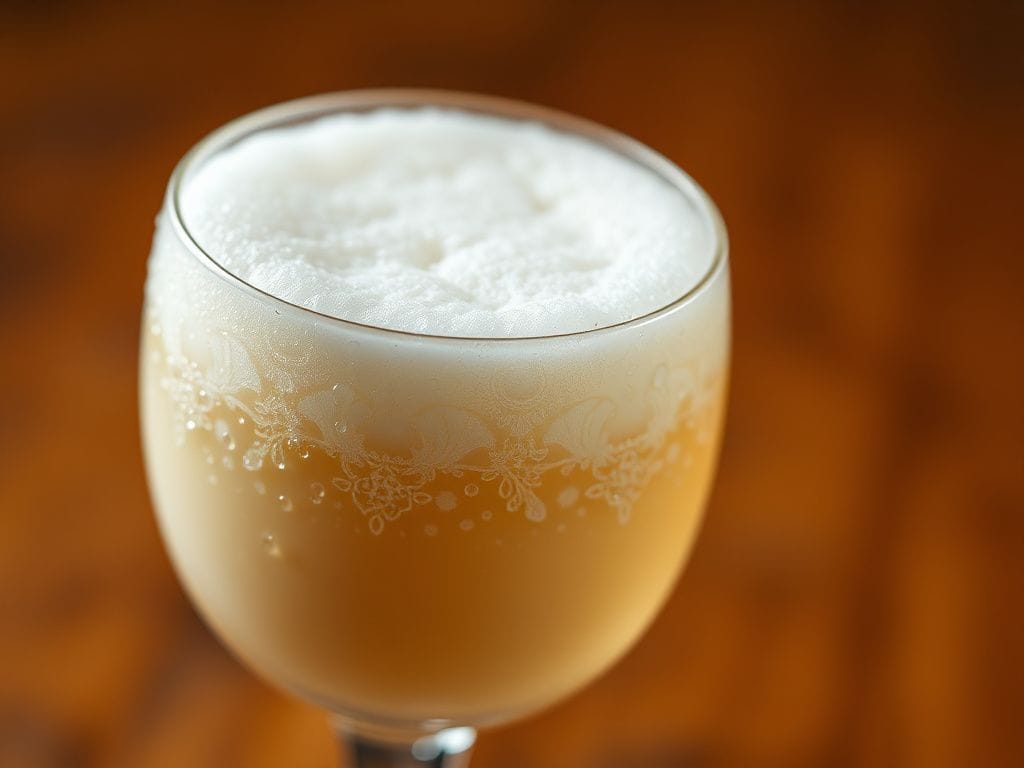
The Chemistry of Foam: How to Achieve the “Belgian Lace” Effect
Achieving the “Belgian Lace” demands a deep understanding of interfacial chemistry. It hinges on specific protein fractions, particularly high molecular weight polypeptides, synergistic interaction with iso-alpha acids, optimal carbonation kinetics, and meticulous process control from mash to pour. Minimizing detrimental lipids and ensuring proper glassware nucleation are paramount for stable, lasting foam architecture.
| Component | Role in Foam Stability | Optimal Range/Condition | Impact on Belgian Lace | Brewing Stage/Consideration |
|---|---|---|---|---|
| High Molecular Weight Proteins | Form elastic film around CO2 bubbles, reducing surface tension. Polypeptides with hydrophobic and hydrophilic regions. | Optimal concentration dependent on beer style, typically 400-800 mg/L (total protein), with a significant fraction above 10 kDa. | Primary structural component; essential for forming the tenacious, clingy foam that adheres to the glass. Directly correlates with foam density and longevity. | Malt selection (wheat, oats, rye, highly modified base malts), Mash protein rest (temperature 48-55°C, time 15-30 min), Boil (controlled hot break, avoid excessive boil-off). |
| Iso-alpha acids | Synergistic interaction with proteins, forming stable complexes that reinforce bubble walls. Provide hydrophobic anchoring points. | Sufficient concentration, typically >15 IBU for noticeable contribution. Specific isomer ratios (cis/trans). | Enhance foam adhesion and stability, contributing to the lacing effect by strengthening the protein matrix. Higher levels often correlate with improved lacing. | Hop additions (boil hops, late additions for isomerization), controlled pH during boil and fermentation, adequate hop utilization. |
| CO2 Saturation | Gas phase for bubble nucleation and formation. Dissolved CO2 concentration dictates bubble volume and release rate. | Style-dependent, 2.5-4.0 volumes CO2. Higher carbonation levels often improve initial head formation but require careful protein management for stability. | Provides the physical bubbles that form the lace. Proper saturation and gentle nucleation are key for uniform bubble size and release. | Fermentation temperature control, conditioning pressure, serving temperature, glassware nucleation sites. |
| Lipids/Fats | Antifoaming agents. Disrupt protein-iso-alpha acid complexes, creating weak spots in bubble films, accelerating collapse. | Minimize concentration, <5 mg/L. Sources include malt husks, adjuncts, hops (trace), yeast byproducts, poor cleaning. | Directly detrimental. Even trace amounts degrade foam stability and lacing potential, leading to thin, ephemeral heads. | Malt milling (avoid crushing husks excessively), efficient lautering, hot break removal, proper cleaning & sanitation, avoid lipid-rich adjuncts (e.g., oats, *some* oil-rich grains). |
| Alcohol Content | Ethanol reduces surface tension but higher alcohols (fusel) can disrupt foam. High ethanol content can dehydrate protein films. | Moderate ethanol (3-7% ABV) supports foam. Higher ABV (>8%) requires increased protein and iso-alpha acid content to compensate for surface tension reduction. | High ABV (>8%) can negatively impact foam stability by reducing surface tension and altering protein hydration, necessitating increased foam-positive compounds. | Yeast selection, fermentation temperature control (to minimize fusel alcohol production), adequate protein/iso-alpha acid balance for high ABV styles. |
Calculation of Dissolved CO2 Volumes (VCO2) for Belgian Lace-Optimized Carbonation
For a typical Belgian Tripel, a carbonation level of 3.0 – 3.5 volumes of CO2 is desired to support robust lace formation. We often prime with sugar or use forced carbonation.
Example Scenario: Carbonating 20 Liters of Beer at 18°C (64.4°F) to 3.2 VCO2 using Dextrose.
1. Calculate Saturation Pressure (Psat) for Target VCO2:
Using a simplified Henry’s Law approach or a gas solubility chart, for 3.2 VCO2 at 18°C, the required CO2 partial pressure is approximately 1.7 bar (24.7 psi) above atmospheric. This is a crucial parameter for forced carbonation, but for priming, we calculate sugar.
2. Calculate Dextrose Priming Sugar (grams) for Target VCO2:
Formula: Sugar (g) = Volume (L) × (Target VCO2 – Residual VCO2) × Factor
Assume residual CO2 in beer post-fermentation at 18°C is 0.85 VCO2.
Factor for Dextrose: ~4 g/L per volume CO2 (this varies slightly, but is a common approximation).
Sugar (g) = 20 L × (3.2 VCO2 – 0.85 VCO2) × 4 g/L/VCO2
Sugar (g) = 20 L × 2.35 VCO2 × 4 g/L/VCO2
Sugar (g) = 188 grams Dextrose
This precise CO2 level ensures adequate bubble formation for lace without excessive effervescence overwhelming protein structure. Note that ambient temperature variations and dissolved CO2 charts will refine these numbers.
Introduction to Belgian Lace
The “Belgian Lace,” or Brussels Lace, refers to the distinctive, intricate pattern of foam residue left on the inside of a beer glass as the liquid is consumed. It is a hallmark of well-crafted, often higher-carbonated beers, particularly those of Belgian origin. This tenacious lacing is not merely an aesthetic quality; it is a direct indicator of superior foam stability, signaling a robust and complex interplay of specific chemical compounds within the beer. Achieving this effect consistently demands a meticulous understanding of brewing science, from raw material selection to serving practices. The goal is to maximize foam-positive compounds while minimizing foam-negative elements, all within the constraints of a desired beer style.
The Interfacial Chemistry of Foam
Beer foam is a complex colloidal system consisting of gas bubbles (predominantly CO2) surrounded by thin liquid films. The stability and structure of these films, and thus the foam itself, are governed by the properties of surface-active molecules that adsorb at the gas-liquid interface. The Belgian Lace is the persistent residue of these films, demonstrating their strength and adhesive qualities.
Proteins: The Structural Scaffold
Proteins are the absolute backbone of beer foam. Specifically, high molecular weight (HMW) polypeptides, typically ranging from 10 kDa to 100 kDa, are crucial. These proteins possess both hydrophobic (water-repelling) and hydrophilic (water-attracting) regions. At the gas-liquid interface, they orient themselves with hydrophobic segments pointing into the gas bubble and hydrophilic segments facing the aqueous phase. This arrangement lowers the surface tension of the liquid, allowing for the formation of stable bubble films. Furthermore, these proteins can denature and cross-link, forming a semi-rigid, viscoelastic network that physically stabilizes the bubbles. The tenacity of Belgian Lace is directly attributable to the adhesive properties of these protein networks as the liquid recedes. The specific amino acid composition, especially proline-rich proteins, contributes significantly to this stability due to their unique secondary structures which resist enzymatic degradation and facilitate interaction with other foam-positive compounds.
Iso-alpha Acids: The Reinforcement
Derived from hop alpha acids through isomerization during the boil, iso-alpha acids are bittering compounds that play a synergistic role with proteins in foam stability. They are amphipathic, meaning they also possess both hydrophobic and hydrophilic characteristics. Iso-alpha acids intercalate into the protein films at the gas-liquid interface, anchoring into the hydrophobic regions of the proteins. This interaction strengthens the interfacial film, making it more resistant to rupture. The presence of these compounds significantly enhances foam cling and density, directly contributing to the formation and persistence of Belgian Lace. Optimal concentrations, typically above 15 IBU, are generally required for a noticeable contribution to foam stability. The specific isomer ratios (cis- vs. trans-iso-alpha acids) can also subtly influence their efficacy.
Carbohydrates & Polysaccharides: Stabilizers
While not primary foam formers, residual dextrins and other high molecular weight carbohydrates, particularly β-glucans, act as secondary foam stabilizers. They increase the viscosity of the liquid phase, slowing drainage from the lamellar films between bubbles. This reduced drainage prolongs the lifespan of the bubbles, thereby supporting the overall foam structure and enhancing the adhesion of the protein-iso-alpha acid complex to the glass surface, indirectly aiding lace formation. β-glucans are particularly prevalent in adjuncts like oats and wheat.
Ethanol & Higher Alcohols: Modifiers
Ethanol, the primary alcohol in beer, significantly reduces the surface tension of water. While this reduction can initially aid bubble formation, high concentrations of ethanol (>8% ABV) can destabilize protein films by altering their hydration and solubility, leading to thinner, weaker bubble walls. This is why high-alcohol beers often struggle with foam stability unless meticulously crafted with a surplus of foam-positive proteins and iso-alpha acids. Conversely, higher alcohols, or fusel alcohols (e.g., propanol, butanol), produced during fermentation, are surface-active but in a detrimental way. They can outcompete and displace beneficial proteins and iso-alpha acids at the interface, leading to rapid foam collapse and poor lacing. Careful fermentation temperature control is critical to minimize fusel alcohol production.
Lipids: The Saboteurs
Lipids, including fatty acids and certain phospholipids, are potent antifoaming agents. They are highly surface-active and preferentially adsorb at the gas-liquid interface, disrupting the organized protein-iso-alpha acid complexes. Lipids create weak spots in the bubble films, causing them to rupture rapidly. Even trace amounts, as low as 5 mg/L, can severely degrade foam quality and eliminate any chance of Belgian Lace. Sources of lipids can include improperly milled malt husks, certain adjuncts, hop oils, yeast cell walls after autolysis, and most critically, inadequate cleaning and sanitation of brewing equipment and glassware. Scrupulous cleaning is non-negotiable for superior foam.
Minerals & pH: The Environmental Controls
Water chemistry and mash pH influence protein extraction and modification. A mash pH typically in the range of 5.2-5.6 (at mash temperature) is optimal for proteolytic enzyme activity, which cleaves proteins into various sizes. Excessive proteolytic activity can degrade too many HMW proteins into smaller, foam-negative peptides. Calcium ions (Ca2+) can enhance foam stability by complexing with proteins and iso-alpha acids, reinforcing the bubble films. However, extremely high calcium levels or an inappropriate pH can lead to protein precipitation or inhibit enzymatic activity, negatively affecting foam. Proper water treatment is therefore an integral part of optimizing your brewing process for foam.
Malt Selection & Mashing: Building the Foundation
The journey to superior Belgian Lace begins with the grist and the mash.
Malt Varieties
The choice of malt is paramount. Two-row pale malts typically provide a good base of proteins. However, to significantly enhance HMW protein content, brewers should incorporate specialty malts known for their foam-positive attributes. Wheat malt, even at 5-20% of the grist, is an excellent source of β-glucans and high molecular weight proteins, significantly bolstering foam stability. Flaked oats and rye also contribute similar benefits due to their high protein and β-glucan content. Overly modified malts can have some proteins already degraded, thus reducing potential HMW protein yield, so a balanced approach is key. Unmalted grains, while contributing protein, often require a protein rest for optimal modification.
Protein Rest: Precision Engineering
A protein rest is a specific temperature regimen during mashing designed to optimize protein profiles. It typically involves holding the mash at temperatures between 48-55°C (118-131°F) for 15-30 minutes. At this range, proteolytic enzymes (peptidases and proteinases) are active. Proteinases cleave larger proteins into smaller polypeptides, while peptidases break down polypeptides into individual amino acids. For Belgian Lace, the goal is to create an abundance of HMW polypeptides while avoiding excessive degradation into smaller peptides or amino acids, which are foam-negative. A short, precise protein rest can be beneficial for less modified malts or for styles requiring robust protein contribution. For highly modified malts, a protein rest might be detrimental, degrading too many essential HMW proteins. Understanding the malt modification level is critical for deciding on the necessity and duration of a protein rest.
Mash pH & Temperature
Mash pH affects enzyme activity and protein extraction. An optimal mash pH (typically 5.2-5.6 at mash temperature, which translates to about 5.0-5.4 at room temperature) ensures efficient extraction of desirable compounds, including proteins and β-glucans, without promoting excessive degradation. Deviations from this range can lead to poor protein modification, impacting foam. Mash temperature profiles beyond the protein rest also influence the final protein content. Higher saccharification temperatures (e.g., 68-70°C / 154-158°F) tend to denature proteolytic enzymes, preserving more HMW proteins that survived the protein rest, if one was used. Conversely, lower saccharification temperatures allow more prolonged, albeit less active, proteolytic enzyme activity.
The Boil: Consolidation & Transformation
The boil is a critical stage where foam-positive compounds are further refined and foam-negative compounds are reduced.
Hot Break & Protein Coagulation
During the boil, soluble proteins coagulate and precipitate, forming the “hot break.” This is a desirable process, as it removes unstable, very large proteins that can cause chill haze and some smaller, foam-negative proteins. However, excessive or overly vigorous boiling can lead to the removal of too many HMW proteins essential for foam stability. A controlled, rolling boil is generally preferred over a harsh, violent boil. Efficient removal of the hot break post-boil (e.g., via whirlpool) is important as residual break material can contribute to haze and potentially introduce some lipid-like compounds.
Hop Additions & Iso-alpha Acid Isomerization
Hops are added during the boil for bitterness, flavor, and aroma. Crucially for foam, the alpha acids in hops isomerize into iso-alpha acids, which, as discussed, are vital for synergistic foam stabilization. Longer boil times for bittering hops yield higher concentrations of iso-alpha acids. However, excessive boil times can also lead to the degradation of some foam-positive proteins. Therefore, a balance is struck based on target IBU and the desired protein profile. Late hop additions primarily contribute aroma and flavor but do not significantly isomerize, thus having minimal direct impact on iso-alpha acid-related foam stability.
Boil Duration & Intensity
The length and vigor of the boil can impact foam. A standard 60-90 minute boil is typical. Shorter boils might lead to insufficient protein coagulation and iso-alpha acid isomerization, while excessively long or aggressive boils can degrade desirable proteins. Evaporation rate also plays a role; higher evaporation concentrates proteins, but also increases the risk of scorching and potential Maillard reactions that can alter protein structure.
Fermentation: The Dynamic Phase
Fermentation is a transformative process where yeast activity significantly impacts foam characteristics.
Yeast Strain & Flocculation
Different yeast strains exhibit varying degrees of proteolytic activity and flocculation. Highly flocculant yeast strains tend to settle out more quickly, potentially leaving more HMW proteins in suspension, which is generally beneficial for foam. Conversely, strains with high proteolytic activity can degrade foam-positive proteins. Belgian yeast strains, known for their unique flavor profiles, often have specific flocculation and proteolytic characteristics. Choosing a yeast strain that contributes positively to the desired protein profile, without excessive protein degradation, is key.
Fermentation Temperature & Byproducts
Fermentation temperature significantly influences yeast metabolism and byproduct formation. Warmer fermentations, typical for many Belgian styles, can lead to increased production of higher alcohols (fusel alcohols), which are detrimental to foam stability. Maintaining fermentation within the yeast’s recommended temperature range helps minimize these foam-negative compounds while promoting a healthy fermentation that preserves foam-positive proteins. Stressing the yeast can lead to autolysis, releasing lipid-rich cell contents that are potent antifoamers.
Proteolytic Activity
Yeast itself possesses proteases that can break down proteins during fermentation. While some degree of proteolysis is normal and contributes to yeast nutrition, excessive activity can strip the beer of essential HMW proteins required for stable foam. Factors like nutrient availability, pH shifts, and prolonged contact with yeast sediment can influence this activity. A healthy, swift fermentation minimizes prolonged exposure to potentially proteolytic enzymes from stressed or autolyzing yeast.
Conditioning & Carbonation: Final Polish
The post-fermentation stages are crucial for refining the beer’s foam characteristics.
Cold Crashing & Fining Agents
Cold crashing (reducing beer temperature to near freezing) helps precipitate yeast and other haze-forming particles. While beneficial for clarity, it can also lead to the precipitation of some foam-positive proteins, particularly if done too aggressively or for extended periods. Fining agents, such as isinglass or gelatin, are designed to bind and remove haze-forming particles, often including proteins. If used, they must be chosen carefully and applied judiciously to avoid stripping out the very proteins responsible for foam stability and Belgian Lace. For maximal lace, fining agents that specifically target proteins should be avoided or used with extreme caution. The preference for naturally hazy Belgian beers often means fining agents are not used, thus preserving protein content.
Carbonation Methods & Volumes
Carbonation is the introduction of dissolved CO2 into the beer. For Belgian Lace, both the method and the volume of CO2 are critical. High carbonation levels (typically 2.8-4.0 volumes CO2 for Belgian styles) provide an abundance of gas for bubble formation. Forced carbonation allows for precise control, while bottle conditioning (priming with sugar) creates a natural, fine carbonation that some argue integrates better with the beer matrix, leading to finer bubbles and potentially better lacing. The math box above illustrates a typical calculation for priming sugar. Consistent and appropriate carbonation ensures a steady stream of bubbles and supports the structural integrity of the foam. Inadequate carbonation will result in a weak head and no lacing, regardless of protein content. Over-carbonation can lead to a volatile foam that collapses quickly due to excessive pressure.
Serving: The Presentation
Even after meticulous brewing, improper serving can destroy the Belgian Lace.
Glassware
The choice and cleanliness of glassware are paramount. Belgian beers are traditionally served in specific glass shapes (e.g., chalice, tulip, snifter) designed to capture and enhance aromatics, but also to promote foam retention. Crucially, the glass must be impeccably clean, free of any residual oils, detergents, or grease that act as antifoamers. Beer-clean glassware will allow foam to cling evenly. Some glasses are designed with “nucleation points” – etched patterns at the bottom – to promote a steady stream of fine bubbles, feeding the head and enhancing lacing. A perfectly clean glass is perhaps the single most impactful factor at the point of serving.
Pour Technique
A proper pour is essential. The beer should be poured down the side of the glass initially, then straightened to create a generous head. A too-gentle pour may not generate enough foam initially, while an overly aggressive pour can create large, unstable bubbles that collapse quickly. The aim is a cascade of fine bubbles that build a dense, creamy head.
Environmental Factors
Serving temperature influences CO2 solubility and foam stability. Colder beer retains CO2 better, leading to a more stable head. Warmer temperatures cause CO2 to escape more rapidly, potentially overwhelming the foam structure. Air currents, dust, and even lip balm on the drinker’s lips can introduce foam-negative contaminants.
Troubleshooting & Advanced Considerations
Achieving consistent Belgian Lace requires vigilance against several common pitfalls.
Oxidation
Oxidation can lead to protein degradation and changes in the chemical structure of iso-alpha acids, both of which negatively impact foam stability. Minimizing oxygen exposure throughout the cold side of brewing (fermentation, conditioning, packaging) is vital for preserving foam and overall beer quality. Utilizing proper brewing ingredients handling and sealed transfers are critical.
Cleaning & Sanitation
As repeatedly emphasized, cleanliness cannot be overstated. Residual lipids from previous batches, detergents, sanitizers, or even oils from hands on glassware are potent foam killers. Employing hot caustic washes, acid rinses, and proper passivation for stainless steel equipment, along with dedicated beer-clean glassware practices, is fundamental.
Defoamers & Contaminants
Some industrial processes use defoaming agents, often silicon-based or fatty acid esters, to control foam during fermentation in large-scale operations. These are anathema to achieving Belgian Lace. Brewers dedicated to foam quality must ensure no such contaminants are introduced. Even trace amounts of lubricating oils from pumps or seals can devastate foam. Understanding the entire supply chain and equipment maintenance is paramount.
In conclusion, the pursuit of the Belgian Lace is a multi-faceted endeavor rooted in deep chemical understanding and precise process control. It is a testament to the brewer’s skill, blending art with science to deliver not just a beverage, but an experience defined by enduring beauty and sensory delight.