


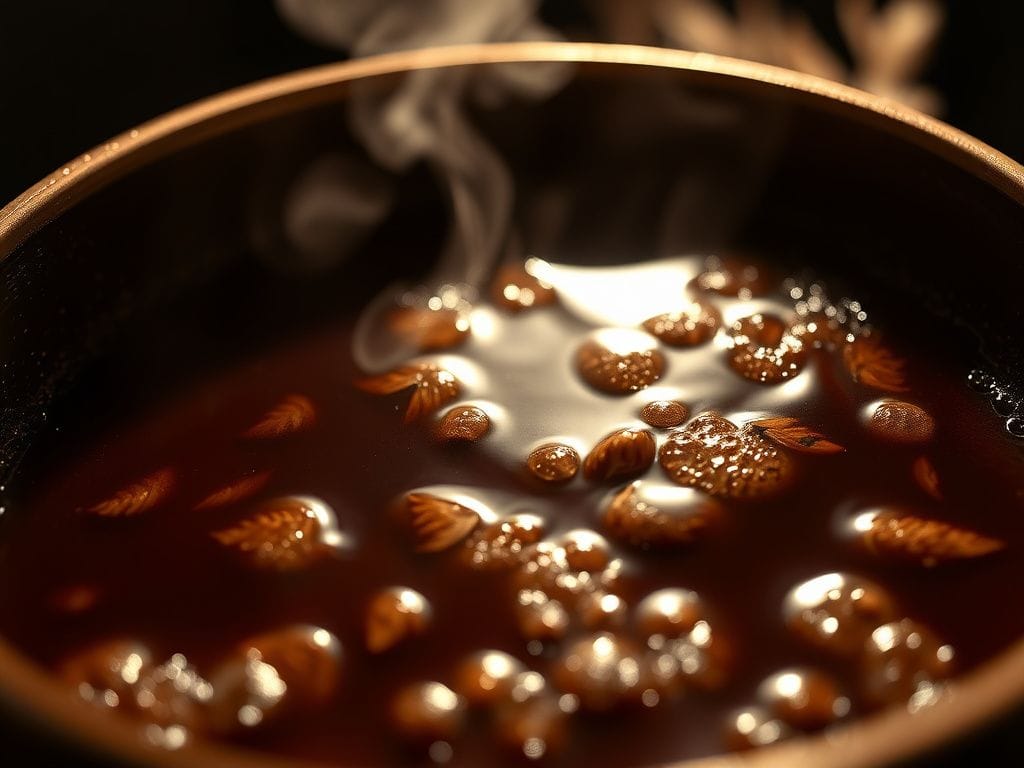
The Maillard Reaction in the kettle is a potent brewer’s tool for forging complex malt character—toasted, bready, and rich caramel notes—without relying on crystal malts. Manipulating pH, gravity, and boil dynamics unlocks deep flavor profiles, transforming simple wort into a nuanced, full-bodied beer. Master this process to elevate your brewing.
The Maillard Reaction in the Kettle: Enhancing Malt Complexity Without Crystal Malt
Technical Parameters for Kettle Maillard Control
| Parameter | Impact on Maillard | Mechanism/Chemistry | Target Flavor/Color | Control Method |
|---|---|---|---|---|
| Wort pH | Dictates reaction rate and product spectrum. Higher pH (5.2-5.8) favors browning/melanoidin formation; lower pH inhibits browning, favors Strecker degradation. | pH influences amino acid protonation state and reactivity of carbonyl groups. Base catalysis accelerates initial condensation and enolization. | Caramel, toasted bread (higher pH); nutty, biscuity (mid-pH); burnt, sulfurous (excessively high pH). | Lactic acid additions, chalk (CaCO₃) additions. Monitor with calibrated pH meter. |
| Reducing Sugar Concentration (Brix/SG) | Directly proportional to reaction rate. Higher sugar content leads to more intense Maillard products. | Increased collision frequency between carbonyls and amino groups. Higher concentration of reactants drives equilibrium towards product formation. | Rich caramel, treacle, intense malty sweetness. Deeper amber to brown color. | Boil off water pre-boil (wort reduction), adjust mash efficiency for higher gravity runnings. |
| Boil Time & Temperature | Exponential impact on reaction kinetics. Longer, hotter boils accelerate all Maillard pathways. | Heat provides activation energy. Sustained high temperature promotes polymerization and cyclization of intermediate compounds. | Toasted, stewed fruit (moderate); burnt, roasty, pruney (extended/high). Darkening color. | Standard 60-90 min boil for minimal Maillard. Extend to 120-180 min, or partial wort pre-boil reduction. |
| Amino Acid Profile (FAN) | Availability and type of amino acids (Free Amino Nitrogen) are co-reactants. Proline, lysine, arginine are highly reactive. | Amino acids provide the nitrogen component for Amadori/Heyns rearrangement products and Strecker degradation. Specific amino acids yield distinct flavor molecules. | Bready, nutty, savory, meaty. Contributes to overall complexity and mouthfeel. | Malt selection (Munich, Vienna, Maris Otter are richer in FAN). Mash temperature profile (protein rest for lower FAN, higher temps for more FAN). |
| Oxygen Presence | Generally inhibitory in initial Maillard stages but promotes oxidative browning at later stages or higher temperatures. | Oxygen can compete for active sites, form peroxides, or catalyze oxidative degradation of certain intermediates, influencing final product distribution. | Can contribute to sherry-like or papery off-flavors if significant. Can contribute to color stability in finished product. | Minimize hot-side aeration during run-off and early boil. Vent kettle adequately. |
Maillard Reaction Kinetic Calculation
Understanding the Maillard Reaction’s progression in the kettle requires appreciating its kinetics. While exact predictions are complex due to numerous parallel and consecutive reactions, simplified models help quantify relative intensity based on critical parameters. A common metric is the “Maillard Unit” (MU), conceptually similar to IBU for bitterness, representing the cumulative effect over time.
Consider a simplified rate law for Maillard intensity (MI) as a function of temperature (T), time (t), and initial reducing sugar (S₀) and amino acid (A₀) concentrations, and pH:
dMI/dt = k * [S₀]^x * [A₀]^y * f(pH) * exp(-Ea/RT)
Where:
-
k= Rate constant -
x, y= Reaction orders for sugar and amino acid concentrations (often assumed ~1 for simplification in initial stages) -
f(pH)= pH dependency function (e.g., pH² for certain phases of browning) -
Ea= Activation energy (typically high for Maillard reactions, 80-150 kJ/mol) -
R= Ideal gas constant (8.314 J/(mol·K)) -
T= Absolute temperature (Kelvin)
For practical kettle application, we can focus on the impact of increased gravity and extended boil time:
Example 1: Wort Concentration Impact
Assume a baseline boil of 90 minutes at 100°C (373.15K) with a wort of 12°P (SG 1.048, ~120 g/L reducing sugars). If we concentrate the wort pre-boil to 15°P (SG 1.060, ~150 g/L reducing sugars) and maintain other parameters:
Relative change in Maillard rate ≈ (New S₀ / Old S₀)^x
If x=1: Relative change ≈ (150 g/L / 120 g/L) = 1.25
This suggests a 25% increase in Maillard reaction intensity at the onset, assuming a linear relationship. The actual effect is more complex and exponential over time.
Example 2: Extended Boil Time
Comparing a 90-minute boil to a 180-minute boil (double the time) at constant temperature and concentration. If the reaction rate is constant over time (a simplification):
Cumulative Maillard Effect (180 min) / Cumulative Maillard Effect (90 min) = 180 / 90 = 2
However, Maillard reactions are not linear over time; intermediates build up, and the rate can accelerate then plateau. A common approach to estimate cumulative thermal input for color development is using a ‘degree-minute’ or ‘Maillard-minute’ concept, where the contribution accumulates over time at boiling temperatures. For every additional 30 minutes of boiling, expect a noticeable increase in color and flavor contribution.
Practical Application: Calculating Boil-Off for Target Gravity
To achieve a concentrated wort for enhanced Maillard, calculate the required boil-off volume. Let:
-
V_initial= Initial wort volume (L) -
SG_initial= Initial wort specific gravity -
SG_target= Target wort specific gravity post-concentration -
V_target= Target wort volume post-concentration
Using conservation of extract:
V_initial * (SG_initial - 1) = V_target * (SG_target - 1)
Or more precisely using Plato (P) values, which are % by weight:
V_initial * P_initial = V_target * P_target
So, V_target = (V_initial * P_initial) / P_target
And Volume_to_boil_off = V_initial - V_target
Example: Start with 300 L of 10°P wort, want to concentrate to 15°P before a long Maillard boil.
V_target = (300 L * 10°P) / 15°P = 200 L
Volume_to_boil_off = 300 L - 200 L = 100 L
This means boiling off 100 L of water to achieve the desired concentration before the main Maillard-focused boil. This is a critical step for maximizing Maillard products without overly extending total boil time or exceeding practical kettle capacities.
The Definitive Master-Guide: Harnessing Kettle Maillard for Crystal-Free Malt Complexity
Introduction: Beyond the Mash Tun – The Kettle as a Maillard Reactor
The Maillard Reaction, a non-enzymatic browning process, is fundamental to flavor development in countless foods, including beer. While often associated with malt kilning, the kettle offers a distinct and powerful arena for manipulating this complex chemical dance. This guide deconstructs the precise mechanisms and practical applications of inducing the Maillard Reaction during the boil, allowing master brewers to forge unparalleled malt complexity—toasted, biscuity, caramel, and bready notes—without the saccharine sweetness or potential astringency sometimes imparted by crystal malts. We aim for sophistication, depth, and a clean finish, leveraging simple base malts to create profound character.
Traditional brewing wisdom often views the boil as primarily for hop isomerization, enzyme deactivation, protein coagulation, and sanitization. However, the high temperatures, extended times, and concentrated wort provide an ideal environment for Maillard chemistry to flourish. By precisely controlling variables such as pH, wort gravity, and boil duration, brewers gain granular control over the flavor and color spectrum, pushing the boundaries of what base malts can deliver.
The Core Chemistry: Reducing Sugars, Amino Acids, and Heat – A Symphony of Flavor
At its heart, the Maillard Reaction is the chemical interaction between reducing sugars (those with a free aldehyde or ketone group) and amino acids (or other amine-containing compounds) when subjected to heat. In brewing, the primary reducing sugars are glucose, fructose, and maltose, derived from the enzymatic breakdown of starch in the mash. The amino acids come primarily from malt proteins, present as Free Amino Nitrogen (FAN) in the wort.
The reaction proceeds through a series of complex, interconnected pathways:
-
Initial Condensation (Glycosylamine Formation): The carbonyl group of the reducing sugar reacts with the amino group of an amino acid to form an unstable N-substituted glycosylamine. This is a rapid initial step.
-
Amadori Rearrangement (or Heyns Rearrangement): The glycosylamine then undergoes an intramolecular rearrangement to form a more stable Amadori product (1-amino-1-deoxy-2-ketose). This intermediate is crucial, acting as a branching point for subsequent reactions. This stage is particularly sensitive to pH and temperature, influencing the ultimate flavor profile. At higher pH and temperature, this rearrangement is accelerated.
-
Degradation of Amadori Products: The Amadori products can then degrade via several routes:
-
Enolization and Dehydration: Under acidic conditions, 1,2-enolization followed by dehydration yields furfural (from pentoses) or hydroxymethylfurfural (HMF, from hexoses), which contribute bready, malty, and sometimes slightly bitter notes. Under alkaline conditions, 2,3-enolization occurs, leading to reductones and various dicarbonyl compounds, potent precursors for caramel and toasted flavors.
-
Strecker Degradation: This pathway involves the reaction of dicarbonyl compounds (formed from Amadori product degradation) with specific amino acids. The amino acid is deaminated and decarboxylated, producing an aldehyde that is one carbon atom shorter than the original amino acid. These Strecker aldehydes are highly potent flavor compounds, often contributing savory, malty, or roasted notes (e.g., methional from methionine, contributing to “cooked potato” if excessive, or phenylacetaldehyde from phenylalanine, providing honey-like aroma). This reaction also produces pyrazines, potent roasted and nutty flavor compounds.
-
-
Aldol Condensations and Polymerization: The reactive intermediates (furfural, HMF, dicarbonyls, Strecker aldehydes) then undergo further condensations, cyclizations, and polymerizations. These complex reactions lead to the formation of high-molecular-weight, nitrogenous brown pigments known as melanoidins. Melanoidins are critical for beer color (amber to dark brown), mouthfeel, and provide a range of desirable flavors including caramel, toasted bread, and dried fruit. They also exhibit antioxidant properties, contributing to beer stability.
The intricate interplay of these pathways, each with its own kinetic profile and pH dependency, allows for precise flavor engineering. By manipulating the primary variables, brewers can steer the reaction towards specific outcomes, optimizing for desired complexity without unwanted off-flavors.
Key Variables for Kettle Maillard Control: Precision Engineering of Flavor
Mastering kettle Maillard requires a deep understanding of the variables that influence its progression. Each factor offers a leverage point for flavor modulation.
1. Wort pH: The Reaction Catalyst
pH is arguably the most critical variable. The Maillard Reaction is significantly accelerated at higher pH values, specifically in the slightly acidic to neutral range (pH 5.2-5.8). This is because the initial condensation step and subsequent enolization pathways are base-catalyzed. A higher pH promotes the deprotonated (more reactive) form of amino acids and facilitates the rearrangement of Amadori products.
-
Higher pH (e.g., 5.4-5.8): Favors rapid browning and the formation of melanoidins. This leads to intense caramel, treacle, and dark fruit notes. However, excessively high pH (above 6.0) can lead to harsh, astringent, or even burnt flavors due to uncontrolled polymerization and degradation.
-
Lower pH (e.g., 5.0-5.2): Slows down browning reactions. It tends to favor the formation of furans (like HMF), contributing more subtle bready, malty, and sometimes cracker-like notes. Strecker degradation can still occur, yielding nutty and roasted nuances. Lower pH generally results in a cleaner, less heavy Maillard profile.
Control: Monitor your pre-boil wort pH diligently. If aiming for intense Maillard, allow your mash pH to finish slightly higher (e.g., 5.4-5.5) or consider a small addition of a buffering agent like calcium carbonate (chalk) to the kettle, carefully monitoring the effect. For cleaner Maillard, ensure your mash finishes in the 5.0-5.2 range. Lactic acid can be used to lower pH, offering finer control for specific flavor targets. Precision is key; slight deviations can dramatically alter the outcome.
2. Reducing Sugar Concentration (Wort Gravity): Fueling the Fire
The concentration of reducing sugars in the wort directly impacts the rate and intensity of the Maillard Reaction. More reactants mean more frequent collisions and a faster rate of product formation. Higher gravity wort (e.g., 1.060+ SG) will exhibit significantly more Maillard character than a lower gravity wort (e.g., 1.040 SG) under identical time and temperature conditions.
Different sugars react at different rates: fructose reacts faster than glucose, which reacts faster than maltose. While maltose is the predominant sugar in most worts, the presence of smaller, more reactive monosaccharides will accelerate the initial stages of Maillard.
Control: The most effective way to increase reducing sugar concentration is through wort reduction. This involves boiling down a portion of the wort pre-boil or boiling the entire wort for an extended period to achieve a higher specific gravity before the main hop additions. This is a critical technique for maximizing Maillard products. Alternatively, design a mash schedule that favors higher fermentability, yielding more reducing sugars, or simply brew a higher gravity beer. For brewers seeking to fine-tune their recipes, consulting BrewMyBeer.online can provide valuable insights into mash efficiency and gravity targets.
3. Boil Time & Temperature: The Kinetic Engine
Heat provides the activation energy for the Maillard Reaction, and its effect is exponential. Longer boil times and higher temperatures dramatically accelerate all Maillard pathways. While kettle temperatures are generally near boiling (100°C / 212°F at sea level), the duration of this exposure is fully controllable.
-
Extended Boils: A typical 60-90 minute boil will contribute some Maillard character, primarily light caramelization and browning. Extending the boil to 120, 180, or even 240 minutes (especially with concentrated wort) pushes the reaction further, developing deep caramel, treacle, dried fruit, and pronounced bready/toasted notes. This method is common in historical brewing practices for styles like English Barleywines or some Belgian strong ales, even when not explicitly targeting Maillard.
-
Forced Evaporation/Wort Reduction: This technique involves boiling off a significant portion of water before the main boil and hop additions. The concentrated wort reaches higher temperatures and reactant concentrations more quickly, supercharging the Maillard reaction. This is often done for 30-60 minutes before diluting back or adding the rest of the wort for a standard boil. This concentrated first wort provides a highly reactive medium.
Control: Carefully plan your boil duration and intensity. For nuanced Maillard, a 90-120 minute boil might suffice. For robust, dark caramel flavors, consider 180 minutes or more, especially with a concentrated wort. Ensure your kettle has adequate heating power and ventilation for extended boils. Monitor color development with a refractometer or spectrophotometer. Keep in mind that extended boils also increase hop isomerization, so adjust hop additions accordingly.
4. Amino Acid Profile (FAN): The Nitrogenous Backbone
The type and concentration of Free Amino Nitrogen (FAN) in your wort are equally important, as they are the nitrogenous reactants in the Maillard Reaction. Different amino acids yield different Strecker aldehydes and influence the final flavor profile.
-
Higher FAN: Generally leads to a more pronounced Maillard character, contributing savory, malty, and sometimes meaty notes. Malts rich in protein and amino acids (e.g., Munich, Vienna, Maris Otter, even Pilsner if mashed appropriately) will provide a robust FAN profile.
-
Lower FAN: Can limit the extent of Maillard reactions or shift the product spectrum. While not inherently bad, it results in less complex Maillard contributions.
Control: Malt selection is key. Incorporate base malts known for their robust protein content. Mash temperature profile also plays a role: a shorter or absent protein rest (below 55°C/131°F) will result in a higher FAN content, as fewer proteins are broken down into smaller, yeast-available amino acids during mash, leaving more for the Maillard reaction. Conversely, a long protein rest can reduce FAN, affecting both Maillard and yeast health. Optimize your mash to balance FAN for both Maillard and healthy fermentation.
5. Oxygen Presence: A Double-Edged Sword
While the Maillard Reaction is often described as non-oxidative, oxygen can play a complex role. In early stages, oxygen can inhibit some Maillard pathways by oxidizing reducing sugars, rendering them non-reactive. However, in later stages or under intense heat, oxygen can promote oxidative browning, which contributes to color and certain oxidative flavors (e.g., sherry-like, papery).
Control: For controlled Maillard, minimizing hot-side aeration during runoff and the initial stages of the boil is generally recommended. While some incidental oxygen exposure is unavoidable, deliberate aeration during hot wort transfer or a sluggish boil with insufficient venting can introduce unwanted oxidative compounds that may compete with or alter Maillard pathways in undesirable ways. A vigorous, rolling boil ensures good evaporation and minimal localized oxygen issues.
Targeting Specific Flavor Profiles: Crafting Complexity
The beauty of kettle Maillard lies in its versatility. By manipulating the variables, brewers can dial in specific flavor and color contributions, completely bypassing crystal malts.
-
Toasted & Bready: Aim for moderate pH (5.1-5.3) and extended boil times (90-120 minutes) with a standard gravity wort. This favors HMF formation and milder Strecker degradation products. Good for Helles Bock, Vienna Lager, or Scottish Ales.
-
Caramel & Toffee (Crystal-Free): Elevate pH slightly (5.3-5.5) and/or significantly increase wort gravity via concentration, followed by an extended boil (120-180 minutes). This pushes towards melanoidin formation and 2,3-enolization. Excellent for Marzen, Doppelbock, Belgian Dubbel, or strong English ales.
-
Dark Fruit, Pruney, Raisiny: Requires aggressive Maillard conditions—high gravity (1.070+ SG), elevated pH (5.4-5.6), and very long boils (180-240 minutes) or intensive wort reduction. This generates significant melanoidins and complex polymers. Ideal for Imperial Stouts, Barleywines, or Belgian Dark Strong Ales. This approach can also bring out roasted or slightly burnt notes if pushed too far, so careful monitoring is essential.
-
Nutty & Biscuity: A balanced approach, often with a slightly lower pH (5.0-5.2) to moderate browning, but sufficient FAN and boil time (90-120 minutes) to allow Strecker degradation to occur. Base malts like Maris Otter or Munich are excellent choices here. Great for Pale Ales, Bitters, or Brown Ales aiming for depth.
It is crucial to taste your wort at different stages during the extended boil. Take small samples (cool quickly!) to monitor flavor development. This iterative feedback loop is invaluable for understanding how your specific setup and raw materials influence the reaction.
Practical Application & Recipe Design: Implementing Kettle Maillard
Integrating kettle Maillard into your brewing process requires intentional recipe design and process adjustments. The goal is to maximize precursor availability and reaction conditions without sacrificing other aspects of beer quality.
Malt Bill Considerations: Building the Foundation
Since the aim is to minimize or eliminate crystal malts, the base malt selection becomes paramount. Focus on highly kilned base malts and specialty non-crystal malts that are rich in Maillard precursors.
-
Munich Malt (Light/Dark): Excellent source of Maillard precursors, particularly amino acids and readily available sugars. Its inherent bready and rich malty character directly complements kettle Maillard.
-
Vienna Malt: Similar to Munich but lighter, offering bready and slightly toasted notes that provide a fantastic canvas for kettle Maillard development.
-
Pilsner Malt: While lighter in character, a well-modified Pilsner malt can provide sufficient precursors, especially when mashed to optimize FAN. It requires more aggressive kettle treatment for significant Maillard.
-
Maris Otter / Golden Promise: These English heritage malts are renowned for their rich, nutty, and biscuity characteristics, making them superb choices for building a foundation for kettle Maillard. They provide good FAN and develop complexity beautifully.
-
Aromatic Malt: A specialty malt kilned at slightly higher temperatures than base malts, specifically to enhance Maillard precursors. It can be used in small percentages (5-10%) to boost kettle Maillard effects without adding crystal sweetness.
-
Melanoidin Malt: While technically a crystal malt in process, some lighter versions are designed explicitly to enhance ‘maltiness’ and provide Maillard character. It can be a bridge, but for a truly crystal-free approach, focus on the other malts. The goal here is kettle Maillard, not maltster Maillard.
Avoid excessive amounts of highly modified pale malts without adequate compensating factors, as they may lack the necessary precursor concentrations for significant kettle Maillard development.
Mash Protocol: Optimizing Precursors
A single infusion mash at a slightly higher temperature (e.g., 67-69°C / 152-156°F) can be beneficial. This temperature range favors beta-amylase activity initially, producing fermentable sugars, but also leaves a good proportion of dextrins and, importantly, ensures sufficient FAN remains for the kettle reaction. Avoid extended protein rests if aiming for high FAN. A slightly thinner mash (higher water-to-grist ratio) can also lead to higher FAN in the runnings, as amino acids are more readily extracted.
Boil Strategy: The Heart of Kettle Maillard
This is where the magic happens. Implement one or a combination of these techniques:
-
Extended Full Boil: The simplest approach. Boil the entire wort for 120-240 minutes. Remember to adjust hop additions for extended alpha acid isomerization.
-
Wort Reduction / Pre-Boil Concentration: Collect a portion of your first runnings or the entire first runnings. Boil this volume aggressively until it reaches a significantly higher gravity (e.g., 1.070-1.100+ SG). This concentrated wort will undergo intense Maillard. Then, either add this back to the rest of the wort for a standard boil, or dilute it with water to reach your target pre-boil gravity for a standard boil duration. This method is highly effective for maximizing Maillard products in a shorter overall ‘active’ Maillard phase.
-
“First Wort Caramelization”: A specialized method where only the first, most concentrated runnings are boiled intensely for 30-60 minutes before the rest of the wort is added. This ensures the highest concentration of precursors interacts at peak heat. This technique can be a powerful flavor builder.
Ensure good kettle ventilation to allow volatile compounds, particularly DMS precursors, to escape. A vigorous, rolling boil is essential for consistent heat transfer and effective evaporation. For advanced brewers, consider a specialized brewing course at BrewMyBeer.online to further refine these techniques.
Troubleshooting & Fine-Tuning: Navigating the Maillard Spectrum
The Maillard Reaction is potent, and missteps can lead to undesirable outcomes.
-
Too Much Maillard: Resulting beer can be overly dark, taste burnt, astringent, or have cloying treacle/prune notes. This often indicates excessively high pH, overly concentrated wort, or an excessively long boil. Reduce boil time, decrease wort gravity, or slightly lower mash/boil pH in subsequent batches.
-
Too Little Maillard: The beer might lack depth, taste thin, or be surprisingly pale despite expectations. This points to insufficient boil time, low wort gravity, or a mash/boil pH that is too low. Increase boil time, concentrate wort, or raise pH.
-
Off-Flavors (e.g., Cooked Vegetable, Sulfur): While DMS (dimethyl sulfide) is often the culprit, sometimes intense Strecker degradation can yield undesirable aldehydes (e.g., methional). Ensure vigorous boil for DMS removal. Re-evaluate FAN profile and boil conditions; sometimes specific amino acid over-expression can lead to these. Ensure wort pH is not excessively high.
-
Unpredictable Results: Consistency in pH measurement, gravity readings, and boil vigor is paramount. Small variations in any of these can lead to different outcomes. Calibrate instruments regularly.
Advanced Considerations & Future Directions
For the truly experimental brewer, several advanced avenues exist:
-
Controlled pH Ramping: Begin the boil at a lower pH (e.g., 5.0) to encourage specific furan formation, then gradually raise pH (e.g., to 5.4-5.5) during the boil to accelerate melanoidin formation. This requires precise acid/base additions and careful monitoring.
-
Pressure Boiling: While not practical for most homebrewers, commercial breweries with pressure kettles can achieve higher temperatures, dramatically accelerating Maillard reactions and potentially yielding unique flavor compounds not typically found at atmospheric boiling points. This requires specialized equipment and safety protocols, influencing the wort boiling fundamentals.
-
Specific Amino Acid Addition: While generally not recommended due to potential for unbalanced flavors and off-flavors, some research has explored adding specific amino acids (e.g., proline) to wort to target particular Maillard products. This is highly experimental and requires in-depth chemical understanding.
-
Wort pH and Gravity Manipulation for Specific Styles: Consult BJCP Style Guidelines for target color, flavor profiles, and original gravities. This provides a framework for how aggressive your Maillard strategy needs to be. For example, a Dunkel might require more intense kettle Maillard than a Scottish Light.
Conclusion: The Art and Science of Kettle Maillard
The Maillard Reaction in the kettle is far more than a simple browning phenomenon; it’s a sophisticated tool for flavor development, allowing brewers to engineer deep, complex malt character without relying on crystal malts. By understanding the intricate chemistry and precisely controlling pH, wort gravity, boil time, and FAN, you can unlock a spectrum of toasted, bready, caramel, and dark fruit notes, creating beers of unparalleled depth and elegance. This technique empowers brewers to achieve a cleaner, more refined malt profile, showcasing the true potential of base malts. Embrace the science, master the variables, and transform your kettle into a true flavor forge. The journey to superior, crystal-free malt complexity begins here.