
Master the complete Traditional Scottish Ale brewing guide with authentic techniques, proper grain bills, controlled fermentation, and historical methods for creating malty, sessionable Highland ales.

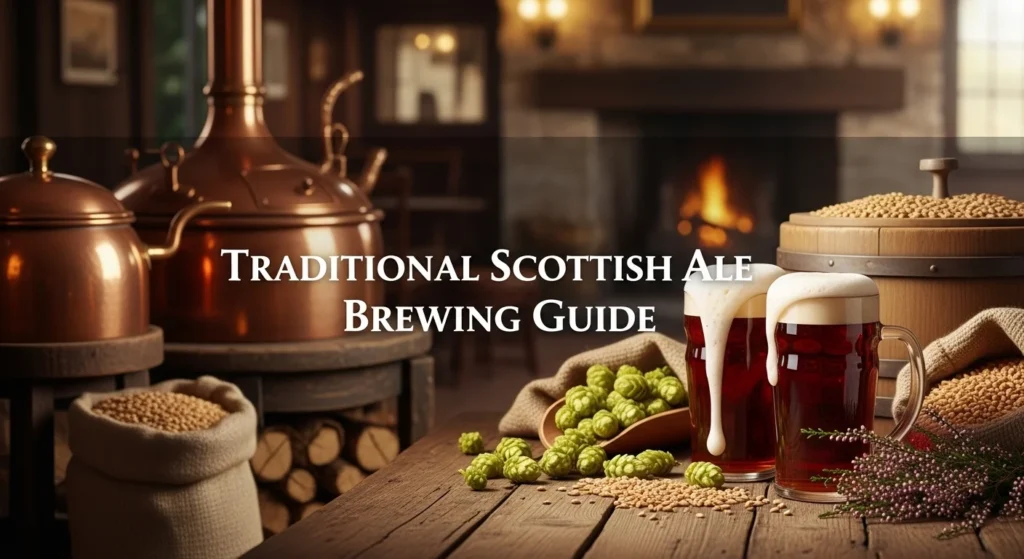
Traditional Scottish Ale brewing guide represents one of the most distinctive and historically rich brewing traditions in the world, requiring mastery of malty grain bills, restrained hop usage, and cool fermentation techniques to create the characteristic caramel sweetness, smooth mouthfeel, and exceptional drinkability that has defined Highland brewing culture for centuries. After developing numerous Traditional Scottish Ale brewing guide recipes over the past nine years and studying authentic methods from historic Scottish breweries, I can confidently state that mastering this style demands understanding the delicate balance between Golden Promise malt foundations, minimal hop character, and controlled fermentation that creates the signature amber-brown colors, toffee-like complexity, and remarkable sessionability defining authentic Scottish brewing heritage.
My Traditional Scottish Ale brewing guide journey began with attempts that either produced overly hoppy beers that masked the essential malt character or created cloying, sweet ales that lacked the clean finish that makes Scottish ales so drinkable. The breakthrough came when I discovered that proper malt selection and restrained hopping create the foundation while cool fermentation temperatures and traditional techniques develop the smooth, malty character that separates exceptional Scottish ales from ordinary amber beers through authentic Highland methods.
This comprehensive Traditional Scottish Ale brewing guide explores every aspect of Highland brewing including historical grain bill formulations, traditional mashing techniques, minimal hop utilization, and specialized fermentation protocols that produce the characteristic rich amber appearance, caramel-toffee complexity, and moderate strength defining Scotland’s most beloved beer contribution. From understanding the shilling system origins to mastering modern applications of traditional techniques, this guide provides complete knowledge for creating outstanding Scottish ales that honor Celtic brewing heritage.
Whether you’re exploring British brewing traditions or seeking to master malty, sessionable ales, learning Traditional Scottish Ale brewing guide provides essential skills while creating satisfying beers that demonstrate both technical precision and cultural authenticity through systematic approach and proven Scottish methods.
Understanding Traditional Scottish Ale Character
Authentic Scottish Ale displays amber to dark brown coloration with rich malty character ranging from 1.030-1.075 original gravity while achieving 2.5-7% alcohol content through malt-forward grain bills featuring Golden Promise and specialty grains that create the signature caramel sweetness, smooth body, and restrained hop presence defining traditional Highland brewing excellence.
Rich Malty Appearance
Traditional Scottish Ales exhibit amber to deep brown hues ranging from 13-22 SRM with excellent clarity and persistent tan foam while showcasing proper malt integration and traditional brewing methods that create visual appeal essential for authentic Highland presentation.
Complex Malty Sweetness
Caramel, toffee, and brown sugar notes dominate the profile while Golden Promise malt and specialty grains contribute bread-like sweetness and toasted character that defines traditional Scottish brewing through historical grain selection.
Minimal Hop Presence
Restrained hop character allows malt expression while English noble hops provide just enough bitterness to balance sweetness without overwhelming the delicate malt complexity through traditional Highland brewing philosophy.
Smooth, Medium Body
Traditional body provides satisfying mouthfeel while careful grain bill construction and fermentation management create substantial texture that supports malt complexity without heaviness through proven Scottish techniques.
Clean Scottish Yeast Character
Scottish ale yeast produces minimal esters while cool fermentation temperatures maintain clean profiles that allow malt character complete dominance without competing fermentation flavors through traditional methods.
For comprehensive Traditional Scottish Ale brewing techniques and authentic Highland methods, explore the historic Celtic brewing resources at BrewMyBeer’s traditional ale section, where Scottish brewing wisdom meets modern homebrewing precision.
Essential Traditional Scottish Ingredients
Authentic Traditional Scottish Ale brewing guide requires specific ingredient combinations including quality Scottish malts, traditional British hops, authentic yeast strains, and proper water treatment that create distinctive character through ingredient authenticity and historical accuracy.
Golden Promise Malt Foundation
Premium Scottish Golden Promise malt comprises 75-85% of grain bills providing essential biscuity, nutty character while contributing the clean, rich foundation that defines traditional Scottish brewing quality and authenticity through terroir expression.
Specialty Malt Integration
Crystal malts including Caramunich and British varieties add 5-15% caramel complexity while roasted barley and chocolate malt provide color and subtle roasted notes that enhance rather than dominate malt foundations.
Traditional Color Grains
Small amounts of roasted barley create authentic color while contributing dry, coffee-like notes that balance sweetness without harsh astringency through careful proportion control and traditional usage patterns.
Flaked Grains Enhancement
Flaked barley or maize improve body and head retention while providing smooth mouthfeel and enhanced foam stability that creates traditional Scottish ale drinking experience through texture modification.
English Noble Hops
Fuggle and East Kent Goldings provide traditional character while contributing gentle, earthy bitterness that complements rather than competes with malt complexity through historical hop variety selection.
Scottish Ale Yeast Strains
Wyeast 1728 or White Labs WLP028 produce authentic character while maintaining clean fermentation and proper attenuation that showcases malt complexity without unwanted ester development.
Traditional Scottish Water
Soft to moderately hard water supports malt extraction while providing proper mineral balance that enhances traditional brewing methods without harsh interference through balanced chemistry.
| Ingredient Component | Percentage Range | Character Contribution | Quality Requirements | Scottish Authenticity |
|---|---|---|---|---|
| Golden Promise Malt | 75-85% | Biscuity foundation | Premium Scottish | Traditional terroir |
| Crystal Malts | 10-15% | Caramel sweetness | British varieties | Historical usage |
| Roasted Grains | 2-5% | Color and balance | Controlled quantity | Traditional proportion |
| Noble Hops | 10-25 IBU | Gentle bitterness | English varieties | Highland tradition |
| Scottish Yeast | Clean strain | Neutral fermentation | Authentic cultures | Character preservation |
Complete Traditional Scottish Ale Recipe
This authentic Traditional Scottish Ale brewing guide recipe produces 5 gallons of classic Highland ale with proper malt complexity, balanced sweetness, and traditional character through carefully selected ingredients and proven Scottish brewing techniques.
Scottish 70/- Heavy Recipe Specifications
Target parameters include 1.035 original gravity, 1.012 final gravity, 13 IBU, 13 SRM, and 3.0% ABV while creating authentic Scottish Heavy character through traditional ingredient ratios and systematic Highland brewing methods.
Traditional Grain Bill Architecture
Premium grain bill includes 6.5 lbs Golden Promise pale ale malt, 6 oz flaked barley, 3 oz Caramunich II malt, 1.5 oz pale chocolate malt, and 1.5 oz roasted barley while providing proper foundation, complexity, and authentic color development.
Restrained Hop Schedule
Conservative hop program includes 0.5 oz Fuggle hops at 60 minutes while maintaining traditional restraint that allows malt character complete dominance throughout the flavor profile.
Authentic Scottish Yeast
Recommended yeast includes White Labs WLP028 Edinburgh Scottish Ale while ensuring clean fermentation and proper attenuation that showcases malt integration through traditional Scottish brewing character.
Alternative Strong Scotch Ale
Higher strength version includes 9.9 lbs Maris Otter extract, 5 oz debittered black malt, and 1.5 oz Golding hops while maintaining traditional character through quality ingredient selection and proven methods.
Traditional Scottish Mashing Techniques
Authentic Scottish mashing employs high-temperature single infusion methods that optimize malt extraction while creating proper body and sweetness retention through systematic temperature control and traditional Highland brewing techniques.
High-Temperature Mash Protocol
Mash at 156-158°F for enhanced body and sweetness while promoting alpha amylase activity that creates proper balance between fermentability and residual sugars essential for traditional Scottish character.
Extended Mash Duration
Hold mash temperature for 60-90 minutes while ensuring complete starch conversion and optimal enzyme activity that maximizes extract efficiency from traditional Scottish grain bills.
Late Dark Grain Addition
Add roasted grains during final 15 minutes of mash while minimizing harsh extraction and tannin development that might create inappropriate astringency in smooth Scottish ales.
Recirculation and Lautering
Begin recirculation carefully establishing clear wort flow while maintaining grain bed integrity and achieving optimal extract efficiency through traditional lautering methods.
Sparge Water Management
Sparge slowly with 170°F water maintaining proper pH while preventing tannin extraction and ensuring complete sugar recovery from complex traditional grain bills.
Extended Boiling and Wort Concentration
Traditional Scottish Ale brewing guide emphasizes extended boiling methods that develop proper color, concentrate flavors, and create the characteristic Maillard complexity defining authentic Highland brewing through thermal processing innovation.
Extended Boil Duration
Traditional 90-180 minute boils enhance color and flavor while extended thermal processing creates proper caramelization and concentration that defines authentic Scottish brewing character through proven methods.
Wort Concentration Technique
Remove portion of wort for separate concentration while boiling small volume to syrup consistency before returning to main kettle creates enhanced color and flavor complexity.
Minimal Hop Utilization
Single bittering hop addition maintains restraint while 60-minute addition provides just enough bitterness to balance malt sweetness without overwhelming traditional character through conservative usage.
Kettle Caramelization
Long boils create natural caramel flavors while Maillard reactions contribute toffee and brown sugar notes that enhance rather than mask malt complexity through traditional thermal processing.
Late Hop Additions
Optional late additions provide subtle aroma while maintaining hop restraint and allowing malt character complete dominance through traditional Scottish brewing philosophy.
Cool Scottish Fermentation
Traditional Scottish fermentation emphasizes cool temperature control that maintains clean yeast character while developing the smooth, malty profiles that define authentic Highland brewing through systematic environmental management.
Cool Temperature Protocol
Ferment at 59-65°F for clean character development while cooler temperatures promote traditional Scottish ale character and prevent excessive ester formation that might compete with malt expression.
Scottish Yeast Characteristics
Traditional strains produce minimal esters at cool temperatures while maintaining proper attenuation and allowing malt complexity complete expression without competing fermentation flavors.
Extended Primary Duration
Allow 7-14 days primary fermentation while monitoring gravity changes and ensuring complete yeast activity before conditioning phases that develop final traditional character.
Secondary Conditioning Benefits
Extended secondary improves smoothness and clarity while allowing flavors to integrate and harsh edges to smooth creating the refined drinking experience defining quality Scottish ales.
Temperature Control Importance
Consistent cool temperatures prevent off-flavors while maintaining traditional fermentation conditions that create authentic Scottish character through proven environmental management.
Water Chemistry and Treatment
Proper water chemistry supports Traditional Scottish Ale brewing guide development while traditional Highland water profiles enhance malt extraction and brewing methods through balanced mineral content and systematic treatment.
Scottish Water Profile Emulation
Soft to moderately hard water enhances malt character while supporting traditional Scottish brewing conditions that create optimal extraction and flavor development through balanced chemistry.
Mineral Balance Optimization
Balanced calcium and alkalinity support extraction while providing proper mash pH and yeast health without excessive mineral character that might interfere with smooth drinking experience.
pH Management
Target brewing water pH around 6.0-6.5 while ensuring proper mash pH achievement and enzyme activity through appropriate buffering capacity and systematic monitoring.
Chloride Enhancement
Moderate chloride levels enhance mouthfeel and malt character while supporting traditional body development without excessive sulfate that might create harsh hop character inappropriate for Scottish ales.
Treatment Restraint
Avoid excessive water modification while maintaining clean mineral profile that allows traditional ingredients complete expression without chemical interference or harsh character development.
Shilling System and Style Variations
Traditional Scottish brewing employed the shilling system that categorized ales by strength while parti-gyle brewing methods created multiple beer strengths from single mash through systematic production efficiency and economic considerations.
60/- Light Ale Characteristics
Lowest strength version targeting 2.5-3.5% ABV while maintaining traditional malt character and drinkability through reduced grain bills that preserve authentic Scottish brewing methods.
70/- Heavy Ale Profile
Standard strength achieving 3.0-4.0% ABV while providing balanced malt character and moderate strength that defines traditional Scottish session brewing through proven grain bill architecture.
80/- Export Ale Standards
Higher strength version reaching 4.0-5.5% ABV while enhanced malt complexity and body create premium drinking experience through increased ingredient usage and traditional methods.
Wee Heavy/Strong Scotch Ale
Strongest traditional version achieving 6.0-10% ABV while maximum malt richness and warming alcohol create contemplative drinking experience through intensive brewing methods.
Parti-Gyle Production Methods
Traditional brewing created multiple strengths from single mash while economic efficiency and resource utilization maximized production value through systematic brewing innovation and traditional Highland methods.
Modern Brewing Adaptations
Contemporary Traditional Scottish Ale brewing guide incorporates modern techniques while maintaining traditional character through ingredient adaptations and method modifications that honor historical Highland brewing heritage.
Extract Brewing Methods
Quality malt extract maintains traditional character while simplified brewing process preserves authentic Scottish flavor profiles through proper extract selection and specialty grain integration.
Ingredient Substitutions
Modern malt varieties create acceptable alternatives while Maris Otter and American pale malts substitute for Golden Promise when traditional varieties are unavailable or cost-prohibitive.
Contemporary Hop Applications
Modern hop varieties maintain traditional restraint while preserving traditional character through conservative usage that honors Scottish brewing philosophy and malt emphasis.
Advanced Fermentation Control
Modern temperature control improves consistency while maintaining traditional fermentation temperatures and character development through systematic environmental management.
Quality Control Improvements
Modern sanitation and monitoring enhance reliability while preserving traditional character and brewing methods through improved quality systems and systematic evaluation.
Troubleshooting Scottish Ale Production
Traditional Scottish Ale brewing guide challenges require systematic solutions while addressing problems including excessive sweetness, poor malt integration, clarity issues, and fermentation difficulties that affect authenticity and quality.
Excessive Sweetness Issues
Poor attenuation creates cloying character requiring improved yeast health and mash temperature adjustment while ensuring proper fermentation completion and traditional dry finish development.
Inadequate Malt Complexity
Poor specialty malt integration affects character requiring grain bill optimization and technique refinement while achieving proper caramel and toffee development through traditional methods.
Harsh Roasted Character
Excessive dark malt creates astringency requiring reduced quantities or late addition techniques while maintaining color through proper grain selection and timing control.
Poor Fermentation Performance
Cool temperatures stress yeast requiring enhanced management while adequate cell counts and nutrition support complete fermentation at traditional Scottish temperatures.
Clarity and Presentation Problems
Protein haze affects visual appeal requiring extended conditioning, proper fining techniques, and systematic protein management while achieving traditional Scottish presentation standards.
Serving and Cultural Context
Proper Traditional Scottish Ale service honors Highland tradition while appropriate temperature, glassware, and presentation showcase the rich character and cultural heritage that defines authentic Scottish brewing tradition.
Optimal Serving Temperature
Serve at cellar temperature 50-55°F while showcasing malt complexity and traditional character without temperature masking that might reduce flavor appreciation or drinking pleasure.
Traditional Scottish Glassware
Use appropriate pint glasses or traditional vessels while providing proper volume and presentation that enhances visual appeal and supports traditional Scottish service methods and cultural heritage.
Food Pairing Excellence
Excellent with haggis, roasted meats, and hearty Scottish fare while the rich malt character complements traditional Highland cuisine through balanced integration and cultural authenticity.
Cultural Significance Understanding
Appreciating Highland brewing heritage enhances enjoyment while recognizing traditional methods and cultural importance that make Scottish ales more than mere alcoholic beverages through historical appreciation.
Session Drinking Tradition
Traditional strength supports extended consumption while moderate alcohol and smooth character create perfect pub beers for social situations and traditional Highland drinking customs.
Conclusion and Brewing Excellence
Mastering Traditional Scottish Ale brewing guide requires understanding Highland traditions and historical accuracy while systematic malt selection, restrained hopping, and cool fermentation create exceptional examples that honor Scottish brewing heritage.
Begin with quality Scottish ingredients and proven grain ratios while building understanding of malt complexity and traditional brewing techniques that create authentic character through historical Highland methods.
Master temperature control and fermentation management while learning cool fermentation principles that create clean, malty character essential for authentic Scottish ale production through proven techniques.
Practice traditional brewing and cultural appreciation while understanding that Scottish ales represent both brewing skill and cultural heritage through historical techniques and proven Highland methods.
Remember that authentic Traditional Scottish Ale demonstrates Highland brewing mastery through simplicity while creating satisfying, malty ales that showcase Scotland’s most important contribution to world brewing heritage.
The investment in understanding Scottish brewing provides lasting education while creating exceptional malty ales that honor Scotland’s remarkable contribution to global beer culture and tradition.
Choose authentic ingredients and proven techniques while maintaining respect for Highland tradition that created this beloved style through centuries of Scottish brewing refinement and cultural preservation.
About the Author
Amber Maltson is a certified brewing instructor and sustainable brewing advocate with over 14 years of experience specializing in traditional European beer styles and historical brewing methods. Her background in agricultural science and brewing history provides deep insights into the traditional Scottish techniques and malt-forward brewing approaches required for authentic Highland ale production. Amber has extensively studied British Isles brewing traditions through collaborations with historic Scottish breweries and has mastered the systematic approaches to malt selection and cool fermentation that create traditional Scottish character. Her expertise in sustainable brewing practices and historical accuracy makes her particularly knowledgeable about how traditional Scottish brewing methods can inform modern quality standards while preserving cultural authenticity and Highland brewing heritage.
Amber maintains an organic homebrew operation where she recreates historical recipes using traditional ingredients and techniques while testing sustainable brewing practices that honor environmental stewardship. Her systematic approach to traditional brewing helps both commercial and home brewers understand the discipline and cultural appreciation required for styles like Scottish Ales that showcase brewing artistry rather than ingredient innovation or technical complexity. When not researching sustainable brewing practices or perfecting traditional European techniques, Amber enjoys exploring how historical Scottish brewing wisdom can inform modern sustainable practices while preserving the authenticity and cultural heritage that defines exceptional Highland brewing traditions and malty ale production. Contact Amber at amber.maltson@brewmybeer.online or explore her comprehensive brewing guides and traditional technique resources at brewmybeer.online.