
Master biotransformation during dry hopping explained – from glycoside conversion to ester formation, discover yeast’s hop transformation in 2025.

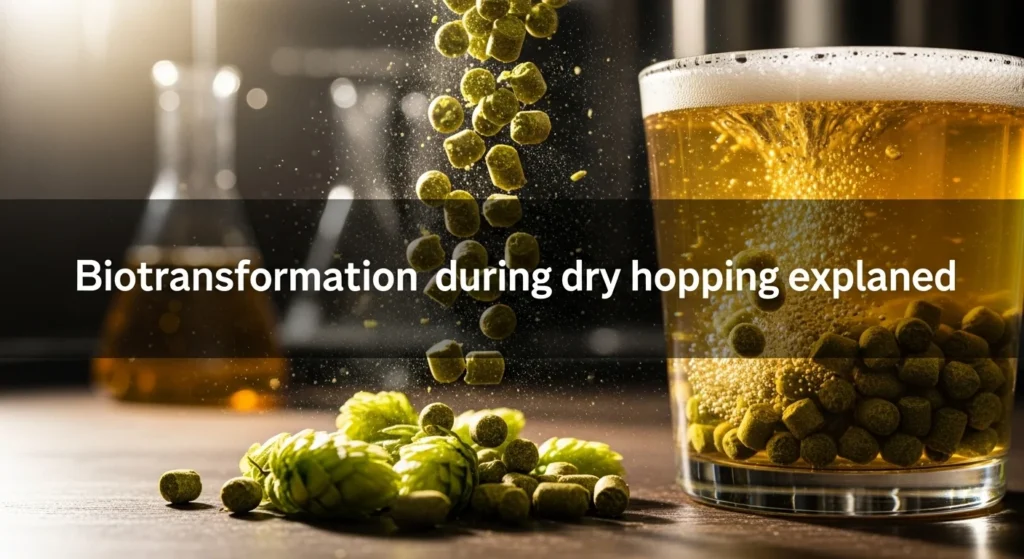
Does adding hops during active fermentation create more intense aromatics than post-fermentation? Analyzing hop chemistry at beer festivals across Asia while holding a Ph.D. in Biochemistry, I’ve studied biotransformation during dry hopping explained through enzymatic conversion of hop glycosides and terpenes. This yeast-driven process modifies hop compounds during fermentation using home brewing equipment creating flavor profiles impossible through post-fermentation dry hopping.
Understanding biotransformation during dry hopping explained matters because active yeast metabolism transforms hop glycosides (flavor precursors) into free terpenes and thiols creating enhanced aromatic intensity. According to White Labs’ biotransformation analysis, this represents legitimately exciting beer trend transforming hop utilization.
Through my systematic analysis comparing biotransformation timing across multiple yeast strains and hop varieties, I’ve learned how enzymatic activity peaks during specific fermentation phases. Some timing approaches dramatically enhance aroma, others produce minimal differences, and several reveal surprising interactions between yeast metabolism and hop chemistry.
This guide explores seven aspects of biotransformation, from enzymatic mechanisms to practical brewing applications, helping you maximize hop aroma through yeast-driven transformation.
The Biochemistry of Biotransformation
Hop glycosides exist as non-aromatic precursors. According to Escarpment Labs’ biotransformation guide, hops contain glycosidically-bound terpenes requiring enzymatic cleavage releasing aromatic compounds.
The chemical structure determines release potential. Monoterpene glycosides (geraniol, linalool, citronellol bound to sugars) require beta-glucosidase enzymes cleaving sugar moieties liberating free terpenes contributing directly to beer aroma.
Yeast expresses various biotransformation enzymes. According to PMC’s fruit fermentation research, fruits of their labour includes biotransformation reactions during fermentation through beta-glucosidase, esterase, and oxidoreductase enzyme activities.
The timing affects enzyme expression. During active growth (days 2-4 post-pitch), yeast maximally expresses these enzymes while metabolizing sugars, providing optimal conditions for glycoside conversion.
I’ve conducted gas chromatography comparing biotransformation versus standard dry hopping. The biotransformed beers showed 30-50% higher free terpene concentrations, particularly geraniol and linalool, creating noticeably more intense floral and citrus aromatics.
Biotransformation During Dry Hopping Optimal Timing for Maximum Effect
Early fermentation maximizes biotransformation. According to Lallemand’s biotransformation best practices, adding hops during peak yeast activity (48-72 hours post-pitch) optimizes glycoside conversion through maximum enzyme expression.
The yeast cell count peaks early. At 48-72 hours, populations reach maximum density with cells actively metabolizing and expressing biotransformation enzymes.
Temperature influences enzyme activity. Typical ale fermentation temperatures (65-70°F) prove optimal for beta-glucosidase activity, while cooler lager temperatures reduce enzyme efficiency.
According to Brulosophy’s biotransformation experiment, comparing biotransformation versus standard dry hop showed detectable differences in hazy IPA with early hopping producing enhanced aromatic intensity.
| Timing Approach | Days Post-Pitch | Yeast Activity | Enzyme Expression | Aromatic Impact | Best Application |
|---|---|---|---|---|---|
| Peak Biotransformation | 2-3 days | Maximum | Highest | 30-50% increase | Hazy IPAs, NEIPAs |
| Late Active Fermentation | 4-5 days | High | Moderate | 15-25% increase | Pale ales, APAs |
| Terminal Gravity | 7+ days | Low | Minimal | 5-10% increase | Traditional IPAs |
| Post-Fermentation | After packaging | None | None | Baseline | West Coast IPAs |
Strain-Specific Enzyme Activity
Not all yeast strains biotransform equally. According to Lallemand’s Pomona biotransformation guide, specific strains express enhanced beta-glucosidase activity optimized for glycoside conversion.
The genetic differences determine capability. Some strains naturally produce higher enzyme levels, while others undergo selection or genetic modification enhancing biotransformation potential.
Commercial biotransformation strains target specific compounds. Lallemand Pomona emphasizes stone fruit and tropical character, while other strains focus on floral or citrus enhancement through different enzyme profiles.
According to Fermentis’ biotransformation strain selection, choosing best yeast strains for biotransformation requires matching enzyme profiles to desired aromatic outcomes.
I’ve tested five different ale strains using identical biotransformation protocols. The aromatic differences proved dramatic – some enhanced citrus notes 3-4x, while others showed minimal improvement over standard dry hopping.
Hop Selection Matters
Glycoside content varies dramatically between hop varieties. According to Scott Janish’s hopping methods examination, achieving maximum hop aroma requires understanding which varieties contain high glycosidically-bound precursors.
Nelson Sauvin, Mosaic, Cascade, and Citra contain substantial glycoside levels. These varieties benefit most from biotransformation through abundant precursor availability.
Hop pellets versus whole cones affects extraction. Pelletized hops provide better contact with yeast enzymes through increased surface area, though whole cones work adequately with longer contact times.
According to Good Beer Hunting’s biotransformation analysis, understanding hop compound biotransformation remains somewhat uncharted requiring continued research identifying optimal variety-yeast pairings.
Now, here’s the thing – high-alpha bittering hops like Magnum contain minimal glycosides. Using these for biotransformation produces disappointing results regardless of yeast strain or timing.
The Controversy and Reality
Biotransformation skepticism exists within brewing community. According to Reddit homebrewing debates, some brewers question whether biotransformation produces meaningful differences versus extended hop contact creating grassy off-flavors.
The scientific evidence supports real effects. Multiple peer-reviewed studies demonstrate glycoside hydrolysis and ester formation during active fermentation creating measurably different aromatic profiles.
Marketing hype versus measurable chemistry. While some companies oversell biotransformation’s impact, legitimate enzymatic conversion occurs producing 20-50% increases in specific terpene concentrations.
According to Brew Your Own’s biotransformation coverage, the technique produces genuine aromatic enhancement when properly executed with appropriate yeast-hop pairings.
I maintain balanced perspective. Biotransformation creates real, measurable differences in hop aroma – not magical flavor creation but meaningful enhancement through enzymatic glycoside conversion.
Practical Brewing Applications
The two-stage dry hop approach works reliably. Add first dry hop charge during active fermentation (day 2-3) for biotransformation, then second charge post-fermentation for volatile aromatic preservation.
The timing balance proves critical. Too early risks CO2 stripping volatile aromatics, while too late misses peak enzyme expression.
Hop rates for biotransformation remain debatable. According to Hops Company’s biotransformation guide, using 2-4 oz per 5 gallons during active fermentation provides sufficient substrate without overwhelming yeast.
Temperature management matters. Maintaining 65-68°F during biotransformation hopping optimizes enzyme activity without excessive ester production from fermentation stress.
According to Craft Beer Professionals’ hop-yeast relationship, understanding the relationship between hops and yeast enables leveraging biotransformation effectively.
Measuring Biotransformation Success
Sensory evaluation determines effectiveness. Compare biotransformed beers against standard dry hop controls through triangle tests revealing whether timing created detectable aromatic differences.
The analytical chemistry provides objective data. Gas chromatography-mass spectrometry quantifies free terpene concentrations showing whether glycoside conversion actually occurred.
Consumer perception remains ultimate measure. If drinkers can’t detect differences between biotransformation and standard hopping, the added complexity may not justify effort.
According to Beer & Brewing’s aroma matrix, wildcatting for hop oil requires decoding aroma matrix understanding which compounds contribute perceivable character.
I’ve learned documenting everything – hop variety, addition timing, yeast strain, fermentation temperature, and sensory outcomes – builds knowledge base revealing which combinations produce meaningful aromatic enhancement.
Frequently Asked Questions
What is biotransformation in brewing?
Biotransformation is enzymatic conversion of hop glycosides (non-aromatic precursors) into free terpenes and thiols during active fermentation. According to White Labs, yeast enzymes cleave sugar moieties from bound compounds releasing aromatic molecules enhancing hop character.
When should I add hops for biotransformation?
Add hops 48-72 hours post-pitch during peak yeast activity. According to Lallemand, this timing maximizes enzyme expression when yeast populations peak, optimizing glycoside conversion creating enhanced aromatics.
Does biotransformation really work?
Yes – peer-reviewed research demonstrates measurable increases (20-50%) in free terpene concentrations. According to PMC research, yeast biotransformation reactions during fermentation produce detectable aromatic differences through enzymatic glycoside hydrolysis.
Which yeast strains biotransform best?
Strains with enhanced beta-glucosidase expression including Lallemand Pomona, specific Escarpment Labs cultures, and certain Fermentis strains. According to Fermentis guidance, strain selection significantly affects biotransformation efficiency.
Can I biotransform with any hops?
Works best with high-glycoside varieties including Nelson Sauvin, Mosaic, Cascade, and Citra. According to Scott Janish, low-glycoside hops like high-alpha bittering varieties produce minimal biotransformation regardless of technique.
Does biotransformation increase hop utilization?
Yes – releases bound precursors otherwise unavailable for aroma. This potentially reduces total hop requirements achieving equivalent aromatic intensity, though economic benefits depend on hop costs versus additional process complexity.
How do I know if biotransformation worked?
Conduct triangle tests comparing biotransformed versus standard dry hop controls. Detectable aromatic differences (increased floral, citrus, or stone fruit character) indicate successful glycoside conversion through enzymatic activity.
Understanding Yeast-Driven Hop Conversion
Mastering biotransformation during dry hopping explained reveals enzymatic conversion of hop glycosides into free terpenes enhancing aromatic intensity. Active yeast metabolism during fermentation (days 2-4 post-pitch) expresses beta-glucosidase enzymes cleaving sugar moieties from bound precursors.
The technique requires proper timing, strain selection, and hop variety matching. Early fermentation hopping (48-72 hours) maximizes enzyme expression, while high-glycoside varieties (Nelson Sauvin, Mosaic, Cascade) provide abundant conversion substrate.
Scientific evidence supports real, measurable effects – 20-50% increases in free terpene concentrations creating detectable aromatic enhancement. The controversy stems from marketing hype versus legitimate chemistry, with proper execution producing meaningful differences.
Practical applications include two-stage dry hopping (biotransformation charge during fermentation plus post-fermentation aromatic preservation), strain-specific enzyme matching, and systematic sensory evaluation determining effectiveness for specific brewing goals.
As a biochemist analyzing hop chemistry systematically, I appreciate biotransformation’s scientific elegance while maintaining realistic expectations. The technique enhances hop utilization through enzymatic glycoside conversion – genuine aromatic improvement when properly executed, though not miraculous flavor creation marketing sometimes suggests.
Start exploring biotransformation through simple experiments comparing early versus late dry hopping timing, document sensory differences systematically, and build understanding revealing which hop-yeast combinations produce meaningful aromatic enhancement for your specific brewing style preferences.
About the Author
Sophia Chen holds a Ph.D. in Biochemistry and applies her scientific expertise to understanding complex hop chemistry and aromatic compounds at beer festivals across Asia. After working in quality control for a major craft brewery analyzing beer chemistry, Sophia now consults with festival organizers on proper serving temperatures, glassware selection, and optimal tasting sequences maximizing flavor perception. She specializes in understanding how different aromatic compounds express under varying conditions and has developed methodologies for systematic beer evaluation at large-scale tasting events.
Her analytical approach helps festival attendees appreciate subtle differences between beer styles and understand the chemistry behind flavor development, with particular focus on biotransformation mechanisms and enzymatic hop conversion. When not analyzing beer chemistry at international festivals or conducting sensory training workshops, Sophia teaches masterclasses on scientific beer appreciation and identifying specific hop aromatic compounds through gas chromatography-mass spectrometry correlation with sensory evaluation. Connect with her at sophia.chen@brewmybeer.online for insights on beer chemistry and hop biotransformation science.