
Learn brewing English Bitter at home with traditional recipes, proper ingredient selection, and authentic brewing techniques for creating classic British pub-style ales with perfect balance.

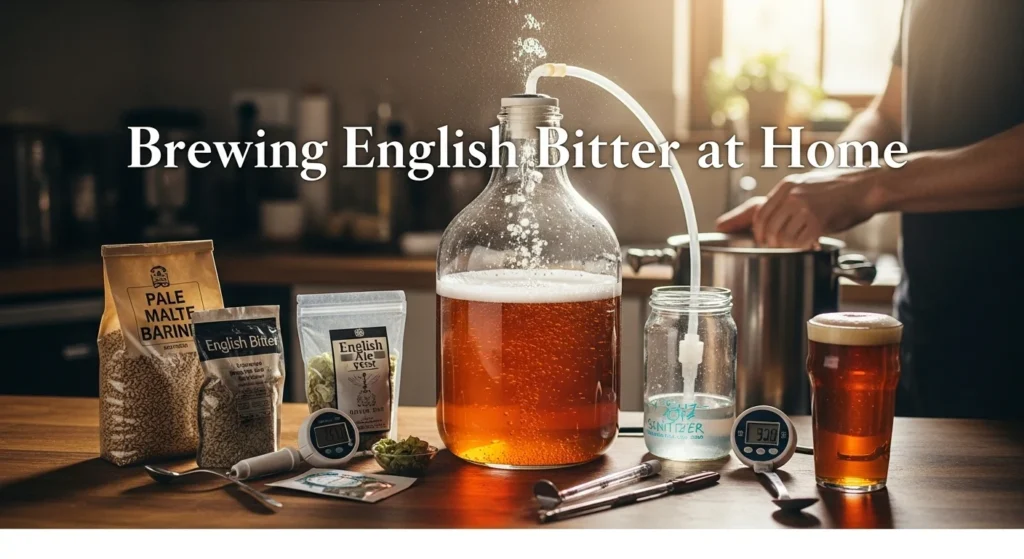
Brewing English Bitter at home represents one of the most rewarding and accessible beer styles for homebrewers seeking to master traditional British brewing techniques while creating sessionable ales with perfect balance of malt sweetness and hop bitterness. After brewing countless English Bitter variations over the past decade and studying traditional British brewing methods, I can confidently state that mastering this style requires understanding the subtle interplay between British malts, classic English hops, and proper fermentation management that creates the distinctive character and drinkability that made bitter the cornerstone of British pub culture.
My English Bitter brewing journey began with attempts that lacked the characteristic balance and smooth drinkability I expected from authentic British examples. The transformation occurred when I discovered that proper Maris Otter selection and traditional English hop varieties create the distinctive malty backbone while controlled fermentation temperatures develop the clean, balanced character that defines exceptional British bitter ales.
This comprehensive guide to brewing English Bitter at home explores every aspect of authentic British brewing including traditional grain bill formulations, classic hop selection, proper mashing techniques, and conditioning methods that produce the smooth, balanced character and exceptional drinkability characteristic of the finest British pub ales. From understanding the importance of British base malts to mastering traditional cask conditioning, this guide provides complete knowledge for creating exceptional bitter that rivals the best British brewery examples.
Whether you’re attempting your first British ale or seeking to perfect traditional brewing methods, mastering brewing English Bitter at home provides essential skills while creating one of the world’s most balanced and sessionable beer styles that showcases British brewing craftsmanship and centuries of brewing tradition.
Understanding Traditional English Bitter Characteristics
Authentic English Bitter displays amber to copper coloration with moderate bitterness ranging from 1.030-1.048 original gravity while achieving 3.0-5.0% alcohol content through clean fermentation that emphasizes malt character balanced by traditional English hop varieties and exceptional drinkability.
Color and Appearance Standards
Traditional English Bitter exhibits amber to deep copper hues ranging from 8-18 SRM with good clarity and persistent off-white foam that reflects proper British malt selection and traditional brewing techniques developed over centuries.
Malty Backbone Foundation
British pale ale malts provide distinctive biscuity and nutty character with Maris Otter creating the classic foundation while crystal malts contribute caramel sweetness and body that balances hop bitterness without overwhelming subtle complexity.
Balanced Hop Character
Classic English hop varieties provide earthy, floral bitterness ranging from 20-40 IBU through Fuggle, East Kent Goldings, and Target hops while contributing traditional character without aggressive intensity or citrus qualities.
Clean Ale Fermentation
Proper English ale yeast produces balanced character with subtle fruitiness that complements malt and hop flavors while avoiding excessive esters or off-flavors that might interfere with traditional British bitter profile.
Sessionable Strength Range
English Bitter encompasses three traditional categories including Ordinary Bitter (3.0-3.8% ABV), Best Bitter (3.8-4.6% ABV), and Strong Bitter (4.6-6.2% ABV) while maintaining characteristic balance and drinkability across strength variations.
For comprehensive English bitter brewing techniques and traditional British methods, explore the authentic British brewing resources at BrewMyBeer’s English ale section, where traditional British brewing wisdom meets modern homebrewing precision.
Essential English Bitter Ingredients
Authentic English Bitter requires specific British ingredients including premium pale ale malts, traditional crystal malts, classic English hop varieties, and proper ale yeast strains that create the distinctive character impossible to replicate with substitute ingredients.
British Base Malt Selection
Maris Otter provides the classic English bitter foundation comprising 80-90% of grain bill while contributing distinctive biscuity and nutty flavors that separate British ales from continental or American interpretations through superior malt character.
Traditional Crystal Malt Integration
British crystal malts add essential caramel sweetness and body ranging from 40L-120L while providing color development and mouthfeel enhancement that balances hop bitterness without creating cloying sweetness or overwhelming complexity.
Specialty Grain Additions
Small amounts of Victory, Biscuit, or Special Roast malts enhance complexity while maintaining style authenticity through careful integration that complements rather than dominates the traditional British malt profile.
Classic English Hop Varieties
Traditional hop varieties including Fuggle, East Kent Goldings, Target, and Progress provide authentic earthiness and floral character while delivering appropriate bitterness levels without harsh astringency or inappropriate citrus qualities.
British Ale Yeast Strains
Authentic English ale yeast including Wyeast 1968 London ESB and White Labs WLP002 produce traditional character with appropriate attenuation while contributing subtle fruitiness that enhances rather than competes with malt and hop complexity.
| Ingredient Type | Traditional Options | Percentage/Amount | Character Contribution | Quality Importance |
|---|---|---|---|---|
| Base Malt | Maris Otter | 80-90% | Biscuity foundation | Critical |
| Crystal Malt | 60L-80L Crystal | 5-15% | Caramel sweetness | Essential |
| Specialty Malts | Victory, Biscuit | 0-5% | Added complexity | Optional |
| English Hops | Fuggle, EKG, Target | 20-40 IBU | Earthy bitterness | Essential |
| Ale Yeast | London ESB strains | Standard pitch | Clean fermentation | Important |
Complete English Bitter Recipe Formulation
This comprehensive English Bitter recipe produces 5 gallons of authentic British-style ale with proper malt balance, traditional hop character, and classic British fermentation profile through carefully selected ingredients and proven brewing techniques.
All-Grain Best Bitter Specifications
Target parameters include 1.046 original gravity, 1.011 final gravity, 33 IBU, 11 SRM, and 4.6% ABV while creating authentic English Bitter character through proper ingredient ratios and traditional British brewing methods.
Traditional Grain Bill Composition
Premium grain bill includes 7.25 lbs Maris Otter pale ale malt, 13.6 oz medium crystal malt (80L), and 8 oz Victory malt while providing proper foundation, sweetness balance, and complexity enhancement essential for style authenticity.
Classic Hop Schedule Design
Traditional hop additions include 1.00 oz Fuggle at 60 minutes, 1.00 oz East Kent Goldings at 30 minutes, and 1.00 oz East Kent Goldings at 5 minutes while providing balanced bitterness progression and authentic British character.
Proper Yeast Selection
Recommended British ale yeast strains include White Labs WLP002 English Ale or Wyeast 1968 London ESB while ensuring traditional fermentation character and appropriate attenuation for classic British bitter profile.
Extract Version Adaptation
Extract brewers substitute 4.7 lbs pale liquid malt extract with 0.5 lbs crystal malt and 0.25 lbs Special Roast while maintaining traditional character through proper specialty grain steeping and hop utilization.
Traditional Mashing and Lautering
English Bitter mashing employs single infusion techniques with moderate temperatures that promote balanced fermentability while extracting proper malt character and maintaining traditional British brewing methods.
Single Infusion Mash Protocol
Mash at 152°F (67°C) using 1.25 qts/lb water ratio for 60 minutes while promoting moderate fermentability that creates proper balance between residual sweetness and alcohol development essential for British bitter character.
Temperature Consistency Maintenance
Maintain consistent mash temperature throughout rest period while ensuring complete starch conversion and optimal enzyme activity that maximizes extract efficiency without compromising malt character or creating thin body.
Mash-Out Temperature Rise
Raise mash temperature to 168°F (76°C) for mash-out while stopping enzymatic activity and improving lautering efficiency through proper temperature control and systematic heating procedures.
Gentle Sparging Technique
Sparge slowly with 170°F (77°C) water while collecting wort until pre-boil volume reaches target and gravity drops to appropriate levels without extracting excessive tannins or harsh compounds.
Pre-Boil Volume and Gravity
Collect approximately 5.9 gallons pre-boil wort targeting appropriate gravity while ensuring adequate volume for proper boil concentration and hop utilization throughout extended boiling period.
Boiling and Hop Utilization
Traditional English Bitter boiling requires extended duration and systematic hop additions that develop proper bitterness while maintaining traditional British hop character and ensuring complete protein coagulation.
Extended Boil Duration
Boil wort for 90 minutes total while concentrating flavors and developing color that creates proper British bitter character through extended thermal processing and hop integration.
Traditional Hop Addition Schedule
Add bittering hops at 60 minutes, flavor hops at 30 minutes, and aroma hops at 5 minutes while creating balanced hop profile that showcases traditional English hop varieties and authentic British character.
Proper IBU Development
Target 30-35 IBU through systematic hop additions while balancing bitterness with malt sweetness and creating the moderate hop presence characteristic of traditional British bitter ales.
Kettle Additions and Clarification
Add Irish moss at 15 minutes and yeast nutrients at 10 minutes while improving protein coagulation and fermentation health through proper additive timing and utilization.
Final Boil Management
Maintain rolling boil throughout duration while ensuring proper evaporation and hop utilization without excessive caramelization or harsh compound development that might compromise traditional character.
Fermentation Management and Temperature Control
English Bitter fermentation requires controlled temperature management and proper yeast handling while developing clean character through systematic temperature progression and conditioning that creates smooth, balanced British ale profile.
Initial Fermentation Temperature
Begin fermentation at 64°F (18°C) with gradual temperature rise to 67°F (19°C) while promoting controlled yeast activity that develops appropriate ester levels without excessive fermentation stress.
Temperature Progression Protocol
Allow temperature to naturally rise during active fermentation while monitoring yeast health and fermentation progress to ensure complete attenuation without off-flavor development or fermentation problems.
Final Temperature Rise
Raise temperature to 72°F (22°C) during final fermentation stages while encouraging complete attenuation and diacetyl cleanup that ensures proper finish and traditional British bitter character.
Fermentation Duration Management
Allow 10-14 days primary fermentation while monitoring specific gravity changes and ensuring complete yeast activity before proceeding to conditioning or packaging stages.
Cold Crashing and Clarification
Cold crash to 33°F (1°C) for 48 hours after fermentation completion while promoting yeast settling and clarity development that improves final beer presentation and quality.
Traditional Cask Conditioning Methods
Authentic English Bitter benefits from cask conditioning that develops traditional character and serving presentation while creating the smooth mouthfeel and natural carbonation characteristic of proper British pub ales.
Cask Preparation and Filling
Transfer beer to proper cask with priming sugar and optional finings while ensuring adequate yeast for secondary fermentation and natural carbonation development.
Secondary Fermentation Development
Allow 5-7 days secondary fermentation in cask while developing natural carbonation and flavor integration through continued yeast activity and proper conditioning environment.
Dry Hopping Integration
Add 0.25-0.5 oz whole East Kent Goldings during cask conditioning while enhancing aroma and traditional character through gentle hop integration without excessive bitterness extraction.
Proper Serving Temperature
Serve at 50-55°F (10-13°C) for optimal character while showcasing malt complexity and hop balance without cold-masking flavors or creating harsh sensations through improper temperature management.
Beer Engine Service
Traditional beer engine service creates proper presentation while providing authentic British pub experience and optimal mouthfeel through specialized equipment and serving technique.
Modern Homebrewing Adaptations
Contemporary homebrewing techniques adapt traditional methods while maintaining authentic character through proper ingredient selection and brewing process management that accommodates modern equipment limitations.
Bottling and Kegging Options
Bottle conditioning with reduced priming sugar targeting 1.5-2.0 volumes CO2 while maintaining traditional low carbonation that enhances drinkability and authentic British character.
Temperature Control Equipment
Use fermentation chambers or temperature controllers while maintaining proper fermentation temperatures that develop authentic English ale character through systematic temperature management.
Extract Brewing Simplification
Extract versions maintain traditional character through proper extract selection and specialty grain steeping while providing accessible entry point for developing British ale brewing skills.
Ingredient Substitution Guidelines
American equivalents can approximate British character while understanding limitations and adjusting techniques to compensate for ingredient differences and maintain style authenticity.
Modern Equipment Integration
Contemporary brewing equipment enhances consistency while maintaining traditional character through proper technique adaptation and systematic quality control procedures.
Water Chemistry and Treatment
Proper water chemistry enhances English Bitter character while replicating traditional British brewing water profiles that optimize malt extraction and hop utilization for authentic flavor development.
Burton-on-Trent Water Profile
Traditional Burton water contains high sulfate levels that enhance hop bitterness perception while supporting proper malt extraction and traditional British bitter character through mineral balance.
Water Treatment Strategies
Adjust brewing water with gypsum additions while achieving appropriate calcium and sulfate levels that enhance hop character and support traditional British brewing chemistry.
pH Optimization
Target mash pH between 5.2-5.6 while ensuring proper enzyme activity and flavor development through systematic pH monitoring and adjustment procedures.
Mineral Balance Considerations
Balance calcium, magnesium, and sulfate levels while supporting yeast health and proper fermentation that develops clean British ale character without off-flavors or fermentation problems.
Regional Water Variations
Different British regions emphasize various mineral profiles while creating subtle character differences that reflect local brewing traditions and water source characteristics.
Troubleshooting Common Issues
English Bitter brewing challenges require systematic solutions while addressing problems including excessive sweetness, harsh bitterness, poor balance, and inadequate malt character that prevent authentic British character achievement.
Balance Problems and Solutions
Malt-hop imbalance requires recipe adjustment while modifying grain bill ratios or hop additions to achieve proper traditional British bitter balance without overwhelming individual components.
Attenuation Issues
Poor attenuation creates excessive sweetness requiring yeast health improvement and temperature management while ensuring complete fermentation and appropriate final gravity for style requirements.
Harsh Bitterness Correction
Excessive hop harshness indicates water chemistry problems or improper hop utilization requiring technique adjustment and mineral balance optimization for smooth British character.
Clarity and Presentation
Poor clarity affects visual presentation requiring proper fining techniques and conditioning protocols while maintaining traditional character and improving overall quality and appeal.
Off-Flavor Prevention
Common off-flavors including diacetyl and esters require proper fermentation management and yeast health while maintaining clean character essential for traditional British bitter appreciation.
Recipe Variations and Style Exploration
English Bitter variations explore different strength levels and regional interpretations while maintaining core characteristics through systematic ingredient adjustment and brewing technique adaptation.
Ordinary Bitter Characteristics
Lower gravity Ordinary Bitter emphasizes drinkability with 3.0-3.8% ABV while maintaining balance and traditional character through proper ingredient proportions and brewing techniques.
Best Bitter Development
Medium strength Best Bitter provides enhanced complexity with 3.8-4.6% ABV while maintaining sessionability and traditional character through balanced grain bill and proper hop utilization.
Strong Bitter/ESB Interpretation
Higher gravity Strong Bitter offers increased malt presence with 4.6-6.2% ABV while maintaining hop balance and British character through appropriate ingredient scaling.
Regional Style Variations
Different British regions emphasize various characteristics while Yorkshire bitters feature maltier profiles and Southern versions emphasize hop character through regional brewing traditions.
Seasonal Adaptations
Seasonal ingredients create interesting variations while maintaining style integrity through careful integration that enhances rather than overwhelms traditional British bitter character.
Serving and Evaluation
Proper English Bitter service enhances appreciation while appropriate glassware, temperature, and presentation maximize flavor development and authentic British pub experience that honors brewing tradition.
Traditional Serving Methods
Serve at proper cellar temperature 50-55°F while using appropriate British glassware that enhances aromatics and provides traditional presentation and drinking experience.
Carbonation Level Optimization
Maintain low carbonation 1.5-2.0 volumes while enhancing mouthfeel and drinkability that characterizes traditional British bitter and supports extended consumption.
Flavor Profile Assessment
Evaluate malt-hop balance, yeast character, and finish while identifying characteristic biscuity malt, earthy hops, and clean fermentation that define exceptional British bitter examples.
Food Pairing Integration
Traditional pairings include pub fare and British cuisine while exploring combinations that complement rather than compete with balanced bitter character and moderate strength.
Style Competition Evaluation
Competition judging focuses on authenticity and balance while assessing conformance to British brewing traditions and proper execution of traditional techniques and ingredient utilization.
Conclusion and Brewing Mastery
Brewing English Bitter at home requires dedication to traditional British methods while systematic ingredient selection, proper technique execution, and careful balance create exceptional examples that honor British brewing heritage and showcase brewing craftsmanship.
Begin with quality British malts and traditional English hops while investing in proper fermentation temperature control and authentic British yeast strains that provide foundation for traditional character development.
Master single infusion mashing and proper hop utilization while understanding traditional British techniques that create distinctive malt character and balanced hop presence without harsh qualities.
Focus on fermentation management and proper conditioning while achieving appropriate balance and smooth character through systematic temperature control and proper yeast handling.
Remember that authentic English Bitter emphasizes balance and drinkability while rewarding dedicated brewers with sessionable, complex ales that showcase traditional British brewing excellence and timeless character.
The investment in proper technique and quality British ingredients provides lasting satisfaction through exceptional bitters that honor centuries of British brewing tradition while building skills applicable to broader ale brewing.
Choose authentic methods and traditional approaches while maintaining respect for British brewing heritage that created one of the world’s most balanced and satisfying beer styles.
About the Author
Lisa Fermenta is a certified nutritionist and fermentation expert who explores the health benefits of probiotic beverages. Her journey began in her grandmother’s kitchen, where she learned traditional fermentation techniques that have been passed down for generations. Lisa has studied with fermentation masters across Asia and Europe, bringing global perspectives to her brewing approach. She regularly conducts workshops on kombucha, kefir, and other fermented drinks, emphasizing both flavor development and health benefits. While Lisa specializes in alternative fermented beverages, her deep understanding of fermentation science makes her equally skilled at brewing traditional ales, including British styles like English Bitter.
Her holistic approach to brewing considers not only flavor and tradition but also the nutritional and probiotic benefits that well-brewed ales can provide. Lisa has extensively studied traditional British brewing methods alongside her fermentation expertise, understanding how proper ale fermentation creates beneficial compounds while maintaining authentic character. When not tending to her collection of fermentation cultures or brewing traditional ales, Lisa enjoys exploring how different fermentation traditions from around the world can enhance and inform traditional brewing practices. Contact Lisa at lisa.fermenta@brewmybeer.online or explore her comprehensive brewing guides and fermentation resources at brewmybeer.online.