

Master the complete classic Saison farmhouse ale recipe with traditional Belgian ingredients, proper yeast management, spicing techniques, and authentic brewing methods for exceptional rustic ales.

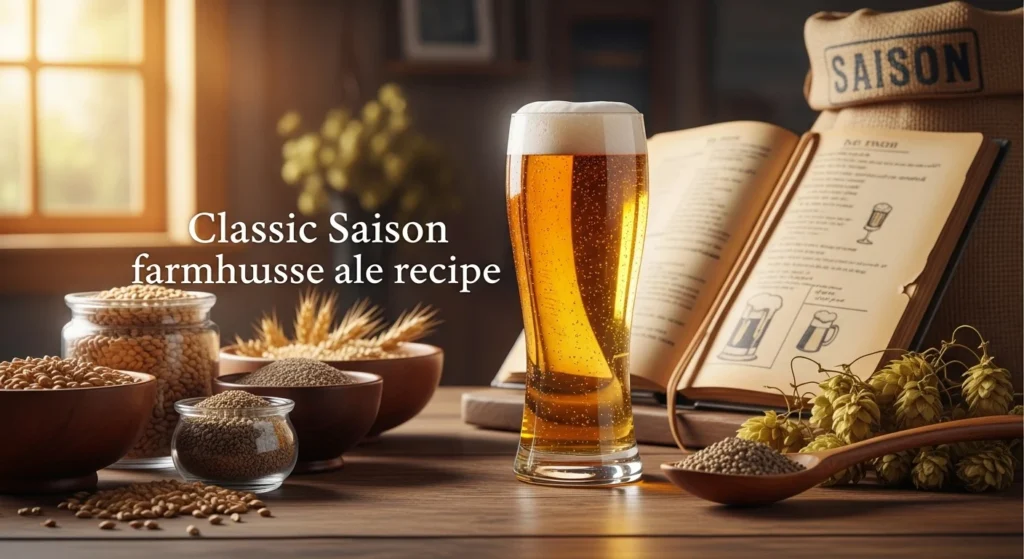
Classic Saison farmhouse ale recipe represents one of Belgium’s most versatile and historically significant beer styles, demanding mastery of traditional farmhouse brewing techniques combined with specialized yeast management to create the distinctive peppery, fruity character that defines authentic Belgian farmhouse brewing tradition. After developing numerous classic Saison farmhouse ale recipe variations over the past twelve years and studying traditional Wallonian brewing methods, I can confidently state that mastering this style requires understanding the delicate interplay between simple grain bills, traditional spicing, and temperamental Belgian yeast strains that create the signature dry finish and complex aromatics characteristic of exceptional farmhouse ales.
My classic Saison farmhouse ale recipe journey began with disappointing attempts that lacked the characteristic peppery bite and dry finish I experienced in authentic Belgian examples. The transformation occurred when I discovered that proper temperature management during fermentation and traditional Belgian yeast strains create the essential phenolic character while systematic spice integration develops the complex aromatics that separate exceptional Saisons from ordinary pale ales through authentic farmhouse brewing techniques.
This comprehensive classic Saison farmhouse ale recipe guide explores every aspect of traditional Belgian farmhouse brewing including historical context, authentic ingredient selection, specialized fermentation techniques, and traditional spicing methods that produce the distinctive dry character, peppery aromatics, and refreshing drinkability that defines exceptional Belgian farmhouse ales. From understanding the agricultural origins to mastering modern fermentation control, this guide provides complete knowledge for creating outstanding Saisons that honor Belgian brewing heritage.
Whether you’re exploring Belgian brewing traditions or seeking to master challenging fermentation techniques, developing a classic Saison farmhouse ale recipe provides essential skills while creating one of the world’s most expressive and food-friendly beer styles that showcases both brewing artistry and cultural heritage through systematic approach and proven methods.
Understanding Traditional Saison Characteristics
Authentic Belgian Saison displays pale gold to deep amber coloration with distinctive farmhouse character ranging from 1.048-1.065 original gravity while achieving 3.5-9.5% alcohol content through traditional grain bills balanced by signature Belgian yeast phenols and spice integration that creates the dry, peppery character defining authentic farmhouse brewing.
Color Range and Visual Appeal
Traditional Saison exhibits pale straw to deep amber hues ranging from 5-22 SRM with good clarity and persistent white foam that reflects proper grain bill selection and high carbonation levels essential for authentic Belgian farmhouse presentation.
Distinctive Yeast Character
Belgian farmhouse yeast produces signature peppery phenols and fruity esters including black pepper, clove, and citrus notes while creating the complex aromatics that define authentic Saison character through specialized fermentation management.
Exceptional Dryness Profile
Proper Saison finishes exceptionally dry with final gravity around 1.002-1.008 while creating crisp, refreshing character that encourages continued consumption despite substantial flavor complexity and moderate to high alcohol content.
Traditional Hop Balance
Restrained European hops provide 20-35 IBU of earthy, herbal bitterness that supports yeast character while maintaining traditional Belgian hop restraint that allows fermentation aromatics complete dominance.
High Carbonation Essential
Authentic Saison requires 3.0-4.0 volumes CO2 creating effervescent mouthfeel and enhanced aroma release that amplifies yeast character while providing the spritzy quality that defines proper farmhouse ale presentation and drinking experience.
For comprehensive Saison brewing techniques and traditional Belgian farmhouse methods, explore the authentic Belgian brewing resources at BrewMyBeer’s farmhouse ale section, where traditional Wallonian brewing wisdom meets modern homebrewing precision.
Essential Classic Saison Ingredients
Authentic classic Saison farmhouse ale recipe requires specific ingredient combinations including quality Belgian Pilsner malt, traditional adjuncts, European noble hops, and proper Belgian farmhouse yeast strains that create the distinctive character impossible to replicate with substitute ingredients.
Belgian Pilsner Malt Foundation
Belgian Pilsner malt comprises 70-90% of traditional grain bills providing clean, slightly sweet foundation that supports yeast character without overwhelming subtle fermentation aromatics through premium European malt quality and proper kilning.
Traditional Adjunct Integration
Wheat, oats, and spelt enhance body and complexity in 5-25% proportions while providing traditional farmhouse character and improved head retention through historical ingredient usage and authentic brewing methods.
Sugar Addition Benefits
Belgian candi sugar or table sugar contributes to dryness comprising 5-15% of fermentables while promoting exceptional attenuation and creating the characteristic dry finish through simple sugar fermentation.
Vienna Malt Enhancement
Vienna malt adds subtle toasted character in 5-20% proportions while providing color development and flavor complexity that complements rather than competes with yeast character through careful integration.
European Noble Hops
Traditional varieties including Styrian Goldings, Saaz, and Fuggle provide earthy, herbal character while maintaining restraint that allows yeast dominance throughout the flavor profile.
Belgian Farmhouse Yeast Selection
Authentic strains including Wyeast 3711 French Saison and White Labs WLP565 produce signature phenols and exceptional attenuation while creating traditional farmhouse character essential for style authenticity.
| Ingredient Component | Percentage Range | Character Contribution | Quality Requirements | Traditional Importance |
|---|---|---|---|---|
| Belgian Pilsner Malt | 70-90% | Clean grain foundation | Premium European quality | Critical |
| Wheat/Adjuncts | 5-25% | Body and complexity | Fresh quality | Traditional |
| Sugar Additions | 5-15% | Dryness and attenuation | Pure cane or Belgian | Essential |
| Vienna Malt | 5-20% | Toasted complexity | Traditional kilning | Enhancement |
| European Hops | 20-35 IBU | Earthy, herbal character | Noble varieties | Important |
Complete Traditional Saison Recipe
This comprehensive classic Saison farmhouse ale recipe produces 5 gallons of authentic Belgian farmhouse ale with proper yeast character, traditional spicing, and exceptional dryness through carefully selected ingredients and proven Belgian brewing techniques.
All-Grain Recipe Specifications
Target parameters include 1.055 original gravity, 1.005 final gravity, 28 IBU, 6 SRM, and 6.6% ABV while creating authentic Saison character through proper ingredient ratios and traditional Belgian brewing methods.
Traditional Grain Bill Composition
Premium grain bill includes 8.75 lbs Belgian Pilsner malt, 0.5 lbs flaked wheat, 1.0 lb white table sugar, and optional Vienna malt additions while providing proper foundation, body enhancement, and exceptional attenuation essential for style authenticity.
European Hop Schedule Design
Traditional hop additions include 0.5 oz Magnum at 60 minutes for bittering with optional late additions of Styrian Goldings or Saaz while providing balanced bitterness without overwhelming yeast character.
Belgian Yeast Selection
Recommended yeast strains include Wyeast 3711 French Saison or similar diastatic strain while ensuring exceptional attenuation and authentic farmhouse character development through proper Belgian yeast genetics.
Extract Version Adaptation
Extract brewers substitute 6 lbs Pilsner dried malt extract and 1 lb wheat dried malt extract with corn sugar addition while maintaining traditional character through proper extract selection and technique.
Traditional Belgian Mashing Techniques
Classic Saison farmhouse ale recipe employs specific mashing protocols that promote exceptional attenuation while extracting proper malt character through traditional Belgian brewing methods and temperature management.
Low Temperature Mash Strategy
Mash at 147-149°F for enhanced attenuation while promoting beta amylase activity that creates highly fermentable wort essential for achieving proper Saison dryness and alcohol development.
Extended Conversion Period
Hold mash temperature for 60-90 minutes while ensuring complete starch conversion and optimal enzyme activity that maximizes extract efficiency from traditional Belgian grain bills.
Sugar Integration Method
Add table sugar or candi sugar during sparge while ensuring complete dissolution and integration without creating caramelization or harsh flavors that might interfere with clean fermentation character.
pH Management
Target mash pH around 5.2-5.4 while ensuring proper enzyme activity and flavor development through systematic pH monitoring and appropriate acid additions when necessary.
Step Mash Alternative
Traditional step mashing enhances attenuation through protein rest at 120°F followed by saccharification while optimizing enzyme activity and creating highly fermentable wort.
Classic Saison Farmhouse Ale Recipe Specialized Belgian Yeast Management
Proper Belgian farmhouse yeast handling creates authentic Saison character through controlled temperature progression and systematic fermentation management that develops signature phenols and exceptional attenuation.
Initial Fermentation Temperature
Begin fermentation at 70-75°F with controlled temperature management that promotes healthy yeast activity while avoiding excessive phenol production that might create harsh or overwhelming character.
Temperature Rise Protocol
Gradually raise temperature to 80-85°F during final fermentation stages while encouraging complete attenuation and characteristic phenol development through systematic temperature progression.
Extended Fermentation Duration
Allow 2-4 weeks primary fermentation while monitoring specific gravity and ensuring complete yeast activity before packaging to achieve proper dryness and avoid residual sweetness.
Yeast Starter Preparation
Use large yeast starters for healthy fermentation while ensuring adequate cell count and yeast health that supports complete attenuation and proper character development.
Stalling Prevention
Maintain consistent temperature throughout fermentation while avoiding temperature drops that might cause yeast stalling and incomplete attenuation that compromises traditional Saison character.
Traditional Spicing and Flavoring
Historic Saison often incorporated traditional spices while modern interpretations emphasize yeast character with optional subtle spice additions that complement rather than dominate farmhouse aromatics.
Traditional Spice Selection
Coriander, black pepper, and orange peel provide classic character while maintaining restraint that allows yeast phenols to dominate through careful quantity control and integration timing.
Spice Addition Timing
Add spices during final 5 minutes of boil while preserving volatile compounds and preventing harsh extraction that might create medicinal or overwhelming spice character.
Quantity Control Guidelines
Use 0.25 tsp each crushed coriander and black pepper per 5-gallon batch while maintaining subtle integration that enhances rather than masks traditional yeast character development.
Modern Minimalist Approach
Contemporary Saisons emphasize yeast character alone while avoiding spice additions that might interfere with clean fermentation aromatics and allowing Belgian yeast complete flavor dominance.
Dry Spicing Alternative
Post-fermentation spice additions provide more control while allowing precise character adjustment through tasting and systematic integration during conditioning phases.
Carbonation and Conditioning
Proper Saison conditioning develops exceptional character while high carbonation levels and extended aging create the spritzy mouthfeel and integrated aromatics that define authentic Belgian farmhouse presentation.
High Carbonation Requirements
Target 3.0-4.0 volumes CO2 for authentic character while creating effervescent mouthfeel that enhances yeast aromatics and provides the characteristic spritzy quality essential for proper Saison experience.
Bottle Conditioning Benefits
Natural bottle conditioning develops superior carbonation while allowing continued yeast activity that may enhance flavor development and maintains traditional Belgian farmhouse presentation methods.
Priming Sugar Calculations
Calculate priming sugar carefully for high carbonation while accounting for residual CO2 and preventing over-carbonation that might create excessive pressure or harsh mouthfeel.
Extended Conditioning Period
Allow 4-8 weeks bottle conditioning while developing flavor integration and proper carbonation that improves overall quality and traditional farmhouse character expression.
Temperature Control During Conditioning
Condition at cellar temperature around 65°F while promoting proper carbonation development and flavor integration without excessive yeast activity that might create off-flavors.
Fermentation Troubleshooting
Saison fermentation presents unique challenges requiring systematic problem-solving approaches while addressing common issues including stalled fermentation, incomplete attenuation, and temperature management difficulties.
Stalled Fermentation Solutions
Temperature consistency prevents yeast stalling while maintaining proper fermentation environment that encourages complete sugar consumption and achievement of target final gravity.
Under-Attenuation Prevention
Low mash temperatures and simple sugars promote attenuation while diastatic yeast strains provide enzymatic activity that breaks down complex carbohydrates for complete fermentation.
Excessive Phenol Management
Temperature control prevents harsh phenolic development while maintaining optimal fermentation conditions that create pleasant peppery character without overwhelming harshness or medicinal qualities.
Patience Requirements
Extended fermentation time ensures completion while allowing temperamental Belgian yeast adequate time for complete sugar consumption and proper character development.
Yeast Health Optimization
Proper starter preparation supports healthy fermentation while ensuring adequate cell counts and yeast viability that prevent stalling and promote complete attenuation.
Water Chemistry and Treatment
Proper water chemistry enhances Saison character while supporting Belgian yeast performance and hop utilization through balanced mineral profiles that complement traditional farmhouse brewing methods.
Belgian Water Profile Emulation
Moderate mineral content supports traditional brewing while avoiding excessive treatment that might interfere with yeast performance or create harsh mineral interference with delicate flavor balance.
Sulfate-Chloride Balance
Higher sulfate-to-chloride ratios enhance dryness perception while supporting hop character and creating crisp finish that complements traditional Saison dryness and refreshing character.
pH Optimization
Target brewing water pH around 6.0-6.5 while ensuring proper mash pH achievement and yeast health through appropriate buffering capacity and mineral balance.
Calcium Level Management
Adequate calcium supports yeast health and flocculation while maintaining proper fermentation performance without excessive mineral character that might interfere with traditional character.
Minimal Treatment Approach
Traditional Belgian brewing requires restrained water treatment while modern brewers adjust only as necessary to achieve proper brewing conditions without over-treatment that compromises authenticity.
Style Variations and Creative Interpretations
Modern Saison brewing explores creative variations while maintaining core characteristics through ingredient experimentation and brewing technique adaptation that honors traditional Belgian farmhouse principles.
Strength Variations
Table Saison emphasizes lower alcohol and enhanced drinkability while maintaining characteristic dryness and yeast character through proportional scaling and modified brewing techniques.
Alternative Grain Additions
Rye, spelt, and ancient grains create unique character while maintaining traditional Belgian farmhouse identity through careful integration that complements rather than overwhelms yeast aromatics.
Fruit Integration
Fresh or dried fruits enhance traditional farmhouse character while complementing yeast esters through strategic addition timing and proper integration techniques.
Hop-Forward Interpretations
American hop varieties create modern farmhouse expressions while maintaining traditional Belgian yeast character through careful balance and appropriate hop utilization.
Barrel Aging Applications
Wood aging adds complexity and traditional farmhouse character while complementing Belgian yeast through extended conditioning and flavor development that honors historical brewing methods.
Food Pairing and Service
Saison’s versatile character creates exceptional food pairing opportunities while the dry finish and effervescent character complement diverse cuisines through balanced alcohol and refreshing drinkability.
Traditional Belgian Cuisine
Classic pairings include mussels, frites, and farmhouse cheeses while the crisp character and moderate strength complement traditional Belgian dishes without overwhelming delicate flavors.
Seasonal Menu Integration
Summer consumption highlights refreshing character while high carbonation and dry finish provide cooling refreshment during warm weather dining and outdoor activities.
Spicy Food Compatibility
Dry finish and effervescence balance spicy cuisines while the yeast character complements rather than competes with complex spice profiles through moderate alcohol and refreshing character.
Optimal Serving Temperature
Serve at 45-50°F in tulip glasses or wine glasses while showcasing aromatics and maintaining proper carbonation that enhances both visual appeal and flavor appreciation.
Versatile Occasion Suitability
Appropriate for both casual and formal dining while the sophisticated character and food-friendly profile accommodate diverse social situations and culinary applications.
Advanced Brewing Techniques
Professional Saison techniques enhance authenticity while traditional methods including mixed fermentation and extended aging develop superior character that separates exceptional examples from basic interpretations.
Mixed Fermentation Applications
Brett and bacteria additions create traditional farmhouse funk while providing authentic rustic character through controlled wild yeast integration and extended fermentation management.
Open Fermentation Benefits
Traditional open fermentation develops enhanced character while allowing natural yeast selection and improved ester development through historical Belgian farmhouse methods.
Seasonal Ingredient Integration
Local and seasonal additions reflect farmhouse traditions while creating unique regional expressions that honor agricultural cycles and ingredient availability.
Extended Aging Protocols
Long-term conditioning improves complexity and integration while developing smooth character and enhanced aromatics through systematic aging and flavor development.
Blending Techniques
Combining different batches creates consistent character while allowing quality control and flavor adjustment through traditional Belgian farmhouse practices.
Conclusion and Brewing Excellence
Mastering classic Saison farmhouse ale recipe requires understanding traditional Belgian techniques and specialized yeast management while systematic ingredient selection, proper fermentation control, and patient conditioning create exceptional examples that honor farmhouse brewing heritage.
Begin with quality Belgian ingredients and authentic yeast strains while building understanding of temperature management and fermentation techniques that develop signature phenolic character without overwhelming harshness or medicinal qualities.
Master low-temperature mashing and extended fermentation protocols while appreciating the patience and precision required for exceptional attenuation and proper dryness that defines authentic Belgian farmhouse character.
Practice systematic recipe development and yeast experimentation while maintaining respect for Belgian traditions that created this versatile style through centuries of agricultural brewing and cultural preservation.
Remember that authentic Saison emphasizes drinkability and versatility while rewarding dedicated brewers with complex, food-friendly ales that demonstrate both fermentation artistry and traditional Belgian craftsmanship through systematic approach.
The investment in understanding Belgian yeast behavior and traditional techniques provides lasting brewing education while creating exceptional farmhouse ales that showcase one of Belgium’s most important contributions to world brewing heritage.
Choose authentic methods and quality ingredients while appreciating the agricultural origins and cultural significance that make Saison both historically important and eternally relevant to modern brewing.
About the Author
Dave Hopson brings over 16 years of experience analyzing beer culture, trends, and traditional brewing methods to his exploration of Belgian farmhouse ales. His background in anthropology and food science provides unique insights into how agricultural practices influenced traditional brewing styles like Saison. Dave has extensively studied Belgian farmhouse brewing traditions, including research collaborations with historic Belgian breweries and agricultural museums that document traditional farmhouse ale production. His systematic approach to understanding beer culture helps brewers appreciate not only the technical aspects but also the historical and social context that makes each style meaningful.
Dave maintains detailed records of traditional Belgian brewing practices and has successfully recreated dozens of historical farmhouse ale recipes using both traditional and modern methods. His expertise in fermentation cultures and traditional brewing techniques makes him particularly knowledgeable about the challenges and rewards of brewing authentic Belgian styles. When not researching brewing history or analyzing beer culture trends, Dave enjoys exploring how traditional agricultural practices continue to influence modern craft brewing while preserving the authenticity and heritage that defines exceptional beer styles. Contact Dave at dave.hopson@brewmybeer.online or explore his comprehensive brewing culture guides and Belgian beer resources at brewmybeer.online.