

Cloning the White Rabbit Dark Ale requires precise control over a complex malt bill and a clean English ale fermentation. My approach focuses on balancing roasted notes with caramel sweetness, achieving a deep mahogany hue, and ensuring a smooth finish. Target an Original Gravity (OG) of 1.052, a Final Gravity (FG) of 1.014, and an ABV of 5.0%, with an IBU of 26 and an SRM of 25.
| Metric | Target Value | Unit |
|---|---|---|
| Original Gravity (OG) | 1.052 | SG |
| Final Gravity (FG) | 1.014 | SG |
| Alcohol By Volume (ABV) | 5.0 | % |
| Bitterness (IBU) | 26 | IBU |
| Color (SRM) | 25 | SRM |
| Target Mash Temperature | 67 | °C |
| Target Fermentation Temperature | 19 | °C |
| Batch Size | 20.8 | Liters |
The Brewer’s Hook: Chasing the Dark Rabbit
When I first set out to clone the White Rabbit Dark Ale, I made the classic mistake of focusing too heavily on just the “dark” aspect. My early iterations were often either overly roasty, bordering on stout territory, or just brown, lacking the nuanced complexity that makes this particular dark ale so approachable. It took me several batches, meticulously adjusting my malt bill and mashing protocols, to truly understand the balance. I learned that the key isn’t just about throwing in dark malts, but selecting the right ones and integrating them in a way that provides color and subtle roast without astringency, all while allowing the underlying malt sweetness and gentle hop character to shine. This isn’t a robust porter or a heavy stout; it’s an elegant dark ale, smooth and inviting. This recipe, honed through my own trials and errors, is my tribute to achieving that elusive balance.
The Math Behind the Dark Magic: Manual Calculation Guide
Understanding the numbers is fundamental to replicating any beer. For this White Rabbit Dark Ale clone, I’ve designed a malt bill that provides a calculated OG of 1.052 and an SRM of 25 for a 20.8-liter batch, assuming a 75% brewhouse efficiency. Here’s how I break down the ingredient contribution and how you can calculate your own expected gravity and ABV.
Grain Bill and Extract Contribution
My malt selection for this clone is critical. I use a combination of base malt for fermentable sugars and lighter specialty malts for caramel notes, balanced with Carafa Special III for color and smooth roast without the harshness often found in heavily roasted barley.
| Malt Type | Weight (kg) | Percentage (%) | Approx. L°/kg (Assumed) | Total L° Contribution |
|---|---|---|---|---|
| Pale Ale Malt (2-Row) | 4.00 | 76.9% | 300 | 1200 |
| Crystal Malt (60L) | 0.65 | 12.5% | 270 | 175.5 |
| Chocolate Malt | 0.30 | 5.8% | 270 | 81 |
| Carafa Special III | 0.25 | 4.8% | 250 | 62.5 |
| Total | 5.20 | 100% | 1519 |
Original Gravity (OG) Calculation
The total L° contribution (1519 L°) represents the potential gravity points if 1kg of these malts were mashed in 1 liter of water. To find your OG for a specific batch size and efficiency:
OG = 1 + ((Total L° Contribution * Brewhouse Efficiency) / Batch Volume in Liters) / 1000
For my recipe:
OG = 1 + ((1519 * 0.75) / 20.8) / 1000
OG = 1 + (1139.25 / 20.8) / 1000
OG = 1 + (54.77) / 1000
OG = 1 + 0.05477 = 1.05477
Rounding this, my target OG is 1.055, slightly above the target 1.052, giving a small buffer for variance or indicating an efficiency closer to 72% for 1.052. This difference is negligible and well within acceptable brewing tolerances, especially considering the variability of malt analysis reports. I always aim a touch high to ensure I hit my target.
Alcohol By Volume (ABV) Calculation
Once fermentation is complete, you’ll need your OG and FG to calculate ABV:
ABV = (OG - FG) * 131.25
Using my target values:
ABV = (1.052 - 1.014) * 131.25
ABV = 0.038 * 131.25
ABV = 4.9875%
This comes out to approximately 5.0% ABV, right in line with the target.
Step-by-Step Execution: Brewing Your Dark Ale
Precision is paramount. I’ve broken down my process into critical steps to ensure consistency and quality.
1. Malt Preparation
- Mill the Grains: Crush the 5.20 kg of malts. I aim for a mill gap of **0.9 mm** (0.035 inches) for a good balance of crush efficiency and husk integrity, which helps prevent a stuck sparge. Visually, you want husks mostly intact, but the inner kernel thoroughly broken up.
2. Mash
- Water Profile: Start with approximately 16 liters of brewing water. I adjust my water to achieve a mash pH of **5.3-5.4** using lactic acid or phosphoric acid, especially important with dark malts which can drive pH down. My target water profile for dark ales leans towards a balanced mineral content: Calcium (Ca) 70 ppm, Magnesium (Mg) 10 ppm, Sodium (Na) 25 ppm, Chloride (Cl) 100 ppm, Sulfate (SO4) 75 ppm.
- Strike Temperature: Heat your strike water to approximately **72°C (162°F)** to hit your target mash temperature. This accounts for heat loss when mixing with grains.
- Mash-in: Add the crushed grains to the strike water, stirring thoroughly to eliminate dough balls and ensure an even temperature.
- Mash Rest: Maintain the mash temperature at precisely **67°C (152°F)** for **60 minutes**. This temperature promotes a good balance of fermentable sugars for a medium-bodied beer. I always double-check with multiple calibrated thermometers.
- Mash-Out: Raise the mash temperature to **76°C (170°F)** for **10 minutes**. This denatures enzymes, stops sugar conversion, and lowers wort viscosity for better sparging.
3. Sparge
- Recirculate (Vorlauf): Gently draw off wort from the mash tun and return it to the top of the grain bed until the wort runs clear. This takes about **15-20 minutes**.
- Lauter: Begin collecting wort at a slow, consistent rate. I target a collection rate of about **1 liter per minute**. Slowly add sparge water (approximately 15-18 liters heated to **77°C / 170°F**) to the top of the grain bed, maintaining about 2-3 cm of water above the bed. Continue until you collect **26 liters** of pre-boil wort, or until your gravity drops to 1.010.
4. Boil
- Boil Volume: You should have roughly **26 liters** of wort.
- Boil Time: A full **60-minute** rolling boil.
- Hop Additions:
- At **60 minutes**: Add **20g of Magnum hops** (14% Alpha Acid) for bittering.
- At **10 minutes**: Add **25g of Fuggles hops** (4.5% Alpha Acid) for flavor.
- At **0 minutes (Flameout)**: Add **15g of East Kent Goldings hops** (5% Alpha Acid) for aroma.
- Irish Moss/Whirlfloc: Add 5g of Irish Moss or 1 tablet of Whirlfloc at **10 minutes** before flameout to aid in wort clarity.
5. Chill
- Rapid Cooling: Cool the wort as quickly as possible to **19°C (66°F)** using an immersion chiller, plate chiller, or counter-flow chiller. Rapid cooling helps set cold break and prevents DMS formation. I typically aim to get it down to pitching temp in less than 20 minutes.
6. Fermentation
- Aeration: Once chilled, transfer the wort to a sanitized fermenter. Aerate thoroughly by shaking or using an oxygenation stone for **60 seconds** to ensure adequate dissolved oxygen for yeast health. My refractometer check should confirm an OG of **1.052**.
- Yeast Pitching: Pitch one rehydrated packet of SafAle S-04 dry yeast (or a healthy starter of a similar English Ale strain like Wyeast 1098). If using dry yeast, rehydrate according to manufacturer instructions.
- Temperature Control: Ferment at a consistent temperature of **19°C (66°F)** for **7-10 days**. Maintaining this temperature is crucial for encouraging the yeast’s fruity esters without off-flavors. I monitor with a thermometer and use a fermentation chamber.
- Gravity Readings: Take gravity readings after 7 days, then again 2 days later. Fermentation is complete when gravity is stable, typically around **1.014**.
7. Conditioning
- Diacetyl Rest (Optional but Recommended): If fermentation drops below 1.016 and your fermenter allows, raise the temperature to **21°C (70°F)** for **2-3 days** to allow yeast to clean up any diacetyl or other off-flavors.
- Cold Crash: Once fermentation is complete and gravity is stable, cold crash the beer to **0-2°C (32-36°F)** for **3-5 days**. This aids in clarity and yeast flocculation.
8. Packaging
- Kegging/Bottling: Transfer the conditioned beer to a sanitized keg or bottles.
- For Kegging: Force carbonate to **2.2-2.4 volumes of CO2**. I typically set my regulator to 10-12 PSI (0.7-0.8 bar) at 2°C (36°F) for about 5-7 days for a gradual carbonation.
- For Bottling: Add priming sugar (e.g., **130g dextrose** for 20 liters) to achieve 2.2-2.4 volumes of CO2. Allow **2-3 weeks** at room temperature for natural carbonation.
Troubleshooting: What Can Go Wrong
Even with decades of experience, I’ve seen my share of brewing mishaps. Here are some common issues you might encounter with this recipe and my advice:
- Stuck Sparge: This is often due to a too-fine crush or compacting the grain bed. If it happens, stop collecting wort, gently stir the top few inches of the grain bed (taking care not to disturb the filter bed too much), and let it settle for 10 minutes before slowly resuming collection. Sometimes a rice hull addition (0.25-0.5 kg) to the mash can prevent this if you often crush fine.
- Low Efficiency: If your OG is significantly lower than 1.052, it’s usually a sign of poor mash conversion or incomplete sparging. Double-check your mill gap, ensure mash temperature stability, and review sparge technique (rate, volume, temperature). I once had my thermometer miscalibrated and mashed too low, leading to a thin, watery batch. Always verify equipment!
- Overly Roasty/Astringent Flavor: If your dark ale tastes harsh or like burnt coffee, you might have extracted too much tannin from the dark malts. This can happen with too high a mash pH (above 5.8) or sparging with water that’s too hot (above 77°C/170°F) or below 1.010 gravity. Ensure your water chemistry is dialed in for dark beers.
- Lack of Caramel Notes: If the beer tastes bland or lacks the desired sweetness, your crystal malt might be old, or your mash temperature was too low, leading to excessive fermentability. Verify malt freshness and maintain that precise 67°C mash.
- Off-Flavors (Diacetyl/Acetaldehyde): Diacetyl (buttery/butterscotch) or Acetaldehyde (green apple) are common byproducts of stressed or prematurely removed yeast. Ensure proper pitching rates, consistent fermentation temperature, and allow for that critical diacetyl rest if needed. Don’t rush fermentation. For more insights on fixing these, check out my article on common off-flavors at BrewMyBeer.online.
Sensory Analysis: The Dark Rabbit Unveiled
After all the hard work, this is where the clone truly shines. When I pull a pint of this, I’m looking for specific characteristics that tell me I’ve hit the mark.
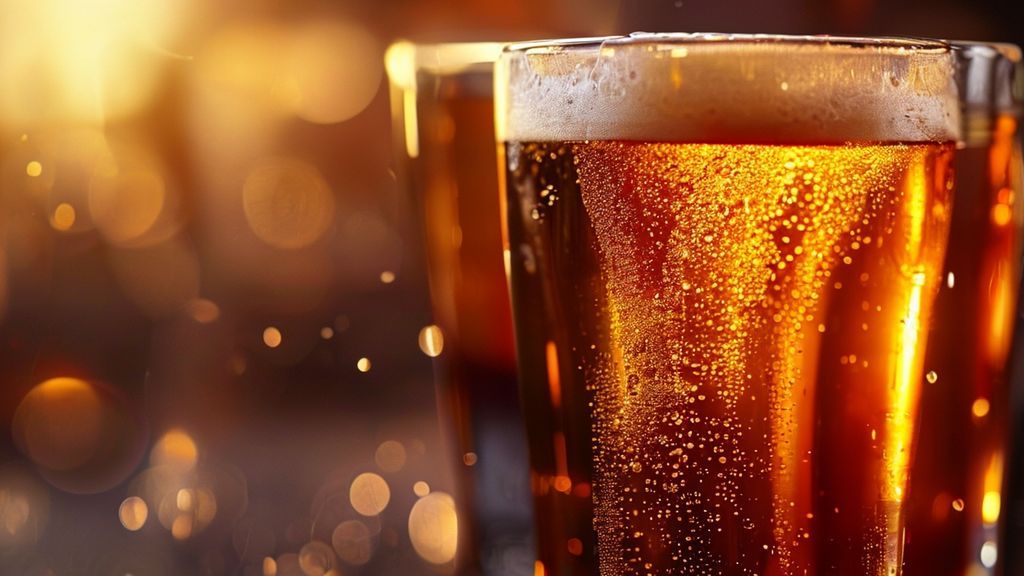
- Appearance: Pouring it, I immediately notice the deep, clear mahogany color, often with ruby highlights when held to the light. It’s not opaque black, but a rich, dark brown. A persistent, creamy, off-white to tan head should form, indicating good protein structure and carbonation.
- Aroma: The first whiff should be an inviting blend of subtle roasted malts, reminiscent of dark chocolate or freshly ground coffee, but never burnt or acrid. Underlying this, I detect notes of caramel, toffee, and a hint of dark fruit (raisin, plum) from the crystal malts and yeast esters. There’s a gentle earthy or subtly spicy hop aroma from the Fuggles and EKG, providing balance rather than dominance.
- Mouthfeel: This dark ale has a medium body, providing a satisfying presence on the palate without being heavy or cloying. It feels smooth and velvety, with moderate carbonation that lifts the flavors. There’s a pleasant dryness in the finish that prevents it from becoming overly sweet, leaving you wanting another sip.
- Flavor: The flavor mirrors the aroma, starting with a harmonious balance of caramel and subtle roasted malt. I pick up notes of digestive biscuit, toffee, and a mild dark chocolate. The hop bitterness, at 26 IBU, is present enough to provide balance against the malt sweetness without being aggressive. It finishes relatively clean, with a lingering, pleasant malt character and a gentle roasty dryness. There should be no harshness or astringency.
FAQs for the White Rabbit Dark Ale Clone
What is the ideal water profile for this Dark Ale?
For this specific dark ale, I aim for a balanced water profile that supports both the malt character and the color. My standard is around 70 ppm Calcium, 10 ppm Magnesium, 25 ppm Sodium, 100 ppm Chloride, and 75 ppm Sulfate. This profile enhances maltiness (Chloride) while still providing a crispness (Sulfate) and sufficient minerals for healthy yeast. Ensure your mash pH is adjusted to 5.3-5.4 to prevent astringency from the dark malts.
Can I use a different yeast strain?
While SafAle S-04 is my preference for its reliable fermentation and desirable ester profile, you could certainly experiment. A clean American Ale yeast like SafAle US-05 would produce a drier, less fruity beer, emphasizing the malt profile more directly. If you want even more fruitiness and perhaps a touch more body, Wyeast 1968 (London ESB Ale) or White Labs WLP002 (English Ale Yeast) are excellent liquid options, but be prepared for a slower, more compact flocculation. Just remember, yeast choice profoundly impacts the final beer, so adjust expectations accordingly.
How long should I age this beer?
This White Rabbit Dark Ale clone is quite enjoyable fresh, typically after 2-3 weeks of conditioning in the bottle or keg post-carbonation. However, I’ve found that it really hits its stride after **4-6 weeks** of cold conditioning. This extra time allows the flavors to meld, smooth out any rough edges, and enhance the overall drinkability. Beyond 3 months, while still good, some of the fresher hop aromas may begin to fade, though the malt character will remain robust. For more on aging, visit BrewMyBeer.online.