

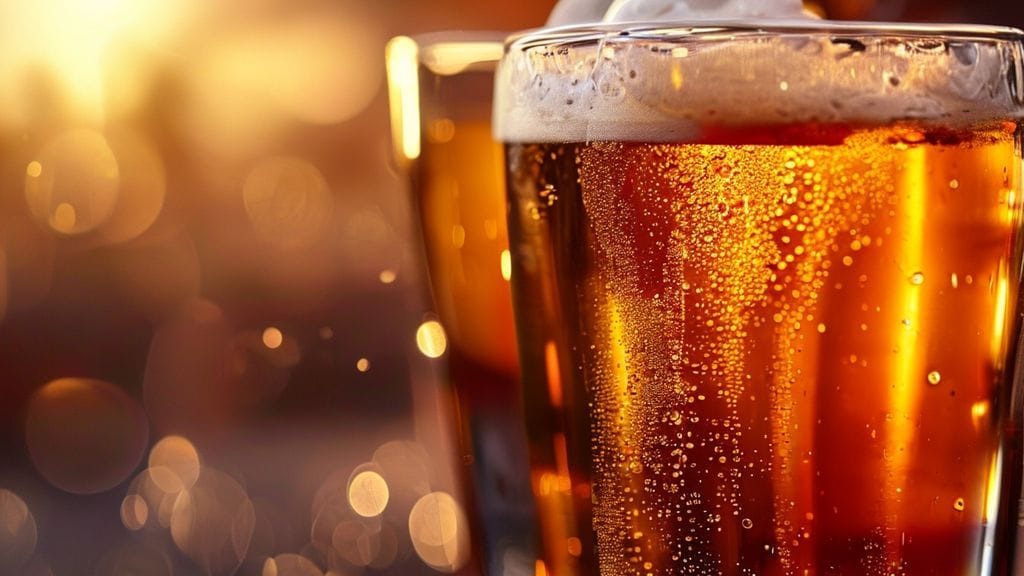
Diving into Belgian brewing, the Dubbel and Tripel represent distinct pinnacles of abbey-inspired artistry. While both showcase complex Belgian yeast character, a Dubbel is typically a darker, sweeter, and medium-strength ale with rich caramel and dried fruit notes. A Tripel, by contrast, is a paler, stronger, drier beer, exhibiting spicy phenols, brighter fruity esters, and a deceptive drinkability.
| Metric | Belgian Dubbel | Belgian Tripel |
|---|---|---|
| Original Gravity (OG) | 1.062 – 1.075 | 1.078 – 1.092 |
| Final Gravity (FG) | 1.010 – 1.018 | 1.008 – 1.014 |
| Alcohol By Volume (ABV) | 6.0% – 7.6% | 7.5% – 9.5% |
| International Bitterness Units (IBU) | 15 – 25 | 20 – 40 |
| Standard Reference Method (SRM) | 10 – 17 | 4.5 – 7 |
| Typical Fermentation Temp | 18°C – 22°C (64°F – 72°F) | 20°C – 24°C (68°F – 75°F) |
| Key Malt Profile | Pilsner, Munich, Special B, Aromatic | Pilsner, hint of aromatic/pale |
| Key Sugar Type | Dark Candi Sugar/Syrup (D90, D180) | Clear/Light Candi Sugar (D45) |
When I first dipped my toes into brewing Belgian styles, I made the common mistake of thinking “stronger” just meant “more malt.” Oh, how naive I was! I brewed what I thought was a Tripel, packed with CaraMunich and Crystal malts, and ended up with a sweet, cloying mess that was far from the dry, effervescent elegance I was aiming for. It was a learning curve that taught me the fundamental distinctions between the Dubbel and Tripel aren’t just about ABV or color; they’re about the *entire* brewing philosophy, from grain bill to yeast management. These styles, both stemming from the rich tradition of abbey brewing, offer a masterclass in subtlety and yeast expression.
The Math Behind the Belgian Magic: Gravity, Sugars, and Attenuation
Understanding the numerical backbone of Dubbel and Tripel is crucial for achieving authentic results. It’s not just about hitting a target OG; it’s about *how* you get there and how that impacts the final beer’s character. My experience has shown me that precision here makes all the difference.
Manual Calculation Guide: Grain Bill & Sugar Impact
Both styles rely heavily on highly fermentable sugars, but their application differs dramatically. This is where you manipulate body, color, and fermentability.
| Component | Dubbel Typical Contribution | Tripel Typical Contribution | Specific Gravity Points per lb/gal (approx.) |
|---|---|---|---|
| Base Malt (Pilsner, Pale Ale) | 60-70% of fermentables | 80-90% of fermentables | 35-37 |
| Specialty Malt (Munich, Special B, Aromatic) | 10-20% of fermentables | 0-5% of fermentables | 30-34 |
| Candi Sugar (Dark for Dubbel, Light for Tripel) | 15-25% of fermentables | 10-20% of fermentables | 42-46 (highly fermentable) |
To calculate ABV, I always use the precise formula for high-gravity beers:
ABV = ((OG - FG) * 131.25)
This provides a more accurate reading than simpler formulas, especially when dealing with the higher gravities of Tripels. For example, a Tripel with an OG of 1.085 and an FG of 1.010 would yield: ((1.085 - 1.010) * 131.25) = (0.075 * 131.25) = 9.84% ABV.
Step-by-Step Execution: Brewing Both Belgian Icons
While the overall process shares similarities, the nuanced differences in ingredients and parameters define these distinct styles. I’ve brewed both countless times, and attention to these details is paramount.
1. Malt Selection and Milling
- Dubbel: My typical Dubbel grist starts with **60-65% Belgian Pilsner malt** for fermentability and a light base. I then layer in **10-15% Munich malt** for body and malty complexity, **5-10% Aromatic malt** for intense malt aroma, and critically, **2-5% Special B malt** to provide those characteristic dark fruit and caramel notes. A touch of carafa special III might be used for color adjustment if needed, but I prefer the flavor contributions of Special B.
- Tripel: This is a much simpler grist. I use **90-95% Belgian Pilsner malt**. That’s it, mostly. Sometimes, a tiny addition of **2-3% Vienna or Pale Ale malt** for a touch more body, but the goal is a very pale, crisp, fermentable base that allows the yeast and hop character to shine.
- Milling: For both, I mill finely but ensure the husks remain largely intact to aid in lautering. A gap of **0.9mm (0.035 inches)** usually works well for my mill.
2. Mashing Protocol
My approach here varies slightly to encourage different enzymatic activity, especially considering the higher gravity of Tripels.
- Dubbel: I prefer a multi-step infusion mash.
- Protein Rest: **50°C (122°F)** for **15 minutes**. This aids in head retention and clarity, especially with Belgian Pilsner.
- Saccharification Rest 1 (Beta-amylase): **63°C (145°F)** for **30 minutes**. Focuses on creating highly fermentable sugars.
- Saccharification Rest 2 (Alpha-amylase): **68°C (154°F)** for **45 minutes**. Converts remaining starches to fermentable sugars and some dextrins for body.
- Mash Out: **76°C (168°F)** for **10 minutes**. Stops enzymatic activity and prepares for lautering.
My target mash pH is **5.2 – 5.4**.
- Tripel: I generally go with a slightly higher temperature single-infusion mash, aiming for maximum fermentability.
- Saccharification Rest: **65°C (149°F)** for **90 minutes**. This longer rest at a slightly lower temp ensures a highly fermentable wort.
- Mash Out: **76°C (168°F)** for **10 minutes**.
Target mash pH is also **5.2 – 5.4**. With the high percentage of Pilsner malt, I often need to add a touch of acid (lactic or phosphoric) to hit this range.
3. Boil & Hop Additions
The boil for both styles is typically **60-90 minutes**. This concentrates the wort, isomerizes hop acids, and sterilizes.
- Dubbel: My goal here is balance. Bitterness should be present but not assertive. I aim for **18-22 IBU**.
- **Bittering:** A noble hop like Styrian Goldings or Hallertau at **60 minutes** to achieve around 15-18 IBU.
- **Flavor/Aroma:** A small addition of Saaz or Tettnang at **15 minutes** (0.25 oz/gal) for a subtle floral/spicy note.
Crucially, candi sugar is added in the last **10-15 minutes** of the boil to prevent scorching and ensure full dissolution. For a Dubbel, I’d use **D90 or D180 Dark Candi Syrup/Sugar**, contributing **15-25% of the total fermentables**.
- Tripel: Here, the hops play a slightly more prominent role, though still balanced. I aim for **25-35 IBU**.
- **Bittering:** High alpha acid noble hops or similar, like German Magnum or Challenger, at **60 minutes** to achieve 20-25 IBU.
- **Flavor/Aroma:** Significant additions of Saaz, Styrian Goldings, or Hallertau at **15 minutes** (0.5 oz/gal) and even a small flame-out addition for a delicate spicy, floral, or earthy aroma that complements the yeast.
Light Candi Sugar (clear or D45) is added in the last **10-15 minutes** of the boil, contributing **10-20% of total fermentables**. This adds fermentable sugars without imparting color or significant flavor.
4. Fermentation & Yeast Management
This is arguably the most critical stage for both styles. The right Belgian yeast strain, carefully managed, unlocks their true character.
- Yeast Selection: For Dubbels, I often use Wyeast 1762 (Belgian Abbey Ale II) or White Labs WLP530 (Abbey Ale). For Tripels, Wyeast 3787 (Trappist High Gravity) or White Labs WLP500 (Monastery Ale) are my go-tos. These strains are ester and phenol producers.
- Pitching Rate: I always pitch a healthy, adequately sized starter. For these high-gravity beers, this means a pitching rate of **0.75-1 million cells/mL/°Plato**. Underpitching will lead to under-attenuation and off-flavors.
- Temperature Control:
- Dubbel: I typically start fermentation at **18°C (64°F)** for the first 2-3 days, then allow it to free-rise slowly to **21°C (70°F)** to encourage more fruit ester production. I hold it there until gravity stabilizes.
- Tripel: I start slightly warmer, around **20°C (68°F)**, and allow it to free-rise to **23-24°C (73-75°F)** over the first 3-5 days. This higher temperature profile coaxes out more of the spicy, phenolic notes (clove, pepper) characteristic of Tripels, while still producing some fruity esters. Aggressive temperature control is vital to prevent fusel alcohols.
- Fermentation Duration: Both will typically finish primary fermentation in **7-14 days**, but I always wait for gravity readings to be stable for 3 consecutive days before considering it complete.
5. Conditioning & Carbonation
Both styles benefit from some conditioning time to smooth out flavors and allow yeast byproducts to mellow.
- Dubbel: After primary, I’ll often rack to a secondary for **2-4 weeks** at ambient cellar temperatures (15-18°C / 59-64°F). This allows the beer to clear and flavors to integrate. I then bottle condition or keg to **2.5-3.0 volumes of CO2**.
- Tripel: Tripels benefit even more from conditioning. I’ll typically transfer to secondary for **4-8 weeks** at slightly cooler temperatures, around **12-15°C (54-59°F)**. This long, cool conditioning is critical for the beer to dry out further, for fusel alcohols to dissipate, and for that characteristic “sparkle” to develop. I carbonate to a higher level, typically **3.0-3.5 volumes of CO2**, which enhances its effervescence and perceived dryness.
- Bottle Conditioning: Both styles are excellent candidates for bottle conditioning. Adding fresh yeast (such as a neutral champagne yeast or even a small repitch of the primary strain) and priming sugar at bottling creates a naturally carbonated beer with a finer bead and extended shelf life. For carbonation levels, refer to the guides on BrewMyBeer.online for accurate priming sugar calculations based on your desired volumes of CO2 and current beer temperature.
What Can Go Wrong: Troubleshooting Common Pitfalls
Even with experience, brewing these complex Belgian styles can present challenges. Here are some issues I’ve personally encountered and how I learned to address them.
1. Under-Attenuation / Sweetness
- Problem: Your FG is too high, and the beer tastes cloying or overly sweet, lacking the expected dryness. More common in Tripels, but can affect Dubbels.
- Cause:
- Underpitching yeast.
- Yeast health issues (old, not rehydrated properly).
- Insufficiently fermentable wort (mash temperature too high, creating too many unfermentable dextrins).
- Yeast stressed by high alcohol, leading to early flocculation.
- Solution:
- Prevention is Key: Always pitch a robust, healthy yeast starter at the correct rate. Aerate your wort thoroughly.
- For an existing batch: A secondary yeast pitch with a fresh, high-attenuating Belgian strain (or even a neutral dry ale yeast like US-05) can help restart fermentation. Gently rouse the yeast cake if still in primary.
- Adjust Mash: For future batches, ensure your mash schedule prioritizes fermentability, especially for Tripels (e.g., a longer rest at 63-65°C / 145-149°F).
2. Solvent/Fusel Alcohol Flavors
- Problem: A harsh, boozy, solvent-like aroma or flavor, especially noticeable in the finish. More prevalent in high-gravity Tripels.
- Cause: Fermenting too hot. Belgian yeasts are powerful, and uncontrolled high temperatures (above 24°C / 75°F for most strains) can lead to excessive production of fusel alcohols.
- Solution:
- Strict Temperature Control: Invest in a good fermentation chamber or use swamp coolers. Monitor temperature closely and keep it within the recommended range for your chosen yeast strain.
- Conditioning: For an existing batch, extended cool conditioning (4-8 weeks at 10-15°C / 50-59°F) can help mellow these harsh flavors, though they may never fully disappear.
3. Lack of Belgian Character / Blandness
- Problem: The beer is clean, perhaps well-made, but lacks the distinctive fruity esters, spicy phenols, or complex aromas expected from these styles.
- Cause:
- Using a non-Belgian or too-neutral yeast strain.
- Fermenting too cold for the chosen Belgian strain, suppressing ester/phenol production.
- Over-filtering or improper yeast handling leading to loss of yeast character.
- Solution:
- Yeast Selection: Re-evaluate your yeast. Ensure you’re using an authentic Belgian Abbey or Trappist strain.
- Temperature Profile: Review your fermentation temperature schedule. Allowing a controlled free-rise within the yeast’s optimal range is crucial for character development.
- Minimal Processing: Avoid excessive filtering. Bottle conditioning helps retain and develop complex flavors.
Sensory Analysis: Experiencing Dubbel vs. Tripel
This is where the brewing journey culminates – in the glass. The differences are striking and delightful.
Belgian Dubbel
- Appearance: A classic Dubbel pours a beautiful deep amber to reddish-brown, often with ruby highlights when held to light. It should be mostly clear, topped with a dense, creamy, persistent tan head. The carbonation is moderate.
- Aroma: My Dubbels always sing with notes of dark dried fruits – raisins, dates, plums, and figs – alongside rich caramel, toffee, and sometimes a hint of chocolate. There are subtle spicy notes (clove, pepper) from the yeast, and often a whiff of alcohol or sherry-like complexity in older examples.
- Mouthfeel: Medium-full body, with a velvety smoothness. Moderate carbonation creates a gentle effervescence. It should feel warming, but not hot or harsh.
- Flavor: The flavor mirrors the aroma, with a delightful interplay of dark fruit, caramel, and a breadiness from the malt. The yeast contributes peppery spice and sometimes a subtle banana ester. The finish is balanced, leaning towards semi-sweet but never cloying, often with a lingering malty and fruity aftertaste.
Belgian Tripel
- Appearance: A Tripel is a radiant pale gold to deep gold, brilliant in clarity. It forms an enormous, rocky, white, persistent head – a hallmark of the style. High carbonation is evident with a steady stream of bubbles.
- Aroma: The Tripel aroma is a captivating bouquet of spicy phenols (clove, white pepper) and fruity esters (pear, apple, citrus, sometimes banana). There’s a delicate noble hop character, a subtle bready-malt sweetness, and a noticeable, but not offensive, alcohol presence that adds to its complexity.
- Mouthfeel: Despite its strength, the Tripel feels surprisingly light-bodied and exceptionally crisp due to the high attenuation and high carbonation. It has a dry finish, a pleasant alcohol warmth, and a zesty effervescence that cleanses the palate.
- Flavor: The flavor profile is complex and layered. It starts with a prominent spicy, peppery yeast character, followed by a medley of bright fruit flavors. A slight underlying bready malt sweetness provides balance, but the finish is decidedly dry, often with a pleasant alcoholic warmth and a lingering spicy, phenolic aftertaste. The hop bitterness is clean and supportive, preventing any cloying sweetness.
Frequently Asked Questions About Dubbels and Tripels
Can I use the same yeast strain for both a Dubbel and a Tripel?
While some versatile Belgian Abbey strains might perform adequately in both, for optimal and authentic results, I strongly recommend choosing strains specifically suited for each. Dubbels generally benefit from strains that accentuate dark fruit and caramel notes at slightly lower fermentation temperatures, while Tripels thrive with strains that produce pronounced spicy phenols and bright fruit at slightly warmer temperatures. Using the same yeast for both might lead to a beer lacking the distinctive character of one or both styles. Check out the yeast profiles on BrewMyBeer.online for specific recommendations.
Why are these beers called “Dubbel” and “Tripel”? Is there a “Singel”?
Historically, the terms “Dubbel” (double) and “Tripel” (triple) are believed to refer to the relative strength or amount of malt/sugar used in the brewing process, possibly stemming from ancient monastic practices of marking casks with crosses (one for Singel, two for Dubbel, three for Tripel). A “Singel” (or Enkel) does exist! It’s generally a lighter, lower-ABV (around 4-5%) beer, often brewed for the monks’ daily consumption, though it’s less commonly seen commercially outside of the abbey breweries themselves. It’s typically pale, crisp, and highly carbonated, serving as a ‘table beer’ equivalent.
What’s the precise role of candi sugar in these styles, beyond just increasing gravity?
Candi sugar (or syrup) is absolutely crucial, far beyond just boosting alcohol. In both styles, it contributes highly fermentable sugars that yeast can easily consume, leading to a drier finish than if all fermentable sugars came solely from malt. For Dubbels, *dark* candi sugar (like D90 or D180) imparts significant color and complex flavors of caramel, toffee, and dark dried fruits, which are essential to the style’s profile. For Tripels, *light* candi sugar (clear or D45) increases fermentability without adding color or unwanted heavy flavors, ensuring the beer remains pale, dry, and allows the nuanced yeast and hop character to shine without being masked by excessive malt sweetness. It’s a key ingredient for achieving the high attenuation and often deceptively light body of these strong beers.