

Explore the art of making kombucha with herbal tea varieties beyond traditional black tea. Learn expert techniques, flavor combinations, and health benefits in this comprehensive guide for both beginners and experienced brewers.
When I first started brewing kombucha over a decade ago, I followed the conventional wisdom: black tea, white sugar, and a healthy SCOBY (Symbiotic Culture of Bacteria and Yeast). This traditional approach consistently produced delicious results, but after years of experimentation, I discovered the fascinating world of brewing kombucha with herbal teas. These explorations have yielded unique flavor profiles, different nutritional benefits, and unexpected brewing behaviors that have completely transformed my fermentation practice.

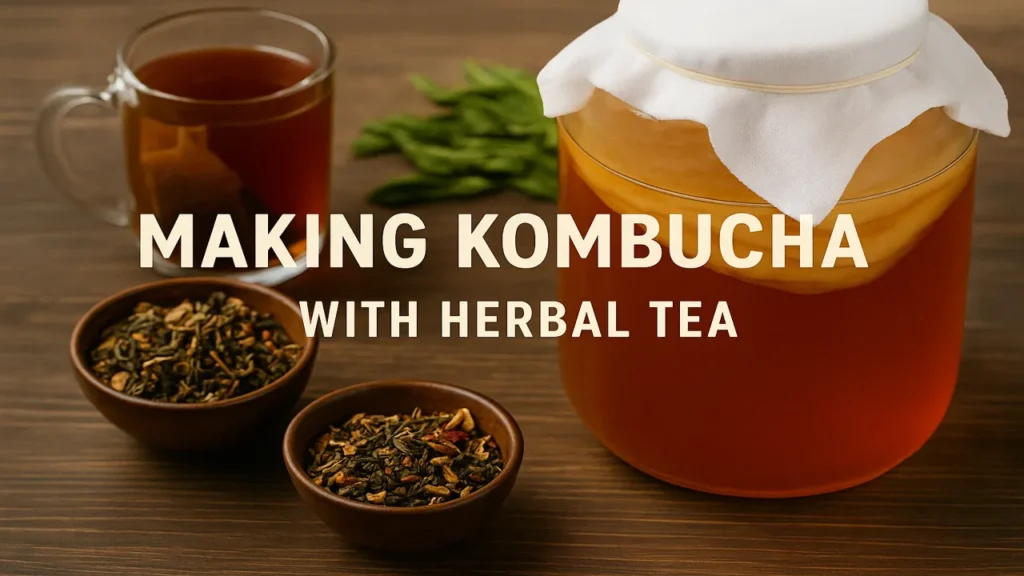
Herbal tea kombucha brewing represents the perfect intersection of ancient fermentation traditions and modern culinary experimentation. By stepping beyond camellia sinensis (true tea) into the diverse realm of herbal infusions, home brewers can create personalized probiotic beverages tailored to specific taste preferences and wellness goals.
In this comprehensive guide, I’ll share everything I’ve learned about successfully fermenting kombucha with herbal teas, including which herbs work best, how to maintain SCOBY health during transitions, and techniques for crafting balanced flavors that rival commercial varieties but with your personal creative touch.
Understanding the Science: Can Kombucha Thrive Without True Tea?
Before diving into recipes and techniques, it’s important to understand what makes herbal tea kombucha different from traditional versions. The SCOBY culture has specific nutritional requirements that traditionally come from black tea, which contains:
- Nitrogen compounds that feed the yeast
- Tannins that support bacterial growth
- Specific antioxidants that contribute to the fermentation environment
When brewing with herbals, we need to ensure these nutritional needs are still met. According to research published in the Journal of Food Biochemistry, many herbal teas lack sufficient nitrogen or tannins to support robust SCOBY health long-term. This doesn’t mean herbal kombucha is impossible—it simply requires some strategic adaptations.
The most successful approach involves either:
- Gradually transitioning your SCOBY to herbals by incrementally decreasing true tea content
- Using a hybrid tea base (part black tea, part herbal)
- Supplementing herbal brews with additional nutrients
Dr. Hannah Crum, co-founder of Kombucha Kamp, recommends the 80/20 approach for beginners: 80% traditional tea with 20% herbal infusion, gradually shifting the ratio as your SCOBY adapts. This conservative method preserves culture health while introducing new flavors.
Herbal Tea Selection: Which Varieties Work Best?
Not all herbal teas perform equally in kombucha brewing. Through extensive testing, I’ve identified herbs that consistently produce excellent results and those that should be approached with caution.
Top-Performing Herbal Teas for Kombucha
| Herbal Tea | Flavor Profile | Fermentation Notes | Special Benefits |
|---|---|---|---|
| Rooibos | Smooth, earthy, slightly sweet | Ferments reliably, minimal SCOBY impact | Rich in antioxidants, mineral-dense |
| Hibiscus | Tart, cranberry-like, floral | Faster fermentation, vibrant color | High in vitamin C, supports immune function |
| Lemongrass | Citrusy, bright, refreshing | Moderate fermentation speed | Digestive support, antimicrobial properties |
| Peppermint | Cool, refreshing | Slower fermentation | Digestive aid, cooling effect |
| Chamomile | Soft, apple-like, honey notes | Gentle fermentation | Calming, anti-inflammatory |
Herbs to Use with Caution
Some herbal ingredients contain volatile oils or compounds that may inhibit fermentation or harm your SCOBY over time:
- Sage: Contains antimicrobial compounds that may inhibit beneficial bacteria
- Oregano: Essential oils can disrupt microbial balance
- Cinnamon (in large amounts): Can inhibit yeast activity
- St. John’s Wort: Contains compounds that may weaken culture vitality
These herbs are best used in secondary fermentation (after removing the SCOBY) or in very small quantities as part of a blend.
Adapting Your SCOBY: Transition Techniques for Herbal Success
Successfully brewing with herbal teas requires a healthy, adaptive SCOBY. Here’s my step-by-step process for transitioning a traditional tea SCOBY to work with herbals:
Gradual Transition Method (Recommended for Beginners)
- Start with a backup: Always keep a “hotel” of traditional SCOBYs before experimenting
- Begin with a 90/10 ratio: 90% black tea, 10% herbal tea for the first brew
- Observe and evaluate: Check fermentation time, SCOBY formation, and flavor
- Increase gradually: With each successful batch, increase herbal content by 10%
- Monitor SCOBY health: Look for continued normal growth and typical fermentation timelines
Many herbal varieties will max out at about 50/50 tea-to-herbal ratio for optimal SCOBY health. However, rooibos is exceptional and can eventually be used at 100% concentration after proper adaptation.
SCOBY Health Indicators During Transition
When adapting your culture to herbals, watch for these signs of SCOBY health:
✓ Consistent new layer formation
✓ Normal fermentation time (7-14 days)
✓ Expected pH drop (reaching 2.5-3.5)
✓ Clear, pleasant aroma (no mold or off-smells)
✓ Regular carbonation development
If fermentation stalls or the SCOBY appears unhealthy (unusually thin, discolored, or developing mold), return to a traditional tea base to rejuvenate the culture before attempting herbal brewing again.
The Base Recipe: Herbal Kombucha Foundation
After years of experimentation, I’ve developed this base recipe that reliably produces excellent herbal kombucha:
Hybrid Herbal Kombucha Base Recipe
Ingredients:
- 3 cups filtered water
- 2 tablespoons loose black tea (or 4-6 tea bags)
- 3 cups filtered water (separate from above)
- 3-4 tablespoons loose herbal tea of choice
- ¾ cup organic cane sugar
- 1 cup mature kombucha (from previous batch)
- 1 healthy SCOBY
Equipment:
- 1-gallon glass brewing vessel
- Fine-mesh strainer
- Breathable cover (coffee filter, tight-weave cloth)
- Rubber band
- pH test strips (optional but recommended)
Instructions:
- Brew the black tea base: Steep black tea in 3 cups hot water (just off boil) for 5-7 minutes
- Prepare herbal infusion: Separately steep herbal tea in 3 cups hot water for 7-10 minutes
- Combine and sweeten: Strain both teas into brewing vessel, add sugar while still warm, stir to dissolve completely
- Add remaining water: Top off with filtered water to total approximately 3.5 quarts (leaving headspace)
- Cool completely: Allow tea to reach room temperature (68-75°F)
- Add starter and SCOBY: Pour in mature kombucha, then gently place SCOBY on top
- Cover and ferment: Secure breathable cover, store out of direct sunlight at 68-78°F
- Test regularly: Begin tasting at day 7, brewing until desired balance of sweetness/acidity is reached
- Bottle and second ferment: Remove SCOBY, reserve starter liquid, bottle remaining kombucha with optional flavoring ingredients
Remember that herbal kombucha often ferments at different rates than traditional brews. Hibiscus typically speeds fermentation, while chamomile or mint may slow it down. Use pH strips to track fermentation progress objectively—ideal finished kombucha should reach pH 2.5-3.5.
Five Exceptional Herbal Kombucha Combinations to Try
After brewing hundreds of experimental batches, these five combinations have emerged as consistent favorites among my tasting groups:
1. Rooibos-Vanilla Bean Kombucha
Primary Fermentation:
- 50% black tea, 50% rooibos tea
- ¾ cup sugar per gallon
Secondary Fermentation:
- 1 tablespoon vanilla extract per gallon, or
- 1 split vanilla bean per gallon
- Optional: 2 tablespoons dried elderberries
This combination produces a smooth, creamy kombucha with natural caramel notes that’s particularly appealing to new kombucha drinkers. The rooibos adds mineral complexity while vanilla rounds out any acidic edges.
2. Hibiscus-Ginger Sunrise Kombucha
Primary Fermentation:
- 70% black tea, 30% hibiscus tea
- ¾ cup sugar per gallon
Secondary Fermentation:
- 1-inch fresh ginger, grated, per bottle
- 1 tablespoon fresh lemon juice per bottle
- Optional: pinch of cayenne for warmth
The stunning ruby-red color of this brew is matched by its bold flavor profile. Hibiscus provides tartness and antioxidants, while ginger adds digestive benefits and natural carbonation during second fermentation.
3. Lemongrass-Mint Refresher Kombucha
Primary Fermentation:
- 60% black tea, 20% lemongrass, 20% peppermint
- ¾ cup sugar per gallon
Secondary Fermentation:
- Fresh cucumber slices (3-4 per bottle)
- 1 teaspoon lime juice per bottle
This cooling combination creates the perfect summer kombucha. The lemongrass provides citrus notes without acidity, while mint adds refreshing coolness. The cucumber secondary fermentation contributes a spa-like quality that’s incredibly refreshing.
4. Chamomile-Lavender Twilight Kombucha
Primary Fermentation:
- 60% black tea, 30% chamomile, 10% lavender
- ¾ cup sugar per gallon
Secondary Fermentation:
- 1 tablespoon honey per bottle
- Optional: 2-3 blueberries per bottle for color and subtle flavor
This gentle evening kombucha contains adaptogenic herbs known for promoting relaxation. The flavor profile is delicate and floral with honey notes, making it a perfect evening alternative to alcoholic beverages. Note that fermentation is typically slower with these calming herbs.
5. Tulsi-Ginger Immunity Kombucha
Primary Fermentation:
- 50% black tea, 50% tulsi (holy basil)
- ¾ cup sugar per gallon
Secondary Fermentation:
- 1-inch ginger, grated, per bottle
- 1 tablespoon turmeric juice per bottle
- Pinch of black pepper (activates turmeric)
Tulsi (holy basil) is renowned in Ayurvedic medicine for its adaptogenic properties. When combined with immune-supporting ginger and turmeric, this kombucha becomes a functional beverage that supports wellness while offering a complex, spicy flavor profile.
You can find more creative brewing techniques and recipes in our comprehensive guide to kombucha ingredients for additional inspiration and detailed information about fermentation principles.
Troubleshooting Common Herbal Kombucha Issues
Even experienced brewers encounter challenges when working with herbal teas. Here are solutions to the most common problems:
Weak or Stalled Fermentation
Symptoms: Minimal carbonation, limited acidity development, sugar remains detectable after 14+ days
Solutions:
- Increase black tea ratio temporarily
- Add a splash of apple cider vinegar to lower pH
- Verify fermentation temperature (ideal range: 75-80°F)
- Try a different SCOBY with more vitality
SCOBY Discoloration
Symptoms: SCOBY taking on the color of herbal ingredients (especially common with hibiscus)
Solution: This is purely cosmetic and not harmful. If preferred, alternate between herbal batches and traditional batches to maintain the classic appearance.
Mold Development
Symptoms: Fuzzy patches on SCOBY surface, unusual colors (blue, black, orange)
Solutions:
- Discard batch completely (never try to save a moldy batch)
- Use more starter liquid in next batch (increase to 1.5-2 cups)
- Verify proper sanitation practices
- Return to traditional tea until new SCOBY forms
Off Flavors or Aromas
Symptoms: Unusually yeasty, vinegary, or chemical-like flavors
Solutions:
- Check fermentation temperature (too warm accelerates vinegar production)
- Reduce fermentation time
- Ensure no residual soap or cleaning products in brewing vessel
- Try different water source (filtered preferred)
Health Considerations: Benefits of Herbal Kombucha Variations
While traditional kombucha offers numerous health benefits, herbal variations can provide additional wellness properties. According to a study published in the Journal of Medicinal Food, combining probiotics with herbal compounds may enhance the bioavailability and efficacy of both.
Potential Benefits of Popular Herbal Additions:
- Rooibos: Rich in unique antioxidants like aspalathin and nothofagin
- Hibiscus: May support healthy blood pressure and provide vitamin C
- Lemongrass: Contains citral, which has antimicrobial properties
- Peppermint: Supports digestive comfort and contains menthol
- Chamomile: Provides apigenin, a compound with calming properties
- Tulsi: Adaptogenic herb that helps the body manage stress
When creating functional kombucha blends, consider both primary and secondary fermentation ingredients for therapeutic properties. However, remember that kombucha should complement, not replace, medical treatment for specific conditions.
Advanced Techniques: Multi-Stage Fermentation for Complex Herbals
For brewers ready to take their herbal kombucha to the next level, multi-stage fermentation offers opportunities for incredible complexity and flavor development.
Three-Stage Herbal Method
Stage 1: Primary Fermentation
- Use the hybrid tea base described earlier
- Ferment until pH reaches approximately 3.2
Stage 2: Herb Infusion
- Remove SCOBY
- Add fresh herbs directly to kombucha
- Seal and allow to infuse 2-3 days at room temperature
Stage 3: Carbonation Development
- Strain out herbs
- Bottle with small amount of sugar source (1 tsp per 16 oz)
- Ferment at room temperature 2-4 days, then refrigerate
This method allows for the introduction of more delicate herbs and precise flavor control. It’s particularly effective with herbs that might inhibit primary fermentation, as they’re only introduced after the SCOBY is removed.
Seasonal Brewing: Adapting Herbal Kombucha Throughout the Year
One of the joys of herbal kombucha brewing is the ability to work with seasonal ingredients and align with the body’s changing needs throughout the year. Here’s how I adapt my brewing with the seasons:
Spring Renewal Brews
- Focus herbs: Nettle, dandelion, cleavers
- Benefits: Supports natural detoxification pathways
- Brewing notes: These cleansing herbs work best at 30% concentration with 70% true tea
Summer Cooling Brews
- Focus herbs: Mint, lemongrass, hibiscus
- Benefits: Provides electrolytes and cooling properties
- Brewing notes: These herbs ferment quickly in warm weather; check after 7 days
Autumn Immune Support
- Focus herbs: Elderberry, echinacea, ginger
- Benefits: Supports respiratory and immune health
- Brewing notes: Some immune herbs are potent; limit to 20% of tea base
Winter Warming Brews
- Focus herbs: Cinnamon, ginger, tulsi
- Benefits: Supports circulation and warming energy
- Brewing notes: Spices work best in secondary ferment rather than primary
By adapting your brewing to seasonal rhythms, you not only create varieties that taste appropriate for the weather but also support the body’s changing needs throughout the year.
Creating Your Herbal Kombucha Brewing Practice
Exploring herbal tea kombuchas opens a world of possibilities beyond traditional brewing. By understanding the scientific principles, respecting SCOBY needs, and approaching experimentation systematically, you can create signature brews that express your creativity while delivering probiotic benefits.
Remember these key principles as you develop your brewing practice:
- Start gradually when introducing new herbs
- Maintain a SCOBY hotel with traditional tea as backup
- Document your process to replicate successful batches
- Trust your senses when evaluating fermentation progress
- Be patient as your culture adapts to new ingredients
The most successful herbal kombuchas often emerge from mindful observation and adaptation rather than rigid recipes. Your brewing environment, unique SCOBY characteristics, and local water composition all contribute to results that are distinctly yours.
I encourage you to start with the recipes outlined here, but ultimately to develop your own signature blends that reflect your taste preferences and wellness goals. The art of fermentation is a conversation between brewer and microbes—listen closely, adjust thoughtfully, and enjoy the delicious results of this ancient yet endlessly innovative craft.
About the Author:
Lisa Fermenta is a certified nutritionist and fermentation expert who explores the health benefits of probiotic beverages. Her journey began in her grandmother’s kitchen, where she learned traditional fermentation techniques that have been passed down for generations. Lisa has studied with fermentation masters across Asia and Europe, bringing global perspectives to her brewing approach. She regularly conducts workshops on kombucha, kefir, and other fermented drinks, emphasizing both flavor development and health benefits. Her SCOBY library contains over 30 unique cultures from around the world.