Last updated:
Wild fermentation uses yeast and bacteria already present in your environment, on fruit skins, grain husks, in the air, rather than commercial cultures. The result is unpredictable in a way that’s either exciting or frustrating depending on your temperament. You don’t control which organisms dominate; you control the conditions that favor the ones you want. The payoff when it works is flavor complexity that’s genuinely impossible to replicate with a single commercial yeast strain.
What’s actually happening in wild fermentation
Spontaneous fermentation follows a predictable succession regardless of location. Early colonizers are typically non-Saccharomyces yeasts, Hanseniaspora uvarum, Pichia kudriavzevii, Candida species, that can’t tolerate much alcohol. They dominate the first 1–3 days, producing esters, glycerol, and organic acids that contribute background complexity. As alcohol rises above 4–5%, they die off and alcohol-tolerant Saccharomyces cerevisiae strains take over and complete fermentation. In spontaneous sour beers and wines, lactic acid bacteria (Lactobacillus, Pediococcus) and Brettanomyces often persist into later fermentation stages, producing the sourness and “barnyard” character that define styles like Belgian lambic.
Method 1: Spontaneous fermentation (Belgian-style)
The traditional approach: brew a turbid wort (higher protein, lower attenuation, typically 1.054–1.058 OG with significant unfermented starch), then expose it to ambient air by pouring it into a shallow open vessel (a coolship) overnight before transferring to fermentation barrels or carboys. Inoculation happens from the air and whatever organisms are present in your brewing environment.
This works best in cool weather, historically October through April in Belgium, when the ambient microbial population skews toward fermentation-friendly organisms rather than spoilage bacteria that thrive in summer heat. Modern spontaneous brewers in different climates map their local microbial seasons through trial and error. A failed batch (one that produces acetone, vomit-like, or truly unpleasant aromas beyond acceptable sour/funky) tells you the overnight temperature or local microbial environment wasn’t suitable. Success ratios for first-time coolship batches are genuinely unpredictable, experienced wild fermenters in non-traditional regions report success rates of 50–80% depending on season.
Method 2: Fruit-derived wild yeast capture
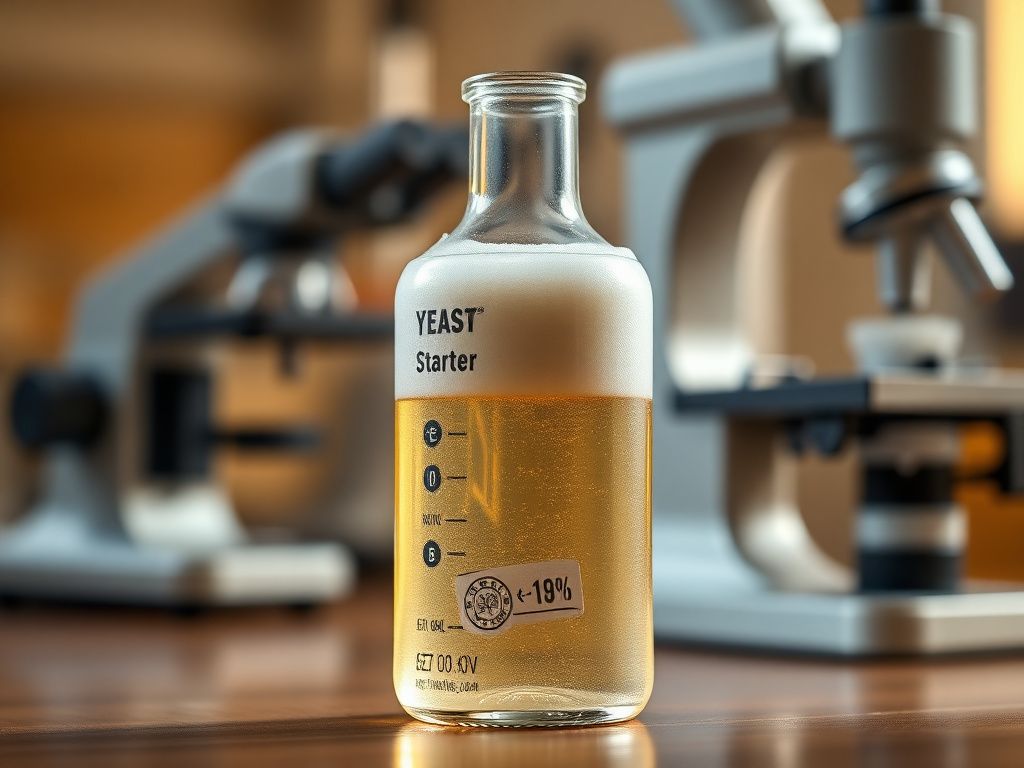
The bloom on unwashed organic fruit, grapes, plums, apples, wild berries, carries a population of wild Saccharomyces and non-Saccharomyces yeasts. You can capture and propagate these before pitching into a full batch:
- Crush 4–6 oz of unwashed organic fruit (grapes work best) in a sanitized jar
- Add 4 oz of 1.040 starter wort (or diluted apple juice) and cover loosely with a cloth
- Leave at 65–75°F/18–24°C and observe for 24–72 hours
- When you see active bubbling and CO₂ production, the yeast is viable
- Step up by adding 8 oz more of starter wort; repeat once more to 24 oz
- Pitch into your main batch when the starter is actively fermenting
The result is an isolated wild culture that reflects the specific fruit and location, but with a more predictable starting population than open-air spontaneous fermentation. Attenuation and flavor are still variable, you won’t know exactly what you’re getting until it’s done fermenting and aged. I’ve had captures from local wild plums produce clean, elegant fermentations indistinguishable from commercial wine yeast; I’ve also had them produce undrinkable batches. That’s the territory.
Method 3: Kveik and heritage strains
Norwegian kveik strains, traditional farmhouse yeasts maintained by Norwegian homebrewers for generations, occupy a middle ground between commercial and truly wild. They’re Saccharomyces cerevisiae genetically, but represent distinct landraces with unusual properties: fermentation at 85–100°F/29–38°C without fusel production, high flocculation, and distinct fruity esters. Strains like Voss Kveik (Lallemand or Omega brands) and Hornindal Kveik are available commercially and represent what wild, place-specific yeast selection looks like after centuries of use. If you want the “wild character” of a local farmhouse ale without the unpredictability of true wild fermentation, kveik is the practical option. White Labs WLP518 (Opshaug Kveik) and Lallemand Voss are the most approachable starting points.
What Brettanomyces actually contributes
Brettanomyces bruxellensis is the organism responsible for the barnyard, leather, horse blanket, and spicy phenolic character in Belgian gueuze and lambic, some natural wines, and certain mixed-fermentation ales. At low levels it contributes complexity; at high levels it dominates everything else. The two key compounds: 4-ethylphenol (barnyard, medicinal) and 4-ethylguaiacol (spicy, smoky, clove-like). Brett also produces high levels of acetic acid in the presence of oxygen, which is why spontaneous fermentation vessels need careful oxygen management after the initial inoculation phase.
Brett fermentation is extremely slow, often 12–24 months to full attenuation in a mixed-culture beer. It super-attenuates beyond what Saccharomyces achieves because it can metabolize dextrins and other complex sugars commercial yeast leaves behind. This means Brett-fermented beers often drop to final gravities of 1.000–1.003, and any residual carbonation from bottle conditioning needs to be carefully managed or you’ll have over-pressurized bottles.
Managing wild fermentation: what you can and can’t control
- You can control: initial wort composition, temperature, pH (lower pH favors LAB over spoilage bacteria), oxygen exposure timing, and aging vessel
- You can’t control: which specific organisms are present in your environment, their relative populations, and the exact flavor trajectory of any given batch
The most important controllable variable is initial wort pH. Dropping the wort pH to 4.2–4.5 before inoculation (with lactic acid) selects strongly against Enterobacteria and other spoilage organisms while still allowing Saccharomyces and LAB to thrive. This is standard practice in modern spontaneous breweries that want to reduce the spoilage rate without eliminating the wild character.
Common Questions
How do I know if a wild fermentation has gone wrong vs. just being funky?
Acceptable wild fermentation flavors: sourness (lactic or acetic), earthiness, leather, hay, stone fruit, slight vinegar at low levels. Unacceptable indicators of genuine spoilage: strong acetone or nail polish remover (ethyl acetate in large quantities), vomit-like aroma (butyric acid from Clostridium), fecal notes (indole/skatole), or a strong “mousey” character (tetrahydropyridines, often from Brettanomyces combined with specific LAB). The mousey fault is particularly tricky because it only shows up on the palate after swallowing, not on the nose. If you’re getting true spoilage aromas, not just challenging funkiness, the batch should be discarded.
Can wild fermentation be done in an apartment?
Yes, with the fruit-capture method. Open-air spontaneous fermentation in an apartment captures only the organisms present in your indoor environment, which typically means less interesting results than outdoor exposure in a natural setting. The fruit-capture approach gives you more control and produces consistent interesting results regardless of location. Some urban wild fermenters use the roof or a balcony for their overnight coolship exposure to get a broader microbial capture.
How long before a wild-fermented beer is ready to drink?
Minimum 6 months for a simple wild ale; 12–18 months for anything with significant Brett character to integrate; 18–36 months for lambic-style spontaneous beers. The waiting is non-negotiable, young wild beer has raw, harsh, unintegrated acidity and phenolics that need time to round out. The traditional Belgian approach of blending young (1-year) and old (2–3-year) gueuze balances freshness against depth. For home production without the blending stock, 18 months is a reasonable minimum before evaluating a spontaneous batch.