


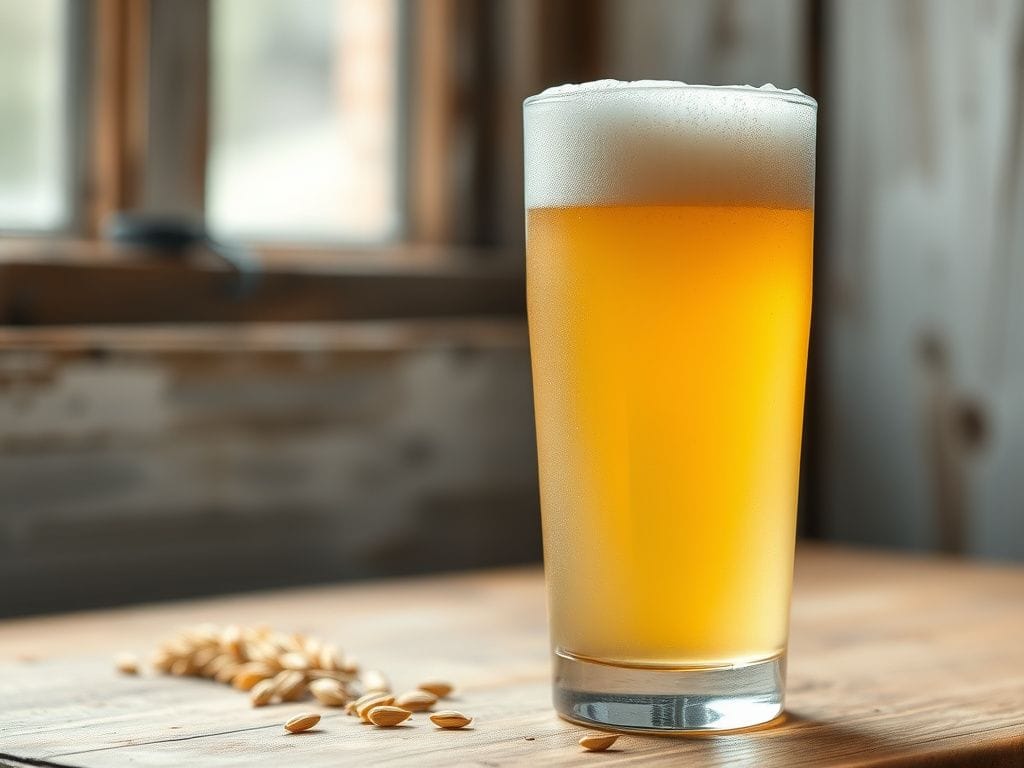
The 2026 Guide to Brewing Rice Lagers: The Most Popular Style in Craft
Mastering Rice Lagers for 2026 demands precision. High adjunct loads necessitate multi-step mashing and meticulous water chemistry. Low-temperature lager fermentation with specific yeast strains ensures crispness and clarity. Optimal conditioning and strict quality control deliver the clean, refreshing profile consumers crave. Focus on process, not just ingredients.
Rice Lager Component Matrix: Technical Specifications
| Component | Specification/Quantity | Purpose in Rice Lager | Impact on Final Product | Technical Notes |
|---|---|---|---|---|
| Base Malt | Pilsner Malt (2-Row, Continental or Domestic), 60-70% of grist | Primary fermentable sugar source, provides backbone. Low color contribution. | Clean, bready malt profile; pale straw color; ensures proper enzyme activity. | Target Lovi. 1.5-2.0 SRM. Use high diastatic power malt when using high adjunct percentages. |
| Adjunct Rice | Flaked Rice, Rice Hulls (for lautering), 30-40% of grist | Lightens body, enhances crispness, adds fermentable sugars without flavor. Rice hulls prevent stuck sparges. | Very dry finish, minimal residual sweetness, brilliant clarity. Reduced protein, preventing haze. | Requires gelatinization if raw rice is used. Flaked rice is pre-gelatinized. Rice hulls are inert. Consider enzyme supplements for raw rice. |
| Hops | Noble Varieties (Saaz, Tettnanger, Hallertau), 10-18 IBU | Balanced bitterness, minimal aromatic contribution to maintain crispness. | Subtle floral/spicy notes, clean bitterness that recedes, not forward. | Single bittering addition at 60 mins. Consider zero late additions. Alpha acid stability is key. |
| Yeast | Lager Strains (e.g., WLP830, W34/70, S-23) | Efficient fermentation at low temperatures, produces clean ester and diacetyl profile. | Crisp, sulfur-free, highly attenuated, minimal fermentation by-products. | Pitch rate: 1.5-2.0 million cells/mL/°P. High viability and oxygenation critical for clean fermentation. |
| Water Profile | Soft water, low minerals. Ca: 40-70 ppm, Mg: 5-10 ppm, SO4: 50-70 ppm, Cl: 40-60 ppm. | Allows malt and hop character to shine; prevents harshness. Optimizes mash pH. | Smooth mouthfeel, no mineral astringency, ideal mash pH range (5.2-5.4). | Adjust with lactic acid or phosphoric acid to hit mash pH. Use RO water as a base for precise control. |
Brewmaster’s Technical Calculation: Mash pH Adjustment for High-Adjunct Rice Lager
Achieving the optimal mash pH (5.2-5.4) is critical for enzyme activity, lautering efficiency, and final beer clarity/flavor, especially with the buffering reduction from rice adjuncts. Here’s a simplified calculation for lactic acid addition (88%) based on a common scenario:
Given:
- Target Mash pH: 5.2
- Measured Initial Mash pH (post-dough-in, 10 min): 5.6
- Mash Volume: 25 Liters
- Grist Composition: 65% Pilsner Malt, 35% Flaked Rice
Empirical Adjustment Rate: For a high-adjunct grist, assume approximately 0.1 mL of 88% Lactic Acid per liter of mash water lowers pH by ~0.1 unit, though this is highly dependent on specific water buffer capacity and grain bill.
Calculation Steps:
1. Determine pH Difference:
Difference = Initial pH – Target pH = 5.6 – 5.2 = 0.4 pH units
2. Calculate Estimated Lactic Acid Needed per Liter:
Acid mL/L = (pH Difference / 0.1 pH unit per 0.1 mL/L) * 0.1 mL/L
Acid mL/L = (0.4 / 0.1) * 0.1 = 4 * 0.1 = 0.4 mL/L
3. Calculate Total Lactic Acid for Mash Volume:
Total Acid mL = Acid mL/L * Mash Volume
Total Acid mL = 0.4 mL/L * 25 Liters = 10 mL of 88% Lactic Acid
Application Protocol: Add 5 mL, recirculate mash for 5 minutes, remeasure pH. Adjust further incrementally if necessary. Always adjust slowly and re-measure to avoid overshooting. This calculation is an estimate; actual response varies by specific water chemistry and grist.
Deep Dive: The 2026 Definitive Guide to Brewing World-Class Rice Lagers
The landscape of craft brewing is in constant flux, and 2026 heralds the definitive rise of the Rice Lager as a quintessential style. No longer relegated to mass-market industrial production, the craft Rice Lager embodies precision, subtlety, and an unparalleled crispness that discerning palates now demand. This guide outlines the technical imperatives for brewing a Rice Lager that not only meets but exceeds expectations for clarity, dryness, and drinkability.
1. Grist Formulation and Adjunct Integration
The foundation of a superior Rice Lager begins with the grist. Pilsner malt, typically accounting for 60-70% of the total grist, serves as the primary enzyme source and provides a delicate, clean malt character. Opt for a high-quality, low-SRM (1.5-2.0) Pilsner malt, preferably a continental variety for its authentic profile, or a domestic equivalent with sufficient diastatic power to handle high adjunct loads.
Rice adjuncts are the defining component, constituting 30-40% of the grist. Flaked rice is the preferred adjunct due to its pre-gelatinized state, simplifying the mash process significantly by eliminating the need for a separate cereal mash. Flaked rice contributes fermentable sugars without adding significant flavor or color, thus promoting a lighter body and exceptionally dry finish. For brewers utilizing raw rice (e.g., rice grits, polished rice), a decoction or cereal mash step is absolutely mandatory to gelatinize the starches, making them accessible to enzymatic conversion. This usually involves cooking the rice separately with a small portion of malt, then returning it to the main mash. Regardless of the rice form, an adequate percentage of rice hulls (1-2% of total grist) is crucial to maintain a permeable filter bed during lautering, preventing a notorious stuck sparge common with high adjunct percentages. The reduced protein content from the rice also aids in achieving brilliant clarity in the finished product. For more in-depth knowledge on specific grain properties and adjunct mashing techniques, refer to resources like the Brewers Association educational publications.
2. Meticulous Mashing Regimen
Brewing a Rice Lager with significant adjuncts necessitates a multi-step mash program for optimal starch conversion and enzyme activity. A standard single-infusion mash is insufficient. The recommended approach involves:
- Acid Rest (optional, for raw rice): 35-45°C (95-113°F) for 20-30 minutes. Primarily to reduce mash pH, if initial water chemistry dictates.
- Protein Rest (optional, depending on malt modification): 50-55°C (122-131°F) for 15-20 minutes. Modern, highly modified Pilsner malts often make this rest unnecessary or even detrimental, potentially leading to a thin body. However, with large adjunct percentages, a short protein rest can improve clarity and head retention.
- Saccharification Rests:
- Beta-Amylase Rest: 62-64°C (144-147°F) for 45-60 minutes. This temperature range favors beta-amylase activity, producing highly fermentable sugars (maltose), which is critical for the characteristic dry finish of a Rice Lager.
- Alpha-Amylase Rest: 68-72°C (154-162°F) for 20-30 minutes. This higher temperature range favors alpha-amylase, producing larger, unfermentable dextrins that contribute to body and mouthfeel. For a truly crisp and dry Rice Lager, prioritize the beta-amylase rest and keep the alpha-amylase rest shorter or at the lower end of its range.
- Mash Out: 76-78°C (169-172°F) for 10 minutes. This denatures enzymes, locks in the sugar profile, and reduces wort viscosity for improved lautering.
Mash pH must be rigorously controlled, ideally between 5.2-5.4 throughout the saccharification rests. Rice adjuncts offer little buffering capacity, making water chemistry adjustments via lactic or phosphoric acid imperative. Maintaining this pH optimizes enzyme performance and contributes significantly to flavor profile and clarity. For more specific guidance on water adjustments, brewers can utilize comprehensive resources from BrewMyBeer.online’s water chemistry calculators.
3. Water Profile: The Canvas of Clarity
The ideal water profile for a Rice Lager is soft and low in mineral content, mimicking classic Northern European lager-producing regions. Hard water can impart undesirable mineral notes and negatively impact mash pH. A suitable profile aims for:
- Calcium (Ca): 40-70 ppm
- Magnesium (Mg): 5-10 ppm
- Sodium (Na): <20 ppm
- Sulfate (SO4): 50-70 ppm
- Chloride (Cl): 40-60 ppm
- Alkalinity: As low as possible, requiring acid additions to reach target mash pH.
Using reverse osmosis (RO) water as a base and building the profile with specific mineral salts (calcium chloride, gypsum) is the most controlled approach. Sulfate can accentuate dryness, while chloride can enhance mouthfeel, so strike a delicate balance. Always ensure mash pH is adjusted to the target range of 5.2-5.4. Phosphoric or lactic acid are preferred for flavor neutrality.
4. Hop Selection and Usage
The hop profile of a Rice Lager is intentionally subdued, designed to provide just enough bitterness to balance the malt sweetness without overshadowing the clean, crisp character. Noble hop varieties such as Saaz, Tettnanger, and Hallertau are traditional choices, offering subtle floral, spicy, or earthy notes. Total bitterness should fall within the 10-18 IBU range. A single bittering addition at 60 minutes is often sufficient. Late hop additions for flavor or aroma are generally avoided in classic Rice Lagers to maintain their ultra-clean profile, though some contemporary interpretations might experiment sparingly. The goal is to let the fermentable dryness and clarity define the beer, not the hops.
5. Yeast Management and Fermentation Precision
The choice and management of lager yeast are paramount. Recommended lager yeast strains include White Labs WLP830 German Lager, Wyeast 2124 Bohemian Lager, Fermentis Saflager W-34/70, or Saflager S-23. These strains are known for their clean fermentation profiles, efficient attenuation, and ability to drop clear rapidly. Critical yeast management protocols:
- Pitch Rate: Lagers require significantly higher pitch rates than ales. Target 1.5-2.0 million cells/mL/°P (Plato) for optimal fermentation and to minimize off-flavor production (e.g., esters, diacetyl, acetaldehyde). Underpitching is a common source of problems.
- Oxygenation: Adequately oxygenate the wort (8-10 ppm dissolved oxygen) prior to pitching. This supports healthy yeast growth and proper cell division during the initial lag phase.
- Fermentation Temperature: Ferment at the lower end of the yeast strain’s recommended range, typically 9-13°C (48-55°F). Consistent temperature control is vital. Fluctuations can lead to off-flavors.
- Diacetyl Rest: Once fermentation is 2-4°P from terminal gravity (or after specific gravity has dropped by two-thirds), raise the temperature by 3-5°C (5-9°F) for 2-5 days. This allows the yeast to reabsorb and metabolize diacetyl and its precursors, preventing butterscotch or butter off-flavors. Verify diacetyl levels via force diacetyl test or gas chromatography. Information on proper diacetyl rest protocols can be found on resources like the Homebrewers Association.
- Attenuation: Aim for a high degree of apparent attenuation (78-85%) to achieve the characteristic dryness.
6. Lagering and Conditioning: The Art of Maturation
The lagering phase is where a Rice Lager truly transforms, developing its signature smoothness and brilliant clarity. After primary fermentation and the diacetyl rest, crash cool the beer to 0-4°C (32-39°F) and transfer to a dedicated lagering vessel, minimizing oxygen pickup. Extended cold conditioning at near-freezing temperatures for 4-8 weeks (or even longer for larger batches) allows:
- Yeast Sedimentation: Remaining yeast cells flocculate and settle, naturally clarifying the beer.
- Protein Precipitation: Chill haze precursors fall out of solution.
- Flavor Maturation: Harsh notes soften, and flavors meld, resulting in a remarkably smooth and clean profile.
- CO2 Absorption: Beer slowly absorbs CO2, contributing to a finer, more stable carbonation.
For commercial clarity, especially in a market demanding visual perfection, filtration (e.g., plate and frame, lenticular) is often employed after lagering. However, careful brewing practices can yield excellent clarity without excessive filtration, preserving more flavor and body. Always maintain a closed system during transfer and conditioning to prevent any oxygen ingress.
7. Quality Control, Troubleshooting, and Sensory Evaluation
Rigorous quality control throughout the brewing process is non-negotiable for a premium Rice Lager. Specific checkpoints include:
- Mash pH: Consistent measurement and adjustment.
- Wort Turbidity: Post-boil clarity and chill haze potential.
- Fermentation Performance: Gravity readings, temperature logs, VDK (Vicinal Diketone) analysis.
- Dissolved Oxygen (DO): Measure DO levels at every stage post-fermentation, aiming for <50 ppb in finished product to prevent oxidation.
- Sensory Evaluation: Conduct formal sensory panels using BJCP guidelines or similar protocols. Evaluate for:
- Clarity: Brilliant, no haze.
- Aroma: Clean, subtle malt, faint noble hops, no off-aromas (DMS, diacetyl, acetaldehyde, sulfur).
- Flavor: Crisp, dry, clean, low bitterness, balanced by a delicate malt sweetness. No fruity esters.
- Mouthfeel: Light body, effervescent, smooth, refreshing finish.
Common troubleshooting issues include starch haze (insufficient gelatinization or conversion), protein haze (insufficient protein rest or poor cold conditioning), diacetyl (inadequate diacetyl rest), or acetaldehyde (underpitching, poor oxygenation, premature removal from yeast). Precision at every step mitigates these risks.
8. Packaging and Shelf Stability
Packaging a Rice Lager demands the highest attention to dissolved oxygen (DO) control. Whether kegging, bottling, or canning, DO levels must be kept exceptionally low (target <50 ppb, ideally <20 ppb) to prevent oxidation, which manifests as cardboard, sherry, or honey-like off-flavors. Employ CO2 purging for all packaging vessels, counter-pressure filling techniques, and minimize beer exposure to air. The inherent delicate nature of a Rice Lager makes it particularly susceptible to oxidation, so invest in proper DO measurement equipment and protocols.
By adhering to these technical guidelines, brewers can consistently produce world-class Rice Lagers that exemplify the style’s potential: a refreshingly crisp, brilliantly clear, and exquisitely drinkable beer that perfectly captures the evolving tastes of the 2026 craft beer consumer. For more detailed equipment guides and process optimizations, visit BrewMyBeer.online.