


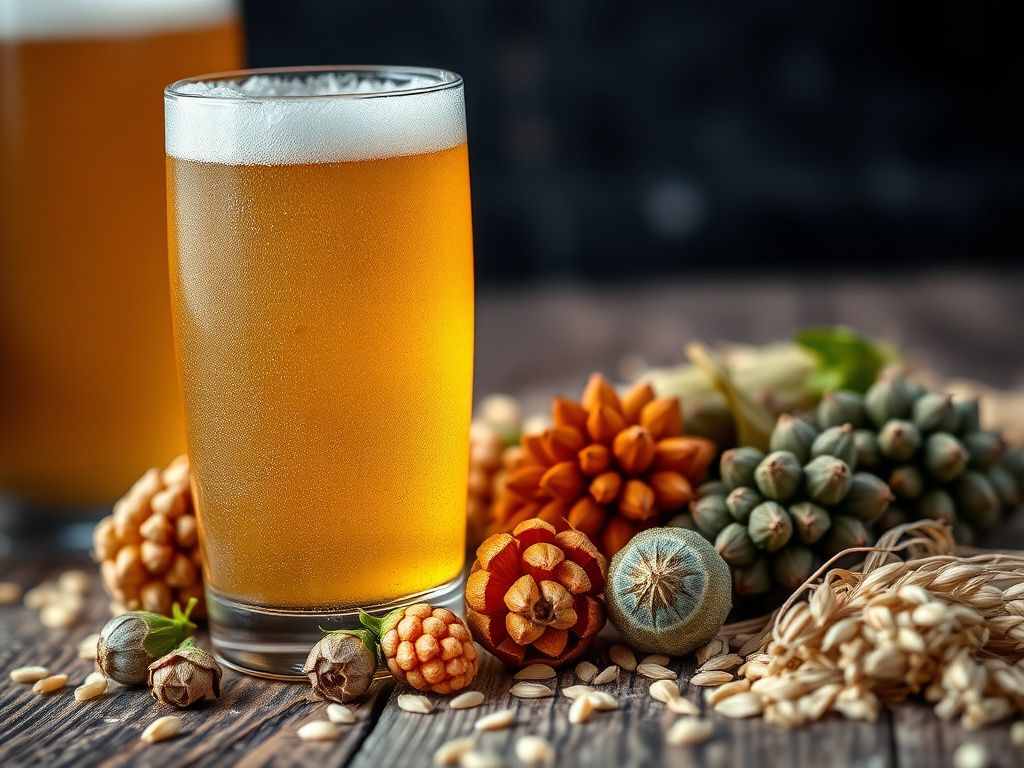
Mastering dry hopping with Citra, Mosaic, and Galaxy is critical for achieving dynamic aromatic profiles. This guide dissects each hop’s unique volatile oil composition, optimal application strategies, and synergistic potential. Learn precise technical parameters and advanced methodologies for crafting complex, stable hop-forward beers, ensuring peak flavor delivery and retention in 2026 and beyond.
Dry Hopping Hop Profile Matrix: Citra, Mosaic, Galaxy (2026 Projections)
This table details the critical analytical parameters and sensory descriptors for optimal dry hopping utilization of Citra, Mosaic, and Galaxy hops, with consideration for evolving cultivar characteristics and processing techniques projected for 2026.
| Hop Variety | Typical Alpha Acid (%) | Typical Beta Acid (%) | Total Oil Content (ml/100g) | Key Aroma Compounds | Primary Aroma Descriptors | Optimal Dry Hop Window |
|---|---|---|---|---|---|---|
| Citra (HBC 394) | 11.0 – 15.0 | 3.0 – 4.5 | 2.2 – 2.8 | Myrcene, Geraniol, Linalool, α-Pinene, Limonene | Potent grapefruit, lime zest, tropical fruit (passion fruit, lychee), dank, resinous pine. Highly complex citrus. | Late fermentation (biotransformation), Post-fermentation (cold side for preservation). |
| Mosaic (HBC 369) | 11.5 – 14.5 | 3.2 – 3.9 | 1.0 – 1.6 | Myrcene, β-Pinene, Humulene, Caryophyllene, Geraniol, 4MMP (thiol precursor) | Complex tropical (mango, guava), blueberry, stone fruit, earthy pine, subtle dankness. Multi-faceted fruit and earthy tones. | Late fermentation (biotransformation for thiol expression), Post-fermentation (aroma retention). |
| Galaxy | 13.0 – 15.0 | 5.0 – 6.0 | 2.2 – 2.8 | Myrcene, Ethyl-2-methylbutyrate, β-Pinene, Linalool, α-Pinene | Intense passion fruit, peach, vibrant citrus, clean tropical fruit. Explosive, singular fruit character. | Post-fermentation (cold side for preservation of delicate thiols), Late fermentation (for enhanced fruit esters). |
Dry Hop Essential Oil Contribution Calculation
Objective: Calculate the total potential essential oil contribution from a blended dry hop charge in a 1,000L batch of Double Hazy IPA, targeting a robust aromatic saturation. This calculation provides an estimate of the raw oil input, critical for predicting aromatic intensity.
Parameters:
- Batch Volume (V): 1,000 L
- Citra Dry Hop Rate (DHCitra): 5.0 g/L
- Mosaic Dry Hop Rate (DHMosaic): 3.0 g/L
- Galaxy Dry Hop Rate (DHGalaxy): 2.0 g/L
- Average Citra Total Oil Content (OilCitra): 2.5 ml/100g (or 0.025 ml/g)
- Average Mosaic Total Oil Content (OilMosaic): 1.3 ml/100g (or 0.013 ml/g)
- Average Galaxy Total Oil Content (OilGalaxy): 2.5 ml/100g (or 0.025 ml/g)
Calculations:
1. Total Citra Hops: 5.0 g/L * 1,000 L = 5,000 g
2. Total Mosaic Hops: 3.0 g/L * 1,000 L = 3,000 g
3. Total Galaxy Hops: 2.0 g/L * 1,000 L = 2,000 g
4. Citra Oil Contribution: 5,000 g * 0.025 ml/g = 125 ml
5. Mosaic Oil Contribution: 3,000 g * 0.013 ml/g = 39 ml
6. Galaxy Oil Contribution: 2,000 g * 0.025 ml/g = 50 ml
7. Total Essential Oil Contribution: 125 ml (Citra) + 39 ml (Mosaic) + 50 ml (Galaxy) = 214 ml
Result: This dry hop regimen introduces approximately 214 ml of raw hop essential oils into the 1,000L batch. This substantial oil load, equating to 0.214 ml/L, suggests a highly aromatic beer. Brewmasters must consider the volumetric impact, potential for extraction of undesirable compounds, and critical oxygen mitigation strategies to preserve these volatile oils. Further analysis, including specific compound concentrations (e.g., Myrcene, Linalool, Thiols), is required for a complete sensory prediction.
Deep Dive: The Definitive Master-Guide to Dry Hopping with Citra, Mosaic, and Galaxy Hops in 2026
Introduction to Advanced Dry Hopping Phenology
Dry hopping has evolved from a simple post-fermentation addition to a sophisticated process integral to modern brewing. The objective is no longer merely to impart hop aroma, but to precisely engineer complex aromatic profiles, optimize volatile compound retention, and mitigate deleterious effects such as hop creep and oxidation. The trio of Citra, Mosaic, and Galaxy hops represents the pinnacle of modern aromatic cultivars, each offering a distinct chemical fingerprint that, when understood and manipulated, can produce beers of unparalleled sensory depth. This guide delves into the specific biophysical and biochemical interactions of these hops, providing a framework for their optimal deployment in 2026.
Understanding Hop Chemistry: Aromatic Compound Analysis
Citra (HBC 394) – The Citrus Powerhouse
Citra’s renown stems from its extraordinarily high concentration of myrcene (60-70% of total oils), which contributes primary citrus notes (grapefruit, lime) and tropical fruit characteristics. Beyond myrcene, Citra contains significant levels of geraniol and linalool, both crucial precursors for biotransformation. Geraniol, often described as rose-like or geranium, can be converted by yeast enzymes (specifically β-glucosidases and alcohol acyltransferases) into citronellol, enhancing citrus and floral notes, or into geranyl acetate, contributing to fruity esters. Linalool provides sweet, floral, and citrus peel nuances, and is also highly susceptible to biotransformation into esters like linalyl acetate, amplifying fruity complexity. The presence of α-pinene and limonene further bolsters the resinous, zesty profile. Dry hopping with Citra during active fermentation capitalizes on yeast’s enzymatic activity, converting bound glycosidic precursors into their volatile aglycone forms, thereby unlocking deeper aromatic potential and maximizing thiol expression.
Mosaic (HBC 369) – The Berry and Tropical Enigma
Mosaic is arguably the most complex of the trio, a true “pantry” hop providing a spectrum of flavors from tropical mango and guava to blueberry and dank pine. Its oil profile is diverse, featuring significant myrcene (up to 55%), but also substantial humulene and caryophyllene, which lend earthy and spicy undertones that balance the fruit. What truly sets Mosaic apart is its high concentration of thiol precursors, particularly 4-methyl-4-mercaptopentan-2-one (4MMP) and 3-mercaptohexan-1-ol (3MH). These compounds, when liberated by yeast enzymes during fermentation (especially during a well-managed biotransformation dry hop), translate into intense blackcurrant, passion fruit, and guava aromas. The unique interplay of these precursors and the primary terpenes makes Mosaic incredibly versatile. Its onion/garlic notes, often perceived at high concentrations, are generally mitigated by careful blending and optimized contact times, though some brewers intentionally leverage them for specific “dank” profiles.
Galaxy – The Passion Fruit Cannon
Hailing from Australia, Galaxy is characterized by its explosive, singular passion fruit aroma, complemented by notes of peach and clean citrus. This intense fruitiness is largely attributed to its high myrcene content (up to 60%) combined with unique volatile esters, particularly ethyl-2-methylbutyrate, which is a key contributor to its distinctive passion fruit and apple notes. Galaxy also possesses a significant proportion of alpha-acids, contributing to bitterness if used in the boil, but its true power is unleashed in the dry hop. Like Mosaic, Galaxy contains important thiol precursors, although often with a different balance, leading to a brighter, more overt tropical character. Optimal use of Galaxy in dry hopping often involves minimal contact time at colder temperatures post-fermentation to preserve its delicate, highly volatile esters and thiols from degradation or scrub. For advanced brewers, exploring dry hopping strategies to enhance Galaxy’s potential while preventing flavor degradation is paramount.
Optimizing Dry Hopping Strategies: Technical Parameters & Methodologies
1. Timing and Temperature: The Biotransformation Imperative
The timing of dry hop addition critically influences the final aroma profile due to yeast enzymatic activity.
a. During Active Fermentation (Biotransformation): Adding hops (Citra, Mosaic) during the latter half of active fermentation (e.g., specific gravity drop of 50-75%) exposes hop compounds to yeast enzymes. This facilitates:
- Glycoside Hydrolysis: Yeast β-glucosidases cleave sugar molecules from non-volatile glycosides, releasing potent aglycone forms of terpenes (e.g., geraniol, linalool) and thiols.
- Esterification: Yeast alcohol acyltransferases can convert hop alcohols (e.g., geraniol, linalool) into their corresponding esters (geranyl acetate, linalyl acetate), intensifying fruity, floral notes.
- Thiol Liberation: Key for Mosaic and Galaxy. Yeast enzymes (e.g., β-lyase activity from specific yeast strains) transform non-aromatic thiol precursors into highly aromatic volatile thiols (e.g., 3MH, 4MMP, 3MHA), responsible for strong passion fruit and blackcurrant notes.
Optimal temperature for biotransformation dry hopping typically aligns with the active fermentation temperature range of the yeast strain (e.g., 18-22°C for ale yeasts). This maximizes enzymatic activity. However, higher temperatures can increase the risk of extracting undesirable grassy or vegetal notes.
b. Post-Fermentation (Cold Side Dry Hopping): Adding hops (especially Galaxy, or a secondary charge of Citra/Mosaic) once fermentation is complete and the beer has been crashed to colder temperatures (e.g., 8-15°C) primarily focuses on extraction of volatile oils with minimal enzymatic conversion. This method:
- Preserves delicate hop compounds that might be volatilized or degraded at warmer temperatures.
- Minimizes the risk of hop creep (secondary fermentation due to hop enzymes breaking down residual dextrins).
- Results in a cleaner, often brighter expression of the hops’ intrinsic aroma profile.
2. Dosage Rates: Achieving Saturation and Balance
Dosage is style-dependent. For highly aromatic styles like Hazy IPAs or DDH (Double Dry Hopped) IPAs, rates typically range from 8-20 g/L (2.0-5.0 lbs/bbl), sometimes exceeding 30 g/L (7.5 lbs/bbl) for extreme examples.
a. Single-Stage vs. Multi-Stage Dry Hopping:
- Single-Stage: A single large dry hop addition. Can be efficient but risks over-extraction of undesirable compounds or difficulty in CO2 purging.
- Multi-Stage: Splitting the total dry hop charge into two or more additions. E.g., a primary charge during active fermentation for biotransformation, and a secondary charge post-fermentation for fresh aroma. This allows for a more controlled aroma development and can enhance overall hop complexity and stability.
For Citra/Mosaic/Galaxy blends, a common strategy is to target a cumulative total oil concentration per liter, considering the specific gravity, alcohol content, and desired sensory outcome. Excessive dry hopping can lead to saturation past which additional hops provide diminishing returns, or even negative sensory impacts (astringency, grassy notes, vegetal character).
3. Contact Time: The Extraction-Degradation Equilibrium
Optimal contact time is typically 2-5 days. While longer contact times increase extraction, they also increase the risk of:
- Grassy/Vegetal Notes: Due to extraction of polyphenols and chlorophyll.
- Hop Creep: Enzymes (amylase, amyloglucosidase) present in hop material can break down residual dextrins, leading to unwanted secondary fermentation, diacetyl production, and over-attenuation. This is particularly relevant with high dry hopping rates and longer contact times. Adherence to best practices for hop removal is crucial.
- Oxidation: Prolonged contact time, especially during transfer, increases exposure to oxygen.
Employing active recirculation, where beer is gently pumped through a hop bed or a hop dosing skid, can significantly reduce necessary contact time by enhancing mass transfer kinetics, often achieving desired extraction in 24-48 hours.
4. Oxygen Management: The Paramount Challenge
Oxygen ingress during dry hopping is the single greatest threat to hop aroma stability and overall beer quality. Hop oils, especially volatile terpenes and thiols, are highly susceptible to oxidation, leading to:
- “Wet Cardboard” or Sherry Notes: Direct oxidation of beer compounds.
- Loss of Hop Freshness: Oxidation of myrcene into geraniol, or general degradation of delicate thiols.
- Increased Bitterness/Astringency: Oxidation of polyphenols.
Critical Procedures:
- CO2 Purging: Thoroughly purge dry hop vessels, hop cannons, or fermenters before adding hops. Aim for O2 levels below 50 ppb in the headspace.
- Closed-System Additions: Utilize hop dosers, hop cannons, or dedicated dry hop ports that allow for additions without exposing the beer to atmospheric oxygen.
- Spunding Valves: Maintain a positive CO2 pressure in the fermenter during and after dry hopping to prevent vacuum formation during chilling or CO2 absorption.
- Transfer Protocols: Employ closed transfers with minimal head pressure differential to minimize shear and oxygen pickup.
Synergistic Blending Strategies: Crafting Complexity
Citra + Mosaic: The Modern IPA Core
This is a classic pairing, forming the backbone of countless New England and West Coast IPAs. Citra provides a bright, sharp citrus and tropical base, while Mosaic layers in complex berry, stone fruit, and a subtle dank earthiness.
Strategy: Often used in a 60/40 or 50/50 ratio. Citra can lead for a bolder citrus attack, or Mosaic can lead for a more berry-forward profile. Consider biotransformation for Mosaic to enhance thiols, and a cold post-fermentation addition of Citra to preserve its sharp citrus notes.
Citra + Galaxy: The Tropical Fruit Bomb
This combination amplifies tropical fruit character to extreme levels. Citra’s grapefruit and passion fruit notes perfectly complement Galaxy’s explosive passion fruit and peach.
Strategy: Galaxy, with its delicate thiols and esters, benefits from cold dry hopping post-fermentation. Citra can be introduced during fermentation for biotransformation. Ratios can vary, but a 1:1 or 2:1 Citra:Galaxy ratio is common to harness both hops effectively without one overpowering the other, though some brewers might go heavy on Galaxy for maximum impact.
Mosaic + Galaxy: The Exotic Blend
This pairing creates a highly exotic, intense tropical fruit experience, leaning heavily into passion fruit, guava, and mango, with Mosaic adding a layer of berry and earthy complexity.
Strategy: Mosaic during fermentation for thiol conversion, followed by Galaxy post-fermentation. This minimizes the risk of Mosaic’s danker notes clashing with Galaxy’s clean fruit. The resulting beer will be intensely fruity with underlying depth. Ratios often favor Galaxy (e.g., 2:1 Galaxy:Mosaic) to highlight its unique character.
Citra + Mosaic + Galaxy: The Triple Threat
Employing all three requires careful balancing to prevent sensory overload or a muddled profile. The goal is to create a multi-layered experience where each hop contributes distinctly but harmoniously.
Strategy:
- Primary Biotransformation Dry Hop (Fermentation): Utilize Mosaic (e.g., 30-40% of total hop bill) to unlock thiols and build a complex tropical/berry base.
- Secondary Cold Dry Hop (Post-Fermentation): Introduce Citra (e.g., 40-50%) for bright citrus and tropical notes, and Galaxy (e.g., 20-30%) for its explosive passion fruit top notes.
This phased approach allows for specific compound liberation at optimal stages, leading to a more defined and stable aroma profile. Sensory evaluation throughout the process is critical for fine-tuning.
Advanced Techniques and Considerations for 2026
Hop Selection and Pellet Morphology
The quality of hop pellets (T-90, Cryo Hops, etc.) significantly impacts extraction efficiency and sensory outcomes.
- T-90 Pellets: Standard, retain some vegetal matter which can contribute polyphenols and enzymes.
- Cryo Hops (Lupulin-rich pellets): Concentrated lupulin glands, reducing vegetal matter by up to 50%. This leads to cleaner flavors, less vegetal astringency, and higher essential oil content per gram. Ideal for achieving intense aroma with reduced contact time and less beer loss. When calculating dosages for Cryo, a general rule is to use 50-70% of the T-90 pellet weight to achieve similar (or often superior) aromatic impact.
For high-gravity, intensely dry-hopped beers, Cryo versions of Citra, Mosaic, and Galaxy are becoming the industry standard to minimize vegetal matter and maximize pure hop expression. Understanding the impact of hop product on hop utilization and sensory profiles is critical.
Active Dry Hopping & Recirculation
Moving beyond static dry hopping, methods like hop cannons, hop torpedoes, or recirculation through external vessels filled with hops offer significant advantages:
- Enhanced Extraction: Increased surface area contact and improved solvent exchange drastically reduce the required contact time.
- Reduced Beer Loss: Hops can be added and removed without opening the fermenter, minimizing oxygen exposure and yeast/beer trub loss.
- Uniformity: Ensures consistent hop saturation throughout the batch.
These systems require meticulous cleaning and sanitization to prevent microbial contamination. Recirculation should be gentle (e.g., tangential inlets) to avoid shearing delicate hop compounds or excessive yeast agitation.
Enzyme Assisted Dry Hopping
The intentional addition of exogenous enzymes, particularly β-glucosidases or β-lyase preparations, is gaining traction. These enzymes can specifically target and hydrolyze glycosidic bonds, liberating bound terpenes and thiols that yeast might not fully process, thereby augmenting specific aroma profiles. This approach allows for even greater control over the final sensory outcome, especially when trying to maximize the thiol potential of Mosaic and Galaxy.
Troubleshooting Common Dry Hopping Issues
Grassy/Vegetal Notes & Astringency
Cause: Over-extraction of polyphenols, chlorophyll, and other undesirable compounds, often due to excessive contact time, high dry hop temperatures, or very high hop rates with T-90 pellets.
Mitigation: Reduce contact time (2-4 days recommended), lower dry hop temperature (if post-fermentation), consider Cryo Hops, ensure proper hop removal/separation post-dry hop.
Oxidation & Flavor Degradation
Cause: Oxygen ingress during any stage of dry hopping or packaging. Hop oils are extremely susceptible.
Mitigation: Implement stringent oxygen management protocols: thorough CO2 purging of all vessels, closed-system transfers, use of hop cannons, maintaining positive CO2 pressure, packaging under low-DO (dissolved oxygen) conditions.
Hop Creep & Diacetyl Production
Cause: Amylolytic enzymes in hop material break down unfermentable dextrins into fermentable sugars, leading to an unwanted secondary fermentation (hop creep) and potentially diacetyl production if yeast is no longer active.
Mitigation: Dry hop when yeast is still active (biotransformation), or at cold temperatures post-fermentation followed by rapid hop removal. Some brewers intentionally crash the beer rapidly after dry hopping to inactivate enzymes and drop yeast. Enzyme-free hop products (e.g., some extracts or highly processed pellets) can also minimize this risk.
Hop Burn/Harshness
Cause: High concentrations of hop particulate matter in suspension or over-extraction of polyphenols.
Mitigation: Use fining agents (e.g., Biofine, gelatin), ensure thorough conditioning time to allow hop particulate to settle, minimize shear during transfers, consider whirlpool additions of concentrated hop products to reduce dry hop load.
Conclusion: The Future of Hop-Forward Brewing (2026 Perspective)
The mastery of dry hopping with Citra, Mosaic, and Galaxy in 2026 demands a scientific approach grounded in an understanding of hop chemistry, yeast physiology, and meticulous process control. Brewers must transcend traditional methodologies, embracing advanced techniques like biotransformation, precise temperature control, active recirculation, and uncompromising oxygen management. The continuous development of hop varieties and processing technologies (e.g., novel Cryo-variants, targeted enzyme preparations) provides unprecedented tools for crafting stable, intensely aromatic beers. By applying these principles, brewers can unlock the full, nuanced potential of these exceptional hop varieties, delivering unparalleled sensory experiences to the consumer and pushing the boundaries of what is possible in hop-forward brewing.