

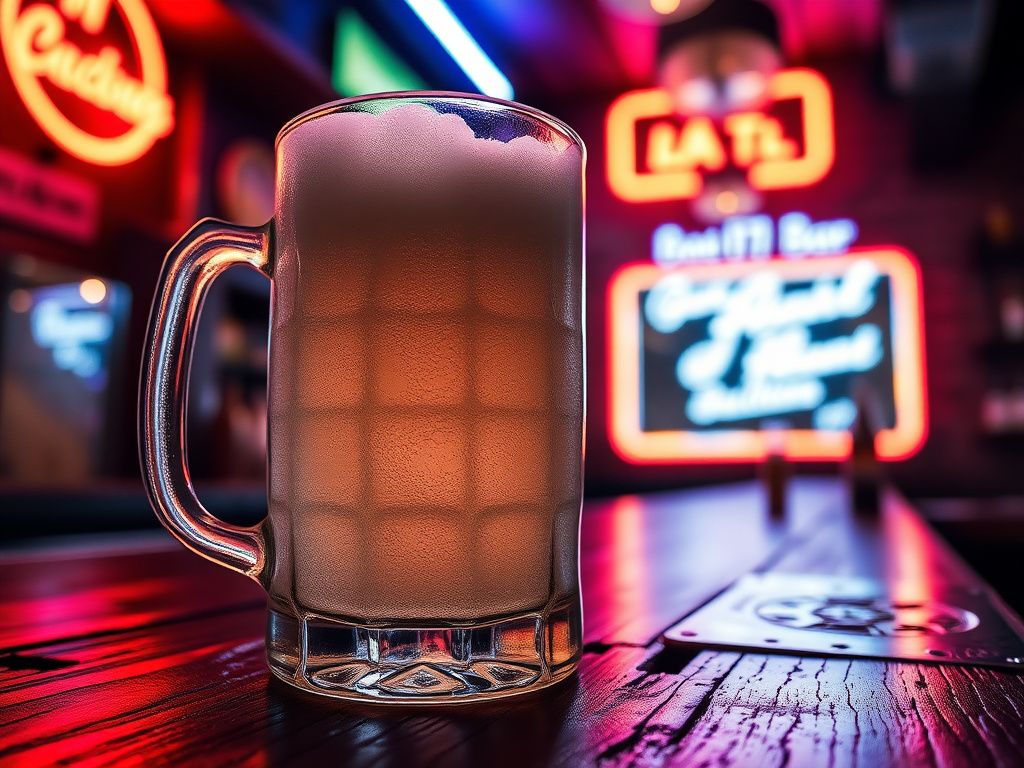
From the BrewMyBeer.online labs, this guide illuminates the critical role of superior lighting in the ultimate home bar. We dissect LED accent strips and neon signage, detailing their technical specifications, electrical demands, installation protocols, and aesthetic impact. Precision in ambiance control ensures your brewing achievements are showcased under optimal conditions, transforming a mere drinking space into a true craft sanctuary.
Technical Lighting Component Analysis for the Master Brewer’s Home Bar
As a Master Brewmaster, I understand that the sensory experience extends far beyond the glass. The environment in which your meticulously crafted beers are enjoyed is paramount. A truly exceptional home bar, like a well-executed fermentation, demands careful control and precise execution. This isn’t about mere illumination; it’s about engineering an atmosphere that elevates the appreciation of your brews. We’re talking about controlled light dynamics, calculated visual impact, and the robust electrical infrastructure to support it. Forget decorative fluff; this is technical design for the serious home brewer.
| Component Category | Technical Specification Focus | Electrical Parameters (Typical) | Control & Integration | Application & Impact |
|---|---|---|---|---|
| LED Accent Strips | SMD Type (e.g., 2835, 5050), COB Density (e.g., 320/480 LEDs/m), CCT (2700K-6500K), CRI (Ra>90), IP Rating (IP20-IP67) | DC Voltage (12V/24V), Power Density (4.8-24W/m), Amperage/meter, Power Supply (Constant Voltage Driver) | PWM Dimming (0-10V, DALI, TRIAC), RGB/RGBW Controllers (DMX, Wi-Fi, Bluetooth, Zigbee), Multi-Zone Grouping | Cove lighting, under-shelf, backlighting, cabinet accents. Enhances material textures, provides ambient glow, influences perceived beer color. |
| LED Neon Signs | SMD Chip Size, Silicone Encapsulation, Minimum Bend Radius, Power Consumption/meter, Beam Angle (120-160 degrees) | DC Voltage (12V/24V), Power Density (8-15W/m), Dedicated LED Driver (Constant Voltage) | On/Off Switch, Simple Dimming (PWM compatible), Integration with Smart Home Systems (via external relay/controller) | Branding, focal points, artistic elements. Creates bold, continuous lines of light. Visual anchor for brewery branding or themed messaging. |
| Traditional Neon Signs | Gas Composition (Neon, Argon/Mercury), Glass Tubing Diameter, Electrode Type, Transformer Output Voltage/Current | AC Voltage (120V/240V Input), High Voltage AC (2kV-15kV Output), High Leakage Current Transformer (HVAC) | High-Voltage Relay, On/Off Switch. Not typically dimmable without specialized dimming transformers. | Classic aesthetic, unique glow, audible hum. Iconic branding, retro ambiance. Requires professional installation and specific safety protocols. |
| Power Supplies/Drivers | Input Voltage (AC 100-240V), Output Voltage (DC 12V/24V), Wattage Rating, Efficiency (>85%), Safety Certifications (UL, CE) | Rated Output Current (Amps), Overload Protection, Short Circuit Protection, Thermal Management, Power Factor Correction | Compatibility with specific LED types (Constant Voltage for strips/LED neon, Constant Current for high-power LEDs), Enclosure Rating | Converts AC line voltage to stable DC power. Crucial for LED longevity and safety. Proper sizing prevents premature failure and voltage drop. |
| Control Systems | Protocol (DMX512, 0-10V, TRIAC, PWM, Wi-Fi, Bluetooth, Zigbee), Number of Zones/Channels, User Interface (App, Wall Panel, Remote) | Input Voltage (DC/AC), Output Current/Channel, Wireless Range, Data Transmission Speed | Seamless integration of multiple lighting types, scene programming, scheduling, voice control, remote access. | Centralized command over ambiance. Dynamic scene creation, mood manipulation, energy management. Enables precision lighting choreography. |
Power Consumption & Operational Cost Calculation for a Home Bar Lighting Rig
To accurately assess the financial and electrical impact of your chosen lighting, precise calculations are essential. Here, we determine the weekly operational cost for a typical home bar lighting setup:
Assumed Lighting Components:
-
LED Accent Strips: 7 meters of high-density 24V LED strip, rated at 18W/meter. Total: 7m * 18W/m = 126 Watts.
-
LED Neon Sign: One custom LED neon sign, rated at 75 Watts.
-
Integrated Puck Lights: Four 12V LED puck lights, rated at 3 Watts each. Total: 4 * 3W = 12 Watts.
Operational Parameters:
-
Daily Average Operation: 5 hours.
-
Electricity Cost: $0.18 per kilowatt-hour (kWh).
Calculations:
1. Total Connected Load (P_total):
P_total = (LED Strips Wattage) + (LED Neon Sign Wattage) + (Puck Lights Wattage)
P_total = 126W + 75W + 12W = 213 Watts
2. Daily Energy Consumption (E_daily):
E_daily = P_total * Daily Operation Hours
E_daily = 213W * 5 hours = 1065 Watt-hours
To convert to kWh: 1065 Wh / 1000 = 1.065 kWh
3. Weekly Energy Consumption (E_weekly):
E_weekly = E_daily * 7 days/week
E_weekly = 1.065 kWh/day * 7 days/week = 7.455 kWh
4. Weekly Operational Cost (C_weekly):
C_weekly = E_weekly * Electricity Cost
C_weekly = 7.455 kWh * $0.18/kWh = $1.3419
Conclusion:
The estimated weekly operational cost for this specific home bar lighting setup is approximately $1.34. This demonstrates that modern LED-based lighting, despite its complexity and visual impact, remains highly energy-efficient, minimizing ongoing expenses while maximizing ambiance.
The Ultimate Home Bar Lighting Guide: LED Accents and Neon Beer Signs – A Master Brewer’s Deep Dive
Gentlemen, and discerning connoisseurs, allow me to articulate the profound importance of the home bar environment. Just as precise temperature control, sanitation, and ingredient selection dictate the quality of your brew, so too does the calibrated interplay of light define the experience of consuming it. This is not about haphazardly affixing a few bulbs; this is about engineering a sensory space where the liquid art you’ve meticulously crafted can be truly appreciated. As a Master Brewmaster, my focus extends beyond fermentation vessels to the entire consumption ecosystem. Your home bar is the ultimate expression of your dedication to the craft, and its lighting must reflect that.
The Fundamental Role of Illumination in Beer Appreciation
Before delving into specific technologies, understand this: light profoundly impacts perception. It dictates the visual appeal of your beer – its clarity, color (from the palest straw to the deepest ebony), and the character of its head. Improper lighting can mute these crucial visual cues, diminish the perceived quality, and detract from the narrative of your brew. Furthermore, it sets the psychological tone of the space. A well-lit bar fosters conversation, highlights details, and enhances the ritual of tasting. A poorly lit one creates gloom, obscures imperfections, and ultimately, cheapens the experience. Our goal is surgical precision in light deployment.
LED Accent Lighting: The Backbone of Ambiance Engineering
LED accent strips are the workhorses of modern home bar illumination. Their versatility, energy efficiency, and dynamic control capabilities make them indispensable. However, not all LEDs are created equal. Understanding their technical specifications is crucial for optimal implementation.
Types of LED Strips: SMD vs. COB
The market offers primarily two types:
1. Surface-Mount Device (SMD) LEDs: These are the most common, featuring individual LED chips mounted on a flexible circuit board. Common designations like 2835, 3528, 5050 refer to the physical dimensions of the chip in millimeters. For instance, a 5050 chip is 5.0mm x 5.0mm and often contains three smaller LED diodes, making it brighter and capable of RGB (Red, Green, Blue) color mixing. Higher LED density (e.g., 60 LEDs/meter, 120 LEDs/meter) reduces visible hot spots and creates a more continuous line of light. While effective, at lower densities, individual LED “dots” can be visible, which may detract from a premium aesthetic.
2. Chip-on-Board (COB) LEDs: This newer technology offers a vastly superior light distribution. Multiple LED chips are directly mounted onto a single circuit board and then covered with a continuous phosphor layer. This eliminates individual LED dots, producing a uniform, seamless line of light. COB strips typically boast higher LED densities (e.g., 320, 480, or even 528 LEDs/meter), offering smoother light output, higher CRI (Color Rendering Index), and often greater flexibility. For a high-end bar, COB strips are the preferred choice for their refined, continuous glow.
Color Temperature (CCT) and Color Rendering Index (CRI)
These metrics are paramount for showcasing your brews:
Color Temperature (CCT): Measured in Kelvin (K), CCT describes the perceived warmth or coolness of white light.
-
Warm White (2700K-3500K): Emits a soft, yellowish light, similar to incandescent bulbs. Ideal for creating a cozy, inviting, and traditional pub-like atmosphere. It can enhance the amber and ruby tones of darker beers like Belgian Dubbels or Stouts, making them appear richer.
-
Neutral White (3500K-4500K): A balanced white light that approximates natural daylight. Excellent for general task lighting and for presenting beers accurately without color distortion. This is often a good compromise for versatility.
-
Cool White (4500K-6500K): Emits a bright, bluish-white light. While excellent for modern, clean aesthetics or task areas where alertness is required, it can sometimes make warmer beer colors appear washed out or flat. However, it can highlight the crispness and clarity of a Pilsner or a Helles.
Color Rendering Index (CRI): This measures how accurately a light source reveals the true colors of objects compared to natural light. A CRI of 90+ is essential for any environment where color accuracy is important, such as a bar where the hue and clarity of your various fermentations are on display. A low CRI can distort the appearance of your beer, making a vibrant IPA look dull or a dark lager less appealing. Always specify high CRI LEDs.
RGB and RGBW: Dynamic Ambiance Control
For truly dynamic control, consider RGB (Red, Green, Blue) or RGBW (Red, Green, Blue, White) LED strips. RGB strips can create millions of colors by mixing the primary colors. RGBW strips add a dedicated white LED chip, allowing for purer whites in addition to vibrant colors. This capability allows you to adjust the bar’s mood to match the occasion, perhaps a celebratory green for St. Patrick’s Day or a subtle blue wash for a relaxed evening. Paired with intelligent controllers, these can transition seamlessly between scenes, providing an unparalleled level of atmospheric manipulation.
Installation and Integration: Precision is Key
Proper installation is paramount for longevity and aesthetic appeal. LEDs generate heat, and effective heat dissipation is vital. Always install LED strips in aluminum profiles or channels. These channels serve multiple purposes:
-
Heat Sink: Dissipates heat, extending the life of the LEDs.
-
Diffusion: When paired with a frosted diffuser cover, they smooth out the light, eliminating hot spots and creating a clean, continuous line of light. This is especially beneficial for SMD strips.
-
Protection: Shields the LED strip from dust, moisture, and physical damage.
-
Aesthetics: Provides a finished, professional look.
Consider placement for maximum effect: under-shelf lighting to illuminate bottles and glassware, cove lighting along ceilings or kickplates for ambient glow, or backlighting for bar panels or liquor displays. The goal is indirect, diffused light that enhances, rather than overwhelms, the space.
Power Supply and Voltage Drop: The Electrical Foundation
LED strips operate on low DC voltage, typically 12V or 24V. A dedicated LED driver (constant voltage power supply) is required to convert AC household current to the appropriate DC voltage. Always ensure your power supply’s wattage rating exceeds the total wattage of the connected LED strips by at least 20% to prevent overloading and ensure stable operation.
Voltage Drop: This is a critical factor, especially with longer runs of LED strips. As electricity travels along the strip, resistance causes the voltage to gradually decrease, resulting in dimmer light towards the end of the run. To mitigate voltage drop:
-
Use 24V strips instead of 12V for longer runs, as higher voltage reduces current and thus voltage drop.
-
Run shorter lengths of strips, and power each length independently, or “home run” wires back to the power supply.
-
Utilize thicker gauge wiring for connecting strips to the power supply to minimize resistance.
Ignoring voltage drop results in uneven illumination, which, to a Master Brewmaster, is an unacceptable inconsistency.
Controllers and Smart Integration
The true power of LED accent lighting is unlocked with advanced control systems. Simple dimmers (PWM-based for DC LEDs) are a start, but smart controllers elevate the experience:
-
Wi-Fi/Bluetooth Controllers: Allow control via smartphone apps, offering dimming, color changes, and scene programming.
-
Zigbee/Z-Wave: For seamless integration into broader smart home ecosystems, enabling centralized control with other devices and voice commands.
-
DMX (Digital Multiplex): While typically for professional installations, DMX offers granular control over multiple channels and sophisticated lighting choreography for very complex setups.
These systems enable you to program specific “scenes” – for instance, a warm, dim light for a late-night sampling of a robust stout, or a brighter, neutral white for showcasing the clarity of your latest finest fermentations. This level of environmental control mirrors the precision applied in the brewing process itself.
Neon Beer Signs: The Art of the Luminous Statement
Neon signs, whether traditional or LED-based, serve as powerful focal points, adding character, branding, and a touch of nostalgic flair to any home bar. Their distinct glow is instantly recognizable.
Traditional Neon Signs: Gas Discharge Artistry
Traditional neon signs are a marvel of glass bending and gas discharge physics. Inert gases (typically neon for red-orange, or argon/mercury for blue/green) are sealed in evacuated glass tubes. When high voltage is applied, the gas ionizes and emits light. Each color requires a specific gas mixture or phosphorescent coating on the glass. The high voltage (thousands of volts) is supplied by a specialized transformer.
Pros: Unmistakable, deep, continuous glow; unique, handcrafted artistry; distinct buzzing sound.
Cons: Fragile; high power consumption; requires high-voltage transformers (safety concern); professional installation often required; limited dynamic control; susceptible to damage from vibration or impact.
LED Neon Signs: Modern Flexibility and Efficiency
LED neon is a more recent innovation designed to replicate the look of traditional neon with greater efficiency, durability, and safety. These signs utilize flexible silicone or PVC tubing embedded with numerous small LED chips. The material diffuses the light, creating a continuous, uniform glow reminiscent of classic neon.
Pros: Highly durable and flexible; low voltage (12V/24V) operation (safer); energy-efficient; easy installation (often plug-and-play); wide range of colors and dynamic effects; no glass to break.
Cons: Can lack the absolute depth of color or the vintage “hum” of traditional neon; often custom-made, requiring design files.
For the home brewer seeking a blend of aesthetic appeal, safety, and modern convenience, LED neon signs are generally the superior choice. They can proclaim your homebrewery’s name or display iconic beer-related imagery without the inherent fragility and high-voltage risks of traditional neon.
Placement and Impact: Strategic Visuals
The placement of a neon sign is strategic. It should be a focal point, drawing the eye and reinforcing the bar’s theme or your personal brewing brand. Consider mounting it above the bar, behind a tap system, or on a prominent wall. Its light output can also subtly contribute to the overall ambiance, providing a specific color cast that complements or contrasts with your LED accent lighting. A custom sign for your home brewery is a bold statement, telling visitors, “This is a serious operation.”
Integration and Control: Orchestrating the Luminous Symphony
The true mastery of home bar lighting lies in the seamless integration of these disparate elements. A cohesive lighting scheme doesn’t treat LED strips and neon signs as isolated components but as instruments in an orchestra, each playing its part to create a harmonious sensory experience. This requires a well-planned wiring schema and a centralized control system.
Harmonizing LED and Neon
Ensure that the color temperatures and brightness levels of your LED accents complement your neon signs. If your neon sign emits a cool blue, using warm white LEDs for general ambient lighting might create a jarring contrast. Instead, opt for neutral white or even subtle cool white accents. Conversely, a warm red neon sign would pair beautifully with warm white LED strips, enhancing the cozy feel. The objective is visual flow, not conflict.
Centralized Control Systems
For a sophisticated setup, avoid a multitude of remote controls. A centralized smart home hub (e.g., Apple HomeKit, Google Home, Amazon Alexa, Home Assistant) capable of integrating Wi-Fi, Zigbee, or Z-Wave enabled lighting components is ideal. This allows for:
-
Scene Creation: Pre-program lighting configurations for different moods or occasions (e.g., “Game Night,” “Tasting Session,” “Quiet Evening”).
-
Scheduling: Automate lights to turn on/off at specific times.
-
Voice Control: Adjust lighting with simple commands.
-
Remote Access: Control your bar lighting even when you’re not home.
For more advanced installations, especially those with numerous zones or specific color requirements, a DMX controller might be considered, though it typically requires more complex programming. The ability to instantly transform the bar’s atmosphere with a single command is a powerful tool, reflecting the precision expected in all aspects of the brewing craft. This level of control allows you to highlight your achievements, from your first successful IPA to your latest batch of finest fermentations.
Brewmaster’s Aesthetic and Practical Considerations
Beyond the technical specifications, a Master Brewmaster approaches lighting with a critical eye towards functionality, longevity, and how it directly impacts the appreciation of beer.
Optimal Light Levels for Beer Appreciation: While mood lighting is essential, specific areas require adequate illumination. The pouring station, the tap handles, and any display shelves for bottles or labels need enough light to reveal the beer’s color, clarity, and the artistry of its packaging. Overly dim lighting hides potential flaws in clarity, while overly bright, direct lighting can create glare, hindering sensory evaluation. Subtle backlighting for your tap wall, for instance, perfectly frames your rotating selection without overwhelming the space.
Maintenance and Longevity: LEDs have impressive lifespans (50,000+ hours), but proper installation and quality components are key. Good heat management extends LED life. For traditional neon, regular cleaning and professional servicing might be required. Factor in accessibility for future maintenance when designing your lighting scheme.
Energy Efficiency: Modern LED technology is inherently efficient, significantly reducing operational costs compared to incandescent or even fluorescent alternatives. This aligns with a brewer’s ethos of maximizing yield and minimizing waste.
Safety: Electrical safety is non-negotiable. All components should be UL or CE listed. Proper wiring, grounding, and adherence to local electrical codes are essential. For any high-voltage components, consider professional installation. Water and electricity are a dangerous combination, especially in a bar environment where spills are possible. Opt for low-voltage LED systems (12V/24V) in areas susceptible to moisture, and ensure all connections are secure and insulated.
Showcasing Brewing Achievements: Your home bar is also a trophy case. Strategic lighting can highlight awards, custom tap handles, branded glassware, and even the labels of your best batches. Use focused spot lighting or accent strips within display cabinets to draw attention to these elements. Imagine a perfectly lit shelf displaying your collection of diacetyl-rested lagers, each label a testament to your skill. The lighting should tell your brewing story.
The Home Bar as a Sensory Hub: Consider the broader sensory experience. While lighting sets the visual tone, the overall environment fosters discussion and education. A well-lit bar encourages guests to examine their beer, discuss its characteristics, and delve into topics like specific fermentation process variations or the nuances of hop profiles. Your bar isn’t just a place to drink; it’s a hub for brewing culture. Explore further at BrewMyBeer.online for more insights into perfecting your home brewing environment.
Conclusion: Beyond Illumination – Engineering the Experience
For the Master Brewmaster, the home bar is an extension of the brewery itself – a place where the fruits of your labor are presented with the reverence they deserve. The lighting is not an afterthought; it is a meticulously engineered system designed to enhance the visual appeal of your brews, establish the desired ambiance, and reflect the technical precision of your craft. From the crisp, even glow of COB LED strips to the bold statement of an LED neon sign, every element contributes to an unparalleled sensory experience. Embrace the technical details, plan with foresight, and illuminate your passion with the same dedication you apply to every fermentation. Your beer, and your guests, deserve nothing less.