
Discover expert techniques for barrel aging homebrew with our comprehensive guide. Learn about barrel selection, preparation, aging times, and flavor development to create complex, award-winning beers at home.
The Transformative Power of Wood
There’s something almost magical about barrel-aged beer. The complexity, depth, and character that develops when beer meets wood creates flavors impossible to achieve any other way. While once the exclusive domain of professional breweries with extensive barrel programs, barrel aging has become increasingly accessible to dedicated homebrewers willing to invest in the equipment, time, and patience required to master this advanced technique.
“Wood is not an ingredient—it’s a process,” explains Peter Bouckaert, former brewmaster at New Belgium and founder of Purpose Brewing. “The barrel doesn’t just add flavors; it transforms the beer through slow oxidation, extraction, and microbiological interaction.”

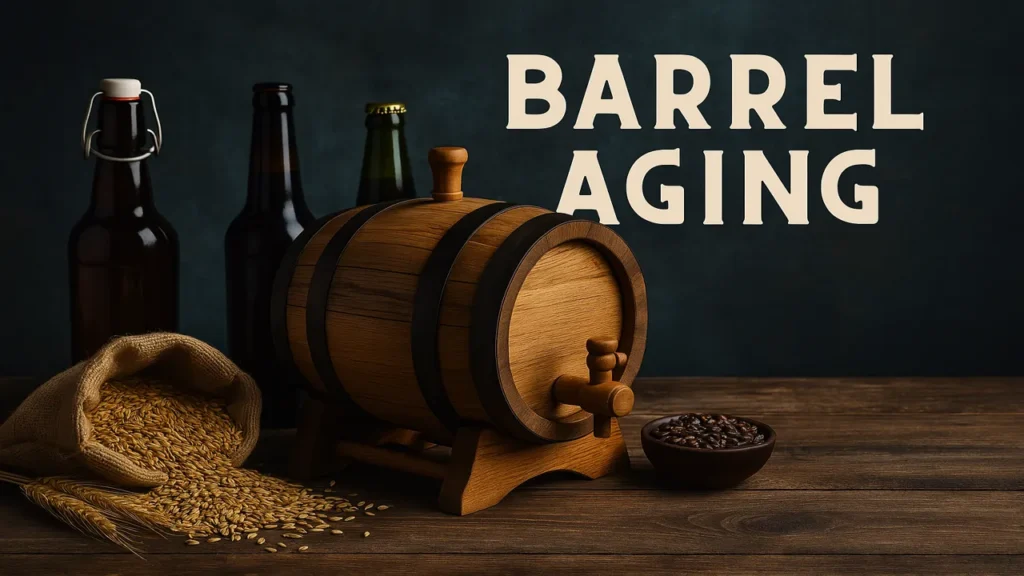
In recent years, the explosion of commercial barrel-aged beers has inspired homebrewers to create their own versions, with impressive results. Homebrewed barrel-aged beers now regularly win medals in competitions and sometimes rival their commercial counterparts in complexity and execution.
However, barrel aging remains one of the most challenging homebrewing techniques to master. Success requires understanding wood chemistry, microbiological management, and patience—lots of patience. This comprehensive guide will walk you through everything you need to know to create exceptional barrel-aged beers at home, from barrel selection and preparation to aging techniques and troubleshooting.
Understanding Barrel Aging: Science and Transformation
The Chemistry of Wood and Beer
When beer meets wood, several processes occur simultaneously:
Extraction
Wood contains numerous compounds that leach into the beer over time:
- Lactones: Impart woody, coconut, and vanilla notes
- Tannins: Add astringency, structure, and mouthfeel
- Lignin: Breaks down into vanillin (vanilla flavor) and other compounds
- Hemicellulose: Contributes toasted, caramel, and nutty characteristics
- Previous Contents: Residual spirits, wine, or other characters from barrel’s previous life
According to research from the American Society of Brewing Chemists, freshly emptied bourbon barrels can contain up to 8 liters of whiskey trapped in the wood—explaining the pronounced bourbon character often found in first-use barrel-aged beers.
Micro-Oxygenation
Unlike stainless steel, wood is semi-permeable, allowing minute amounts of oxygen to penetrate:
- Oxygen diffusion rates vary by wood species and barrel construction
- Typically 1-5 mg of O₂ per liter per month enters through wood
- This slow oxidation contributes to flavor development without off-flavors
- Develops sherry-like notes in some styles over extended aging
Microbiological Aspects
Wood harbors a complex microbiome that can influence beer character:
- Barrels can contain Brettanomyces, Lactobacillus, Pediococcus, and other microorganisms
- These can be intentional (sour programs) or unintentional (contamination)
- Microorganisms live deep in the wood, making complete sterilization nearly impossible
- Each barrel develops a unique microbiome over time, creating its own “house character”
“Understanding that barrels are alive is critical,” explains Lauren Limbach, wood cellar director at New Belgium. “They’re not just containers—they’re ecosystems that evolve over time and contribute to your beer in ways that go beyond flavor extraction.”
What Happens During Aging
The timeline of barrel aging follows a generally predictable pattern:
Early Phase (1-3 months)
- Aggressive extraction of wood compounds
- Strong flavor of previous contents (bourbon, wine, etc.)
- Beer character may be temporarily overwhelmed
- Higher alcohols begin to transform and soften
Middle Phase (3-9 months)
- Wood character begins integrating with beer
- Oxidative processes develop complexity
- Harsh edges begin to smooth out
- Microbiological elements may become noticeable
Extended Aging (9+ months)
- Full integration of flavors
- Continued development of complexity
- Diminishing returns on wood extraction
- Potential risk of over-oxidation or unwanted microbial development
According to research published by Master Brewers Association, the extraction rate follows a logarithmic curve—most rapid in the beginning and gradually slowing over time. This explains why second- and third-use barrels impart less intense flavor and require longer aging times.
Selecting the Right Barrel
Barrel Types and Previous Contents
The previous life of your barrel dramatically impacts the character it will impart:
Spirit Barrels
- Bourbon Barrels: Intense vanilla, coconut, caramel, and bourbon notes
- Whiskey Barrels: Similar to bourbon but character varies by whiskey type
- Rum Barrels: Contribute tropical, molasses, and sometimes spice notes
- Tequila Barrels: Unique agave character with earthy, spicy undertones
Wine Barrels
- Red Wine: Red fruit, tannic structure, vinous character
- White Wine: Subtler wine notes, often with pronounced oak
- Port/Sherry: Rich oxidative character with dark fruit notes
Other Options
- Brandy/Cognac: Fruity, complex, with distinctive oak profiles
- Maple Syrup: Sweet, rich maple character with subtle oak
- New Oak: Pure wood character without previous contents
“Barrel selection is your first and most important decision,” explains Jeffers Richardson, director of the Firestone Walker Barrelworks facility. “Everything else builds on this foundation, so choose based on your beer style and flavor goals.”
Wood Species and Toast Levels
Different wood species impart distinctive characteristics:
American Oak (Quercus alba)
- More aggressive wood lactones (coconut, vanilla)
- Higher vanillin content
- Often used for bourbon barrels
French Oak (Quercus petraea)
- Subtler, spicier character
- Higher tannin content
- Traditional for wine barrels
Hungarian/Eastern European Oak
- Characteristics between American and French
- Often used in wine production
- Increasing availability for brewers
Toasting and Charring
- Light Toast: Subtle wood, higher tannins
- Medium Toast: Balanced vanilla, caramel, toasted bread
- Heavy Toast: Pronounced coffee, chocolate, smoke
- Char: Found in bourbon barrels, contributes color and smoky notes
According to Jack Daniel’s cooperage master, a properly charred American oak barrel forms three distinct layers: a charred inner surface that filters and colors the liquid, a red layer rich in vanillin and caramelized wood sugars, and an untransformed layer that provides structure and slower extraction over time.
Barrel Size Considerations for Homebrewers
Size significantly impacts aging dynamics and practicality:
5-Gallon (19L) Barrels
- Pros: Manageable size, fits standard homebrew batches
- Cons: Very high surface-to-volume ratio accelerates aging and oxidation
- Aging Speed: 2-4x faster than larger barrels
- Best For: Short-term aging, experimental batches
10-15 Gallon (38-57L) Barrels
- Pros: More balanced surface-to-volume ratio, still manageable for homebrewers
- Cons: Requires larger or multiple brew batches
- Aging Speed: More moderate, closer to commercial timeline
- Best For: Serious homebrewers with adequate production capacity
30+ Gallon (114L+) Barrels
- Pros: Professional-like aging dynamics, excellent for clubs or group brewing
- Cons: Requires substantial space, handling equipment, and beer volume
- Aging Speed: Similar to commercial practice
- Best For: Homebrew clubs, collectives, or very advanced homebrewers
“For most homebrewers, 15-gallon barrels hit the sweet spot,” suggests <a href=”https://brewmybeer.online/advanced-brewing-techniques/barrel-aging-at-home-a-beginners-guide/” target=”_blank”>barrel aging specialist</a> Michael Tonsmeire. “They’re manageable for an individual but don’t rush the aging process like smaller barrels do.”
Preparing for Barrel Aging Success
Barrel Acquisition and Preparation
Properly preparing your barrel is critical for success:
Sourcing Fresh Barrels
- Purchase from reputable barrel brokers or directly from distilleries/wineries
- Ideally, use barrels that have been recently emptied (within 1-2 months)
- Check for signs of excess drying, mold, or damage
- Transport and store with bungs in place to prevent drying
Swelling Dried Barrels
If your barrel has dried out, rehydration is necessary:
- Fill with hot water (not boiling) and let stand for 4-6 hours
- Empty and refill if leaks persist
- Add 1 tablespoon citric acid per 5 gallons to prevent mold during swelling
- Once watertight, rinse thoroughly before use
Sanitizing Considerations
- For clean beer styles: Rinse with hot water, then fill with 180°F water for 10-15 minutes
- For sour programs: Minimal sanitation needed if intentionally introducing microbes
- Avoid harsh chemicals that can penetrate and remain in wood
- Citric acid rinse (1 oz per gallon) can help reduce unwanted microbes
“Never use bleach on a barrel,” warns Patrick Rue, founder of The Bruery. “It’s nearly impossible to rinse completely, and chlorine compounds can create TCA, the same compound responsible for ‘corked’ wine.”
Designing Beer Recipes for Barrel Aging
Not all beer styles benefit equally from barrel aging. Consider these factors when designing recipes:
Ideal Characteristics
- Higher Alcohol: Beers above 8% ABV better withstand oxidation and aging
- Residual Sweetness: Some sweetness balances wood tannins and oxidation
- Robust Base Flavor: Should stand up to barrel character without disappearing
- Lower Hop Rates: Hop character fades and can become unpleasant over time
Classic Styles for Barrel Aging
- Imperial Stouts and Porters
- Barleywines and Old Ales
- Belgian Quads and Strong Dark Ales
- Wee Heavies and Scotch Ales
- Wild and Sour Ales (with appropriate microbiological management)
Recipe Adjustments for Barrels
- Increase original gravity by 2-4 points to account for dilution from liquid in barrel
- Reduce hop bittering by 10-15% to account for increased perceived bitterness from wood tannins
- Consider adding 3-5% flaked oats or wheat for protein stability during long aging
- For spirit barrels, account for 1-2% ABV increase from absorbed alcohol
According to award-winning brewer Vinnie Cilurzo of Russian River Brewing, “The beer should be designed from the beginning with the barrel in mind—not as an afterthought. Every element from grain bill to hopping rate should consider how the barrel will transform the beer.”
Equipment and Space Requirements
Beyond the barrel itself, successful barrel aging requires:
Temperature Control
- Ideal temperature range: 50-65°F (10-18°C)
- Consistent temperature more important than specific point
- Avoid temperature swings that cause barrel expansion/contraction
- Higher temperatures accelerate aging but increase evaporation and oxidation
Humidity Management
- Aim for 60-75% relative humidity
- Too dry: excessive evaporation and potential barrel damage
- Too humid: mold growth on barrel exterior
- Humidifiers or dehumidifiers may be necessary depending on climate
Additional Equipment
- Accurate liquid transfer system (pump or gravity system)
- Dedicated siphoning equipment to prevent cross-contamination
- Sampling device (wine thief or turkey baster)
- Replacement bungs and taps
- Cleaning and sanitizing equipment
“Creating the right environment is half the battle,” explains barrel aging expert Gordon Strong. “A consistent cellar-like environment will make barrel management much easier and produce better results.”
The Barrel Aging Process
Filling and Maintenance
The process begins with properly filling your barrel:
Filling Technique
- Ensure barrel is watertight and properly prepared
- Transfer beer carefully to minimize oxygen pickup
- Fill completely—headspace promotes oxidation
- Secure bung tightly
- Note fill date, beer details, and barrel information
Regular Maintenance
- Check for leaks weekly during first month, then monthly
- Top up as needed to compensate for evaporation (the “angel’s share”)
- Use similar beer or sterile neutral spirit for topping up
- Monitor ambient temperature and humidity
- Rotate barrel 90 degrees every 2-3 months to prevent dry spots (optional)
According to research from Founders Brewing, barrel loss through evaporation typically ranges from 3-5% per year in commercial settings but can be significantly higher (10-15%) for small barrels in dry environments.
Sampling and Evaluation
Regular sampling helps track development and determine optimal aging time:
Sampling Best Practices
- Use sanitized wine thief or turkey baster
- Sample every 4-6 weeks initially, then less frequently as aging progresses
- Always replace sampled volume to prevent headspace
- Keep detailed tasting notes to track development
Evaluation Framework
Assess these characteristics during sampling:
- Wood intensity: Is extraction appropriate or overwhelming?
- Integration: Are barrel and beer flavors harmonizing?
- Oxidation: Are sherry-like notes developing? Beneficial or excessive?
- Microbiological: Any signs of unwanted sourness or funk?
- Overall development: Is complexity increasing? Improving or declining?
“The sampling process is where art meets science,” explains Lauren Salazar, sensory specialist at New Belgium. “You’re looking for that perfect moment when extraction, oxidation, and integration reach their peak before decline begins.”
When to Package
Determining the optimal time to remove beer from the barrel is critical:
Signs of Readiness
- Wood character well-integrated, not dominating
- Desired flavor complexity achieved
- No unpleasant astringency from wood
- Oxidative character present but not excessive
- If using testing equipment: stable gravity and pH readings
Packaging Considerations
- Purge receiving vessels with CO₂ to minimize oxygen exposure
- Consider blending options (discussed below)
- For carbonated styles, check viability of remaining yeast or add fresh yeast
- Higher carbonation can help lift complex barrel flavors
- Allow 1-2 weeks post-packaging rest before evaluation
According to a survey of craft brewers published by the Brewers Association, the most common aging periods for different barrel types were:
- Bourbon/whiskey barrels: 6-12 months
- Wine barrels (clean beer): 3-9 months
- Wine barrels (mixed fermentation): 9-24 months
Advanced Techniques for Exceptional Results
Blending Strategies
Blending is perhaps the most powerful tool in barrel aging:
Common Blending Approaches
- Barrel to Fresh Beer: Adding fresh beer to cut intensity and add vibrancy
- Multiple Barrels: Combining different barrels to create complexity
- Reserve Blending: Keeping portion of previous batch to blend with new batch
- Solera System: Perpetual blending where portion is removed and replaced
- Different Ages: Combining young and old barrels for balance
Blending Process
- Take samples from all potential blend components
- Create small test blends in graduated cylinders
- Taste immediately and after 24 hours (flavors continue to integrate)
- Calculate scaling for full-sized blend
- Blend in CO₂-purged vessel before packaging
“Blending isn’t just for fixing problems—it’s for creating something greater than the sum of its parts,” explains Jeffers Richardson of Firestone Walker, known for their extensive blending program. “Some of the world’s best barrel-aged beers are blends of multiple barrels and sometimes multiple base beers.”
Multi-Use Barrel Strategy
Planning for a barrel’s entire lifecycle maximizes its value:
First Use (New Barrel)
- Strong extraction and previous contents character
- Best for robust styles that can stand up to intensity
- Example: Imperial Stout in fresh bourbon barrel
Second Use
- More subtle wood and previous contents
- Good for complex styles where barrel shouldn’t dominate
- Example: Barleywine or Belgian Quad
Third Use and Beyond
- Minimal extraction, mostly oxygen exchange
- Ideal for delicate styles or long-term aging projects
- Example: Wild ales, solera projects, or sour programs
Transitioning to Sour/Wild Program
- Many brewers transition barrels to sour program after 2-3 clean beer uses
- Intentional inoculation with mixed cultures
- Can continue producing for many years in this capacity
According to research from The Sour Beer Blog, barrels in continuous sour production can remain productive for 20+ years if properly maintained, with many lambic producers using barrels that are decades old.
Oak Alternatives and Hybrid Approaches
For those not ready for full barrel commitment, alternatives exist:
Oak Alternative Options
- Oak Spirals: Offer good surface area and extraction
- Oak Cubes: Provide balanced extraction and some micro-oxygenation
- Oak Chips: Quick extraction but less complexity
- Oak Staves: Can be suspended in carboys or kegs
Hybrid Approaches
- Partial Barrel Filling: Using small barrel with portion of batch
- Keg + Oak: Adding oak alternatives to stainless fermenters or kegs
- Solera Barrel: Maintaining one barrel with fractional replacement
- Barrel-Aged Ingredient Addition: Adding small amount of barrel-aged beer to regular batches
“Oak alternatives can provide good extraction but miss the micro-oxygenation that makes barrel aging special,” notes John Palmer, author of How to Brew. “However, combining oak products with controlled oxygen exposure can approximate many barrel characteristics.”
Troubleshooting Barrel Aging Problems
Common Issues and Solutions
Even experienced barrel agers encounter challenges:
Excessive Oxidation
- Symptoms: Cardboard, sherry, or paper flavors dominating
- Causes: Too much headspace, barrel too small, aging too long, excessive temperature
- Solutions:
- Blend with fresh beer
- Reduce aging time for future batches
- Maintain fuller barrel
- Consider larger barrel for longer aging
Unwanted Sourness
- Symptoms: Acid development in clean beer styles
- Causes: Contamination with Lactobacillus or Pediococcus from barrel
- Solutions:
- Accept and potentially transition to intentional sour program
- Blend with clean beer to reduce acidity
- More thorough sanitizing for future barrels
- Dedicated equipment for sour vs. clean barrel programs
Barrel Leaks
- Symptoms: Beer leaking from staves or head
- Causes: Drying wood, temperature fluctuations, physical damage
- Solutions:
- For minor leaks: apply barrel wax
- For stave leaks: gently tap hoops downward to tighten
- Maintain proper humidity
- Turn barrel to keep all staves wet
Insufficient Barrel Character
- Symptoms: Minimal wood or previous contents flavor after extended aging
- Causes: Older barrel with minimal extraction left, insufficient contact time
- Solutions:
- Add oak alternatives for additional extraction
- Reserve for styles where subtle barrel character is appropriate
- Consider transition to sour program
- Blend with beer from more expressive barrel
“The mark of an experienced barrel ager isn’t avoiding problems—it’s knowing how to address them creatively,” explains Peter Bouckaert. “Some of our most interesting beers at New Belgium came from ‘problem’ barrels that forced us to think differently.”
Barrel Maintenance Between Batches
Proper care between uses extends barrel life:
Short-Term Storage (1-4 weeks)
- Rinse thoroughly with hot water
- Drain completely
- Burn sulfur stick or add sulfite solution if storing longer than a week
- Keep bung tight and store in cool, humid environment
Medium-Term Storage (1-3 months)
- Clean with hot water and citric acid rinse
- Fill with sanitizer solution (citric acid or sulfite)
- Check liquid level monthly and top up as needed
- Keep in temperature-stable environment
Long-Term Storage (Not Recommended)
If unavoidable:
- Clean thoroughly
- Dry completely in well-ventilated area
- Store with bungs removed
- Accept that extensive rehydration will be necessary before next use
“The ideal scenario is to have your next beer ready when the barrel becomes empty,” recommends Firestone Walker’s barrelmeister Jeffers Richardson. “A barrel is happiest when it’s full of beer.”
Building a Barrel Aging Program
Scaling Up: From One Barrel to Many
As your barrel aging skills develop, expansion requires planning:
Infrastructure Considerations
- Dedicated temperature-controlled space
- Barrel racks or storage system
- Liquid transfer system (pumps, hoses)
- Blending vessel capacity
- Cleaning station
Program Management
- Tracking system for fill dates, contents, and sampling notes
- Scheduling production to maintain barrel fills
- Dedicated tasting sessions for evaluation and blending decisions
- Long-term planning for barrel lifecycle
Collaboration Opportunities
- Homebrew club barrel shares
- Friendships with local craft brewers
- Relationships with local wineries or distilleries for barrels
- Group purchasing to reduce barrel acquisition costs
“Starting with one barrel teaches you the basics, but a program of multiple barrels opens up the true art of barrel aging: blending,” explains barrelmaster Eric Salazar. “Each barrel develops its own personality, giving you more colors on your blending palette.”
Documentation and Learning
Detailed record-keeping is essential for improvement:
Critical Data Points to Record
- Base beer specifications (OG, FG, IBU, ABV)
- Barrel details (previous contents, age, char/toast level)
- Fill date and volume
- Temperature and humidity log
- Sampling dates and detailed tasting notes
- Any additions or treatments
- Final blend details and rationale
Systematic Learning
- Create control samples of base beer for comparison
- Take photos of beer appearance at different stages
- Consider blind triangle testing of different barrels/ages
- Maintain a barrel aging journal with observations and lessons
According to research from UC Davis Department of Food Science, barrel-aged beer sensory development follows a bell curve—quality improves to a peak, plateaus briefly, then declines. Detailed records help identify this peak for different beer styles and barrel types.
The Rewarding Journey of Barrel Aging
Barrel aging represents one of homebrewing’s most rewarding frontiers. The patience, attention to detail, and willingness to embrace both art and science required for successful barrel aging makes it challenging—but the unique flavors and experiences it creates simply cannot be replicated any other way.
As you embark on your barrel aging journey, remember that each barrel tells a story—of the tree it came from, the spirits or wine it previously held, and now the beer you’ve entrusted to its embrace. This connection to brewing history and tradition, combined with the extended relationship you develop with a beer over months or years of aging, creates a deeper appreciation for the craft.
Start simply, maintain meticulous cleanliness, practice patience, and embrace the unpredictability that comes with barrel aging. Your first barrel-aged beer may not be perfect, but each subsequent batch will build on lessons learned, gradually developing your skills and palate.
Whether you’re drawn to the rich vanilla and coconut notes of bourbon barrel-aged stouts, the complex funk of mixed-fermentation sours in wine barrels, or something entirely experimental, the world of barrel aging offers endless opportunities for exploration and expression.
In the words of legendary barrel aging pioneer Vinnie Cilurzo, “Wood isn’t just a flavor—it’s a journey. The same beer and the same barrel will show you something different every time you visit it.” That journey, with all its challenges and rewards, awaits.
Author: Olivia Barrelton
Email: olivia.barrelton@brewmybeer.online
Barrel Aging & Wood Infusion Expert at Brew My Beer. Olivia comes from three generations of coopers (barrel makers) and brings unmatched expertise in wood aging techniques to the brewing world. After apprenticing at distilleries in Scotland and wineries in France, she applied her knowledge of wood influences to beer aging.