Last updated:
New Zealand punches far above its weight in craft beer, a country of five million people has over 250 craft breweries, an internationally acclaimed hop industry (Nelson Sauvin, Riwaka, and Motueka hops are sought after by brewers worldwide), and a consumer culture that takes quality seriously. Wellington is recognized as one of the great craft beer cities in the world relative to its size; Christchurch, Auckland, Nelson, and Dunedin all have strong scenes. Starting a brewery in New Zealand benefits from a straightforward regulatory framework, excellent local ingredient sourcing, and a supportive craft brewing community through the Brewers Guild of New Zealand.
Licensing framework
Alcohol manufacturing and sales in New Zealand are governed by the Sale and Supply of Alcohol Act 2012, administered by the Alcohol Regulatory and Licensing Authority (ARLA) and local District Licensing Committees (DLCs). The relevant licence for a craft brewery depends on what you’re doing: manufacturing only, or manufacturing plus on-premises and/or off-premises sales.
Required licences
- Manufacturer’s Licence: Issued by ARLA. Required to manufacture beer commercially. A Manufacturer’s Licence allows the licensee to sell product wholesale to other licence holders and to sell from the manufacturing premises at retail (with appropriate endorsement). Application requires: company registration, premises description, production details, and a fit and proper person assessment of directors/managers. Fee: approximately NZD $368 application fee plus annual licence fee based on premises risk rating.
- On-Licence (if running a taproom): Issued by the local District Licensing Committee for on-premises consumption. This is the taproom/bar licence, allows sale and consumption of alcohol on the premises. Requires a certified Manager (a person holding a General Manager’s Certificate) on duty during trading hours.
- General Manager’s Certificate: At least one manager at your taproom must hold a current General Manager’s Certificate, obtained by passing the Licence Controller Qualification (LCQ), a straightforward online course.
- Resource Consent (if applicable): If your brewing operations require change of use for the premises or create noise/environmental effects, a Resource Consent from your local council under the Resource Management Act may be required. Many industrial-zoned properties don’t require consent for brewing operations.
Excise duty (NZCS)
New Zealand Customs Service (NZCS) collects excise duty on domestically produced beer under the Customs and Excise Act 2018. Beer excise: NZD $33.18 per litre of alcohol content for beer (2024 rate). For a 5% ABV beer, this is approximately NZD $1.66 per litre of beer. No small producer reduced rate applies in New Zealand, all domestic producers pay the same rate. Register with NZCS as an excise manufacturer before first production; monthly returns and payments are required.
New Zealand hop sourcing
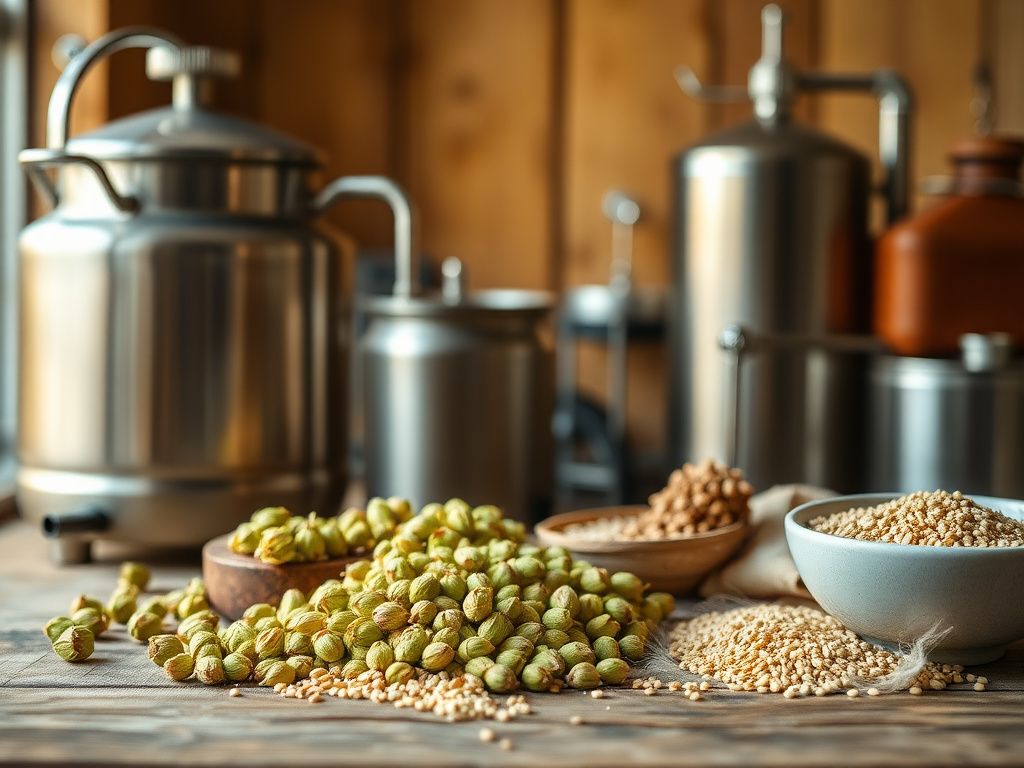
One of the greatest advantages for a New Zealand brewery is access to NZ hops at domestic prices. The Nelson-Tasman region in the top of the South Island produces the world-famous New Zealand hop varieties, Nelson Sauvin (white wine and passionfruit character), Riwaka (citrus), Motueka (tropical fruit and lemon), and Pacific Jade (herbal, citrus). These varieties are premium priced internationally but available to domestic breweries at standard market prices through NZ Hops Ltd and individual grower relationships. Building a house IPA around Nelson Sauvin or Riwaka with a “brewed with New Zealand hops” provenance story is a natural and compelling identity for a new NZ brewery.
Common Questions
Why is Wellington considered New Zealand’s craft beer capital?
Wellington’s craft beer culture is exceptional for a city of 215,000 people, it has more craft beer bars per capita than almost any city in the world. Several factors converge: a high concentration of government, creative, and tech workers with disposable income and sophisticated tastes; a compact, walkable inner city where hospitality venues are dense; a strong foodie culture that extends naturally to craft drinks; and a community of passionate early brewers (Garage Project, Tuatara, Liberty Brewing) who set quality standards and built a craft-literate consumer base. Wellington is arguably the best city in New Zealand to launch a quality-focused brewery due to consumer receptiveness, though the flip side is that the bar is high and mediocre product doesn’t survive in Wellington’s competitive taproom market.