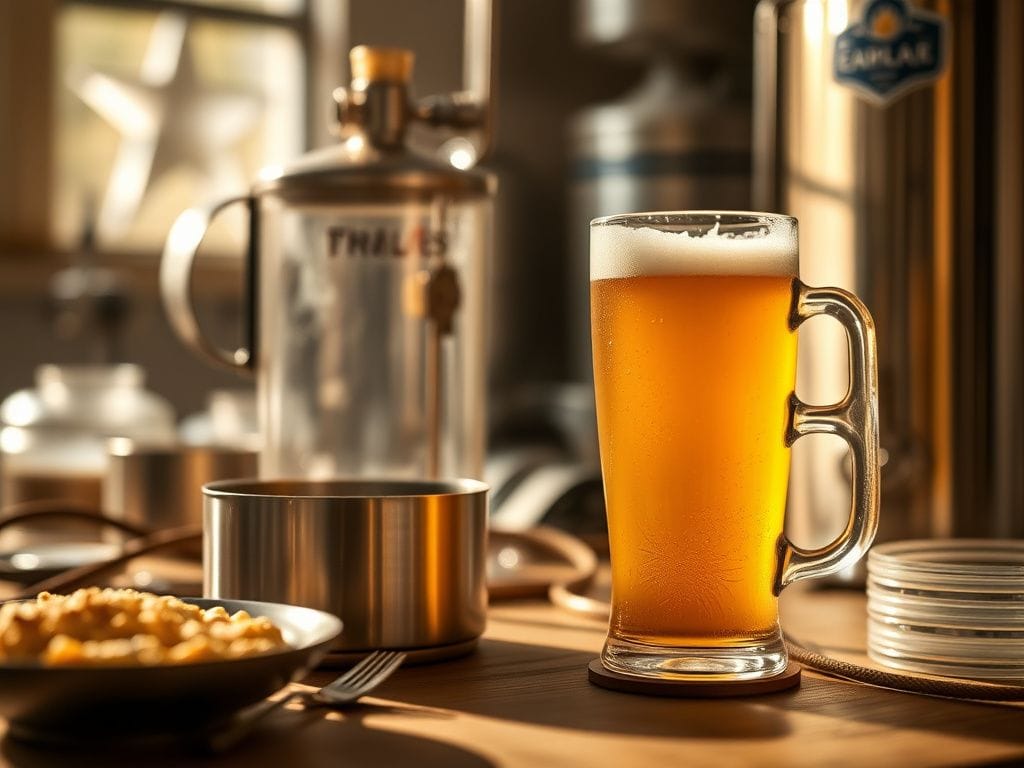
I’ve spent years perfecting my brewing technique, and I’ve found that having the right equipment can make all the difference. As an advanced brewer, I’ve invested in a range of professional-grade tools that have taken my beers to the next level. In this article, I’ll share my expertise on the ultimate brewing equipment guide for advanced brewers, covering everything from brew kettles to filtration systems. Whether you’re looking to upgrade your existing setup or build a new brewhouse from scratch, this guide will provide you with the knowledge you need to make informed decisions about the equipment that’s right for you. With a focus on precision, control, and efficiency, I’ll dive into the details of each piece of equipment, sharing my own experiences and insights to help you navigate the world of advanced brewing.
My journey into advanced brewing began when I realized that my old equipment was limiting my ability to produce consistent, high-quality beers. I started researching and investing in new gear, and the results were astonishing. My beers became clearer, more flavorful, and more complex, with a depth and character that I never thought possible. If you’re like me, and you’re passionate about brewing the best beers you can, then this guide is for you. Over the next few sections, I’ll explore the details of each piece of equipment, sharing my own experiences and insights to help you navigate the world of advanced brewing. From the basics of brew kettles to the complexities of filtration systems, I’ll cover it all, providing you with the knowledge you need to take your brewing to the next level.
Upgrading to Professional-Grade Brew Kettles
When it comes to brew kettles, there are a few key factors to consider. First and foremost, you’ll want a kettle that’s made from high-quality, food-grade materials that can withstand the rigors of frequent use. Stainless steel is a popular choice, as it’s durable, easy to clean, and resistant to corrosion. I’ve found that a good brew kettle should also have a number of features, including a heavy-duty heating element, a temperature control system, and a valve for easy draining. In my brewhouse, I use a 20-gallon kettle with a 5500-watt heating element and a temperature control system that allows me to precision-control the heat. This setup has given me the ability to produce a wide range of beer styles, from pale ales to stouts, with ease and consistency. The kettle is also equipped with a number of sensors, including temperature probes and level sensors, which allow me to monitor the brewing process and make adjustments on the fly.
In addition to the features mentioned above, I’ve also found that a good brew kettle should have a number of other characteristics, including a large, easy-to-clean interior, a secure lid, and a sturdy base. The kettle should also be designed with safety in mind, with features such as overheat protection and a secure electrical connection. When choosing a brew kettle, it’s also important to consider the size of your brewhouse and the type of beers you plan to produce. A larger kettle may be necessary for larger batches, while a smaller kettle may be sufficient for smaller batches. Ultimately, the key to choosing the right brew kettle is to consider your specific needs and goals, and to select a kettle that is designed to meet those needs.
| Kettle Size | Heating Element | Temperature Control | Valve Type |
|---|---|---|---|
| 10 gallons | 3000 watts | Basic thermostat | Ball valve |
| 20 gallons | 5500 watts | Precision temperature control | Butterfly valve |
| 30 gallons | 7500 watts | Advanced temperature control with PID | Sanitary valve |
Advanced Fermentation Control Systems
Fermentation is a critical stage in the brewing process, and having a good control system can make all the difference. I’ve found that a temperature control system is essential for maintaining the optimal temperature for fermentation, which can vary depending on the type of yeast and the style of beer being produced. In my brewhouse, I use a fermentation control system that includes a temperature control unit, a heating and cooling system, and a set of sensors that monitor the temperature and specific gravity of the beer. This setup allows me to precision-control the fermentation process, ensuring that my beers are produced to the highest standard. The system is also equipped with a number of features, including automatic temperature control, data logging, and alarm notifications, which allow me to monitor the fermentation process and make adjustments on the fly.
In addition to the features mentioned above, I’ve also found that a good fermentation control system should have a number of other characteristics, including a user-friendly interface, a secure electrical connection, and a sturdy design. The system should also be designed with safety in mind, with features such as overheat protection and a secure electrical connection. When choosing a fermentation control system, it’s also important to consider the size of your brewhouse and the type of beers you plan to produce. A larger system may be necessary for larger batches, while a smaller system may be sufficient for smaller batches. Ultimately, the key to choosing the right fermentation control system is to consider your specific needs and goals, and to select a system that is designed to meet those needs.
- Temperature control unit with PID
- Heating and cooling system with glycol or refrigerant
- Sensors for temperature and specific gravity monitoring
- Control panel with touchscreen interface
- Integration with brewhouse control system
High-Performance Chillers for Temperature Management
Chillers are an essential piece of equipment for any brewhouse, as they allow you to cool your wort quickly and efficiently. I’ve found that a good chiller should be able to cool the wort to a temperature of around 70°F (21°C) within 30 minutes, which helps to prevent the growth of bacteria and other contaminants. In my brewhouse, I use a high-performance chiller that includes a refrigeration unit, a heat exchanger, and a set of sensors that monitor the temperature of the wort. This setup allows me to precision-control the cooling process, ensuring that my beers are produced to the highest standard. The chiller is also equipped with a number of features, including automatic temperature control, data logging, and alarm notifications, which allow me to monitor the cooling process and make adjustments on the fly.
In addition to the features mentioned above, I’ve also found that a good chiller should have a number of other characteristics, including a large, easy-to-clean heat exchanger, a secure electrical connection, and a sturdy design. The chiller should also be designed with safety in mind, with features such as overheat protection and a secure electrical connection. When choosing a chiller, it’s also important to consider the size of your brewhouse and the type of beers you plan to produce. A larger chiller may be necessary for larger batches, while a smaller chiller may be sufficient for smaller batches. Ultimately, the key to choosing the right chiller is to consider your specific needs and goals, and to select a chiller that is designed to meet those needs.
| Chiller Type | Cooling Capacity | Temperature Range | Refrigerant Type |
|---|---|---|---|
| Air-cooled chiller | 10,000 BTU | 40°F – 80°F (4°C – 27°C) | R-22 |
| Water-cooled chiller | 20,000 BTU | 30°F – 70°F (-1°C – 21°C) | R-410A |
| Glycol-cooled chiller | 30,000 BTU | 20°F – 60°F (-7°C – 16°C) | Propylene glycol |
Precision Pumping Systems for Optimized Transfer
Pumping systems are a critical component of any brewhouse, as they allow you to transfer wort and beer between vessels. I’ve found that a good pumping system should be able to handle a wide range of viscosities and flow rates, and should include features such as variable speed control, sanitary fittings, and a control panel with touchscreen interface. In my brewhouse, I use a precision pumping system that includes a centrifugal pump, a diaphragm pump, and a set of sensors that monitor the flow rate and pressure of the wort. This setup allows me to optimize the transfer process, ensuring that my beers are produced to the highest standard. The pumping system is also equipped with a number of features, including automatic flow control, data logging, and alarm notifications, which allow me to monitor the transfer process and make adjustments on the fly.
In addition to the features mentioned above, I’ve also found that a good pumping system should have a number of other characteristics, including a large, easy-to-clean interior, a secure electrical connection, and a sturdy design. The pumping system should also be designed with safety in mind, with features such as overheat protection and a secure electrical connection. When choosing a pumping system, it’s also important to consider the size of your brewhouse and the type of beers you plan to produce. A larger pumping system may be necessary for larger batches, while a smaller pumping system may be sufficient for smaller batches. Ultimately, the key to choosing the right pumping system is to consider your specific needs and goals, and to select a system that is designed to meet those needs.
- Centrifugal pump with variable speed control
- Diaphragm pump with sanitary fittings
- Sensors for flow rate and pressure monitoring
- Control panel with touchscreen interface
- Integration with brewhouse control system
Advanced-Equipment-Guide to Wort Cooling and Heating
Wort cooling and heating are critical stages in the brewing process, and having the right equipment can make all the difference. I’ve found that a good wort cooler should be able to cool the wort to a temperature of around 70°F (21°C) within 30 minutes, while a good wort heater should be able to heat the wort to a temperature of around 160°F (71°C) within 30 minutes. In my brewhouse, I use a wort cooler that includes a heat exchanger, a refrigeration unit, and a set of sensors that monitor the temperature of the wort. I also use a wort heater that includes a heating element, a temperature control unit, and a set of sensors that monitor the temperature of the wort. These setups allow me to precision-control the cooling and heating processes, ensuring that my beers are produced to the highest standard.
In addition to the features mentioned above, I’ve also found that a good wort cooler and heater should have a number of other characteristics, including a large, easy-to-clean interior, a secure electrical connection, and a sturdy design. The wort cooler and heater should also be designed with safety in mind, with features such as overheat protection and a secure electrical connection. When choosing a wort cooler and heater, it’s also important to consider the size of your brewhouse and the type of beers you plan to produce. A larger wort cooler and heater may be necessary for larger batches, while a smaller wort cooler and heater may be sufficient for smaller batches. Ultimately, the key to choosing the right wort cooler and heater is to consider your specific needs and goals, and to select a system that is designed to meet those needs.
| Wort Cooler Type | Cooling Capacity | Temperature Range | Refrigerant Type |
|---|---|---|---|
| Plate heat exchanger | 10,000 BTU | 40°F – 80°F (4°C – 27°C) | R-22 |
| Shell and tube heat exchanger | 20,000 BTU | 30°F – 70°F (-1°C – 21°C) | R-410A |
| Glycol-cooled heat exchanger | 30,000 BTU | 20°F – 60°F (-7°C – 16°C) | Propylene glycol |
Selecting the Right Sanitization and Cleaning Equipment
Sanitization and cleaning are critical components of any brewhouse, as they help to prevent the growth of bacteria and other contaminants. I’ve found that a good sanitization system should include a range of features, such as a temperature control unit, a pumping system, and a set of sensors that monitor the temperature and flow rate of the sanitizing solution. In my brewhouse, I use a sanitization system that includes a temperature control unit, a diaphragm pump, and a set of sensors that monitor the temperature and flow rate of the sanitizing solution. This setup allows me to precision-control the sanitization process, ensuring that my equipment is clean and sanitized to the highest standard. The sanitization system is also equipped with a number of features, including automatic temperature control, data logging, and alarm notifications, which allow me to monitor the sanitization process and make adjustments on the fly.
In addition to the features mentioned above, I’ve also found that a good sanitization system should have a number of other characteristics, including a large, easy-to-clean interior, a secure electrical connection, and a sturdy design. The sanitization system should also be designed with safety in mind, with features such as overheat protection and a secure electrical connection. When choosing a sanitization system, it’s also important to consider the size of your brewhouse and the type of beers you plan to produce. A larger sanitization system may be necessary for larger batches, while a smaller sanitization system may be sufficient for smaller batches. Ultimately, the key to choosing the right sanitization system is to consider your specific needs and goals, and to select a system that is designed to meet those needs.
- Temperature control unit with PID
- Diaphragm pump with sanitary fittings
- Sensors for temperature and flow rate monitoring
- Control panel with touchscreen interface
- Integration with brewhouse control system
Automated Brewhouse Controllers for Streamlined Brewing
Automated brewhouse controllers are a critical component of any modern brewhouse, as they help to streamline the brewing process and improve efficiency. I’ve found that a good automated controller should include a range of features, such as a temperature control unit, a pumping system, and a set of sensors that monitor the temperature, flow rate, and specific gravity of the wort. In my brewhouse, I use an automated controller that includes a temperature control unit, a diaphragm pump, and a set of sensors that monitor the temperature, flow rate, and specific gravity of the wort. This setup allows me to precision-control the brewing process, ensuring that my beers are produced to the highest standard. The automated controller is also equipped with a number of features, including automatic temperature control, data logging, and alarm notifications, which allow me to monitor the brewing process and make adjustments on the fly.
In addition to the features mentioned above, I’ve also found that a good automated controller should have a number of other characteristics, including a user-friendly interface, a secure electrical connection, and a sturdy design. The automated controller should also be designed with safety in mind, with features such as overheat protection and a secure electrical connection. When choosing an automated controller, it’s also important to consider the size of your brewhouse and the type of beers you plan to produce. A larger automated controller may be necessary for larger batches, while a smaller automated controller may be sufficient for smaller batches. Ultimately, the key to choosing the right automated controller is to consider your specific needs and goals, and to select a controller that is designed to meet those needs.
| Controller Type | Features | Integration |
|---|---|---|
| Basic controller | Temperature control, pumping system | Stand-alone |
| Advanced controller | Temperature control, pumping system, sensors for temperature, flow rate, and specific gravity monitoring | Integration with brewhouse control system |
| PLC-based controller | Temperature control, pumping system, sensors for temperature, flow rate, and specific gravity monitoring, PID control | Integration with brewhouse control system, remote access |
High-Capacity Grain Mills for Large-Scale Brewing
Grain mills are a critical component of any brewhouse, as they help to crush the grains and prepare them for mashing. I’ve found that a good grain mill should include a range of features, such as a high-capacity crushing system, a dust collection system, and a set of sensors that monitor the moisture content and temperature of the grains. In my brewhouse, I use a high-capacity grain mill that includes a crushing system with a capacity of 500 pounds per hour, a dust collection system, and a set of sensors that monitor the moisture content and temperature of the grains. This setup allows me to precision-control the milling process, ensuring that my grains are prepared to the highest standard. The grain mill is also equipped with a number of features, including automatic moisture control, data logging, and alarm notifications, which allow me to monitor the milling process and make adjustments on the fly.
In addition to the features mentioned above, I’ve also found that a good grain mill should have a number of other characteristics, including a large, easy-to-clean interior, a secure electrical connection, and a sturdy design. The grain mill should also be designed with safety in mind, with features such as overheat protection and a secure electrical connection. When choosing a grain mill, it’s also important to consider the size of your brewhouse and the type of beers you plan to produce. A larger grain mill may be necessary for larger batches, while a smaller grain mill may be sufficient for smaller batches. Ultimately, the key to choosing the right grain mill is to consider your specific needs and goals, and to select a mill that is designed to meet those needs.
- High-capacity crushing system with 500 pounds per hour capacity
- Dust collection system with HEPA filter
- Sensors for moisture content and temperature monitoring
- Control panel with touchscreen interface
- Integration with brewhouse control system
Advanced Filtration Systems for Improved Beer Clarity
Filtration is a critical stage in the brewing process, as it helps to remove impurities and improve the clarity of the beer. I’ve found that a good filtration system should include a range of features, such as a filter medium with a pore size of 0.2 microns, a pumping system, and a set of sensors that monitor the Differential Pressure (ΔP) across the filter. In my brewhouse, I use a filtration system that includes a filter medium with a pore size of 0.2 microns, a diaphragm pump, and a set of sensors that monitor the ΔP across the filter. This setup allows me to precision-control the filtration process, ensuring that my beers are produced to the highest standard. The filtration system is also equipped with a number of features, including automatic filter cleaning, data logging, and alarm notifications, which allow me to monitor the filtration process and make adjustments on the fly.
In addition to the features mentioned above, I’ve also found that a good filtration system should have a number of other characteristics, including a large, easy-to-clean interior, a secure electrical connection, and a sturdy design. The filtration system should also be designed with safety in mind, with features such as overheat protection and a secure electrical connection. When choosing a filtration system, it’s also important to consider the size of your brewhouse and the type of beers you plan to produce. A larger filtration system may be necessary for larger batches, while a smaller filtration system may be sufficient for smaller batches. Ultimately, the key to choosing the right filtration system is to consider your specific needs and goals, and to select a system that is designed to meet those needs.
| Filtration System Type | Filter Medium | Pumping System | Sensors |
|---|---|---|---|
| Basic filtration system | Filter medium with 1 micron pore size | Centrifugal pump | Sensors for ΔP monitoring |
| Advanced filtration system | Filter medium with 0.2 micron pore size | Diaphragm pump | Sensors for ΔP monitoring, temperature monitoring |
| High-performance filtration system | Filter medium with 0.1 micron pore size | Sanitary pump | Sensors for ΔP monitoring, temperature monitoring, flow rate monitoring |
Integrating Advanced Equipment into Your Existing Brewhouse Setup
Integrating advanced equipment into your existing brewhouse setup can be a complex process, but with the right planning and execution, it can help to improve efficiency, reduce costs, and increase productivity. I’ve found that the key to successful integration is to start by assessing your existing equipment and identifying areas for improvement. From there, you can develop a plan for integrating new equipment, including brewhouse controllers, pumping systems, and filtration systems. In my brewhouse, I’ve integrated a range of advanced equipment, including a brewhouse controller, a pumping system, and a filtration system. This setup has allowed me to precision-control the brewing process, ensuring that my beers are produced to the highest standard.
When integrating advanced equipment into your existing brewhouse setup, it’s also important to consider the compatibility of the new equipment with your existing equipment. This may involve upgrading or replacing existing equipment, such as pumps, valves, and sensors, to ensure that they are compatible with the new equipment. Additionally, it’s important to consider the training and support needs of your staff, as they will need to learn how to operate and maintain the new equipment. By taking a thoughtful and planned approach to integration, you can ensure that your brewhouse is running at peak efficiency and producing high-quality beers.
| Equipment Type | Existing Equipment | New Equipment | Integration Plan |
|---|---|---|---|
| Brewhouse controller | Basic controller | Advanced controller with PID control | Replace existing controller, integrate with pumping system and filtration system |
| Pumping system | Centrifugal pump | Diaphragm pump with sanitary fittings | Replace existing pump, integrate with brewhouse controller and filtration system |
| Filtration system | Basic filtration system | Advanced filtration system with 0.2 micron filter medium | Replace existing filtration system, integrate with brewhouse controller and pumping system |
Common Questions
Here are some common questions that I’ve encountered when it comes to advanced brewing equipment:
- Q: What is the best type of brew kettle for advanced brewing? A: The best type of brew kettle for advanced brewing is a stainless steel kettle with a heavy-duty heating element, a temperature control system, and a valve for easy draining.
- Q: How do I choose the right fermentation control system for my brewhouse? A: When choosing a fermentation control system, consider factors such as temperature control, pumping system, and sensors for temperature and specific gravity monitoring.
- Q: What is the difference between a basic and advanced filtration system? A: A basic filtration system typically includes a filter medium with a pore size of 1 micron, while an advanced filtration system includes a filter medium with a pore size of 0.2 microns or smaller.
- Q: How do I integrate advanced equipment into my existing brewhouse setup? A: To integrate advanced equipment into your existing brewhouse setup, start by assessing your existing equipment and identifying areas for improvement. From there, develop a plan for integrating new equipment, including brewhouse controllers, pumping systems, and filtration systems.
- Q: What is the best way to sanitize and clean my brewhouse equipment? A: The best way to sanitize and clean your brewhouse equipment is to use a sanitization system that includes a temperature control unit, a pumping system, and a set of sensors that monitor the temperature and flow rate of the sanitizing solution.
- Q: How do I choose the right grain mill for my brewhouse? A: When choosing a grain mill, consider factors such as crushing capacity, dust collection system, and sensors for moisture content and temperature monitoring.
- Q: What is the importance of automation in brewhouse operations? A: Automation is critical in brewhouse operations, as it allows for precision control, improved efficiency, and increased productivity. Automated systems can also help to reduce labor costs and improve beer quality.