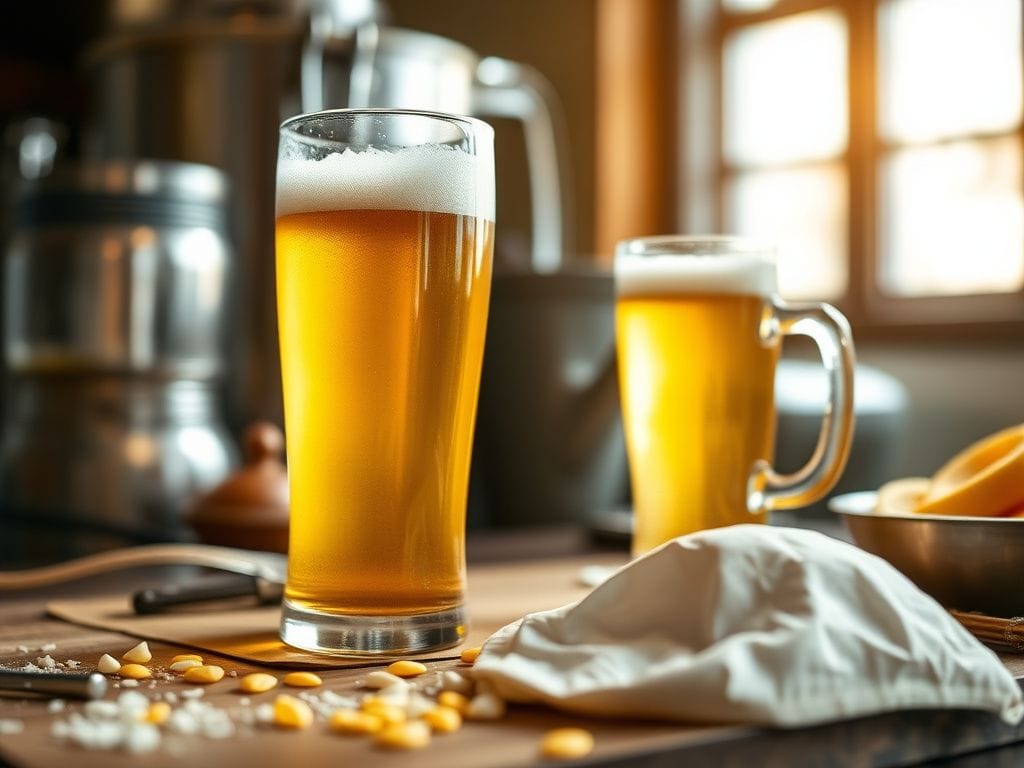
I’ve found that brewing an American Light Lager is a challenging yet rewarding experience, requiring attention to detail and a deep understanding of the style’s nuances. As a homebrewer, I’ve spent countless hours perfecting my American Light Lager recipe, and I’m excited to share my knowledge with you. With its crisp, refreshing taste and pale golden color, American Light Lager is a popular choice among beer enthusiasts. But what makes this style so unique, and how can you brew a delicious American Light Lager at home? In this article, we’ll explore the history and characteristics of American Light Lager, explore the style guidelines, and provide a complete recipe and brewing guide to help you create your own exceptional American Light Lager. From the importance of using high-quality ingredients to the need for precise temperature control, brewing an American Light Lager requires a combination of art and science.
My journey with American Light Lager began several years ago, when I first discovered the style’s refreshing, easy-drinking nature. As I experimented with different recipes and brewing techniques, I developed a deeper appreciation for the style’s subtleties and challenges. From the delicate balance of malt and hop flavors to the importance of proper fermentation and conditioning, brewing an American Light Lager requires a keen understanding of the brewing process. In this article, we’ll explore the intricacies of American Light Lager and provide you with the knowledge and tools you need to brew a top-tier example of this beloved style. Whether you’re a seasoned brewer or just starting out, this article will provide you with the guidance and expertise you need to create a delicious American Light Lager that’s sure to impress.
Introduction to American Light Lager: History and Characteristics
American Light Lager has a rich history that dates back to the late 19th century, when European brewers first introduced lager brewing techniques to the United States. Over time, American brewers adapted these techniques to create their own unique style, characterized by a light, crisp taste and a pale golden color. Today, American Light Lager is one of the most popular beer styles in the world, with many commercial examples available in stores and taverns. But despite its widespread popularity, American Light Lager remains a challenging style to brew, requiring a deep understanding of the ingredients, brewing techniques, and fermentation processes involved. To brew a great American Light Lager, you need to understand the style’s history and characteristics, as well as the brewing techniques and ingredients that are used to create it.
So what sets American Light Lager apart from other beer styles? For starters, the style is characterized by a light, refreshing taste with a subtle balance of malt and hop flavors. American Light Lagers typically have a pale golden color, with a crisp, clean finish and a moderate level of carbonation. In terms of specific characteristics, American Light Lagers typically have an original gravity (OG) of 1.040-1.050, a final gravity (FG) of 1.008-1.012, and an International Bitterness Unit (IBU) rating of 8-12. The style’s flavor profile is often described as neutral, with a subtle sweetness and a hint of hop bitterness. To achieve this flavor profile, brewers use a combination of Pilsner malt, corn, or rice to create a light, crisp taste, along with a subtle hop schedule that provides a balanced bitterness.
Understanding the American Light Lager Style Guidelines
The American Light Lager style guidelines, as outlined by the Beer Judge Certification Program (BJCP), provide a detailed framework for understanding the style’s characteristics and brewing requirements. According to the BJCP, American Light Lagers should have a light, crisp taste with a subtle balance of malt and hop flavors. The style’s aroma should be neutral, with a hint of sweetness and a subtle hop presence. In terms of appearance, American Light Lagers should have a pale golden color, with a clear, brilliant clarity and a moderate level of carbonation. The BJCP guidelines also provide specific parameters for the style’s gravity, bitterness, and alcohol content, which are essential for brewers to follow in order to create a authentic American Light Lager.
| Characteristic | BJCP Guidelines |
|---|---|
| OG | 1.040-1.050 |
| FG | 1.008-1.012 |
| IBU | 8-12 |
| SRM | 2-4 |
| ABV | 4.0-5.0% |
Essential Ingredients for an American Light Lager Recipe
When it comes to brewing an American Light Lager, the right ingredients are essential for achieving the style’s characteristic flavor and aroma. For the grain bill, I recommend using a combination of Pilsner malt, corn, or rice to create a light, crisp taste. The Pilsner malt provides a subtle sweetness and a hint of malt flavor, while the corn or rice adds a light, refreshing quality to the beer. For hops, I recommend using a combination of Hallertau, Saaz, or Tettnang to create a subtle, balanced bitterness. These hops are known for their mild, spicy flavor and aroma, which complements the beer’s malt flavor and creates a refreshing, easy-drinking character.
| Ingredient | Quantity |
|---|---|
| Pilsner Malt | 6.0 lbs (2.7 kg) |
| Corn or Rice | 1.0 lb (0.45 kg) |
| Hallertau Hops | 1.0 oz (28g) |
| Saaz Hops | 1.0 oz (28g) |
Step-by-Step Brewing Process for a Classic American Light Lager
Brewing an American Light Lager requires a careful, step-by-step approach to ensure the best possible results. Here’s a basic recipe and brewing guide to get you started: Mash the grains at 152°F (66°C) for 60 minutes to create a light, crisp wort. Sparge with enough water to reach a pre-boil volume of 6.5 gallons (25 liters). Boil for 60 minutes, adding hops at the following times: Hallertau (60 minutes), Saaz (15 minutes). Cool the wort to fermentation temperature (50°F/10°C) and pitch the yeast. Ferment at 50°F (10°C) for 14 days, then condition at 40°F (4°C) for 30 days. This will allow the yeast to fully ferment the wort, resulting in a dry, crisp finish.
| Step | Time | Temperature |
|---|---|---|
| Mash | 60 minutes | 152°F (66°C) |
| Sparge | 60 minutes | 168°F (76°C) |
| Boil | 60 minutes | 212°F (100°C) |
| Cool | 30 minutes | 50°F (10°C) |
Recipe 1: Classic American Light Lager
| Ingredient | Quantity |
|---|---|
| Pilsner Malt | 6.0 lbs (2.7 kg) |
| Corn or Rice | 1.0 lb (0.45 kg) |
| Hallertau Hops | 1.0 oz (28g) |
| Saaz Hops | 1.0 oz (28g) |
| Hop Addition | Time | Quantity |
|---|---|---|
| Hallertau | 60 minutes | 1.0 oz (28g) |
| Saaz | 15 minutes | 1.0 oz (28g) |
Recipe 2: Modern American Light Lager
| Ingredient | Quantity |
|---|---|
| Pilsner Malt | 5.5 lbs (2.5 kg) |
| Corn or Rice | 1.5 lb (0.68 kg) |
| Hallertau Hops | 1.5 oz (42g) |
| Saaz Hops | 1.5 oz (42g) |
| Hop Addition | Time | Quantity |
|---|---|---|
| Hallertau | 60 minutes | 1.5 oz (42g) |
| Saaz | 15 minutes | 1.5 oz (42g) |
Fermentation and Conditioning Techniques for a Crisp Finish
Fermentation and conditioning are critical steps in the brewing process, and can make or break the quality of your American Light Lager. To achieve a crisp, refreshing finish, I recommend fermenting the beer at 50°F (10°C) for 14 days, then conditioning at 40°F (4°C) for 30 days. This will allow the yeast to fully ferment the wort, resulting in a dry, crisp finish. It’s also important to monitor the beer’s gravity and pH levels during fermentation, to ensure that the yeast is healthy and active. A healthy fermentation will result in a beer that is free of off-flavors and aromas, and has a clean, refreshing character.
Conditioning is also an important step in the brewing process, as it allows the flavors to mature and integrate. During conditioning, the beer will clarify and develop a smooth, refined flavor. To condition your American Light Lager, simply transfer the beer to a secondary fermenter or keg, and store it at 40°F (4°C) for 30 days. This will allow the flavors to mature and integrate, resulting in a smooth, refreshing beer. It’s also important to monitor the beer’s carbonation levels during conditioning, to ensure that it’s properly carbonated and refreshing. A well-conditioned American Light Lager will have a crisp, clean finish and a refreshing, easy-drinking character.
Tips for Achieving the Perfect Balance of Flavor and Clarity
Achieving the perfect balance of flavor and clarity is a key challenge when brewing an American Light Lager. To achieve this balance, I recommend using a combination of Pilsner malt, corn, or rice to create a light, crisp taste. It’s also important to use a subtle hop schedule, with a balance of bittering and flavor hops. Finally, be sure to monitor the beer’s gravity and pH levels during fermentation, to ensure that the yeast is healthy and active. A healthy fermentation will result in a beer that is free of off-flavors and aromas, and has a clean, refreshing character. By following these tips and techniques, you can create an American Light Lager that is balanced, refreshing, and full of flavor.
In addition to using the right ingredients and brewing techniques, it’s also important to pay attention to the beer’s clarity and appearance. To achieve a brilliant, crystal-clear appearance, I recommend using a fining agent such as gelatin or Irish moss to remove any haze or sediment from the beer. It’s also important to monitor the beer’s carbonation levels, to ensure that it’s properly carbonated and refreshing. A well-carbonated American Light Lager will have a crisp, clean finish and a refreshing, easy-drinking character. By paying attention to the beer’s clarity and appearance, you can create an American Light Lager that is visually appealing and refreshing to drink.
Common Mistakes to Avoid When Brewing an American Light Lager Recipe
When brewing an American Light Lager, there are several common mistakes to avoid. One of the most common mistakes is using the wrong ingredients, such as specialty malts or hops that are too bitter or flavorful. It’s also important to avoid over-hopping or over-sparging, as this can result in a beer that’s too bitter or dry. Finally, be sure to monitor the beer’s fermentation and conditioning temperatures, to ensure that the yeast is healthy and active. A healthy fermentation will result in a beer that is free of off-flavors and aromas, and has a clean, refreshing character. By avoiding these common mistakes, you can create an American Light Lager that is balanced, refreshing, and full of flavor.
Another common mistake is not paying attention to the beer’s gravity and pH levels during fermentation. This can result in a beer that’s too sweet or too dry, or that has off-flavors or aromas. To avoid this mistake, be sure to monitor the beer’s gravity and pH levels regularly, and make adjustments as needed. It’s also important to use a hydrometer to measure the beer’s specific gravity, and to take regular readings to track the fermentation progress. By monitoring the beer’s gravity and pH levels, you can ensure that the fermentation is healthy and active, and that the beer is developing the right flavor and character.
Common Questions
- Q: What is the ideal fermentation temperature for an American Light Lager? A: The ideal fermentation temperature for an American Light Lager is 50°F (10°C). This temperature allows the yeast to ferment the wort slowly and cleanly, resulting in a beer that is free of off-flavors and aromas.
- Q: How long should I condition my American Light Lager? A: You should condition your American Light Lager for at least 30 days to allow the flavors to mature and integrate. This will result in a beer that is smooth, refined, and full of flavor.
- Q: What is the best type of hops to use for an American Light Lager? A: The best type of hops to use for an American Light Lager are Hallertau, Saaz, or Tettnang, which provide a subtle, balanced bitterness. These hops are known for their mild, spicy flavor and aroma, which complements the beer’s malt flavor and creates a refreshing, easy-drinking character.
- Q: How do I achieve a brilliant, crystal-clear appearance in my American Light Lager? A: To achieve a brilliant, crystal-clear appearance, use a fining agent such as gelatin or Irish moss to remove any haze or sediment from the beer. It’s also important to monitor the beer’s carbonation levels, to ensure that it’s properly carbonated and refreshing.
- Q: What is the typical ABV of an American Light Lager? A: The typical ABV of an American Light Lager is 4.0-5.0%. This range allows for a beer that is refreshing and easy-drinking, without being too strong or overpowering.