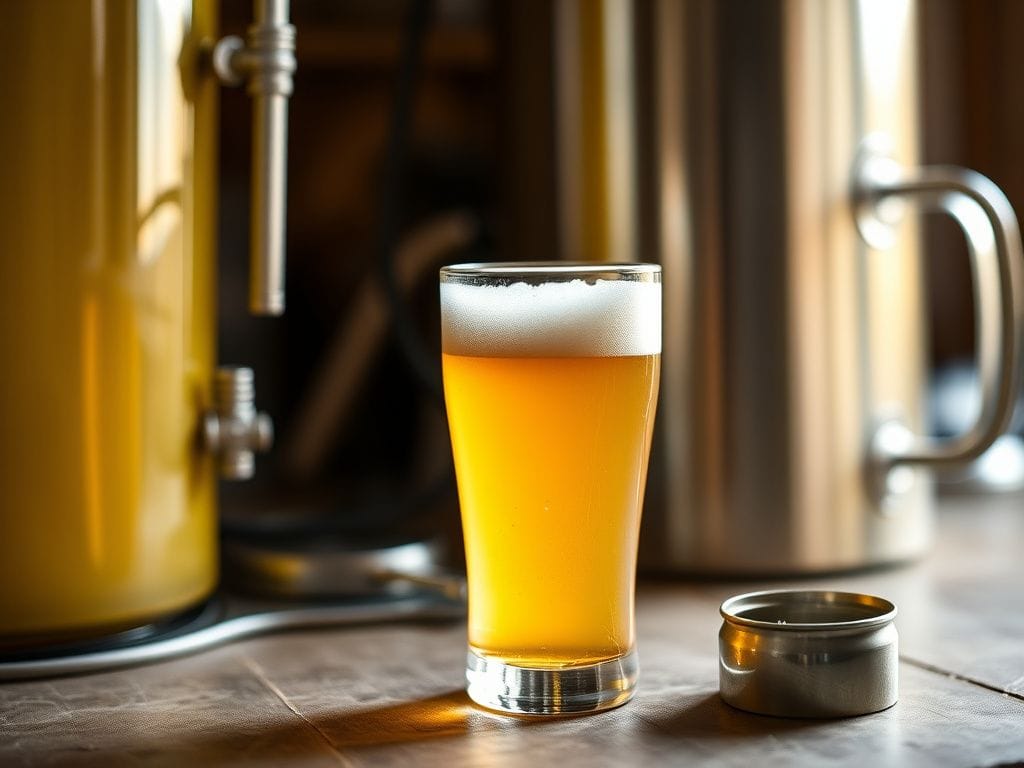
I’ve always been fascinated by the complexity and nuance of Belgian beers, and one style that stands out to me is the Belgian Witbier. With its cloudy appearance, citrusy flavor, and refreshing character, it’s a perfect beer for warm weather or anytime you want something a little different. As a homebrewer, I’ve experimented with various Belgian Witbier recipes, and I’m excited to share my knowledge with you. In this article, we’ll explore the history and style characteristics of Belgian Witbier, explore the essential ingredients and brewing process, and provide tips for achieving the ideal balance and clarity in your brew.
My journey with Belgian Witbier began several years ago when I first tried a commercial example of the style. I was struck by the beer’s unique flavor profile, which combined the sweetness of wheat with the spiciness of coriander and the tartness of orange peel. From that moment on, I was determined to brew my own Belgian Witbier, and I spent countless hours researching and experimenting with different recipes and techniques. Through trial and error, I’ve developed a deep understanding of the style and its requirements, and I’m eager to share my expertise with you. Whether you’re a seasoned homebrewer or just starting out, this article will provide you with the knowledge and guidance you need to brew a delicious and authentic Belgian Witbier.
Introduction to Belgian Witbier: History and Style Characteristics
Belgian Witbier, also known as Belgian White Ale, is a style of beer that originated in Belgium in the 14th century. The name “Witbier” literally means “white beer” in Dutch, which refers to the beer’s cloudy appearance. Traditionally, Witbier was brewed with a combination of wheat and barley malt, along with spices and flavorings such as coriander, orange peel, and lemon. The style was popularized in the 1960s by the Hoegaarden brewery, which is still producing Witbier today. Belgian Witbier is characterized by its pale color, cloudy appearance, and refreshing flavor profile, which makes it a perfect beer for warm weather or anytime you want something a little different.
According to the Beer Judge Certification Program (BJCP) style guidelines, Belgian Witbier should have the following characteristics: OG: 1.044-1.052, FG: 1.008-1.012, IBU: 10-20, SRM: 2-4, ABV: 4.5-5.5%. The beer should be cloudy or hazy in appearance, with a white head that is long-lasting. The flavor profile should be complex and refreshing, with notes of citrus, spice, and wheat. The beer should be highly carbonated, with a crisp and dry finish. Overall, Belgian Witbier is a unique and delicious style of beer that is perfect for homebrewers who want to challenge themselves and create something special.
| Characteristic | Range |
|---|---|
| OG | 1.044-1.052 |
| FG | 1.008-1.012 |
| IBU | 10-20 |
| SRM | 2-4 |
| ABV | 4.5-5.5% |
Essential Ingredients for a Traditional Belgian Witbier Recipe
When it comes to brewing a traditional Belgian Witbier, the ingredients you choose are crucial. The grain bill should include a combination of wheat and barley malt, with the wheat malt making up at least 50% of the total grain bill. The barley malt should be a pale malt, such as Pilsner or Pale Ale malt, and the wheat malt should be a raw wheat or a wheat malt that has been malted to a low degree. In addition to the grains, you’ll also need to add spices and flavorings such as coriander, orange peel, and lemon. The coriander should be added in the form of whole seeds or ground coriander, and the orange peel should be added in the form of dried or fresh peel. The lemon can be added in the form of lemon zest or lemon juice.
In terms of hops, Belgian Witbier is typically brewed with a combination of low-alpha-acid hops such as Hallertau or Saaz. The hops should be added in the form of whole hops or hop pellets, and the bitterness level should be relatively low, around 10-20 IBU. The yeast strain you choose is also critical, as it will contribute to the beer’s flavor profile and character. A traditional Belgian Witbier yeast strain such as Wyeast 3944 or White Labs WLP400 is recommended, as it will produce a beer with a complex and refreshing flavor profile.
| Ingredient | Quantity |
|---|---|
| Wheat malt | 5 lbs (2.3 kg) |
| Barley malt | 3 lbs (1.4 kg) |
| Coriander | 1 oz (28 g) |
| Orange peel | 1 oz (28 g) |
| Lemon | 1 oz (28 g) |
| Hallertau hops | 1 oz (28 g) |
| Saaz hops | 1 oz (28 g) |
| Wyeast 3944 yeast | 1 packet |
Understanding the Role of Yeast in Belgian Witbier Fermentation
Yeast plays a critical role in the fermentation of Belgian Witbier, as it contributes to the beer’s flavor profile and character. A traditional Belgian Witbier yeast strain such as Wyeast 3944 or White Labs WLP400 is recommended, as it will produce a beer with a complex and refreshing flavor profile. The yeast should be pitched at a temperature of around 65-70°F (18-21°C), and the fermentation should be allowed to proceed at a temperature of around 65-75°F (18-24°C). The fermentation should be relatively short, lasting around 7-10 days, and the beer should be racked to a secondary fermenter after 5-7 days to allow for conditioning and clarification.
It’s also important to note that the yeast strain you choose will affect the beer’s ester profile, which is the combination of fruity and floral flavors that are produced by the yeast during fermentation. A yeast strain that produces a high level of esters, such as Wyeast 3944, will produce a beer with a more complex and refreshing flavor profile. On the other hand, a yeast strain that produces a low level of esters, such as White Labs WLP400, will produce a beer with a cleaner and more straightforward flavor profile. Ultimately, the choice of yeast strain will depend on your personal preference and the style of beer you are trying to brew.
Step-by-Step Brewing Process for a Perfect Belgian Witbier
Brewing a perfect Belgian Witbier requires attention to detail and a step-by-step approach. The first step is to mash the grains at a temperature of around 152-155°F (66-68°C) to produce a wort with a gravity of around 1.044-1.052. The mash should be relatively short, lasting around 60 minutes, and the sparge water should be heated to a temperature of around 170-180°F (77-82°C). The wort should be boiled for around 60 minutes, with the hops being added at the beginning and middle of the boil.
After the boil, the wort should be cooled to a temperature of around 65-70°F (18-21°C) and pitched with the yeast. The fermentation should be allowed to proceed at a temperature of around 65-75°F (18-24°C), and the beer should be racked to a secondary fermenter after 5-7 days to allow for conditioning and clarification. The beer should be bottled or kegged after 14-21 days, and it should be allowed to condition for at least 2 weeks before being served. With attention to detail and a step-by-step approach, you can brew a perfect Belgian Witbier that is sure to impress your friends and family.
| Step | Description |
|---|---|
| Mashing | Mash the grains at 152-155°F (66-68°C) for 60 minutes |
| Sparge | Sparge the grains with water heated to 170-180°F (77-82°C) |
| Boil | Boil the wort for 60 minutes, adding hops at the beginning and middle of the boil |
| Cooling | Cool the wort to 65-70°F (18-21°C) and pitch the yeast |
| Fermentation | Allow the fermentation to proceed at 65-75°F (18-24°C) for 7-10 days |
| Conditioning | Rack the beer to a secondary fermenter and allow it to condition for 14-21 days |
| Bottling/Kegging | Bottle or keg the beer and allow it to condition for at least 2 weeks |
Hopping and Spicing Techniques for Authentic Belgian Witbier Flavor
Hopping and spicing are critical components of the Belgian Witbier style, as they contribute to the beer’s flavor profile and character. The hops should be added in the form of whole hops or hop pellets, and the bitterness level should be relatively low, around 10-20 IBU. The spices should be added in the form of whole seeds or ground spices, and the quantity should be adjusted to taste. Coriander, orange peel, and lemon are traditional spices used in Belgian Witbier, and they should be added in a quantity of around 1 oz (28 g) per 5 gallons (19 liters) of beer.
In addition to the spices, you can also experiment with other flavorings such as ginger, cinnamon, and nutmeg. These flavorings can add a unique and interesting twist to the beer, but they should be used sparingly to avoid overpowering the other flavors. The key to brewing a great Belgian Witbier is to balance the flavors and create a harmonious and refreshing beer. With the right combination of hops, spices, and flavorings, you can create a beer that is sure to impress your friends and family.
| Hop Variety | Quantity | Alpha Acid |
|---|---|---|
| Hallertau | 1 oz (28 g) | 4-6% |
| Saaz | 1 oz (28 g) | 3-5% |
Tips for Achieving the Ideal Balance and Clarity in Belgian Witbier
Achieving the ideal balance and clarity in Belgian Witbier requires attention to detail and a few tips and tricks. The first tip is to use a high-quality yeast strain that is specifically designed for brewing Belgian Witbier. This will help to create a beer with a complex and refreshing flavor profile. The second tip is to use a combination of wheat and barley malt, with the wheat malt making up at least 50% of the total grain bill. This will help to create a beer with a light and refreshing character.
The third tip is to add the spices and flavorings in the right quantity and at the right time. The spices should be added in the form of whole seeds or ground spices, and the quantity should be adjusted to taste. The flavorings should be added in the form of extracts or oils, and the quantity should be adjusted to taste. The key is to balance the flavors and create a harmonious and refreshing beer. Finally, the beer should be conditioned for at least 2 weeks to allow the flavors to mature and develop. With these tips and tricks, you can achieve the ideal balance and clarity in your Belgian Witbier and create a beer that is sure to impress your friends and family.
Advanced Techniques for Experimenting with Unique Belgian Witbier Recipes
Once you have mastered the basic technique of brewing Belgian Witbier, you can experiment with unique and interesting recipes. One advanced technique is to add unique spices and flavorings such as ginger, cinnamon, and nutmeg. These flavorings can add a unique and interesting twist to the beer, but they should be used sparingly to avoid overpowering the other flavors. Another advanced technique is to use different types of yeast, such as a yeast strain that produces a high level of esters or a yeast strain that produces a low level of esters.
Here are two complete recipes for Belgian Witbier that you can try: Recipe 1: Grain Bill:
- 5 lbs (2.3 kg) wheat malt
- 3 lbs (1.4 kg) barley malt
- 1 oz (28 g) Hallertau hops at 60 minutes
- 1 oz (28 g) Saaz hops at 30 minutes
- 1 oz (28 g) coriander at 15 minutes
- 1 oz (28 g) orange peel at 15 minutes
- 5 lbs (2.3 kg) wheat malt
- 3 lbs (1.4 kg) barley malt
- 1 oz (28 g) Hallertau hops at 60 minutes
- 1 oz (28 g) Saaz hops at 30 minutes
- 1 oz (28 g) coriander at 15 minutes
- 1 oz (28 g) lemon peel at 15 minutes
Common Questions
Q: What is the ideal temperature for fermenting Belgian Witbier? A: The ideal temperature for fermenting Belgian Witbier is between 65-75°F (18-24°C). Q: How long should I condition my Belgian Witbier? A: You should condition your Belgian Witbier for at least 2 weeks to allow the flavors to mature and develop. Q: Can I use a different type of yeast to brew Belgian Witbier? A: Yes, you can use a different type of yeast to brew Belgian Witbier, but it’s recommended to use a yeast strain that is specifically designed for brewing Belgian Witbier. Q: How much spice should I add to my Belgian Witbier? A: The amount of spice you should add to your Belgian Witbier will depend on your personal preference, but a good starting point is to add 1 oz (28 g) of spice per 5 gallons (19 liters) of beer. Q: Can I brew Belgian Witbier with a combination of wheat and barley malt? A: Yes, you can brew Belgian Witbier with a combination of wheat and barley malt, and this is actually the traditional way to brew the style. The wheat malt should make up at least 50% of the total grain bill.