


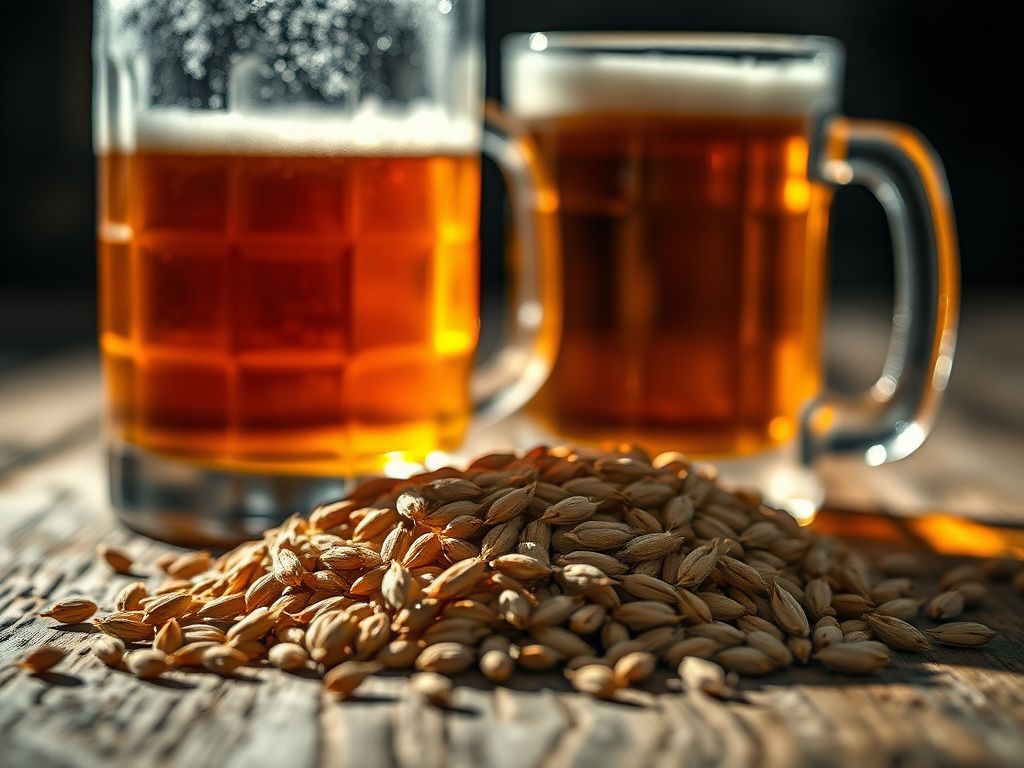
Embark on all-grain brewing with BIAB, a simplified method merging mash tun and lauter tun into a single vessel. This guide deconstructs equipment, water chemistry, precise mashing, efficient boiling, and critical sanitation for consistent, high-quality craft beer from your home brewery. Achieve professional results without complex setups.
BIAB Core Equipment and Parameters
| Component/Parameter | Technical Specification | Rationale | Optimal Value/Range | Notes |
|---|---|---|---|---|
| Kettle Volume | Minimum 1.25x final batch size | Accommodates full strike water + grain volume, preventing boil-overs. | 10-15 Gallons (38-57 L) for 5 Gallon (19 L) batch | Ensure adequate headspace for vigorous boil. |
| Mesh Bag Material | Food-grade, durable polyester or nylon, fine mesh | Withstands high temperatures, prevents grain particulate bypass, reusable. | 500-micron to 200-micron mesh | Requires robust seams for heavy wet grain lifting. |
| Heat Source | High BTU burner (propane) or powerful electric element | Achieves strike temperature rapidly, maintains mash temperature, ensures vigorous boil. | 60,000-120,000 BTU/hr (propane), 3500-5500W (electric) | Indoor electric elements require dedicated circuits; outdoor propane needs ventilation. |
| Thermometer | Calibrated digital or analog, high accuracy | Critical for precise mash temperature control and cooling verification. | +/- 1°F (0.5°C) accuracy | Regular calibration against ice bath/boiling water is essential. |
| Grain Crush | Finer than traditional 3-vessel mash, coarser than flour | Maximizes surface area for enzyme action in a single vessel, compensates for lack of sparge bed. | Tight roller gap, often a double crush | Too fine can lead to stuck bags; adjust based on individual mill and bag. |
Critical BIAB Calculation: Strike Water & Temperature
1. Strike Water Volume (V_strike):
To determine the initial water volume required for mashing, account for target final wort volume (V_final), grain absorption (A_grain), boil-off rate (B_rate), and trub loss (L_trub).
Formula: V_strike = V_final + (Grain_Weight_lbs * A_grain) + (Boil_Time_min * B_rate_gal_per_min) + L_trub
Typical Values: A_grain = 0.125 gal/lb (or 0.5 L/kg), B_rate_gal_per_min = 0.08 gal/min (for 10 gal batch, 1 gal/hr), L_trub = 0.25-0.5 gal
Example (5-gallon batch, 10 lbs grain, 60 min boil):
V_strike = 5 gal + (10 lbs * 0.125 gal/lb) + (60 min * 0.0167 gal/min) + 0.35 gal
V_strike = 5 gal + 1.25 gal + 1.002 gal + 0.35 gal = 7.602 gallons (28.77 L)
2. Strike Water Temperature (T_strike):
To achieve the target mash temperature (T_mash), account for grain temperature (T_grain) and kettle heat loss (K_loss).
Formula: T_strike = ((T_mash – T_grain) / (Grain_Weight_lbs / Water_Weight_lbs)) + T_mash + K_loss
Simplified Estimation: T_strike = (0.2 * (T_mash – T_grain)) + T_mash
Constants: Specific heat of water ≈ 1.0 BTU/lb/°F, Specific heat of grain ≈ 0.4 BTU/lb/°F
Example (Target T_mash = 152°F, T_grain = 70°F, 10 lbs grain, 7.6 gal water = 63.3 lbs):
T_strike = ((152°F – 70°F) / (10 lbs / 63.3 lbs)) + 152°F
T_strike = (82°F / 0.158) + 152°F = 519°F + 152°F = 671°F (This formula is for specific heat calculation, not direct estimation of strike temp.)
Corrected (more practical) formula, considering heat capacity:
T_strike = ( (0.2 * Grain_Weight_lbs * (T_mash – T_grain)) / Water_Weight_lbs ) + T_mash
T_strike = ( (0.2 * 10 lbs * (152°F – 70°F)) / 63.3 lbs ) + 152°F
T_strike = ( (2 * 82°F) / 63.3 ) + 152°F = (164 / 63.3) + 152°F = 2.59°F + 152°F = 154.59°F (68.1°C)
Add 2-3°F for initial kettle heat absorption and environmental losses for a more robust estimate.
The Definitive Master-Guide: All-Grain BIAB for Beginners
Introduction to All-Grain BIAB Brewing
Brew-in-a-Bag, or BIAB, represents the most accessible entry point into all-grain brewing, streamlining the traditional multi-vessel system into a singular kettle operation. This method eliminates the need for a separate mash tun and hot liquor tank, consolidating mashing and lautering functions within a single brewing vessel. Its core advantages lie in reduced equipment requirements, simplified process flow, and minimized cleaning efforts, making high-quality, fully customized beer an achievable reality for the homebrewer. While often perceived as a ‘beginner’s’ method, BIAB is capable of producing exceptionally clear, consistent, and complex beers, rivaling those from more elaborate three-vessel setups, provided precision in execution is maintained. Understanding the underlying biochemical processes and employing meticulous technique are paramount to success with BIAB. We at BrewMyBeer.online champion this efficient approach.
Essential Equipment and Setup
The foundation of a successful BIAB brew day is robust and appropriate equipment. A large stainless steel kettle is non-negotiable, typically requiring a volume at least 1.25 to 1.5 times your target batch size to accommodate the full strike water volume plus the grain bill, allowing for adequate headspace to prevent boil-overs. For a standard 5-gallon (19L) finished batch, a 10-15 gallon (38-57L) kettle is recommended. The brewing bag itself must be food-grade, heat-resistant, and durable, often constructed from fine mesh polyester or nylon with robust stitching to withstand the weight of saturated grains. Mesh sizes typically range from 200 to 500 microns to effectively contain grain particulates while allowing efficient wort runoff.
Your heat source must be powerful enough to rapidly achieve strike temperature and maintain a vigorous boil. Propane burners, often rated between 60,000 to 120,000 BTUs, are popular for outdoor brewing. For indoor applications, high-wattage electric heating elements (e.g., 3500-5500W) are preferred, often requiring dedicated 240V circuits for optimal performance. Temperature monitoring is critical; a highly accurate, calibrated digital thermometer with a probe is essential for precise mash temperature control. Finally, a method for rapid wort chilling, such as an immersion chiller or plate chiller, is necessary to quickly bring the wort down to pitching temperature, minimizing the risk of infection and DMS formation.
Water Chemistry: The Silent Ingredient
Water constitutes over 90% of your beer, and its mineral profile profoundly impacts mash pH, enzyme activity, hop utilization, and final flavor perception. While advanced water chemistry can be complex, beginners should focus on ensuring a mash pH within the optimal range of 5.2-5.6 at mash temperature (measured at room temperature, this typically corresponds to 5.0-5.4). This pH range is critical for alpha- and beta-amylase enzyme activity, which convert complex starches into fermentable sugars. Failure to hit this pH can lead to stuck mashes, low efficiency, or astringent off-flavors.
For most municipal water sources, pH adjustment can be achieved through the addition of lactic acid, phosphoric acid, or acidulated malt. Calcium sulfate (gypsum) or calcium chloride can also be added to enhance specific beer styles or compensate for mineral deficiencies. A starting point for beginners is to use distilled or reverse osmosis (RO) water and build a profile from scratch using brewing salts, or obtain a water report for your local tap water and use an online calculator to formulate additions. Understanding these water chemistry principles is a crucial step for consistent quality.
Grain Selection and Milling
The grain bill is the heart of your beer’s flavor, aroma, color, and fermentability. BIAB offers immense flexibility in grain selection, accommodating various base malts, specialty malts, and adjuncts. The key distinction in BIAB is the grain crush. Unlike traditional three-vessel systems that require a coarser crush to prevent a stuck sparge, BIAB benefits from a finer crush. A finer crush increases the surface area of the grain, allowing for more efficient starch conversion and sugar extraction within the single-vessel, no-sparge (or single-sparge) environment. Aim for a crush that is finer than typical but not flour-like, as excessively fine grist can lead to a sluggish drain, excessive particulate matter in the wort, or a “cementing” effect within the bag.
If purchasing pre-milled grain, specify “BIAB crush” to your supplier. If milling your own, gradually tighten your mill gap until you observe most kernels cracked multiple times with some flour present, but without pulverizing the husks entirely. The husks still provide some filtration. A double crush, passing the grain through the mill twice with a slightly tighter gap on the second pass, is often ideal. Always store grains in airtight containers in a cool, dark place to prevent oxidation and pest infestation.
The Mashing Process: Conversion Dynamics
Mashing is the enzymatic conversion of complex starches in malted barley into fermentable sugars and dextrins. Precision in strike water volume and temperature is paramount. After calculating your required strike water volume and heating it to the precise strike temperature, the brewing bag is carefully positioned within the kettle. Slowly dough-in your milled grains, adding them gradually to the hot water while stirring vigorously to ensure even saturation and to prevent dough balls, which can encapsulate dry grain and lead to poor conversion. A powerful whisk or mash paddle is essential here. The goal is a uniform, oatmeal-like consistency.
Once all grains are added and thoroughly mixed, take a mash temperature reading. Adjust as necessary by applying direct heat briefly, stirring constantly to prevent scorching the bag or grains on the bottom. The target mash temperature typically falls between 148°F and 168°F (64°C – 76°C), dictating the fermentability and body of the final beer. Lower temperatures (148-152°F / 64-67°C) favor beta-amylase, producing more fermentable sugars and a drier, thinner-bodied beer. Higher temperatures (154-158°F / 68-70°C) favor alpha-amylase, leading to more complex, unfermentable dextrins, resulting in a fuller-bodied, sweeter beer. Maintaining a stable temperature for the full mash duration, usually 60-90 minutes, is crucial. Insulating your kettle with a reflectix jacket or blankets can help minimize heat loss during the mash rest. Regularly stir the mash every 15-20 minutes to ensure even heat distribution and prevent localized temperature gradients.
Mash Out (Optional but Recommended)
While not strictly necessary for BIAB, a mash out step can improve efficiency and stabilize the wort. After the primary mash rest, gently raise the mash temperature to 168-170°F (76-77°C) and hold for 10-15 minutes. This inactivates the mash enzymes, preventing further starch conversion and setting the sugar profile. It also lowers the viscosity of the wort, allowing for better drainage from the grain bag and minimizing sugar retention. Exercise caution when applying direct heat with the bag still in the kettle; lift the bag slightly off the bottom or stir constantly to avoid scorching.
The Lift and Drain: Maximizing Extraction
This is the defining moment for BIAB. After the mash rest (and optional mash out), it’s time to separate the wort from the spent grains. Carefully lift the grain bag out of the kettle. This can be heavy, especially for larger batches, so a pulley system, winch, or a strong assistant is highly recommended. Suspend the bag above the kettle, allowing the wort to drain naturally back into the kettle. Avoid squeezing the bag excessively, as this can extract undesirable tannins from the grain husks, leading to astringency in the finished beer. A gentle squeeze at the very end to consolidate the last drips is generally acceptable, but aggressive squeezing should be avoided. Allow it to drain for 15-30 minutes until the flow significantly slows. You may choose to perform a brief “dunk sparge” by heating a small amount of additional water to 170°F (77°C), pouring it over the suspended grain bag, and allowing it to drain through, or simply adding it to the kettle post-drain to rinse residual sugars. This technique helps boost overall efficiency. Once drained, discard the spent grains responsibly.
The Boil: Sanitation, Sterilization, and Hop Integration
With the grain bag removed, bring the wort to a vigorous, rolling boil. This serves several critical functions: sanitization of the wort, isomerization of hop alpha acids for bitterness, coagulation of proteins (hot break), evaporation of off-flavor precursors (e.g., DMS), and concentration of sugars. The boil typically lasts 60-90 minutes, depending on the beer style and hop schedule. Maintain a strong boil throughout to ensure proper protein coagulation and DMS evaporation. For a consistent boil volume and to achieve target gravity, it’s essential to understand your system’s boil-off rate per hour.
Hop additions are typically staged throughout the boil. Bittering hops, with higher alpha acid content, are added at the beginning (60 minutes for a standard boil) to allow sufficient time for isomerization. Flavor hops are added midway (20-30 minutes), and aroma hops (often with lower alpha acids but higher essential oil content) are added towards the end of the boil (5-10 minutes, or at flameout) to preserve their volatile aromatic compounds. Always use a hop bag or spider to contain hops, especially with BIAB, to minimize kettle trub and simplify cleaning. Refer to BJCP style guidelines for appropriate hop profiles for specific beer styles.
Cooling: A Race Against Time
Once the boil is complete, rapid cooling of the wort to pitching temperature (typically 60-75°F / 15-24°C, depending on yeast strain) is paramount. The period between flameout and yeast pitching is the most vulnerable to bacterial infection. Immersion chillers, consisting of a copper or stainless steel coil submersed directly into the hot wort with cold water circulating through, are common for homebrewers. Plate chillers or counterflow chillers offer faster cooling but require more intricate cleaning. Regardless of the method, ensure all cooling equipment is thoroughly sanitized prior to contact with the wort. Agitate the wort gently while chilling to improve heat transfer efficiency. Once the target temperature is reached, transfer the cooled wort to a sanitized fermenter, leaving behind the heavy trub (coagulated proteins and hop material) at the bottom of the kettle. Excessive trub transfer can lead to off-flavors or compaction issues in the fermenter.
Fermentation: Yeast at Work
Yeast is responsible for converting the fermentable sugars in your wort into ethanol and carbon dioxide, along with a myriad of flavor-contributing byproducts. Proper yeast management is critical. Select a yeast strain appropriate for your beer style. Ensure you pitch a sufficient amount of healthy, viable yeast; underpitching can lead to sluggish fermentation, off-flavors, and incomplete attenuation, while overpitching can strip delicate flavors. Dry yeast should be rehydrated according to manufacturer instructions, and liquid yeast should ideally be propagated with a starter, especially for higher gravity beers. Ensure the wort is adequately oxygenated before pitching yeast, as yeast requires oxygen for healthy cell reproduction in the initial stages of fermentation. This can be achieved by vigorously shaking the fermenter or using an oxygenation stone and pure O2.
Maintain a stable fermentation temperature within the yeast strain’s recommended range. Temperature control is one of the most impactful factors on final beer flavor. Fluctuations or excessively high temperatures can produce undesirable esters, fusel alcohols, and phenols. Use a fermentation chamber, temperature-controlled fridge, or even a simple swamp cooler to keep temperatures consistent. Monitor fermentation activity via airlock bubbling and gravity readings using a hydrometer or refractometer. Once terminal gravity is reached and stable for several days, fermentation is complete. While optional, some brewers transfer to a secondary fermenter for aging or dry hopping, though this increases oxygen exposure risk. For most BIAB brews, a single primary fermentation is sufficient.
Packaging: Carbonation and Conditioning
Upon completion of fermentation, the beer is ready for packaging. Options include bottling or kegging. For bottling, prime the beer with a calculated amount of priming sugar (dextrose, sucrose, or corn sugar) to achieve desired carbonation levels. Carefully siphon the beer into sanitized bottles, leaving adequate headspace, and cap securely. Bottle conditioning typically takes 2-3 weeks at room temperature. For kegging, transfer the beer to a sanitized keg and force carbonate using CO2 pressure. This offers faster carbonation and more precise control. Whichever method you choose, ensure absolute sanitation of all packaging equipment to prevent contamination, which can rapidly spoil your beer.
Cleaning and Sanitation: The Golden Rule
This cannot be overstated: sanitation is paramount. Even the most meticulously executed brew day can be ruined by improper cleaning and sanitation. Anything that comes into contact with the cooled wort or fermented beer must be thoroughly cleaned and then sanitized. Cleaning removes organic matter and debris; sanitizing kills microorganisms. Use a high-quality brewery cleaner (e.g., PBW, OxiClean Free) to remove caked-on wort and hop residue from your kettle, fermenter, and all other equipment. Follow with a no-rinse sanitizer (e.g., Star San, Iodophor) at the recommended concentration and contact time. Always prepare sanitizing solutions fresh for each use. Neglecting this step is the most common cause of off-flavors and ruined batches. A clean brewery is a happy brewery, ensuring the integrity of every batch brewed at BrewMyBeer.online.
Troubleshooting Common BIAB Issues
Low Mash Efficiency:
Often due to coarse grain crush, insufficient mash time, or improper mash temperature (enzymes not active). Remedy by adjusting crush, extending mash, or ensuring accurate temperature control. Also, ensure adequate stirring during mash to avoid hot spots and dough balls.
Stuck Mash/Slow Drain:
Can occur from an overly fine crush or a very high protein adjunct load. Solution involves gently agitating the bag to loosen the grain bed or slightly lifting and dropping it to re-settle. In future brews, adjust crush or consider adding rice hulls to the grain bill.
Off-Flavors (Astringency):
Most commonly caused by squeezing the grain bag too aggressively, extracting tannins from the husks. Also, can result from high mash pH (above 5.6). Avoid over-squeezing and monitor mash pH carefully.
Infection:
Sour flavors, pellicle formation, or unexpected cloudiness usually indicate contamination. Reinforce your cleaning and sanitation regimen. Replace scratched plastic equipment, and ensure all post-boil equipment is sanitized properly.
Poor Fermentation/Attenuation:
Typically stems from underpitching yeast, unhealthy yeast, or insufficient oxygenation of the wort. Ensure proper yeast cell counts, make starters for liquid yeast, and oxygenate thoroughly. Verify fermentation temperatures are within the yeast’s optimal range to ensure robust yeast metabolism.