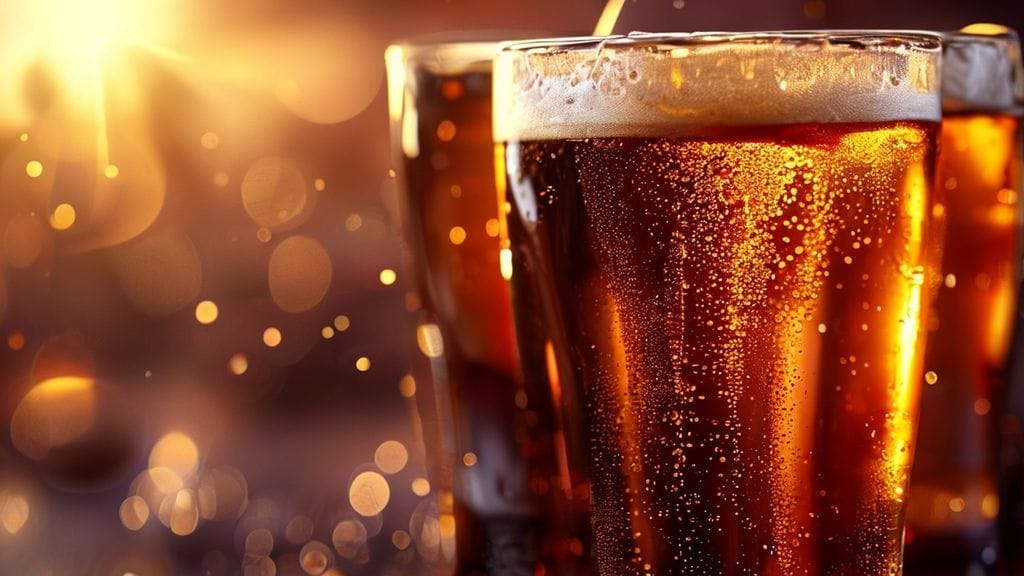
Pairing beer with chocolate cake requires selecting styles that either complement the rich, often bittersweet cocoa notes or provide a contrasting balance. My experience points to Imperial Stouts, robust Porters, Belgian Quads, or even certain Fruit Lambics. Look for beers with substantial malt character, notes of roast coffee, dark fruit, caramel, or subtle vanilla, ensuring the beer’s intensity matches the cake’s decadence for a harmonious experience.
| Beer Style | OG Range | FG Range | ABV Range | SRM Range | IBU Range | Key Flavor Descriptors |
|---|---|---|---|---|---|---|
| Imperial Stout | 1.085-1.120 | 1.020-1.035 | 9.0-12.0% | 30-40+ | 50-80 | Roast coffee, dark chocolate, burnt sugar, dried fruit, alcohol warmth |
| Robust Porter | 1.050-1.070 | 1.012-1.018 | 5.5-7.5% | 22-35 | Chocolate, caramel, slight roast, earthy hops, often nutty | |
| Belgian Dark Strong Ale (Quadrupel) | 1.090-1.120 | 1.016-1.024 | 9.0-13.0% | 12-22 | Dark fruit (raisin, fig), caramel, candi sugar, spice (clove), complex esters | |
| Oud Bruin | 1.048-1.060 | 1.008-1.012 | 4.0-8.0% | 15-22 | Sour cherry, balsamic vinegar, caramel, dark fruit, tannic acidity |
The Brewer’s Hook: Decoding the Dessert Dance
When I first started exploring the intricate world of beer and food pairing, I made a classic blunder with my favorite chocolate fudge cake. I grabbed a crisp, hop-forward IPA, thinking the bitterness would cut through the richness. Oh, how wrong I was! The aggressive hops amplified the cake’s inherent cocoa bitterness and created a harsh, metallic sensation that ruined both the beer and the dessert. It was a learning moment that cemented my belief: successful pairing isn’t just about matching flavors; it’s about understanding the *interaction* of molecular compounds and textural elements. Since then, I’ve spent countless hours in my brewhouse and kitchen, meticulously dissecting what makes a beer truly sing with a decadent chocolate cake.
The Math of Harmonious Pairing: My Flavor Interaction Score
To move beyond subjective taste, I developed a simple quantitative framework I call the “Flavor Interaction Score” (FIS). This helps me assess potential synergies or clashes between a beer and a dessert like chocolate cake. It’s not about brewing calculations here, but about understanding how different components stack up. My formula factors in the cake’s sweetness, fat content, and cocoa intensity against the beer’s residual sweetness, roasted malt character, and perceived bitterness. Here’s how I break it down:
Manual Calculation Guide: Flavor Interaction Score (FIS)
My FIS helps predict the pairing success by considering five key variables. Each variable is assigned a value from 1 (low/weak) to 5 (high/strong) for both the chocolate cake (C) and the chosen beer (B).
- Sweetness (S): How sweet is the cake/beer? (1=dry/low, 5=cloyingly sweet/high residual)
- Fat/Body (F): How rich/heavy is the cake/beer? (1=lean, 5=creamy/full-bodied)
- Cocoa/Roast Intensity (R): How strong are the cocoa/roast notes? (1=mild, 5=intense dark chocolate/burnt roast)
- Bitterness (X): Perceived bitterness from cocoa/hops. (1=none, 5=very bitter/hoppy)
- Complexity/Acidity (A): Presence of dark fruit, spice, or balancing acidity. (1=simple, 5=highly complex/noticeable acidity)
My Formula for overall harmony (H) and potential clash (Cl):
H = (S_B * S_C) + (F_B * F_C) + (R_B * R_C) + (A_B * A_C)
Cl = (X_B * R_C) - (S_B * S_C) (A high positive result here indicates potential bitterness clash)
Goal: Maximize H while minimizing Cl. An ideal pairing often has a high H score and a Cl score close to zero or slightly negative (where beer’s sweetness counters cake’s bitterness effectively).
| Variable | Chocolate Fudge Cake (C) | Imperial Stout (B) | Belgian Quad (B) |
|---|---|---|---|
| Sweetness (S) | 4 | 3 | 4 |
| Fat/Body (F) | 5 | 5 | 4 |
| Cocoa/Roast (R) | 4 | 5 | 2 |
| Bitterness (X) | 3 | 4 | 2 |
| Complexity/Acidity (A) | 2 | 4 | 5 |
Example Calculation (Imperial Stout + Fudge Cake):
- H = (3*4) + (5*5) + (5*4) + (4*2) = 12 + 25 + 20 + 8 = 65
- Cl = (4*4) – (3*4) = 16 – 12 = 4 (Slight bitterness lift, but manageable due to high H)
Example Calculation (Belgian Quad + Fudge Cake):
- H = (4*4) + (4*5) + (2*4) + (5*2) = 16 + 20 + 8 + 10 = 54
- Cl = (2*4) – (4*4) = 8 – 16 = -8 (Beer’s sweetness actively mitigates cake’s bitterness)
Both show good potential, but the Imperial Stout offers a higher “harmony” through direct flavor amplification, while the Quad provides excellent complementary balance with its sweetness and complexity.
Step-by-Step Execution: My Pairing Protocol
When I’m setting up a pairing, especially with something as nuanced as chocolate cake, I follow a precise protocol:
- Analyze the Cake Profile:
- Sweetness Level: Is it dark, bittersweet, or intensely sweet milk chocolate? This dictates the residual sugar needed in the beer.
- Texture/Density: Is it a light sponge, a dense fudge, or a moist lava cake? This influences the beer’s body.
- Additional Flavors: Are there fruit elements (raspberry, cherry), nuts, coffee, or spices (cinnamon, chili)? These are key in guiding beer selection.
- Fat Content: High fat content in the cake needs a beer with enough ABV and body to cut through or complement, preventing palate fatigue.
- Select Candidate Beers Based on the 3 Cs:
- Complement: Matching similar flavor compounds. For dark chocolate, think roasted malts, coffee, vanilla, or caramel notes in the beer.
- Contrast: Providing a counterpoint to balance or highlight. A tart fruit Lambic or a beer with subtle acidity can cut through richness. High ABV can provide a warming contrast.
- Cleanse: The beer should refresh the palate, preparing it for the next bite. Carbonation and a balanced finish are crucial.
- Consider Serving Temperature: This is paramount for showcasing both beer and cake. For dark, rich beers, I always aim for cellar temperatures.
- Imperial Stouts, Porters, Belgian Quads: Serve at 10-13°C (50-55°F). This allows the complex aromas and flavors to fully develop without the alcohol becoming too dominant or the roast notes too harsh.
- Fruit Lambics: Serve at 7-10°C (45-50°F) to maintain their crisp acidity and fruit vibrancy.
- Glassware Selection: I insist on the right glass. A snifter or a tulip glass is ideal for most dark, complex beers. Its shape concentrates the aroma, enhancing the sensory experience, especially when paired with a rich dessert.
- Portion Control & Tasting Sequence: I recommend small, equal-sized bites of cake and sips of beer. Alternate between them. My rule of thumb: take a bite of cake, let the flavors settle, then take a sip of beer, letting it wash over the residual cake flavors. Note how the beer changes the perception of the cake, and vice versa.
For more detailed brewing insights that can influence these beer characteristics, always check out the advanced guides on BrewMyBeer.online.
Troubleshooting: What Can Go Wrong and How I Fix It
Even with careful planning, beer pairing can sometimes go awry. Here are common issues I’ve encountered and my solutions:
- Issue 1: Beer Tastes Too Thin/Watery.
- My Diagnosis: The cake’s richness or sweetness is overwhelming the beer’s body and flavor.
- My Fix: Next time, select a beer with higher ABV, more residual sugar, and a fuller mouthfeel. Imperial Stouts or Belgian Quads are almost always safer bets than a standard Porter if the cake is particularly dense or sweet.
- Issue 2: Excessive Bitterness/Harshness.
- My Diagnosis: The hops in the beer or the roasted malts are clashing with the cocoa bitterness in the cake, often intensified by the cake’s sweetness. This was my rookie mistake.
- My Fix: Avoid overly hopped beers (like IPAs) with chocolate cake. If using a stout or porter, ensure its bitterness is balanced by sufficient residual sweetness or caramelization. For very dark, high-roast cakes, consider beers with softer bitterness or sweeter profiles, perhaps even fruit-forward options to contrast the roast.
- Issue 3: Clashing Flavors (e.g., Sour Notes).
- My Diagnosis: While some acidity can cleanse, the wrong kind of sourness or a dominant fruity ester can conflict.
- My Fix: If pairing with a sour beer, ensure it’s a harmonious sourness (e.g., an Oud Bruin with notes of dried fruit and caramel, which complements chocolate) rather than a bright, lactic sourness that might taste jarring. Ensure fruit notes in the beer are complementary to chocolate (cherry, raspberry, plum often work well).
- Issue 4: Lack of “Wow” Factor.
- My Diagnosis: The pairing is pleasant but doesn’t elevate either the beer or the cake.
- My Fix: Experiment with contrasting elements. Try adding a beer with a higher ABV for a warming counterpoint, or one with a distinct spice or fruit character that isn’t present in the cake. Sometimes, a subtle vanilla or coffee note in the beer can lift a standard chocolate cake into something extraordinary. Don’t be afraid to take notes and refine your choices on BrewMyBeer.online for future pairings.
Sensory Analysis: The Perfect Union
When I achieve that perfect beer and chocolate cake pairing, the experience is multi-layered and sublime. It transcends individual components, creating a new, harmonious whole.
- Appearance: My ideal paired beer, often a deep Imperial Stout, presents an opaque, obsidian hue, often with a persistent, tan head, visually echoing the rich darkness of the chocolate cake. The two, side by side, form a luxurious still life of dark indulgence.
- Aroma: As I bring the glass to my nose, a symphony of dark aromas unfolds. I typically detect intense dark chocolate and roasted coffee beans, seamlessly blending with the cake’s cocoa notes. Nuances of dried dark fruits – raisins, figs, plums – emerge from the beer, complementing the cake’s sweetness. Often, I get a hint of vanilla, faint bourbon, or even a whisper of smokiness that entwines perfectly with the cake’s baked scent. The alcohol warmth in the beer lifts these aromatics, making them more perceptible.
- Mouthfeel: This is where the magic truly happens. The beer should possess a luxurious, full-bodied viscosity that matches the density of the cake. It coats the palate, mingling with the cake’s creamy texture. The carbonation, typically moderate in these styles, provides just enough effervescence to prevent cloying sweetness and acts as a gentle palate cleanser, ensuring each bite feels as fresh as the first. The warmth from the beer’s higher ABV rounds out the experience, leaving a comforting, velvety sensation.
- Flavor: The first bite of cake and sip of beer should meld, not compete. I look for the beer’s deep roasted malts to amplify the cake’s dark chocolate character. Notes of espresso, cocoa nibs, and even bittersweet fudge become more pronounced. If it’s a Belgian Quad, the cake’s sweetness highlights the beer’s rich dark fruit (candied fig, plum) and spice notes, while the beer’s slight effervescence and subtle acidity provide a counterpoint to the cake’s richness. The finish should be long, echoing notes of chocolate, caramel, and a pleasant, lingering warmth, inviting the next perfect bite.
What if my chocolate cake isn’t very sweet, like a dark chocolate torte?
If your chocolate cake is less sweet and leans towards a bittersweet dark chocolate torte, my approach shifts slightly. I’d lean towards beers with slightly less residual sweetness but still plenty of complexity and body. A dry Irish Stout or a moderately roasty Porter could work well, as their dryness won’t add unnecessary sugar. I’d also consider a well-aged Barleywine, where oxidation has mellowed the hops and brought out nutty, dried fruit notes that can beautifully complement bittersweet cocoa without overpowering it.
Can I successfully pair a sour beer with chocolate cake?
Yes, but with precision. My experience tells me that not all sours are created equal for this pairing. A crisp, lactic sour or a bright Berliner Weisse would likely clash. However, an aged Oud Bruin or a Flanders Red Ale, with their complex notes of balsamic vinegar, dark fruit (cherry, plum), and caramel sweetness, can provide a fantastic contrast. The acidity cuts through the cake’s richness, while the underlying malt and fruit notes complement the chocolate. It’s a “contrast pairing” that often surprises and delights.
Does the specific type of chocolate (milk, dark, white) in the cake change the beer choice?
Absolutely, the chocolate type is a primary driver for my beer selection. For a milk chocolate cake, I’d gravitate towards beers with more caramel, toffee, or even vanilla notes, perhaps a sweeter Milk Stout or a Brown Ale, as their sweetness and lower roast profile align better with the milk chocolate. For a classic dark chocolate cake, the Imperial Stout or Robust Porter are my go-to. White chocolate, while technically not chocolate, would require a much lighter touch – maybe a Fruit Lambic with raspberry or cherry to add a complementary fruit note and acidity, as heavy roasty beers would overwhelm its delicate flavor.
Is there an ideal serving temperature for the cake itself to optimize the pairing?
Yes, just like beer, the cake’s temperature affects its flavor and texture. My preference is for chocolate cake to be served at or just slightly below room temperature, around 18-20°C (64-68°F). This allows the cocoa butter to soften, releasing its full aroma and flavor, and ensures the texture is yielding and moist. If the cake is too cold, the flavors become muted and the texture too firm. If it’s too warm, it can become overly soft or oily, which also impacts the pairing adversely.