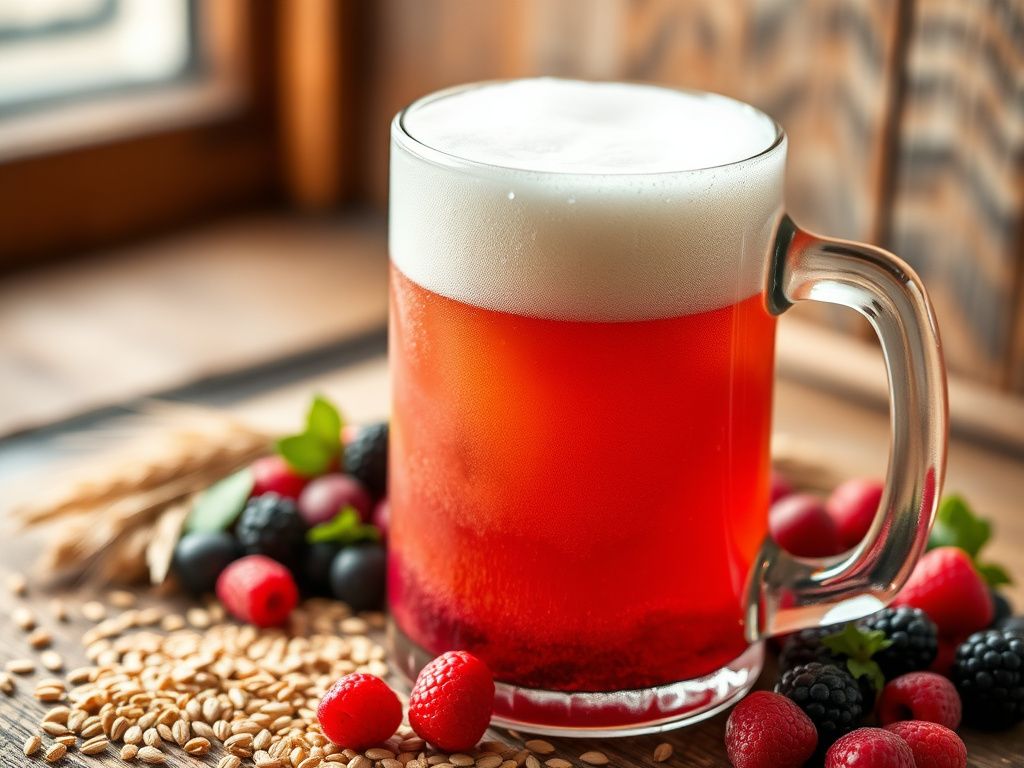
Brewing with fruit purées introduces complex saccharide loads and microbial risks, demanding precise process control to avert refermentation and spoilage. Meticulous sanitation, proper yeast management, pre-fermentation pasteurization, and post-fermentation stabilization protocols are critical. Understanding osmotic pressure, sugar content, and pH shifts is paramount for preventing disastrous secondary fermentations in packaged products.
Fruit Purée Brewing: Common Issues & Solutions
| Issue | Root Cause | Preventative Measure | Corrective Action (Post-Fermentation) | Target Parameter/Metric |
|---|---|---|---|---|
| Refermentation in Package | Residual fermentable sugars; microbial contamination (wild yeast/bacteria); insufficient stabilization. | Pasteurize purée; adequate primary fermentation; ensure fermentation completes to stable terminal gravity; sterile filtration; chemical stabilization (sulfites, sorbates). | None, catastrophic. Re-pitch high-attenuation yeast to ensure full dryness if detected pre-package. | <1.000 g/L residual glucose/fructose; <1.00 g/L residual sucrose; OG-FG attenuation >85%. |
| Pectin Haze | High pectin content in fruit; inadequate enzymatic breakdown. | Add pectinase enzyme during fruit steep or early primary fermentation; select low-pectin fruits. | Cold crash; fining agents (silica gel, PVPP, gelatin); filtration (lenticular or plate & frame). | Clarity >95% T. |
| Microbial Spoilage (off-flavors, gushing) | Unsanitized purée; contaminated equipment; wild yeast/bacteria ingress. | Flash pasteurize or heat treat purée (170°F/77°C for 15 mins); meticulous CIP/SIP; maintain CO2 blanket; proper airlock hygiene. | Detection often too late. Filtration can remove some organisms, but off-flavors persist. Chemical stabilization. | <10 CFU/mL total microbial load; zero coliforms; zero spoilage yeast/bacteria. |
| Oxidation/Staling | Excessive oxygen exposure during purée addition, transfer, or packaging. | Minimize head-space; use CO2 purge; closed transfer systems; dose antioxidants (ascorbic acid) at packaging. | Difficult to reverse. Cold aging can sometimes mitigate, but off-flavors (papery, sherry) are permanent. | Dissolved Oxygen (DO) <50 ppb at packaging. |
| Insufficient Fruit Flavor/Aroma | Low fruit concentration; loss during fermentation/conditioning; poor fruit quality. | Increase fruit purée concentration; add fruit later in fermentation (secondary/conditioning); select ripe, high-quality fruit. | Dry-fruit (adding small amounts of fruit post-fermentation); fruit essence addition (with caution). | Sensory panel fruit intensity score >3 (on 5-point scale). |
Fruit Purée Sugar Contribution & ABV Calculation
To precisely predict the impact of fruit purée addition on wort gravity and final alcohol content, one must account for the purée’s sugar profile and volume. Assume an average fruit purée contains 10-15% fermentable sugars by weight, with a specific gravity contribution roughly equivalent to its sugar percentage.
Example Scenario:
Base Beer Wort Volume (Vbeer): 20 L
Base Beer Original Gravity (OGbeer): 1.050
Fruit Purée Volume (Vfruit): 2 kg (~2 L, assuming specific gravity ~1.000 for simplicity of volume conversion, though denser purées vary)
Fruit Purée Sugar Content (%Sfruit): 12% fermentable sugars (e.g., raspberry purée)
Specific Gravity Points Contribution of Sugar: Approximately 38 gravity points per pound of sugar in 1 gallon (or 1000g sugar in 3.785L gives ~1.046 SG; 1% sugar by weight contributes ~4 gravity points/L).
1. Calculate Total Sugar from Purée:
Total Sugar (g) = Vfruit (g) * %Sfruit
Total Sugar (g) = 2000 g * 0.12 = 240 g fermentable sugars
2. Calculate Gravity Points Contribution from Purée:
Convert Total Sugar to Specific Gravity Points. A simplified approximation: 100 g sugar in 1 L adds ~0.040 SG points.
Gravity Points from Purée = (Total Sugar (g) / (Vbeer + Vfruit) (L)) * (SG contribution per 100g sugar/L)
Using a more direct method for gravity points from specific sugar mass:
Approximate Gravity Contribution per 1% sugar by weight in a solution is ~4 gravity points. For 2 kg purée at 12% sugar:
Equivalent Sugar Percentage if added to 20L beer = (2000g * 0.12) / (20000g + 2000g) = 240g / 22000g = 0.0109 or 1.09%
Gravity Points Added = 1.09 * 4 = ~4.36 gravity points (0.00436 SG)
3. Calculate Blended Original Gravity (OGblend):
OGblend = ((Vbeer * OGbeer_points) + (Vfruit * OGfruit_points)) / (Vbeer + Vfruit)
Where OGbeer_points = (OGbeer – 1) * 1000 = (1.050 – 1) * 1000 = 50 points.
OGfruit_points = (1.000 + 0.00436 – 1) * 1000 = 4.36 points (this is an approximation, often purées have higher density than water even without fermentables).
More precisely, the purée’s density contributes to the total volume and density. If purée has its own SG, use that. For simplicity, if we consider it as sugar added to the wort:
New Total Gravity Points = (OGbeer_points * Vbeer) + (Sugar Gravity Points from Purée * Total Volume)
Simplified, if you’re adding fruit directly to fermenter with wort:
New OG = ( (OGbeer * Vbeer) + ( (1 + SG_contribution_from_puree_sugars) * Vfruit ) ) / (Vbeer + Vfruit)
Let’s use a simpler, common brewer’s approach: how many gravity points does the fruit *add* to the *total volume*?
Assuming 240g fermentable sugar added to 20L. 240g / 20L = 12g/L. Each g/L sugar adds ~0.0004 SG points.
SG contribution = 12 * 0.0004 = 0.0048 SG.
New OG = OGbeer + SG_contribution = 1.050 + 0.0048 = 1.0548 (assuming constant volume for calculation, which isn’t strictly true).
A more accurate way is to calculate total fermentable extract. If 12% sugar in 2 kg purée is 240g sugar.
1 Plato = 1% sugar by weight.
10 Plato = 1.040 SG.
Roughly, 1% sugar by weight in solution increases SG by ~0.004.
So 12% sugar in 2 kg purée, added to 20L beer.
The 2 kg purée is effectively 2L. So total volume is 22L.
240g sugar in 22L = 10.9g/L sugar.
SG increase = 10.9 * 0.004 = 0.00436.
New OG = 1.050 + 0.00436 = 1.05436.
4. Estimate Final ABV:
Standard ABV Formula: ABV = (OG – FG) * 131.25
If the fruit sugars are fully fermented, and assuming the base beer would finish at 1.010 (76% attenuation):
Predicted Final Gravity (FGblend) = (OGblend – 1) * (1 – Attenuation) + 1
FGblend = (1.05436 – 1) * (1 – 0.76) + 1 = 0.05436 * 0.24 + 1 = 0.01305 + 1 = 1.01305
Estimated ABV = (1.05436 – 1.01305) * 131.25 = 0.04131 * 131.25 = 5.42% ABV
This calculation demonstrates the potential gravity shift. Accurate purée sugar content (Brix) and density measurements are critical for precise calculations. Always use a refractometer or hydrometer to verify actual gravity after addition.
The Definitive Master-Guide: Brewing with Fruit Purées – How to Avoid Secondary Fermentation Messes
1. Understanding the Adversary: Fruit Purée Composition and Microbiological Load
Fruit purées, while offering immense flavor and aroma potential, introduce inherent risks. Their primary challenges stem from sugar content, pH, pectin concentration, and resident microbial populations. High concentrations of simple sugars (fructose, glucose, sucrose) are direct fuel for fermentation, necessitating careful management. Fruit pH is typically acidic (pH 3.0-4.5), which can impact yeast health and fermentation kinetics, potentially stressing yeast and leading to undesirable byproducts if not buffered or managed with proper yeast nutrient additions. Pectin, a complex polysaccharide, contributes to haze and can present filtration challenges. Most critically, fruit purées are often microbiologically active. Wild yeasts, lactic acid bacteria (LAB), and acetic acid bacteria (AAB) are naturally present on fruit skins and can proliferate rapidly if not mitigated. These contaminants are the primary drivers of spontaneous secondary fermentation, off-flavors (sour, acetic, phenolic), and gushing in packaged products.
2. Proactive Sanitation and Purée Sterilization
The cardinal rule of brewing is sanitation, and it’s doubly critical when incorporating fruit. Raw fruit purée, even commercially packaged “aseptic” products, should be treated with extreme caution. While aseptic purées are processed to minimize spoilage organisms, they are not sterile. Always assume a microbial load. For homebrewers and small-scale commercial operations, flash pasteurization or heat treatment of the purée is non-negotiable. A target of 170°F (77°C) for 15 minutes is generally sufficient to reduce most spoilage organisms without significantly impacting fruit flavor or aroma. Rapid cooling after heat treatment is essential to prevent cooked flavors and maintain volatile aromatics. Alternatively, some brewers employ sulfite (potassium metabisulfite at 50-100 ppm) in conjunction with cold crashing, though this method is less reliable for complete microbial control and can impart sulfur notes. All equipment coming into contact with the purée—fermenters, transfer hoses, pumps—must be meticulously cleaned and sanitized (e.g., acid cleaner, then a peracetic acid solution or iodophor). Any breach in sanitation at this stage jeopardizes the entire batch.
3. Timing of Fruit Addition: Strategic Integration for Flavor and Fermentation Control
The timing of fruit purée addition profoundly impacts the resulting beer’s flavor profile, aroma intensity, and fermentation dynamics. There are three primary strategies:
a. Primary Fermentation: Adding purée directly to the fermenter with the wort and yeast. This allows the yeast to ferment the fruit sugars alongside the wort sugars.
Advantages: Produces a dryer, more integrated fruit character; minimizes risk of refermentation post-packaging as fruit sugars are consumed early.
Disadvantages: Significant loss of volatile fruit aromatics due to CO2 scrubbing; potential for yeast stress if purée pH is drastically different or nutrient levels are low. High pectin fruits can cause a “fruit cap” that complicates fermentation.
b. Secondary Fermentation (Late Primary/Early Secondary): Adding purée after the vigorous primary fermentation subsides, usually when gravity is within 5-10 points of terminal. This allows yeast to primarily consume wort sugars, then transition to fruit sugars.
Advantages: Better retention of fruit aromatics compared to primary addition; still provides a dry, stable product.
Disadvantages: Requires a healthy, active yeast population to fully attenuate fruit sugars; risks stalling if yeast is stressed or purée is added too late. Increased risk of oxygen ingress during transfer.
c. Post-Fermentation/Conditioning: Adding purée to fully fermented, stable beer, often just before packaging or during a cold conditioning phase. This is the most challenging method for avoiding refermentation.
Advantages: Maximum retention of fresh fruit flavor and aroma; allows for precise blending and sensory adjustment.
Disadvantages: Extreme risk of refermentation in package due to residual fruit sugars. Requires advanced stabilization techniques (sterile filtration, chemical inhibitors, or flash pasteurization of the final beer). This method is rarely recommended without commercial-grade stabilization equipment.
For most brewers aiming for stability without advanced equipment, the **late primary/early secondary** addition is the optimal balance of flavor retention and fermentation control. It ensures sufficient yeast activity to consume all fermentable sugars introduced by the purée.
4. Yeast Selection and Nutrient Management
The chosen yeast strain is paramount. A robust, high-attenuating, flocculant yeast is ideal. Strains known for good fermentation of simple sugars (e.g., US-05, WLP001 California Ale, Wyeast 1056 American Ale) are preferred. Avoid highly phenolic yeast strains unless the desired profile includes a fruit-phenolic interaction. Ensure adequate yeast pitching rates (0.75-1.0 million cells/mL/°Plato) and viability. Fruit purées are often nutrient-poor, especially in terms of Yeast Assimilable Nitrogen (YAN). Supplementation with yeast nutrients (e.g., Fermaid O, DAP) is crucial to prevent sluggish fermentations and yeast stress, which can lead to off-flavors and incomplete sugar attenuation. Monitor fermentation temperature diligently; excessive heat can accelerate fermentation but may also lead to off-flavors and poor attenuation of complex sugars. Cold temperatures can stall fermentation, leaving residual sugars.
5. Enzyme Treatments: Mitigating Pectin Haze
Many fruits (apples, pears, berries, stone fruits) contain high levels of pectin. When fruit is added to beer, pectin can cause a persistent haze that is difficult to remove through conventional fining or cold crashing. Pectinase enzyme (pectic enzyme) is a highly effective solution. Add pectinase directly to the purée during heat treatment or to the fermenter alongside the purée. The enzyme breaks down pectin into smaller, soluble components, preventing haze formation. Dosage rates vary by product but typically range from 0.5-2 mL per gallon of fruit purée. Ensure the enzyme has sufficient contact time (24-48 hours) and appropriate temperature (often effective at typical fermentation temperatures, but check manufacturer specifications).
6. Fermentation Management and Monitoring for Stability
Once fruit purée is introduced, meticulous monitoring is essential. Fermentation may reignite or accelerate, producing additional CO2. Ensure fermenters have adequate headspace and blow-off tubes to manage vigorous activity. Regularly measure specific gravity with a hydrometer. Refractometers can be useful for initial gravity readings but become inaccurate after alcohol production begins. Consistent, stable gravity readings over several days (e.g., 0.001 change over 72 hours) are the definitive indicator of complete fermentation. Do not package until gravity is demonstrably stable and ideally below 1.005, depending on desired sweetness and beer style. For high-attenuation fruit beers, aiming for 1.000-1.003 is prudent. For those looking to precisely control their gravity, investing in precise measuring tools and understanding attenuation limits for various yeast strains is crucial, a topic often explored on resources like BrewMyBeer.online.
7. Post-Fermentation Stabilization: The Final Barrier
Even after fruit sugars are fully fermented, residual microbial loads or dormant yeast cells can pose a refermentation risk, especially with temperature fluctuations. Several advanced techniques can enhance stability:
a. Cold Crashing & Fining: After fermentation, rapidly cooling the beer to near freezing (32-38°F / 0-3°C) for several days helps precipitate yeast and other particulates. Fining agents (e.g., gelatin, BioFine, whirlfloc) can further accelerate this process, improving clarity and reducing yeast count. While beneficial, this alone does not guarantee microbial stability against refermentation.
b. Sterile Filtration: For commercial operations, sterile filtration (e.g., 0.45-micron absolute filter) removes nearly all yeast and bacteria. This is the gold standard for achieving biological stability in non-pasteurized beer. However, it requires specialized equipment, is prone to clogging with fruit solids, and can strip some delicate flavors/aromas. The Brewers Association Technical Briefs offer comprehensive insights into filtration practices for various beer styles, including fruit beers.
c. Chemical Stabilization: Potassium metabisulfite (K-Meta) and potassium sorbate are common chemical stabilizers. K-Meta inhibits wild yeast and some bacteria, while sorbate prevents yeast reproduction. Used in combination, they can provide a degree of protection. However, sorbate can impart a “geranium” off-flavor if yeast metabolizes it, and both can be noticeable at higher doses. They are generally less effective against a heavy microbial load and should be considered supplementary, not primary, stabilization methods. These compounds are commonly discussed within the Homebrewers Association community for various applications.
d. Pasteurization (Flash or Tunnel): The most robust method for biological stability. Flash pasteurization rapidly heats the beer to 160-170°F (71-77°C) for a short duration, then quickly cools it, typically in-line before packaging. Tunnel pasteurization heats packaged beer to similar temperatures. Both effectively kill all spoilage organisms and residual yeast. While highly effective, they require significant capital investment and can subtly alter beer flavor, though modern methods minimize this. For highly volatile fruit characters, this is a trade-off.
8. Packaging Considerations: The Point of No Return
The packaging stage is where all preventative measures are tested. If any fermentable sugars remain, or if there’s viable yeast/bacteria, secondary fermentation will manifest as over-carbonation, gushing, or exploding bottles/cans. This is a severe safety hazard and a catastrophic product loss. Ensure that packaging lines are impeccably clean and sanitized. If sterile filtration is not used, consider adding a priming sugar calculation that precisely targets desired carbonation without excess. Some brewers opting for a sweeter, unfermented fruit character will dose a small amount of non-fermentable sugar (e.g., lactose) or rely on sterile filtration and pasteurization to leave fermentable sugars unconsumed without refermentation. Always confirm a stable terminal gravity via hydrometer readings over multiple days before committing to packaging. For specific style guidelines on fruit beers, including expectations for sweetness and clarity, consult resources like the BJCP Style Guidelines.
9. Specific Fruit Considerations
Different fruits present unique challenges:
- Berries (Raspberry, Strawberry, Blueberry): High sugar, high pectin. Often benefit from pectinase. Can introduce wild yeast easily if not treated.
- Stone Fruits (Peach, Apricot, Cherry): Moderate sugar, moderate pectin. Pits contain cyanide precursors; avoid crushing pits excessively or using whole pits for extended periods. Often have delicate aromatics easily scrubbed.
- Tropical Fruits (Mango, Pineapple, Passion Fruit): High sugar, often high acidity. Can be very volatile aromatically. Pineapple contains bromelain, an enzyme that can break down proteins, potentially impacting head retention, though this is usually denatured during brewing processes.
- Citrus (Orange, Lemon, Lime): High acidity, intense oils. Zest is preferred over juice to avoid excessive sourness and to capture essential oils.
10. Conclusion: Precision and Vigilance
Brewing with fruit purées is an exercise in precision and vigilance. The risks of refermentation and spoilage are high, but manageable with a disciplined approach. From initial purée sterilization and strategic timing of addition to meticulous fermentation monitoring and robust post-fermentation stabilization, each step is critical. Understand the sugar load, pH impact, and microbial potential of your chosen fruit. Employ appropriate yeast, nutrients, and enzymes. Most importantly, do not package until absolute fermentative stability is confirmed. By adhering to these principles, brewers can unlock the vibrant flavors of fruit while consistently producing stable, high-quality, and safe beers.