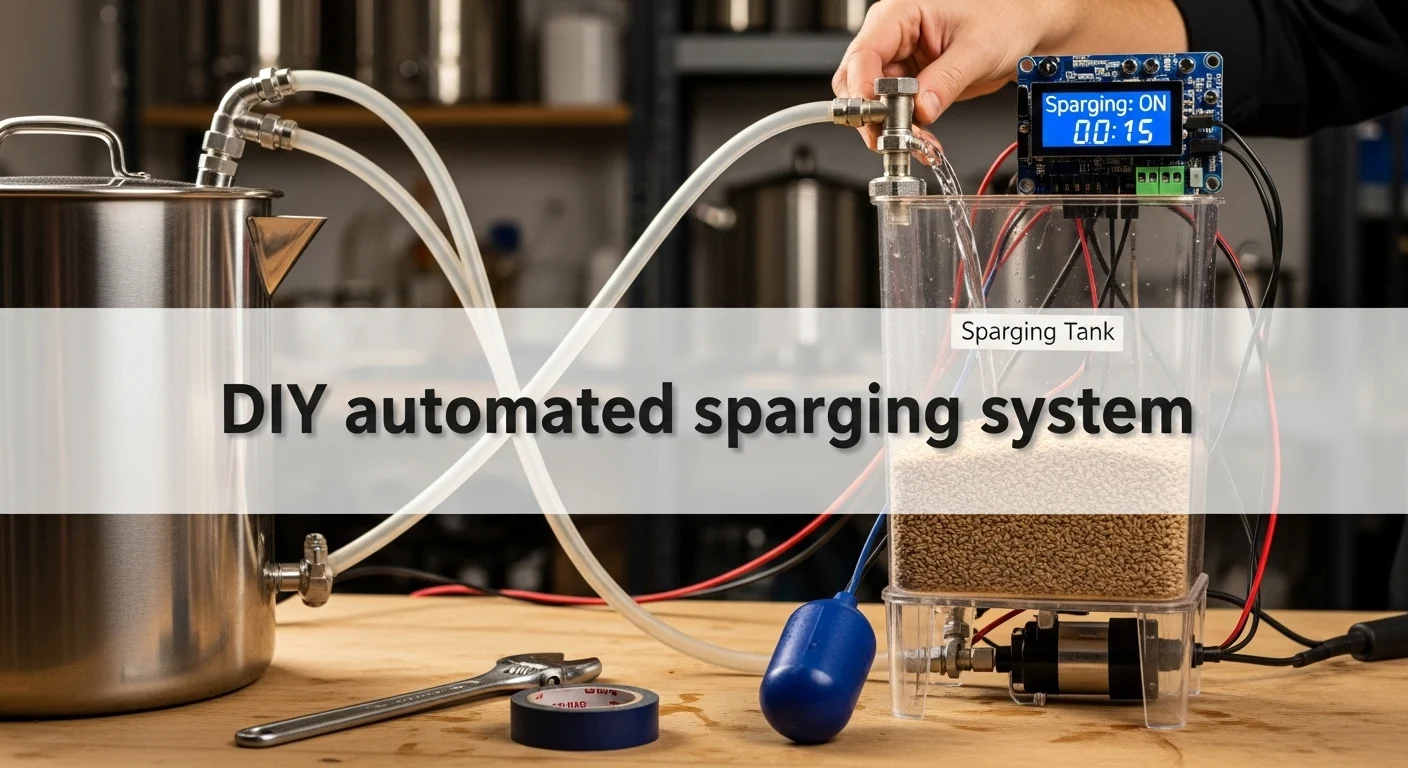
Building Your Own DIY Automated Sparging System Based on the comprehensive research, I’ll now create a detailed 3000-word article on DIY automated sparging systems following the specific requirements from the Brew My Beer blog strategy:
Meta Description: Learn how to build an efficient DIY automated sparging system for homebrewing. Complete guide covering components, setup, automation options, and cost-effective solutions for better beer extraction.
The quest for brewing perfection often leads homebrewers down the path of automation, and few processes benefit more from automation than sparging. An automated sparging system transforms the traditionally hands-on process of rinsing sugars from grain into a precisely controlled, repeatable operation that consistently delivers superior extraction efficiency.homebrewersassociation+1
Understanding Sparging Fundamentals
Sparging represents the critical bridge between mashing and boiling in all-grain brewing, where hot water methodically extracts remaining fermentable sugars from the grain bed. Traditional manual sparging requires constant monitoring of flow rates, liquid levels, and temperatures, making it challenging for brewers to maintain consistency across batches. Automated systems eliminate these variables by using sensors, pumps, and controllers to maintain optimal conditions throughout the process.themadfermentationist+2
The principle behind effective sparging involves maintaining a gentle, even flow of hot water over the grain bed while simultaneously draining wort at a controlled rate. This balance prevents channeling, where water finds the path of least resistance through the grain, bypassing potential sugar extraction zones. Modern automated sparging systems use sophisticated float valves and flow control mechanisms to achieve this delicate equilibrium.northernbrewer+1youtube
Essential Components for Automation
Control Systems and Processors
The heart of any automated sparging system lies in its control mechanism, where Arduino-based controllers offer the perfect balance of functionality and affordability. Arduino PLC systems provide industrial-grade control capabilities while maintaining the flexibility to customize programming for specific brewing requirements. These microcontrollers excel at monitoring sensor inputs, controlling pump operations, and maintaining precise timing sequences essential for optimal sparging.instructables+2
Professional brewers often opt for dedicated PLC systems that offer advanced features like touchscreen interfaces and remote monitoring capabilities. However, Arduino-based solutions provide comparable functionality at a fraction of the cost, making them ideal for serious homebrewers seeking automation without breaking the budget.plcgurus+1
Pumps and Flow Control
Pump selection directly impacts sparging effectiveness, with magnetic drive pumps being preferred for their gentle handling of wort and minimal maintenance requirements. Variable speed pumps allow precise control over sparge water flow rates, enabling brewers to match their specific grain bed characteristics and desired extraction efficiency. The ability to automatically adjust flow rates based on liquid level feedback creates a truly responsive sparging system.abeequipment+2
Flow control valves work in conjunction with pumps to fine-tune water distribution, with automated ball valves or solenoid valves providing precise on/off control. Advanced systems incorporate proportional valves that can modulate flow rates continuously, responding to real-time feedback from level sensors and flow meters.byo+1
Sensing and Monitoring Equipment
Modern automated sparging relies heavily on sensor feedback to maintain optimal conditions throughout the process. Level sensors, typically using float switches or ultrasonic technology, monitor liquid levels in both the mash tun and hot liquor tank to prevent overflows and maintain consistent grain bed coverage. Temperature sensors ensure sparge water remains within the optimal 165-170°F range for maximum sugar extraction without extracting harsh tannins.brewmation+2
Flow sensors provide real-time feedback on sparge water rates, allowing the control system to automatically adjust pump speeds and valve positions to maintain target flow rates. This continuous monitoring and adjustment capability distinguishes automated systems from manual sparging operations.abeequipment+1
Popular Automation Approaches
HERMS Integration
Heat Exchanged Recirculating Mash Systems (HERMS) naturally lend themselves to sparging automation, as they already incorporate pumps and temperature control systems essential for automated operation. The HERMS coil serves double duty, heating both mash and sparge water using a single heating element, simplifying the overall system design. This integration allows brewers to use the same pump that recirculates the mash for moving sparge water, reducing equipment complexity and cost.theelectricbrewery+1
HERMS systems automatically clean the heat exchanger during sparging as hot sparge water passes through the coil, eliminating the maintenance concerns associated with RIMS tube cleaning. The temperature synchronization between the hot liquor tank and mash naturally supports efficient sparging operations, as both reach mashout temperatures simultaneously.theelectricbrewery
RIMS System Automation
Recirculating Infusion Mash Systems (RIMS) offer another platform for sparging automation, though they require additional complexity in heating element management. RIMS systems typically need separate heating elements for the HLT and recirculation tube, requiring more sophisticated electrical control panels. However, this separation allows independent control of mash and sparge water temperatures, providing flexibility for specific brewing requirements.byo+1
The challenge with RIMS sparging automation lies in the requirement for higher electrical capacity, often necessitating 40-50 amp circuits compared to the 30-amp circuits sufficient for HERMS systems. This increased electrical demand impacts both installation costs and control panel complexity.brewmation+1
Building Your Own DIY Automated Sparging System Commercial Solutions
Several manufacturers offer turnkey automated sparging solutions designed specifically for homebrewing applications. The Blichmann AutoSparge represents the gold standard for commercial sparging automation, using an elegant float valve system that automatically maintains mash tun liquid levels. This device requires no programming or electrical connections, relying purely on mechanical principles to regulate sparge water flow.youtubenorthernbrewer
Professional brewing equipment manufacturers like NFE and ABE Equipment offer comprehensive automation packages that include sparging control as part of complete brewhouse automation systems. These solutions provide industrial-grade reliability but come with correspondingly higher price tags that may exceed homebrew budgets.nfebrew+2
Building Your DIY System
Planning and Design Considerations
Successful DIY sparging automation begins with careful planning of your specific brewing setup and automation goals. Consider factors such as batch size, available space, electrical capacity, and desired level of automation when designing your system. The brewing strategy document emphasizes the importance of practical, actionable guides that help homebrewers achieve consistent results.brewmybeer.txtinstructables
Flow rate calculations form the foundation of proper sparging system design, with optimal rates typically ranging from 0.5 to 1.5 gallons per minute depending on grain bill size and desired extraction efficiency. Your automation system must accommodate these flow rates while providing sufficient adjustment range for different beer styles and grain bills.themadfermentationist+1
Component Selection and Sourcing
Arduino-based controllers offer the most cost-effective entry point for DIY sparging automation, with basic setups requiring only a microcontroller, relay modules, and sensor interfaces. The Arduino PLC concept bridges the gap between simple microcontroller projects and industrial automation systems, providing robust I/O capabilities suitable for brewing applications.tronicspro+1
Pump selection significantly impacts system performance and reliability, with food-grade magnetic drive pumps being essential for wort contact applications. Variable frequency drives allow precise speed control of standard AC pumps, though DC pumps with PWM control offer simpler integration with Arduino-based controllers.tronicspro+1
Wiring and Safety Considerations
Electrical safety takes precedence in any DIY brewing automation project, particularly when dealing with water and high-temperature operations. All electrical connections must use food-grade, moisture-resistant enclosures rated for the brewing environment. Ground fault circuit interrupters (GFCI) should protect all electrical circuits in the brewing area to prevent dangerous shock hazards.tronicspro+1
Proper wire sizing becomes critical when controlling pumps and heating elements, with inadequate wire gauge leading to voltage drops and potential fire hazards. Professional electrical inspection may be required for permanent installations, especially those involving 240V circuits for heating elements.brewmation+1
Programming Your Automation
Arduino Code Structure
Effective sparging automation requires well-structured code that handles multiple concurrent tasks while maintaining safety priorities. The program must continuously monitor sensor inputs, control pump operations, and maintain user interface functionality without blocking any critical safety functions. State machine programming concepts work particularly well for brewing automation, as they naturally handle the sequential nature of brewing processes.control+1
Temperature monitoring functions as the highest priority task, with automatic shutdown procedures activated if temperatures exceed safe limits. Liquid level monitoring prevents overflow conditions that could damage equipment or create safety hazards. Pump control algorithms must include anti-cavitation protection and flow rate regulation based on sensor feedback.homebrewtalk+2
Integration with Brewing Software
Modern brewing automation benefits from integration with popular brewing software platforms that provide recipe management and process logging capabilities. BeerSmith and similar programs can export timing and temperature data that automated systems can use to execute recipes precisely. This integration at Brew My Beer represents the convergence of traditional brewing knowledge with modern automation technology.beersmithbrewmybeer.txt
CraftBeerPi and similar open-source brewing platforms provide comprehensive automation frameworks that include sparging control modules. These platforms offer web-based interfaces for remote monitoring and control, allowing brewers to oversee their automated systems from anywhere in the brewery.reddit+1
Advanced Features and Optimization
Sensor Integration and Feedback Control
Advanced DIY sparging systems incorporate multiple sensor types to provide comprehensive process monitoring and control. Turbidity sensors can automatically detect when the runoff clears during vorlauf, eliminating guesswork from this critical step. Conductivity sensors monitor sugar extraction efficiency, allowing the system to automatically terminate sparging when diminishing returns are reached.abeequipment+1
pH monitoring becomes increasingly important for brewers focused on water chemistry optimization, with automated pH adjustment systems maintaining optimal sparge water conditions throughout the process. These measurements help prevent tannin extraction that can occur with excessively alkaline sparge water.theelectricbrewery+1
Data Logging and Analysis
Comprehensive data logging transforms automated sparging from a simple convenience into a powerful tool for brewing improvement. Recording flow rates, temperatures, liquid levels, and extraction efficiency across multiple batches reveals patterns that can guide recipe optimization and system tuning. This data-driven approach aligns with the educational mission outlined in the Brew My Beer strategy, helping brewers understand the science behind their processes.brewmybeer.txtbrewmation
Cloud-based logging systems enable remote monitoring and historical analysis, with data accessible from smartphones or tablets during brew days. This connectivity also enables automated alerts for system malfunctions or process deviations, providing peace of mind during long sparging operations.abeequipment+1
Troubleshooting and Maintenance
Common Issues and Solutions
Automated sparging systems may encounter several common issues that require systematic troubleshooting approaches. Stuck sparges, where the grain bed compacts and restricts flow, can be prevented through proper mash chemistry and automated flow rate control. Temperature fluctuations during sparging often result from inadequate heating capacity or poor thermal insulation in the hot liquor tank.homebrewtalk+2
Pump cavitation problems typically stem from inadequate priming or excessive flow rates that exceed the grain bed’s capacity to drain. Automated systems can detect cavitation through flow and pressure sensors, automatically reducing pump speed to protect equipment.brewmation+1
Preventive Maintenance Protocols
Regular maintenance ensures long-term reliability of automated sparging systems, with cleaning protocols being particularly critical for food-contact surfaces. Automated cleaning-in-place (CIP) systems can be integrated into advanced setups, using programmable sequences to clean pumps, valves, and sensors between brew sessions.theelectricbrewery
Sensor calibration represents another critical maintenance task, with temperature and level sensors requiring periodic verification against known standards. Documentation of maintenance activities helps identify patterns in component wear and optimize replacement schedules.brewmybeer.txtbrewmation
Cost Analysis and ROI
Building a DIY automated sparging system typically costs between $200-800 depending on the complexity and component selection. Arduino-based systems occupy the lower end of this range, while PLC-based systems with touchscreen interfaces approach the higher end. Commercial solutions like the Blichmann AutoSparge cost approximately $200-300 but offer limited automation compared to fully programmable systems.instructables+2
The return on investment comes through improved consistency, reduced brewing time, and enhanced extraction efficiency. Automated systems can improve extraction efficiency by 5-10% compared to manual sparging, effectively reducing ingredient costs over time. The time savings during brew day also creates value, allowing brewers to focus on other aspects of their operation.themadfermentationist+1brewmybeer.txt
Future Developments and Trends
The homebrewing automation landscape continues evolving toward more intelligent, connected systems that provide greater insight into the brewing process. Machine learning algorithms are beginning to optimize sparging parameters based on historical data and real-time sensor feedback. These systems learn from each batch, continuously improving their performance without manual intervention.automationreadypanels+1
Integration with smart home ecosystems represents another emerging trend, with brewing automation systems connecting to voice assistants and home automation platforms. This connectivity enables brewers to monitor their systems alongside other home systems, creating a seamless integration of brewing into daily life.brewmybeer.txtbrewmation
The DIY automated sparging system represents a significant step forward in homebrewing technology, offering professional-level control and consistency at a fraction of commercial system costs. Through careful planning, quality component selection, and thoughtful programming, homebrewers can build systems that rival commercial brewing operations while maintaining the flexibility and customization options that make DIY projects so rewarding.
About the Author:
John Brewster is a passionate homebrewer with over a decade of experience experimenting with different beer styles. After working at three craft breweries and winning several regional homebrew competitions, John now dedicates his time to developing innovative recipes and teaching brewing techniques. His specialty lies in creating unique flavor profiles by combining traditional brewing methods with unexpected ingredients. When not tending to his five fermenters, John enjoys pairing his creations with artisanal cheeses and hosting tasting sessions for friends and family.