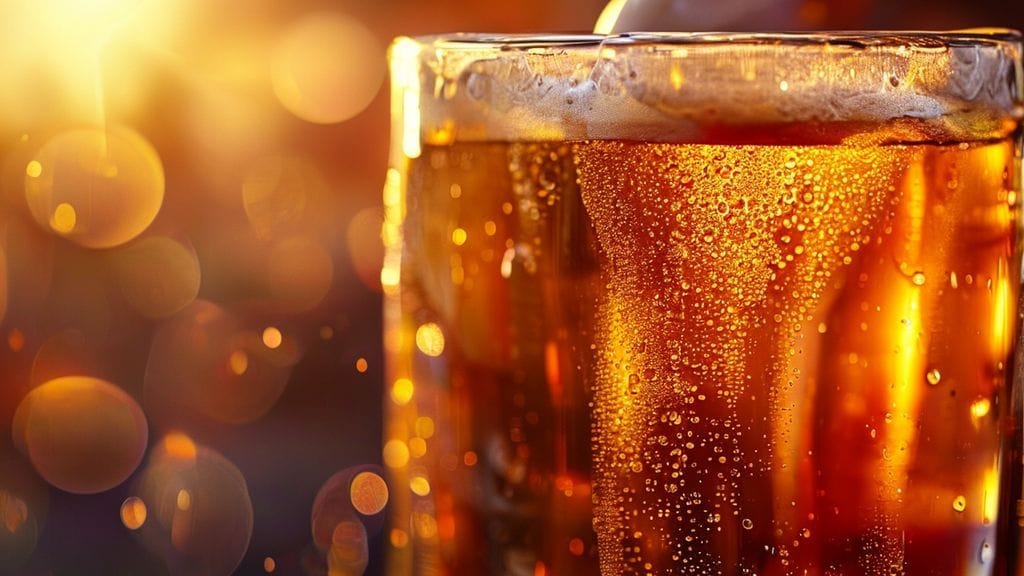
Choosing between Citra and Mosaic hops for your IPA hinges on desired aroma and flavor profile. Citra delivers intense tropical fruit, grapefruit, and lime zest, while Mosaic offers a complex blend of blueberry, dank pine, and stone fruit. My experience shows Citra excels in bright, fruity IPAs, whereas Mosaic shines in more nuanced, resinous, and berry-forward expressions, often complementing each other beautifully.
| Hop Metric | Citra (Avg. Range) | Mosaic (Avg. Range) |
|---|---|---|
| Alpha Acid | 11.0% – 15.0% | 11.5% – 13.5% |
| Beta Acid | 3.0% – 4.5% | 3.2% – 3.9% |
| Co-humulone (% of Alpha) | 22% – 24% | 24% – 26% |
| Total Oil (mL/100g) | 2.2 – 2.8 | 1.0 – 1.5 |
| Myrcene (% of Total Oil) | 60% – 65% | 45% – 50% |
| Humulene (% of Total Oil) | 7% – 9% | 10% – 12% |
| Caryophyllene (% of Total Oil) | 5% – 7% | 5% – 7% |
| Farnesene (% of Total Oil) | 0.1% – 0.2% | 0.1% – 0.2% |
| Key Aroma/Flavor | Grapefruit, tropical fruit, lime, pine | Blueberry, tropical, dank, pine, stone fruit |
The Brewer’s Hook: Navigating the Hop Jungle
When I first ventured into brewing IPAs two decades ago, the hop landscape was far simpler. Cascade, Centennial, Chinook – these were the workhorses. Then, a new generation burst onto the scene, and suddenly, everyone was asking: Citra or Mosaic? I remember my first attempt at a single-hop IPA with Citra. I was aiming for pure tropical bliss, but I dry-hopped too aggressively at too high a temperature, ending up with a beer that was more grassy than glorious. My mistake taught me that even the most celebrated hops demand respect and precise handling. Later, when Mosaic arrived, I approached it with caution, understanding its unique characteristics required a different touch. This journey of discovery, balancing the bold tropical punch of Citra against the complex, often dank, berry-forward profile of Mosaic, has been one of the most rewarding aspects of my brewing career. Let me share my insights, accumulated over countless batches, to help you master these two titans.
The Hop Math: From Alpha Acids to Aromatic Saturation
Understanding the math behind hop additions is non-negotiable for consistent, high-quality IPAs. It’s not just about throwing hops in; it’s about targeted IBU (International Bitterness Unit) levels and achieving specific aroma saturation. Here’s how I approach it:
Manual Calculation Guide for Bitterness and Aroma
My go-to for calculating IBUs for boil additions is a modified version of the Tinseth formula, slightly simplified for practical brewing. This helps me dial in my bittering charge based on the alpha acid (AA) percentage of the specific hop lot I’m using.
-
Target IBU Calculation (Boil Hops):
I calculate my boil additions (typically 60-minute, 30-minute) to hit about 30-40 IBUs for a modern IPA, with the bulk of aroma and flavor coming from later additions. The formula is:
IBUs = (Hop Weight in grams * Alpha Acid % * Utilization % * 1000) / (Batch Volume in Liters * Gravity Correction)- Hop Weight: The mass of hops in grams.
- Alpha Acid %: From your hop supplier, usually on the packaging (e.g., 0.13 for 13%). This is critical.
- Utilization %: This varies significantly based on boil time and wort gravity. For a 60-minute boil in a typical IPA wort (OG ~1.060), I generally estimate around 25-30%. For 30 minutes, 15-20%.
- Gravity Correction: For wort over 1.050 OG, I apply a correction factor to utilization. The formula is
1 + ((OG - 1.050) / 0.2). So, if my OG is 1.060, the factor is1 + ((1.060 - 1.050) / 0.2) = 1.05. This factor divides the utilization, effectively reducing it. - Batch Volume: Post-boil volume in liters.
Example: To hit 20 IBUs in 20L with a 12% AA hop at 60 minutes (28% utilization, OG 1.060):
20 = (X * 0.12 * 0.28 * 1000) / (20 * 1.05)
X = (20 * 20 * 1.05) / (0.12 * 0.28 * 1000)
X = 420 / 33.6 = 12.5 gramsof my 12% AA hop. -
Whirlpool/Hop Stand Additions (Aroma & Flavor):
Here, the math isn’t about IBUs, but about hop oil saturation and concentration. I focus on grams per liter (g/L) or ounces per gallon (oz/gal). For a hazy IPA, my whirlpool additions can be substantial.
- I aim for 2-4 g/L (0.25-0.5 oz/gal) for a significant whirlpool addition of aroma hops.
- Temperature matters: I typically whirlpool at 80-85°C (176-185°F) for 20 minutes, then crash quickly. This extracts soluble aroma compounds without excessive bitterness.
-
Dry Hop Rate (Maximum Aroma):
This is where Citra and Mosaic truly shine. I’ve experimented extensively, and my findings suggest:
- For a standard IPA, I start at 4-6 g/L (0.5-0.75 oz/gal).
- For a “Hazy” or “Juicy” IPA, I push it to 8-16 g/L (1.0-2.0 oz/gal), sometimes even higher for experimental batches.
This rate is divided across primary and secondary dry hop charges if applicable. I track this rigorously to understand the impact of various hop loads. Remember, higher dry hop rates increase the risk of “hop creep,” where residual enzymes in the hops re-ferment dextrins, causing an unexpected FG drop and potential diacetyl. I manage this by ensuring my yeast has fully attenuated and by cold crashing quickly after dry hopping.
Step-by-Step Execution: Crafting a Citra vs. Mosaic IPA
My approach to brewing with Citra and Mosaic is tailored to emphasize their unique characteristics. Here are two simplified scenarios demonstrating how I utilize them.
Scenario 1: Citra-Dominant Hazy IPA
This brew is all about bright, pungent tropical and citrus notes. My typical recipe aims for an OG of 1.065 and an FG of 1.012, yielding approximately 7.0% ABV and around 40 IBUs.
-
Grain Bill (5.5 kg for 20L):
- 60% Pale Malt (e.g., Maris Otter, Golden Promise)
- 30% Flaked Oats (for mouthfeel and haze stability)
- 10% Wheat Malt (for head retention and haze)
-
Mash:
- Mash at 68°C (154°F) for 60 minutes for a fuller body and residual sweetness to balance the hops.
- Mash pH targeting 5.2-5.3. I adjust with lactic acid to achieve this, crucial for enzyme activity and hop expression.
-
Boil (60 minutes):
- 60 minutes: 15g Magnum (14% AA) for clean bitterness. This provides my base 20-25 IBUs.
-
Whirlpool/Hop Stand (20 minutes at 82°C / 180°F):
- 20 minutes @ 82°C: 100g Citra (13% AA) & 50g Mosaic (12% AA). I like a touch of Mosaic here to add complexity without overpowering Citra’s brightness. This is about 2.5 g/L of total whirlpool hops.
-
Fermentation:
- Pitch a high-flocculating English Ale strain (e.g., Wyeast 1318 or Imperial A38) at 18°C (64°F).
- Allow to ferment for 3-4 days until gravity drops to ~1.020.
-
Dry Hop 1 (Active Fermentation):
- When fermentation is roughly 2/3 complete (around 1.020-1.018 SG), I add 100g Citra. This is my “biotransformation” hop addition, aiming for unique thiol expressions.
- Maintain fermentation temperature at 18°C (64°F) for 3-4 days.
-
Dry Hop 2 (Post-Fermentation):
- Once fermentation is complete (FG reached, usually 1.012 SG), I drop the temperature to 16°C (61°F) and add another 150g Citra. This ensures maximum fresh aroma.
- Hold for 3 days, then cold crash rapidly to 2°C (35°F) for packaging. My total dry hop rate for this batch is 12.5 g/L (1.6 oz/gal).
Scenario 2: Mosaic-Forward West Coast IPA
For a crisp, bitter, and resinous IPA with a blueberry backbone, Mosaic is my champion. My target OG is 1.060, FG is 1.010, aiming for approximately 6.6% ABV and a punchy 65 IBUs.
-
Grain Bill (5.0 kg for 20L):
- 90% Pale Malt (e.g., 2-Row, Maris Otter)
- 5% Crystal 20L Malt (for color and residual sweetness)
- 5% Carapils/Dextrin Malt (for head retention)
-
Mash:
- Mash at 65°C (149°F) for 60 minutes for a drier finish.
- Mash pH targeting 5.1-5.2, slightly lower than a hazy, for a crisper expression.
-
Boil (60 minutes):
- 60 minutes: 25g Magnum (14% AA) for clean, firm bitterness. This provides ~35 IBUs.
- 15 minutes: 20g Mosaic (12% AA) for flavor and some mid-boil bitterness.
- 5 minutes: 20g Mosaic (12% AA) for late flavor and aroma contribution.
-
Whirlpool/Hop Stand (20 minutes at 80°C / 176°F):
- 20 minutes @ 80°C: 75g Mosaic (12% AA) & 25g Citra (13% AA). Citra here brightens Mosaic’s danker notes. This is 2.5 g/L total whirlpool hops.
-
Fermentation:
- Pitch a clean, attenuative American Ale strain (e.g., SafAle US-05 or Wyeast 1056) at 19°C (66°F).
- Allow to ferment fully for 7 days or until stable FG.
-
Dry Hop (Post-Fermentation):
- Once fermentation is complete (FG reached, usually 1.010 SG), I drop the temperature to 18°C (64°F).
- Add 150g Mosaic (12% AA).
- Hold for 4 days, then cold crash to 2°C (35°F) for packaging. My total dry hop rate here is 7.5 g/L (1.0 oz/gal).
Troubleshooting: What Can Go Wrong and How I Fix It
Even with two decades under my belt, brewing IPAs with these high-impact hops can present challenges. Here are common issues I’ve encountered and my solutions:
-
Grassy, Vegetal Off-Flavors:
- Cause: Over-dry hopping, especially for too long, or at too high a temperature, and sometimes using heavily oxidized hops. Citra is particularly prone to this if not handled correctly due to its high oil content.
- My Fix: I’ve learned to limit my dry hop contact time to 3-5 days. For multiple dry hop additions, I ensure the previous charge is removed or dropped out before adding the next. Packaging quickly after dry hopping is also key. For Hazy IPAs, I ensure the dry hop temperature is around 16-18°C (61-64°F), not much higher.
-
Lack of Hop Aroma/Flavor:
- Cause: Insufficient hop quantities, poor hop storage (oxidation), or insufficient whirlpool/dry hop contact time/temperature.
- My Fix: I always buy hops in vacuum-sealed packaging, store them frozen at -18°C (0°F), and use them within 12 months. I’ve increased my whirlpool and dry hop rates significantly over the years, often pushing dry hopping to 10 g/L (1.3 oz/gal) or more for hazy IPAs. Ensuring proper contact during dry hopping (e.g., rousing the fermenter gently) helps.
-
Excessive Bitterness/Harshness:
- Cause: Too many high alpha acid hops in the boil, especially late in the boil, or excessive whirlpool temperatures for too long.
- My Fix: I’ve shifted most of my bitterness to a clean, high-alpha hop like Magnum at 60 minutes. My whirlpool temperatures are strictly controlled to 80-85°C (176-185°F) for 20 minutes, then crash quickly to prevent further iso-alpha acid formation. I also ensure my mash pH is not too low, as this can exacerbate harsh bitterness.
-
“Hop Creep” (Unintended Refermentation):
- Cause: Enzymes present in large dry hop additions (especially pelletized hops) can break down unfermentable dextrins into fermentable sugars, causing an unexpected drop in FG and sometimes diacetyl.
- My Fix: I typically ensure fermentation is absolutely complete, and the yeast has dropped out before dry hopping. I often raise the temperature to 20°C (68°F) for a diacetyl rest before dry hopping. After dry hopping, I cold crash quickly and package the beer to minimize contact time between the enzymes and the wort.
Sensory Analysis: My Personal Tasting Notes
My palate has become intimately familiar with the nuances of Citra and Mosaic. Here’s how I typically describe them in an IPA context:
Citra-Dominated IPA
- Appearance: Often a brilliant, hazy golden yellow, sometimes a deeper amber if crystal malts are used sparingly. Good, persistent white head. My hazy versions are turbid but vibrant.
- Aroma: Explodes with bright, fresh citrus – think grapefruit peel, lime zest, and tangerine. Underlying notes of passion fruit, lychee, and sometimes a whisper of pine. It’s vibrant and pungent. My personal batches often hit a nose reminiscent of a fruit smoothie mixed with cannabis, in the best possible way.
- Mouthfeel: Typically medium-bodied, often with a creamy smoothness from flaked adjuncts in hazy versions. Crisp and refreshing in West Coast styles. Bitterness is present but clean, allowing the hop flavor to dominate.
- Flavor: Follows the aroma closely, delivering a burst of juicy citrus and tropical fruit. Grapefruit, mango, and a hint of melon are common. The finish is often clean, with a lingering, pleasant citrus pithiness. There’s a certain “brightness” I associate specifically with Citra.
Mosaic-Dominated IPA
- Appearance: Can range from a clear, shimmering gold to a moderately hazy straw, depending on the grist. Usually a stable, white to off-white head.
- Aroma: More complex and layered than Citra. My Mosaic IPAs often present a unique “blueberry” note, alongside stone fruit (peach, apricot), and a distinct “dank,” resinous, or piney character. Some batches can lean into a musky, earthy complexity. It’s a bouquet that demands attention.
- Mouthfeel: Similar to Citra in body but often perceived as slightly softer, sometimes with a more resinous chewiness, especially in higher bitterness applications. The bitterness tends to be rounder, less sharp than some other high-alpha hops.
- Flavor: A beautiful interplay of berry (blueberry, blackberry), tropical fruit (passionfruit, guava), and earthy, green, or pine notes. There’s an underlying richness that complements a slight malt backbone well. The finish often carries a pleasant, lingering resinous quality that I find incredibly appealing.
Frequently Asked Questions
Should I use Citra or Mosaic for a Hazy IPA?
In my experience, both excel in Hazy IPAs, but they offer different profiles. Citra provides a brighter, more straightforward tropical and citrus burst, making a very “juicy” beer. Mosaic, on the other hand, contributes a more complex, nuanced array of berry, stone fruit, and dank notes, leading to a “hazy” that has more depth. For a truly unique experience, I often combine them to leverage Citra’s upfront punch with Mosaic’s intricate layers, usually leaning 2:1 Citra to Mosaic in my dry hop for balance. You can find more hop pairing ideas on BrewMyBeer.online.
Can Citra and Mosaic be used together in an IPA?
Absolutely, and I often recommend it! They are a fantastic pairing. Citra brings the bright, zesty citrus and tropical notes, while Mosaic adds a layer of blueberry, stone fruit, and subtle dankness. My favorite approach is to use Citra as the dominant bright tropical note and Mosaic as the complex undertone, typically using more Citra for the main aroma additions (whirlpool/dry hop) and a smaller, but significant, portion of Mosaic to add depth and intrigue.
What temperature is best for dry hopping with Citra and Mosaic?
For optimal extraction of desirable aromatics and minimizing grassy notes, I dry hop these varieties in the range of 16-18°C (61-64°F). Going much higher can increase the risk of vegetal flavors, while going too low (below 10°C / 50°F) can significantly reduce hop oil solubility and lead to diminished aroma. The exact temperature also depends on whether I’m aiming for biotransformation during active fermentation or simply cold extraction post-fermentation. My rule of thumb is active fermentation dry hopping around 18°C (64°F) and post-fermentation dry hopping at 16°C (61°F) before cold crashing.
Do Citra or Mosaic contribute more bitterness?
Both Citra and Mosaic have similar high alpha acid ranges (11-15% for Citra, 11.5-13.5% for Mosaic), meaning they both have the potential to contribute significant bitterness if added early in the boil. However, their exceptional aroma and flavor profiles mean I rarely use them for bittering additions. I reserve them for whirlpool and dry hopping to maximize their volatile oil contributions. For clean bitterness, I always rely on a neutral, high-alpha hop like Magnum or Warrior early in the boil, ensuring I calculate my IBUs accurately. Learn more about bitterness curves and hop schedules on BrewMyBeer.online.